

Die 10 besten Blockchain-Softwarelösungen 2026

10 Bestes Blockchain-Software-Shortlist
Here's my pick of the 10 best software from the 23 tools reviewed.


Die Navigation in der Welt der Blockchain-Software kann überwältigend sein. Wahrscheinlich suchen Sie nach einer Lösung, die den Bedürfnissen Ihres Teams entspricht – sei es zur Verbesserung der Sicherheit oder zur Steigerung der Transparenz. Nach meiner Erfahrung kann die richtige Software einen erheblichen Unterschied bewirken.
Ich habe mir die Zeit genommen, zahlreiche Optionen zu testen und zu bewerten, wobei ich mich auf das konzentriert habe, was für Technik-Experten wie Sie wirklich zählt. Nachfolgend finden Sie meine Top-Empfehlungen, jeweils ausgewählt nach ihren besonderen Stärken und ihrer Fähigkeit, gängige Herausforderungen zu lösen.
Dieser Artikel ist nicht einfach eine Liste; er soll Ihnen als Leitfaden dienen, damit Sie eine fundierte Entscheidung treffen können. Ich biete Ihnen eine unparteiische sowie gut recherchierte Bewertung, sodass Sie mit Zuversicht die beste Blockchain-Software für Ihre Anforderungen auswählen können.
Why Trust Our Software Reviews
We’ve been testing and reviewing software since 2023. As tech leaders ourselves, we know how critical and difficult it is to make the right decision when selecting software.
We invest in deep research to help our audience make better software purchasing decisions. We’ve tested more than 2,000 tools for different tech use cases and written over 1,000 comprehensive software reviews. Learn how we stay transparent & our software review methodology.
Bestes Blockchain-Software-Überblick
Diese Vergleichstabelle fasst die Preisinformationen meiner Top-Auswahl an Blockchain-Software zusammen, um Ihnen zu helfen, die passende Lösung für Ihr Budget und Ihre Geschäftsanforderungen zu finden.
| Tool | Best For | Trial Info | Price | ||
|---|---|---|---|---|---|
| 1 | Best for scalable BaaS on AWS | Not available | From $15/user/month (billed annually) + $50 base fee per month. | Website | |
| 2 | Best for integrating with Oracle-based systems | Not available | From $20/user/month (billed annually) + $100 base fee per month. | Website | |
| 3 | Best for rapid transaction finality | Not available | From $15/user/month (billed annually) + $30 base fee per month | Website | |
| 4 | Best for on-chain governance mechanisms | Not available | From $12/user/month (billed annually) | Website | |
| 5 | Best for high-throughput consensus services | Not available | From $10/user/month (min 5 seats) | Website | |
| 6 | Best for distributed cloud services | Not available | From $15/user/month (billed annually) + $60 base fee per month | Website | |
| 7 | Best for scalable decentralized applications | Not available | From $20/user/month (billed annually) + $50 base fee per month | Website | |
| 8 | Best for language model integration | Not available | From $25/user/month (billed annually) + $55 base fee per month | Website | |
| 9 | Best for private transaction networks | Not available | From $20/user/month (billed annually) + $70 base fee per month | Website | |
| 10 | Best for enterprise blockchain solutions | Not available | From $20/user/month (billed annually) + $50 base fee per month | Website |
-

Site24x7
Visit WebsiteThis is an aggregated rating for this tool including ratings from Crozdesk users and ratings from other sites.4.7 -
GitHub Actions
Visit WebsiteThis is an aggregated rating for this tool including ratings from Crozdesk users and ratings from other sites.4.8 -
Docker
Visit WebsiteThis is an aggregated rating for this tool including ratings from Crozdesk users and ratings from other sites.4.6




Bewertungen der besten Blockchain-Software
Nachfolgend finden Sie meine ausführlichen Zusammenfassungen der besten Blockchain-Software, die es auf meine Shortlist geschafft haben. Meine Bewertungen bieten einen detaillierten Einblick in die wichtigsten Funktionen, Vor- & Nachteile, Integrationen und idealen Anwendungsfälle der jeweiligen Lösungen, um Ihnen die passende Auswahl zu erleichtern.


Amazon Managed Blockchain is a fully managed service that simplifies the creation and management of scalable blockchain networks using popular frameworks like Hyperledger Fabric. Given its ability to scale easily on AWS, it’s the go-to choice for businesses looking for Blockchain-as-a-Service (BaaS) on this platform.
Why I Picked Amazon Managed Blockchain: In choosing a tool that would feature on this list, Amazon Managed Blockchain consistently stood out due to its integration with the AWS ecosystem. I selected it not just for its inherent capabilities in blockchain technology, but for the unparalleled scalability it offers to businesses already operating on AWS.
The service is especially useful for those looking to expand their blockchain networks without the operational headache, which is why I judged it to be the best for scalable BaaS on AWS.
Standout Features & Integrations:
One notable feature of Amazon Managed Blockchain is its support for Hyperledger Fabric, allowing for permissioned, private blockchain networks. It also offers robust options for managing nodes and a wide set of APIs for blockchain development.
Additionally, this service integrates well with other AWS services like Amazon CloudWatch for monitoring and AWS Lambda for executing smart contracts.
Pros and Cons
Pros:
- Offers a wide set of APIs for comprehensive blockchain development.
- Support for popular frameworks like Hyperledger Fabric.
- Strong integration with AWS services, making it suitable for businesses already on this platform.
Cons:
- Businesses not on AWS may find less value due to the tight AWS ecosystem integration.
- Not as framework-agnostic as some other BaaS providers.
- Pricing can become complex and add up quickly, especially for larger networks.


Oracle Blockchain is a comprehensive distributed ledger platform, engineered to bring about enterprise-grade blockchain capabilities. Tailored for integration with Oracle services and systems, it emerges as a natural choice for enterprises deeply embedded within the Oracle ecosystem.
Why I Picked Oracle Blockchain: In determining which tools would make the list, Oracle Blockchain particularly captured my attention. The main reason I selected it was its impeccable synergy with Oracle's suite of products. It's crafted with Oracle-based systems in mind, ensuring tight-knit integration, and thus, stands out from many generic blockchain platforms.
Based on my comparison and judgments, I firmly believe that it is unparalleled when it comes to integrating with Oracle-centric enterprises.
Standout Features & Integrations:
Oracle Blockchain's core strength lies in its enterprise-grade functionality, offering robust features like permissioned blockchain development, high scalability, and improved security measures.
More impressively, its deep-rooted integrations with Oracle's vast array of software products, like Oracle ERP, CRM, and Oracle Cloud Infrastructure services, make transitions and data flows exceptionally smooth.
Pros and Cons
Pros:
- Supports popular frameworks like Hyperledger Fabric, broadening its blockchain development capabilities.
- Boasts of robust features including high scalability and tight security protocols.
- Designed with Oracle systems at its core, ensuring smooth integration.
Cons:
- Relatively steep learning curve for those unfamiliar with Oracle's ecosystem.
- Pricing might seem steep for startups or smaller organizations.
- More suitable for enterprises already invested in Oracle, potentially limiting its appeal for non-Oracle users.

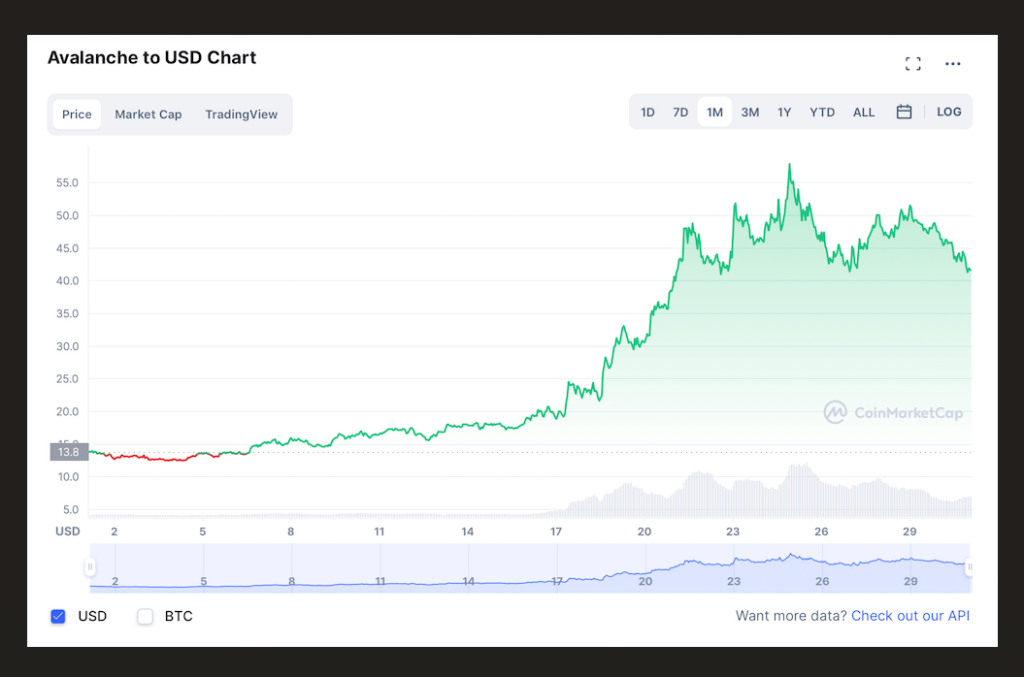
Avalanche is a distinguished player in the realm of blockchain platforms, specifically designed for quick transaction conclusions. Its architecture promises a swiftness in transaction finality that few can rival.
Why I Picked Avalanche: I chose Avalanche after a thorough examination of numerous blockchain platforms. The deciding factor was its impressive ability to achieve rapid transaction finality. Through judicious comparison and consideration, I formed the opinion that Avalanche is indeed a cut above the rest.
Its prowess in ensuring quick transaction conclusions makes it an optimal choice for those who value speed and efficiency in a blockchain network.
Standout Features & Integrations:
Avalanche boasts a decentralized finance ecosystem and a consensus mechanism that improves transaction speed. It caters to developers through its EVM-compatible functionality, facilitating blockchain app creation and development.
In terms of integrations, Avalanche connects with various blockchain-as-a-service providers and supports a myriad of programming languages, improving its utility in the blockchain world.
Pros and Cons
Pros:
- Broad spectrum of integrations with leading blockchain services.
- Versatile ecosystem compatible with EVM, aiding in dApps and blockchain development.
- Exceptional speed in transaction finality.
Cons:
- Annual billing could deter those seeking short-term solutions.
- The platform's focus on speed might not cater to every blockchain use-case.
- Might be overwhelming for beginners given its unique architecture.


Tezos stands out in the world of blockchain platforms, championing a strong on-chain governance model. This decentralized blockchain evolves by upgrading itself, ensuring stakeholders are at the helm of decision-making processes.
Why I Picked Tezos: Tezos captured my interest after I meticulously went through numerous blockchain platforms. What determined my choice was its unique approach to on-chain governance mechanisms. After comparing and analyzing, it became clear that when it comes to a decentralized decision-making process within a blockchain network, Tezos leads.
It's my firm opinion that for anyone prioritizing on-chain governance, Tezos is the best bet.
Standout Features & Integrations:
Tezos prides itself on its modular architecture and the ability for stakeholders to vote on proposed protocol changes. Its functionality goes beyond mere blockchain development, incorporating smart contracts and facilitating dApps creation.
Its integration landscape is diverse, linking with various blockchain-as-a-service providers and software development tools.
Pros and Cons
Pros:
- High scalability ensuring efficient performance on its blockchain network.
- Offers a robust ecosystem supporting dApps and smart contracts.
- Distinct on-chain governance model promoting decentralized decision-making.
Cons:
- Annual billing might be a commitment some users are hesitant about.
- Potential learning curve for users new to the on-chain governance concept.
- Its unique governance model might be unfamiliar to traditional blockchain developers.


Hedera is a decentralized public network that capitalizes on blockchain technology, striving for high-speed transactions and unparalleled security. Its primary focus lies in achieving high-throughput consensus, ensuring that large volumes of transactions are processed rapidly and effectively.
Why I Picked Hedera: In the vast ecosystem of blockchain platforms, Hedera has always grabbed my attention. I chose Hedera for its unique ability to provide rapid consensus services on its blockchain network.
When judging and comparing various platforms, it became evident that Hedera's algorithm, combined with its advanced blockchain technology, made it best for those looking for speed without compromising security.
Standout Features & Integrations:
Hedera offers features like the Hedera Token Service and consensus service, making it easier for businesses to mint their tokens or achieve consensus in real-time. Their smart contracts functionality, combined with the ability to build dApps, caters to diverse blockchain development needs. Important integrations include linking with other blockchain services, IoT solutions, and various dApp platforms, fortifying the applicability of their offering.
Pros and Cons
Pros:
- Offers interoperability with a range of blockchain networks and services.
- Supports development and deployment of dApps.
- Efficient consensus mechanism ensures speedy transactions.
Cons:
- Requires a minimum seat purchase, limiting its use for individual developers.
- Primarily focuses on consensus, which might not cater to all business needs.
- Might have a steeper learning curve for newcomers compared to other platforms.


Ankr AppChains is a pioneering solution that connects blockchain technology to distributed cloud services, allowing developers to create decentralized applications on a global scale. Its focus on distributed cloud infrastructure makes it a frontrunner for those who prioritize reliability and decentralization in their cloud services.
Why I Picked Ankr AppChains:
When I delved into the realm of blockchain-powered cloud services, Ankr AppChains clearly stood out. I chose this tool because it masterfully intertwines blockchain development with distributed cloud functionality.
Given the importance of cloud infrastructure in today's digital age, Ankr AppChains' emphasis on creating a decentralized cloud ecosystem is what convinced me that it's the best in the domain of distributed cloud services.
Standout Features & Integrations:
Ankr AppChains boasts a modular ecosystem, granting developers the flexibility to mold their dApps as per their unique requirements. The platform leverages blockchain networks such as Ethereum and Quorum, enabling real-time cloud functionalities.
Furthermore, its integrations extend to renowned platforms like Hyperledger Fabric, and it's also compatible with widely used programming languages, including Java and Javascript.
Pros and Cons
Pros:
- Modular design facilitates tailored software development.
- Wide array of integrations with major blockchain platforms.
- Centralizes blockchain technology and distributed cloud infrastructure.
Cons:
- Potential for higher costs based on extensive cloud utilization.
- Initial setup might be complex for non-tech-savvy individuals.
- The learning curve for users new to blockchain-as-a-service.


EOSIO stands as a dynamic blockchain platform tailored for building efficient dApps. It's designed from the ground up with scalability in mind, aiming to deliver decentralized applications that can handle vast user numbers with ease.
Why I Picked EOSIO: After carefully selecting and judging various platforms, I chose EOSIO primarily because of its innate ability to accommodate scalable decentralized applications. In the ever-growing ecosystem of blockchain technology, EOSIO distinctly stands out with its focus on accommodating large-scale dApps without compromising on speed or security.
For projects eyeing scalability as their prime concern, EOSIO has cemented itself as the go-to blockchain platform.
Standout Features & Integrations:
EOSIO brings to the table a high throughput, resulting in rapid transaction times, making it a dream for real-time dApps. Its consensus mechanism, combined with the EOS programming language, facilitates smoother blockchain development. On the integration front, EOSIO harmonizes well with multiple blockchain-as-a-service providers and offers flexibility with an array of programming languages, such as Java and Javascript, for developers.
Pros and Cons
Pros:
- Extensive compatibility with various programming languages aids blockchain development.
- Accommodates real-time dApps through its high throughput.
- Tailored for scalable dApps, ensuring efficient functionality.
Cons:
- Might not be the ideal fit for projects not primarily focused on scalability.
- Costs may become a concern for smaller startups.
- Learning curve for new developers unfamiliar with EOS programming language.


ChainGPT is a cutting-edge tool that merges blockchain technology with language models, paving the way for unique decentralized applications. Ideal for those wanting to blend the capabilities of language models with the robustness of blockchain networks, it sets the gold standard for such integrations.
Why I Picked ChainGPT: In the vast landscape of blockchain platforms and language models, ChainGPT caught my attention immediately. The reason I chose it is its unparalleled fusion of advanced language processing and decentralized ledger functionality.
After weighing its features against other tools, it was evident that ChainGPT has a distinctive edge when it comes to integrating language models into blockchain ecosystems, making it the best choice for such endeavors.
Standout Features & Integrations:
ChainGPT boasts a modular design, ensuring that developers have the flexibility to adapt its features according to their project's needs. Its real-time analytics, combined with its powerful language processing algorithms, offer a unique advantage to dApps developers.
In terms of integrations, ChainGPT smoothly collaborates with prominent blockchain platforms like Ethereum, Hyperledger Fabric, and even extends compatibility with programming languages such as Java and Javascript.
Pros and Cons
Pros:
- Extensive compatibility with leading blockchain platforms and programming languages.
- Modular design allows for tailored development.
- Integration of language models with blockchain networks.
Cons:
- The tool may be too specialized for broader blockchain applications.
- The pricing model may be a barrier for smaller projects.
- Might pose a learning curve for those unfamiliar with both blockchain and language models.


Corda is a distinguished blockchain platform designed explicitly for businesses, facilitating private transactions with direct transfer value. Its prowess in ensuring private, secure, and scalable transaction networks naturally aligns it as the best solution for private transaction endeavors.
Why I Picked Corda: Surveying the broad spectrum of blockchain platforms, my judgment consistently swayed towards Corda. I determined its selection based on its dedication to fostering a permissioned environment for transactions, making it stand out in the vast blockchain development landscape.
The ability of Corda to offer businesses the confidentiality they desire, without compromising on transactional integrity, reinforced my conviction that it's unequivocally the best for private transaction networks.
Standout Features & Integrations:
At the heart of Corda lies its permissioned nature, ensuring transactions remain visible only to parties with a legitimate need to view them. Its consensus mechanism is unique; it doesn't require the entire network to validate a transaction. Additionally, Corda integrates with the Java programming language, making it favorable for a vast developer community familiar with Java.
Pros and Cons
Pros:
- Strong integration with Java, simplifying blockchain development for many developers.
- Streamlined consensus mechanism expediting transaction validations.
- Focused on business, offering a permissioned transaction environment.
Cons:
- Limited integrations with other popular programming languages beyond Java.
- Its specialized nature might not suit all blockchain applications.
- Steeper learning curve when compared to more mainstream blockchain platforms.

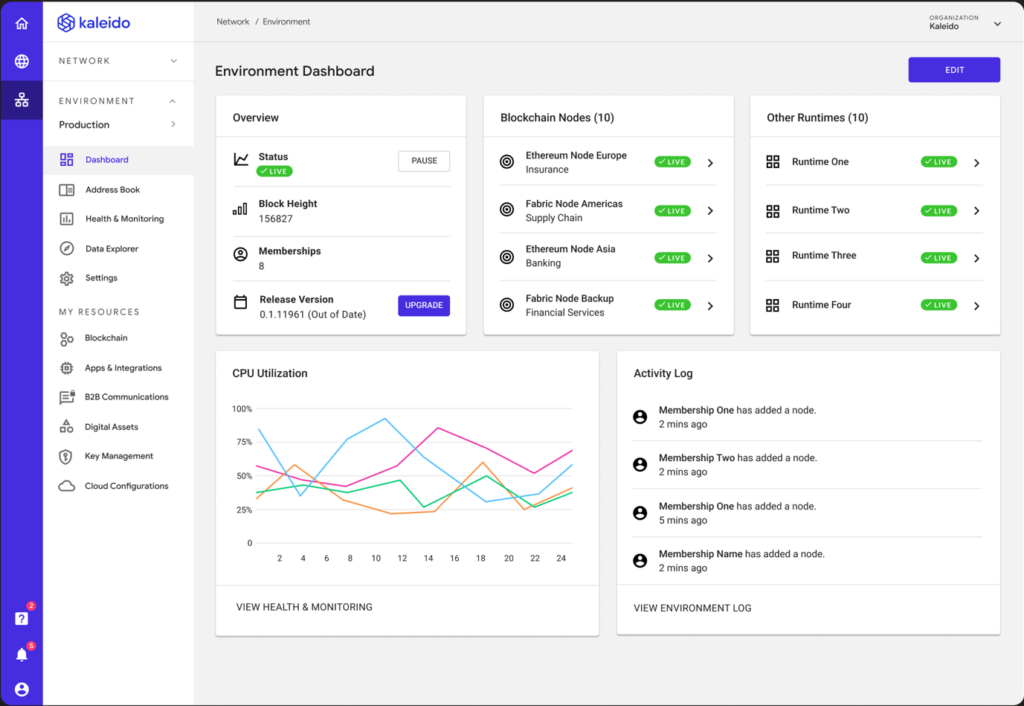
Kaleido serves as a comprehensive blockchain platform tailored specifically for enterprises seeking scalable and robust blockchain solutions. Recognizing the intricate demands of modern businesses, it caters to those looking for powerful blockchain functionality combined with enterprise-level security and support.
Why I Picked Kaleido: When judging various blockchain platforms, Kaleido's commitment to providing holistic enterprise solutions made it an obvious selection. In my opinion, compared to other platforms, Kaleido offers an unparalleled balance of flexibility, security, and robustness tailored specifically for businesses.
This is why I firmly believe it to be the best for companies requiring enterprise-grade blockchain solutions.
Standout Features & Integrations:
One of Kaleido's prominent features is its blockchain-as-a-service functionality, allowing companies to streamline their blockchain development process. The platform also provides real-time analytics, ensuring businesses can monitor their blockchain's performance closely.
On the integration front, Kaleido interfaces with popular tools like Ethereum's EVM, Quorum, and Consensys, improving its adaptability and utility for varied business needs.
Pros and Cons
Pros:
- Integrates effortlessly with several popular blockchain tools and services.
- Real-time analytics for comprehensive oversight of blockchain operations.
- Enterprise-focused blockchain solutions, ensuring robustness and scalability.
Cons:
- Requires a deeper understanding of the ecosystem for full utilization.
- The price point may not be attractive to businesses on a tight budget.
- Might be overkill for smaller entities or startups.
Weitere Blockchain-Software
Hier sind einige zusätzliche Blockchain-Softwarelösungen, die es zwar nicht auf meine Shortlist geschafft haben, aber dennoch einen Blick wert sind:
- Ontology Blockchain
For identity and data integrity
- CoreLedger
For blockchain prototyping needs
- Moralis Web3
Good for easy Web3 application development
- Polkadot
Good for interoperability with Parachains
- Coinbase Cloud
Good for building crypto-native apps
- Alchemy
Good for developer tools in blockchain infrastructure
- Merkle Science
Good for risk management in digital assets
- Cobo DeFi
Good for secure DeFi asset management
- Tron
Good for high-capacity decentralized apps
- Algorand
Good for instant transaction confirmation
- IOTA
Good for scalable ledger transactions without fees
- Cosmos
Good for connecting multiple blockchains
- Crypto APIs
Good for integrating blockchain data and operations


Auswahlkriterien für Blockchain-Software
Bei der Auswahl der besten Blockchain-Software für diese Liste habe ich typische Anforderungen und Schmerzpunkte wie Sicherheitsaspekte und Integrationsfähigkeit berücksichtigt. Zusätzlich habe ich das folgende Rahmenwerk verwendet, um meine Bewertung strukturiert und objektiv zu gestalten:
Kernfunktionen (25 % der Gesamtbewertung)
Um in diese Liste aufgenommen zu werden, musste jede Lösung diese gängigen Anwendungsfälle abdecken:
- Sichere Datenübertragungen
- Ausführung von Smart Contracts
- Verteilte Ledger-Technologie
- Identitätsverifizierung
- Tokenisierung von Vermögenswerten
Zusätzliche besondere Funktionen (25 % der Gesamtbewertung)
Um die Auswahl weiter einzugrenzen, habe ich außerdem nach einzigartigen Merkmalen gesucht, wie etwa:
- Kompatibilität zwischen Blockchains (Cross-Chain-Kompatibilität)
- Echtzeit-Analysen
- Anpassbare Konsensalgorithmen
- Fortschrittliche Verschlüsselungsmethoden
- Unterstützung dezentraler Anwendungen
Benutzerfreundlichkeit (10 % der Gesamtbewertung)
Um das Nutzererlebnis jeder Lösung einzuschätzen, habe ich Folgendes geprüft:
- Intuitive Benutzeroberfläche
- Einfache Navigation
- Geringe Einarbeitungszeit
- Schnelle Reaktionszeiten
- Anpassbare Dashboards
Onboarding (10 % der Gesamtbewertung)
Um die Einführungserfahrung jeder Plattform zu beurteilen, habe ich Folgendes berücksichtigt:
- Verfügbarkeit von Trainingsvideos
- Interaktive Produkttouren
- Zugang zu Vorlagen
- Live-Webinare
- Chatbot-Unterstützung
Kundensupport (10 % der Gesamtbewertung)
Um die Kundendienstleistungen jedes Softwareanbieters zu bewerten, habe ich Folgendes berücksichtigt:
- 24/7 Support-Verfügbarkeit
- Mehrere Support-Kanäle
- Schnelle Reaktionszeiten
- Kompetentes Support-Team
- Umfassendes Hilfezentrum
Preis-Leistungs-Verhältnis (10 % der Gesamtbewertung)
Um das Preis-Leistungs-Verhältnis jeder Plattform zu bewerten, habe ich Folgendes berücksichtigt:
- Wettbewerbsfähige Preise
- Flexible Abonnements
- Verfügbarkeit einer kostenlosen Testversion
- Verhältnis von Funktionen zu Preis
- Rabatte bei jährlicher Abrechnung
Kundenbewertungen (10 % der Gesamtbewertung)
Um einen Eindruck der Kundenzufriedenheit zu bekommen, habe ich bei der Durchsicht von Kundenbewertungen Folgendes berücksichtigt:
- Bewertungen der Nutzerzufriedenheit
- Häufigkeit von Updates
- Feedback zu Zuverlässigkeit
- Rückmeldung zur Integrationsfreundlichkeit
- Gesamtempfehlungsrate
Wie wählt man Blockchain-Software aus?
Es ist leicht, sich in langen Feature-Listen und komplexen Preismodellen zu verlieren. Damit Sie während Ihres individuellen Auswahlprozesses den Überblick behalten, finden Sie hier eine Checkliste mit wichtigen Faktoren:
| Faktor | Worauf ist zu achten |
|---|---|
| Skalierbarkeit | Kann die Software mit Ihrem Wachstum mithalten? Berücksichtigen Sie das Transaktionsvolumen und die Anzahl der Benutzer. Achten Sie auf Tools, die ohne Leistungsverlust skalieren. |
| Integrationen | Lässt sie sich mit Ihren bestehenden Systemen verbinden? Stellen Sie Kompatibilität mit Ihrem aktuellen Technik-Stack und geplanten Tools sicher. |
| Anpassbarkeit | Lässt sich die Software an Ihre Bedürfnisse anpassen? Prüfen Sie, ob Arbeitsabläufe und Funktionen auf Ihre spezifischen Prozesse zugeschnitten werden können. |
| Benutzerfreundlichkeit | Ist die Software für Ihr Team intuitiv bedienbar? Bewerten Sie die Lernkurve und die Benutzeroberfläche, um eine schnelle Einarbeitung zu gewährleisten. |
| Implementierung und Onboarding | Wie lange dauert die Einrichtung? Berücksichtigen Sie Zeit- und Ressourcenaufwand für einen reibungslosen Übergang, einschließlich Schulung und Unterstützung während der Umstellung. |
| Kosten | Ist die Lösung im Budget? Vergleichen Sie Preismodelle, inklusive versteckter Kosten oder Gebühren für Zusatzfunktionen, damit alles mit Ihrer Finanzplanung harmoniert. |
| Sicherheitsmaßnahmen | Schützt die Software Ihre Daten? Achten Sie auf Verschlüsselungsmethoden, Einhaltung von Datenschutzgesetzen sowie regelmäßige Sicherheitsaktualisierungen. |
Was ist Blockchain-Software?
Blockchain-Software ist ein Werkzeug, das sichere und transparente Datentransaktionen mit Distributed-Ledger-Technologie ermöglicht. Fachkräfte wie Entwickler, Finanzanalysten und Compliance-Beauftragte nutzen diese Tools, um die Sicherheit und Effizienz beim Datenmanagement zu erhöhen. Funktionen wie sichere Datentransaktionen, Ausführung von Smart Contracts und Identitätsprüfung helfen dabei, Informationen zu schützen und Prozesse zu automatisieren. Insgesamt bieten diese Tools den Anwendern mehr Transparenz und verringern Risiken bei ihren täglichen Abläufen.
Funktionen
Achten Sie bei der Auswahl von Blockchain-Software auf die folgenden Schlüsselfunktionen:
- Sichere Datenübertragungen: Ermöglicht sicheren und verschlüsselten Informationsaustausch, wodurch das Risiko von Datenpannen verringert wird.
- Ausführung von Smart Contracts: Automatisiert Vereinbarungen durch die Ausführung vordefinierter Bedingungen, spart Zeit und minimiert manuelle Fehler.
- Verteilte Hauptbuchtechnologie: Bietet eine dezentrale Aufzeichnung aller Transaktionen und sorgt so für Transparenz und Vertrauen unter den Nutzern.
- Identitätsüberprüfung: Bestätigt Benutzeridentitäten, um die Sicherheit zu erhöhen und unbefugten Zugang zu verhindern.
- Asset-Tokenisierung: Wandelt physische Vermögenswerte in digitale Token um, wodurch Verwaltung und Übertragung erleichtert werden.
- Cross-Chain-Kompatibilität: Ermöglicht die Interoperabilität zwischen verschiedenen Blockchain-Netzwerken und erweitert so Funktionen und Integrationsmöglichkeiten.
- Echtzeit-Analysen: Bietet Einblicke in Blockchain-Daten und unterstützt Nutzer dabei, schnell fundierte Entscheidungen zu treffen.
- Anpassbare Dashboards: Ermöglicht es den Nutzern, die Benutzeroberfläche individuell an ihre Arbeitsabläufe und Präferenzen anzupassen.
- Fortschrittliche Verschlüsselungsmethoden: Schützt Daten mit starken kryptografischen Techniken und sichert sensible Informationen.
- Unterstützung dezentraler Anwendungen: Erleichtert die Entwicklung und Bereitstellung dezentraler Anwendungen und erweitert die Nutzungsmöglichkeiten des Tools.
Vorteile
Die Implementierung von Blockchain-Software bietet Ihrem Team und Ihrem Unternehmen mehrere Vorteile. Folgende Aspekte können Sie erwarten:
- Erhöhte Sicherheit: Mit sicheren Datenübertragungen und fortschrittlichen Verschlüsselungsmethoden ist Ihre Information vor unbefugtem Zugriff geschützt.
- Mehr Transparenz: Die verteilte Hauptbuchtechnologie sorgt dafür, dass alle Transaktionen sichtbar und überprüfbar sind – das schafft Vertrauen unter den Nutzern.
- Automatisierte Prozesse: Die Ausführung von Smart Contracts reduziert den manuellen Aufwand, spart Zeit und minimiert Fehler.
- Effizientes Asset Management: Die Tokenisierung von Vermögenswerten erleichtert deren Verwaltung und Übertragung.
- Verbesserte Interoperabilität: Cross-Chain-Kompatibilität ermöglicht das Zusammenwirken verschiedener Blockchain-Netzwerke und erweitert die Möglichkeiten Ihres Tools.
- Bessere Entscheidungsfindung: Echtzeit-Analysen bieten Einblicke in Ihre Blockchain-Daten und helfen dabei, schnell fundierte Entscheidungen zu treffen.
Kosten & Preise
Die Auswahl einer Blockchain-Software setzt voraus, dass Sie die verschiedenen Preismodelle und Tarife kennen. Die Kosten variieren je nach Funktionen, Teamgröße, Zusatzleistungen und mehr. Die folgende Tabelle fasst gängige Tarife, ihre durchschnittlichen Preise und typische Merkmale zusammen, die in Blockchain-Softwarelösungen enthalten sind:
Tarifvergleichstabelle für Blockchain-Software
| Tarifart | Durchschnittlicher Preis | Gemeinsame Funktionen |
|---|---|---|
| Gratis-Tarif | $0 | Basis-Datenübertragungen, eingeschränkte Smart-Contract-Ausführung und Community-Support. |
| Persönlicher Tarif | $10-$30/user/month | Erweiterte Sicherheit, Identitätsüberprüfung und Zugriff auf Basis-Analysen. |
| Business-Tarif | $50-$100/user/month | Fortschrittliche Verschlüsselung, Cross-Chain-Kompatibilität und anpassbare Dashboards. |
| Enterprise-Tarif | $150-$300/user/month | Umfassende Integrationsunterstützung, Echtzeit-Analysen und dedizierter Kundendienst. |
Blockchain-Software FAQs
Hier sind einige Antworten auf häufig gestellte Fragen zur Blockchain-Software:
Wie gewährleistet Blockchain-Software den Datenschutz?
Blockchain-Software gewährleistet den Datenschutz durch den Einsatz fortschrittlicher Verschlüsselungsmethoden und dezentraler Netzwerke. Das bedeutet, dass Daten über mehrere Knoten verteilt gespeichert werden, anstatt auf einem einzelnen Server, was unbefugten Zugriff erschwert. Sie sollten die Verschlüsselungsstandards der von Ihnen in Betracht gezogenen Software bewerten, um sicherzustellen, dass sie den Datenschutzanforderungen Ihrer Organisation entsprechen.
Kann Blockchain-Software in bestehende Systeme integriert werden?
Ja, viele Blockchain-Softwarelösungen bieten Integrationsmöglichkeiten mit bestehenden Systemen. Es ist wichtig, die Kompatibilität mit Ihrem aktuellen Technologiestack – einschließlich Datenbanken und anderen Unternehmensanwendungen – zu überprüfen. Achten Sie auf Software mit APIs oder integrierten Schnittstellen, um eine nahtlose Integration zu ermöglichen.
Was ist als Nächstes zu tun:
Wenn Sie gerade dabei sind, Blockchain-Software zu recherchieren, verbinden Sie sich mit einem SoftwareSelect-Berater für kostenlose Empfehlungen.
Sie füllen ein Formular aus und führen ein kurzes Gespräch, in dem wir auf die Besonderheiten Ihrer Anforderungen eingehen. Anschließend erhalten Sie eine Auswahlliste an Software, die Sie prüfen können. Wir unterstützen Sie sogar während des gesamten Kaufprozesses, einschließlich Preisverhandlungen.