AWS Global Head of Solutions Architecture Shares His AI-Led Modernization Model
Saurabh Shrivastava
Global Head of Solutions Architecture

Saurabh Shrivastava explains how CTOs can turn AI experiments into production-ready systems by redesigning engineering around governance, human validation, and business value.
Key Takeaways
Industrialization: Successful AI adoption requires operating models, governance, architecture, talent, and product discipline—not isolated experiments.
Forward Deployment: Forward-deployed engineering moves agentic AI modernization into real environments, addressing data, code, and security constraints early.
Trust Model: Use deterministic discovery, AI-assisted implementation, and human validation to modernize faster without sacrificing accuracy, security, or accountability.
Cost Control: Inference economics matter: model routing, caching, batching, quantization, and optimized serving can reduce costs and improve reliability.
AI-DLC: AI-DLC redesigns delivery around inception, construction, and operation, integrating agents, security gates, evaluation, observability, and continuous improvement.
Saurabh Shrivastava is Global Head of Solutions Architecture and Forward-Deployed Engineering at Amazon Web Services, where he focuses on agentic AI and enterprise modernization.
We sat down with Saurabh to learn about the new engineering models that he's using in his work at AWS. Here's what he shared.
Industrializing AI Responsibly
I am a technology and AI transformation leader with over 20 years of experience helping enterprises turn complex technology shifts into scalable business outcomes. My journey has taken me through engineering, enterprise architecture, product-aligned field engineering, cloud transformation, and now agentic AI and software-factory models at AWS.
Earlier in my career, I built and led large-scale enterprise platforms across telecom, retail, supply chain, fintech, and R&D environments. That gave me a strong appreciation for systems thinking, reliability, integration complexity, and the reality of operating technology at enterprise scale.
At AWS, my role expanded from helping customers modernize infrastructure and applications to leading global solutions architecture and forward-deployed engineering initiatives focused on AI, modernization, and agentic platforms. I have worked with enterprise leaders, partners, product teams, and engineering teams to move from strategy and experimentation into governed, production-ready platforms.
AI is no longer just another technology wave. It is changing how organizations build software, how employees work, how customers engage, and how technology organizations must operate. The real leadership challenge is not only selecting models or tools. It is creating the operating model, architecture, governance, talent, and product discipline to industrialize AI responsibly.
More Articles
Leading AWS Solutions Architecture
As Global Head of Solutions Architecture and FDE, I lead AWS's global organization for solutions architecture and forward-deployed engineering focused on agentic AI platforms, enterprise modernization, and production-scale cloud transformation.
The organization operates at enterprise scale, working with large global customers, strategic partners, product teams, specialist engineering teams, and regional field organizations. The architecture scope is broad: AI/ML platforms, agentic workflows, data and analytics foundations, application modernization, cloud-native infrastructure, security, governance, and partner-integrated solutions.
I lead, enable, and influence more than 200 specialists, partner engineers, and field technology leaders globally. The work is highly complex because we don't build isolated demos. We help enterprises move from early AI ideas and modernization business cases into repeatable, secure, production-ready platforms that can scale across business units, markets, and customer environments.
Our deployment model combines forward-deployed engineering, global platform mechanisms, partner-led delivery, and product-field feedback loops. My team builds reusable blueprints, reference architectures, executive demos, technical playbooks, governance patterns, and composable solution models that accelerate adoption while maintaining quality, security, and operational discipline.
Why a Forward-Deployed Engineering Model Is Essential with AI
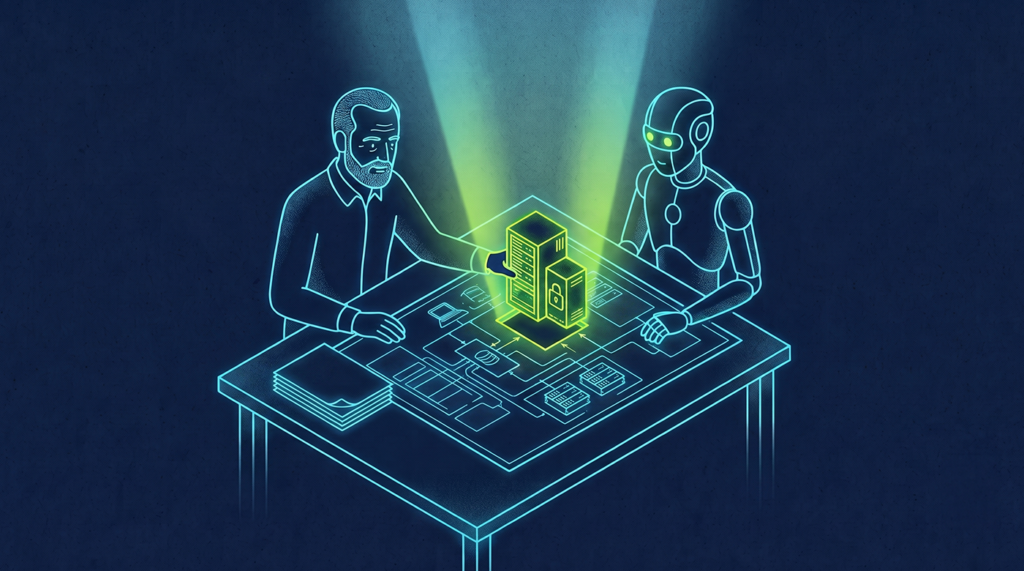
I introduced a forward-deployed engineering model for AI-led modernization last year.
In the cloud era, we had reusable reference architectures, solution blueprints, deployment patterns, and governance checkpoints. These were necessary, but insufficient with AI. Customers still struggled to move from POC to production because the hardest work occurred within their actual environment: data, application estate, code complexity, security constraints, and operating model.
So, I introduced an FDE mechanism that embeds engineers much closer to the customer’s real workloads. Instead of advising from the outside, the FDE team works with the customer’s data, code, architecture, and delivery teams to identify modernization candidates, build usable assets, and move the first workload into production.
I also introduced a simple 3-3-3 model: 3 days for discovery, 3 weeks for assessment, and 3 months to move the first workload to production. This gave executives a clear path from AI ambition to measurable value.
The impact was significant. Customers could accelerate their modernization journey by 2x to 4x, reduce cost by up to half, and move beyond demos to realized ROI. More importantly, it changed the executive conversation. AI was no longer a side experiment; it became a practical mechanism to modernize real workloads, improve engineering productivity, and create measurable business value.
How to Modernize Faster Without Losing Trust
AI becomes more powerful in future-state work: generating modernization options, proposing new architectures, defining service boundaries, developing migration patterns, writing code, generating tests, and accelerating implementation. That part can be more probabilistic because AI can explore options and improve engineering velocity. But even there, the final decision remains human.
I use AI heavily to accelerate technical understanding, pattern recognition, and engineering throughput, but I do not delegate accountability to AI.
In complex enterprises, the business is often built on decades of code, technical debt, undocumented dependencies, and embedded business rules. In that environment, we need both deterministic and probabilistic approaches. You cannot rely solely on probabilistic AI discovery when trying to understand mission-critical systems.
For code discovery, business-rule extraction, dependency analysis, feature mapping, and current-state assessment, I prefer a more deterministic approach. We need traceability, repeatability, evidence, and confidence in what the system does. AI can assist by summarizing, clustering, and accelerating analysis, but the foundation needs verifiable facts from code, logs, data flows, runtime behavior, and architectural evidence.
AI becomes more powerful in future-state work: generating modernization options, proposing new architectures, defining service boundaries, developing migration patterns, writing code, generating tests, and accelerating implementation. That part can be more probabilistic because AI can explore options and improve engineering velocity.
But even there, the final decision remains human. Accountable engineers and leaders must validate architecture choices, security posture, production readiness, compliance risk, customer impact, and investment tradeoffs.
So my model is: deterministic discovery, AI-accelerated design and implementation, and human-governed validation. That combination lets us modernize faster without losing trust, control, or enterprise accountability.
The Downsides of AI in Engineering Workflows

Saurabh Shares
Cost is not the only downside (to AI). AI can also create false confidence if teams use it without governance.
The biggest positive result was that AI significantly shortened the path from discovery to production when embedded in a disciplined engineering workflow.
AI also sped up code understanding, business-rule extraction, dependency analysis, test generation, documentation, and modernization planning. It reduced manual analysis time, helping engineering teams focus more on architecture decisions, validation, and production readiness.
But AI can become very expensive very quickly if teams do not design for inference economics. In large enterprises with millions of users, frontier-model token costs can scale into millions of dollars if every interaction depends on external third-party foundation models without optimization.
One lesson is that AI architecture must include cost architecture. For some workloads, enterprises should evaluate self-hosted or cloud-hosted inference using GPUs or accelerators, including options such as vLLM on cloud infrastructure. This gives more control over cost, latency, data boundaries, and model-serving strategy. Techniques like KV caching, continuous batching, quantization, and kernel optimization can materially improve GPU utilization and reduce inference cost.
Cost is not the only downside. AI can also create false confidence if teams use it without governance. Risks include incomplete code understanding, hallucinated dependencies, weak test coverage, security gaps, and teams moving too quickly from prototype to production.
Why AI Struggles with End-to-End Legacy Modernization

AI has struggled most when teams ask it to make technical judgments without enough system context.
A common example is legacy modernization. AI can summarize code, generate migration ideas, and even produce new code quickly. But in large enterprises, real complexity extends beyond the code. It involves decades of business rules, undocumented integrations, batch jobs, data dependencies, operational exceptions, security constraints, and organizational ownership. If you ask AI to modernize that environment with only a partial view, it can produce confident but incomplete answers.
Production readiness is another place that it struggles. AI can create prototypes very quickly, but many prototypes do not automatically become secure, observable, resilient, cost-efficient production systems. Teams sometimes underestimate the work required for testing, governance, incident response, monitoring, model evaluation, data quality, and lifecycle management.
How engineers Can improve Products While Controlling Inference Costs and Reliability
Here's an example from a large media and marketing content-creation platform, where AI helps users move from intent to finished digital assets at enterprise scale.
The workflow starts when a user describes what they want to create: a product launch campaign, a social media creative, a sales presentation, a video snippet, or a localized marketing asset. AI interprets the user intent, including audience, format, tone, brand guidelines, required assets, channel constraints, and compliance requirements.
From there, the platform uses an agentic workflow. One agent retrieves brand-approved templates, logos, fonts, colors, and campaign assets. Another generates copy and creative variations. Another proposes layouts. Another checks brand compliance, accessibility, policy, and content safety. A final orchestration layer assembles the output into editable assets and routes it through approval or publishing workflows.
At this scale, engineering faced challenges not only with model quality but also with inference economics, latency, reliability, and governance. The team optimized a very large-scale inference environment supporting roughly 10,000 compute nodes and around 80,000 GPUs. The architecture combined GPU capacity from multiple cloud providers and approved third parties, connecting those environments through a hybrid networking layer. That gave the platform flexibility to place workloads based on cost, latency, availability, and data locality.
Humans remained in control at the key points of judgment. AI generated options, recommended layouts, wrote copy, and accelerated production, but the user or brand owner approved the final asset.
The team also implemented a more disciplined model-serving strategy. Instead of sending every request to the most expensive frontier model, the platform routed requests across fit-for-purpose models, including open models such as Kimi and Qwen, served through optimized runtimes such as vLLM and Ollama-style patterns. The team also applied inference optimization techniques, including KV caching, continuous batching, quantization, memory optimization, and kernel-level tuning, to improve GPU utilization and reduce costs.
Humans remained in control at the key points of judgment. AI generated options, recommended layouts, wrote copy, and accelerated production, but the user or brand owner approved the final asset. Engineering teams owned the guardrails: security, data access, model selection, observability, latency, cost controls, safety checks, and feedback loops.
The result was an AI workflow that became part of the product experience, not just an internal productivity tool. It reduced time from idea to asset, improved personalization, increased reuse of approved brand components, and created a feedback loop where user edits and engagement data improved future recommendations. At the same time, the architecture gave the business much stronger control over inference cost, reliability, and governance.
Why AI Rollouts Require a Product Mindset
Rolling out AI tools is less about tool adoption and more about changing the engineering operating model.
Initially, many organizations think the challenge is giving engineers access to copilots, coding assistants, model APIs, or internal AI platforms. That helps, but it is not enough. Without clear patterns, teams use AI inconsistently. Some use it only for code generation. Some use it for documentation. Some over-trust it. Others avoid it because they are unsure about security, IP, or quality risks.
If I were to start over, I'd define the AI engineering workflow even earlier: where AI should and should not be used, what evidence is required, what humans must review, and how output gets tested, secured, and promoted to production.
This would have avoided a few issues. First, we could have reduced inconsistent usage across teams. Second, we could have avoided misplaced confidence in AI-generated code or analysis that looked correct but lacked sufficient context. Third, we could have controlled costs earlier by implementing model routing, token budgeting, caching, and inference governance from the beginning. Fourth, we could have created better reusable patterns instead of letting every team invent its own approach.
The biggest lesson is that AI rollout needs a product and platform mindset. You need enablement, guardrails, observability, cost controls, security review, reusable prompts and agents, evaluation patterns, and clear human accountability. Otherwise, AI increases activity without always increasing engineering quality or business value.
Why the SDLC Must Become the AI-DLC
Saurabh Shares
CTOs should be actively redesigning the software delivery lifecycle itself.
CTOs should be actively redesigning the software delivery lifecycle itself. I think of this as moving from traditional SDLC to AI-DLC, an AI-augmented delivery lifecycle for the agentic AI era.
In traditional SDLC, we often follow linear phases: requirements, design, development, deployment, and support. That worked reasonably well when the main goal was building deterministic software through structured handoffs. But with AI, especially agentic AI, the lifecycle becomes more iterative and compressed.
I simplify AI-DLC into three major phases: inception, construction, and operation.
- In inception, AI helps with discovery, code understanding, business rule extraction, dependency analysis, requirement clarification, risk identification, and target state planning.
- In construction, AI assists with architectural options, service decomposition, code and test generation, documentation, security reviews, infrastructure patterns, and modernization execution.
- In operation, AI supports observability, incident triage, feedback loops, model evaluation, cost optimization, governance, and continuous improvement.
The important point is that AI-DLC is not just SDLC with a coding assistant added. It is a redesigned engineering operating model. It integrates AI agents, deterministic discovery, human validation, security gates, production readiness, and cost governance into a single workflow.
How Engineering Teams Are Changing Due to AI
AI has shifted engineering teams from role-based, sequential execution toward more integrated, outcome-oriented squads.
In the past, we organized around distinct roles: architects, application engineers, data engineers, DevOps, security, QA, and operations. Those roles still matter, but AI compresses the lifecycle and reduces the value of long handoffs. The best-performing teams are more cross-functional and closer to the business problem.
For AI-led modernization and product engineering, I now look for teams that combine several capabilities: strong software engineering fundamentals, cloud and platform engineering, data and AI fluency, security awareness, product thinking, and operational judgment. I also value engineers who work in ambiguous environments, reason from first principles, and validate AI output rather than blindly accept it.
The forward-deployed engineering model is a good example. Instead of keeping architecture, AI engineering, DevOps, and security in separate sequential lanes, we bring those skills closer to the customer or business environment. The team works with real code, data, constraints, and success metrics.
Hiring has shifted as well. I still care deeply about technical depth, but I also look for systems thinkers: people who understand architecture, use AI responsibly, communicate with business stakeholders, and own production outcomes. In the AI era, the best engineers are not just code producers. They are problem framers, validators, and builders of repeatable systems.
How to Measure AI Efficacy
CTOs should not measure AI only by the number of pilots or copilots deployed, or model accuracy in isolation. These are useful signals, but they do not prove transformation…CTOs must convert AI activity into repeatable capability.
One question I wish more people asked is: How should CTOs measure whether AI is creating durable enterprise value?
CTOs should not measure AI only by the number of pilots or copilots deployed, or model accuracy in isolation. These are useful signals, but they do not prove transformation.
CTOs should measure AI across four dimensions:
- Engineering productivity: Is AI reducing cycle time, improving code quality, increasing test coverage, accelerating modernization, and reducing technical debt?
- Business impact: Is AI improving customer experience, employee productivity, revenue conversion, cost efficiency, or speed to market?
- Production maturity: Are AI systems secure, observable, reliable, governed, and cost-controlled? Do they have clear human accountability and production-readiness gates?
- Reusability and scalability: Are teams building reusable AI services, agents, prompts, patterns, data products, and platform capabilities, or are they creating isolated demos?
This matters because AI can create a great deal of visible activity without creating durable value. CTOs must convert AI activity into repeatable capability. This means connecting strategy, architecture, operating model, governance, and economics.
Why CTOs Must Separate Experimentation from Industrialization

Here's my advice.
First, do not treat AI as a side experiment. Treat it as a new operating layer for the business. AI will affect how software is built, how employees work, how customers engage, and how decisions are made. The CTO’s job is to move the organization from scattered pilots to a governed, scalable AI platform strategy.
Second, separate experimentation from industrialization. It is fine to experiment quickly, but production AI needs architecture, security, data governance, evaluation, observability, cost controls, and clear human accountability. Many companies are stuck because they have many demos but no repeatable path to production. CTOs need to build that path.
Third, focus on business value, not model novelty. The winning organizations will not be the ones that simply use the latest model. They will be the ones that embed AI into real workflows, modernize their technology foundation, improve engineering productivity, and measure outcomes such as cycle time, cost efficiency, customer experience, revenue impact, and risk reduction.
And fourth, my practical advice is to create an AI platform and forward-deployed engineering model together. The platform gives reuse, governance, and scale. The FDE model brings AI into real customer and enterprise workloads, using real data, real code, and real constraints. That is how CTOs can move from AI ambition to realized ROI.
Follow Along
Follow Saurabh Shrivastava's work on LinkedIn and his Amazon Author page.
More expert interviews to come on The CTO Club!