

Recensione Iru 2026: Pro, Contro, Caratteristiche e Prezzi
Iru si distingue nella gestione dei dispositivi mobili per il suo focus sulla connettività globale, rendendolo ideale per le aziende che gestiscono flotte oltre confine, anche se potrebbe non essere adatto a chi necessita di controlli avanzati sulle app.

Recensiamo gli strumenti in modo indipendente e le commissioni ci aiutano a finanziare i nostri test. Consulta la nostra politica sulla trasparenza, la nostra metodologia, oppure suggerisci uno strumento.
Iru is an MDM software for IT teams managing device fleets across remote or distributed environments. It handles device enrollment, policy enforcement, and app management across platforms from a single console. I'd mainly consider it if you need tighter control over endpoint configuration than Microsoft Intune provides out of the box, but want something less resource-intensive to deploy and maintain than an enterprise platform like VMware Workspace ONE.
Iru Evaluation Summary
4.7/5
- Pricing upon request
- 14-day free trial + free demo available
Perché fidarsi dei nostri consigli sui software
6,700+
Reviews
20
Industry experts
16+
Evaluation factors
14
Years
Il nostro team testa e recensisce software dal 2012. In quanto leader tecnologici noi stessi, sappiamo quanto sia difficile — e importante — scegliere il software giusto.
Per questa guida, abbiamo valutato gli strumenti attraverso test praticie ricerche indipendenti, assegnando un punteggio agli strumenti in base ai nostri criteri di selezione.
Le nostre recensioni riflettono il nostro giudizio editoriale umano, non un discorso di vendita.
Revisori esperti:
- Paulo Gardini MiguelDirettore tecnico
 Tim FisherVP dell'IA
 Gabriel RosasTech Lead e architetto software
 Christhian GruhnTech Lead e architetto della piattaforma

Iru Overview
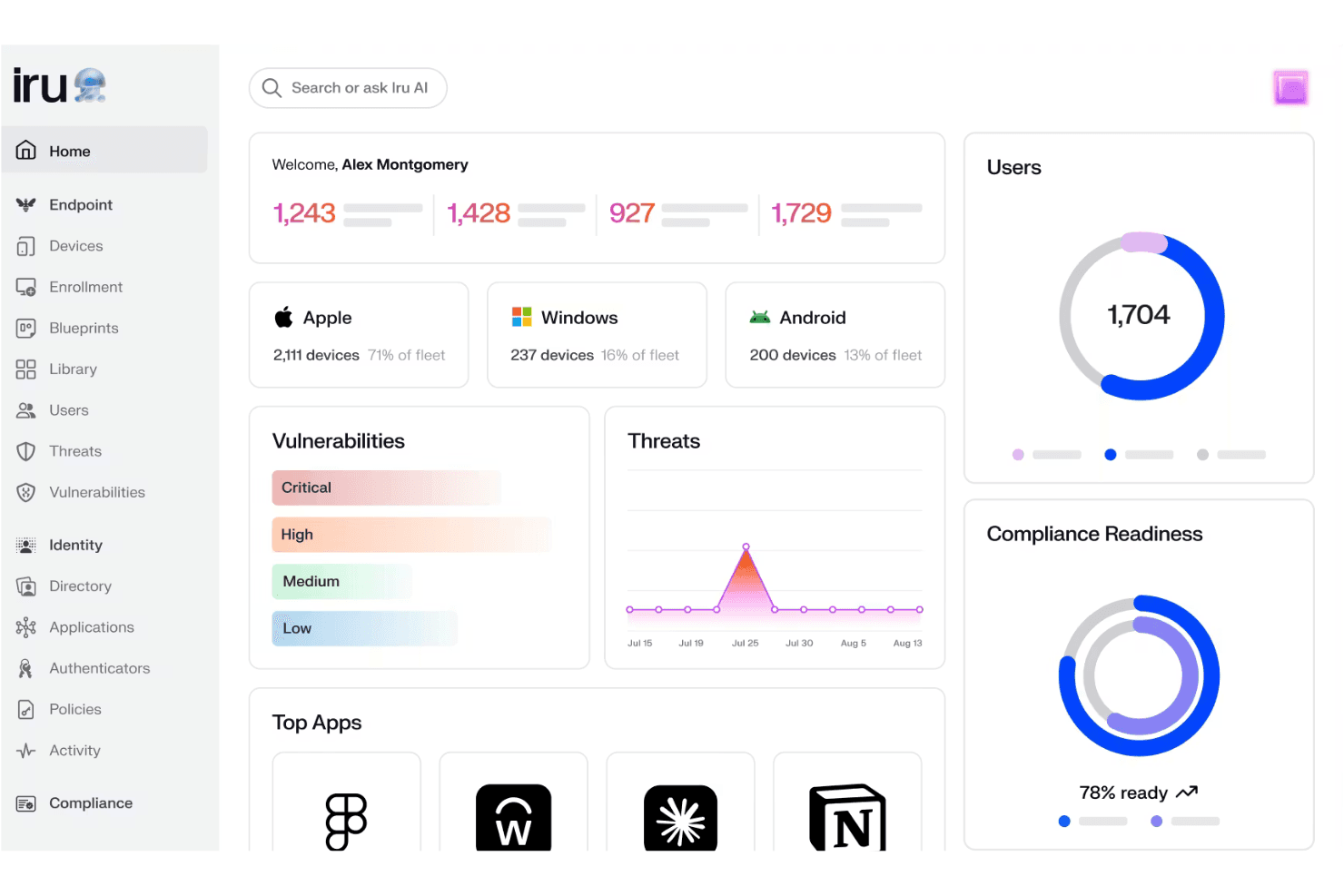
Iru offers a unique edge in MDM by prioritizing global connectivity and fleet oversight, making it a strong choice for organizations with international logistics or transport operations. While its interface is straightforward and onboarding is quick, Iru’s feature set is more focused on tracking and compliance than deep app management or custom integrations. Pricing is competitive for large-scale deployments, and support is responsive, but those needing granular device controls may find it limited.
I think Iru is best for teams managing cross-border assets who value reliable tracking and simple, centralized management over advanced customization.
Pros
- Zero-touch deployment simplifies onboarding for large device fleets
- Strong compliance automation with adaptive evidence mapping
- Reliable endpoint protection across Apple, Windows, and Android devices
Cons
- Limited advanced app management compared to some competitors
- API access not included in base pricing tier
- Fewer third-party integrations for directory and workflow tools
Is Iru Right For Your Needs?
Who Would be a Good Fit for Iru?
Iru is a strong choice for organizations that manage large fleets of devices across borders, especially in industries where compliance, logistics, and real-time tracking are essential. Its strengths in zero-touch deployment, compliance automation, and reliable endpoint protection make it ideal for teams that need to monitor and secure devices in the field without complex app management needs. Iru’s focus on global connectivity and centralized oversight is best suited for businesses with distributed assets and strict regulatory requirements.
- Logistics CompaniesIru’s real-time tracking and compliance features support fleet management and regulatory needs.
- Transportation ProvidersCentralized device oversight helps monitor vehicles and drivers across regions.
- Field Service TeamsZero-touch deployment enables quick device rollouts for remote technicians.
- Healthcare OrganizationsCompliance automation assists with regulatory evidence and device security.
- Large EnterprisesScalable management supports thousands of devices across multiple countries.
- Government AgenciesStrong endpoint protection and compliance tools meet public sector standards.
Who Would be a Bad Fit for Iru?
Iru may not be the best option for organizations that require deep app management, extensive integrations, or highly customized workflows. Teams focused on granular device controls, advanced application deployment, or integration with a wide range of third-party tools may find Iru’s feature set limiting. Smaller businesses or those with simple device needs might also find its capabilities more than they require.
- Small StartupsIru’s advanced compliance and tracking features may be unnecessary overhead.
- App-Heavy Tech FirmsLimited app management restricts control over custom or proprietary apps.
- Retail ChainsFewer integrations make it harder to connect with POS or inventory systems.
- Education DepartmentsLack of classroom management tools limits suitability for schools.
- HR DepartmentsMinimal workflow integrations don’t support onboarding or offboarding processes.
- Creative AgenciesLimited customization and app deployment options hinder device flexibility.
La Nostra Metodologia di Recensione
Come Testiamo e Valutiamo gli Strumenti
Abbiamo trascorso anni a costruire, perfezionare e migliorare il nostro sistema di testing e valutazione del software. Il nostro schema è progettato per cogliere le sfumature della selezione software e cosa rende efficace uno strumento, focalizzandosi sugli aspetti critici del processo decisionale.
Di seguito, puoi vedere esattamente come funziona il nostro testing e punteggio su sette criteri. Ci permette di offrire una valutazione imparziale del software basata su funzionalità principali, caratteristiche distintive, facilità d’uso, onboarding, assistenza clienti, integrazioni, recensioni dei clienti e rapporto qualità-prezzo.
Funzionalità Principali (25% del punteggio finale)
Il punto di partenza della nostra valutazione è sempre la funzionalità principale dello strumento. Ha le funzioni e caratteristiche base che ci si aspetta? Alcune di queste caratteristiche sono limitate ai piani tariffari superiori? Fondamentalmente, ci aspettiamo che uno strumento regga il confronto rispetto alle capacità di base dei concorrenti.
Caratteristiche Distintive (25% del punteggio finale)
Successivamente, valutiamo le caratteristiche distintive e non comuni che vanno oltre la funzionalità base tipicamente trovata negli strumenti di questa categoria. Un punteggio alto riflette funzionalità specializzate o uniche che rendono il prodotto più veloce, efficiente o offrono ulteriore valore all’utente.
Valutiamo inoltre quanto sia semplice integrare altri strumenti tipicamente utilizzati nell’infrastruttura tecnologica per espandere la funzionalità e l’utilità del software. Gli strumenti che offrono numerose integrazioni native, connessioni di terze parti e accesso API per creare integrazioni personalizzate ottengono i punteggi migliori.
Facilità d’Uso (10% del punteggio finale)
Consideriamo quanto sia rapido e semplice svolgere i compiti definiti nella funzionalità principale utilizzando lo strumento. Il software con punteggio alto è ben progettato, intuitivo da usare, offre app mobili, fornisce modelli e rende semplici attività relativamente complesse.
Onboarding (10% del punteggio finale)
Sappiamo quanto sia importante l’adozione rapida da parte del team per una nuova piattaforma, quindi valutiamo quanto sia facile imparare e utilizzare uno strumento con formazione minima. Valutiamo quanto velocemente un membro del team possa iniziare a usare lo strumento anche senza esperienza. Soluzioni con punteggio alto indicano che sono richiesti pochi o nessun supporto.
Assistenza Clienti (10% del punteggio finale)
Esaminiamo quanto sia veloce e facile ricevere assistenza e risolvere problemi tramite telefono, live chat o knowledge base. Gli strumenti e le aziende che garantiscono supporto in tempo reale ottengono il miglior punteggio, mentre i chatbot ottengono il peggiore.
Recensioni dei Clienti (10% del punteggio finale)
Oltre ai nostri test e valutazioni, prendiamo in considerazione il net promoter score dei clienti attuali e passati. Valutiamo la probabilità che, data la scelta, selezionerebbero nuovamente lo strumento per la funzionalità principale. Un software con punteggio alto riflette un alto net promoter score da parte dei clienti attuali o passati.
Rapporto Qualità-Prezzo (10% del punteggio finale)
Infine, considerando tutti gli altri criteri, analizziamo il prezzo medio dei piani base rispetto alle funzionalità principali e consideriamo il valore degli altri criteri di valutazione. Il software che offre di più a meno otterrà un punteggio più alto.
Core Features
Endpoint Management
Manage every device with a single lightweight agent for centralized control. This lets you monitor, update, and secure devices across your organization.
Passwordless Identity
Enable passwordless access that adapts to user context for secure authentication. This reduces credential risks and streamlines user logins.
Continuous Compliance
Stay audit-ready with ongoing evidence collection and adaptive compliance automation. Iru’s AI-driven compliance tools help you meet regulatory requirements without manual tracking.
Endpoint Detection
Detect and respond to threats on Apple, Windows, and Android devices in real time. This feature helps IT teams quickly identify and contain security incidents.
Vulnerability Management
Identify and address vulnerabilities across your device fleet automatically. Iru’s system scans for weaknesses and provides actionable remediation steps.
AI-Powered Insights
Leverage Iru AI to automate compliance, generate insights, and trigger actions from a unified interface. This helps you make informed decisions and respond faster to issues.

Ease of Use
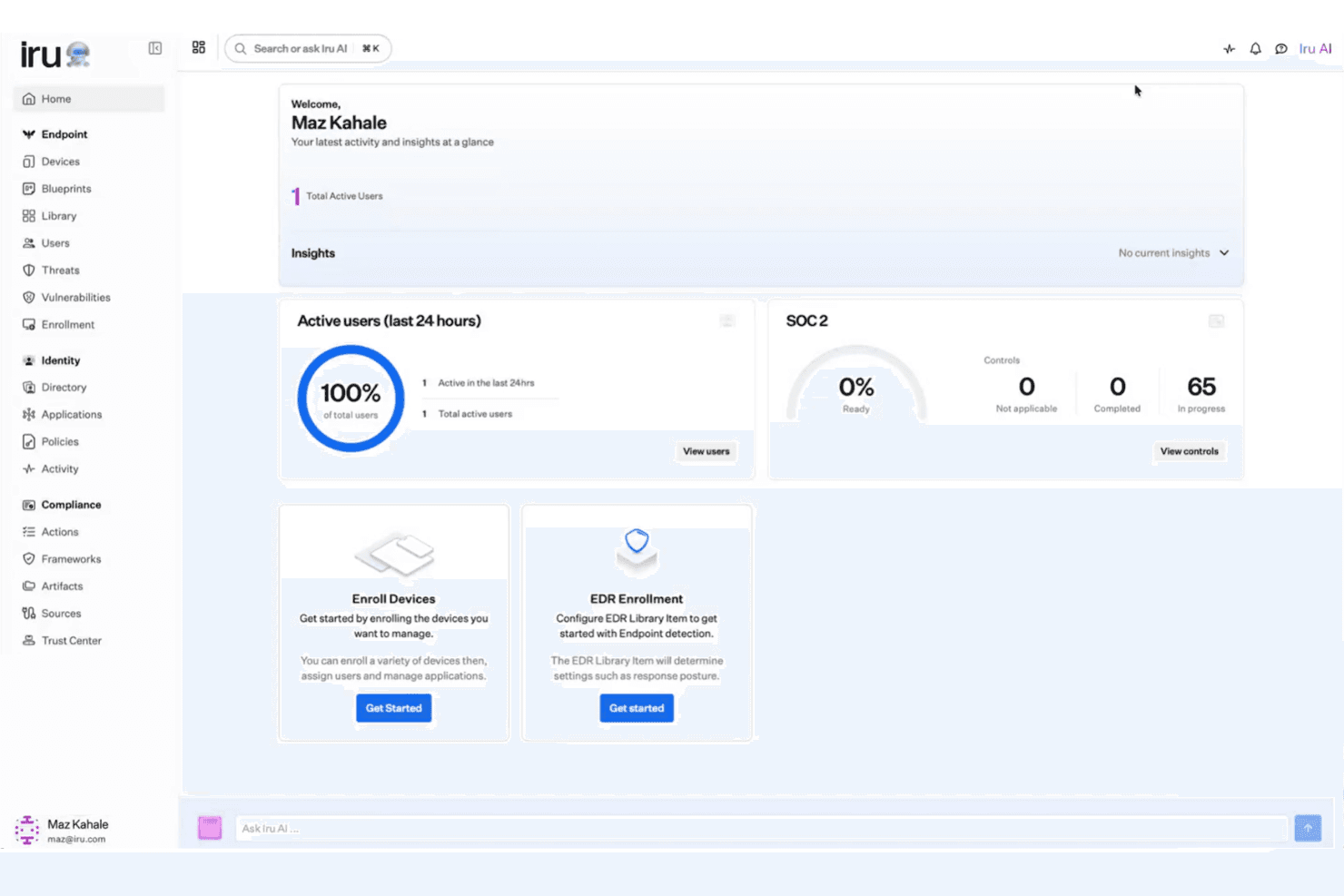
Iru’s interface is clean and straightforward, making it easy for IT teams to onboard and manage devices without extensive training. Users often mention the intuitive dashboard and clear workflows for compliance and device monitoring. I think the zero-touch deployment and passwordless identity features reduce friction for both admins and end users.
While it lacks some advanced customization, Iru’s focus on simplicity and automation makes it accessible for organizations managing large, distributed fleets.
Integrations
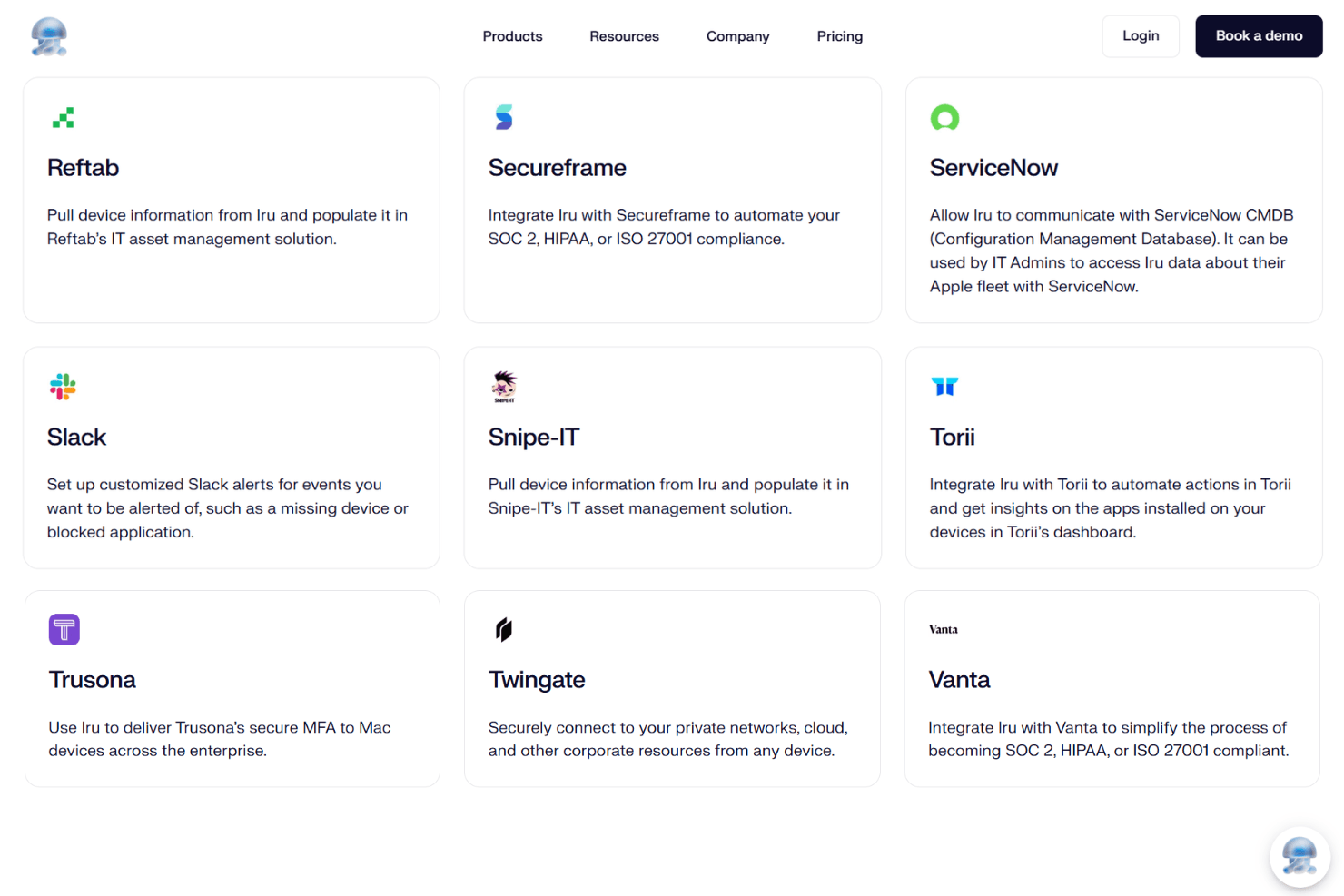
Iru integrates with Microsoft Azure Active Directory, Okta, Google Workspace, Slack, ServiceNow, Jira, AWS, Salesforce, Zendesk, and OneLogin, among others.
Iru also offers an API for custom integrations and automation, but does not connect with third-party integration tools out of the box.
Iru Specs
- 2-Factor Authentication: Yes
- Access Management: Yes
- Anti-Virus: Yes
- API: Yes
- Audit Trail: Yes
- Bug Tracking: No
- Calendar Management: No
- Customer Management: No
- Dashboard: Yes
- Data Export: Yes
- Data Import: Yes
- Data Visualization: Yes
- Email Integration: No
- External Integrations: Yes
- File Sharing: No
- File Transfer: No
- Firewall: Yes
- Google Apps Integration: No
- Inventory Tracking: No
- Malware Protection: Yes
- Multi-User: Yes
- Network Device Performance Monitoring: Yes
- Network Traffic Monitoring: Yes
- Network Visualization: No
- Notifications: Yes
- Project Management: No
- Remote Access: Yes
- Risk Assessment: Yes
- SAP Integration: No
- Scheduling: Yes
- Software Integration: Yes
- Third-Party Plugins/Add-Ons: Yes
- Ticket Management: No


