

Recensione di Godot Engine: Vantaggi, Svantaggi, Caratteristiche e Prezzi
Godot Engine offre una flessibilità senza pari e una comunità open-source, rendendolo una scelta ideale per sviluppatori indipendenti alla ricerca di una soluzione economica.

Recensiamo gli strumenti in modo indipendente e le commissioni ci aiutano a finanziare i nostri test. Consulta la nostra politica sulla trasparenza, la nostra metodologia, oppure suggerisci uno strumento.
Godot Engine is an open-source game development software for developers building 2D and 3D games who want full control over their engine without commercial licensing costs. If Unity's runtime fee model has your team rethinking its toolchain, Godot is worth a serious look. It's completely free, MIT-licensed, and lets you ship without paying per-install or revenue-based fees—something Unity can't offer. This review covers what Godot does well, where it falls short, and who it's actually built for.
Godot Engine Evaluation Summary
4.6/5
- From $800
- Free plan available
Perché fidarsi dei nostri consigli sui software
6,700+
Reviews
20
Industry experts
16+
Evaluation factors
14
Years
Il nostro team testa e recensisce software dal 2012. In quanto leader tecnologici noi stessi, sappiamo quanto sia difficile — e importante — scegliere il software giusto.
Per questa guida, abbiamo valutato gli strumenti attraverso test praticie ricerche indipendenti, assegnando un punteggio agli strumenti in base ai nostri criteri di selezione.
Le nostre recensioni riflettono il nostro giudizio editoriale umano, non un discorso di vendita.
Revisori esperti:
- Paulo Gardini MiguelDirettore tecnico
 Tim FisherVP dell'IA
 Gabriel RosasTech Lead e architetto software
 Christhian GruhnTech Lead e architetto della piattaforma

Godot Engine Overview
In my opinion, Godot Engine is a standout choice for indie developers and small teams looking for a cost-effective game development tool. It excels in flexibility and community support, offering a rich set of features at no cost. While its onboarding process could be smoother, the intuitive interface and extensive documentation help bridge the gap. Compared to other video game development software, Godot shines in its open-source nature and value for money, but it may lack the robust customer support of some paid platforms. It's best suited for environments where budget constraints and customization are key factors. If your team values open-source collaboration and has the patience for a learning curve, Godot Engine deserves serious consideration.
Pros
- You can connect with a large, supportive community.
- Your team benefits from a flexible, customizable open-source platform.
- An intuitive interface helps developers build 2D and 3D games with ease.
Cons
- Despite being user-friendly, its unique concepts may take time to learn.
- Customer support may be more limited than with paid solutions.
- It offers fewer advanced features than some high-end tools.
Is Godot Engine Right For Your Needs?
Who Would be a Good Fit for Godot Engine?
Godot Engine is ideal for indie developers and small teams focused on creating 2D and 3D games. Its open-source nature and supportive community make it perfect for those who need flexibility without a hefty price tag. If your team values customization and the ability to experiment with different game mechanics, Godot provides the tools to do so efficiently. Educational institutions also benefit, as students can learn game development using an intuitive and cost-effective platform.
- Indie Game StudiosYour studio can leverage Godot's open-source platform to develop unique games without budget constraints.
- Educational InstitutionsStudents can learn game development with Godot's user-friendly interface and extensive documentation.
- Tech StartupsStartups can use Godot to prototype and develop games quickly, thanks to its flexibility and customization options.
- 2D Game DevelopersGodot excels in 2D game development with features tailored for smooth and efficient design.
- Small Development TeamsYour team can benefit from Godot's collaborative community and cost-effective tools for creative projects.
- Non-Profit OrganizationsNon-profits can use Godot to create educational or social impact games without incurring high software costs.
Who Would be a Bad Fit for Godot Engine?
Godot Engine may not suit large-scale studios or enterprises that require advanced tools and dedicated customer support. If your team relies on cutting-edge graphics or complex 3D game development that require highly specialized shaders and render pipelines, you might find Godot's features lacking compared to other high-end solutions. Teams that need seamless integration with other enterprise tools or require extensive onboarding support might struggle with Godot's community-driven model and limited official support channels.
- AAA Game StudiosYour studio might need more advanced features and support than Godot can provide for large-scale productions.
- Corporate EnterprisesEnterprises could find Godot's lack of dedicated support and integration options a hindrance.
- High-End Graphic DesignersYour team may need more advanced graphic rendering capabilities than what Godot offers.
- Large Development TeamsLarge teams might struggle with Godot's community-based support instead of dedicated customer service.
- Complex Simulation ProjectsProjects that need custom C++ extensions for very complex, specialized simulations, might find Godot's features insufficient for their needs.
La Nostra Metodologia di Recensione
Come Testiamo e Valutiamo gli Strumenti
Abbiamo trascorso anni a costruire, perfezionare e migliorare il nostro sistema di testing e valutazione del software. Il nostro schema è progettato per cogliere le sfumature della selezione software e cosa rende efficace uno strumento, focalizzandosi sugli aspetti critici del processo decisionale.
Di seguito, puoi vedere esattamente come funziona il nostro testing e punteggio su sette criteri. Ci permette di offrire una valutazione imparziale del software basata su funzionalità principali, caratteristiche distintive, facilità d’uso, onboarding, assistenza clienti, integrazioni, recensioni dei clienti e rapporto qualità-prezzo.
Funzionalità Principali (25% del punteggio finale)
Il punto di partenza della nostra valutazione è sempre la funzionalità principale dello strumento. Ha le funzioni e caratteristiche base che ci si aspetta? Alcune di queste caratteristiche sono limitate ai piani tariffari superiori? Fondamentalmente, ci aspettiamo che uno strumento regga il confronto rispetto alle capacità di base dei concorrenti.
Caratteristiche Distintive (25% del punteggio finale)
Successivamente, valutiamo le caratteristiche distintive e non comuni che vanno oltre la funzionalità base tipicamente trovata negli strumenti di questa categoria. Un punteggio alto riflette funzionalità specializzate o uniche che rendono il prodotto più veloce, efficiente o offrono ulteriore valore all’utente.
Valutiamo inoltre quanto sia semplice integrare altri strumenti tipicamente utilizzati nell’infrastruttura tecnologica per espandere la funzionalità e l’utilità del software. Gli strumenti che offrono numerose integrazioni native, connessioni di terze parti e accesso API per creare integrazioni personalizzate ottengono i punteggi migliori.
Facilità d’Uso (10% del punteggio finale)
Consideriamo quanto sia rapido e semplice svolgere i compiti definiti nella funzionalità principale utilizzando lo strumento. Il software con punteggio alto è ben progettato, intuitivo da usare, offre app mobili, fornisce modelli e rende semplici attività relativamente complesse.
Onboarding (10% del punteggio finale)
Sappiamo quanto sia importante l’adozione rapida da parte del team per una nuova piattaforma, quindi valutiamo quanto sia facile imparare e utilizzare uno strumento con formazione minima. Valutiamo quanto velocemente un membro del team possa iniziare a usare lo strumento anche senza esperienza. Soluzioni con punteggio alto indicano che sono richiesti pochi o nessun supporto.
Assistenza Clienti (10% del punteggio finale)
Esaminiamo quanto sia veloce e facile ricevere assistenza e risolvere problemi tramite telefono, live chat o knowledge base. Gli strumenti e le aziende che garantiscono supporto in tempo reale ottengono il miglior punteggio, mentre i chatbot ottengono il peggiore.
Recensioni dei Clienti (10% del punteggio finale)
Oltre ai nostri test e valutazioni, prendiamo in considerazione il net promoter score dei clienti attuali e passati. Valutiamo la probabilità che, data la scelta, selezionerebbero nuovamente lo strumento per la funzionalità principale. Un software con punteggio alto riflette un alto net promoter score da parte dei clienti attuali o passati.
Rapporto Qualità-Prezzo (10% del punteggio finale)
Infine, considerando tutti gli altri criteri, analizziamo il prezzo medio dei piani base rispetto alle funzionalità principali e consideriamo il valore degli altri criteri di valutazione. Il software che offre di più a meno otterrà un punteggio più alto.
Core Features
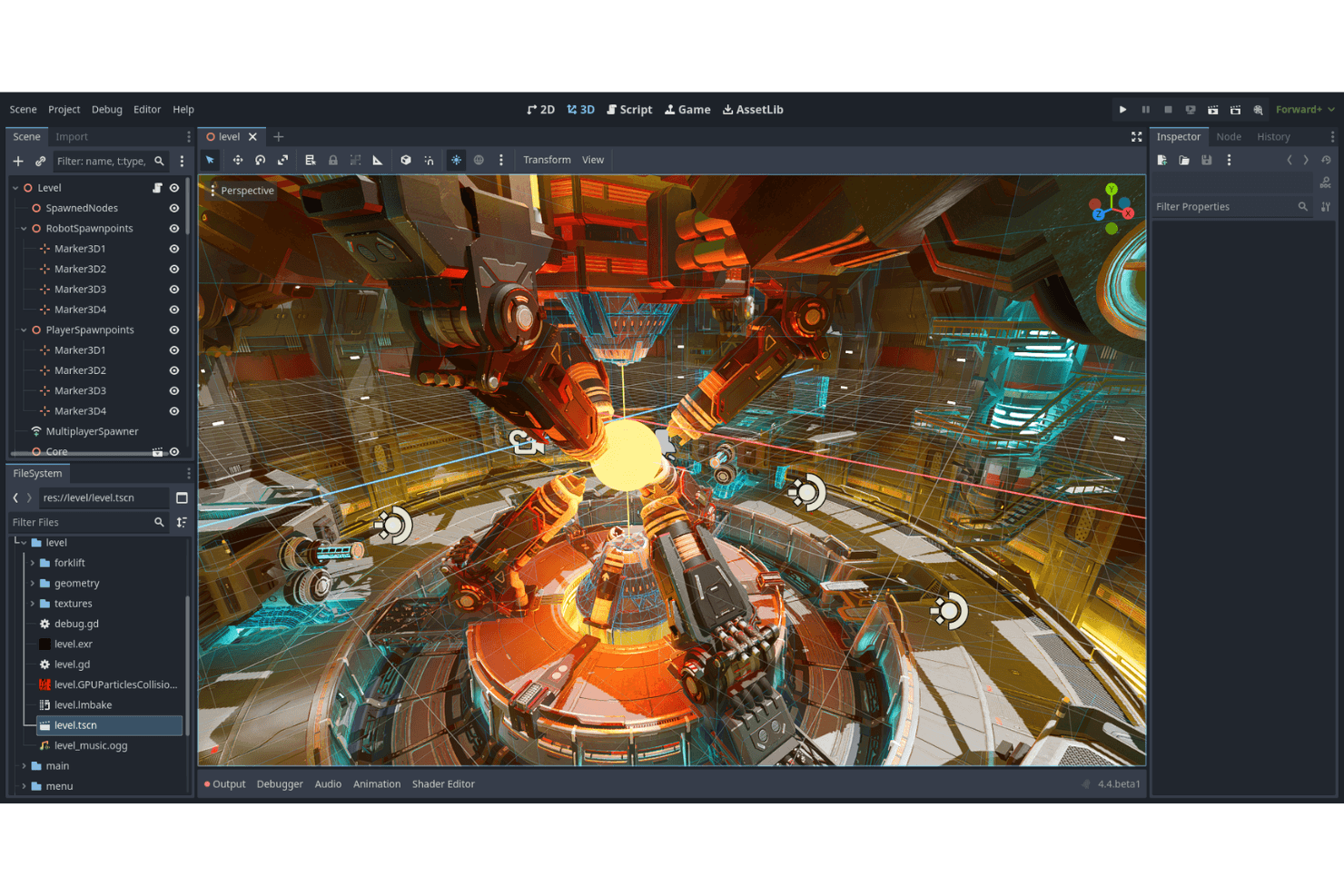
Scene System: Godot uses a unique scene system that lets you organize your game's structure efficiently. Your team can manage different game elements as independent scenes, simplifying complex projects.
Visual Editor: The visual editor is intuitive and user-friendly, helping you design game elements without needing extensive coding knowledge. It includes drag-and-drop functionality that speeds up your workflow.
Animation Tools: Godot offers robust animation tools that allow you to create and tweak animations directly within the engine. This feature supports both 2D and 3D animations, giving your projects a professional touch.
Scripting Language (GDScript): GDScript is a Python-like language that simplifies game scripting, from basic platformers to complex RPG mechanics. It's easy to learn, letting your team quickly implement game logic.
Cross-Platform Deployment: With Godot, you can deploy games across multiple platforms, including Windows, Mac, and Linux. This ensures your work reaches a broader audience without extra effort.
Node-Based Architecture: Godot's node-based architecture allows for modular and organized game development. You can build complex game mechanics by combining different nodes.
Ease of Use
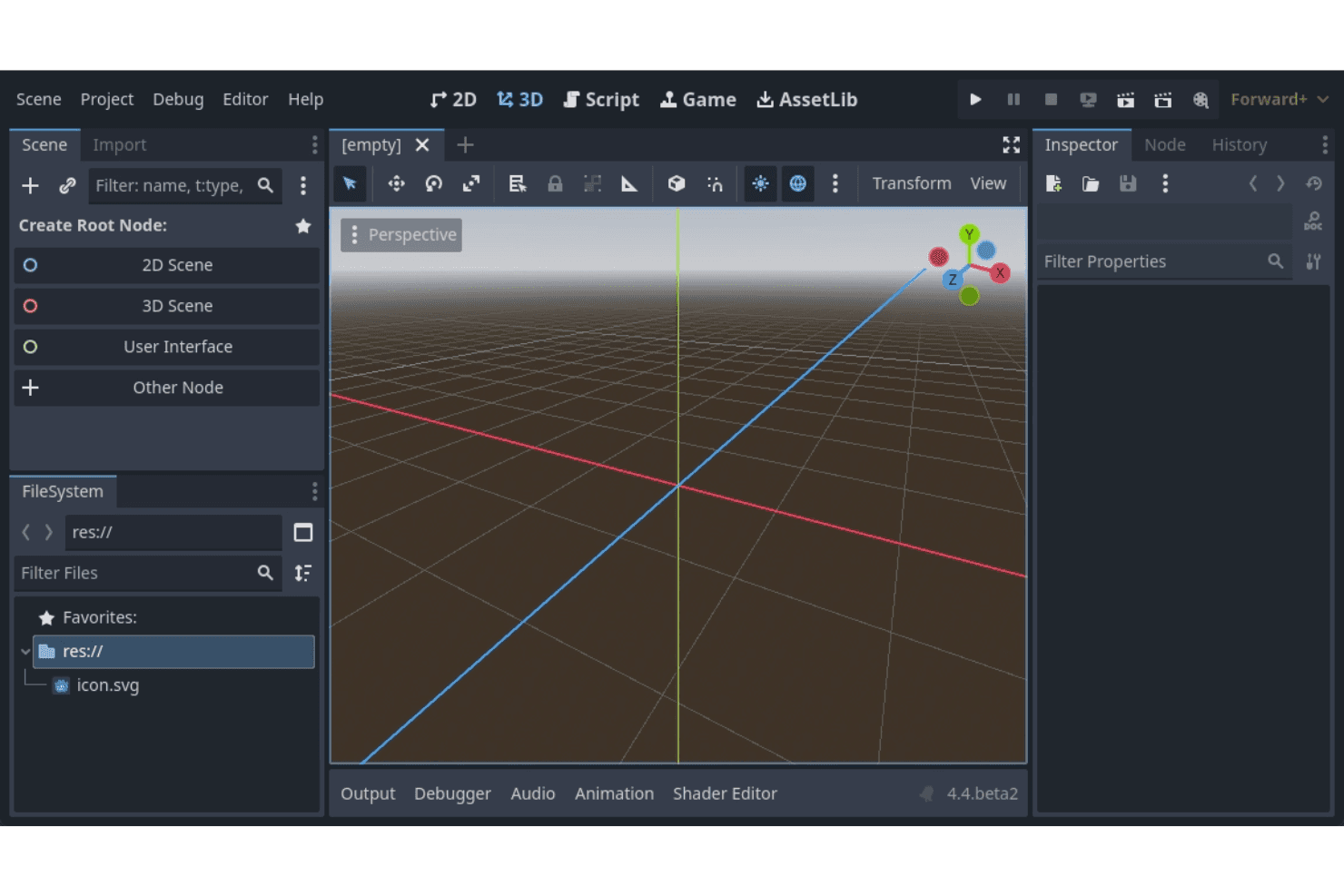
Godot Engine scores well in ease of use with its intuitive visual editor and straightforward scripting language, GDScript. Your team will find that the node-based architecture makes organizing game elements, like a simple sprite or a complex scene, simple and logical. Godot lets you work directly in pixel coordinates in its 2D mode. While onboarding could be smoother, the extensive community resources help bridge the gap. Compared to other software, Godot lets you dive into game development without a steep learning curve, making it accessible for both beginners and experienced developers.
Integrations
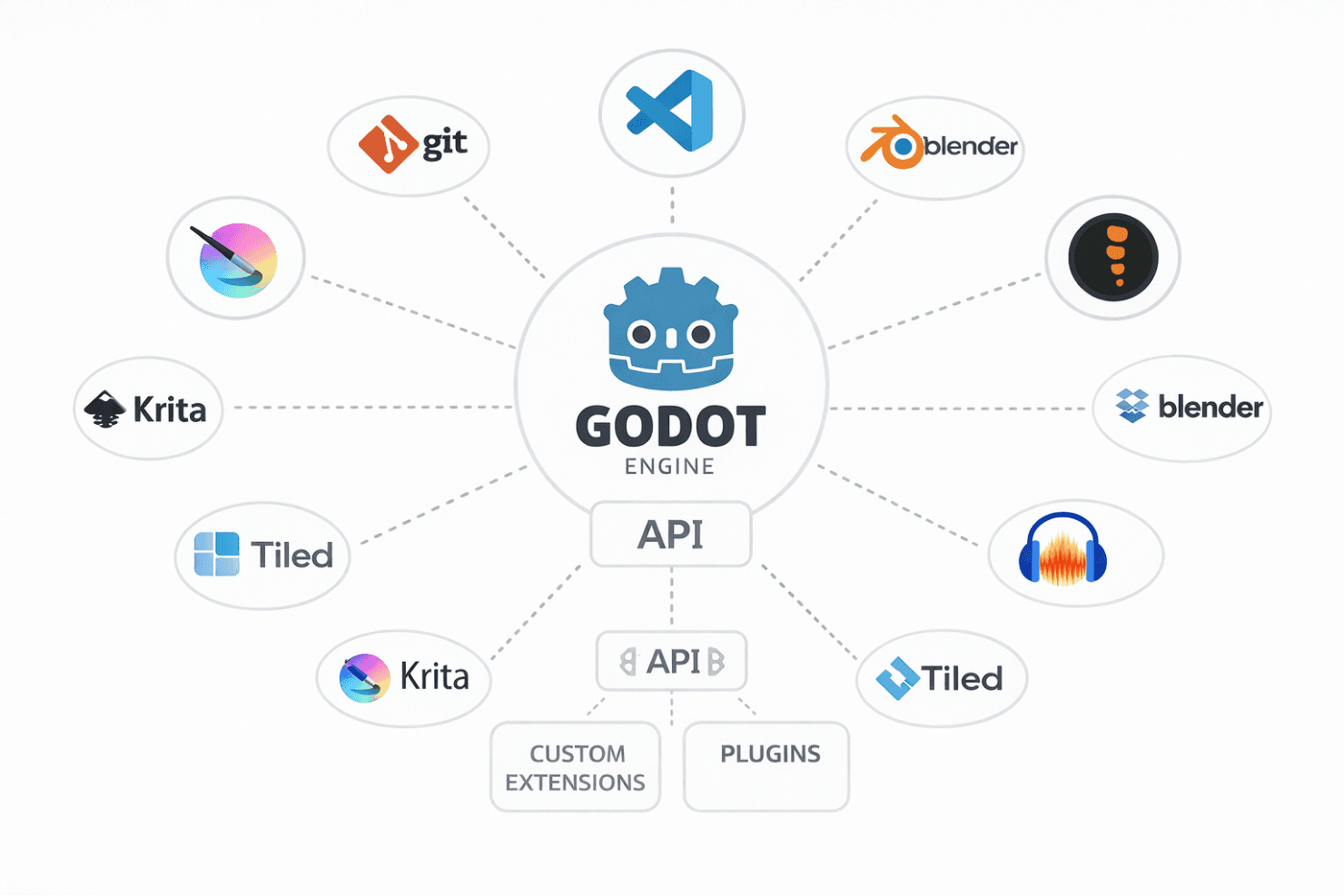
Godot Engine integrates with Git, Visual Studio Code, Blender, Spine, Tiled, Inkscape, Krita, and Audacity.
Godot Engine offers an API for creating custom extensions and supports third-party integration tools through its community-developed plugins.
Godot Engine Specs
- API: Yes
- Bug Tracking: Yes
- CI/CD Integration: No
- Cloud Deployment: Yes
- Code Review: Yes
- Code Transformation: Yes
- Collaboration Support: Yes
- Data Export: No
- Data Import: No
- Developer Tools: Yes
- External Integrations: Yes
- Git Integration: Yes
- History/Version Control: Yes
- IDE Plugins: Yes
- Local Deployment: Yes
- Multi-User: Yes
- Notifications: No
- Project Management: Yes
- Release Management: No
- Static Analysis: No
- Task Scheduling/Tracking: No
- Testing: No


