
Recensione Datadog 2026: Caratteristiche Chiave, Pro, Contro e Prezzi
Datadog si distingue per le sue solide integrazioni e approfondimenti in tempo reale, ma il suo prezzo e la complessità possono non essere adatti a tutti i team. Ideale per le aziende in crescita che necessitano di un'osservabilità approfondita.

Recensiamo gli strumenti in modo indipendente e le commissioni ci aiutano a finanziare i nostri test. Consulta la nostra politica sulla trasparenza, la nostra metodologia, oppure suggerisci uno strumento.
Datadog is a cloud-based performance monitoring tool for IT and DevOps teams that need unified visibility across infrastructure, applications, and logs. I'd reach for it when you're operating in a multi-cloud or hybrid environment and need a single platform to correlate metrics, traces, and events. If you're weighing it against New Relic, Datadog is the stronger pick when integration breadth and infrastructure-level depth matter more than an APM-first approach.
Datadog Evaluation Summary
4.5/5
- From $15/month (billed annually)
- Free plan available
Perché fidarsi dei nostri consigli sui software
6,700+
Reviews
20
Industry experts
16+
Evaluation factors
14
Years
Il nostro team testa e recensisce software dal 2012. In quanto leader tecnologici noi stessi, sappiamo quanto sia difficile — e importante — scegliere il software giusto.
Per questa guida, abbiamo valutato gli strumenti attraverso test praticie ricerche indipendenti, assegnando un punteggio agli strumenti in base ai nostri criteri di selezione.
Le nostre recensioni riflettono il nostro giudizio editoriale umano, non un discorso di vendita.
Revisori esperti:
- Paulo Gardini MiguelDirettore tecnico
 Tim FisherVP dell'IA
 Gabriel RosasTech Lead e architetto software
 Christhian GruhnTech Lead e architetto della piattaforma

Datadog Overview
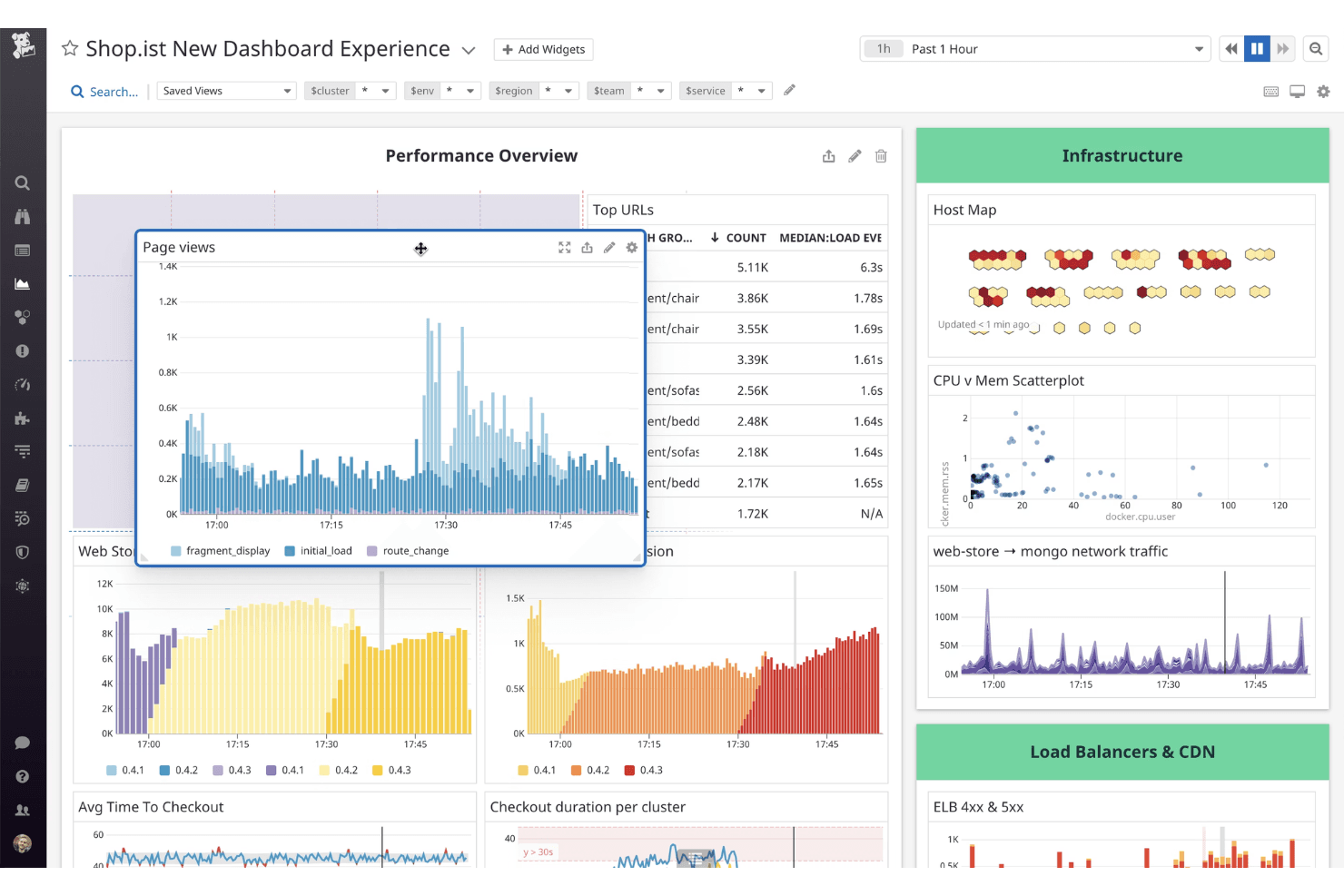
When judging Datadog against other performance monitoring tools, its integration library and customizable dashboards set it apart for teams needing unified observability. The interface is intuitive, and onboarding is straightforward for most cloud-native environments. Pricing can climb quickly as you add features, and support response times vary. Datadog excels in environments with microservices, containers, and hybrid infrastructure, but may feel complex for smaller teams.
If you’re selecting a tool for deep analytics and automation, Datadog’s real-time data and alerting make it a strong contender. For example, its log correlation and anomaly detection outperform many alternatives.
Pros
- Highly customizable dashboards for visualizing key metrics
- Advanced alerting and anomaly detection features
- Real-time monitoring across infrastructure, applications, and logs
Cons
- Setup complexity grows in large or hybrid environments
- Data retention limits can restrict historical analysis
- Pricing increases quickly with data volume and features
Is Datadog Right For Your Needs?
Who Would be a Good Fit for Datadog?
Datadog is best suited for organizations with complex, distributed systems that demand real-time visibility and granular monitoring. Teams in cloud-native environments, large-scale ecommerce, and SaaS operations benefit from Datadog’s advanced analytics, customizable dashboards, and automated alerting.
Its strengths in microservices, container orchestration, and hybrid infrastructure monitoring make it a strong choice for IT departments and DevOps teams managing dynamic workloads.
- Hybrid IT DepartmentsUnified dashboards simplify monitoring across on-premises and cloud resources.
- Ecommerce PlatformsTransaction tracing and anomaly detection support high-traffic reliability.
- SaaS ProvidersEnd-to-end application monitoring ensures uptime and user experience.
- DevOps TeamsAutomated alerting and integrations streamline incident response and troubleshooting.
- Large EnterprisesCentralized observability and advanced analytics help manage sprawling infrastructure.
- Cloud-Native StartupsDatadog’s real-time monitoring and automation support rapid scaling and deployment.
Who Would be a Bad Fit for Datadog?
Datadog may not be ideal for smaller organizations, cost-sensitive teams, or those with simple infrastructure needs. Its pricing model, data retention limits, and setup complexity can outweigh the benefits for businesses with limited monitoring requirements or static environments. Teams seeking basic uptime checks or minimal historical analysis may find Datadog’s feature set excessive and costly.
- Legacy System OperatorsLimited support for older technologies can hinder full environment coverage.
- Government AgenciesStrict data residency and compliance needs may not align with Datadog’s offerings.
- Cost-Conscious StartupsData volume-based pricing can quickly exceed tight budgets.
- Static InfrastructureDynamic monitoring features are unnecessary for rarely changing environments.
- Non-Technical TeamsAdvanced dashboards and analytics require technical expertise to configure.
- Small BusinessesPricing and feature complexity often exceed basic monitoring needs.
La Nostra Metodologia di Recensione
Come Testiamo e Valutiamo gli Strumenti
Abbiamo trascorso anni a costruire, perfezionare e migliorare il nostro sistema di testing e valutazione del software. Il nostro schema è progettato per cogliere le sfumature della selezione software e cosa rende efficace uno strumento, focalizzandosi sugli aspetti critici del processo decisionale.
Di seguito, puoi vedere esattamente come funziona il nostro testing e punteggio su sette criteri. Ci permette di offrire una valutazione imparziale del software basata su funzionalità principali, caratteristiche distintive, facilità d’uso, onboarding, assistenza clienti, integrazioni, recensioni dei clienti e rapporto qualità-prezzo.
Funzionalità Principali (25% del punteggio finale)
Il punto di partenza della nostra valutazione è sempre la funzionalità principale dello strumento. Ha le funzioni e caratteristiche base che ci si aspetta? Alcune di queste caratteristiche sono limitate ai piani tariffari superiori? Fondamentalmente, ci aspettiamo che uno strumento regga il confronto rispetto alle capacità di base dei concorrenti.
Caratteristiche Distintive (25% del punteggio finale)
Successivamente, valutiamo le caratteristiche distintive e non comuni che vanno oltre la funzionalità base tipicamente trovata negli strumenti di questa categoria. Un punteggio alto riflette funzionalità specializzate o uniche che rendono il prodotto più veloce, efficiente o offrono ulteriore valore all’utente.
Valutiamo inoltre quanto sia semplice integrare altri strumenti tipicamente utilizzati nell’infrastruttura tecnologica per espandere la funzionalità e l’utilità del software. Gli strumenti che offrono numerose integrazioni native, connessioni di terze parti e accesso API per creare integrazioni personalizzate ottengono i punteggi migliori.
Facilità d’Uso (10% del punteggio finale)
Consideriamo quanto sia rapido e semplice svolgere i compiti definiti nella funzionalità principale utilizzando lo strumento. Il software con punteggio alto è ben progettato, intuitivo da usare, offre app mobili, fornisce modelli e rende semplici attività relativamente complesse.
Onboarding (10% del punteggio finale)
Sappiamo quanto sia importante l’adozione rapida da parte del team per una nuova piattaforma, quindi valutiamo quanto sia facile imparare e utilizzare uno strumento con formazione minima. Valutiamo quanto velocemente un membro del team possa iniziare a usare lo strumento anche senza esperienza. Soluzioni con punteggio alto indicano che sono richiesti pochi o nessun supporto.
Assistenza Clienti (10% del punteggio finale)
Esaminiamo quanto sia veloce e facile ricevere assistenza e risolvere problemi tramite telefono, live chat o knowledge base. Gli strumenti e le aziende che garantiscono supporto in tempo reale ottengono il miglior punteggio, mentre i chatbot ottengono il peggiore.
Recensioni dei Clienti (10% del punteggio finale)
Oltre ai nostri test e valutazioni, prendiamo in considerazione il net promoter score dei clienti attuali e passati. Valutiamo la probabilità che, data la scelta, selezionerebbero nuovamente lo strumento per la funzionalità principale. Un software con punteggio alto riflette un alto net promoter score da parte dei clienti attuali o passati.
Rapporto Qualità-Prezzo (10% del punteggio finale)
Infine, considerando tutti gli altri criteri, analizziamo il prezzo medio dei piani base rispetto alle funzionalità principali e consideriamo il valore degli altri criteri di valutazione. Il software che offre di più a meno otterrà un punteggio più alto.
Core Features
Infrastructure Monitoring
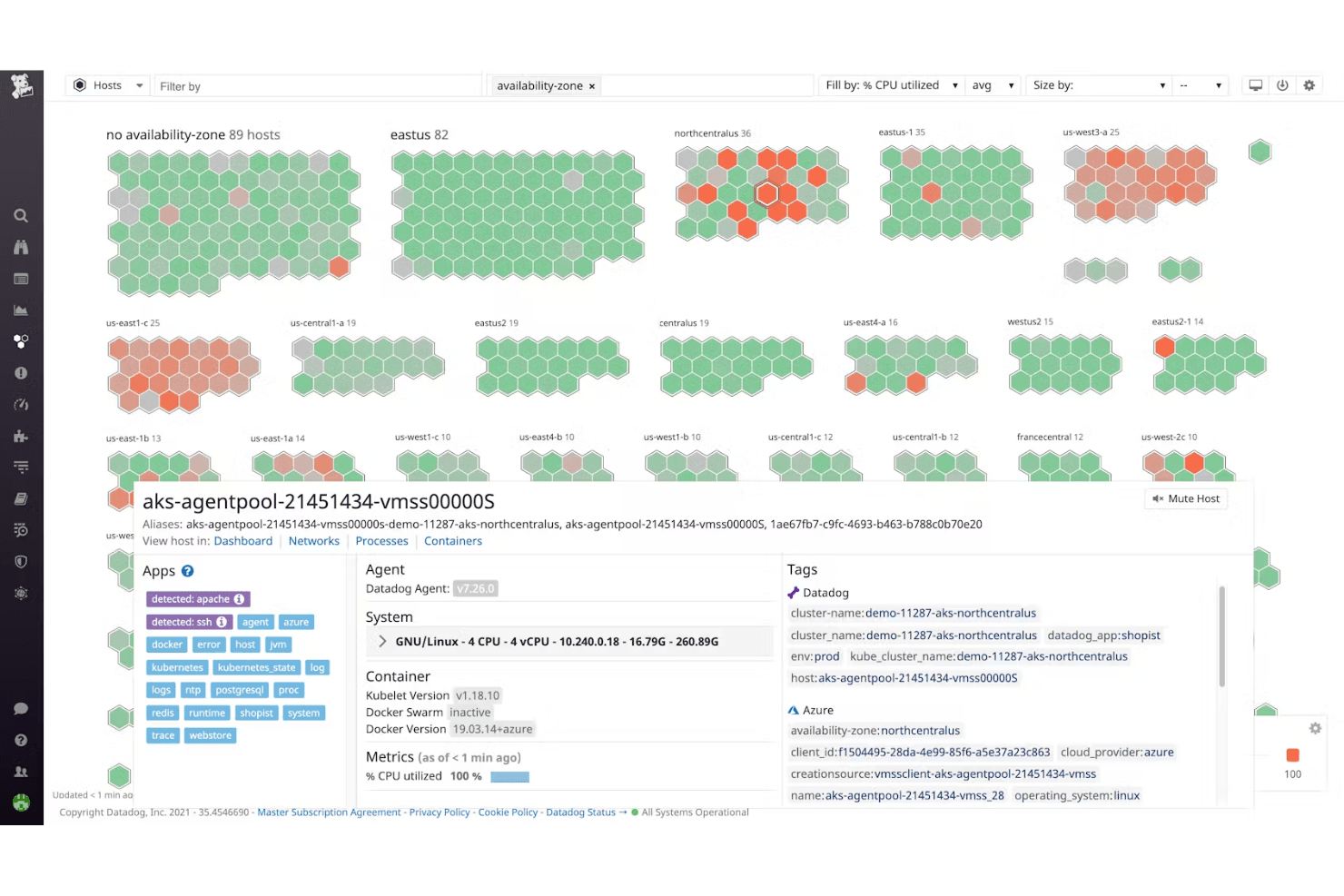
Continuously tracks servers, VMs, containers, and cloud resources in real time. Users can visualize health and performance metrics across hybrid and multi-cloud environments.
Application Performance Monitoring (APM)
Traces requests end-to-end across distributed systems and surfaces latency, errors, and bottlenecks. This helps teams quickly pinpoint and resolve application issues.
Log Management
Aggregates, searches, and correlates logs from all sources with automated tagging. Users can pivot between logs, metrics, and traces for faster troubleshooting.
Network Monitoring
Provides visibility into network flows, device health, and traffic patterns across cloud and on-premises. Teams can identify network bottlenecks and security risks instantly.
Custom Dashboards
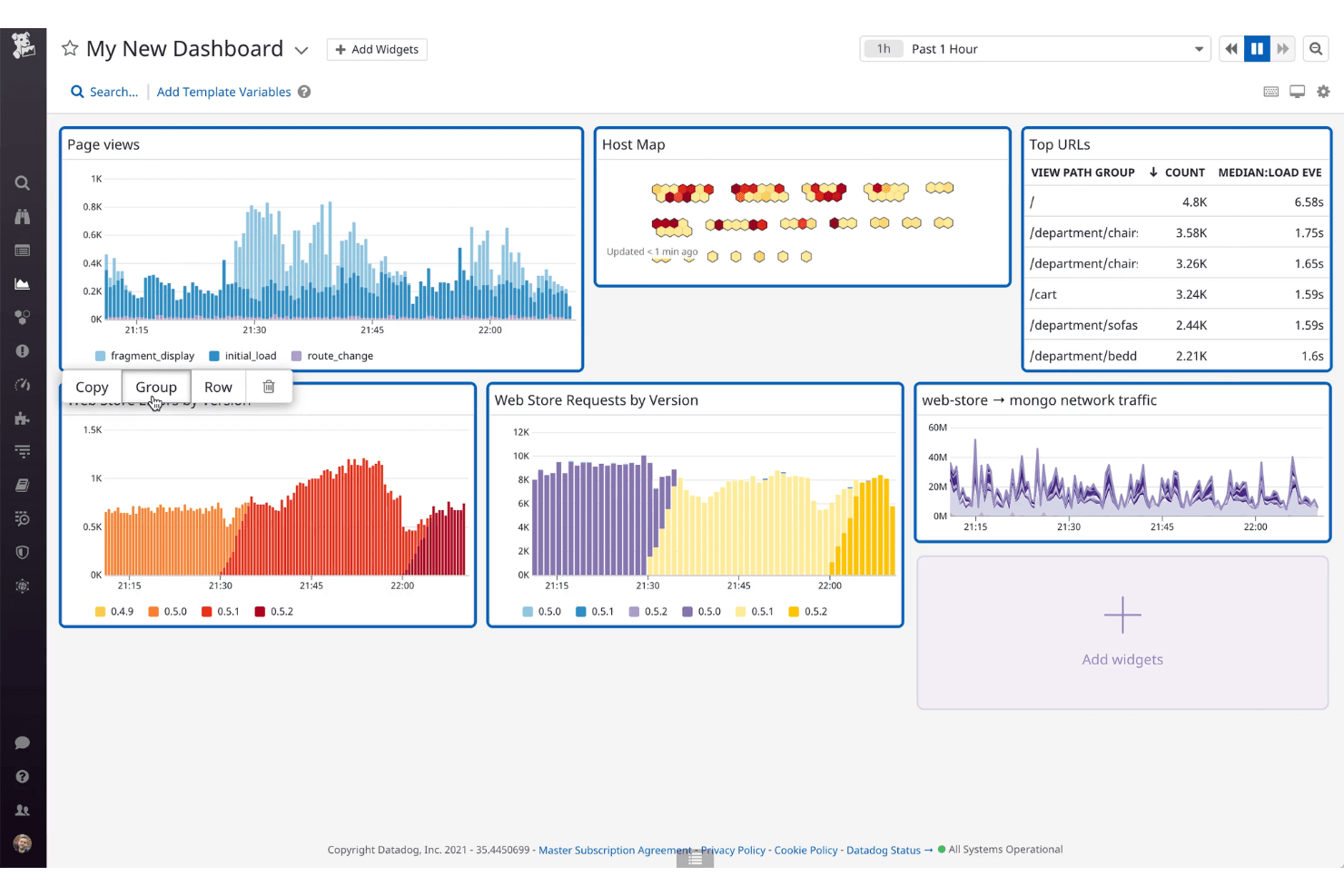
Lets users build interactive, real-time dashboards with high-resolution metrics and events. Dashboards can be tailored for specific teams, services, or business units.
Alerting and Anomaly Detection
Delivers automated alerts on any metric or event, with advanced anomaly detection powered by AI. Teams receive notifications through multiple channels for rapid incident response.
Ease of Use
Datadog offers a clean, intuitive interface with customizable dashboards that make monitoring accessible for technical users. Many users appreciate the guided onboarding and in-app documentation, which help reduce setup friction. However, the platform’s depth and breadth can feel overwhelming for smaller teams or those new to observability.
Advanced features like custom metrics and alerting require some expertise, but overall, Datadog balances powerful capabilities with a user-friendly experience for most IT professionals.
Integrations
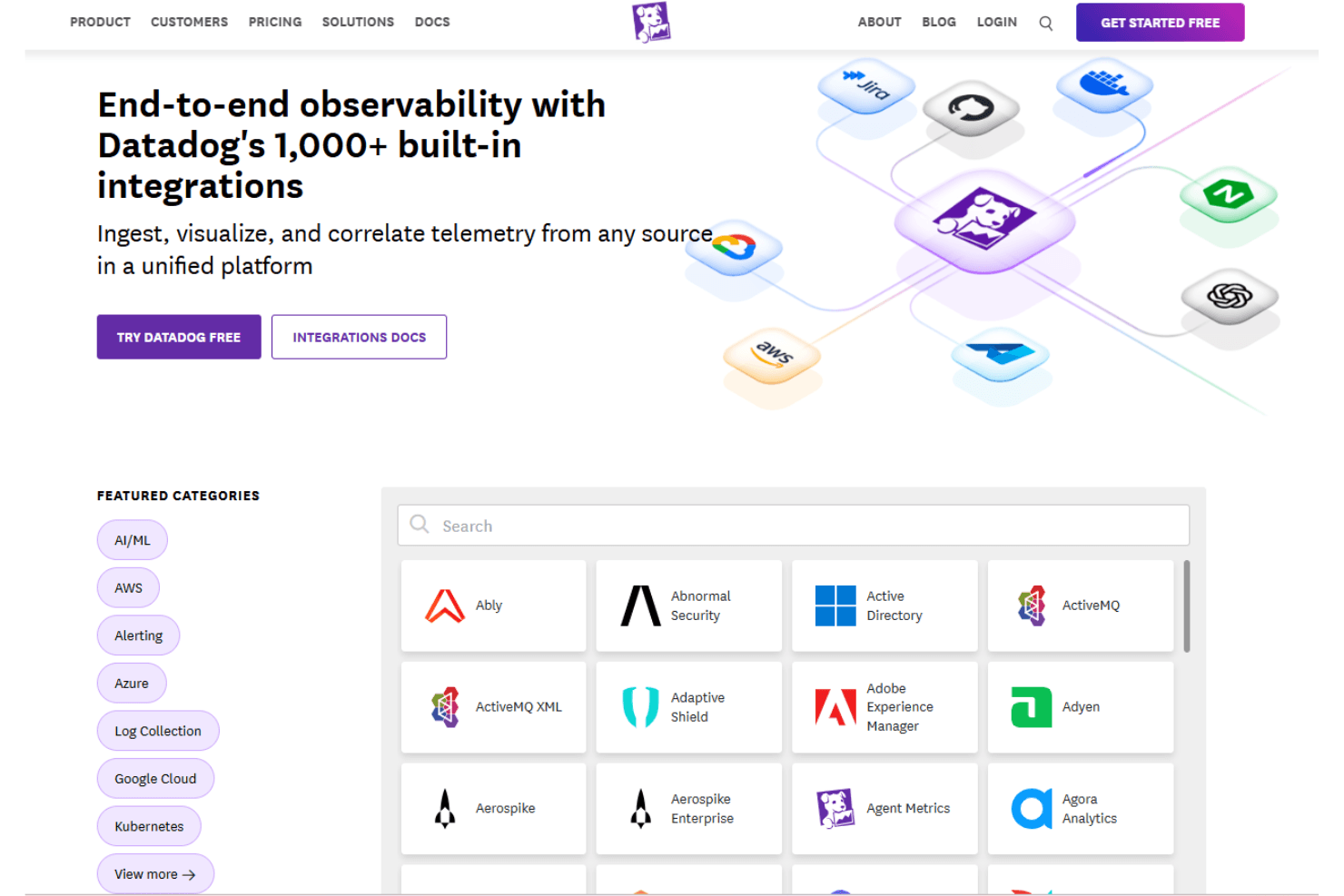
Datadog integrates with AWS, Azure, Google Cloud, Kubernetes, Slack, PagerDuty, GitHub, MongoDB, Twilio, and Elastic Cloud, among others.
Datadog also offers a robust API and supports connections with third-party integration tools.
Datadog Specs
- AI Integration: No
- API: Yes
- Automated Testing: No
- Browser Compatibility Testing: No
- Bug Tracking: Yes
- Code Review: No
- Custom Reports: Yes
- Data Export: Yes
- Data Import: Yes
- Developer Tools: Yes
- External Integrations: Yes
- Malware Protection: No
- Multi-User: Yes
- Notifications: Yes
- Performance Testing: Yes
- Process Reporting: No
- Static Analysis: No
- Status Notifications: Yes
- Workflow Management: No
Alternatives to Datadog


- Implementazione di Datadog: Guida Completa Passo Dopo PassoOpens new window
- Le 10 migliori alternative a Datadog per il monitoraggio del cloud nel 2026Opens new window
- Recensione Datadog 2026: Caratteristiche Chiave, Pro, Contro e PrezziOpens new window
- Recensione di Datadog Log Management: Pro, Contro, Caratteristiche e PrezziOpens new window