
Recensione di Cisco Umbrella: Pro, Contro, Caratteristiche e Prezzi
Cisco Umbrella eccelle nel fornire un’intelligence sulle minacce affidabile, rendendolo una scelta di primo piano per i team che cercano sicurezza robusta e facilità di integrazione.

Recensiamo gli strumenti in modo indipendente e le commissioni ci aiutano a finanziare i nostri test. Consulta la nostra politica sulla trasparenza, la nostra metodologia, oppure suggerisci uno strumento.
Cisco Umbrella is a cloud-native threat intelligence solution built on DNS-layer security, a secure web gateway, and a cloud-delivered firewall. It blocks threats before they reach your network. It's worth considering if your team needs to enforce internet security policies across remote users, branch offices, and cloud environments without on-premises hardware. Compared to Palo Alto Networks DNS Security, Umbrella gives you broader visibility across all ports and protocols with integrated Cisco Talos threat intelligence. That makes it the stronger pick if you're already working within a Cisco ecosystem.
Cisco Umbrella Evaluation Summary
4.4/5
- Pricing upon request
- Free trial + demo available
Perché fidarsi dei nostri consigli sui software
6,700+
Reviews
20
Industry experts
16+
Evaluation factors
14
Years
Il nostro team testa e recensisce software dal 2012. In quanto leader tecnologici noi stessi, sappiamo quanto sia difficile — e importante — scegliere il software giusto.
Per questa guida, abbiamo valutato gli strumenti attraverso test praticie ricerche indipendenti, assegnando un punteggio agli strumenti in base ai nostri criteri di selezione.
Le nostre recensioni riflettono il nostro giudizio editoriale umano, non un discorso di vendita.
Revisori esperti:
- Paulo Gardini MiguelDirettore tecnico
 Tim FisherVP dell'IA
 Gabriel RosasTech Lead e architetto software
 Christhian GruhnTech Lead e architetto della piattaforma

Cisco Umbrella Overview
In my opinion, Cisco Umbrella excels in threat intelligence with its domain name service (DNS)-layer security and flexible integration capabilities. It stands out with strong core and standout features, making it a reliable choice for enterprises that need cloud-delivered security solutions. However, smaller teams with budget constraints might find it expensive. The onboarding process is smooth, but some users may need additional guidance for complex setups. Overall, it's best suited for organizations prioritizing security and integration over cost.
Pros
- It provides reliable DNS-layer security and a cloud-delivered firewall to block threats before they compromise your network.
- You can easily manage security policies with a user-friendly interface.
- It offers real-time threat intelligence to help your team secure network endpoints.
Cons
- Some users find the reporting features less detailed than expected.
- You might need additional training to fully use its advanced features.
- Occasionally, users experience delays in customer support response times.
Is Cisco Umbrella Right For Your Needs?
Who Would be a Good Fit for Cisco Umbrella?
Cisco Umbrella is great for large enterprises and industries like finance and healthcare that need strong security. If your team handles sensitive data and needs real-time threat intelligence, Cisco Umbrella's DNS-layer security offers peace of mind. Its user-friendly interface simplifies policy management, making it a suitable choice for IT departments seeking effective threat protection.
- Financial ServicesCisco Umbrella's real-time threat intelligence is perfect for protecting sensitive financial data.
- Healthcare OrganizationsThis cloud native solution provides reliable security and web filtering to safeguard patient information from cyber threats.
- Large EnterprisesYour team can easily manage security policies across a vast network with Cisco Umbrella.
- IT DepartmentsA user-friendly interface helps your IT team quickly implement data loss prevention (DLP) and security measures.
- Remote WorkforcesRemote workers can secure their connections with Cisco Umbrella without necessarily needing a virtual private network (VPN).
- Educational InstitutionsIt effectively blocks harmful content, ensuring a safe online environment for students and staff.
Who Would be a Bad Fit for Cisco Umbrella?
Cisco Umbrella might not suit small businesses or startups with limited budgets. Its pricing can be a hurdle if cost is a significant concern for your team. Additionally, if your organization has minimal security needs, the advanced functionalities of Cisco Umbrella might be unnecessary. It's also not ideal for teams that expect highly detailed or customizable reports.
- Small StartupsStartups might not be prepared to pay for the high cost.
- NonprofitsIf your organization has minimal security needs, Cisco Umbrella's features might be excessive.
- FreelancersCisco Umbrella's advanced security features are more than what an individual typically requires.
- Retail StoresIf your store handles minimal sensitive data, the extensive threat protection may be unnecessary.
- Local ServicesFor businesses with basic security needs, Cisco Umbrella's capabilities might be overkill.
- Budget-Conscious TeamsIf cost-saving is a priority, Cisco Umbrella's pricing might not be the best fit.
La Nostra Metodologia di Recensione
Come Testiamo e Valutiamo gli Strumenti
Abbiamo trascorso anni a costruire, perfezionare e migliorare il nostro sistema di testing e valutazione del software. Il nostro schema è progettato per cogliere le sfumature della selezione software e cosa rende efficace uno strumento, focalizzandosi sugli aspetti critici del processo decisionale.
Di seguito, puoi vedere esattamente come funziona il nostro testing e punteggio su sette criteri. Ci permette di offrire una valutazione imparziale del software basata su funzionalità principali, caratteristiche distintive, facilità d’uso, onboarding, assistenza clienti, integrazioni, recensioni dei clienti e rapporto qualità-prezzo.
Funzionalità Principali (25% del punteggio finale)
Il punto di partenza della nostra valutazione è sempre la funzionalità principale dello strumento. Ha le funzioni e caratteristiche base che ci si aspetta? Alcune di queste caratteristiche sono limitate ai piani tariffari superiori? Fondamentalmente, ci aspettiamo che uno strumento regga il confronto rispetto alle capacità di base dei concorrenti.
Caratteristiche Distintive (25% del punteggio finale)
Successivamente, valutiamo le caratteristiche distintive e non comuni che vanno oltre la funzionalità base tipicamente trovata negli strumenti di questa categoria. Un punteggio alto riflette funzionalità specializzate o uniche che rendono il prodotto più veloce, efficiente o offrono ulteriore valore all’utente.
Valutiamo inoltre quanto sia semplice integrare altri strumenti tipicamente utilizzati nell’infrastruttura tecnologica per espandere la funzionalità e l’utilità del software. Gli strumenti che offrono numerose integrazioni native, connessioni di terze parti e accesso API per creare integrazioni personalizzate ottengono i punteggi migliori.
Facilità d’Uso (10% del punteggio finale)
Consideriamo quanto sia rapido e semplice svolgere i compiti definiti nella funzionalità principale utilizzando lo strumento. Il software con punteggio alto è ben progettato, intuitivo da usare, offre app mobili, fornisce modelli e rende semplici attività relativamente complesse.
Onboarding (10% del punteggio finale)
Sappiamo quanto sia importante l’adozione rapida da parte del team per una nuova piattaforma, quindi valutiamo quanto sia facile imparare e utilizzare uno strumento con formazione minima. Valutiamo quanto velocemente un membro del team possa iniziare a usare lo strumento anche senza esperienza. Soluzioni con punteggio alto indicano che sono richiesti pochi o nessun supporto.
Assistenza Clienti (10% del punteggio finale)
Esaminiamo quanto sia veloce e facile ricevere assistenza e risolvere problemi tramite telefono, live chat o knowledge base. Gli strumenti e le aziende che garantiscono supporto in tempo reale ottengono il miglior punteggio, mentre i chatbot ottengono il peggiore.
Recensioni dei Clienti (10% del punteggio finale)
Oltre ai nostri test e valutazioni, prendiamo in considerazione il net promoter score dei clienti attuali e passati. Valutiamo la probabilità che, data la scelta, selezionerebbero nuovamente lo strumento per la funzionalità principale. Un software con punteggio alto riflette un alto net promoter score da parte dei clienti attuali o passati.
Rapporto Qualità-Prezzo (10% del punteggio finale)
Infine, considerando tutti gli altri criteri, analizziamo il prezzo medio dei piani base rispetto alle funzionalità principali e consideriamo il valore degli altri criteri di valutazione. Il software che offre di più a meno otterrà un punteggio più alto.
Core Features
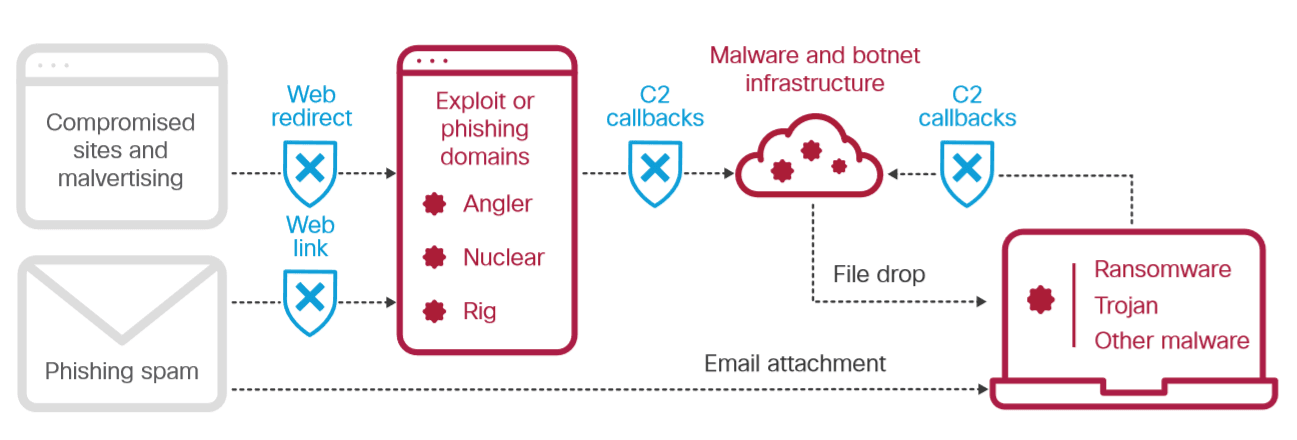
DNS-Layer Security: This feature blocks threats at the DNS level before they reach your network. It keeps your team safe by preventing access to malicious domains, cloud applications and IP addresses.
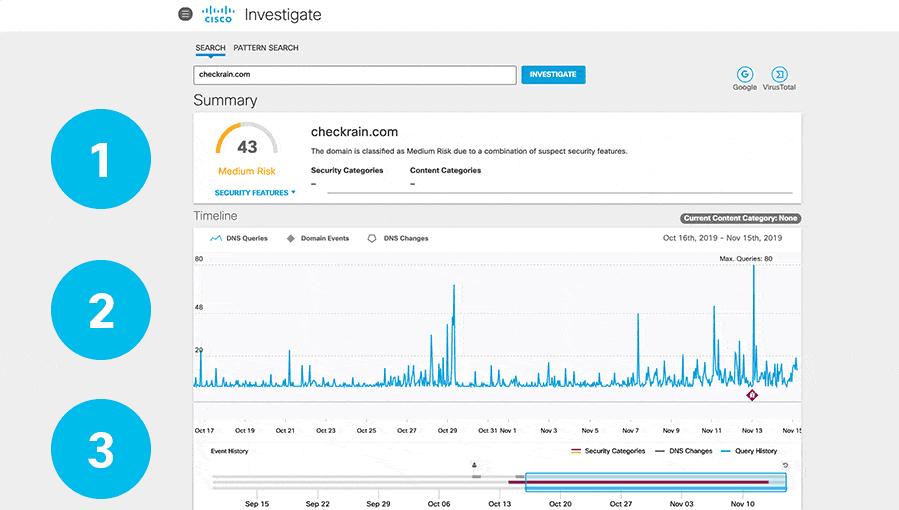
Real-Time Threat Intelligence: You get up-to-date insights on emerging threats, helping your team respond quickly. It ensures your defenses are always current.
Customizable Security Policies: Easily set security rules that fit your organization’s needs. It makes managing your network's safety straightforward.
Content Filtering: You can control access to specific websites, keeping your work environment focused and secure. It helps maintain productivity and safety.
Activity Reporting: This feature provides visibility into your network's internet activity. You can monitor and analyze traffic to spot potential issues.
Malware Blocking: It identifies and blocks malicious software from entering your network. Your team stays protected from harmful software threats.
Ease of Use
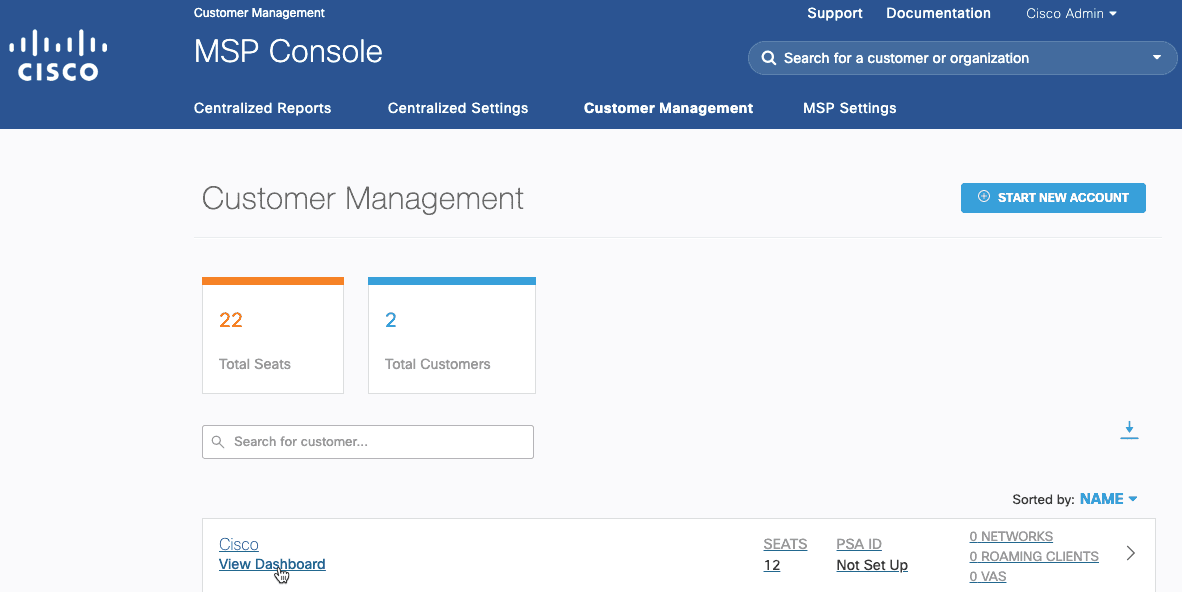
Cisco Umbrella offers a user-friendly interface that simplifies security management for your team. Setting up security policies is straightforward, and the dashboard provides clear insights into your network's status. Users appreciate its intuitive design, which doesn't overwhelm with unnecessary complexity. Compared to other solutions, its ease of use makes it accessible even for those who aren't security experts.
Integrations
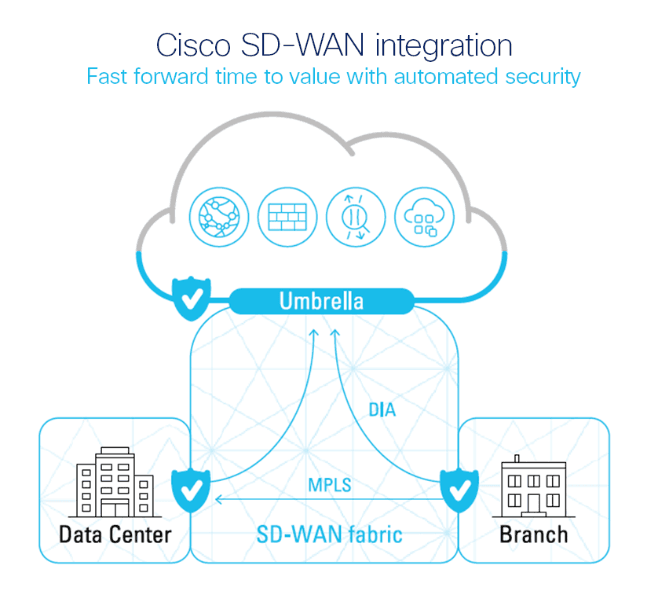
Cisco Umbrella integrates with Cisco SD-WAN, Meraki, ISR, WLC, ASA, Mobility Express, RV series routers, off-network laptops, Android, and iOS devices.
Cisco Umbrella also offers an application programming interface (API) for custom integrations and connects with third-party security tools to enhance its capabilities.
Cisco Umbrella Specs
- 2-Factor Authentication: Yes
- Access Management: No
- Anti-Virus: Yes
- API: Yes
- Audit Management: No
- Audit Trail: No
- Batch Permissions & Access: Yes
- Compliance Tracking: No
- Dashboard: Yes
- Data Export: Yes
- Data Import: Yes
- DDoS Protection: No
- External Integrations: Yes
- File Sharing: Yes
- File Transfer: Yes
- Firewall: Yes
- Incident Management: No
- Malware Protection: No
- Multi-User: Yes
- Notifications: Yes
- Password & Access Management: Yes
- Policy Management: No
- Real-time Alerts: No
- Report & Compliance: No
- Risk Assessment: No
- Security Migration: No
- Threat Detection: No
- Workflow Management: Yes


