

Recensione di Airlock Digital: Pro, Contro, Caratteristiche e Prezzi Spiegati
Airlock Digital si distingue per la sua solida strategia di allowlisting, offrendo un controllo preciso e una protezione elevata, ma potrebbe richiedere una gestione più pratica rispetto agli strumenti di cybersecurity tradizionali.

Recensiamo gli strumenti in modo indipendente e le commissioni ci aiutano a finanziare i nostri test. Consulta la nostra politica sulla trasparenza, la nostra metodologia, oppure suggerisci uno strumento.
Airlock Digital is a cyber security provider built around application allowlisting. It gives IT and security teams precise control over which executables, scripts, and installers can run across endpoints. It's worth considering if your organization needs to meet compliance frameworks like the Essential Eight or wants a stronger defense against ransomware than signature-based tools provide. Compared to broader EDR platforms like CrowdStrike, Airlock Digital keeps its focus on allowlisting policy management. That makes it a better fit when application control is your primary objective, not a secondary feature.
Airlock Digital Evaluation Summary
0/5
- Pricing upon request
- Free demo available
Perché fidarsi dei nostri consigli sui software
6,700+
Reviews
20
Industry experts
16+
Evaluation factors
14
Years
Il nostro team testa e recensisce software dal 2012. In quanto leader tecnologici noi stessi, sappiamo quanto sia difficile — e importante — scegliere il software giusto.
Per questa guida, abbiamo valutato gli strumenti attraverso test praticie ricerche indipendenti, assegnando un punteggio agli strumenti in base ai nostri criteri di selezione.
Le nostre recensioni riflettono il nostro giudizio editoriale umano, non un discorso di vendita.
Revisori esperti:
- Paulo Gardini MiguelDirettore tecnico
 Tim FisherVP dell'IA
 Gabriel RosasTech Lead e architetto software
 Christhian GruhnTech Lead e architetto della piattaforma

Airlock Digital Overview
If you’re judging cybersecurity software by control and precision, Airlock Digital is a top contender. Its allowlisting model gives you more authority over application execution than most alternatives, though it can mean more of an in-depth setup and ongoing management. I think its interface is straightforward, support is responsive, and onboarding is clear for teams familiar with endpoint security. Pricing is competitive for the level of control you get, but integrations are more limited than some broader platforms. I’d suggest Airlock Digital for organizations with strict compliance needs or those prioritizing zero-trust environments.
Pros
- Deny by default model blocks unknown and unauthorized applications
- Lightweight agent has minimal impact on endpoint performance
- Centralized management supports Windows, macOS, and Linux environments
Cons
- Limited integrations compared to broader cybersecurity platforms
- Requires ongoing policy tuning for dynamic environments
- Pricing may be higher than basic endpoint protection tools
Is Airlock Digital Right For Your Needs?
Who Would be a Good Fit for Airlock Digital?
Airlock Digital is a strong choice for organizations that need strict control over application execution and compliance with regulatory standards. Teams in highly regulated industries, or those with sensitive intellectual property, will appreciate its deny-by-default approach and centralized management. Its lightweight agent and cross-platform support make it practical for IT departments managing diverse endpoints. If your business faces targeted attacks or insider threats against critical infrastructure, Airlock Digital’s allowlisting model offers a clear advantage.
- Government AgenciesMeets strict compliance and audit requirements with granular application control.
- Financial ServicesProtects sensitive data and prevents unauthorized software in regulated environments.
- Healthcare ProvidersSupports HIPAA compliance and blocks unapproved medical software on endpoints.
- Manufacturing FirmsSecures industrial control systems by restricting executable code on shop floor devices.
- IT Security TeamsGives security teams granular visibility and control over endpoint applications.
- Medium EnterprisesFits organizations needing centralized policy management across multiple locations.
Who Would be a Bad Fit for Airlock Digital?
Airlock Digital isn’t ideal for businesses that need broad integrations, rapid onboarding for non-technical staff, or those with highly dynamic software environments. If your team relies on frequent software changes or needs advanced threat detection beyond allowlisting, you may find its model restrictive. Smaller businesses with limited IT resources may also struggle with ongoing policy management.
- Small StartupsRequires more policy management than most small teams can handle.
- Retail ChainsLacks integrations with many retail POS and inventory systems.
- Creative AgenciesRestricts frequent software installs and updates common in creative workflows.
- Education InstitutionsNot ideal for open environments with constantly changing applications.
- Managed Service ProvidersLimited multi-tenant features for MSPs managing many client environments.
- Incident Response TeamsDoes not provide advanced threat hunting or forensic analysis tools.
La Nostra Metodologia di Recensione
Come Testiamo e Valutiamo gli Strumenti
Abbiamo trascorso anni a costruire, perfezionare e migliorare il nostro sistema di testing e valutazione del software. Il nostro schema è progettato per cogliere le sfumature della selezione software e cosa rende efficace uno strumento, focalizzandosi sugli aspetti critici del processo decisionale.
Di seguito, puoi vedere esattamente come funziona il nostro testing e punteggio su sette criteri. Ci permette di offrire una valutazione imparziale del software basata su funzionalità principali, caratteristiche distintive, facilità d’uso, onboarding, assistenza clienti, integrazioni, recensioni dei clienti e rapporto qualità-prezzo.
Funzionalità Principali (25% del punteggio finale)
Il punto di partenza della nostra valutazione è sempre la funzionalità principale dello strumento. Ha le funzioni e caratteristiche base che ci si aspetta? Alcune di queste caratteristiche sono limitate ai piani tariffari superiori? Fondamentalmente, ci aspettiamo che uno strumento regga il confronto rispetto alle capacità di base dei concorrenti.
Caratteristiche Distintive (25% del punteggio finale)
Successivamente, valutiamo le caratteristiche distintive e non comuni che vanno oltre la funzionalità base tipicamente trovata negli strumenti di questa categoria. Un punteggio alto riflette funzionalità specializzate o uniche che rendono il prodotto più veloce, efficiente o offrono ulteriore valore all’utente.
Valutiamo inoltre quanto sia semplice integrare altri strumenti tipicamente utilizzati nell’infrastruttura tecnologica per espandere la funzionalità e l’utilità del software. Gli strumenti che offrono numerose integrazioni native, connessioni di terze parti e accesso API per creare integrazioni personalizzate ottengono i punteggi migliori.
Facilità d’Uso (10% del punteggio finale)
Consideriamo quanto sia rapido e semplice svolgere i compiti definiti nella funzionalità principale utilizzando lo strumento. Il software con punteggio alto è ben progettato, intuitivo da usare, offre app mobili, fornisce modelli e rende semplici attività relativamente complesse.
Onboarding (10% del punteggio finale)
Sappiamo quanto sia importante l’adozione rapida da parte del team per una nuova piattaforma, quindi valutiamo quanto sia facile imparare e utilizzare uno strumento con formazione minima. Valutiamo quanto velocemente un membro del team possa iniziare a usare lo strumento anche senza esperienza. Soluzioni con punteggio alto indicano che sono richiesti pochi o nessun supporto.
Assistenza Clienti (10% del punteggio finale)
Esaminiamo quanto sia veloce e facile ricevere assistenza e risolvere problemi tramite telefono, live chat o knowledge base. Gli strumenti e le aziende che garantiscono supporto in tempo reale ottengono il miglior punteggio, mentre i chatbot ottengono il peggiore.
Recensioni dei Clienti (10% del punteggio finale)
Oltre ai nostri test e valutazioni, prendiamo in considerazione il net promoter score dei clienti attuali e passati. Valutiamo la probabilità che, data la scelta, selezionerebbero nuovamente lo strumento per la funzionalità principale. Un software con punteggio alto riflette un alto net promoter score da parte dei clienti attuali o passati.
Rapporto Qualità-Prezzo (10% del punteggio finale)
Infine, considerando tutti gli altri criteri, analizziamo il prezzo medio dei piani base rispetto alle funzionalità principali e consideriamo il valore degli altri criteri di valutazione. Il software che offre di più a meno otterrà un punteggio più alto.
Core Features
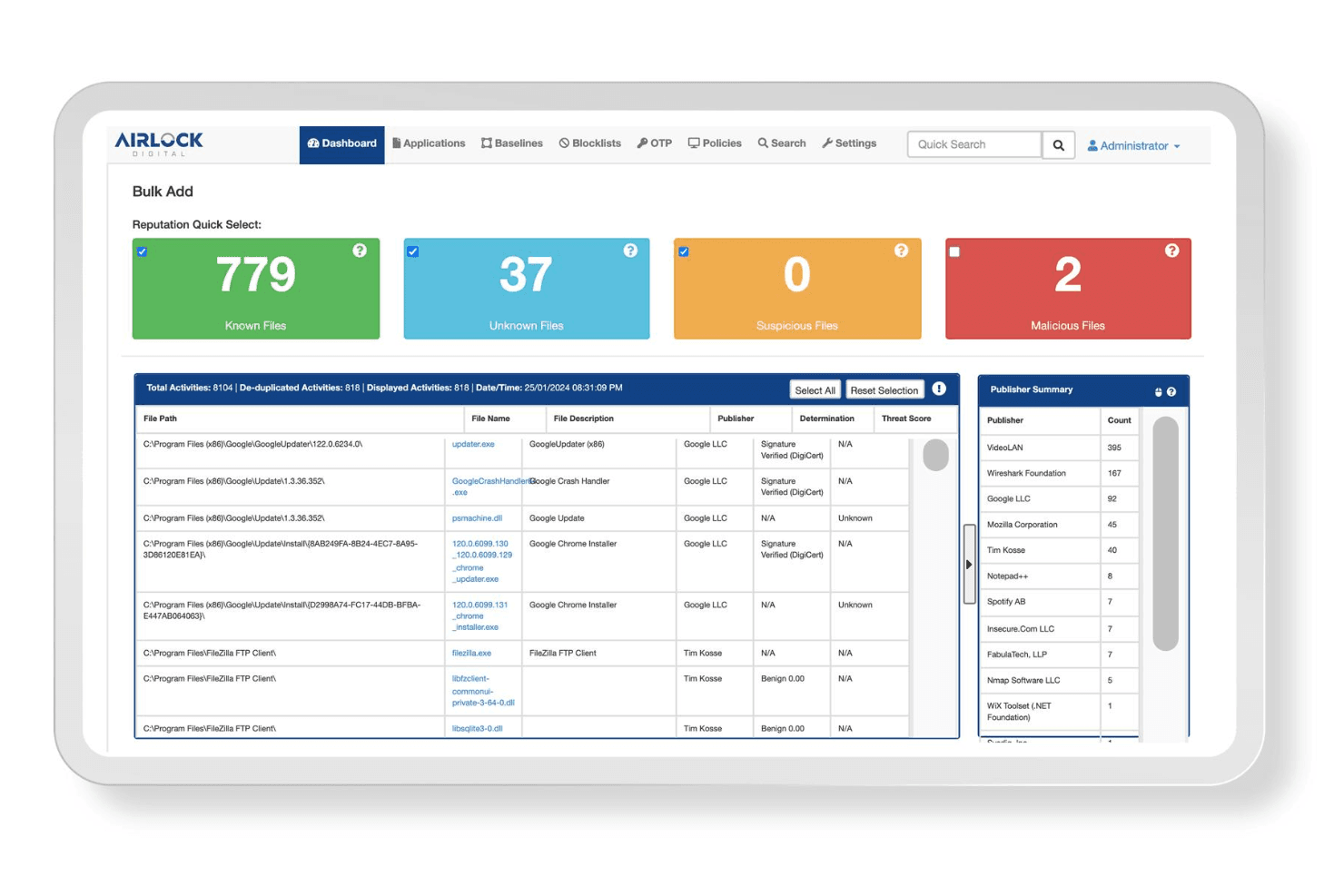
Deny by Default Application Control
Blocks all untrusted and unknown applications from running on endpoints. This approach prevents malware, ransomware, and unauthorized scripts before they can execute.
Centralized Policy Management
Lets you manage application control policies for Windows, macOS, and Linux from a single console. You can quickly update, enforce, and audit policies across your entire environment.
Workflow-Driven Allowlisting
Guides you through discovering, vetting, and approving executable code with repeatable workflows. This makes allowlisting practical and scalable for large organizations.
Blocklisting Capabilities
Allows you to explicitly block known malicious or unwanted files in addition to allowlisting. This dual approach gives you more flexibility in controlling your environment.
File Metadata Repository
Maintains a searchable database of all file metadata across your endpoints. You gain visibility into what’s running and can investigate suspicious files easily.
Legacy System Support
Supports application control on older versions of Windows, macOS, and Linux. This is valuable for organizations with legacy infrastructure that still needs protection.
Ease of Use
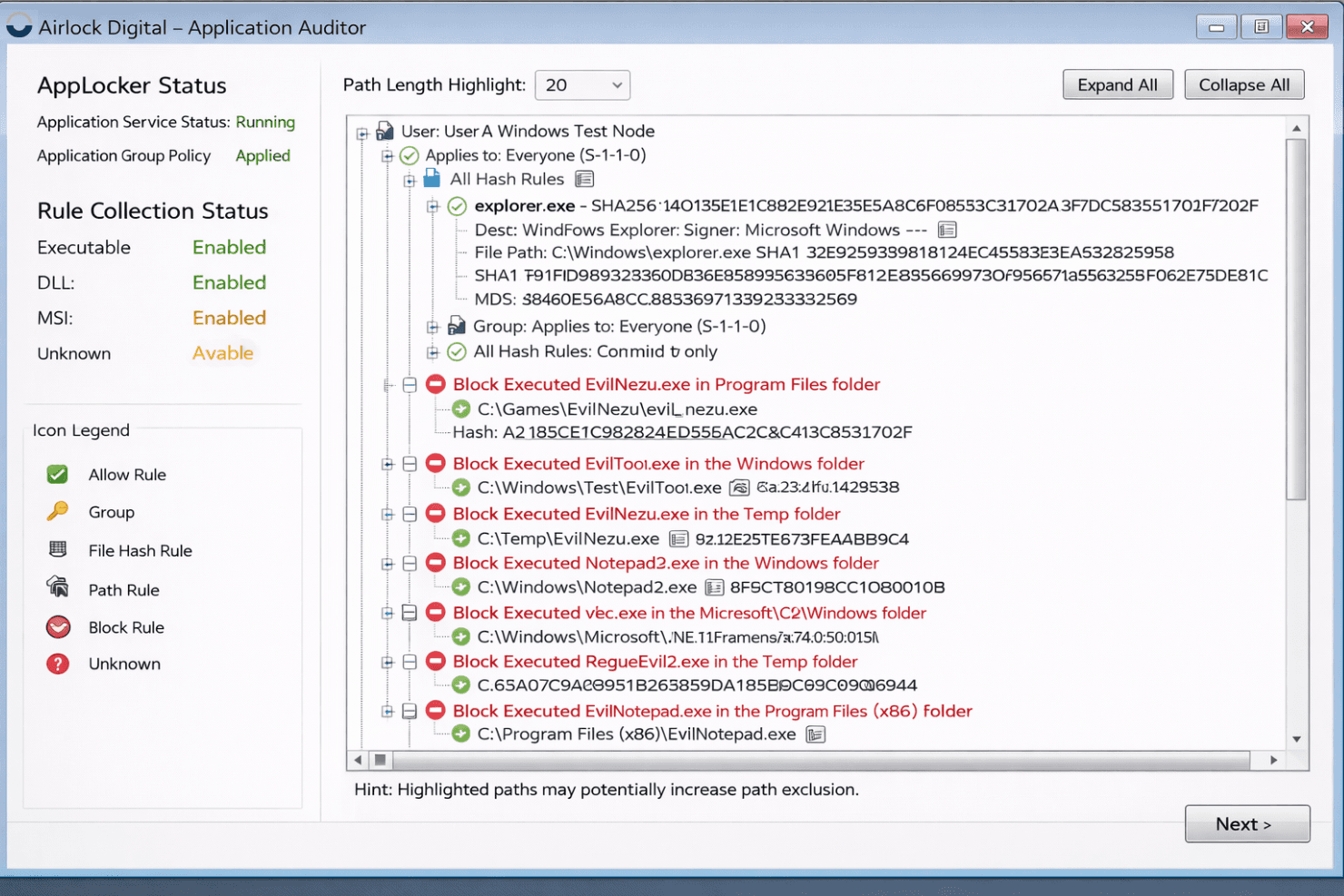
Airlock Digital is straightforward for IT teams familiar with application control, offering a clean interface and guided workflows that simplify policy creation and management. Users often mention that onboarding is clear, with helpful documentation and responsive support. However, ongoing policy tuning can be time-consuming in dynamic environments, and less technical users may find the allowlisting process demanding. Overall, it’s user-friendly for security professionals but may require more hands-on management than broader endpoint security tools.
Integrations
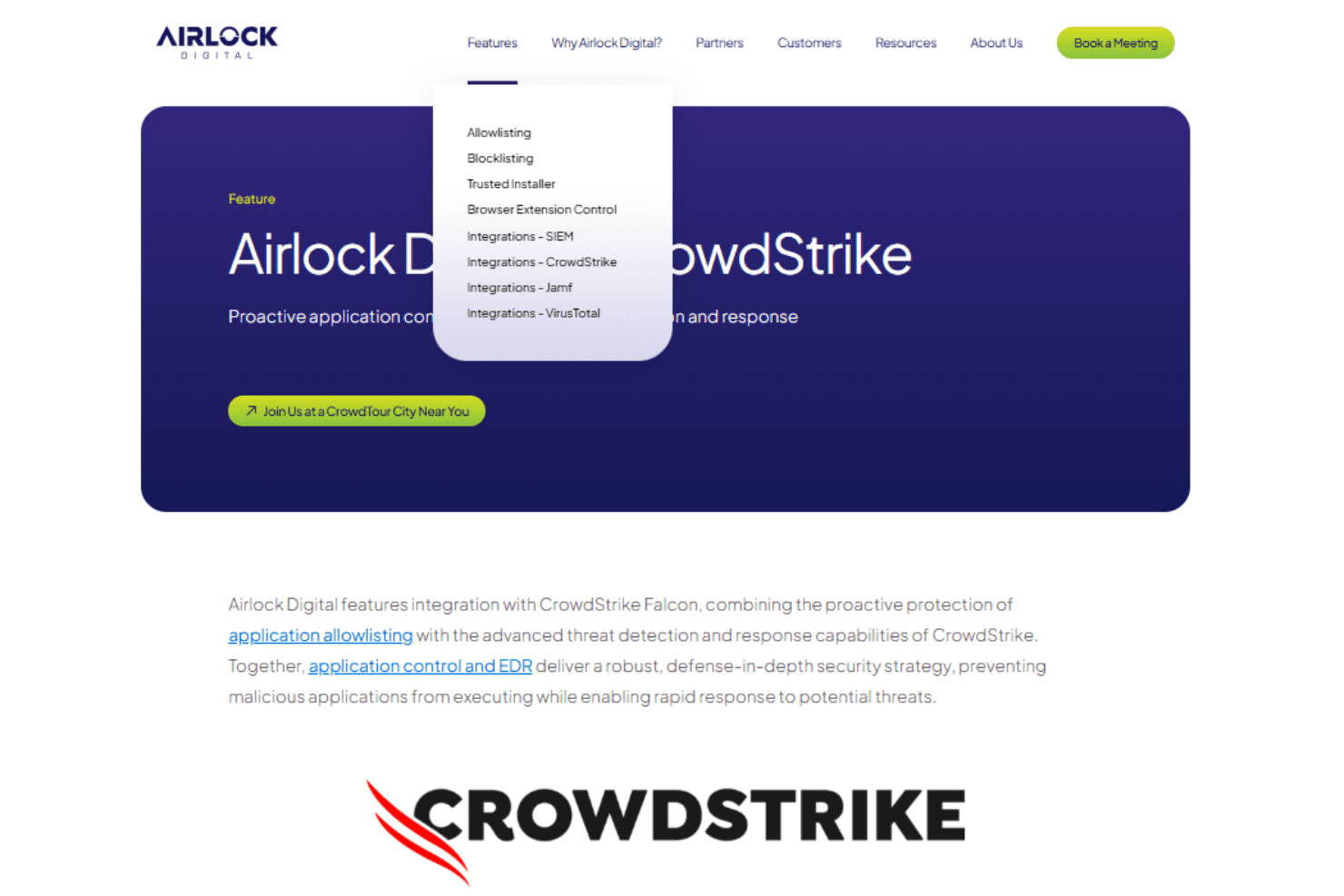
Airlock Digital integrates with Jamf, Splunk, Sumo Logic, Crowdstrike, and Microsoft SCCM, among others.
Airlock Digital also offers a rest API for custom integrations and automation.
Airlock Digital Specs
- 2-Factor Authentication: Yes
- Access Management: Yes
- Anti-Virus: Yes
- API: Yes
- Audit Management: Yes
- Audit Trail: Yes
- Batch Permissions & Access: Yes
- Compliance Tracking: Yes
- Dashboard: Yes
- Data Export: Yes
- Data Import: Yes
- DDoS Protection: Yes
- External Integrations: Yes
- File Sharing: Yes
- File Transfer: Yes
- Firewall: Yes
- Incident Management: Yes
- Malware Protection: Yes
- Multi-User: Yes
- Notifications: Yes
- Password & Access Management: Yes
- Policy Management: Yes
- Real-time Alerts: Yes
- Report & Compliance: Yes
- Risk Assessment: Yes
- Security Migration: Yes
- Threat Detection: Yes
- Workflow Management: Yes


