

Avis sur EZO AssetSonar 2026 : Avantages, Inconvénients, Fonctionnalités & Tarifs

Nous évaluons les outils indépendamment ; les commissions aident à financer nos tests. Consultez notre politique de transparence et notre méthodologie.
If you’re managing hundreds or thousands of IT assets across multiple locations, you know the pain of spreadsheet chaos, ghost licenses, and that sinking feeling during audit season. EZO AssetSonar is an intuitive IT asset management software that offers visibility without the complexity that typically comes with enterprise ITAM platforms.
I’ve analyzed AssetSonar’s feature set, pricing structure, and real user feedback to give you an unbiased assessment of whether this tool deserves a spot in your IT stack. You’ll get the specifics on what works well, like automated discovery and software license optimization, and where it might leave you wanting more.
Ezo AssetSonar Evaluation Summary
4.6/5
- From $29.99/user/month
- 7-day free trial
Pourquoi faire confiance à nos recommandations de logiciels
6,700+
Reviews
20
Industry experts
16+
Evaluation factors
14
Years
Notre équipe teste et évalue des logiciels depuis 2012. En tant que leaders technologiques nous-mêmes, nous savons à quel point il est difficile — et important — de choisir le bon logiciel.
Pour ce guide, nous avons évalué les outils grâce à des tests pratiques et une recherche indépendante, en notant les outils selon nos critères de sélection.
Nos avis reflètent notre jugement éditorial humain, et non un argumentaire de vente.
Réviseurs experts:
- Paulo Gardini MiguelDirecteur technique
 Tim FisherVP de l'IA
 Gabriel RosasTech Lead et architecte logiciel
 Christhian GruhnTech Lead et architecte plateforme

Ezo AssetSonar Overview
Pros
- Mobile app enables IT administrators to track, provision, and maintain assets remotely with full ecosystem visibility from any location.
- Software license optimization tools help identify unused licenses and prevent overspending through detailed usage tracking and renewal management.
- Automated network discovery and ITAM agent deployment provide comprehensive visibility across all hardware assets without manual data entry.
Cons
- While it is easy to use, there is an initial learning curve for configuration and setup.
- Smaller integration ecosystem than competitors, potentially requiring workarounds for specific workflow automations.
- Limited advanced reporting customization compared to enterprise ITAM platforms, which may restrict complex analytics needs for larger organizations.
Is Ezo AssetSonar Right For Your Needs?
Who Would be a Good Fit for Ezo AssetSonar?
AssetSonar is appropriate for medium-sized firms with 100 to 1,000 people who want to view all of their IT assets without having to deal with the expense or complexity of an enterprise-level solution. Its automated discovery and SaaS management tools are highly helpful for businesses that have too many software licenses, can’t keep up with regulations, or have shadow IT.
- Remote-First WorkplacesCloud-based asset monitoring with MDM connectors that maintain track of assets no matter where they are on a device is useful for trams that are spread out globally.
- SaaS-Heavy CompaniesCompanies using a lot of software can save money by detecting licenses that aren’t being utilized and making renewals easier with consolidated license data.
- Educational InstitutionsMobile provisioning and checkout management can help schools and colleges with a number of devices in different areas save time and money.
- Healthcare OrganizationsReal-time vulnerability monitoring and detailed asset custody records can help medical institutions that need to maintain a close track of compliance and be ready for audits.
- Growing IT TeamsAutomated asset monitoring that keeps up with expansion without adding a lot of extra work for administrators can help companies that are swiftly expanding their IT infrastructure.
Who Would be a Bad Fit for Ezo AssetSonar?
If you work for a big company that needs a lot of customization, advanced analytics, or third-party integrations that AssetSonar doesn’t already have, it might not be the best choice. Businesses that already use full-featured ITSM platforms or that need very specific compliance features for their industry might not find AssetSonar to have enough features. Companies with small IT departments, fewer than 50 employees, who only need to keep track of a few things, may also find the platform too hard to use.
- Minimal IT InfrastructureIf your small business only has a few devices and simple software stacks, you probably don’t need all of AssetSonar’s features and would be better off with tools that are less expensive and easier to use.
- Highly Regulated IndustriesBusinesses that need more than just basic vulnerability tracking to stay compliant may need ITAM solutions that are specific to their field and come with certified modules.
- Advanced Analytics TeamsFor IT departments that need detailed custom analytics and complex data modeling, the pre-built reporting structure may not be as flexible as other enterprise options.
- Legacy System EnvironmentsAssetSonar is mostly a cloud-based service, so you can’t use it on-site as much, making it hard for businesses that depend on a lot of on-premise infrastructure and don’t use the cloud.
- Large, Complex CompaniesBusinesses that have more than 5,000 assets in use around the world may not find AssetSonar’s reporting tool sufficient if they need more powerful platforms.
Notre méthodologie d'évaluation
Comment nous testons et notons les outils
Nous avons passé des années à développer, affiner et améliorer notre système de test et de notation des logiciels. Cette grille d’évaluation est conçue pour saisir les subtilités de la sélection des logiciels et ce qui rend un outil efficace, en se concentrant sur les aspects critiques du processus de décision.
Vous trouverez ci-dessous le détail de notre processus de test et de notation sur sept critères. Cela nous permet de fournir une évaluation impartiale du logiciel basée sur les fonctionnalités principales, les caractéristiques distinctives, la facilité d’utilisation, l’intégration, l’accompagnement lors de la prise en main, le support client, les avis utilisateurs et le rapport qualité-prix.
Fonctionnalité principale (25% de la note finale)
Le point de départ de notre évaluation est toujours la fonctionnalité principale de l’outil. Possède-t-il les fonctions de base auxquelles un utilisateur s’attend ? Certaines de ces fonctionnalités principales sont-elles limitées à des forfaits plus chers ? Nous attendons d’un outil qu’il soit au moins à la hauteur des capacités de base de ses concurrents.
Fonctionnalités remarquables (25% de la note finale)
Ensuite, nous évaluons les fonctionnalités exceptionnelles qui dépassent la fonctionnalité de base habituellement trouvée dans ce type d’outil. Un score élevé reflète des fonctionnalités spécialisées ou uniques rendant le produit plus rapide, plus efficace ou apportant une valeur ajoutée à l’utilisateur.
Nous évaluons aussi la facilité d’intégration avec d’autres outils courants dans la pile technologique pour élargir les fonctionnalités et l’utilité du logiciel. Les outils dotés de nombreuses intégrations natives, de connexions tierces et d’un accès API facilitant des intégrations personnalisées obtiennent les meilleurs scores.
Facilité d’utilisation (10% de la note finale)
Nous considérons la rapidité et la simplicité d’exécution des tâches principales avec l’outil. Les logiciels les mieux notés sont bien conçus, intuitifs, proposent des applications mobiles, offrent des modèles et rendent des tâches relativement complexes très simples.
Accompagnement lors de la prise en main (10% de la note finale)
Nous savons que l’adoption rapide d’une nouvelle plateforme au sein d’une équipe est cruciale. Nous évaluons donc la facilité avec laquelle un nouvel utilisateur peut apprendre et utiliser un outil avec un minimum de formation. Les meilleures solutions permettent une mise en route rapide, sans nécessité de support.
Support client (10% de la note finale)
Nous analysons la facilité et la rapidité avec lesquelles il est possible d’obtenir de l’aide par téléphone, chat en direct ou base de connaissances. Les outils et entreprises offrant une assistance en temps réel obtiennent les meilleurs scores, tandis que les chatbots sont moins bien notés.
Avis utilisateurs (10% de la note finale)
Au-delà de nos propres tests et évaluations, nous tenons compte du net promoter score des utilisateurs actuels et passés. Nous regardons la probabilité qu’ils choisiraient à nouveau l’outil pour ses fonctionnalités principales. Un logiciel bien noté reflète un net promoter score élevé.
Rapport qualité-prix (10% de la note finale)
Enfin, en tenant compte de tous les autres critères, nous examinons le prix moyen des forfaits d’entrée de gamme par rapport aux fonctionnalités principales et à la valeur des autres critères. Un logiciel offrant plus, pour moins cher, obtiendra un meilleur score.
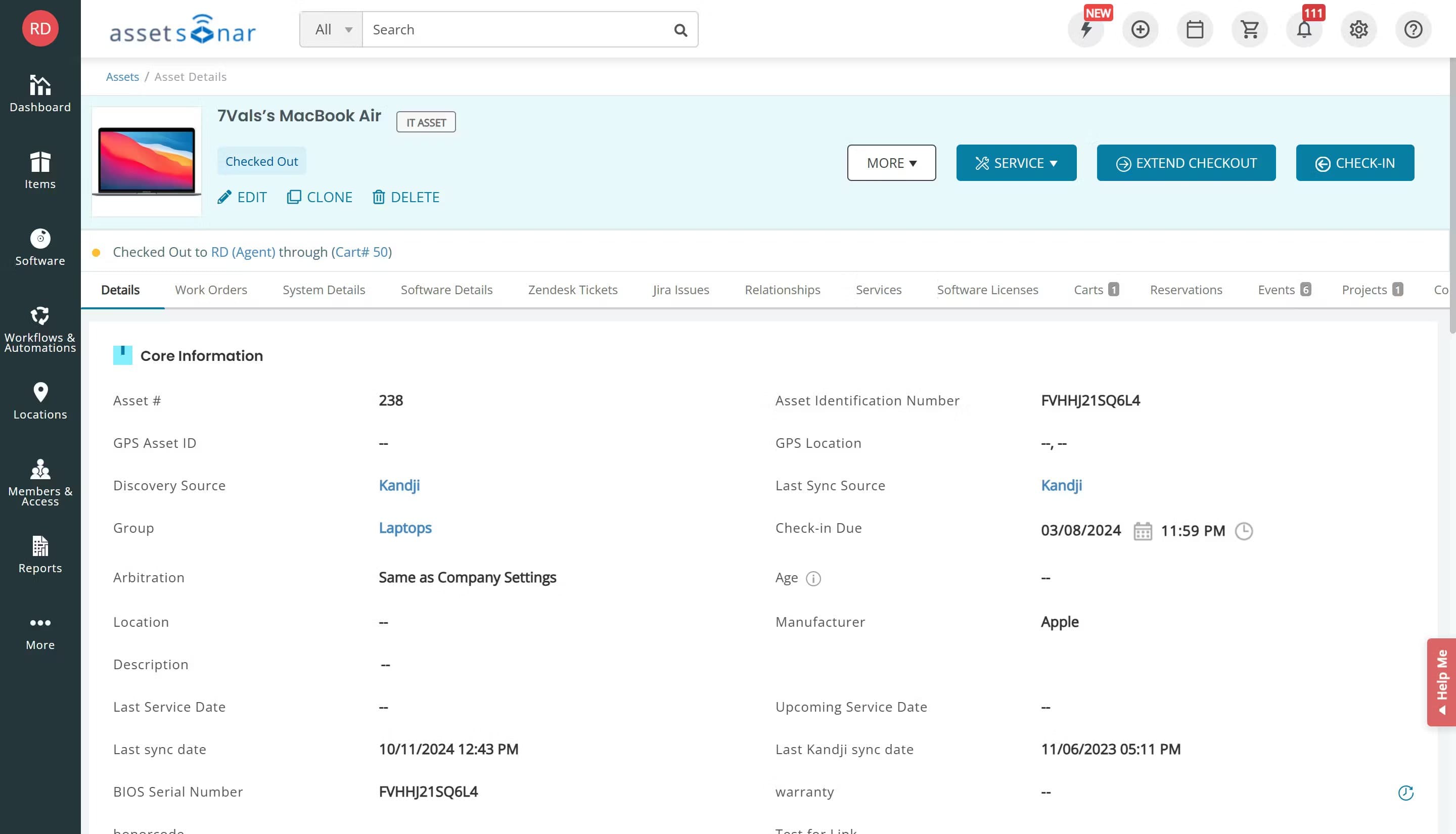
Core Features
Automated Network Discovery
AssetSonar’s network discovery engine automatically finds and lists all the hardware assets that are connected to your network. Your configuration management database stays up to date without IT’s help because the system is always looking for new devices and updating asset records in real time.
Software License Management
The platform keeps track of all the software licenses in your company, including installations, versions, and how they are used. You can find licenses that aren’t being used enough, plan renewals in advance, and save money by canceling or moving software subscriptions that you don’t use.
IT Asset Lifecycle Management
AssetSonar keeps track of assets from the time you buy them until you throw them away, so you can see every step of the hardware lifecycle. The system keeps track of warranty information, maintenance schedules, and how much things lose value over time, making it easier to plan purchases based on how well the assets work and how they are used.
ITAM Agent and MDM Integrations
A lightweight discovery agent runs on both Windows and Mac computers and automatically collects a lot of information about the hardware and software on those computers. With native MDM integrations, you can keep an eye on all of your mobile devices, which gives you full visibility across all of your endpoints.
Configuration Management Database (CMDB)
The built-in CMDB shows how configuration items are connected, which speeds up the process of fixing problems. IT teams can see how changes or outages will affect services by knowing which hardware or software components they depend on.
Vulnerability and Patch Management
Real-time monitoring looks for security holes in both hardware and software and sends automated alerts for serious risks. The platform keeps track of the status of patches and lets you block bad software while keeping browser security data to stop costly security breaches.
Standout Features
Mobile Asset Management App
IT admins can manage the whole asset ecosystem from anywhere, whether they’re at work or on the road, thanks to AssetSonar’s specialized mobile app. System administrators may use their phones to find out where assets are, update maintenance records, set up new equipment, and run audits. This is a feature that isn’t often found in ITAM platforms that cost as much as AssetSonar.
Automated Onboarding and Offboarding Workflows
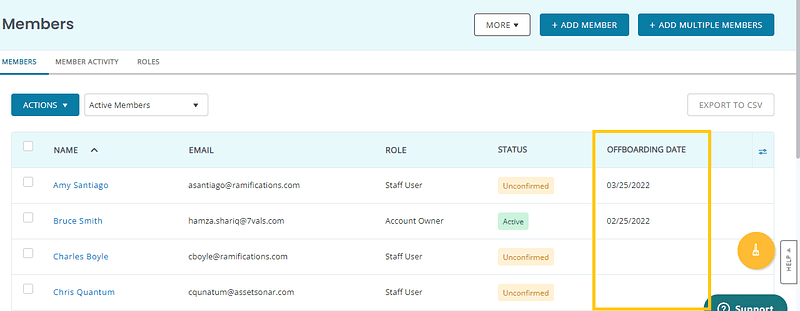
The platform lets you customize process automation to handle the whole employee lifecycle, making it easy to give and receive IT assets. You can build automatic onboarding procedures that offer new employees laptops, software licenses, and login information. When an employee leaves, offboarding routines immediately take back their assets and cancel their access.
Ease of Use
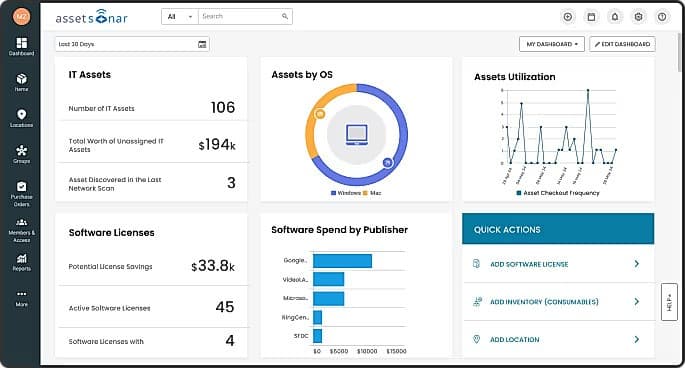
AssetSonar is generally an easy-to-use platform, but the reality of that depends on how complicated the organization is. With visual widgets and pre-made reports, the dashboard gives you a centralized view of your IT ecosystem that makes it easy for most IT teams to keep track of their assets. But the first time you set things up and configure them, it can be hard to learn how to do things, especially when you have to customize workflows, set up integrations, or configure the ITAM agent for different types of devices. Once set up, everyday tasks like checking out assets, running reports, and managing licenses become fairly easy.
Onboarding
AssetSonar helps teams build up their asset collection by providing a structured onboarding process with setup guidance and guided configuration. New users may install the ITAM agent, set up network discovery, and connect ITSM tools with the aid of documentation, video tutorials, and step-by-step instructions. Customer service during onboarding may help with technical setup issues, but the level of hands-on coaching depends on the pricing tier. Automated walkthroughs help with basic navigation, but businesses with complex infrastructure or specific process needs may require extra effort to make the platform work better.
Customer Support
AssetSonar can help customers in many ways, such as email support, a help center with documents, and a knowledge base of the right way to do things and how to solve problems. The platform has videos, setup tips, and an FAQ that answer common questions about how to use its features and set them up. Higher price levels may include paid help choices that respond more quickly and handle accounts directly.
Integrations
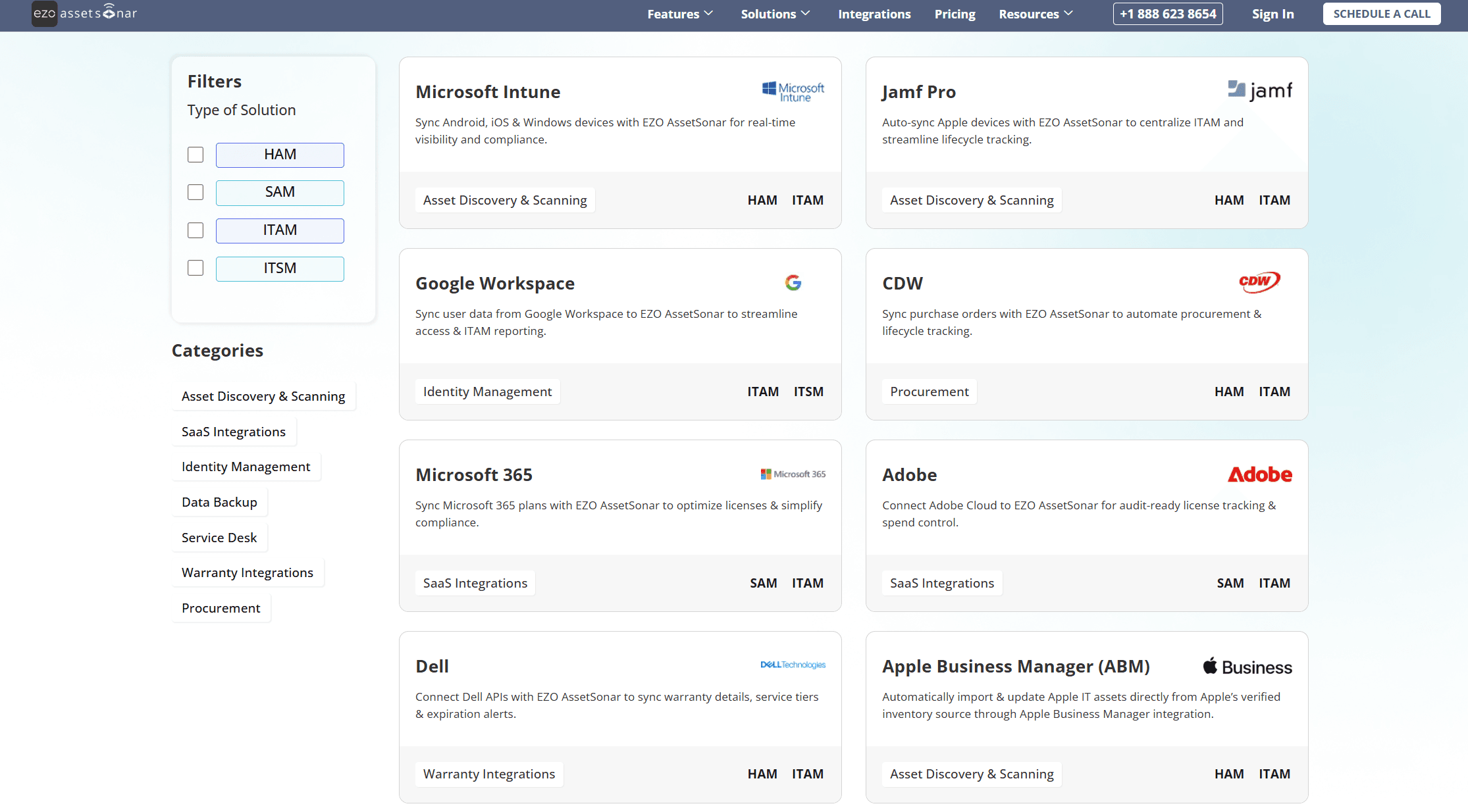
AssetSonar integrates with identity management tools like Okta, Azure AD, G Suite, OneLogin, Centrify, and Ping Identity, as well as native connections to popular ITSM platforms like Zendesk and Jira. It also works with Jamf Pro, Microsoft Intune, Cisco Meraki, Workplace One, JumpCloud, Kandji, and Mosyle Manager to find devices. The platform also works with Microsoft SCCM and Google Endpoint Management to keep track of Windows and Chrome OS devices, respectively, as well as with backup services like Dropbox and OneDrive. AssetSonar’s API lets users add new features and connect the software to private systems or other third-party tools that aren’t covered by native connections.
Value for Money
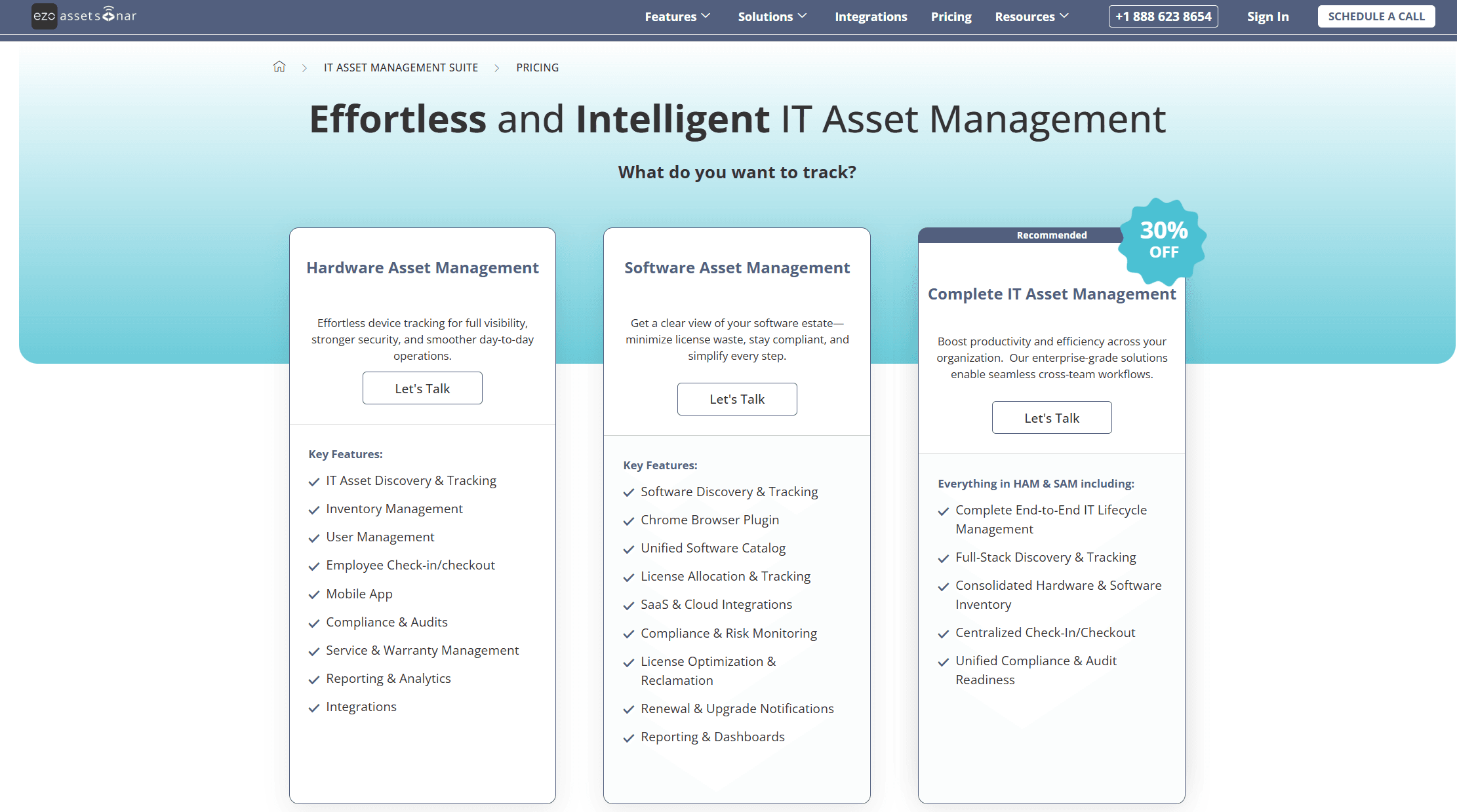
AssetSonar offers competitive pricing positioned between basic asset tracking tools and enterprise-level ITAM platforms, making it accessible for mid-sized organizations that need comprehensive features without enterprise budgets. Its plans are structured around whether you need only Hardware Asset Management (HAM), only Software Asset Management (SAM), or a combined ITAM plan that includes both, so you’re not forced to pay for capabilities you don’t use. The platform provides a free trial to test functionality before committing, but exact pricing isn’t listed publicly—you’ll need to speak with sales to get a quote tailored to your asset volume and feature needs. If you require automated discovery, software license optimization, and mobile management, the value is compelling compared with manual tracking or juggling multiple point solutions.
Ezo AssetSonar Specs
- 2-Factor Authentication: No
- API: Yes
- Asset Tagging: No
- Dashboard: Yes
- Data Export: Yes
- Data Import: Yes
- Data Visualization: Yes
- Database: Yes
- Document Management: No
- External Integrations: Yes
- Hardware Integration: No
- Hardware Modernization: No
- Inventory Tracking: Yes
- Multi-User: Yes
- Network Device Performance Monitoring: No
- Network Traffic Monitoring: No
- Network Visualization: No
- Notifications: Yes
- Scheduling: Yes
- Status Notifications: Yes
- Third-Party Plugins/Add-Ons: Yes
- Workflow Management: Yes
Ezo AssetSonar FAQs
Ezo AssetSonar Company Overview & History
EZO, which used to be called EZOfficeInventory, was first released in 2013 as a cloud-based system for keeping track of assets. Now it is a full-fledged asset intelligence platform that helps businesses all over the world. The company changed its name to EZO in 2025 to reflect its new vision of asset intelligence reimagined. This stop moved the company from traditional inventory management to predictive analytics and AI-driven insights. EZO is based in the US, but it sells to people all over the world and now has a number of product lines, such as AssetSonar for keeping track of IT assets, as well as tools for keeping track of general equipment and running facilities.
Major Milestones
- 2013: EZOfficeInventory was founded as a cloud-based asset tracking solution.
- 2017: Launched AssetSonar as a dedicated IT asset management platform separate from general equipment tracking.
- 2023: Became available on AWS Marketplace, expanding cloud deployment options for enterprise customers.
- 2025: Rebranded from EZOfficeInventory to EZO, reflecting evolution toward asset intelligence and AI-driven capabilities.
- 2025: Introduced enhanced product updates, including advanced network discovery features and expanded MDM integrations.
- 2025: Demonstrated measurable client success with case studies showing 100% IT productivity improvements.