

Avis sur Open DevOps 2026 : Avantages, inconvénients, fonctionnalités et tarification
Open DevOps associe la puissance d’Atlassian à des intégrations flexibles : l’idéal si vous souhaitez une boîte à outils DevOps unifiée sans renoncer à vos outils préférés. Voici ce qui se démarque (et ce qui ne l’est pas).

Nous évaluons les outils indépendamment ; les commissions aident à financer nos tests. Consultez notre politique de transparence et notre méthodologie.
Open DevOps is a DevOps tool built by Atlassian that connects Jira, Bitbucket, Confluence, and third-party integrations across the full software development lifecycle. It's worth considering if your team already lives in the Atlassian ecosystem and needs to coordinate planning, coding, CI/CD, and incident response without jumping between disconnected platforms. Compared to GitLab, which keeps everything inside a single proprietary system, Open DevOps gives you more flexibility to bring in tools like GitHub, Jenkins, or PagerDuty alongside your existing Atlassian stack.
Open DevOps Evaluation Summary
4.5/5
- From $7.75/user/month
- Free plan available
Pourquoi faire confiance à nos recommandations de logiciels
6,700+
Reviews
20
Industry experts
16+
Evaluation factors
14
Years
Notre équipe teste et évalue des logiciels depuis 2012. En tant que leaders technologiques nous-mêmes, nous savons à quel point il est difficile — et important — de choisir le bon logiciel.
Pour ce guide, nous avons évalué les outils grâce à des tests pratiques et une recherche indépendante, en notant les outils selon nos critères de sélection.
Nos avis reflètent notre jugement éditorial humain, et non un argumentaire de vente.
Réviseurs experts:
- Paulo Gardini MiguelDirecteur technique
 Tim FisherVP de l'IA
 Gabriel RosasTech Lead et architecte logiciel
 Christhian GruhnTech Lead et architecte plateforme

Open DevOps Overview
I think Open DevOps stands out for teams that want a unified DevOps experience without losing flexibility. Its deep integration with Atlassian tools, open API, and marketplace apps makes it easy to tailor your stack. Pricing is transparent, and onboarding is smooth if you’re already using Jira or Bitbucket. The interface is familiar, but some advanced automation features lag behind niche competitors.
I’d suggest it for teams that value collaboration, need strong documentation, and want to avoid juggling disconnected tools. If you’re judging by ease of adoption and integration options, Open DevOps is a strong contender.
Pros
- Open DevOps offers a clean interface that simplifies complex tasks for your team.
- It provides advanced features for prioritization and roadmapping that enhance your project management.
- The tool improves visibility, keeping your team aligned with clear milestones and a single source of truth.
Cons
- Onboarding can be overwhelming, requiring time for your team to see value.
- The steep learning curve may initially challenge your team.
- It offers limited templates, which might slow down your project kick-off.
Is Open DevOps Right For Your Needs?
Who Would be a Good Fit for Open DevOps?
Open DevOps is ideal for agile development teams and IT departments in industries like finance and healthcare. Its robust automation and customizable architecture make it a great fit for teams managing complex projects with tight deadlines. If your work involves frequent updates and requires clear project visibility, Open DevOps can streamline your processes and enhance collaboration with its advanced roadmapping and prioritization features.
- Agile TeamsOpen DevOps supports agile workflows with features that enhance collaboration and streamline project management.
- IT DepartmentsIt offers tools for efficient project tracking and prioritization, perfect for IT teams handling multiple projects.
- Finance IndustryOpen DevOps helps manage compliance and security needs with its clear visibility and tracking features.
- Healthcare SectorThe software’s roadmapping capabilities aid in managing complex projects and regulatory requirements.
- Large EnterprisesIts robust architecture and automation features support large teams needing efficient coordination.
- Project ManagersOpen DevOps provides clear milestones and a single source of truth, aiding in effective project leadership.
Who Would be a Bad Fit for Open DevOps?
Small businesses or startups with limited resources might struggle with Open DevOps due to its complex onboarding and steep learning curve. If your team lacks experience in advanced project management tools, the initial setup and training could overwhelm you. Likewise, industries or teams that don’t require frequent updates or complex project tracking may find the software’s advanced features unnecessary and underutilized.
- Small StartupsThe complexity and learning curve could overwhelm small teams with limited resources and experience.
- Retail IndustryRetail businesses that don’t require intensive project management might not benefit from its advanced features.
- Non-Technical TeamsTeams lacking technical expertise may find it challenging to navigate Open DevOps’s robust functionalities.
- FreelancersIndividuals working solo may not need the extensive collaboration and project tracking tools offered.
- Non-Profit OrganizationsOrganizations with limited budgets might not find the investment in Open DevOps justified for their needs.
- Construction CompaniesConstruction projects with less frequent updates may not fully utilize the software’s robust tracking capabilities.
Notre méthodologie d'évaluation
Comment nous testons et notons les outils
Nous avons passé des années à développer, affiner et améliorer notre système de test et de notation des logiciels. Cette grille d’évaluation est conçue pour saisir les subtilités de la sélection des logiciels et ce qui rend un outil efficace, en se concentrant sur les aspects critiques du processus de décision.
Vous trouverez ci-dessous le détail de notre processus de test et de notation sur sept critères. Cela nous permet de fournir une évaluation impartiale du logiciel basée sur les fonctionnalités principales, les caractéristiques distinctives, la facilité d’utilisation, l’intégration, l’accompagnement lors de la prise en main, le support client, les avis utilisateurs et le rapport qualité-prix.
Fonctionnalité principale (25% de la note finale)
Le point de départ de notre évaluation est toujours la fonctionnalité principale de l’outil. Possède-t-il les fonctions de base auxquelles un utilisateur s’attend ? Certaines de ces fonctionnalités principales sont-elles limitées à des forfaits plus chers ? Nous attendons d’un outil qu’il soit au moins à la hauteur des capacités de base de ses concurrents.
Fonctionnalités remarquables (25% de la note finale)
Ensuite, nous évaluons les fonctionnalités exceptionnelles qui dépassent la fonctionnalité de base habituellement trouvée dans ce type d’outil. Un score élevé reflète des fonctionnalités spécialisées ou uniques rendant le produit plus rapide, plus efficace ou apportant une valeur ajoutée à l’utilisateur.
Nous évaluons aussi la facilité d’intégration avec d’autres outils courants dans la pile technologique pour élargir les fonctionnalités et l’utilité du logiciel. Les outils dotés de nombreuses intégrations natives, de connexions tierces et d’un accès API facilitant des intégrations personnalisées obtiennent les meilleurs scores.
Facilité d’utilisation (10% de la note finale)
Nous considérons la rapidité et la simplicité d’exécution des tâches principales avec l’outil. Les logiciels les mieux notés sont bien conçus, intuitifs, proposent des applications mobiles, offrent des modèles et rendent des tâches relativement complexes très simples.
Accompagnement lors de la prise en main (10% de la note finale)
Nous savons que l’adoption rapide d’une nouvelle plateforme au sein d’une équipe est cruciale. Nous évaluons donc la facilité avec laquelle un nouvel utilisateur peut apprendre et utiliser un outil avec un minimum de formation. Les meilleures solutions permettent une mise en route rapide, sans nécessité de support.
Support client (10% de la note finale)
Nous analysons la facilité et la rapidité avec lesquelles il est possible d’obtenir de l’aide par téléphone, chat en direct ou base de connaissances. Les outils et entreprises offrant une assistance en temps réel obtiennent les meilleurs scores, tandis que les chatbots sont moins bien notés.
Avis utilisateurs (10% de la note finale)
Au-delà de nos propres tests et évaluations, nous tenons compte du net promoter score des utilisateurs actuels et passés. Nous regardons la probabilité qu’ils choisiraient à nouveau l’outil pour ses fonctionnalités principales. Un logiciel bien noté reflète un net promoter score élevé.
Rapport qualité-prix (10% de la note finale)
Enfin, en tenant compte de tous les autres critères, nous examinons le prix moyen des forfaits d’entrée de gamme par rapport aux fonctionnalités principales et à la valeur des autres critères. Un logiciel offrant plus, pour moins cher, obtiendra un meilleur score.
Core Features
Automated Workflows
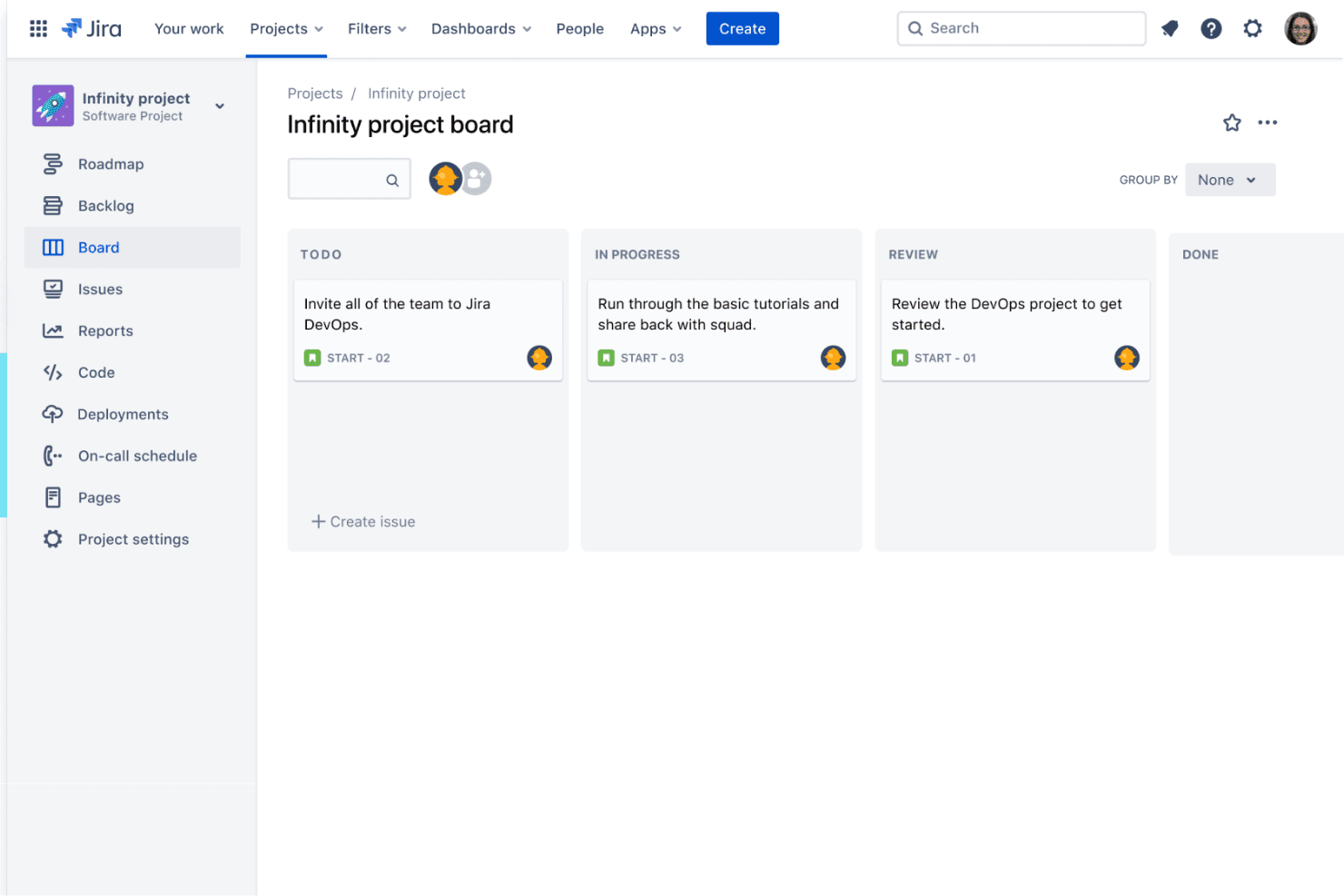
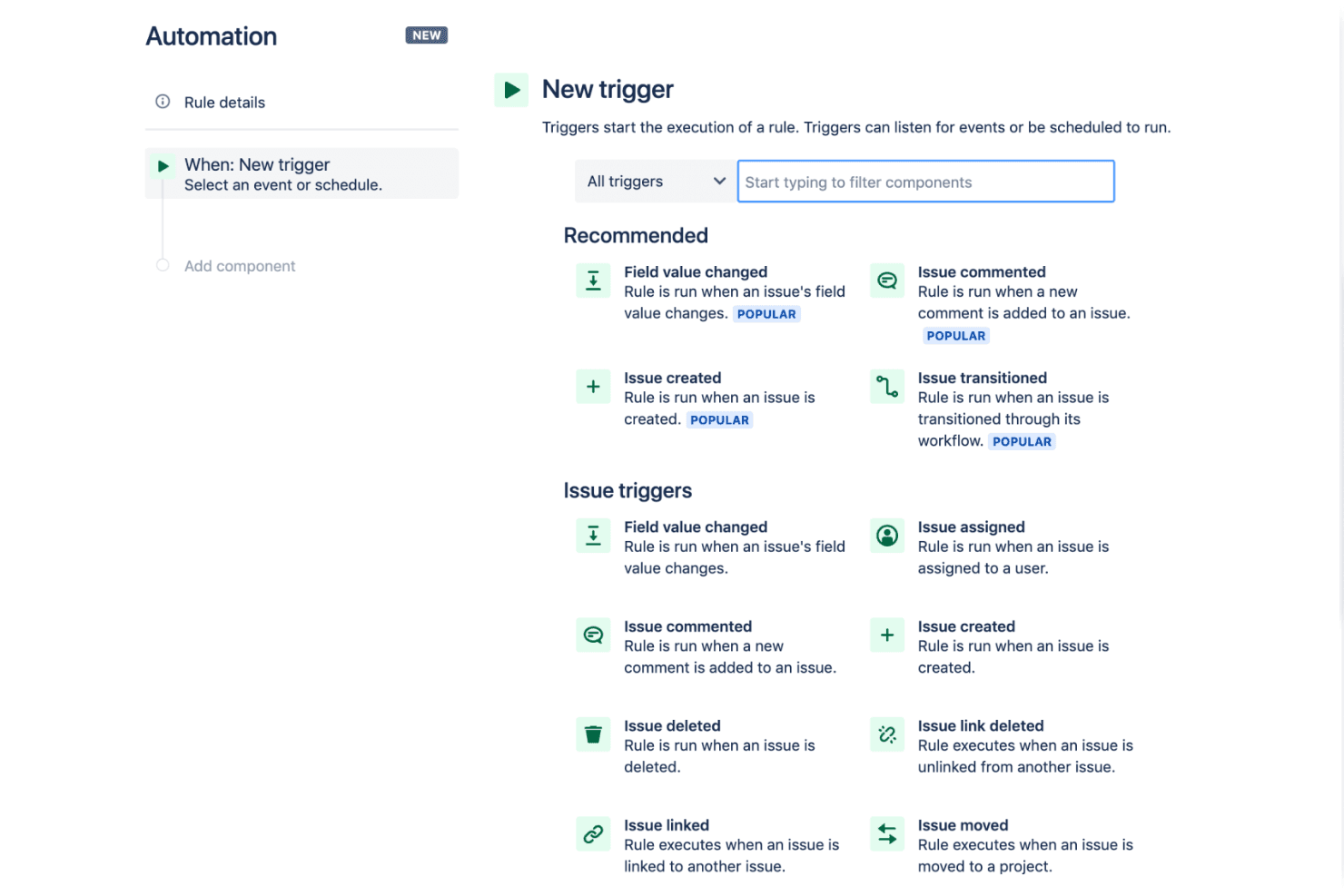
Automate code deployments, testing, and notifications across your pipeline. Users can trigger actions based on code changes or ticket updates.
Jira Issue Tracking
Track bugs, tasks, and user stories directly within your DevOps workflow. Every code change links back to a Jira ticket for full traceability.
Bitbucket Code Repositories
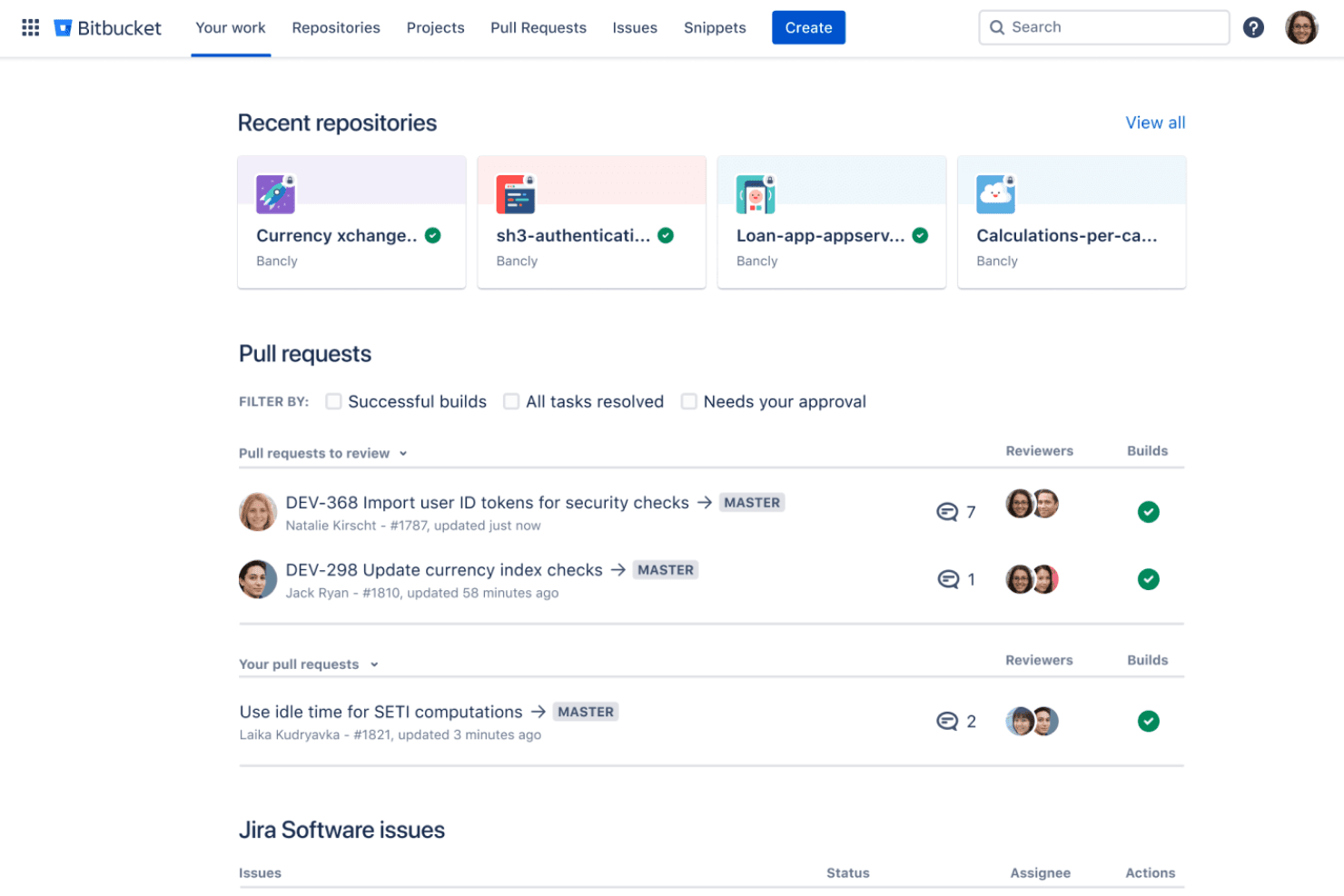
Host, review, and manage code with built-in Git repositories. Pull requests and branch permissions help enforce code quality.
Confluence Documentation
Document processes, runbooks, and project details alongside your code and tickets. Teams can collaborate on living documentation that updates as work progresses.
CI/CD Pipelines
Build, test, and deploy automatically with integrated continuous integration and delivery. Visual pipeline editors make setup and monitoring straightforward.
Incident Management
Respond to outages and incidents with built-in alerting and tracking. Link incidents to code changes and tickets for faster root cause analysis.
Ease of Use
Open DevOps feels approachable for teams already using Atlassian tools, thanks to its familiar interface and clear navigation. Many users say onboarding is quick, especially when linking Jira and Bitbucket projects. Some workflows can get complex as you add more features, but built-in guides and documentation help smooth the process.
I think most teams will find it user-friendly, though power users may want more shortcuts and customization options.
Integrations
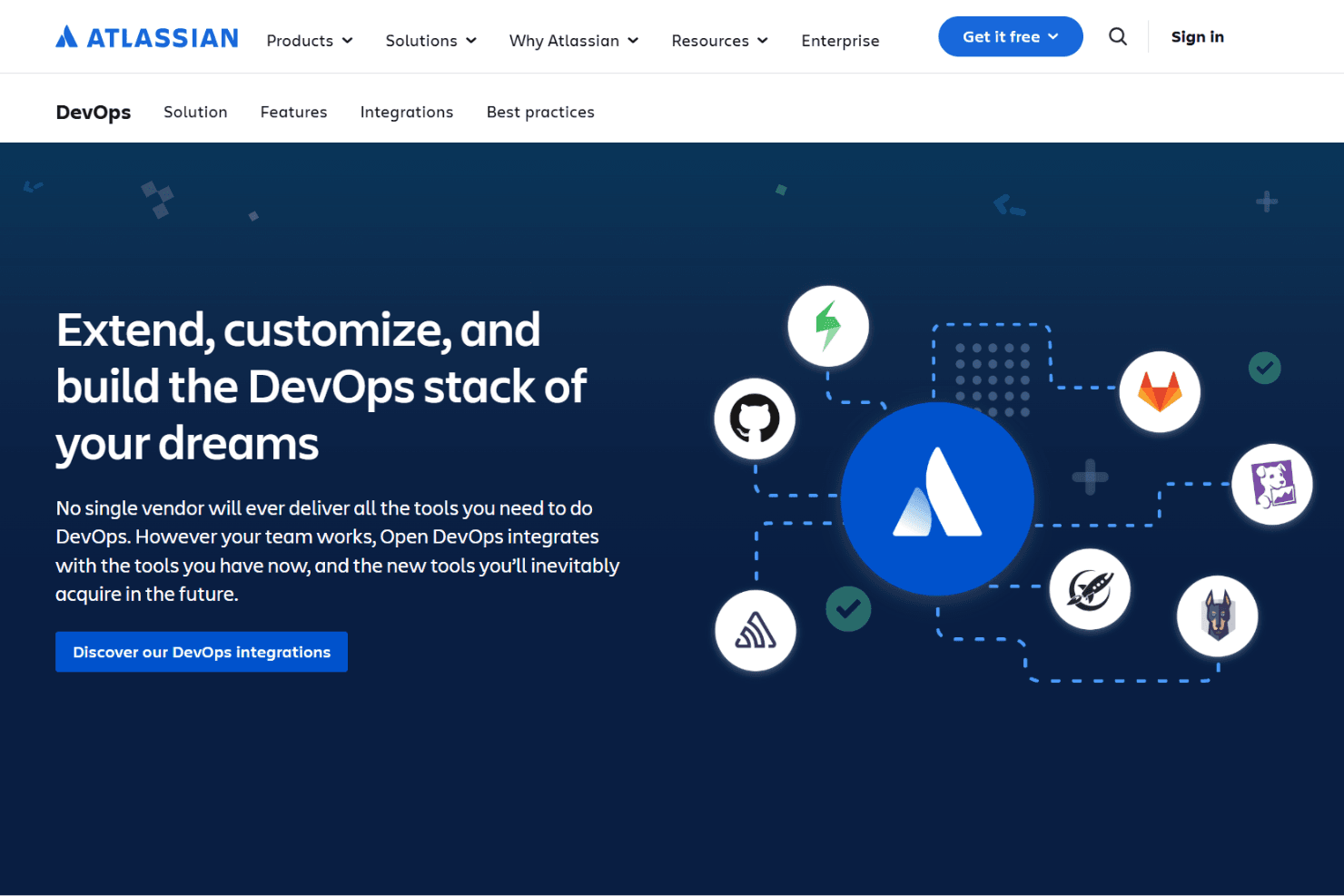
Open DevOps integrates with Jira, Bitbucket, Confluence, Jira Service Management, Trello, Loom, Compass, Rovo, Pipelines, and DX, among others.
Open DevOps also offers an open API and connects with third-party integration tools through the Atlassian Marketplace.
Open DevOps Specs
- 2-Factor Authentication: No
- Access Management: Yes
- Anti-Virus: No
- API: Yes
- Audit Trail: Yes
- Bug Tracking: Yes
- Calendar Management: No
- Customer Management: No
- Dashboard: Yes
- Data Export: No
- Data Import: No
- Data Visualization: No
- Email Integration: No
- External Integrations: Yes
- File Sharing: No
- File Transfer: No
- Firewall: No
- Google Apps Integration: No
- Inventory Tracking: No
- Malware Protection: No
- Multi-User: Yes
- Network Device Performance Monitoring: No
- Network Traffic Monitoring: No
- Network Visualization: No
- Notifications: Yes
- Project Management: Yes
- Remote Access: No
- Risk Assessment: No
- SAP Integration: No
- Scheduling: No
- Software Integration: Yes
- Third-Party Plugins/Add-Ons: Yes
- Ticket Management: Yes


