

Reseña de Trustwave: Ventajas, Desventajas, Características y Precios
Trustwave destaca por sus completas funciones de seguridad y precios competitivos, lo que la convierte en una excelente opción para la seguridad de bases de datos.

Revisamos herramientas de forma independiente y las comisiones ayudan a financiar nuestras pruebas. Consulta nuestra política de transparencia, nuestra metodología o sugiere una herramienta.
Trustwave is a database security software built around database activity monitoring, vulnerability assessment, and compliance reporting across heterogeneous database environments. It's a strong fit for security teams that need visibility into who's accessing sensitive data—and a clear audit trail to back it up. If IBM Guardium feels like more platform than your team can realistically manage and maintain, Trustwave gives you comparable detection and audit coverage with a lighter operational footprint.
Trustwave Evaluation Summary
4.1/5
- Pricing upon request
- Free demo available
Por qué confiar en nuestras recomendaciones de software
6,700+
Reviews
20
Industry experts
16+
Evaluation factors
14
Years
Nuestro equipo lleva probando y evaluando software desde 2012. Como líderes tecnológicos, sabemos lo difícil —y lo importante— que es elegir el software adecuado.
Para esta guía, evaluamos las herramientas mediante pruebas prácticas e investigación independiente, puntuando las herramientas según nuestros criterios de selección.
Nuestras reseñas reflejan nuestro criterio editorial humano, no un discurso de ventas.
Revisores expertos:
- Paulo Gardini MiguelDirector técnico
 Tim FisherVP de IA
 Gabriel RosasTech Lead y arquitecto de software
 Christhian GruhnTech Lead y arquitecto de plataforma

Trustwave Overview
In my opinion, Trustwave offers strong database security features that cater well to larger enterprises requiring advanced protection. Its standout features, such as threat detection and compliance, are impressive, although the onboarding process could be smoother. It provides significant value to bigger IT teams that manage an extensive amount of data. Compared to other database and security tools, Trustwave is often praised for its threat detection, but smaller teams may find some aspects of usability and integration to be challenging.
Pros
- Trustwave offers robust threat detection capabilities.
- It provides reliable compliance management for businesses handling sensitive data.
- Teams can benefit from detailed security reporting features.
Cons
- Implementation and setup can be challenging for some users.
- The interface can be less intuitive compared to other software.
- It may require more time and resources to effectively implement.
Is Trustwave Right For Your Needs?
Who Would be a Good Fit for Trustwave?
Trustwave is a great fit for mid-to-large enterprises and regulated industries such as finance and healthcare, where data security and compliance are crucial. Its strong threat detection, MDR services, and compliance reporting capabilities make it a viable SIEM solution for teams handling sensitive data and responsible for meeting regulatory requirements. If you're managing extensive databases and need reliable protection, Trustwave is worth considering for advanced security measures.
- Financial InstitutionsTrustwave provides excellent threat detection for protecting highly sensitive financial and transaction data.
- Healthcare ProvidersHealthcare teams can benefit from Trustwave's compliance management, ensuring patient data is secure and healthcare regulatory requirements are met.
- Large EnterprisesTrustwave's security reporting helps manage extensive databases in large, complex environments effectively.
- IT Security TeamsSecurity teams can leverage Trustwave's advanced threat detection capabilities, which enables proactive monitoring and remediation.
- Compliance OfficersTrustwave's compliance tools help meet industry regulations through reporting, audits, and advisory services.
- Data-Driven BusinessesCompanies that handle large volumes of sensitive or regulated data can rely on Trustwave's layered security and reporting.
Who Would be a Bad Fit for Trustwave?
Trustwave might not be the best choice for small businesses or startups with limited IT resources. The onboarding process can be challenging, and teams might find the interface less intuitive compared to simpler tools. If you're in an industry with less stringent data security requirements, Trustwave's advanced features may be excessive for your needs. Small teams that need quick, easy-to-use solutions might find other software a better fit.
- Small StartupsTrustwave's enterprise-grade security might be too complex for basic requirements.
- Non-Tech IndustriesThe software's advanced security features may be overkill for environments with minimal risk.
- Budget-Conscious TeamsTrustwave's cost may not align with limited financial resources.
- FreelancersTrustwave's vast capabilities may be unnecessary for individual projects.
- Education SectorEducation organizations with basic data protection needs might not require Trustwave's advanced tools.
- Retail BusinessesTrustwave can be too complex for straightforward data security needs.
Nuestra metodología de revisión
Cómo probamos y puntuamos las herramientas
Hemos invertido años construyendo, refinando y mejorando nuestro sistema de pruebas y puntuación de software. La rúbrica está diseñada para captar los matices de la selección de software y lo que hace a una herramienta efectiva, enfocándose en aspectos críticos del proceso de toma de decisiones.
A continuación, puedes ver exactamente cómo nuestro sistema de prueba y puntuación funciona a través de siete criterios. Esto nos permite ofrecer una evaluación imparcial del software basada en funcionalidad central, características destacadas, facilidad de uso, incorporación, soporte al cliente, integraciones, reseñas de clientes y relación calidad-precio.
Funcionalidad principal (25% de la puntuación final)
El punto de partida de nuestra evaluación siempre es la funcionalidad central de la herramienta. ¿Tiene las características y funciones básicas que un usuario esperaría encontrar? ¿Alguna de esas funciones principales está limitada a planes de precios superiores? Esperamos que una herramienta esté a la altura de las capacidades básicas de sus competidores.
Características destacadas (25% de la puntuación final)
Luego, evaluamos las características poco comunes y sobresalientes que van más allá de la funcionalidad principal que normalmente se encuentra en herramientas de su tipo. Una puntuación alta refleja características especializadas o únicas que hacen el producto más rápido, eficiente o que ofrecen valor adicional al usuario.
También evaluamos qué tan fácil es integrar con otras herramientas que normalmente forman parte del ecosistema tecnológico para expandir la funcionalidad y utilidad del software. Las herramientas que ofrecen abundantes integraciones nativas, conexiones de terceros y acceso API para crear integraciones personalizadas obtienen la mejor puntuación.
Facilidad de uso (10% de la puntuación final)
Consideramos cuán rápido y sencillo es ejecutar las tareas definidas por la funcionalidad principal usando la herramienta. El software con mejor puntuación está bien diseñado, es intuitivo, ofrece aplicaciones móviles, proporciona plantillas y hace que tareas relativamente complejas parezcan sencillas.
Incorporación (10% de la puntuación final)
Sabemos lo importante que es la adopción rápida por parte del equipo para una nueva plataforma, por lo que evaluamos cuán fácil es aprender y usar una herramienta con entrenamiento mínimo. Evaluamos cuán rápido un miembro del equipo puede configurarla y comenzar a utilizarla sin experiencia previa. Las soluciones con mayor puntuación requieren poco o ningún soporte.
Soporte al cliente (10% de la puntuación final)
Revisamos qué tan rápido y sencillo es resolver dudas y encontrar ayuda por teléfono, chat en vivo o base de conocimientos. Las herramientas y compañías que proporcionan soporte en tiempo real obtienen la mejor puntuación, mientras que los chatbots obtienen la peor.
Reseñas de clientes (10% de la puntuación final)
Además de nuestras pruebas y evaluaciones, consideramos la puntuación neta de promotores por parte de clientes actuales y anteriores. Revisamos la probabilidad de que elijan la herramienta de nuevo para la funcionalidad principal. Una puntuación alta refleja una alta puntuación neta de promotores actuales o pasados.
Relación calidad-precio (10% de la puntuación final)
Por último, considerando todos los demás criterios, revisamos el precio promedio de los planes de nivel básico comparado con las funciones principales y consideramos el valor de los demás criterios de evaluación. El software que ofrezca más, por menos, obtendrá una puntuación mayor.
Core Features
Threat Detection: Trustwave identifies potential cyber threats to your database by analyzing attack patterns, logs, and behaviors to help your team take preventive actions swiftly.
Compliance Management: It ensures your data practices align with industry regulations. Trustwave simplifies audits by providing clear compliance reports and guidance.
Security Reporting: You get detailed insights into your database's security status. This feature helps your team understand vulnerabilities and incidents and address them.
Access Oversight: Trustwave monitors and assesses who can access your data for improved security. It allows you to set permissions based on roles.
Encryption Assurance: Trustwave helps ensure encryption best practices are in place and compliant with industry standards, making it harder for unauthorized users to access sensitive information.
Incident Response: Trustwave provides tools to quickly respond to security incidents, helping your team minimize damage and recover faster.
Ease of Use
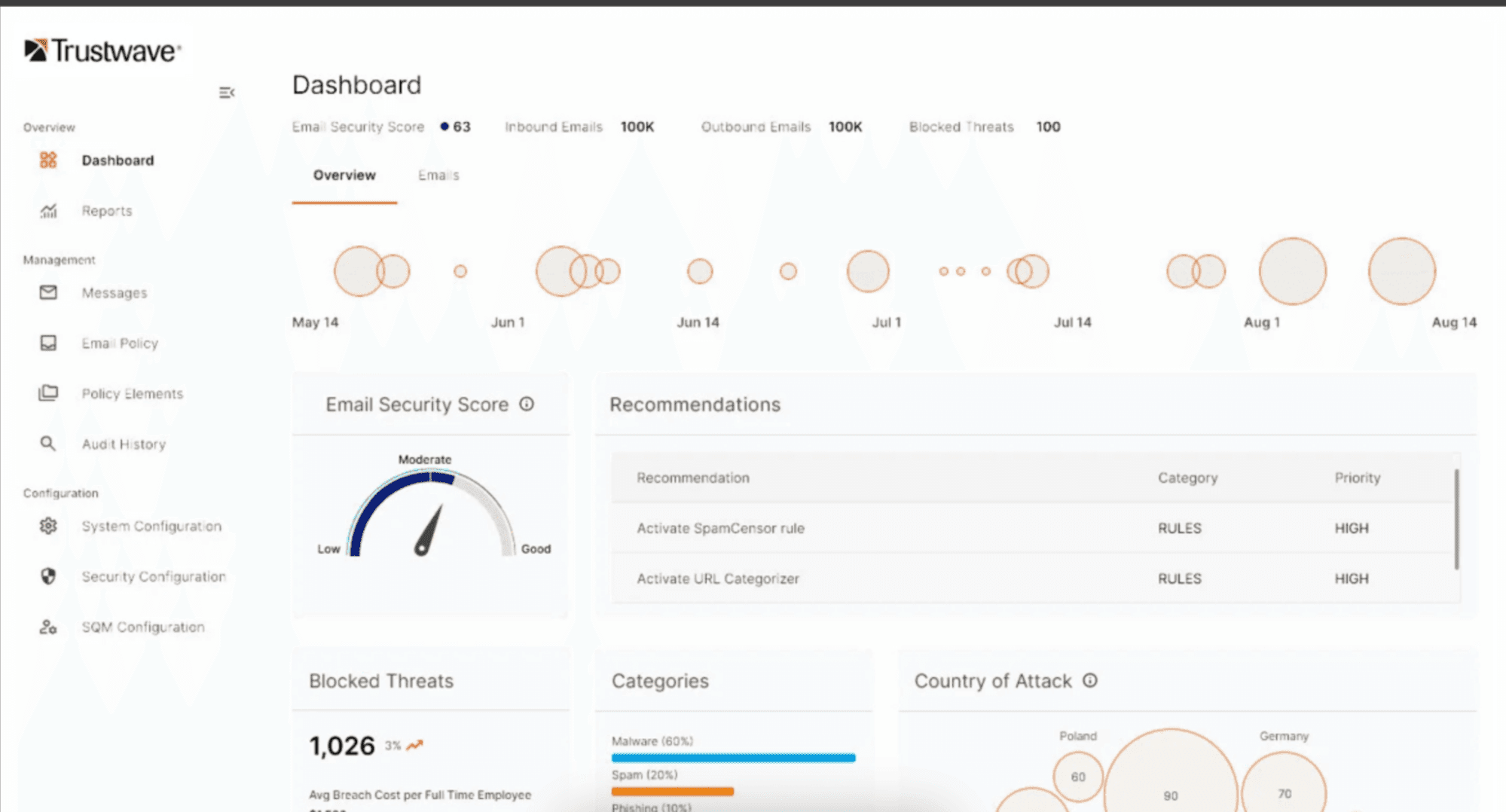
Trustwave's interface can be a bit overwhelming for new users, especially if they lack technical expertise. Some also find the software's navigation to be less intuitive compared to other options. However, once your team becomes familiar with it, features such as customizable alerts and advanced analytics can become valuable. If your team is ready to invest time in learning, Trustwave's powerful capabilities are worth the effort.
Integrations
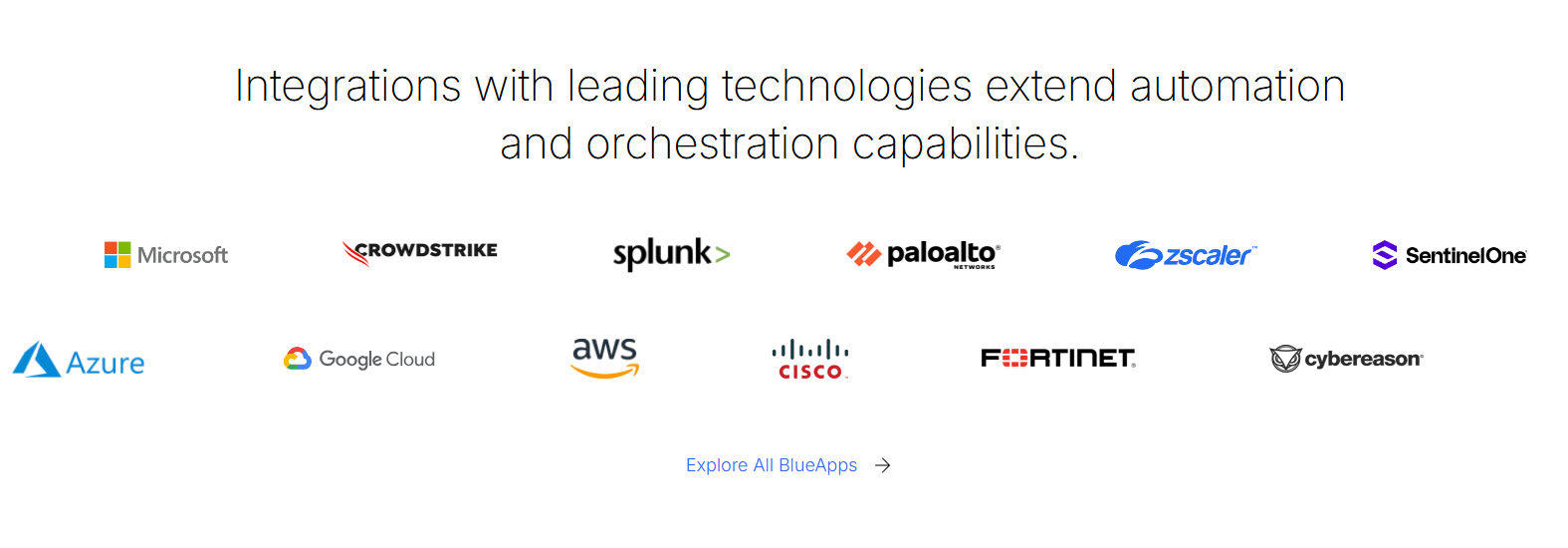
Trustwave integrates with Microsoft Security solutions, Amazon Web Services (AWS), Zscaler, Cybereason, Splunk Cloud Platform, Check Point CloudGuard, Carbon Black EDR, Cisco ACI, and several other professional services through its Global Technology Alliance Partners.
Trustwave also provides an API and connects with third-party integration tools to enhance its cybersecurity offerings.
Trustwave Specs
- 2-Factor Authentication: No
- Access Management: Yes
- Anti-Virus: Yes
- API: Yes
- Audit Trail: Yes
- Bug Tracking: No
- Calendar Management: No
- Customer Management: No
- Dashboard: Yes
- Data Export: Yes
- Data Import: Yes
- Data Visualization: Yes
- Email Integration: No
- External Integrations: Yes
- File Sharing: No
- File Transfer: No
- Firewall: Yes
- Google Apps Integration: No
- Inventory Tracking: No
- Malware Protection: Yes
- Multi-User: Yes
- Network Device Performance Monitoring: Yes
- Network Traffic Monitoring: Yes
- Network Visualization: Yes
- Notifications: Yes
- Project Management: No
- Remote Access: Yes
- Risk Assessment: Yes
- SAP Integration: No
- Scheduling: No
- Software Integration: Yes
- Third-Party Plugins/Add-Ons: No
- Ticket Management: Yes


