

Reseña de Mabl 2026: Ventajas, desventajas, características y precios
En mi carrera, he utilizado muchas herramientas de pruebas automatizadas, incluida Mabl. Permíteme guiarte a través de las características de esta herramienta, alternativas y más.

Revisamos herramientas de forma independiente y las comisiones ayudan a financiar nuestras pruebas. Consulta nuestra política de transparencia, nuestra metodología o sugiere una herramienta.
Mabl is an end to end testing tool built for teams that need to automate browser-based tests without heavy scripting overhead. It's worth considering if your QA workflow involves non-developer testers, since Mabl's low-code interface and AI-powered test auto-healing make it more accessible than developer-centric tools like Cypress—without sacrificing the depth you'd expect from a serious test automation platform.
Mabl Evaluation Summary
4.2/5
- Pricing upon request
- 14-day free trial + free demo available
Por qué confiar en nuestras recomendaciones de software
6,700+
Reviews
20
Industry experts
16+
Evaluation factors
14
Years
Nuestro equipo lleva probando y evaluando software desde 2012. Como líderes tecnológicos, sabemos lo difícil —y lo importante— que es elegir el software adecuado.
Para esta guía, evaluamos las herramientas mediante pruebas prácticas e investigación independiente, puntuando las herramientas según nuestros criterios de selección.
Nuestras reseñas reflejan nuestro criterio editorial humano, no un discurso de ventas.
Revisores expertos:
- Paulo Gardini MiguelDirector técnico
 Tim FisherVP de IA
 Gabriel RosasTech Lead y arquitecto de software
 Christhian GruhnTech Lead y arquitecto de plataforma

Mabl Overview
When judging Mabl against other automation testing tools, its intuitive interface, AI-driven test creation, and strong cloud integrations make it a top pick for teams prioritizing speed and ease of onboarding. While its pricing may be higher and advanced scripting less flexible than some alternatives, Mabl excels in environments where rapid deployment and minimal maintenance are key. For example, teams with frequent releases or limited QA resources will find its self-healing tests and built-in analytics especially valuable when selecting a solution.
Pros
- Mabl makes automated testing accessible with its intuitive user interface.
- It reduces manual testing time, allowing your team to focus on development.
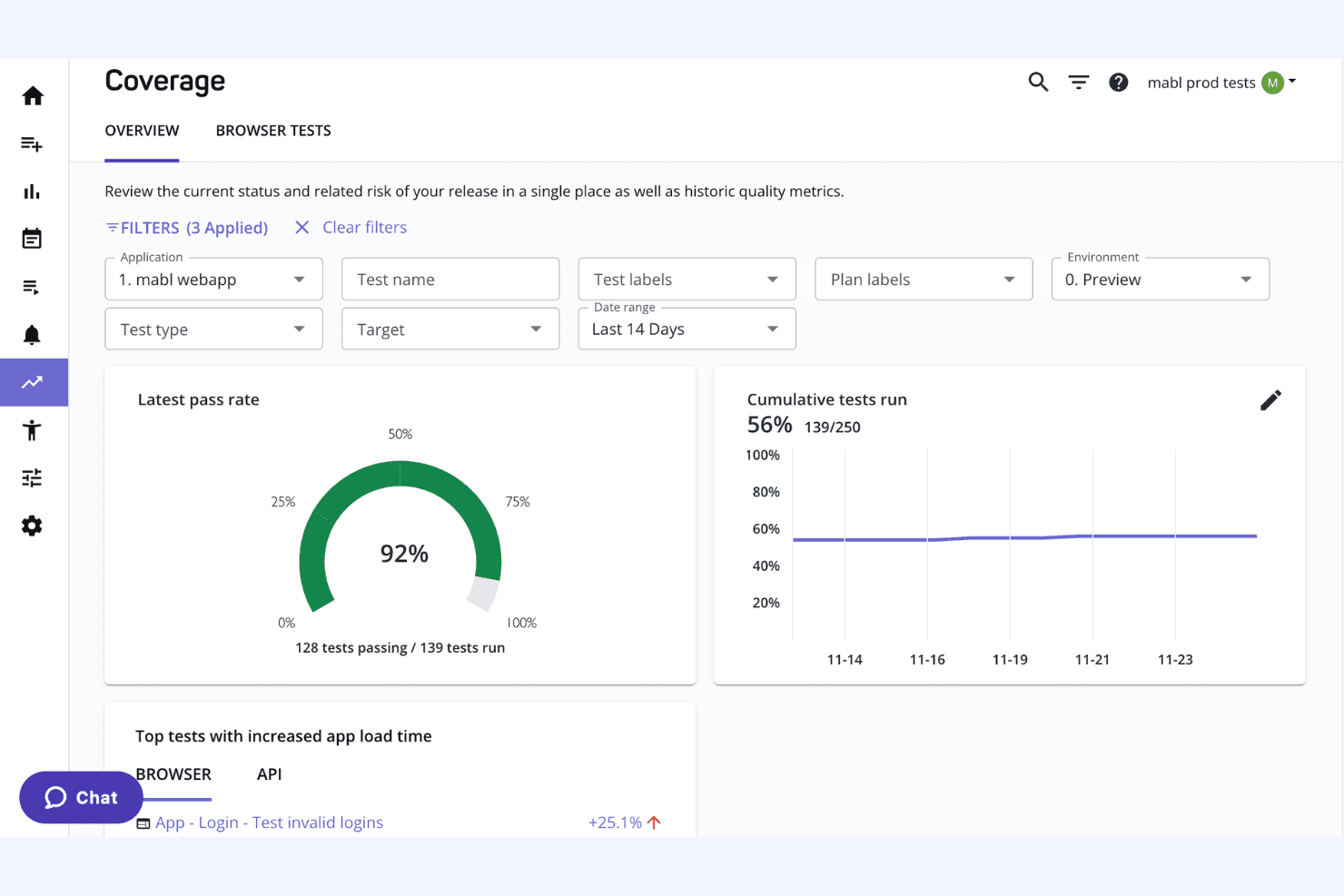
- Mabl's smart analytics help you identify and fix issues quickly.
Cons
- Some users find Mabl's advanced features require a learning curve.
- It can be less flexible for highly customized testing scenarios.
- Users sometimes report delays in receiving support responses.
Is Mabl Right For Your Needs?
Who Would be a Good Fit for Mabl?
Mabl is ideal for agile development teams in tech-driven industries like e-commerce and finance. It suits your team if you need to streamline testing and focus on fast-paced releases. Its intuitive interface and automated testing capabilities are perfect for QA departments that require efficiency without sacrificing quality. If you’re in a role where quick identification and resolution of issues are crucial, Mabl’s smart analytics will greatly benefit your workflow.
- Tech StartupsMabl’s ease of use helps small teams automate testing without needing extensive resources.
- E-Commerce PlatformsIt ensures your website functions smoothly, enhancing the customer experience.
- Financial ServicesMabl’s accuracy and reliability are vital for maintaining secure, error-free transactions.
- QA DepartmentsYour team can reduce manual testing time and focus on boosting software quality.
- Agile Development TeamsMabl supports fast-paced environments with its quick test execution and results.
- Product ManagersGain insights into software performance, helping you make informed decisions quickly.
Who Would be a Bad Fit for Mabl?
Mabl might not be suitable for teams requiring highly customized testing scenarios. If your work involves complex, non-standard testing frameworks, you might find Mabl’s capabilities limiting. Businesses with limited technical expertise or those not ready to invest time in learning advanced features might struggle with its initial complexity. Additionally, if your team requires immediate support responses, Mabl’s support delays could be a drawback.
- Large EnterprisesThey might find Mabl’s functionality insufficient for complex, large-scale testing needs.
- Highly Regulated IndustriesIndustries needing highly specialized compliance testing might find Mabl lacking in customization.
- Non-Tech Savvy TeamsMabl’s advanced features can be overwhelming without technical expertise.
- Custom Software DevelopersDevelopers needing unique testing frameworks might find Mabl too restrictive.
- Immediate Support NeedsTeams requiring quick support might face challenges with Mabl’s response times.
- Legacy System UsersMabl may not integrate well with outdated technologies, posing a challenge for legacy systems.
Nuestra metodología de revisión
Cómo probamos y puntuamos las herramientas
Hemos invertido años construyendo, refinando y mejorando nuestro sistema de pruebas y puntuación de software. La rúbrica está diseñada para captar los matices de la selección de software y lo que hace a una herramienta efectiva, enfocándose en aspectos críticos del proceso de toma de decisiones.
A continuación, puedes ver exactamente cómo nuestro sistema de prueba y puntuación funciona a través de siete criterios. Esto nos permite ofrecer una evaluación imparcial del software basada en funcionalidad central, características destacadas, facilidad de uso, incorporación, soporte al cliente, integraciones, reseñas de clientes y relación calidad-precio.
Funcionalidad principal (25% de la puntuación final)
El punto de partida de nuestra evaluación siempre es la funcionalidad central de la herramienta. ¿Tiene las características y funciones básicas que un usuario esperaría encontrar? ¿Alguna de esas funciones principales está limitada a planes de precios superiores? Esperamos que una herramienta esté a la altura de las capacidades básicas de sus competidores.
Características destacadas (25% de la puntuación final)
Luego, evaluamos las características poco comunes y sobresalientes que van más allá de la funcionalidad principal que normalmente se encuentra en herramientas de su tipo. Una puntuación alta refleja características especializadas o únicas que hacen el producto más rápido, eficiente o que ofrecen valor adicional al usuario.
También evaluamos qué tan fácil es integrar con otras herramientas que normalmente forman parte del ecosistema tecnológico para expandir la funcionalidad y utilidad del software. Las herramientas que ofrecen abundantes integraciones nativas, conexiones de terceros y acceso API para crear integraciones personalizadas obtienen la mejor puntuación.
Facilidad de uso (10% de la puntuación final)
Consideramos cuán rápido y sencillo es ejecutar las tareas definidas por la funcionalidad principal usando la herramienta. El software con mejor puntuación está bien diseñado, es intuitivo, ofrece aplicaciones móviles, proporciona plantillas y hace que tareas relativamente complejas parezcan sencillas.
Incorporación (10% de la puntuación final)
Sabemos lo importante que es la adopción rápida por parte del equipo para una nueva plataforma, por lo que evaluamos cuán fácil es aprender y usar una herramienta con entrenamiento mínimo. Evaluamos cuán rápido un miembro del equipo puede configurarla y comenzar a utilizarla sin experiencia previa. Las soluciones con mayor puntuación requieren poco o ningún soporte.
Soporte al cliente (10% de la puntuación final)
Revisamos qué tan rápido y sencillo es resolver dudas y encontrar ayuda por teléfono, chat en vivo o base de conocimientos. Las herramientas y compañías que proporcionan soporte en tiempo real obtienen la mejor puntuación, mientras que los chatbots obtienen la peor.
Reseñas de clientes (10% de la puntuación final)
Además de nuestras pruebas y evaluaciones, consideramos la puntuación neta de promotores por parte de clientes actuales y anteriores. Revisamos la probabilidad de que elijan la herramienta de nuevo para la funcionalidad principal. Una puntuación alta refleja una alta puntuación neta de promotores actuales o pasados.
Relación calidad-precio (10% de la puntuación final)
Por último, considerando todos los demás criterios, revisamos el precio promedio de los planes de nivel básico comparado con las funciones principales y consideramos el valor de los demás criterios de evaluación. El software que ofrezca más, por menos, obtendrá una puntuación mayor.
Core Features
Automated Test Creation
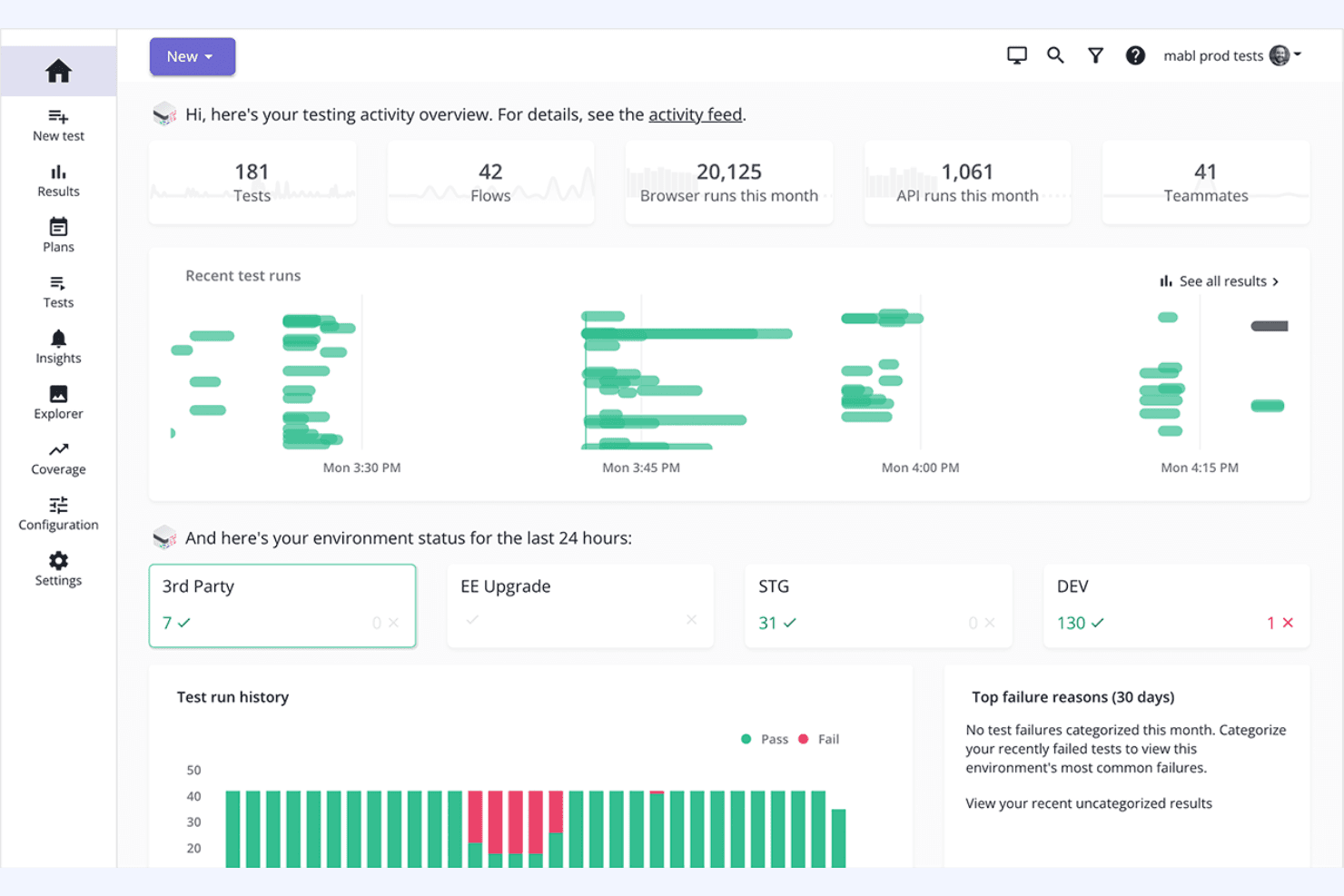
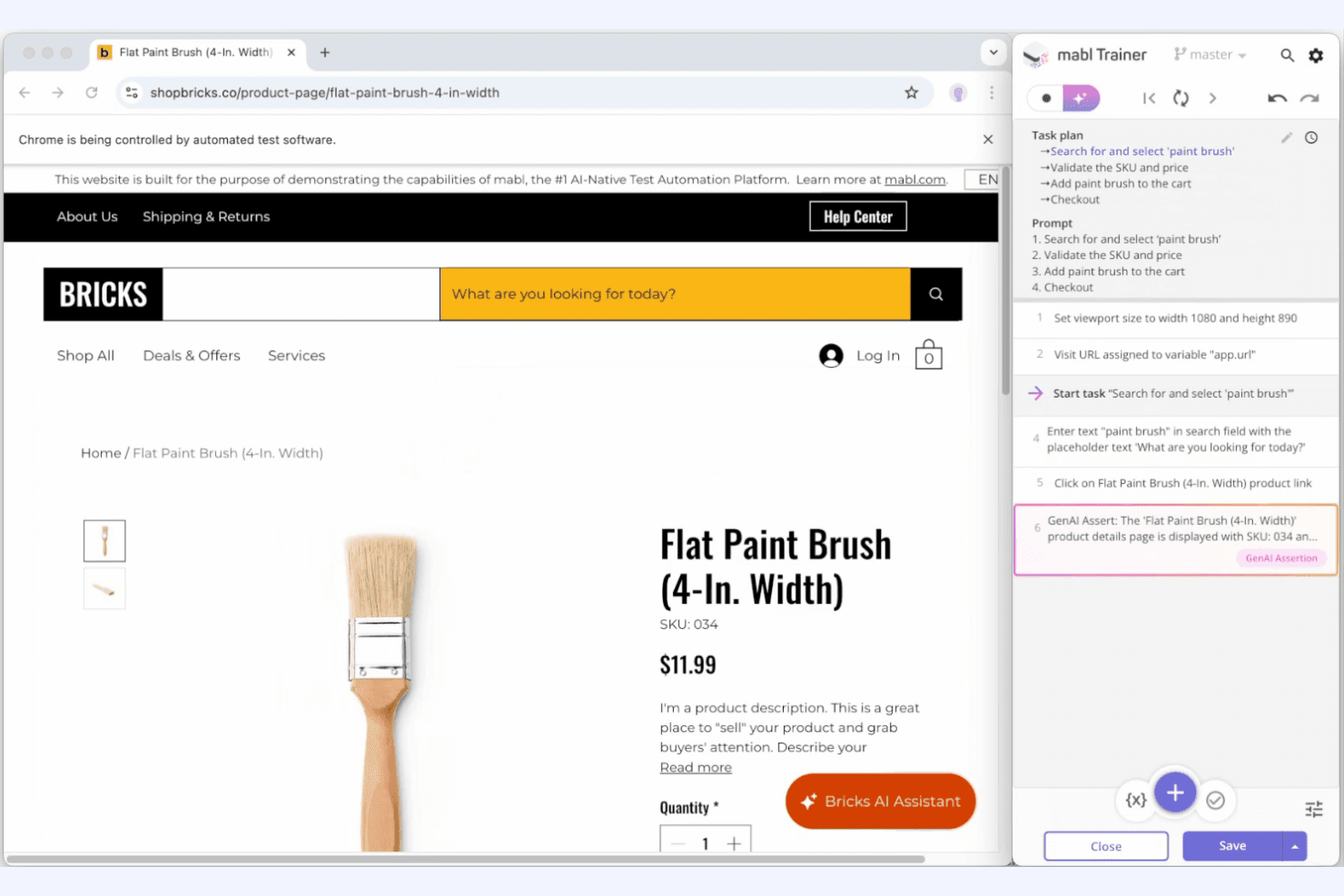
Mabl lets you create tests without coding, using a simple, intuitive interface. This feature helps your team save time and reduces the need for specialized skills.
Smart Analytics
Mabl's analytics provide insights into test results, helping you pinpoint issues quickly. You can make data-driven decisions to improve your software quality.
Cross-Browser Testing
Ensure your application works flawlessly across different browsers. Mabl automatically tests on multiple platforms, increasing your coverage without extra effort.
Visual Testing
Mabl checks the visual aspects of your application, catching UI issues that might go unnoticed. This ensures your users have a consistent experience.
API Testing
Test your application's APIs to ensure they perform correctly. Mabl simplifies this process, allowing your team to focus on core development tasks.
Regression Testing
Mabl automates regression tests to catch bugs early in your development cycle. This keeps your software stable and reliable for users.
Ease of Use
Mabl stands out for its user-friendly interface, making it accessible even if you’re not a coding expert. The codeless test creation allows your team to quickly set up and execute tests without much hassle. User reviews often highlight its intuitive design, which streamlines the testing process and reduces the learning curve. Mabl’s ability to adapt to changes in your application with self-healing tests further simplifies your testing workflow, saving time and effort.
Integrations
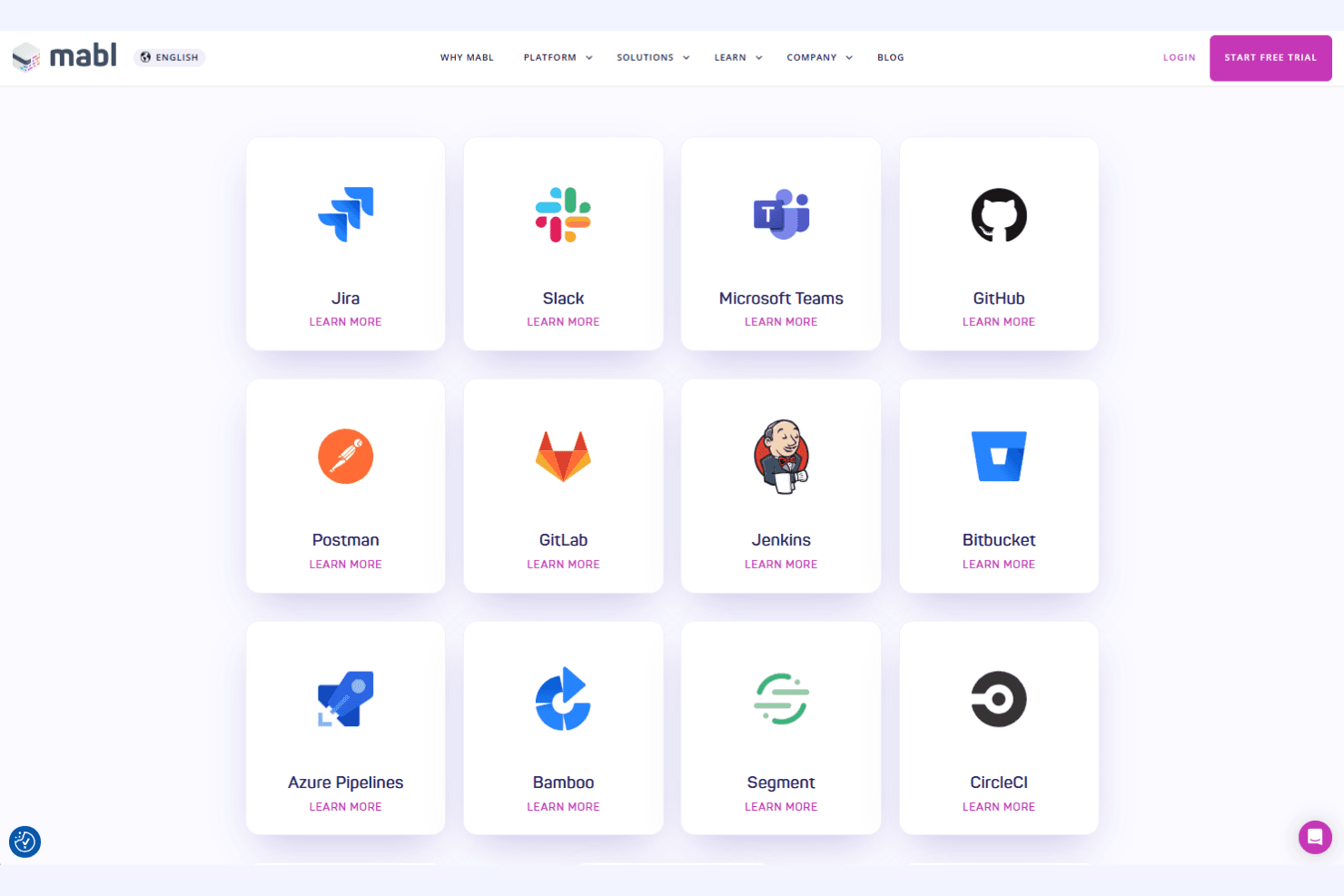
Mabl integrates with Jira, Slack, Microsoft Teams, GitHub, GitLab, Jenkins, Bitbucket, Azure Pipelines, Bamboo, and Postman, among others.
Mabl also offers an API and supports connections with third-party integration tools.
Mabl Specs
- A/B Testing: No
- API: Yes
- Automated Testing: Yes
- Browser Compatibility Testing: Yes
- Bug Tracking: Yes
- Calendar Management: No
- CI/CD Integration: Yes
- Dashboard: Yes
- Data Export: Yes
- Data Import: Yes
- Data Visualization: Yes
- Developer Tools: No
- External Integrations: Yes
- History/Version Control: No
- Manual Testing: No
- Multi-User: Yes
- Notifications: Yes
- Performance Testing: Yes
- Regression Testing: Yes
- Scheduling: Yes
- Status Notifications: Yes
- Third-Party Plugins/Add-Ons: Yes


