

Reseña de KNIME: Ventajas, Desventajas, Características y Precios
La plataforma de análisis KNIME de código abierto ofrece a tu equipo amplias capacidades de integración de datos de extremo a extremo y una flexibilidad que supera a la mayoría de los competidores.

Revisamos herramientas de forma independiente y las comisiones ayudan a financiar nuestras pruebas. Consulta nuestra política de transparencia, nuestra metodología o sugiere una herramienta.
KNIME is an open-source data integration tool for teams that need to build, automate, and run data pipelines using a visual, node-based workflow designer. It's worth a serious look if your team needs flexible ETL and analytics workflows but can't justify the licensing costs of something like Alteryx. KNIME's open-source model gives you access to a broad library of nodes and extensions at no cost, making it a practical pick for data engineering and analytics teams working within tighter budget constraints.
KNIME Evaluation Summary
4.6/5
- From $19/month
- Free plan available
Por qué confiar en nuestras recomendaciones de software
6,700+
Reviews
20
Industry experts
16+
Evaluation factors
14
Years
Nuestro equipo lleva probando y evaluando software desde 2012. Como líderes tecnológicos, sabemos lo difícil —y lo importante— que es elegir el software adecuado.
Para esta guía, evaluamos las herramientas mediante pruebas prácticas e investigación independiente, puntuando las herramientas según nuestros criterios de selección.
Nuestras reseñas reflejan nuestro criterio editorial humano, no un discurso de ventas.
Revisores expertos:
- Paulo Gardini MiguelDirector técnico
 Tim FisherVP de IA
 Gabriel RosasTech Lead y arquitecto de software
 Christhian GruhnTech Lead y arquitecto de plataforma

KNIME Overview
In my opinion, KNIME is a solid choice for data preprocessing and integration, especially for teams that value an open-source platform. It offers flexibility, strong scalability, and extensive integration options, suitable for businesses with complex data needs. However, the onboarding process could be smoother, and some users may find the interface less intuitive than competitors such as Alteryx.
KNIME is best for data scientists, IT departments, and software engineering teams in finance and healthcare where complex workflows are common. Despite minor drawbacks, its value for money and excellent support make it a strong contender among machine learning platforms.
Pros
- KNIME offers a user-friendly drag-and-drop interface for easy workflow creation.
- It supports a wide range of data formats.
- Its open-source nature allows your team to customize and extend its capabilities.
Cons
- The interface can be less intuitive for beginners compared to other tools.
- Onboarding may require more time and resources than expected.
- Some users find the documentation lacking in detailed explanations.
Is KNIME Right For Your Needs?
Who Would be a Good Fit for KNIME?
KNIME is a great fit for data scientists and IT teams in industries such as finance, healthcare, and research. Its open-source platform allows your team to customize workflows and handle complex data. KNIME's drag-and-drop interface simplifies data processing, making it suitable for building data models without extensive coding. KNIME is ideal if your work involves diverse data formats.
- Finance TeamsKNIME allows your finance team to manage complex workflows and analyze large datasets for risk assessment and fraud detection.
- Healthcare ResearchersKNIME helps your researchers integrate and analyze patient data for insights into treatment outcomes.
- Marketing DepartmentsUse KNIME to process and analyze customer data, which helps your team tailor effective marketing strategies.
- Medium-Sized EnterprisesKNIME’s flexibility and cost-efficiency make it suitable for your enterprise's growing data needs.
- Academic ResearchersKNIME supports complex data analysis, making it ideal for your academic research projects.
- IT DepartmentsKNIME enables your IT team to automate data workflows and integrate diverse data sources.
Who Would be a Bad Fit for KNIME?
KNIME may not be suitable for small businesses or teams with limited technical expertise. While its interface is powerful, it can be daunting for users without a data science background. If your team lacks the resources for a steep learning curve or detailed onboarding, KNIME's complexities may outweigh its benefits. It may also not be ideal if your work requires real-time data processing.
- Small StartupsYour startup may struggle with KNIME's complexity, especially if your technical resources are limited.
- Retail ChainsThe real-time data processing needs in retail could make KNIME a less efficient choice for your team.
- Non-Tech DepartmentsDepartments without tech-savvy staff may find KNIME's interface challenging and time-consuming.
- Event Planning TeamsYour team's need for quick, simple data insights may be hindered by KNIME's learning curve.
- Freelance ConsultantsIf you're seeking quick, easy-to-use tools, KNIME's complexity may not align with your needs.
- Customer Service TeamsYour focus on real-time customer interactions may not fit well with KNIME's data processing capabilities.
Nuestra metodología de revisión
Cómo probamos y puntuamos las herramientas
Hemos invertido años construyendo, refinando y mejorando nuestro sistema de pruebas y puntuación de software. La rúbrica está diseñada para captar los matices de la selección de software y lo que hace a una herramienta efectiva, enfocándose en aspectos críticos del proceso de toma de decisiones.
A continuación, puedes ver exactamente cómo nuestro sistema de prueba y puntuación funciona a través de siete criterios. Esto nos permite ofrecer una evaluación imparcial del software basada en funcionalidad central, características destacadas, facilidad de uso, incorporación, soporte al cliente, integraciones, reseñas de clientes y relación calidad-precio.
Funcionalidad principal (25% de la puntuación final)
El punto de partida de nuestra evaluación siempre es la funcionalidad central de la herramienta. ¿Tiene las características y funciones básicas que un usuario esperaría encontrar? ¿Alguna de esas funciones principales está limitada a planes de precios superiores? Esperamos que una herramienta esté a la altura de las capacidades básicas de sus competidores.
Características destacadas (25% de la puntuación final)
Luego, evaluamos las características poco comunes y sobresalientes que van más allá de la funcionalidad principal que normalmente se encuentra en herramientas de su tipo. Una puntuación alta refleja características especializadas o únicas que hacen el producto más rápido, eficiente o que ofrecen valor adicional al usuario.
También evaluamos qué tan fácil es integrar con otras herramientas que normalmente forman parte del ecosistema tecnológico para expandir la funcionalidad y utilidad del software. Las herramientas que ofrecen abundantes integraciones nativas, conexiones de terceros y acceso API para crear integraciones personalizadas obtienen la mejor puntuación.
Facilidad de uso (10% de la puntuación final)
Consideramos cuán rápido y sencillo es ejecutar las tareas definidas por la funcionalidad principal usando la herramienta. El software con mejor puntuación está bien diseñado, es intuitivo, ofrece aplicaciones móviles, proporciona plantillas y hace que tareas relativamente complejas parezcan sencillas.
Incorporación (10% de la puntuación final)
Sabemos lo importante que es la adopción rápida por parte del equipo para una nueva plataforma, por lo que evaluamos cuán fácil es aprender y usar una herramienta con entrenamiento mínimo. Evaluamos cuán rápido un miembro del equipo puede configurarla y comenzar a utilizarla sin experiencia previa. Las soluciones con mayor puntuación requieren poco o ningún soporte.
Soporte al cliente (10% de la puntuación final)
Revisamos qué tan rápido y sencillo es resolver dudas y encontrar ayuda por teléfono, chat en vivo o base de conocimientos. Las herramientas y compañías que proporcionan soporte en tiempo real obtienen la mejor puntuación, mientras que los chatbots obtienen la peor.
Reseñas de clientes (10% de la puntuación final)
Además de nuestras pruebas y evaluaciones, consideramos la puntuación neta de promotores por parte de clientes actuales y anteriores. Revisamos la probabilidad de que elijan la herramienta de nuevo para la funcionalidad principal. Una puntuación alta refleja una alta puntuación neta de promotores actuales o pasados.
Relación calidad-precio (10% de la puntuación final)
Por último, considerando todos los demás criterios, revisamos el precio promedio de los planes de nivel básico comparado con las funciones principales y consideramos el valor de los demás criterios de evaluación. El software que ofrezca más, por menos, obtendrá una puntuación mayor.
Core Features
Data Blending
KNIME lets you easily combine data from different sources. Your team can merge datasets to gain comprehensive insights.
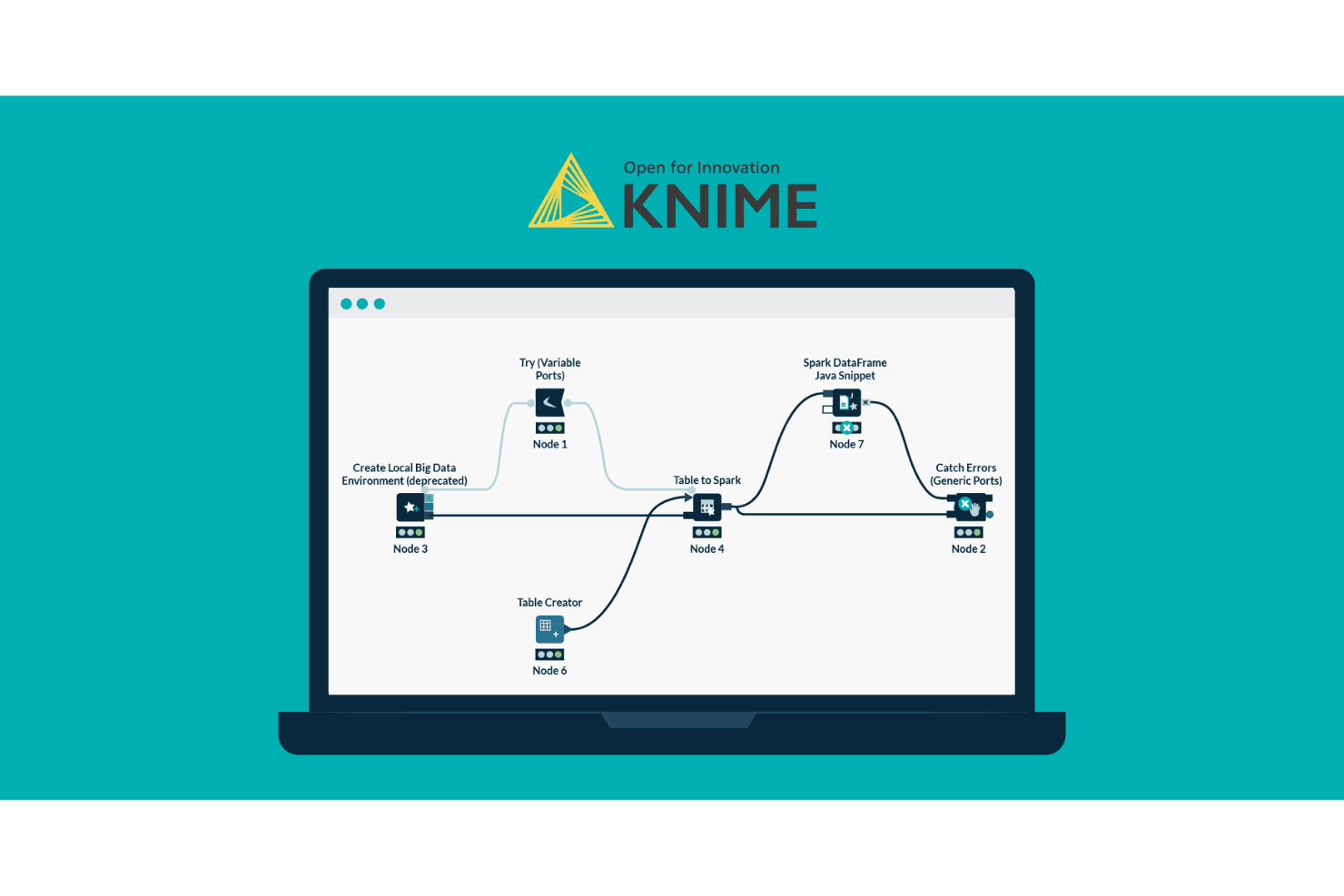
Visual Workflow Editor
With KNIME's drag-and-drop interface, you can build workflows without coding, simplifying your data processing tasks.
Data Transformation
Use KNIME's powerful tools to clean, filter, and aggregate data to fit your analysis needs.
Advanced Analytics
KNIME supports statistical analysis and machine learning. Your team can develop predictive models to enhance decision-making.
Data Visualization
Create visual representations of your data with KNIME's built-in tools to help your team communicate findings effectively.
Automation
KNIME allows you to automate repetitive tasks, saving your team time and reducing the risk of human errors.

Ease of Use
KNIME's drag-and-drop interface makes it accessible, but the learning curve can be steep for beginners. If your team has a data science background, you'll find its visual workflow editor intuitive and powerful. However, users without technical expertise may struggle initially. Although KNIME's detailed documentation and community support are helpful, onboarding requires time and effort. Once you're familiar with it, the platform's flexibility and automation capabilities make it a valuable tool for complex data tasks.

Integrations
KNIME integrates with Oracle, MySQL, AWS, Google Cloud, SAP, Salesforce, Tableau, Power BI, OpenAI, and Google AI. It also offers an API for custom integrations and connects with third-party integration tools to expand its capabilities.

KNIME Specs
- A/B Testing: No
- AI Integration: Yes
- Analytics: Yes
- API: Yes
- Calendar Management: No
- Comparative Reporting: No
- Conversion Tracking: No
- Custom Reports: Yes
- Dashboard: No
- Data Export: Yes
- Data Import: Yes
- Data Mining: No
- Data Visualization: No
- External Integrations: Yes
- Forecasting: No
- Historical Data Analysis: Yes
- Keyword Tracking: No
- Link Tracking: No
- Multi-Site: Yes
- Multi-User: Yes
- Notifications: No
- Referral Tracking: Yes
- Scenario Planning: No
- Scheduling: No
- SEO: No
- Time Series Modeling: Yes
- Workflow Management: Yes


