

Reseña de AWS Elastic Beanstalk 2026: Ventajas, Desventajas, Características y Precios
AWS Elastic Beanstalk simplifica el despliegue de aplicaciones para desarrolladores que buscan integración con AWS, pero su automatización puede limitar la personalización avanzada en comparación con otras plataformas.

Revisamos herramientas de forma independiente y las comisiones ayudan a financiar nuestras pruebas. Consulta nuestra política de transparencia, nuestra metodología o sugiere una herramienta.
AWS Elastic Beanstalk is a deployment software for teams that need to deploy and scale web applications without manually managing the underlying infrastructure. It handles capacity provisioning, load balancing, and health monitoring automatically, while still giving you full access to the AWS resources running your app. If you're already operating within the AWS ecosystem, I'd consider it over Heroku—you get deeper infrastructure control and significantly better cost efficiency at scale, without sacrificing the ease of a managed deployment environment.
AWS Elastic Beanstalk Evaluation Summary
4.2/5
- Pricing upon request
- Up to 6-month free trial
Por qué confiar en nuestras recomendaciones de software
6,700+
Reviews
20
Industry experts
16+
Evaluation factors
14
Years
Nuestro equipo lleva probando y evaluando software desde 2012. Como líderes tecnológicos, sabemos lo difícil —y lo importante— que es elegir el software adecuado.
Para esta guía, evaluamos las herramientas mediante pruebas prácticas e investigación independiente, puntuando las herramientas según nuestros criterios de selección.
Nuestras reseñas reflejan nuestro criterio editorial humano, no un discurso de ventas.
Revisores expertos:
- Paulo Gardini MiguelDirector técnico
 Tim FisherVP de IA
 Gabriel RosasTech Lead y arquitecto de software
 Christhian GruhnTech Lead y arquitecto de plataforma

AWS Elastic Beanstalk Overview
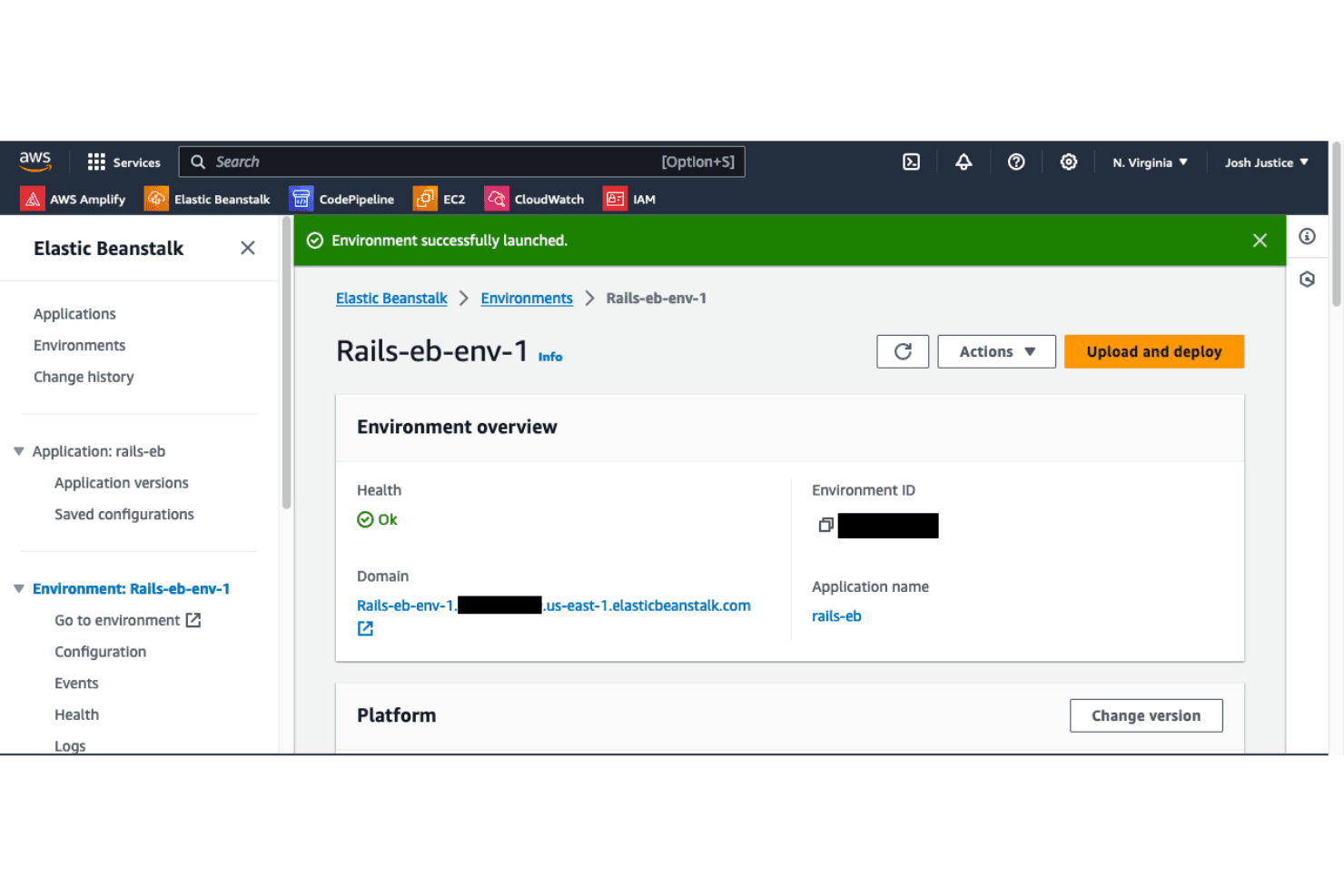
AWS Elastic Beanstalk stands out for its deep AWS integration, automated scaling, and straightforward deployment process, making it a strong choice for teams already invested in AWS. Its pricing is predictable since you only pay for underlying AWS resources, but advanced customization can be restrictive compared to some alternatives. The interface is approachable, onboarding is quick for those familiar with AWS, and support is robust through AWS channels.
If you’re judging platforms for rapid deployment, managed environments, and seamless AWS service connections, Elastic Beanstalk is best suited for cloud-native teams prioritizing speed and operational simplicity.
Pros
- Automates deployment and scaling, freeing your team to focus on coding.
- Supports multiple programming languages, offering flexibility for your projects.
- Provides easy integration with other AWS services, enhancing your cloud environment.
Cons
- Limited customization options might not meet all your team's specific needs.
- Requires AWS knowledge, which might be a hurdle for new users.
- Some users find the dashboard interface less intuitive compared to competitors.
Is AWS Elastic Beanstalk Right For Your Needs?
Who Would be a Good Fit for AWS Elastic Beanstalk?
AWS Elastic Beanstalk is ideal for tech startups and small to medium-sized businesses that want to deploy web applications without getting bogged down by infrastructure management. If your team values flexibility, AWS Elastic Beanstalk supports various programming languages, making it a versatile choice. It’s also a great fit for DevOps teams who already use AWS services, as it easily integrates with other AWS tools, enhancing your cloud capabilities and streamlining your development process.
- Tech StartupsAWS Elastic Beanstalk automates scaling and deployment, letting your team focus on innovation rather than infrastructure.
- E-commerce PlatformsIt handles traffic spikes efficiently, ensuring your online store runs smoothly during peak shopping times.
- Software Development TeamsWith support for multiple programming languages, your developers can work in their preferred coding environment.
- Educational InstitutionsAWS Elastic Beanstalk provides a cost-effective way to deploy educational apps and manage resources.
- Healthcare IT DepartmentsIt offers reliable deployment for healthcare apps, supporting compliance and data security requirements.
- Digital Marketing AgenciesEasily deploy and manage client websites, benefiting from quick scaling to meet campaign demands.
Who Would be a Bad Fit for AWS Elastic Beanstalk?
AWS Elastic Beanstalk may not suit large enterprises with complex infrastructure needs that require extensive customization options. If your team needs highly specialized configurations or operates in a non-AWS environment, you might find AWS Elastic Beanstalk’s limitations frustrating. Organizations without AWS expertise might struggle, as it assumes a certain level of familiarity with AWS services and ecosystems.
- Large EnterprisesComplex infrastructures needing deep customization might find AWS Elastic Beanstalk too restrictive.
- Non-Cloud UsersIf your team hasn’t moved to the cloud, AWS Elastic Beanstalk’s cloud-based nature could be a hurdle.
- Highly Regulated IndustriesIndustries needing strict compliance might find AWS Elastic Beanstalk’s default configurations insufficient.
- Custom Software BuildersIf your software requires unique deployment configurations, AWS Elastic Beanstalk’s options might feel limited.
- Legacy System OperatorsTeams working with outdated technology may face compatibility issues with AWS Elastic Beanstalk.
- Non-Technical TeamsWithout technical expertise, navigating AWS Elastic Beanstalk’s setup and features could be challenging.
Nuestra metodología de revisión
Cómo probamos y puntuamos las herramientas
Hemos invertido años construyendo, refinando y mejorando nuestro sistema de pruebas y puntuación de software. La rúbrica está diseñada para captar los matices de la selección de software y lo que hace a una herramienta efectiva, enfocándose en aspectos críticos del proceso de toma de decisiones.
A continuación, puedes ver exactamente cómo nuestro sistema de prueba y puntuación funciona a través de siete criterios. Esto nos permite ofrecer una evaluación imparcial del software basada en funcionalidad central, características destacadas, facilidad de uso, incorporación, soporte al cliente, integraciones, reseñas de clientes y relación calidad-precio.
Funcionalidad principal (25% de la puntuación final)
El punto de partida de nuestra evaluación siempre es la funcionalidad central de la herramienta. ¿Tiene las características y funciones básicas que un usuario esperaría encontrar? ¿Alguna de esas funciones principales está limitada a planes de precios superiores? Esperamos que una herramienta esté a la altura de las capacidades básicas de sus competidores.
Características destacadas (25% de la puntuación final)
Luego, evaluamos las características poco comunes y sobresalientes que van más allá de la funcionalidad principal que normalmente se encuentra en herramientas de su tipo. Una puntuación alta refleja características especializadas o únicas que hacen el producto más rápido, eficiente o que ofrecen valor adicional al usuario.
También evaluamos qué tan fácil es integrar con otras herramientas que normalmente forman parte del ecosistema tecnológico para expandir la funcionalidad y utilidad del software. Las herramientas que ofrecen abundantes integraciones nativas, conexiones de terceros y acceso API para crear integraciones personalizadas obtienen la mejor puntuación.
Facilidad de uso (10% de la puntuación final)
Consideramos cuán rápido y sencillo es ejecutar las tareas definidas por la funcionalidad principal usando la herramienta. El software con mejor puntuación está bien diseñado, es intuitivo, ofrece aplicaciones móviles, proporciona plantillas y hace que tareas relativamente complejas parezcan sencillas.
Incorporación (10% de la puntuación final)
Sabemos lo importante que es la adopción rápida por parte del equipo para una nueva plataforma, por lo que evaluamos cuán fácil es aprender y usar una herramienta con entrenamiento mínimo. Evaluamos cuán rápido un miembro del equipo puede configurarla y comenzar a utilizarla sin experiencia previa. Las soluciones con mayor puntuación requieren poco o ningún soporte.
Soporte al cliente (10% de la puntuación final)
Revisamos qué tan rápido y sencillo es resolver dudas y encontrar ayuda por teléfono, chat en vivo o base de conocimientos. Las herramientas y compañías que proporcionan soporte en tiempo real obtienen la mejor puntuación, mientras que los chatbots obtienen la peor.
Reseñas de clientes (10% de la puntuación final)
Además de nuestras pruebas y evaluaciones, consideramos la puntuación neta de promotores por parte de clientes actuales y anteriores. Revisamos la probabilidad de que elijan la herramienta de nuevo para la funcionalidad principal. Una puntuación alta refleja una alta puntuación neta de promotores actuales o pasados.
Relación calidad-precio (10% de la puntuación final)
Por último, considerando todos los demás criterios, revisamos el precio promedio de los planes de nivel básico comparado con las funciones principales y consideramos el valor de los demás criterios de evaluación. El software que ofrezca más, por menos, obtendrá una puntuación mayor.
Core Features
Automated Scaling
AWS Elastic Beanstalk automatically adjusts your application's capacity to meet demand, ensuring consistent performance. This means your team won't have to manually manage server resources.
Environment Management
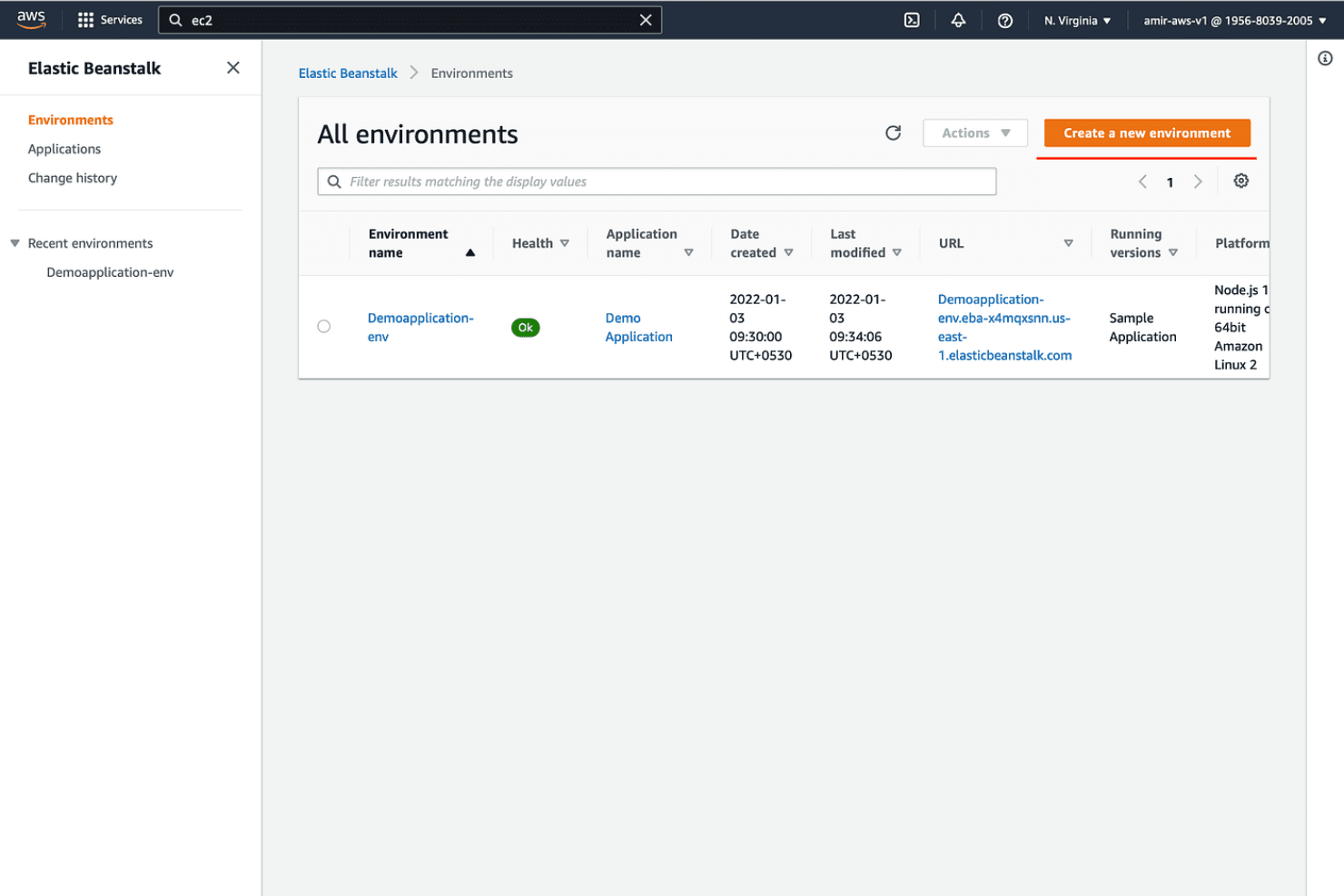
You can deploy and manage multiple application environments with ease, allowing for testing and production setups. This feature simplifies switching between different stages of your development.
Health Monitoring
AWS Elastic Beanstalk continuously checks your application's health, providing real-time alerts and insights. This helps your team quickly address any issues that arise.
Application Deployment
Deploying applications is straightforward with support for various programming languages and platforms. Your team can use familiar tools and frameworks, reducing the learning curve.
Version Control
Easily track and manage application versions, allowing rollbacks if needed. This feature ensures your team can maintain stability and respond to issues efficiently.
Customization Options
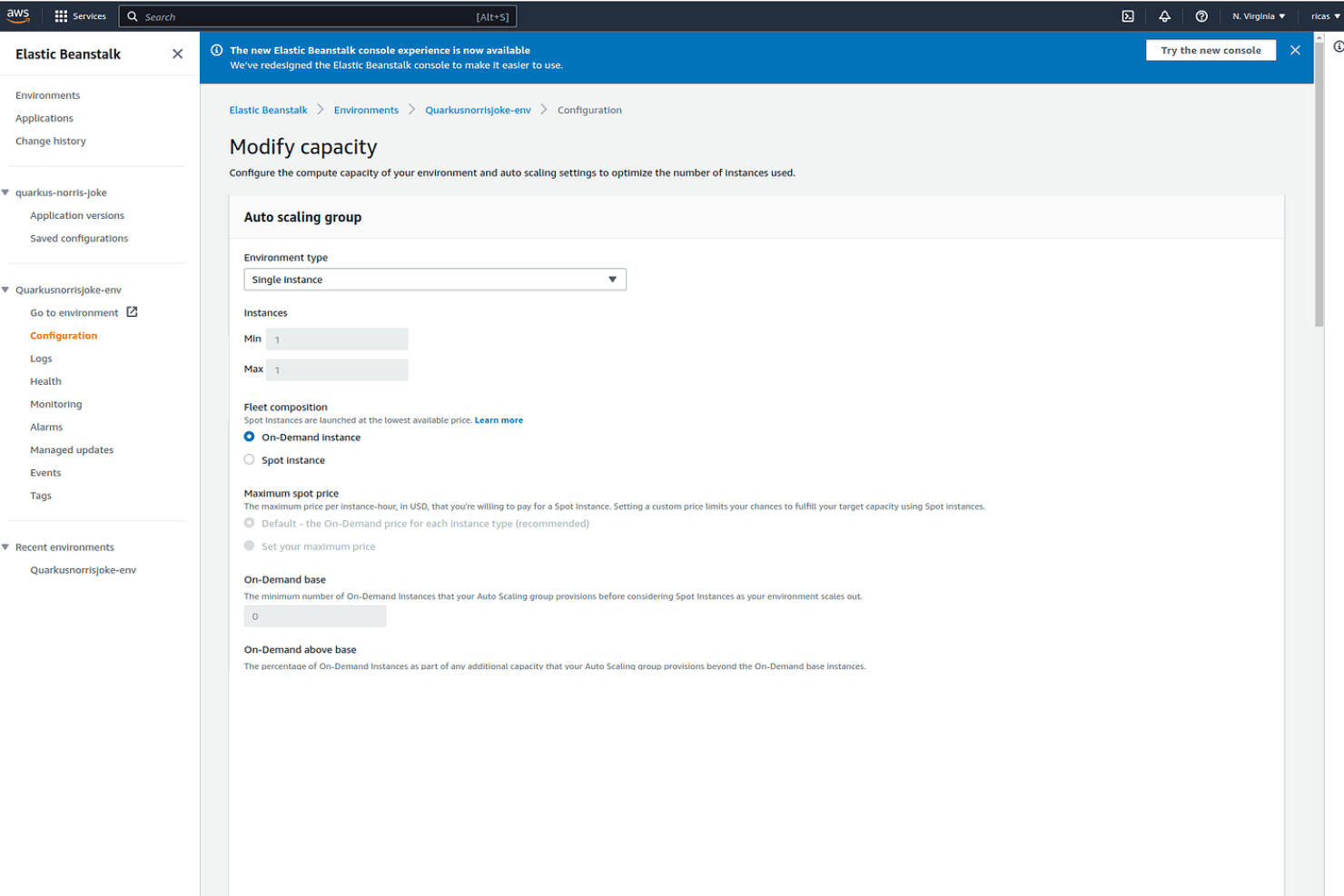
While not extensive, AWS Elastic Beanstalk does offer some configuration settings for environments. This allows your team to tailor deployments to specific needs, within certain limits.
Ease of Use
AWS Elastic Beanstalk is user-friendly for teams already familiar with AWS, offering a straightforward deployment process and a clear web console. Many users appreciate the ability to deploy code with minimal configuration and the guided environment setup. However, some find troubleshooting and advanced configuration less intuitive, especially when issues arise beneath the managed layer. Overall, it strikes a balance between automation and control, making it approachable for most cloud-focused development teams.
Integrations
AWS Elastic Beanstalk integrates with Amazon EC2, Amazon RDS, Amazon S3, Amazon CloudWatch, AWS IAM, AWS CodePipeline, AWS CloudFormation, Amazon SNS, AWS X-Ray, and Amazon VPC, among others.
Elastic Beanstalk also provides a REST API and supports connections with third-party integration tools through AWS SDKs and CLI.
AWS Elastic Beanstalk Specs
- API: Yes
- Bug Tracking: No
- CI/CD Integration: Yes
- Cloud Deployment: Yes
- Code Review: No
- Code Transformation: No
- Collaboration Support: No
- Data Export: No
- Data Import: No
- Developer Tools: Yes
- External Integrations: Yes
- Git Integration: Yes
- History/Version Control: Yes
- IDE Plugins: No
- Local Deployment: No
- Multi-User: Yes
- Notifications: Yes
- Project Management: No
- Release Management: Yes
- Static Analysis: No
- Task Scheduling/Tracking: Yes
- Testing: Yes


