

ServiceNow Bewertung: Vorteile, Nachteile, Funktionen und Preise erklärt
Ich untersuche, wie sich ServiceNow im Bereich KI-Governance hervorhebt – egal, ob Sie eine optimierte Überwachung, automatisierte Compliance oder echte Transparenz über Ihre KI-Workflows hinweg benötigen.

Wir bewerten Tools unabhängig; Provisionen helfen, unsere Tests zu finanzieren. Siehe unsere Transparenzrichtlinie und unsere Methodik.
ServiceNow is an AI governance platform designed to help IT and tech leaders manage risk, compliance, and oversight for machine learning and automation initiatives. If you’re navigating conflicting priorities like security, transparency, and rapid innovation across SaaS and enterprise environments, ServiceNow aims to bring everything into a single workspace—so you can track, audit, and optimize AI assets without the chaos.
In this review, I’ll dig into ServiceNow’s features, ideal use cases, pricing model, and where it excels (or falls short) compared to other platforms.
ServiceNow Evaluation Summary
4.4/5
- Pricing upon request
- Free demo available
Warum Sie unseren Software-Empfehlungen vertrauen können
6,700+
Reviews
20
Industry experts
16+
Evaluation factors
14
Years
Unser Team testet und bewertet Software seit 2012. Als Tech-Führungskräfte wissen wir selbst, wie schwierig – und wichtig – es ist, die richtige Software auszuwählen.
Für diesen Leitfaden haben wir Tools mithilfe von praktischen Tests und unabhängiger Recherche bewertet und dabei unsere Bewertungskriterien angewendet.
Unsere Bewertungen spiegeln unser menschliches redaktionelles Urteilsvermögen wider, keine Verkaufsstrategie.
Expertenprüfer:
- Paulo Gardini MiguelTech-Direktor
 Tim FisherVP für KI
 Gabriel RosasTech Lead & Software-Architekt
 Christhian GruhnTech Lead & Plattform-Architekt

ServiceNow Overview
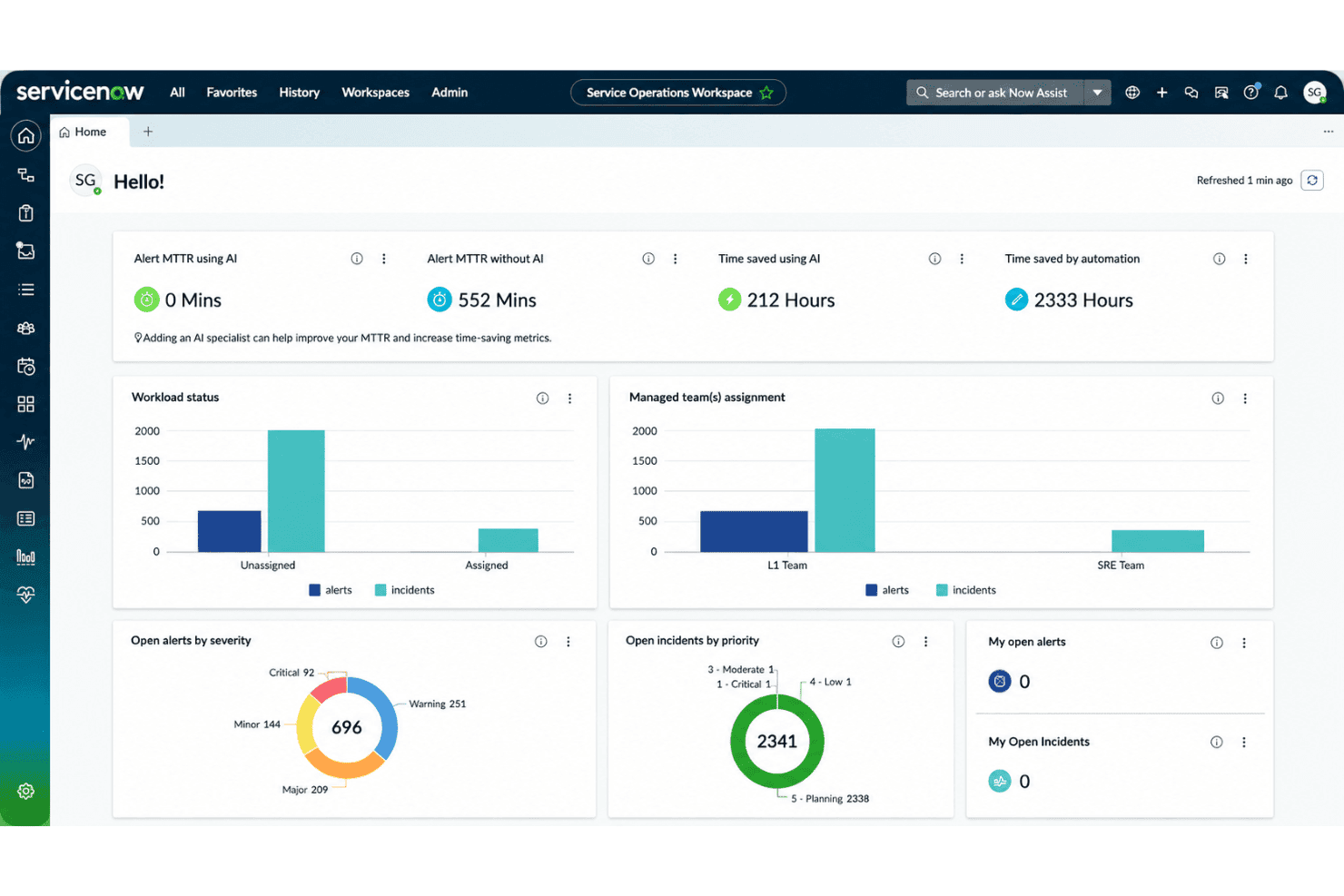
When judging ServiceNow as an AI governance tool, I think its automated workflows, broad integration options, and policy management really set it apart. The pricing skews high, but in exchange you get a unified, enterprise-grade interface that can be tailored for complex environments. ServiceNow reviews from enterprise teams confirm it makes sense when you need scalable governance for multiple business units or tight control over AI compliance. However, the full functionality can feel heavy for small teams, so I’d choose it for environments with mature IT operations and clear governance needs.
Pros
- Built-in policy management automates complex governance processes
- Detailed audit trails support regulatory and compliance needs
- Centralized dashboard provides clear visibility into AI workflows
Cons
- Advanced governance features require significant setup and training
- Pricing is not transparent for most AI-specific modules
- Custom automation can strain IT resources during deployment
Is ServiceNow Right For Your Needs?
Who Would be a Good Fit for ServiceNow?
Large organizations, regulated industries, and complex IT environments will get the most value from ServiceNow’s AI governance tools. The platform excels at enforcing policy, automating compliance, and delivering oversight at scale—especially where workflows span departments or require strict controls. ServiceNow is well positioned for telecommunications companies and other enterprises needing centralized audit trails, integrations across multiple systems, and tools designed for risk-heavy scenarios.
- Financial ServicesServiceNow’s deep audit trails and policy automation help meet strict regulatory requirements for banking and insurance operations.
- Healthcare OrganizationsCentralized governance and compliance workflows support HIPAA needs and ensure patient data protection.
- Global EnterprisesServiceNow scales well for globally distributed teams needing unified oversight and secure model management.
- Government AgenciesBuilt-in controls and policy management align with complex government information technology standards and public sector risk controls.
- IT DepartmentsIntegrated governance in ITSM workflows makes ServiceNow a natural fit for teams already using incident and change management.
- Data Science LeadersCentralized model tracking and risk scoring make software development teams and AI leaders more efficient at cross-team collaboration and regulatory reporting.
Who Would be a Bad Fit for ServiceNow?
ServiceNow may be less suitable for small teams, non-technical users, or companies with lightweight governance needs. Organizations without in-house admin resources or those that don’t need advanced automation could find the platform costly and unnecessarily complex. It isn’t ideal where budgets, training, or onboarding resources are tight, or where simplicity is the top priority.
- Small StartupsHigh setup costs and advanced features outweigh the needs of most small teams.
- Creative AgenciesAI governance workflows are likely overkill for marketing-focused or design-driven groups.
- Non-Technical DepartmentsThe learning curve and admin duties are more than most HR or basic business units require.
- Education SectorSchools and small colleges often lack the IT support required for ServiceNow’s deployment and maintenance.
- Local GovernmentsBudget limitations and administrative overhead don’t align with the platform’s complexity.
- FreelancersSolo practitioners won’t benefit from ServiceNow’s scale or advanced governance features.
Unsere Bewertungsmethodik
Wie wir Werkzeuge testen & bewerten
Wir haben Jahre damit verbracht, unser System zur Softwareprüfung und -bewertung aufzubauen, zu verfeinern und zu verbessern. Das Bewertungsraster ist darauf ausgelegt, die Feinheiten der Softwareauswahl und Effektivität eines Tools einzufangen, wobei wir uns auf kritische Aspekte des Entscheidungsprozesses konzentrieren.
Nachfolgend sehen Sie genau, wie unser Test- und Bewertungssystem anhand von sieben Kriterien funktioniert. Es ermöglicht uns eine unparteiische Bewertung der Software basierend auf Grundfunktionalität, besonderen Funktionen, Benutzerfreundlichkeit, Onboarding, Kundensupport, Integrationen, Kundenbewertungen und Preis-Leistungs-Verhältnis.
Grundfunktionalität (25 % der Endbewertung)
Der Ausgangspunkt unserer Bewertung ist immer die Grundfunktionalität des Werkzeugs. Verfügt es über die grundlegenden Funktionen und Merkmale, die ein Benutzer erwarten würde? Sind grundlegende Funktionen auf höherpreisige Tarife beschränkt? Im Kern erwarten wir, dass ein Tool den Basisfähigkeiten seiner Konkurrenten standhält.
Besondere Features (25 % der Endbewertung)
Anschließend bewerten wir ungewöhnliche, herausragende Funktionen, die über die typische Grundfunktionalität von Tools dieser Art hinausgehen. Eine hohe Bewertung zeigt spezialisierte oder einzigartige Eigenschaften, die das Produkt schneller, effizienter oder für den Nutzer wertvoller machen.
Wir bewerten außerdem, wie einfach sich das Tool mit anderen üblichen Werkzeugen im Technologie-Stack integrieren lässt, um die Funktionalität und den Nutzen der Software zu erweitern. Tools mit vielen nativen Integrationen, Drittanbieter-Anbindungen und API-Zugang zur Erstellung kundenspezifischer Integrationen erhalten die besten Bewertungen.
Benutzerfreundlichkeit (10 % der Endbewertung)
Wir betrachten, wie schnell und einfach Aufgaben aus dem Bereich der Grundfunktionalität mit dem Tool erledigt werden können. Gut bewertete Software ist durchdacht gestaltet, intuitiv bedienbar, bietet mobile Apps, Vorlagen und lässt relativ komplexe Aufgaben einfach erscheinen.
Onboarding (10 % der Endbewertung)
Wir wissen, wie wichtig die schnelle Einführung eines neuen Tools für das Team ist, daher bewerten wir, wie leicht sich ein Werkzeug mit minimalem Training erlernen und nutzen lässt. Wir bewerten, wie schnell ein Teammitglied ohne Vorerfahrung anfangen kann. Hoch bewertete Lösungen benötigen wenig bis gar keine Unterstützung.
Kundensupport (10 % der Endbewertung)
Wir prüfen, wie schnell und einfach man bei Problemen Hilfe per Telefon, Live-Chat oder Wissensdatenbank erhält. Tools und Anbieter mit Echtzeit-Support werden besser bewertet, während Chatbots schlechter abschneiden.
Kundenbewertungen (10 % der Endbewertung)
Neben unserer eigenen Prüfung beziehen wir den Net Promoter Score aktueller und ehemaliger Kunden mit ein. Wir bewerten, wie wahrscheinlich es ist, dass sie sich erneut für das Werkzeug entscheiden würden. Hoch bewertete Software weist einen hohen Net Promoter Score auf.
Preis-Leistungs-Verhältnis (10 % der Endbewertung)
Abschließend vergleichen wir unter Berücksichtigung aller Kriterien den durchschnittlichen Preis der Einstiegspakete mit den Grundfunktionen und bewerten den Mehrwert aus den anderen Bewertungsbereichen. Software, die mehr fürs gleiche Geld bietet, schneidet besser ab.
Core Features
Automated Policy Management
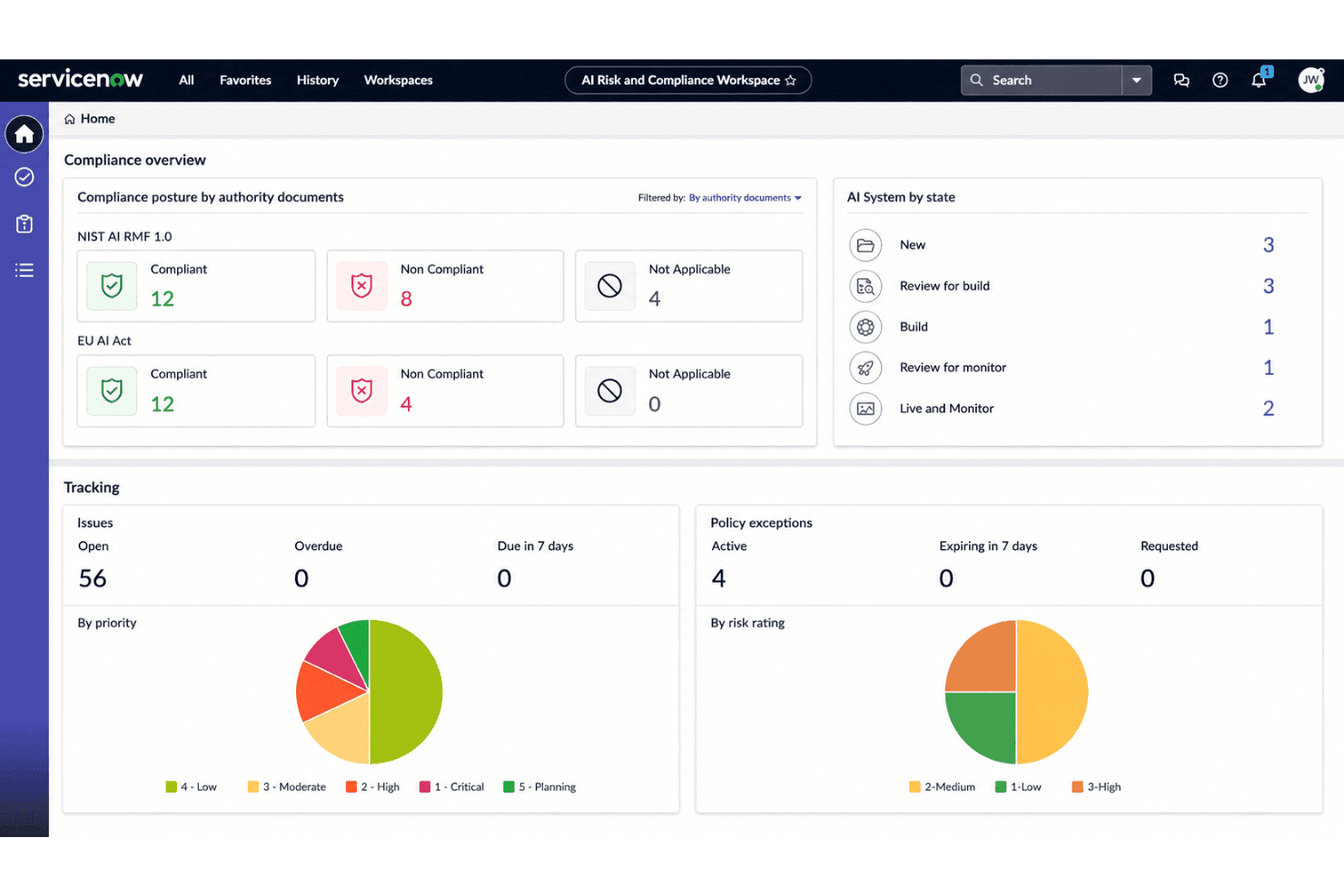
Create, enforce, and update governance policies across all AI assets from a central console. You can trigger automated actions if policies are violated.
Audit Trail and Reporting
Track every AI model change across the CMDB and governance layer in real time. Reports can be exported and shared in real-time for regulatory reviews.
Model Risk Assessment
Use this management tool to assess AI systems for potential bias, risk, or compliance gaps with purpose-built templates. Scores and recommendations guide remediation efforts.
Access Controls and Permissions
Control who can deploy, edit, or monitor AI models and IT asset management systems by user role or group.
Compliance Workflow Automation
Automate compliance checks, problem management escalations, documentation, and approval routing within the platform. This reduces the manual workload for risk, audit, and project management teams.
AI Lifecycle Monitoring
Monitor performance, drift, and accuracy of AI models through the Now Platform continuously. Alerts notify you when models require retraining or review.
Ease of Use
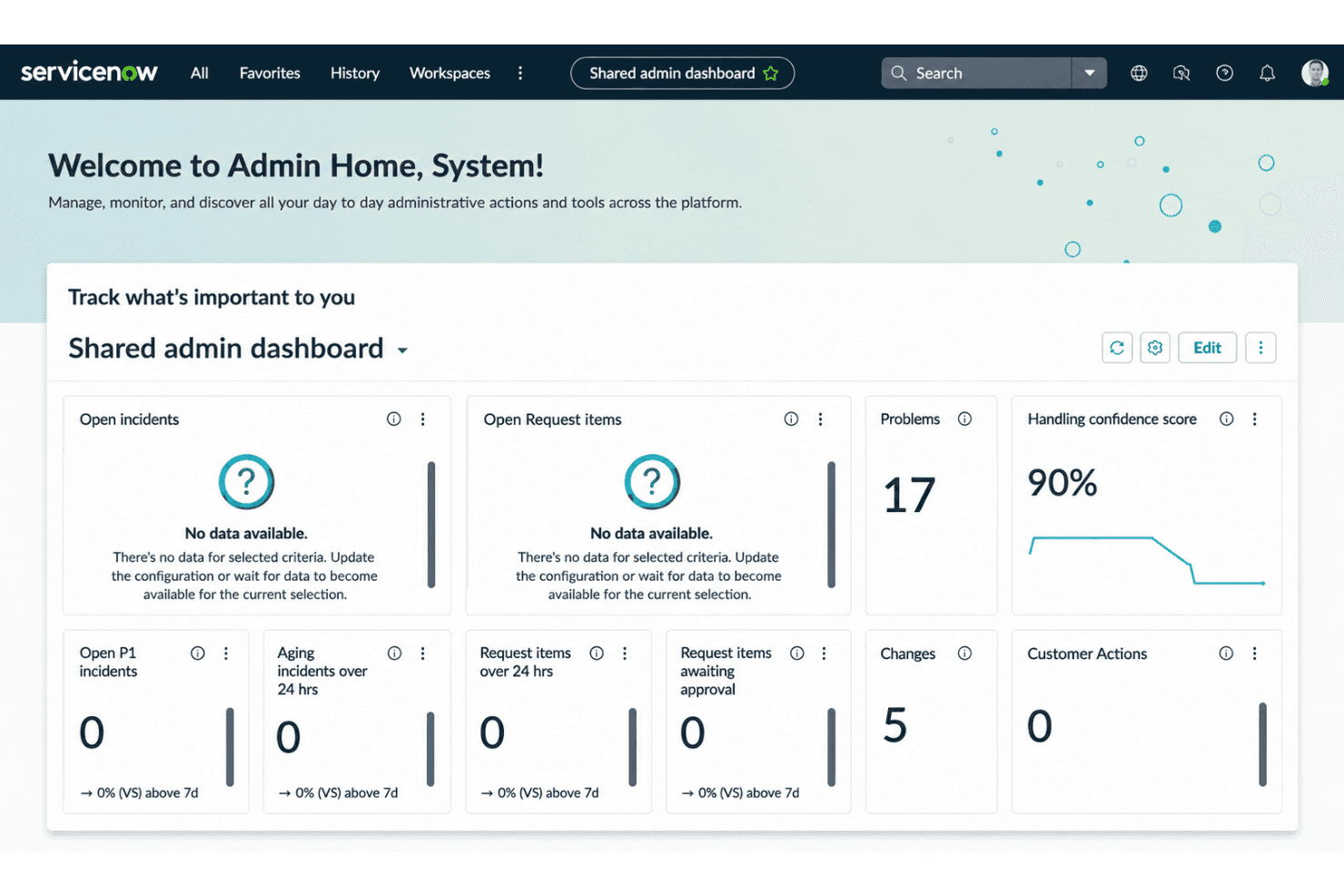
ServiceNow offers a highly configurable interface, but its complexity can be intimidating for new users. I’ve seen teams praise the dashboard’s clarity and automated workflows, yet many mention the setup and customization require ongoing admin time. If you want granular control and a better user experience across AI compliance tasks, the usability pays off, especially in larger environments.
Integrations
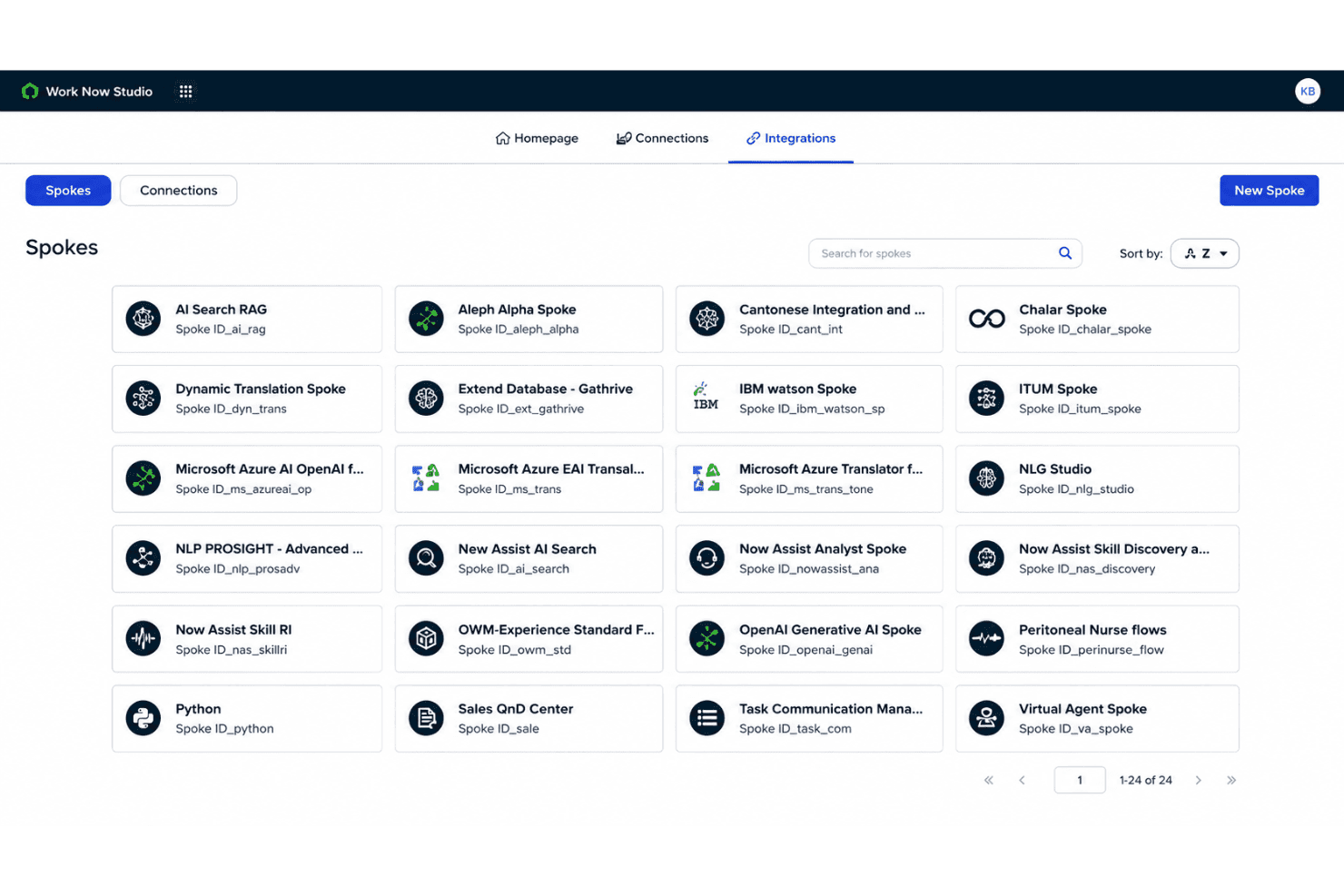
ServiceNow integrates with Microsoft Azure, AWS, Google Cloud, Slack, SAP, Jira, Salesforce, Okta, Microsoft Teams, and Splunk, among others.
ServiceNow also offers a robust API and connects with third-party integration tools.
ServiceNow Specs
- 2-Factor Authentication: Yes
- Analytics: Yes
- Anti-Virus: Yes
- API: Yes
- Batch Permissions & Access: Yes
- Bug Tracking: Yes
- Call Integration: Yes
- Chat: Yes
- Contact Management: Yes
- CRM Integration: Yes
- Customer Management: Yes
- Data Export: Yes
- Data Import: Yes
- Email Integration: Yes
- Escalation Management: Yes
- External Integrations: Yes
- Incident Management: Yes
- Instant Chat Integration: Yes
- Knowledge Base: Yes
- Malware Protection: Yes
- Multi-User: Yes
- Notifications: Yes
- Organization Management: Yes
- Password & Access Management: Yes
- Project Management: Yes
- Real-time Alerts: Yes
- SAP Integration: Yes
- Self-service Portal: Yes
- Social Media Integration: Yes
- Support Forum: Yes
- Ticket Management: Yes
- Workflow Management: Yes


