

Cloudera-Testbericht 2026: Vorteile, Nachteile, Funktionen und Preisübersicht
Cloudera isn’t just another data warehouse—here’s where it stands out, where it stumbles, and how it reshapes decision-making for enterprises in 2026.

Wir bewerten Tools unabhängig; Provisionen helfen, unsere Tests zu finanzieren. Siehe unsere Transparenzrichtlinie und unsere Methodik.
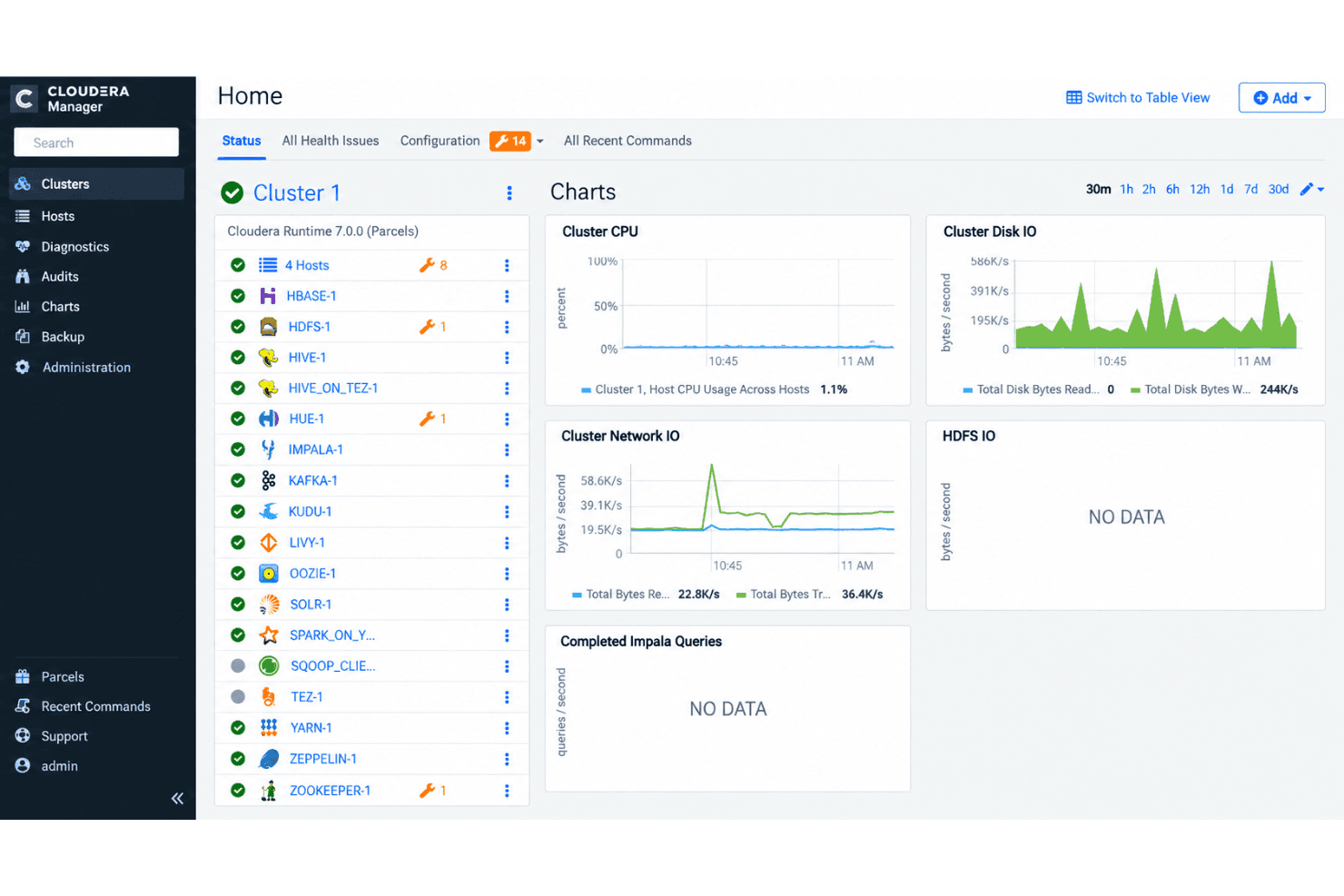
Cloudera is a hybrid data warehouse software built on an open-source data lakehouse architecture, giving IT teams a single platform to run analytics, machine learning, and data engineering workloads across on-premises, private cloud, and public cloud environments. I'd consider it if your organization manages petabyte-scale datasets under strict governance or residency requirements and you need portability across AWS, Azure, Google Cloud, and your own data centers without rewriting pipelines. Compared to Snowflake, which locks you into a cloud-only, proprietary compute model, Cloudera gives you more control over where data lives and how it's processed, which matters when you're balancing regulated workloads with modernization plans.
Cloudera Evaluation Summary
4.1/5
- From $0.04/CCU/hour
- 60-day free trial
Warum Sie unseren Software-Empfehlungen vertrauen können
6,700+
Reviews
20
Industry experts
16+
Evaluation factors
14
Years
Unser Team testet und bewertet Software seit 2012. Als Tech-Führungskräfte wissen wir selbst, wie schwierig – und wichtig – es ist, die richtige Software auszuwählen.
Für diesen Leitfaden haben wir Tools mithilfe von praktischen Tests und unabhängiger Recherche bewertet und dabei unsere Bewertungskriterien angewendet.
Unsere Bewertungen spiegeln unser menschliches redaktionelles Urteilsvermögen wider, keine Verkaufsstrategie.
Expertenprüfer:
- Paulo Gardini MiguelTech-Direktor
 Tim FisherVP für KI
 Gabriel RosasTech Lead & Software-Architekt
 Christhian GruhnTech Lead & Plattform-Architekt

Cloudera Overview
I think Cloudera sets itself apart if you need open-source flexibility and hybrid deployment. I’d judge its data governance, support for petabyte-scale workloads, and multi-cloud compatibility as its strongest features. The interface and onboarding can feel heavy for smaller teams, but I’d pick it when I need granular control and strong security with customizable integrations. Compared to others, Cloudera sometimes underperforms on ease of use and quick setup, but it’s a solid choice for environments with strict compliance needs or data residency requirements. It’s best for regulated industries or organizations balancing legacy and modern cloud systems.
Pros
- Handles petabyte-scale datasets with strong data governance tools
- Flexible deployment across on-premises, private, and public clouds
- Open-source architecture with full control over data location
Cons
- Interface is complex for smaller or less technical teams
- Initial setup and onboarding can be time-consuming
- Performance tuning requires deep technical expertise
Is Cloudera Right For Your Needs?
Who Would be a Good Fit for Cloudera?
Cloudera is a strong choice for enterprises and teams working with complex, regulated, or hybrid data environments that need granular security, governance, and deep integration with open-source tools. You’ll see its value most in industries with strict compliance needs or organizations running hybrid multi-cloud deployments. IT departments managing technical infrastructure and analytics across large or distributed teams will appreciate its advanced lineage, custom integrations, and flexible deployment models.
- Financial ServicesCloudera’s advanced governance, lineage, and security features make it a reliable fit for meeting banking and financial regulatory demands.
- Healthcare & Life SciencesStrict data governance, in-depth audit trails, and hybrid cloud options match healthcare’s compliance and privacy requirements.
- TelecommunicationsManaging massive data pipelines is easier with Cloudera’s Apache Spark, Kafka, and NiFi integrations.
- Large EnterprisesCloudera’s hybrid deployment support and control over complex infrastructures suit organizations with diverse, global operations.
- Data Engineering TeamsNative integration with tools like Apache Airflow, Impala, and Hive gives data engineers extensive workflow and processing flexibility.
- Government AgenciesFull data residency control, advanced security controls, and detailed auditing cater to public sector compliance standards.
Who Would be a Bad Fit for Cloudera?
Smaller companies, non-technical teams, or businesses seeking quick, intuitive deployment may find Cloudera’s complexity and cost are too high for the value they get. Organizations with straightforward analytics needs or teams lacking extensive IT resources often struggle with the steep learning curve and lengthy onboarding required.
- Small StartupsThe high setup complexity and investment outpace the needs and resources of most startups.
- Marketing TeamsCloudera’s dense interface and technical onboarding don’t fit teams wanting simple, drag-and-drop analytics.
- Retail SMBsMid-sized retailers usually don’t need the advanced governance and hybrid integration that drive Cloudera’s higher cost.
- Solo IT ManagersCloudera requires dedicated IT teams for ongoing configuration, so solo administrators will be overburdened.
- No-Code UsersThose seeking a no-code experience will find Cloudera’s workflow design and management require technical expertise.
- Creative AgenciesMost creative teams benefit more from plug-and-play analytics platforms than from Cloudera’s highly configurable, technical environment.
Unsere Bewertungsmethodik
Wie wir Werkzeuge testen & bewerten
Wir haben Jahre damit verbracht, unser System zur Softwareprüfung und -bewertung aufzubauen, zu verfeinern und zu verbessern. Das Bewertungsraster ist darauf ausgelegt, die Feinheiten der Softwareauswahl und Effektivität eines Tools einzufangen, wobei wir uns auf kritische Aspekte des Entscheidungsprozesses konzentrieren.
Nachfolgend sehen Sie genau, wie unser Test- und Bewertungssystem anhand von sieben Kriterien funktioniert. Es ermöglicht uns eine unparteiische Bewertung der Software basierend auf Grundfunktionalität, besonderen Funktionen, Benutzerfreundlichkeit, Onboarding, Kundensupport, Integrationen, Kundenbewertungen und Preis-Leistungs-Verhältnis.
Grundfunktionalität (25 % der Endbewertung)
Der Ausgangspunkt unserer Bewertung ist immer die Grundfunktionalität des Werkzeugs. Verfügt es über die grundlegenden Funktionen und Merkmale, die ein Benutzer erwarten würde? Sind grundlegende Funktionen auf höherpreisige Tarife beschränkt? Im Kern erwarten wir, dass ein Tool den Basisfähigkeiten seiner Konkurrenten standhält.
Besondere Features (25 % der Endbewertung)
Anschließend bewerten wir ungewöhnliche, herausragende Funktionen, die über die typische Grundfunktionalität von Tools dieser Art hinausgehen. Eine hohe Bewertung zeigt spezialisierte oder einzigartige Eigenschaften, die das Produkt schneller, effizienter oder für den Nutzer wertvoller machen.
Wir bewerten außerdem, wie einfach sich das Tool mit anderen üblichen Werkzeugen im Technologie-Stack integrieren lässt, um die Funktionalität und den Nutzen der Software zu erweitern. Tools mit vielen nativen Integrationen, Drittanbieter-Anbindungen und API-Zugang zur Erstellung kundenspezifischer Integrationen erhalten die besten Bewertungen.
Benutzerfreundlichkeit (10 % der Endbewertung)
Wir betrachten, wie schnell und einfach Aufgaben aus dem Bereich der Grundfunktionalität mit dem Tool erledigt werden können. Gut bewertete Software ist durchdacht gestaltet, intuitiv bedienbar, bietet mobile Apps, Vorlagen und lässt relativ komplexe Aufgaben einfach erscheinen.
Onboarding (10 % der Endbewertung)
Wir wissen, wie wichtig die schnelle Einführung eines neuen Tools für das Team ist, daher bewerten wir, wie leicht sich ein Werkzeug mit minimalem Training erlernen und nutzen lässt. Wir bewerten, wie schnell ein Teammitglied ohne Vorerfahrung anfangen kann. Hoch bewertete Lösungen benötigen wenig bis gar keine Unterstützung.
Kundensupport (10 % der Endbewertung)
Wir prüfen, wie schnell und einfach man bei Problemen Hilfe per Telefon, Live-Chat oder Wissensdatenbank erhält. Tools und Anbieter mit Echtzeit-Support werden besser bewertet, während Chatbots schlechter abschneiden.
Kundenbewertungen (10 % der Endbewertung)
Neben unserer eigenen Prüfung beziehen wir den Net Promoter Score aktueller und ehemaliger Kunden mit ein. Wir bewerten, wie wahrscheinlich es ist, dass sie sich erneut für das Werkzeug entscheiden würden. Hoch bewertete Software weist einen hohen Net Promoter Score auf.
Preis-Leistungs-Verhältnis (10 % der Endbewertung)
Abschließend vergleichen wir unter Berücksichtigung aller Kriterien den durchschnittlichen Preis der Einstiegspakete mit den Grundfunktionen und bewerten den Mehrwert aus den anderen Bewertungsbereichen. Software, die mehr fürs gleiche Geld bietet, schneidet besser ab.
Core Features
Hybrid and Multi-Cloud Deployment
Run Cloudera across on-premises, private cloud, and public cloud environments to keep data where you need it. Move workloads between AWS, Azure, Google Cloud, and data centers without modifying pipelines.
Unified Data Governance
Manage access, security policies, and audit trails centrally with Apache Ranger and Atlas built in. You’ll get fine-grained governance for regulated industries and transparent tracking for compliance.
Data Lakehouse Architecture
Combine structured and unstructured data in one system using open-source Apache Iceberg and HDFS. Analyze batch and streaming data together without data movement, making it easier to unify analytics projects.
Enterprise-Scale Analytics and Machine Learning
Run analytics, SQL queries, and machine learning at petabyte scale with engines like Apache Spark and Hive. Process huge workloads in parallel and connect directly to BI tools for real-time insights.
Advanced Data Engineering Workflows
Use built-in Apache NiFi, Airflow, and Spark to automate pipelines and transformations across diverse data. Schedule and monitor ETL, prepping your data for analytics or AI, all in one place.
End-to-End Security Controls
Encrypt data at rest and in transit, manage keys, and isolate workloads. Built-in authentication and role-based access controls keep sensitive information protected across your environment.
Ease of Use
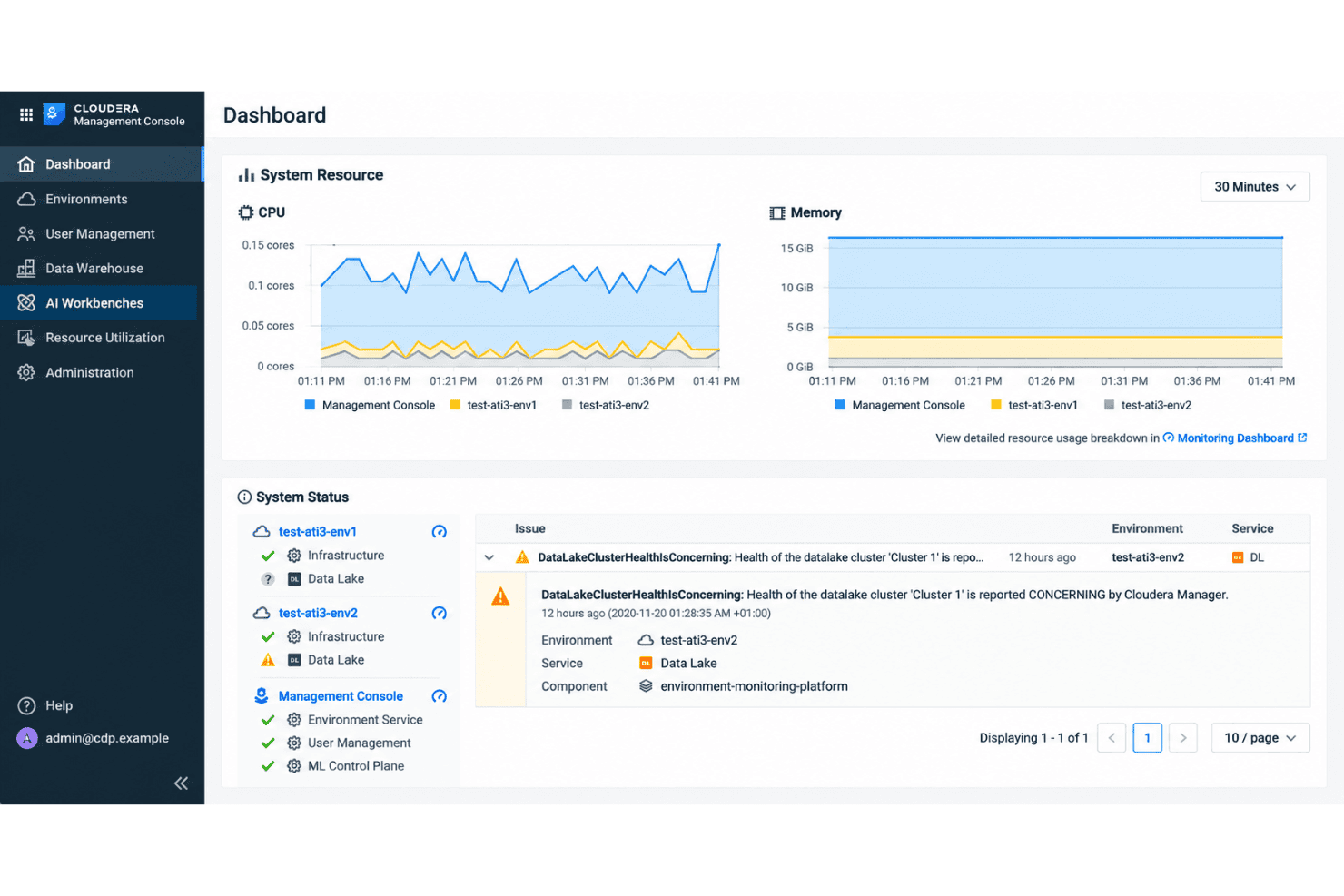
Cloudera’s user interface can feel dense and overwhelming, especially during the initial onboarding and setup process. Many users mention a steep learning curve and the need for technical expertise to get the most out of its governance and hybrid features. While it offers strong flexibility and control, you’ll likely spend extra time configuring workflows, managing security, and tuning performance compared to other options with simpler interfaces.
Integrations
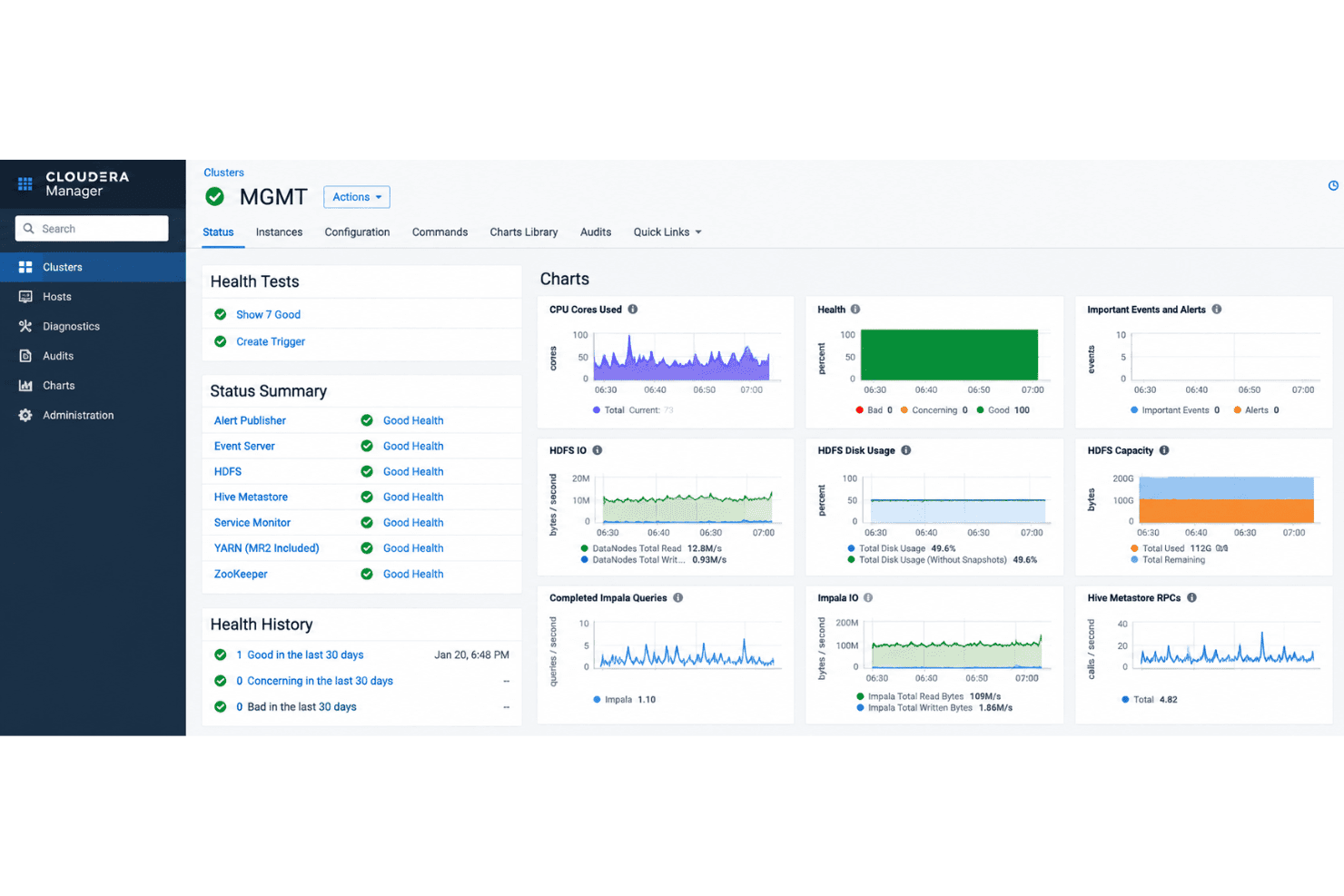
Cloudera works with open-source technologies including Apache Hive, Apache Spark, Apache NiFi, Apache Kafka, Apache HBase, Apache Impala, Apache Ranger, Apache Atlas, Apache Airflow, and Apache Iceberg, among others.
Cloudera also provides REST APIs and supports connections with third-party integration and workflow tools.
Cloudera Specs
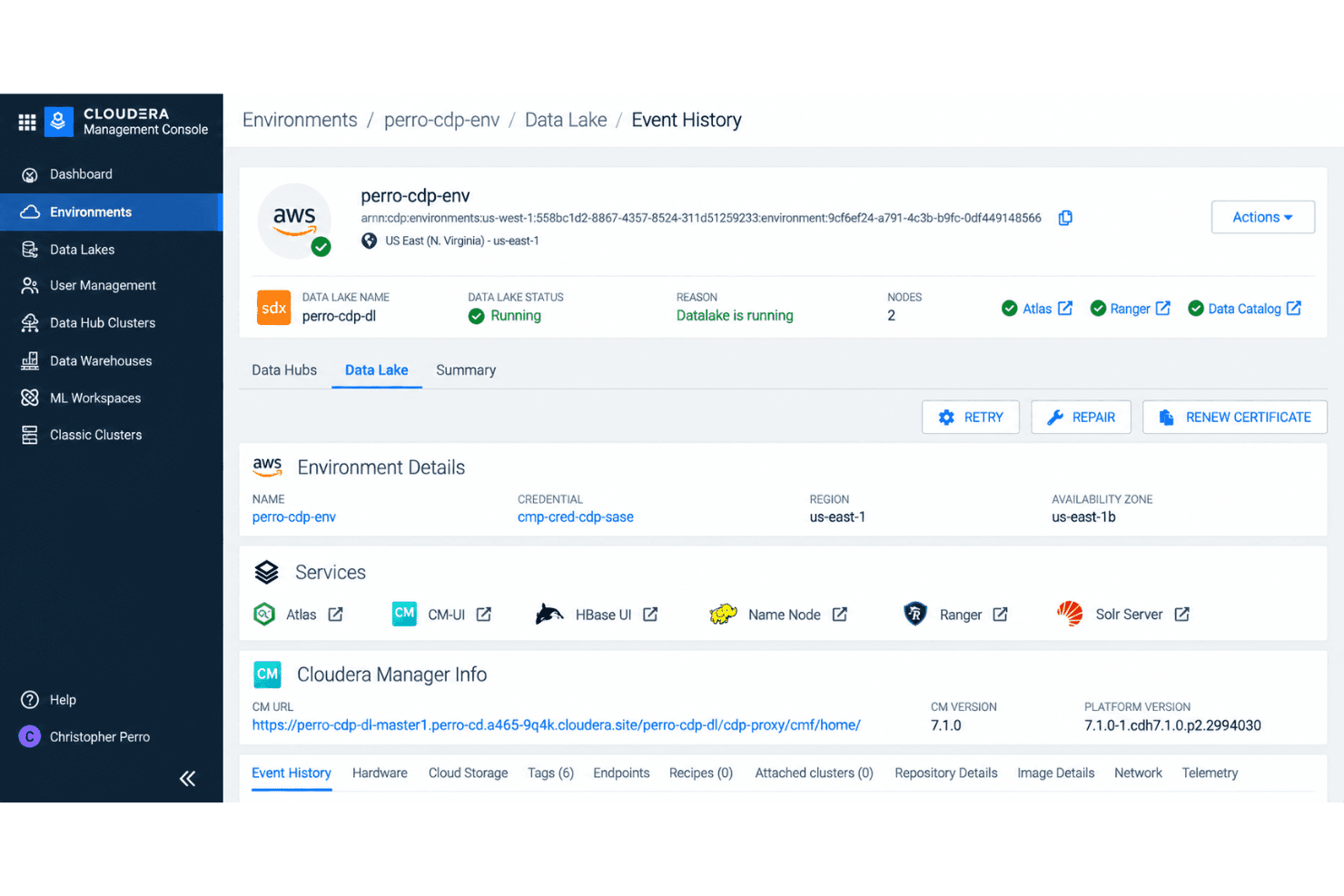
- A/B Testing: No
- Access Management: Yes
- Analytics: Yes
- API: Yes
- Conversion Tracking: No
- Custom Reports: Yes
- Customer Management: No
- Dashboards: Yes
- Data Export: Yes
- Data Import: Yes
- Data Mining: Yes
- Data Visualization: Yes
- External Integrations: Yes
- Forecasting: Yes
- Inventory Tracking: No
- Keyword Tracking: No
- Link Tracking: No
- Multi-User: Yes
- Notifications: Yes
- Project Management: No
- Reports: Yes
- Scenario Planning: No
- SEO: No
- Supplier Management: No
- Visualization: Yes


