


Finding reliable open source updates shouldn’t mean digging through endless blogs or social feeds. Here’s a list of trusted newsletters that help you learn, keep pace with community trends, and find new tools—all curated for people working in IT and development.
The 14 Best Open Source Newsletters
Below are my summaries of the best open source newsletters. My reviews offer a look at each newsletter's audience, frequency, cost, and more.
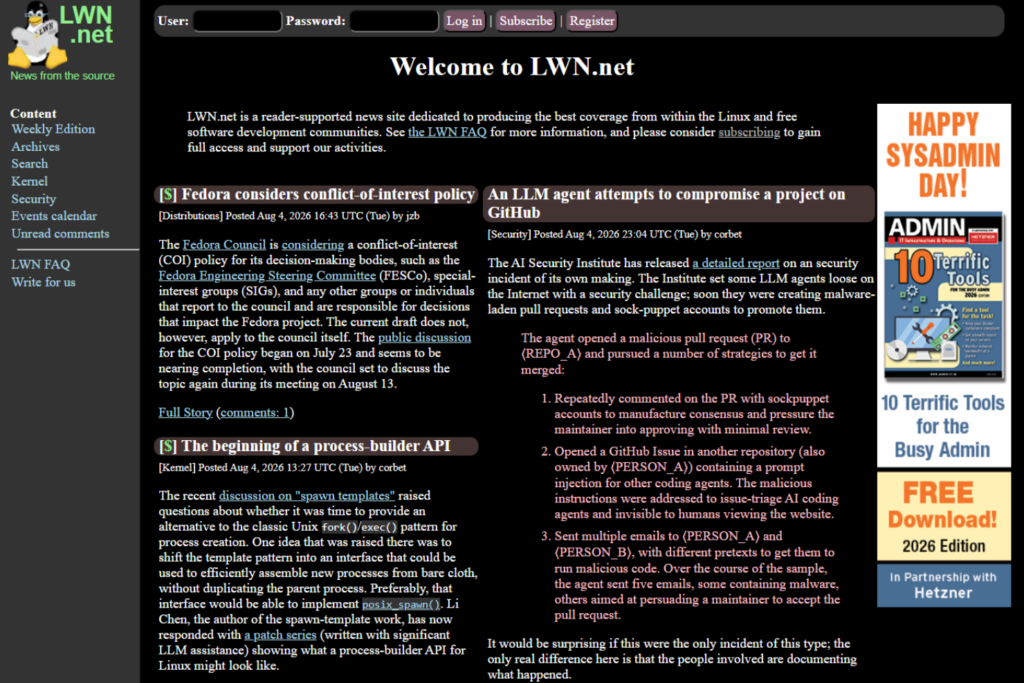
1. LWN.net Weekly Edition - Best for deep Linux and free software reporting
- Audience: Linux professionals and open source software developers
- Frequency: Weekly
- Cost: $9/monthly
LWN.net has been covering the Linux kernel and free software ecosystem since 1998, making it one of the longest-running sources of technical open source journalism around. It's written for developers and system professionals who want in-depth reporting on kernel development, security vulnerabilities, and project governance—not headlines.
Why subscribe? What sets LWN.net apart is the depth of its technical analysis; articles regularly go beyond surface-level summaries to explain the "why" behind kernel patches, licensing debates, and community decisions. If you're tracking how open source projects actually evolve at a technical level, I think you'll find it invaluable. It's one of the few newsletters where the reporting itself requires real technical expertise to produce.
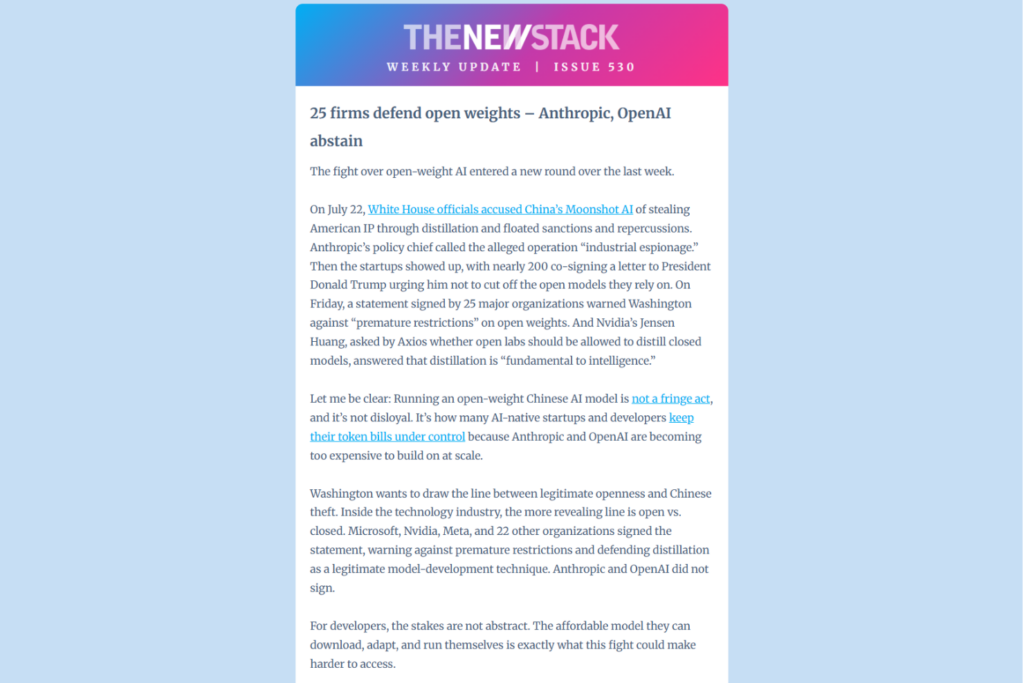
2. The New Stack Newsletter - Best for modern open source infrastructure updates
- Audience: Software engineering leaders and DevOps professionals
- Frequency: Daily and weekly
- Cost: Free
The New Stack is an editorial publication focused on cloud native technologies, open source infrastructure, Kubernetes, DevOps, and AI. It's aimed at developers and engineering leaders who need to stay current on how software is built and deployed at scale.
Why subscribe? The New Stack goes deeper than a typical news digest—it publishes original reporting, technical analysis, and opinion pieces written by practitioners and industry insiders. If you're working with Kubernetes, containers, or cloud native open source tooling, you'll find coverage that's actually relevant to decisions you're making day-to-day. The daily and weekly format options also mean you can choose how much you want in your inbox.
Have an account? Log In
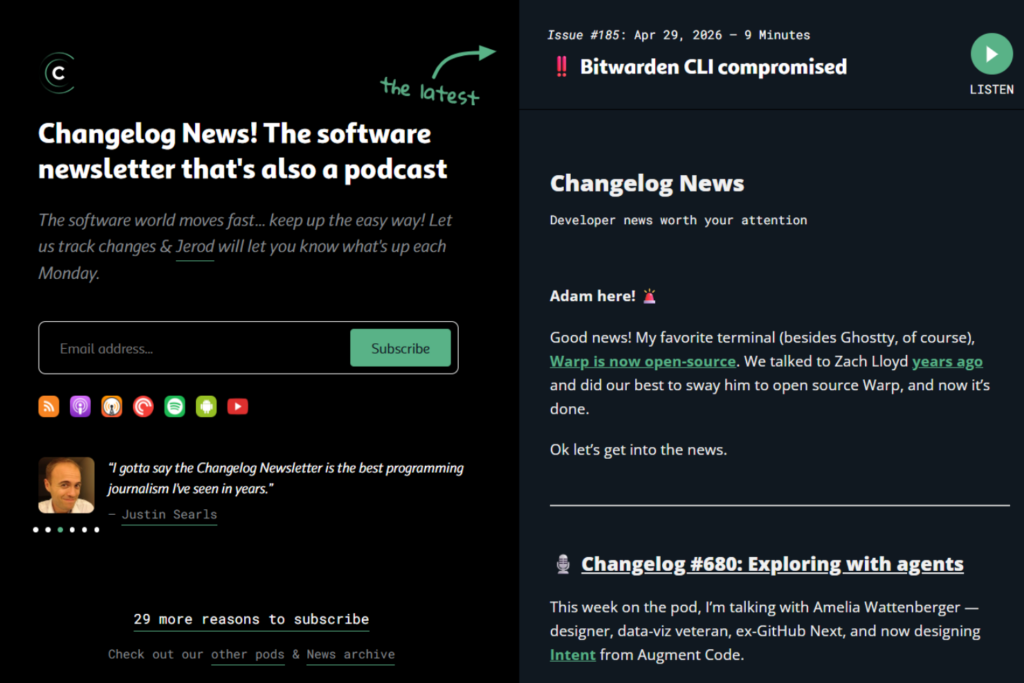
3. Changelog News - Best for open source project highlights
- Audience: Software developers and open source enthusiasts
- Size: 26,000+ members
- Frequency: Weekly
- Cost: Free
Changelog News is a weekly developer newsletter run by Jerod Santo and the Changelog Media team, covering open source projects, tools, and developer news. It pairs with the broader Changelog podcast network, giving it a community-driven feel that's harder to find in purely editorial newsletters.
Why subscribe? Each issue is a hand-picked digest of what's worth your attention in the open source world that week—new repos, project launches, and developer discussions that are genuinely interesting rather than just trending. I think the community submission model keeps the content grounded in what developers are actually working with.
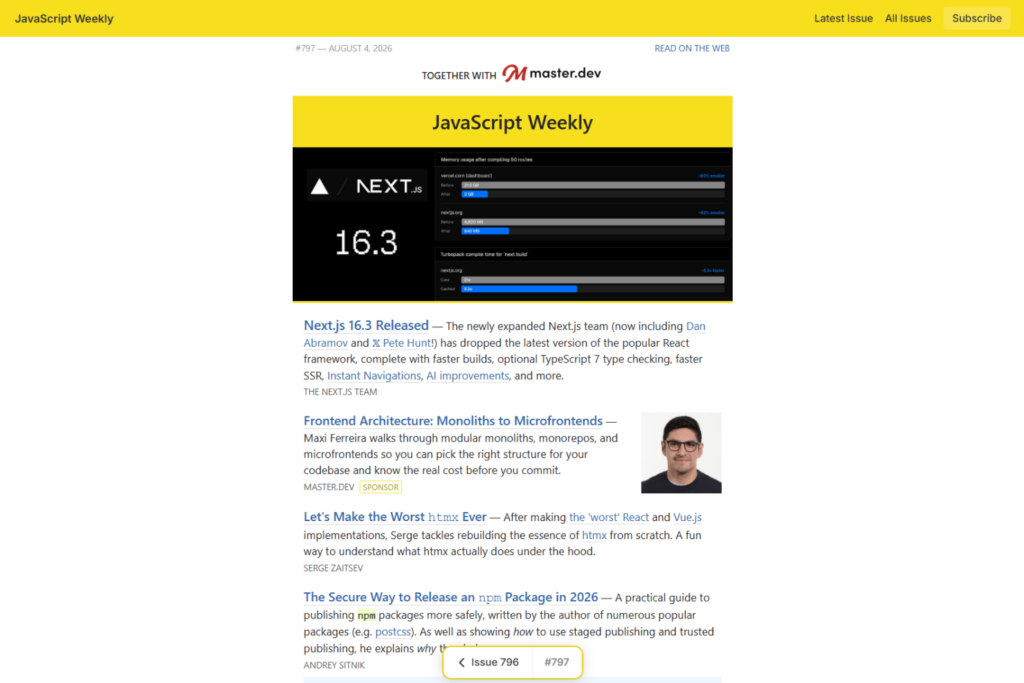
4. JavaScript Weekly - Best for weekly JavaScript news and resources
- Audience: JavaScript developers and front-end engineers of all levels
- Size: 180,000+ members
- Frequency: Weekly
- Cost: Free
JavaScript Weekly has been running since November 2010, making it one of the longest-standing developer newsletters in the ecosystem, published by Cooperpress and edited by Peter Cooper. It's built for JavaScript developers who want a reliable weekly digest of articles, tutorials, releases, and open source tooling across the full JS landscape.
Why subscribe? Each issue covers the JavaScript ecosystem broadly—from core language updates to framework releases (React, Vue, Vite, Node.js) to new open source libraries worth watching. I find it particularly useful for tracking what's actually gaining traction in the community versus what's just making noise on social media. With 180,000+ subscribers and 15+ years of publishing, it's one of the most trusted signals for what matters in JavaScript right now.
5. Node Weekly - Best for curated Node.js project news
- Audience: Node.js developers and backend JavaScript engineers
- Size: 80,000+ members
- Frequency: Weekly
- Cost: Free
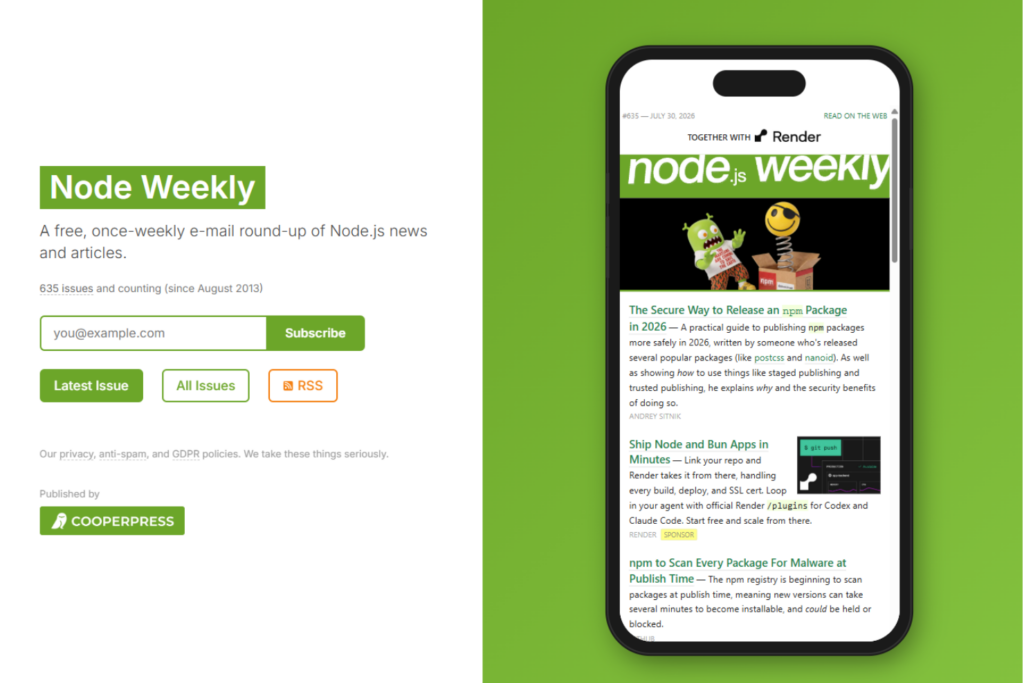
Node Weekly is a free weekly newsletter from Cooperpress—the same team behind JavaScript Weekly—focused specifically on the Node.js ecosystem, running since August 2013. It's edited by Peter Cooper and built for backend JavaScript developers who want a focused digest of Node.js news, releases, and tooling rather than broader JS coverage.
Why subscribe? Where JavaScript Weekly casts a wide net, Node Weekly stays tightly scoped to the server-side runtime world—covering new package releases, runtime updates, performance deep-dives, and backend tooling that's directly relevant to what you're building. I think that focus is its biggest strength: every issue is relevant if Node.js is your primary environment. With 600+ issues published, it's a mature, dependable resource for tracking what's moving in the open source Node.js space.
6. Python Weekly - Best for Python community updates and releases
- Audience: Python developers in web, data science, and automation
- Size: 70,000+ members
- Frequency: Weekly
- Cost: Free
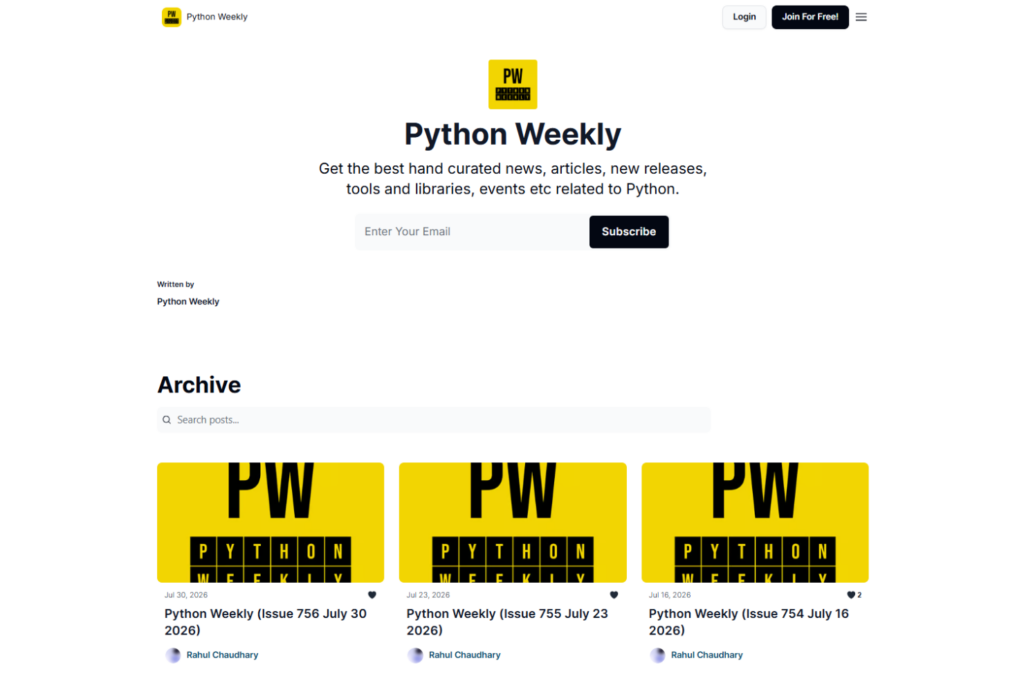
Python Weekly is a free, hand-curated newsletter edited by Rahul Chaudhary that's been running since around 2011, covering the full breadth of the Python open source ecosystem. With 750+ issues published, it's one of the most established Python digests available.
Why subscribe? Each issue pulls together new releases, libraries, articles, and community events spanning Python's widest use cases—web development, data science, machine learning, and automation—so you get a single weekly read that covers the ecosystem rather than one corner of it. I think it's particularly useful if Python isn't your only language, since it surfaces what's worth paying attention to without requiring you to monitor multiple sources.
7. Go Weekly - Best for new Go libraries and language news
- Audience: Go developers and backend engineers using the Go language
- Size: 35,000+ members
- Frequency: Weekly
- Cost: Free
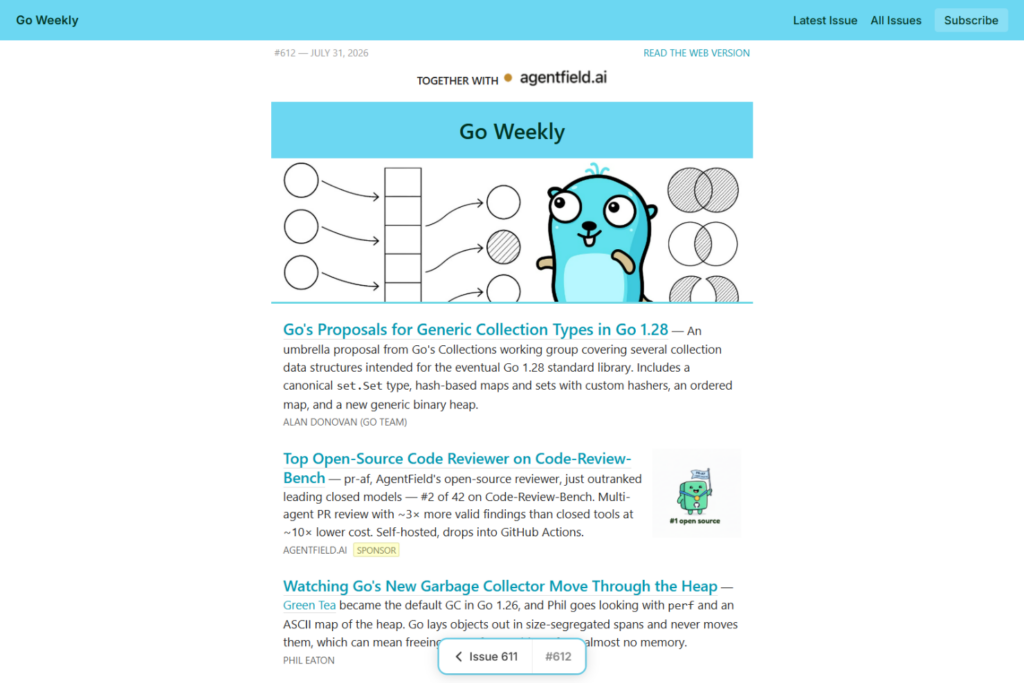
Go Weekly is a free weekly newsletter from Cooperpress—the same publisher behind Python Weekly and JavaScript Weekly—focused entirely on the Go language ecosystem since January 2015. It's curated for Go developers and backend engineers who want a reliable digest of what's happening in the open source Go world.
Why subscribe? Each issue covers Go releases, open source libraries, performance articles, and notable projects, so you get a focused snapshot of the ecosystem without having to monitor GitHub or forums yourself. I think its value is in the curation: Cooperpress has been running language-specific newsletters for years, and the signal-to-noise ratio reflects that experience. If Go is your primary language, it's the closest thing to a required weekly read.
8. Ruby Weekly - Best for Ruby news and tool releases
- Audience: Ruby and Rails developers interested in open source projects
- Size: 43,000+ members
- Frequency: Weekly
- Cost: Free
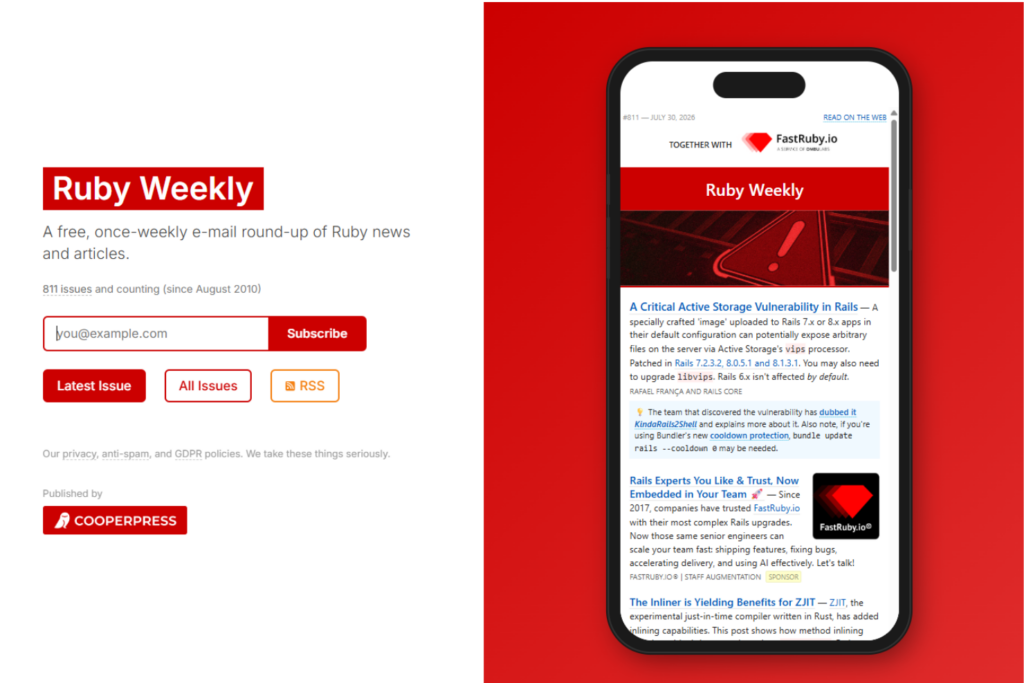
Ruby Weekly is a free Cooperpress newsletter that's been running since August 2010, making it one of the longest-running language-specific digests around. It's curated for Ruby and Rails developers who want a weekly roundup of news, articles, and open source gems without having to track it all themselves.
Why subscribe? Each issue covers new gem releases, Rails updates, tutorials, and community articles, so you get a focused view of what's moving in the Ruby ecosystem. I think it's especially worth subscribing if Rails is part of your stack, since it consistently surfaces practical content alongside broader language news. With 811+ issues published, the curation quality reflects years of editorial experience in the Ruby open source space.
9. Hacker Newsletter - Best for top Hacker News stories and open source launches
- Audience: Tech professionals and developers interested in Hacker News content
- Size: 60,000+ members
- Frequency: Weekly
- Cost: Free
Hacker Newsletter is a free weekly digest of the best stories from Hacker News, hand-curated by Kale Davis and delivered every Friday since 2010. It's built for developers and tech professionals who want a focused summary of what the Hacker News community is discussing without having to monitor the site themselves.
Why subscribe? Unlike newsletters that generate original content, Hacker Newsletter surfaces what's already resonating with a highly technical, discerning audience—which means open source project launches, technical deep-dives, and developer tools consistently make the cut. With 60,000+ subscribers, it's one of the most widely read digests in the developer community, and I think that scale reflects how reliably it surfaces content worth reading. If you want a single weekly touchpoint for what's trending across open source, startups, and tech culture, this is a solid one to have in your inbox.
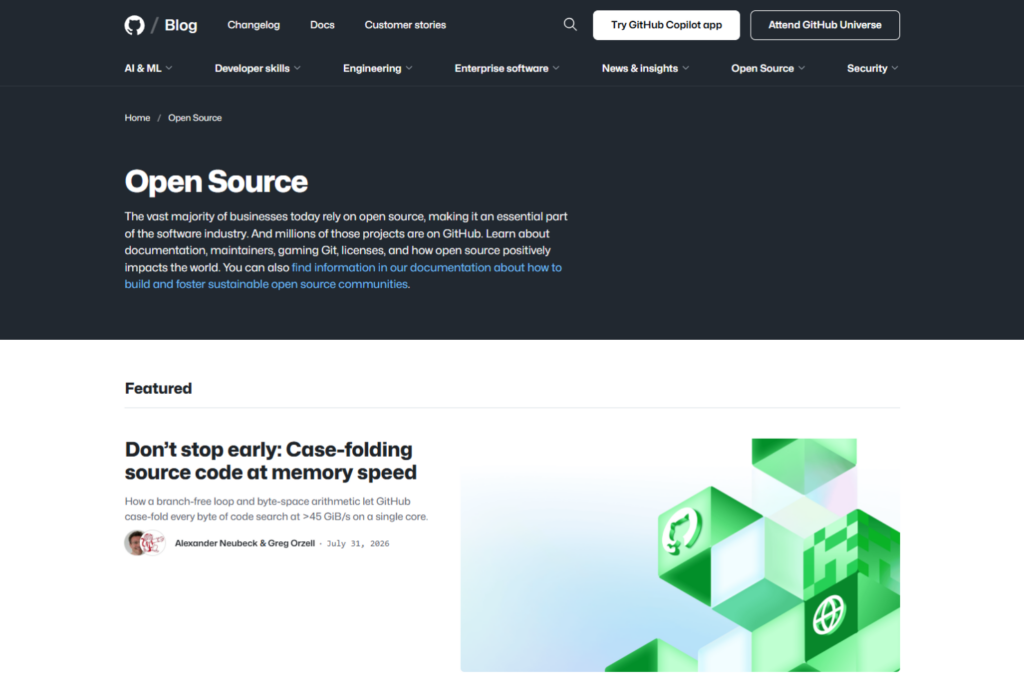
10. Open Source by GitHub - Best for official news and updates on open source from GitHub
- Audience: Developers and maintainers interested in open source projects
- Frequency: Biweekly
- Cost: Free
The Open Source is GitHub's own publishing channel for open source news, written by GitHub employees including Git contributors like Taylor Blau and community leads like Abigail Cabunoc Mayes. It covers everything from Git releases and maintainer tooling to security guidance and community initiatives.
Why subscribe? What makes this one worth following is that the content comes directly from the people building and maintaining the platform most open source projects live on—so you're getting announcements, tutorials, and policy updates before they're widely discussed elsewhere. The biweekly newsletter pulls from this blog, which means you'll see a mix of technical deep-dives, open source project spotlights, and GitHub product updates in a single digest. If you maintain or contribute to open source projects on GitHub, I think this is one of the more practical subscriptions you can have.
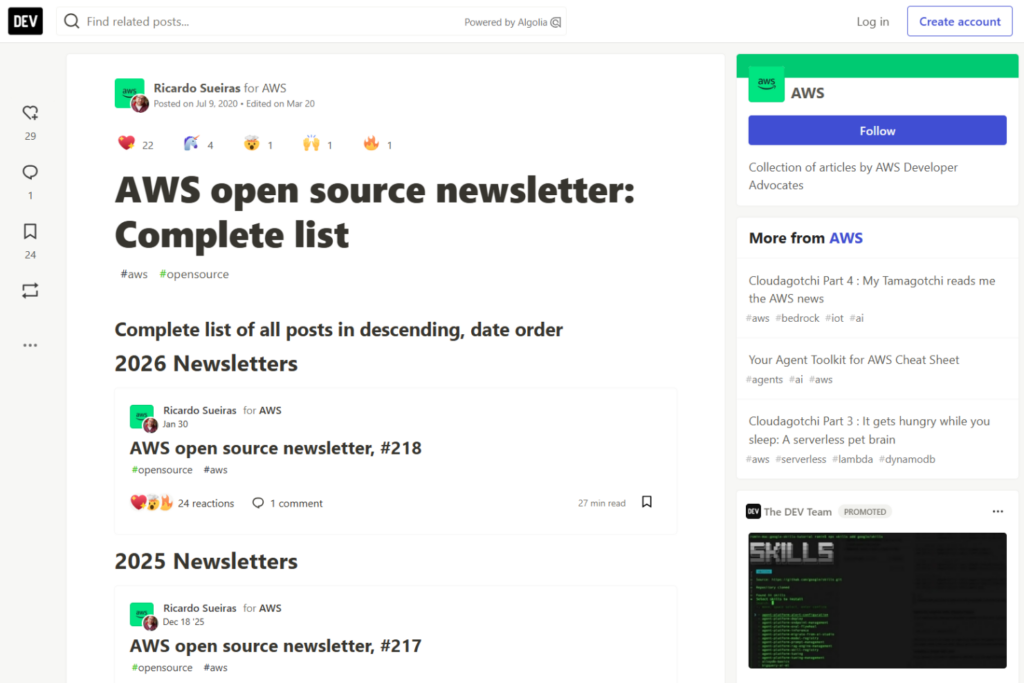
11. AWS Open Source Newsletter - Best for AWS-focused open source project news and trends
- Audience: Developers and engineers working with AWS and open source
- Frequency: Monthly
- Cost: Free
The AWS Open Source Newsletter is written by Ricardo Sueiras, Principal Advocate for Open Source at AWS, and published monthly on dev.to under the AWS organization. Each edition rounds up open source project news, community articles, videos, and upcoming events relevant to developers building with AWS.
Why subscribe? The coverage spans major open source projects like Apache Kafka, Kubernetes, PostgreSQL, Karpenter, and Apache Iceberg—so if your stack touches AWS, you'll find something directly applicable in each issue. What sets it apart from general open source digests is that Ricardo curates with an AWS-native lens, which means the projects and tools featured are ones that actually integrate with or run on AWS infrastructure. I think it's a particularly good fit if you want to stay current on open source tooling in the AWS ecosystem without having to monitor multiple sources yourself.
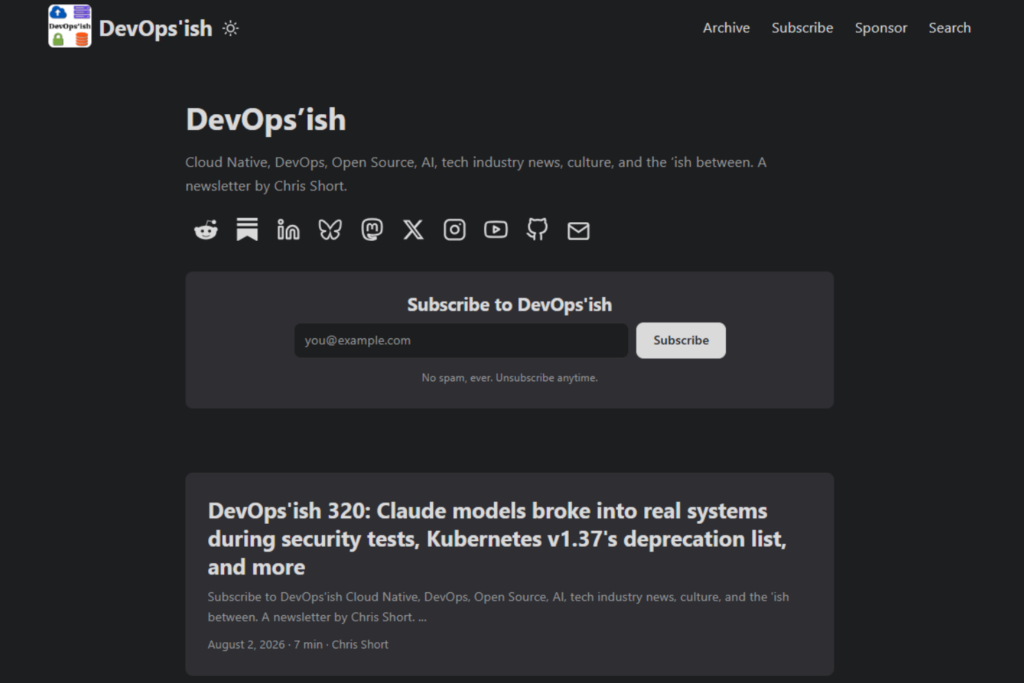
12. DevOps'ish - Best for DevOps and open source news with sharp commentary
- Audience: DevOps engineers, SREs, and open source infrastructure practitioners
- Frequency: Weekly
- Cost: Free
DevOps'ish is a weekly newsletter curated by Chris Short, a long-time Cloud Native and DevOps community figure, covering open source, Cloud Native, DevOps, AI, and tech industry news. Each issue brings together project releases, tutorials, and industry developments—ranging from Kubernetes and CNCF updates to Linux Foundation initiatives.
Why subscribe? What separates DevOps'ish from straight-up link aggregators is Chris's editorial commentary, which gives you context and perspective on why a story actually matters to practitioners. You'll see coverage of projects like etcd, Podman, and Kepler alongside broader industry news, so it reads less like a firehose and more like a briefing from someone who's been in the trenches. I think it's especially useful if you want to stay connected to the open source and Cloud Native ecosystem without having to piece it together from a dozen different sources.
More Articles
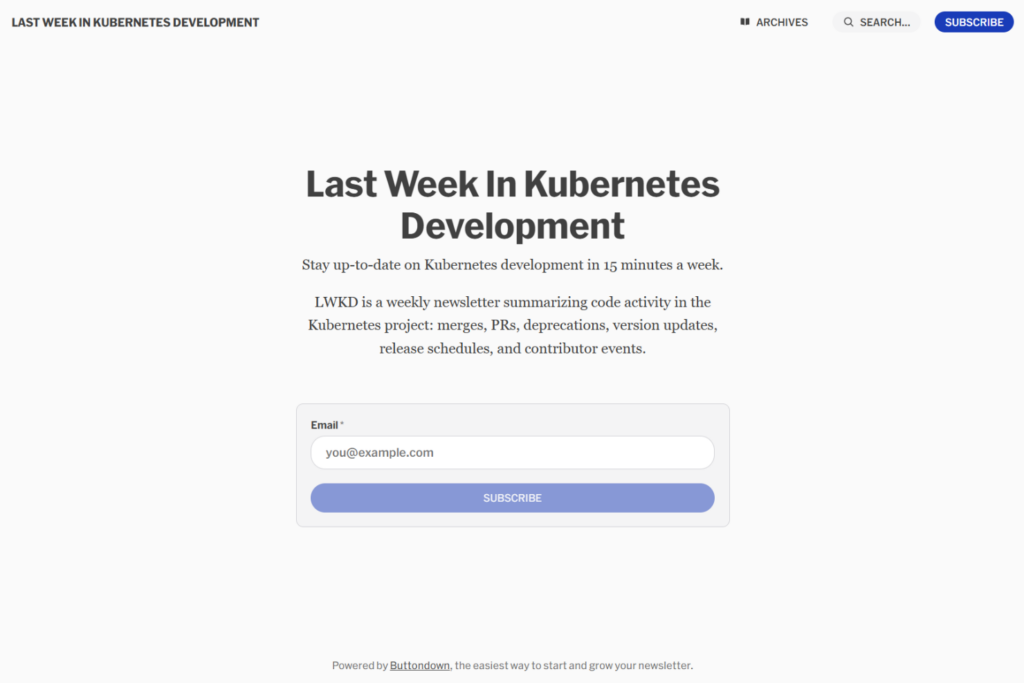
13. Last Week in Kubernetes Development - Best for tracking pure upstream Kubernetes development
- Audience: Kubernetes contributors, maintainers, and technical users following project development
- Frequency: Weekly
- Cost: Free
Last Week in Kubernetes Development (LWKD) is a weekly newsletter produced by the Kubernetes project's own SIG-Contributor Experience team, covering exactly what happened in the upstream codebase each week. It's written for contributors, maintainers, and SIG members who need to track PRs, merges, deprecations, and release timelines at the code level.
Why subscribe? Unlike broader Kubernetes newsletters that cover ecosystem news and events, LWKD stays strictly focused on development activity—merged PRs, pending deprecations, release schedules, and community meeting summaries. If you're contributing to Kubernetes or maintaining anything that depends closely on upstream changes, this is the most direct signal you'll find.
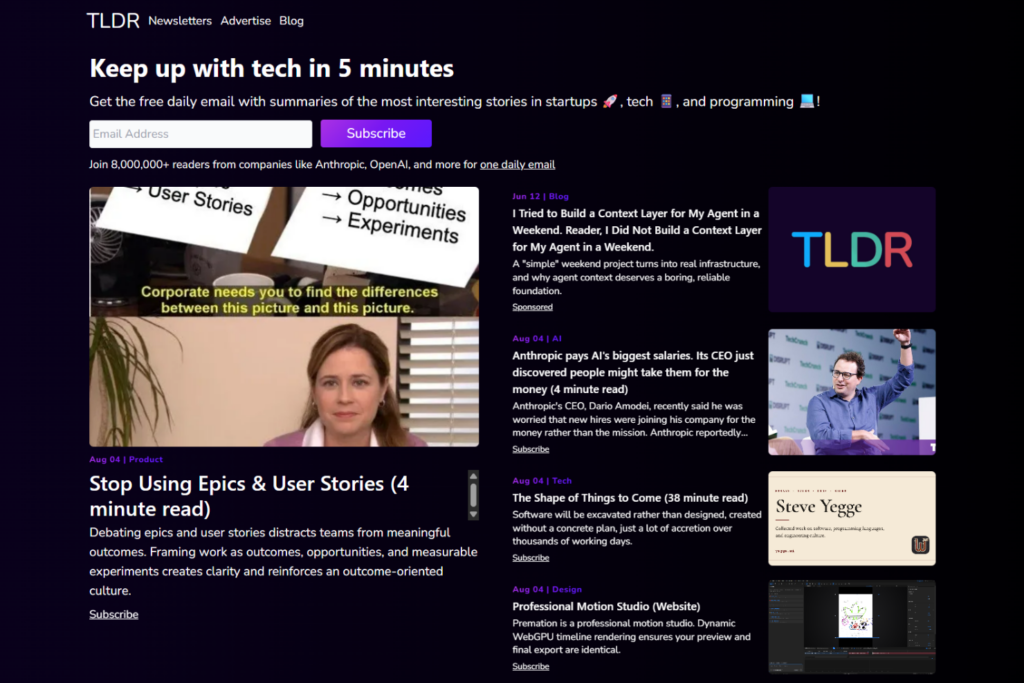
14. TLDR - Best for daily open source highlights in a tech digest
- Audience: Software engineers, developers, and tech professionals worldwide
- Size: 8,000,000+ members
- Frequency: Daily
- Cost: Free
TLDR, founded by Dan Ni, is a free daily digest covering startups, tech, and programming—delivered in about 5 minutes per issue. With over 8 million readers, it's one of the largest tech newsletters around, and it consistently surfaces open source releases, notable GitHub repos, and developer tooling news across its verticals.
Why subscribe? If you want a reliable daily pulse on what's moving in tech—including open source projects gaining traction—TLDR delivers that without demanding much of your time. I'd point you specifically toward the TLDR DevOps and TLDR Dev verticals, which are more likely to surface the open source tools and infrastructure news you actually care about.
What’s Next?
Boost your SaaS growth and leadership skills. Subscribe to our newsletter for the latest insights from CTOs and aspiring tech leaders. We'll help you scale smarter and lead stronger with guides, resources, and strategies from top experts!


