

Sendmarc Review: Pros, Cons, Key Features and Pricing Guide
I break down how Sendmarc stands out in the DMARC crowd, delivering straightforward compliance and visibility—even for teams who’d rather be focusing on growth than email security.

We review tools independently, and commissions help fund our testing. See our transparency policy, our methodology, or suggest a tool.
Sendmarc is a DMARC software for organizations that need to reach full DMARC enforcement, protect their domains from spoofing, and get visibility into who's sending email on their behalf. I'd point you to it if you want a more automated, partner-friendly path to enforcement than the incumbent enterprise platforms, with guided workflows that suit MSPs and internal IT teams managing multiple domains. As a DMARC solution it also covers the adjacent standards—SPF, DKIM, MTA-STS, and TLS-RPT—rather than leaving them for a second vendor.
Sendmarc Evaluation Summary
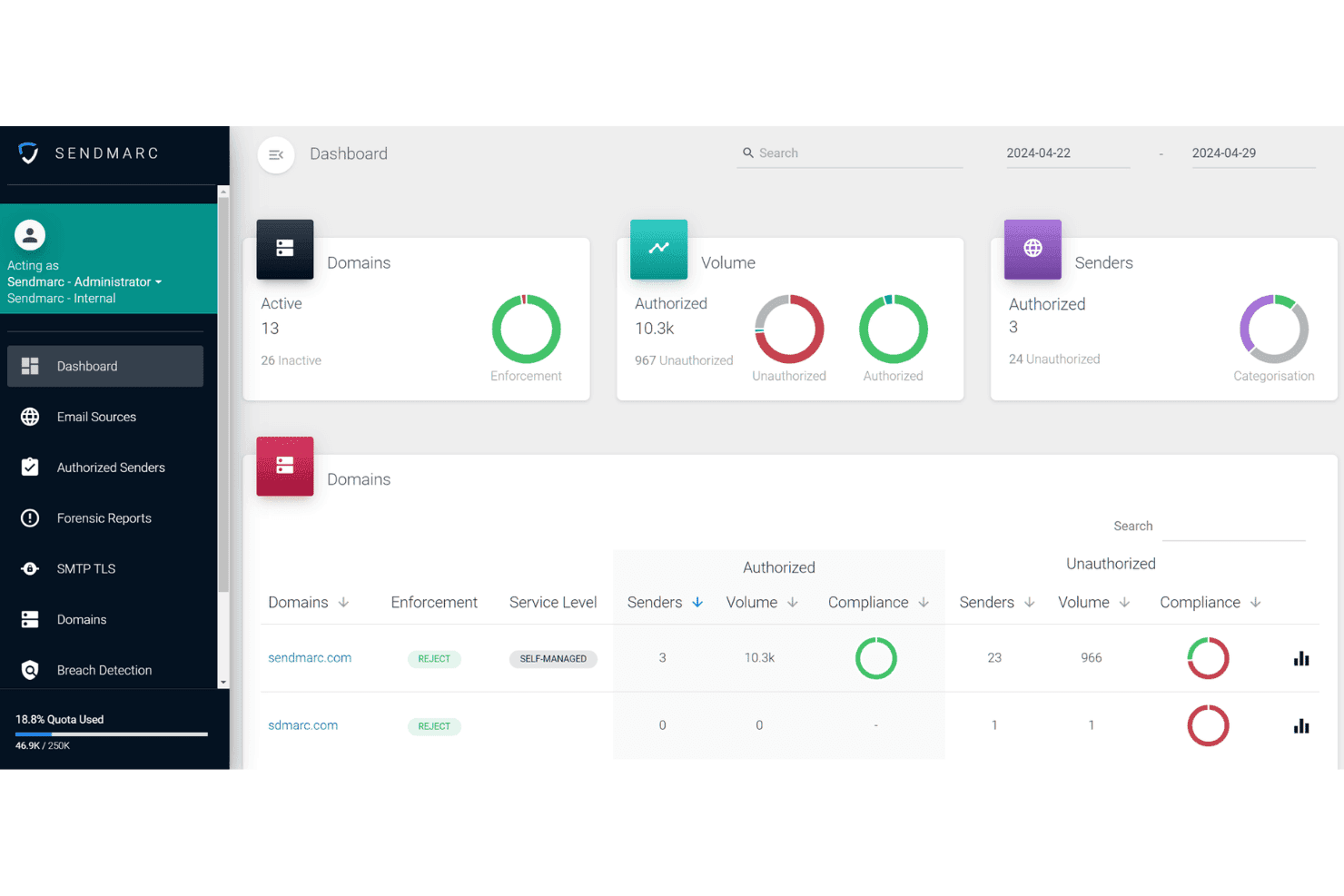
4.9/5
- Pricing upon request
- 21-day free trial
Why Trust Our Software Recommendations
6,700+
Reviews
20
Industry experts
16+
Evaluation factors
14
Years
Our team has been testing and reviewing software since 2012. As tech leaders ourselves, we know how difficult—and important—it is to choose the right software.
For this guide, we evaluated tools using hands-on testing and independent research, scoring tools using our selection criteria.
Our reviews reflect our human editorial judgment, not a sales pitch.
Expert reviewers:
- Paulo Gardini MiguelTech Director
 Tim FisherVP of AI
 Gabriel RosasTech Lead & Software Architect
 Christhian GruhnTech Lead & Platform Architect

Sendmarc Overview
I think Sendmarc stands out if you're judging DMARC tools on automation, support, and MSP features. Its guided onboarding makes it easy to adopt, while automated reporting and troubleshooting help you reach enforcement faster. Expert support is the differentiator here more than raw feature count, and getting to enforcement cleanly tends to help deliverability rather than hurt it. The interface is clean and intuitive—something you can hand to a client or non-technical stakeholder without worries. You might find fewer direct integrations, but if you're choosing for a multi-client environment or want hands-on support, Sendmarc is a solid pick.
Pros
- Automated DMARC enforcement simplifies reaching full compliance.
- Guided workflows help MSPs manage many domains efficiently.
- Hands-on customer support responds quickly and speaks plainly.
Cons
- Thin PSA integration and few direct connections to SIEM or alerting platforms.
- Limited analytics drill-down compared to some competing tools.
- Smaller knowledge base than larger email security providers.
Is Sendmarc Right For Your Needs?
Who Would be a Good Fit for Sendmarc?
Sendmarc makes sense for organizations with complex email environments, public-facing brands, or compliance-driven needs. It works well for IT and security teams who want expert-backed onboarding, responsive support, and detailed reporting. I think companies handling confidential data, multi-domain management, or external partners will see the most value from Sendmarc’s strong DMARC automation, monitoring, and incident response features. If deliverability of transactional and marketing mail matters to revenue, enforcement is the floor rather than the ceiling.
- Financial ServicesSendmarc offers advanced threat protection, audit-friendly reporting, and critical support demanded by highly regulated financial institutions.
- Healthcare OrganizationsIts detailed incident notifications and compliance-driven tools help healthcare teams quickly meet strict security standards and spot email impersonation attempts.
- Mid-Size EnterprisesThe platform scales DMARC enforcement and analytics as companies grow and add domains, making it easier for IT departments to maintain oversight.
- Managed Service ProvidersSendmarc’s multi-client features, bulk management tools, and reseller options help MSPs deliver DMARC protection as a polished, value-added service.
- Retail/Ecommerce BrandsPublic-facing brands benefit from Sendmarc’s strong impersonation detection, sender monitoring, and customizable reports for managing brand reputation.
- Government AgenciesThe combination of guided onboarding, dedicated support, and security controls makes Sendmarc well-suited to agencies prioritizing phishing defense and regulatory compliance.
Who Would be a Bad Fit for Sendmarc?
Sendmarc may not be right for organizations with basic email environments, small teams without technical resources, or those who only need minimal DMARC oversight. Its richer capabilities can feel unnecessary for less complex needs and entry pricing might not appeal to low-risk email users or those focused only on SPF/DKIM setup. If email fraud isn’t a live risk for your brand, a lighter tool will do the job.
- Small StartupsLean teams with one domain and few users often don’t need Sendmarc’s advanced controls and may find its full platform more than they require.
- Nonprofits With Minimal ITResource-limited nonprofits running a single public domain could find Sendmarc’s platform excessive for their simple authentication needs.
- Freelancers/Sole ProprietorsIndividuals or single-person businesses usually require basic DMARC records, not advanced policy management, analytics, or high-touch support.
- Internal-Only IT DepartmentsTeams who restrict all email use to inside the organization may not need outside threat monitoring or DMARC enforcement at Sendmarc’s level.
- Temporary Project GroupsShort-term projects with limited external communication will see little value from ongoing monitoring and policy enforcement tools.
- Educational Clubs/AssociationsStudent groups or academic clubs often don’t need sophisticated DMARC platforms due to low stakes and minimal public-facing risk.
Our Review Methodology
How We Test & Score Tools
We’ve spent years building, refining, and improving our software testing and scoring system. The rubric is designed to capture the nuances of software selection and what makes a tool effective, focusing on critical aspects of the decision-making process.
Below, you can see exactly how our testing and scoring works across seven criteria. It allows us to provide an unbiased evaluation of the software based on core functionality, standout features, ease of use, onboarding, customer support, integrations, customer reviews, and value for money.
Core Functionality (25% of final scoring)
The starting point of our evaluation is always the core functionality of the tool. Does it have the basic features and functions that a user would expect to see? Are any of those core features locked to higher-tiered pricing plans? At its core, we expect a tool to stand up against the baseline capabilities of its competitors.
Standout Features (25% of final scoring)
Next, we evaluate uncommon standout features that go above and beyond the core functionality typically found in tools of its kind. A high score reflects specialized or unique features that make the product faster, more efficient, or offer additional value to the user.
We also evaluate how easy it is to integrate with other tools typically found in the tech stack to expand the functionality and utility of the software. Tools offering plentiful native integrations, 3rd party connections, and API access to build custom integrations score best.
Ease of Use (10% of final scoring)
We consider how quick and easy it is to execute the tasks defined in the core functionality using the tool. High scoring software is well designed, intuitive to use, offers mobile apps, provides templates, and makes relatively complex tasks seem simple.
Onboarding (10% of final scoring)
We know how important rapid team adoption is for a new platform, so we evaluate how easy it is to learn and use a tool with minimal training. We evaluate how quickly a team member can get set up and start using the tool with no experience. High scoring solutions indicate little or no support is required.
Customer Support (10% of final scoring)
We review how quick and easy it is to get unstuck and find help by phone, live chat, or knowledge base. Tools and companies that provide real-time support score best, while chatbots score worst.
Customer Reviews (10% of final scoring)
Beyond our own testing and evaluation, we consider the net promoter score from current and past customers. We review their likelihood, given the option, to choose the tool again for the core functionality. A high scoring software reflects a high net promoter score from current or past customers.
Value for Money (10% of final scoring)
Lastly, in consideration of all the other criteria, we review the average price of entry level plans against the core features and consider the value of the other evaluation criteria. Software that delivers more, for less, will score higher.
Core Features
Automated DMARC Record Setup
Sendmarc generates and checks DMARC records, including the rua tag that routes aggregate reports. This automation speeds compliance and cuts manual errors.
Threat and Spoofing Detection
Get alerts when unauthorized sources send email using your domains. Real-time notifications help you stop phishing, spoofing, and email fraud fast.
Guided Enforcement Path
Sendmarc provides a step-by-step workflow to reach DMARC enforcement safely. Teams see exactly what actions to take next, avoiding email disruptions.
Email Source Discovery
The platform maps all legitimate email senders in your environment. SPF flattening keeps you under the ten-lookup limit as that list grows.
Personalized Report Summaries
You get regular DMARC reporting that highlights trends and issues. The summaries break data into plain language for business and IT stakeholders.
Managed Service Provider Dashboard
MSPs get a unified dashboard to monitor multiple client domains. This multi-tenant view lets you handle many customers without jumping between accounts.
Ease of Use
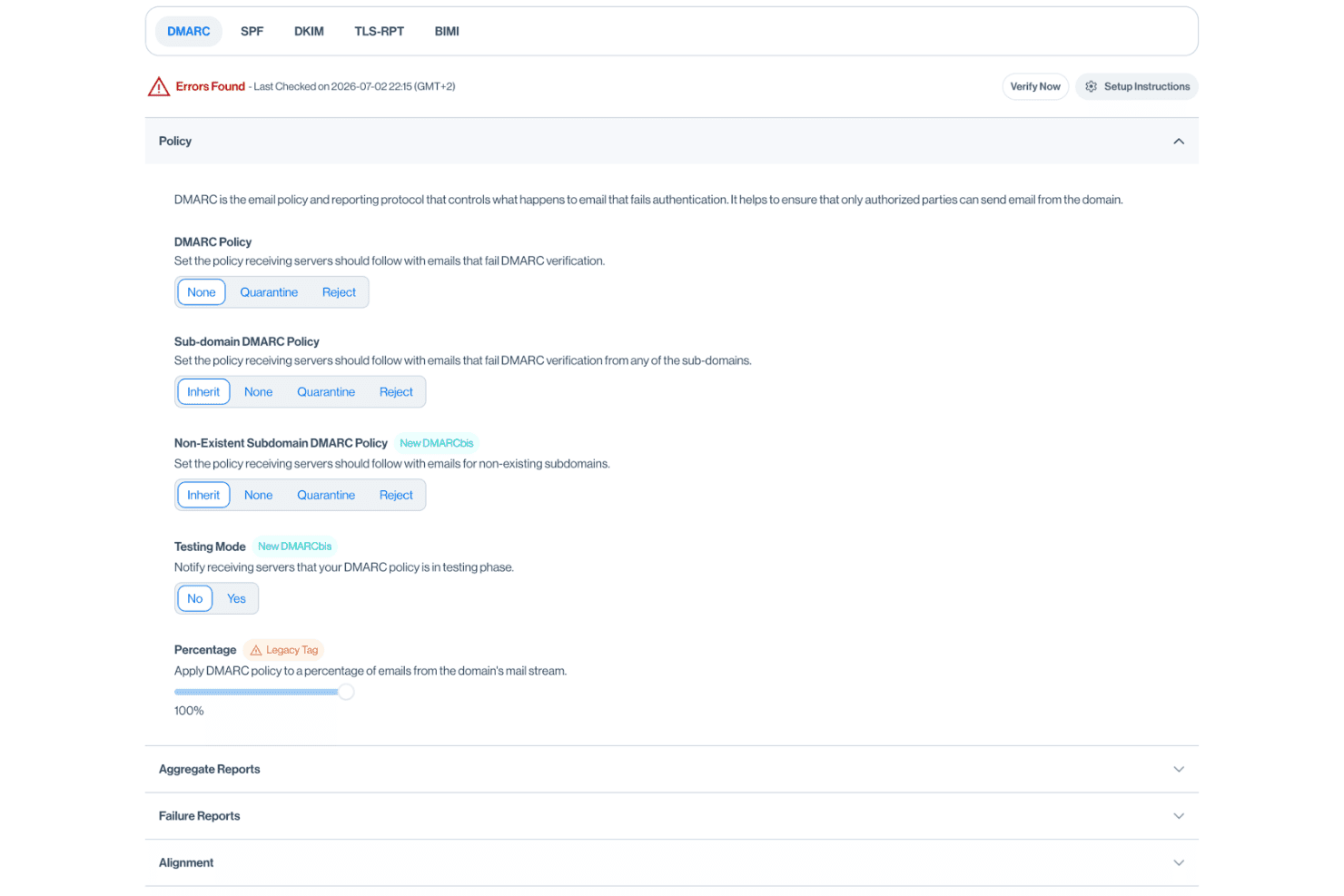
Sendmarc is especially user-friendly, thanks to its straightforward dashboards and clear, step-by-step enforcement workflow. I think IT admins appreciate not needing deep email expertise to set policies or interpret reports. If you're used to leaning on an AI assistant to decode raw DMARC XML, the plain-language summaries here cover much of the same ground. Based on user reviews, the guided onboarding and real-time alerts make for a less stressful DMARC rollout, and the reporting is business-friendly without jargon.
Integrations
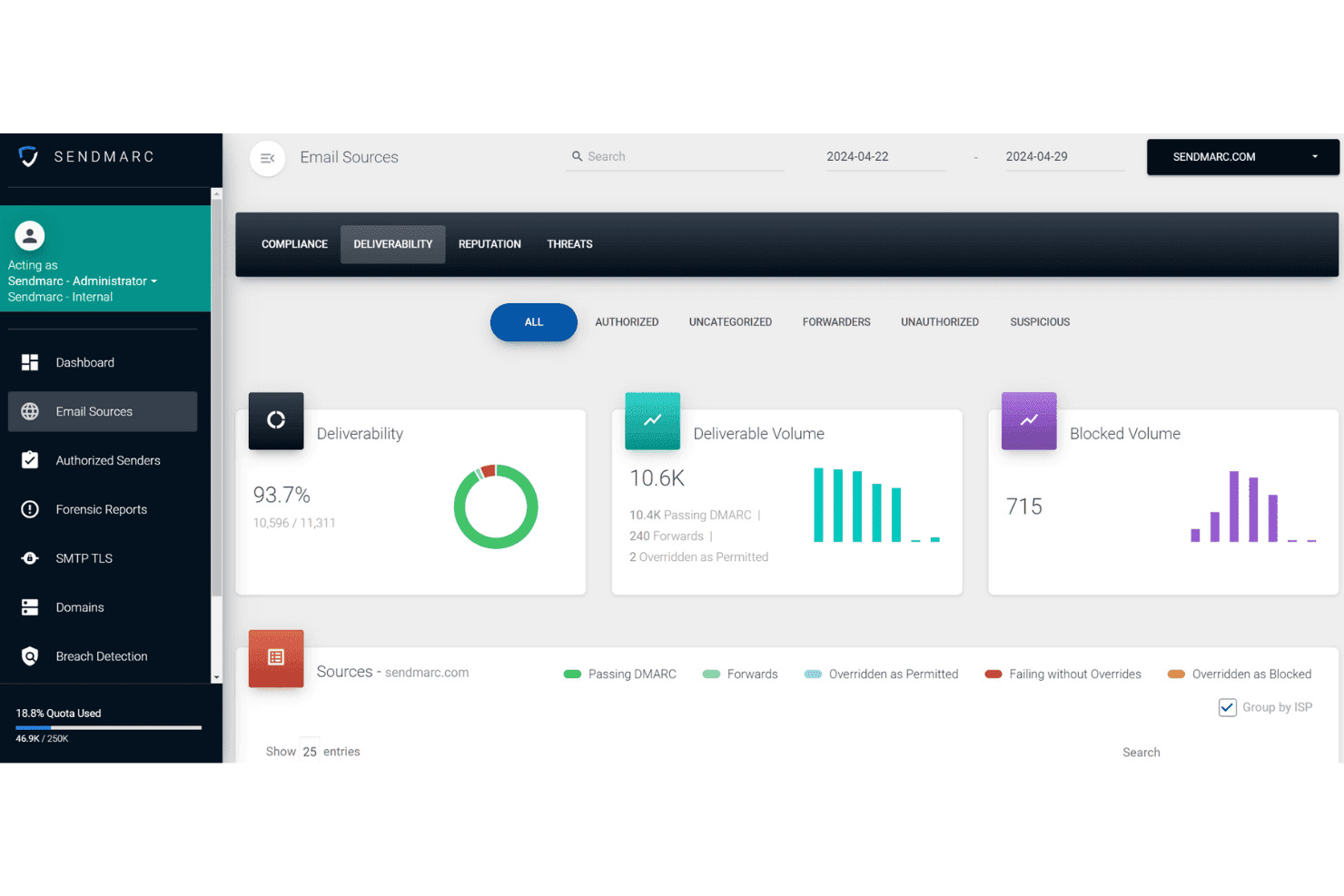
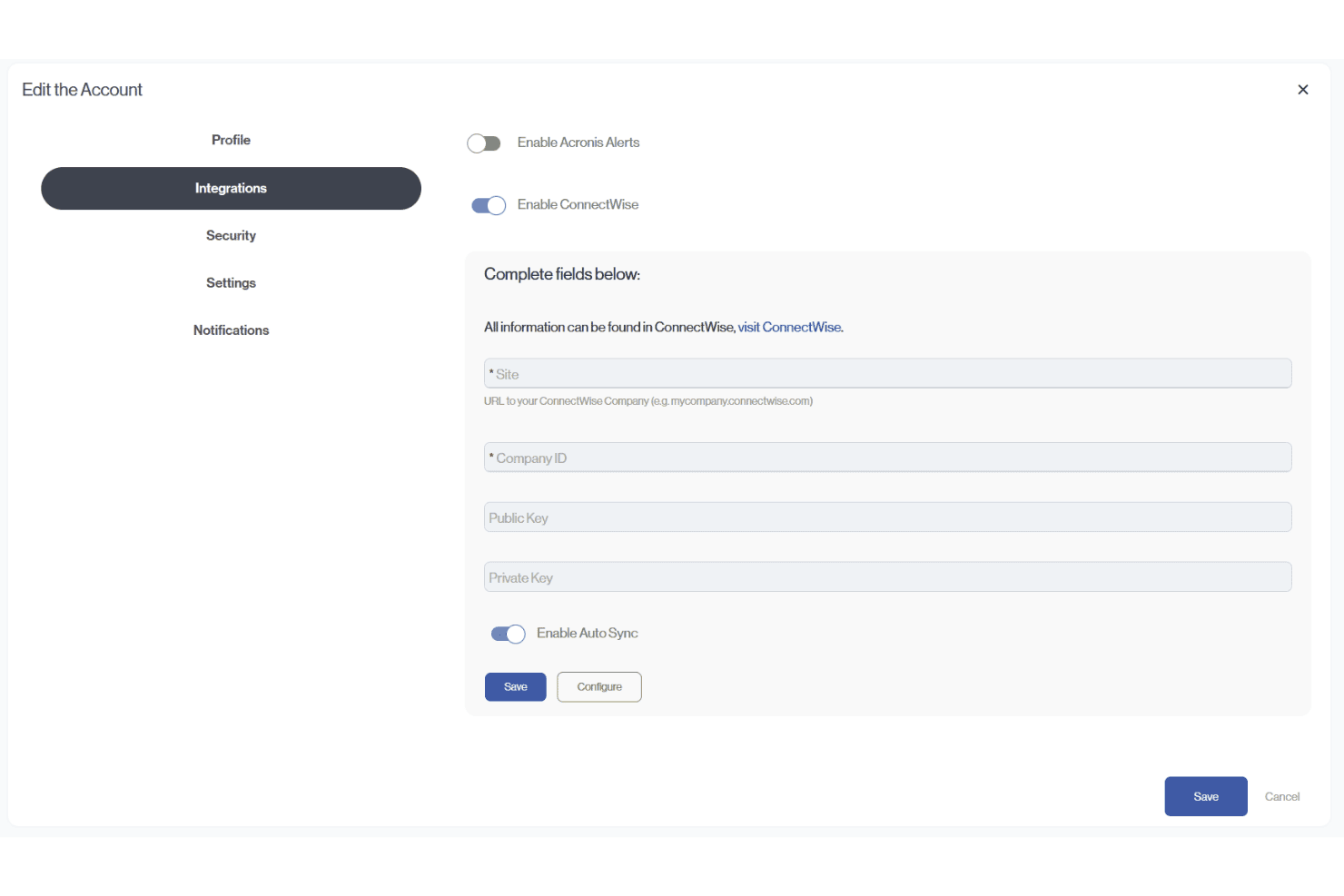
Sendmarc provides documented integrations with Abnormal Security, ConnectWise PSA, Acronis, HaloPSA, and Autotask (Datto/Kaseya). It also supports API-token creation for custom integrations, including connections with third-party platforms.
Sendmarc Specs
- 2-Factor Authentication: Yes
- Access Management: Yes
- Anti-Virus: No
- API: Yes
- Audit Trail: Yes
- Bug Tracking: Yes
- Calendar Management: Yes
- Customer Management: Yes
- Dashboard: Yes
- Data Export: Yes
- Data Import: Yes
- Data Visualization: Yes
- Email Integration: Yes
- External Integrations: Yes
- File Sharing: No
- File Transfer: No
- Firewall: No
- Google Apps Integration: Yes
- Inventory Tracking: Yes
- Malware Protection: Yes
- Multi-User: Yes
- Network Device Performance Monitoring: Yes
- Network Traffic Monitoring: Yes
- Network Visualization: Yes
- Notifications: Yes
- Project Management: Yes
- Remote Access: Yes
- Risk Assessment: Yes
- SAP Integration: Yes
- Scheduling: Yes
- Software Integration: Yes
- Third-Party Plugins/Add-Ons: Yes
- Ticket Management: Yes


