


Labelbox Review 2026: Pros, Cons, Features, and Pricing



Labelbox is a machine learning software designed to help teams build, manage, and improve training data pipelines for AI projects. For developers and data scientists facing challenges with data quality, annotation speed, and collaboration, Labelbox offers a centralized platform that streamlines labeling, integrates with popular ML tools, and supports large-scale workflows.
This review covers Labelbox’s features, use cases, pros and cons, and pricing to help you decide if it fits your AI development needs.
Labelbox Evaluation Summary
- Pricing upon request
- Free trial available
Why Trust Our Software Reviews
We’ve been testing and reviewing software since 2023. As tech leaders ourselves, we know how critical and difficult it is to make the right decision when selecting software.
We invest in deep research to help our audience make better software purchasing decisions. We’ve tested more than 2,000 tools for different tech use cases and written over 1,000 comprehensive software reviews. Learn how we stay transparent & our software review methodology.
Labelbox Overview
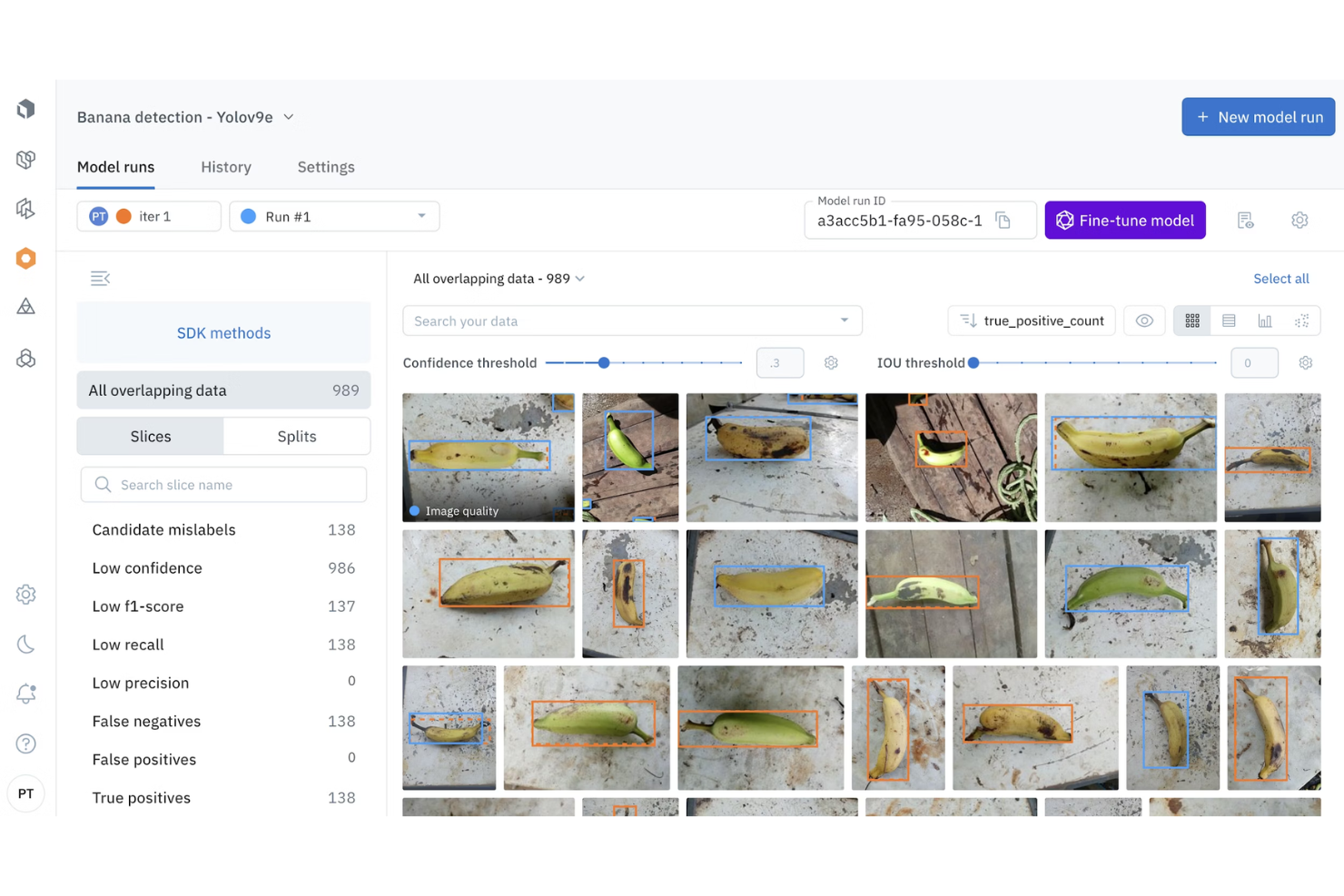
Labelbox offers a user-friendly interface, strong annotation tools, and flexible API integrations, making it a top choice for teams prioritizing collaboration and rapid onboarding. Its pricing is competitive for mid-sized and enterprise projects, though smaller teams may find costs add up. Compared to others, Labelbox excels in workflow customization and support responsiveness but can lag in advanced automation features. It’s best suited for organizations needing scalable, managed data labeling with clear audit trails and integration into existing ML pipelines—especially where ease of use and team onboarding are key decision factors.
pros
-
Supports complex annotation types for diverse data needs.
-
Offers strong workflow management for large teams.
-
Provides responsive customer support for enterprise users.
cons
-
Lacks advanced automation for repetitive labeling tasks.
-
Pricing can be high for small-scale projects.
-
Occasional platform slowdowns with very large datasets.
-

TestDevLab
Visit Website -
Site24x7
Visit WebsiteThis is an aggregated rating for this tool including ratings from Crozdesk users and ratings from other sites.4.7 -
GitHub Actions
Visit WebsiteThis is an aggregated rating for this tool including ratings from Crozdesk users and ratings from other sites.4.8



Our Review Methodology
How We Test & Score Tools
We’ve spent years building, refining, and improving our software testing and scoring system. The rubric is designed to capture the nuances of software selection and what makes a tool effective, focusing on critical aspects of the decision-making process.
Below, you can see exactly how our testing and scoring works across seven criteria. It allows us to provide an unbiased evaluation of the software based on core functionality, standout features, ease of use, onboarding, customer support, integrations, customer reviews, and value for money.
Core Functionality (25% of final scoring)
The starting point of our evaluation is always the core functionality of the tool. Does it have the basic features and functions that a user would expect to see? Are any of those core features locked to higher-tiered pricing plans? At its core, we expect a tool to stand up against the baseline capabilities of its competitors.
Standout Features (25% of final scoring)
Next, we evaluate uncommon standout features that go above and beyond the core functionality typically found in tools of its kind. A high score reflects specialized or unique features that make the product faster, more efficient, or offer additional value to the user.
We also evaluate how easy it is to integrate with other tools typically found in the tech stack to expand the functionality and utility of the software. Tools offering plentiful native integrations, 3rd party connections, and API access to build custom integrations score best.
Ease of Use (10% of final scoring)
We consider how quick and easy it is to execute the tasks defined in the core functionality using the tool. High scoring software is well designed, intuitive to use, offers mobile apps, provides templates, and makes relatively complex tasks seem simple.
Onboarding (10% of final scoring)
We know how important rapid team adoption is for a new platform, so we evaluate how easy it is to learn and use a tool with minimal training. We evaluate how quickly a team member can get set up and start using the tool with no experience. High scoring solutions indicate little or no support is required.
Customer Support (10% of final scoring)
We review how quick and easy it is to get unstuck and find help by phone, live chat, or knowledge base. Tools and companies that provide real-time support score best, while chatbots score worst.
Customer Reviews (10% of final scoring)
Beyond our own testing and evaluation, we consider the net promoter score from current and past customers. We review their likelihood, given the option, to choose the tool again for the core functionality. A high scoring software reflects a high net promoter score from current or past customers.
Value for Money (10% of final scoring)
Lastly, in consideration of all the other criteria, we review the average price of entry level plans against the core features and consider the value of the other evaluation criteria. Software that delivers more, for less, will score higher.
Core Features
Reinforcement Learning Data
Labelbox supports the creation and management of reinforcement learning (RLHF and RLAIF) datasets for training and evaluating frontier AI systems. This includes structured human feedback workflows to improve model alignment and performance.
Model Evaluation (Evals)
The platform provides tools for evaluating large and frontier models across multimodal inputs. Teams can design structured evaluation tasks, measure outputs, and benchmark performance against defined criteria.
Robotics Data Engine
Labelbox supports robotics and embodied AI use cases with tools designed to handle complex sensor and multimodal datasets, helping teams generate high-quality training data for real-world environments.
Off-the-Shelf Data
Access to pre-curated datasets and scalable data generation services enables teams to accelerate AI development without starting from scratch.
Expert Network
Labelbox offers access to trained annotators and domain experts who can provide high-quality data labeling, evaluation, and feedback services for specialized use cases.
Data Curation
Advanced filtering, sampling, and dataset management tools help teams prioritize high-impact data, refine training sets, and improve model performance over time.
Ease of Use
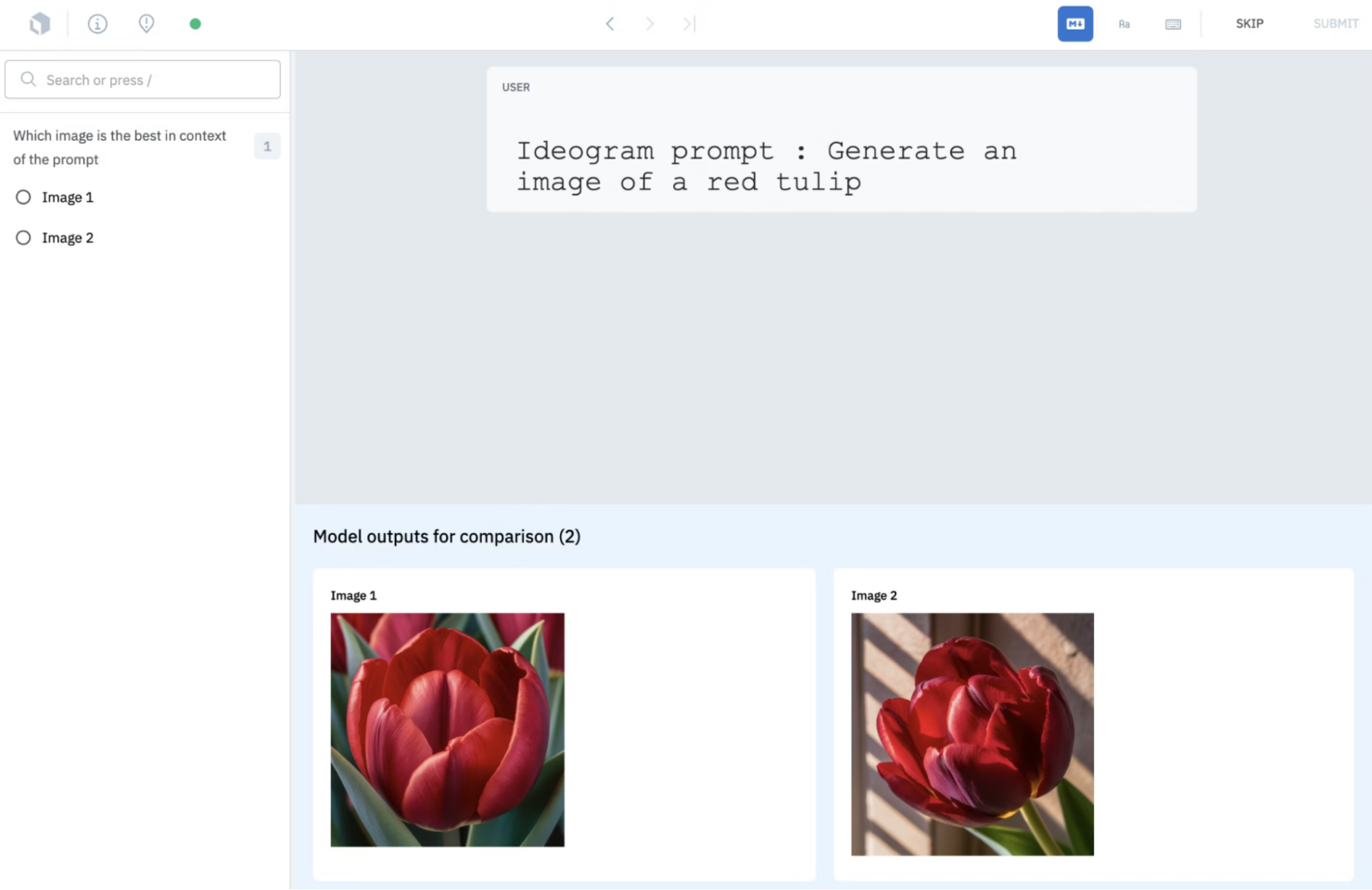
Labelbox is widely recognized for its clean interface and intuitive project setup, making onboarding straightforward even for large teams. Users appreciate the customizable labeling workflows and clear task assignments, which reduce confusion and speed up annotation cycles. While some advanced features require initial configuration, most users find the platform easy to navigate and manage, especially when coordinating multiple annotators or handling complex data types. This usability sets it apart in environments where collaboration and scale matter.
Integrations
Labelbox integrates with Amazon S3, Google Cloud Storage, Azure Blob Storage, Databricks, Snowflake, Segment, Slack, Python SDK, TensorFlow, and PyTorch, among others.
Labelbox also offers a robust API and supports third-party integrations for custom workflows.
Labelbox Specs
- A/B Testing
- Analytics
- API
- Big Data
- Cloud Deployment
- Dashboard
- Data Export
- Data Import
- Data Mining
- Data Visualization
- External Integrations
- Local Deployment
- Multi-User
- Optimized Search Processing
- SAP Integration
- Sentiment Analysis




Labelbox FAQs
How does Labelbox handle data security and compliance?
Can I use Labelbox for both image and video annotation projects?
What quality control features does Labelbox offer?
How does Labelbox support collaboration across large teams?
Is it possible to automate parts of the labeling process in Labelbox?
What types of data integrations are available with Labelbox?
How does Labelbox help identify and fix model errors?
What support resources are available for new users?
What's Next?
Boost your SaaS growth and leadership skills. Subscribe to our newsletter for the latest insights from CTOs and aspiring tech leaders. We'll help you scale smarter and lead stronger with guides, resources, and strategies from top experts!