

Kamatera Review: Pros, Cons, Features, and Pricing
Kamatera stands out as a flexible cloud hosting provider with scalable cloud servers and pay-as-you-go pricing, making it ideal for businesses needing customizable infrastructure.

We review tools independently, and commissions help fund our testing. See our transparency policy, our methodology, or suggest a tool.
Kamatera is a cloud storage software for IT teams that need scalable, configurable storage infrastructure without committing to a hyperscaler. I'd consider it if you want block and object storage you can tune to your specific workload, backed by pay-as-you-go pricing. Compared to AWS S3, Kamatera is much easier to set up and manage—making it a stronger fit for teams that want cloud-grade storage without the sprawling service catalog and steep learning curve that comes with AWS.
Kamatera Evaluation Summary
4.2/5
- From $4/month
- 30-day free trial available
Why Trust Our Software Recommendations
6,700+
Reviews
20
Industry experts
16+
Evaluation factors
14
Years
Our team has been testing and reviewing software since 2012. As tech leaders ourselves, we know how difficult—and important—it is to choose the right software.
For this guide, we evaluated tools using hands-on testing and independent research, scoring tools using our selection criteria.
Our reviews reflect our human editorial judgment, not a sales pitch.
Expert reviewers:
- Paulo Gardini MiguelTech Director
 Tim FisherVP of AI
 Gabriel RosasTech Lead & Software Architect
 Christhian GruhnTech Lead & Platform Architect

Kamatera Overview
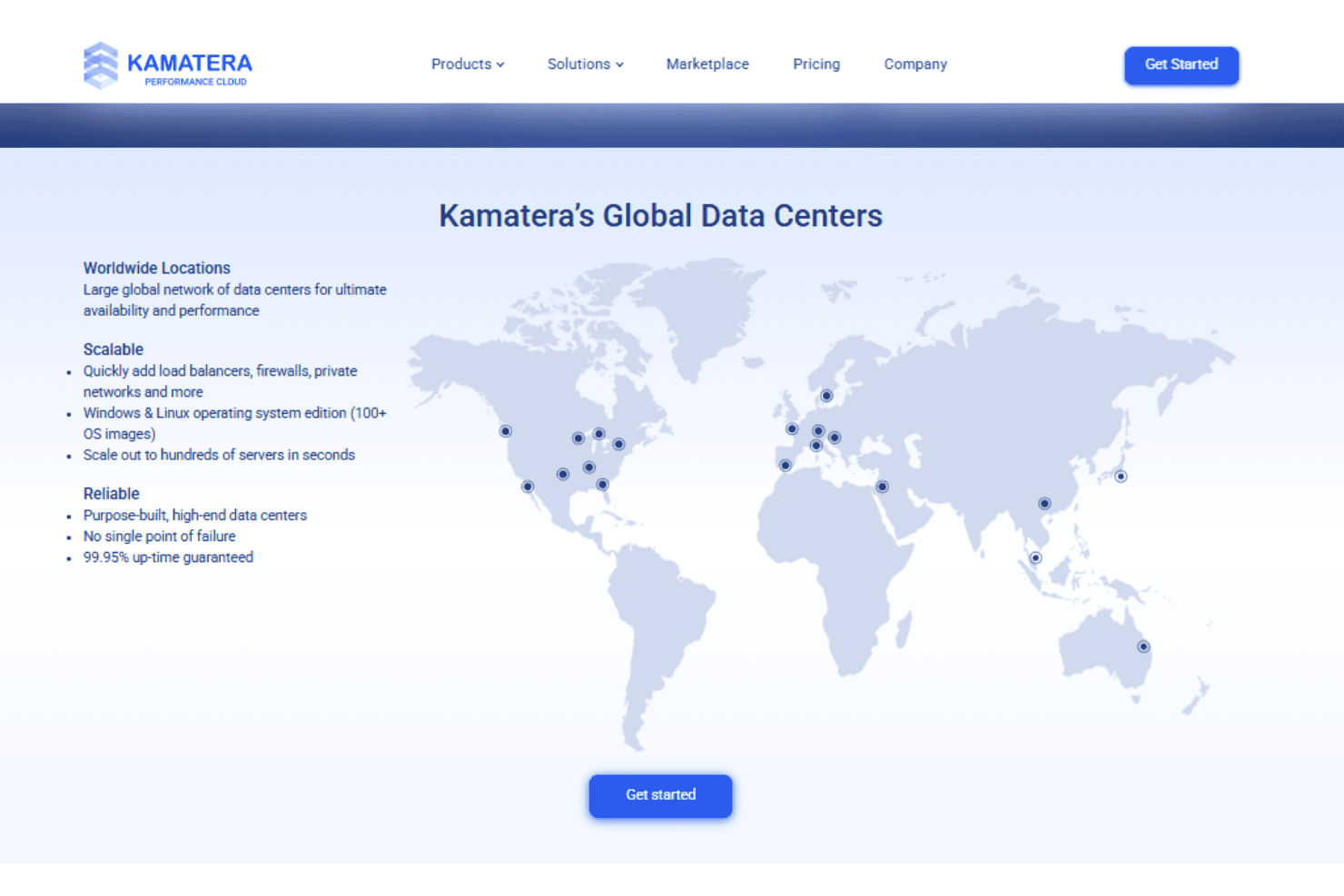
In my opinion, Kamatera offers a flexible cloud system ideal for businesses needing scalable solutions. It offers pay-as-you-go pricing and customization options such as configurable vCPU, bandwidth, and SSD storage, making it a high-performance alternative to traditional hosting companies. However, it may not be the best fit for small businesses or beginners due to its pricing complexity. Compared to competitors, Kamatera's standout features include its global data center presence in locations such as New York and Hong Kong, top-notch infrastructure, and excellent customer support. It's best suited for IT departments and tech startups that need to scale up quickly and require diverse options.
Pros
- You can customize your server configurations to fit your specific needs.
- Your team benefits from a global network of data centers for better performance.
- You get quick, reliable assistance via technical support and support ticket systems.
Cons
- You may find the interface less intuitive compared to some competitors.
- Your team could face a steeper learning curve during initial setup.
- You may notice limited preconfigured templates, which can slow deployment.
Is Kamatera Right For Your Needs?
Who Would be a Good Fit for Kamatera?
Kamatera is ideal for tech startups and IT departments that need scalable and customizable cloud hosting and VPS hosting solutions. This software is ideal if your team requires flexibility in server setup, hosting plans, and access to global cloud servers. For businesses with fluctuating workloads, the platform's pay-as-you-go pricing and optional managed service offerings can be a financial advantage. Kamatera's customer support ensures that help is available when needed.
- Tech StartupsKamatera offers flexible server options that support rapid scaling as your startup grows.
- eCommerce PlatformsYour platform benefits from global data centers, scalable web hosting, SSL support, and high bandwidth availability, ensuring quick and reliable service for customers worldwide.
- IT DepartmentsCustomize infrastructure, operating systems, and server configurations to meet the unique needs of your organization efficiently.
- Media CompaniesEasily handle large volumes of data using SSD and block storage.
- Software DevelopersTest and deploy applications quickly, including WordPress projects, with Kamatera’s versatile cloud environment and flexible add-on resources.
- Financial ServicesEnsure data security and high-performance hosting with Kamatera’s reliable infrastructure and support.
Who Would be a Bad Fit for Kamatera?
Kamatera may not be suitable for small businesses with limited budgets and straightforward needs seeking shared hosting and a free domain. If your team requires simple control panel access or bundled hosting services with minimal configuration, Kamatera's complexity could be a hindrance. Companies that prefer preconfigured templates for quick deployments may find Kamatera lacking, as it offers limited options in this area. If you don't need extensive customization or global infrastructure, simpler cloud hosting solutions may serve you better.
- Small BusinessesYour budget may not justify Kamatera’s complex offerings and pricing structure.
- Non-Tech DepartmentsThe learning curve can be steep for teams without Linux or technical server setup expertise.
- FreelancersYou probably don't need Kamatera's extensive cloud computing capabilities and would benefit from simpler tools.
- Education SectorPreconfigured templates are limited, which may slow down deployment for education needs.
- Retail ShopsKamatera's complexity may not match your straightforward web hosting needs.
- Local Service ProvidersIf you don’t require global reach, Kamatera’s data center network may be unnecessary.
Our Review Methodology
How We Test & Score Tools
We’ve spent years building, refining, and improving our software testing and scoring system. The rubric is designed to capture the nuances of software selection and what makes a tool effective, focusing on critical aspects of the decision-making process.
Below, you can see exactly how our testing and scoring works across seven criteria. It allows us to provide an unbiased evaluation of the software based on core functionality, standout features, ease of use, onboarding, customer support, integrations, customer reviews, and value for money.
Core Functionality (25% of final scoring)
The starting point of our evaluation is always the core functionality of the tool. Does it have the basic features and functions that a user would expect to see? Are any of those core features locked to higher-tiered pricing plans? At its core, we expect a tool to stand up against the baseline capabilities of its competitors.
Standout Features (25% of final scoring)
Next, we evaluate uncommon standout features that go above and beyond the core functionality typically found in tools of its kind. A high score reflects specialized or unique features that make the product faster, more efficient, or offer additional value to the user.
We also evaluate how easy it is to integrate with other tools typically found in the tech stack to expand the functionality and utility of the software. Tools offering plentiful native integrations, 3rd party connections, and API access to build custom integrations score best.
Ease of Use (10% of final scoring)
We consider how quick and easy it is to execute the tasks defined in the core functionality using the tool. High scoring software is well designed, intuitive to use, offers mobile apps, provides templates, and makes relatively complex tasks seem simple.
Onboarding (10% of final scoring)
We know how important rapid team adoption is for a new platform, so we evaluate how easy it is to learn and use a tool with minimal training. We evaluate how quickly a team member can get set up and start using the tool with no experience. High scoring solutions indicate little or no support is required.
Customer Support (10% of final scoring)
We review how quick and easy it is to get unstuck and find help by phone, live chat, or knowledge base. Tools and companies that provide real-time support score best, while chatbots score worst.
Customer Reviews (10% of final scoring)
Beyond our own testing and evaluation, we consider the net promoter score from current and past customers. We review their likelihood, given the option, to choose the tool again for the core functionality. A high scoring software reflects a high net promoter score from current or past customers.
Value for Money (10% of final scoring)
Lastly, in consideration of all the other criteria, we review the average price of entry level plans against the core features and consider the value of the other evaluation criteria. Software that delivers more, for less, will score higher.
Core Features
Scalable Servers: You can adjust vCPU, RAM, and SSD storage on demand, ensuring your team handles fluctuating workloads smoothly.
Global Data Centers: Your work benefits from faster data access and redundancy with Kamatera’s worldwide infrastructure network.
Customizable Configurations: Tailor server settings to your specific needs to optimize performance for your applications.
Load Balancers: Distribute traffic efficiently across servers to ensure that your applications run smoothly even under heavy loads.
Cloud Firewalls: Protect your data with powerful security measures and SSL support to protect against unauthorized access.
Backup and Recovery: Easily schedule backups and restore data to minimize downtime and data loss.
Ease of Use
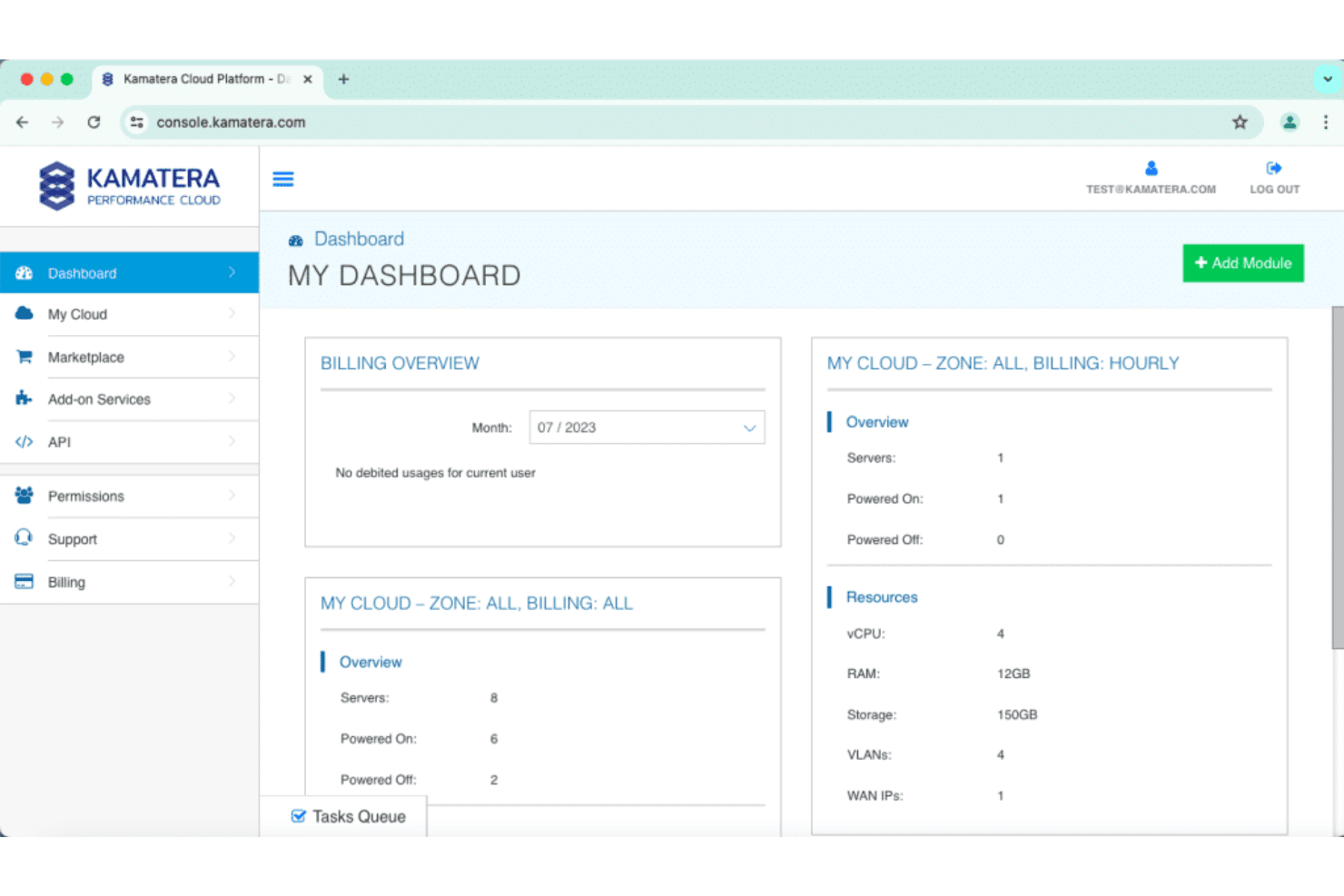
Kamatera's user interface may not be the most intuitive, especially for those new to cloud storage solutions. Although the software offers flexibility and control for tech-savvy users, your team may face a learning curve, particularly during initial setup. However, once you get accustomed to the platform, the customizable configurations and scalable options become more manageable.
Integrations
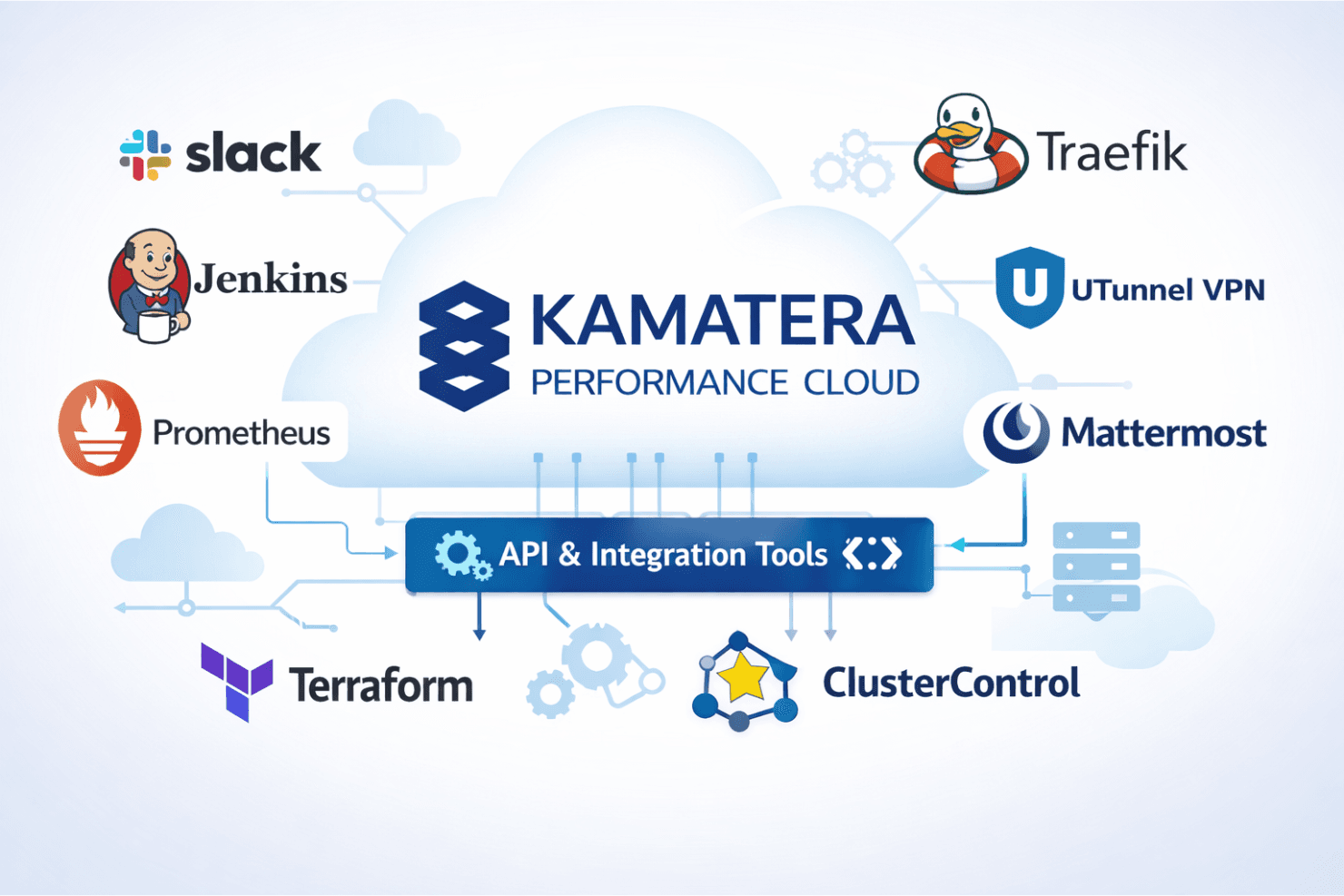
Kamatera integrates with Slack, Jenkins, Prometheus, Traefik, UTunnel VPN, Mattermost, Terraform, and ClusterControl.
It offers an API for programmatic server management and supports third-party integration tools for enhanced connectivity.
Kamatera Specs
- 2-Factor Authentication: Yes
- API: Yes
- Chat: Yes
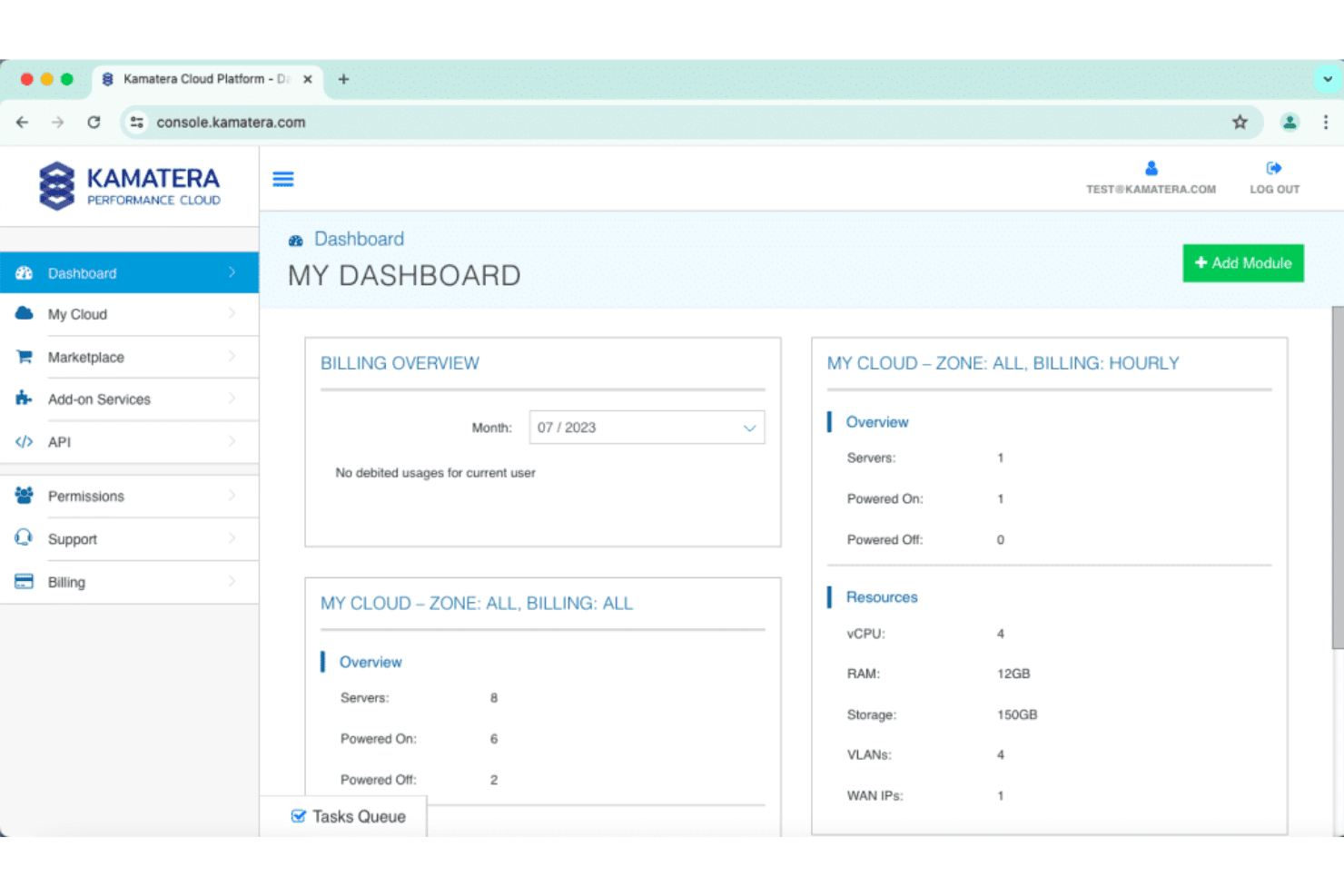
- Dashboard: Yes
- Data Export: Yes
- Data Import: Yes
- Document Comparison: Yes
- External Integrations: Yes
- File Sharing: Yes
- File Transfer: Yes
- History/Version Control: Yes
- Multi-User: Yes
- Network Traffic Monitoring: Yes
- Notifications: Yes
- Project Management: Yes


