

Carbonite Review: Pros, Cons, Features, and Pricing
Carbonite offers reliable data backup with user-friendly features, making it a strong choice for personal and small business cloud storage needs.

We review tools independently, and commissions help fund our testing. See our transparency policy, our methodology, or suggest a tool.
Carbonite is a cloud storage software built around automated backup and recovery for businesses that need to protect endpoint data, servers, and local files without constant manual oversight. I'd look at it if you want a dedicated backup solution that's straightforward to deploy—especially over something like Acronis Cyber Protect, which bundles in security tooling that can overcomplicate things when reliable backup coverage is your primary goal.
Carbonite Evaluation Summary
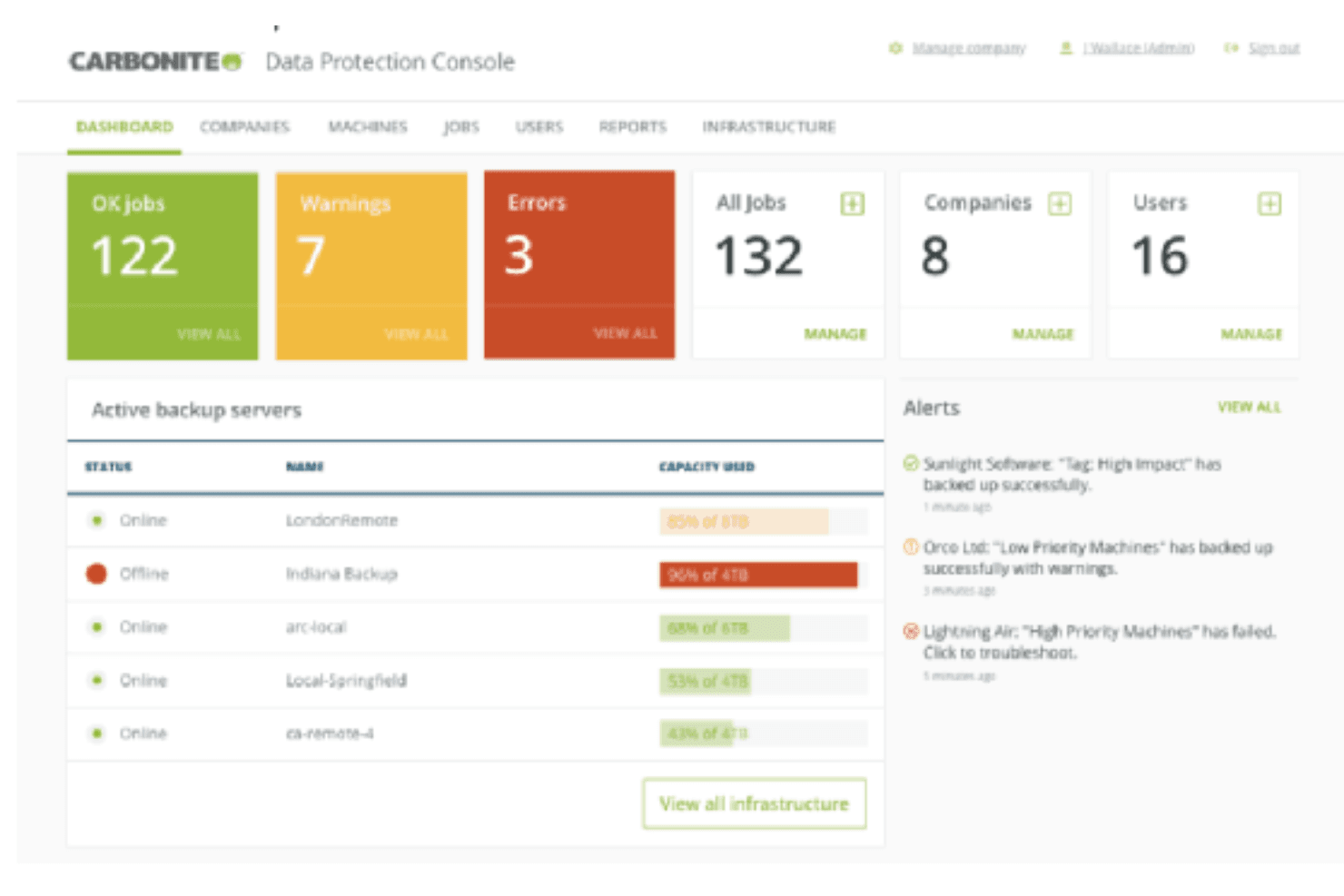
4.3/5
- From $4.80/user/month (billed annually)
- 30-day free trial
Why Trust Our Software Recommendations
6,700+
Reviews
20
Industry experts
16+
Evaluation factors
14
Years
Our team has been testing and reviewing software since 2012. As tech leaders ourselves, we know how difficult—and important—it is to choose the right software.
For this guide, we evaluated tools using hands-on testing and independent research, scoring tools using our selection criteria.
Our reviews reflect our human editorial judgment, not a sales pitch.
Expert reviewers:
- Paulo Gardini MiguelTech Director
 Tim FisherVP of AI
 Gabriel RosasTech Lead & Software Architect
 Christhian GruhnTech Lead & Platform Architect

Carbonite Overview
In my opinion, Carbonite is a solid choice for small and medium-sized businesses and individuals needing a reliable cloud backup service. It's straightforward and offers good value, especially for those who prioritize ease of use and customer support. Its user-friendly interface and dependable performance make it a wise choice for non-tech-savvy teams. However, it might not be the best fit for large enterprises that require extensive integrations and advanced functionality. If you're deciding on a cloud storage solution, consider Carbonite for its simplicity and effective support, particularly if you're in a small business environment.
Pros
- It's easy for your team to navigate and use.
- Customer support is responsive and helpful.
- Reliable backup ensures your data's safety.
Cons
- It lacks advanced features for tech-heavy teams as compared to Acronis or iDrive. Onboarding can be slow for new users. Limited customization might not fit all business needs.
- Onboarding can be slow for new users.
- Limited customization might not fit all business needs.
Is Carbonite Right For Your Needs?
Who Would be a Good Fit for Carbonite?
Carbonite is a strong choice for small and medium-sized businesses and freelancers who need reliable data protection without complex features. If your team values straightforward backup solutions and dependable customer support, Carbonite fits the bill. Its ease of use makes it ideal for non-tech-savvy users who want to ensure their data's safety without a steep learning curve. Its focus on reliability over advanced functionalities means it suits those who prioritize simplicity and effectiveness.
- Small and Medium-sized BusinessesCarbonite offers simple data backup, making it perfect for SMBs without dedicated IT support.
- FreelancersWith user-friendly features, Carbonite ensures your work is securely backed up without hassle.
- Remote WorkersCarbonite provides peace of mind with reliable backups for those working from home on a laptop or mobile devices.
- Creative AgenciesEasily protect your valuable projects and individual files with Carbonite's straightforward backup process.
- Legal FirmsEnsure compliance and security with Carbonite's dependable data protection for sensitive client information.
- NonprofitsBenefit from Carbonite's cost-effective and easy-to-use backup solution, ideal for budget-conscious organizations.
Who Would be a Bad Fit for Carbonite?
In general, Carbonite isn't ideal for large enterprises or tech-heavy industries needing advanced backup software. If your team relies on complex data management and requires customizable solutions, Carbonite's simplicity might not meet your needs. Its limited customization and lack of advanced functionalities can hinder organizations that demand more robust data handling and specialized tools. Consider alternatives if your work involves intricate data processes and high-level IT requirements.
- Large EnterprisesCarbonite's simplicity lacks the advanced features needed to manage complex data operations.
- Tech StartupsStartups needing cutting-edge integrations and tech features may find Carbonite insufficient.
- Data-Intensive DepartmentsTeams handling large-scale data analysis might find Carbonite's capabilities too basic, as they need more download speed controls.
- IT DepartmentsIT teams seeking specialized tools won't find the advanced options they need with Carbonite.
Our Review Methodology
How We Test & Score Tools
We’ve spent years building, refining, and improving our software testing and scoring system. The rubric is designed to capture the nuances of software selection and what makes a tool effective, focusing on critical aspects of the decision-making process.
Below, you can see exactly how our testing and scoring works across seven criteria. It allows us to provide an unbiased evaluation of the software based on core functionality, standout features, ease of use, onboarding, customer support, integrations, customer reviews, and value for money.
Core Functionality (25% of final scoring)
The starting point of our evaluation is always the core functionality of the tool. Does it have the basic features and functions that a user would expect to see? Are any of those core features locked to higher-tiered pricing plans? At its core, we expect a tool to stand up against the baseline capabilities of its competitors.
Standout Features (25% of final scoring)
Next, we evaluate uncommon standout features that go above and beyond the core functionality typically found in tools of its kind. A high score reflects specialized or unique features that make the product faster, more efficient, or offer additional value to the user.
We also evaluate how easy it is to integrate with other tools typically found in the tech stack to expand the functionality and utility of the software. Tools offering plentiful native integrations, 3rd party connections, and API access to build custom integrations score best.
Ease of Use (10% of final scoring)
We consider how quick and easy it is to execute the tasks defined in the core functionality using the tool. High scoring software is well designed, intuitive to use, offers mobile apps, provides templates, and makes relatively complex tasks seem simple.
Onboarding (10% of final scoring)
We know how important rapid team adoption is for a new platform, so we evaluate how easy it is to learn and use a tool with minimal training. We evaluate how quickly a team member can get set up and start using the tool with no experience. High scoring solutions indicate little or no support is required.
Customer Support (10% of final scoring)
We review how quick and easy it is to get unstuck and find help by phone, live chat, or knowledge base. Tools and companies that provide real-time support score best, while chatbots score worst.
Customer Reviews (10% of final scoring)
Beyond our own testing and evaluation, we consider the net promoter score from current and past customers. We review their likelihood, given the option, to choose the tool again for the core functionality. A high scoring software reflects a high net promoter score from current or past customers.
Value for Money (10% of final scoring)
Lastly, in consideration of all the other criteria, we review the average price of entry level plans against the core features and consider the value of the other evaluation criteria. Software that delivers more, for less, will score higher.
Core Features
Automatic Backup
Carbonite performs automatic online backup of your files, so you don’t have to remember. This ensures your data is always protected without manual effort.
File Versioning
You can restore previous versions of files, which is handy if you make mistakes. It provides peace of mind knowing your work is safe.
Remote Access
Access your backed-up files from anywhere, offering flexibility for your team. This is perfect for remote work or when you're on the go.
Continuous Backup
Carbonite continuously updates backups as changes occur, keeping your data current. You never have to worry about losing the latest versions.
Encryption
Your data is protected with AES encryption during transfer and storage, ensuring privacy and security. This protection is vital for sensitive information.
Easy Restore
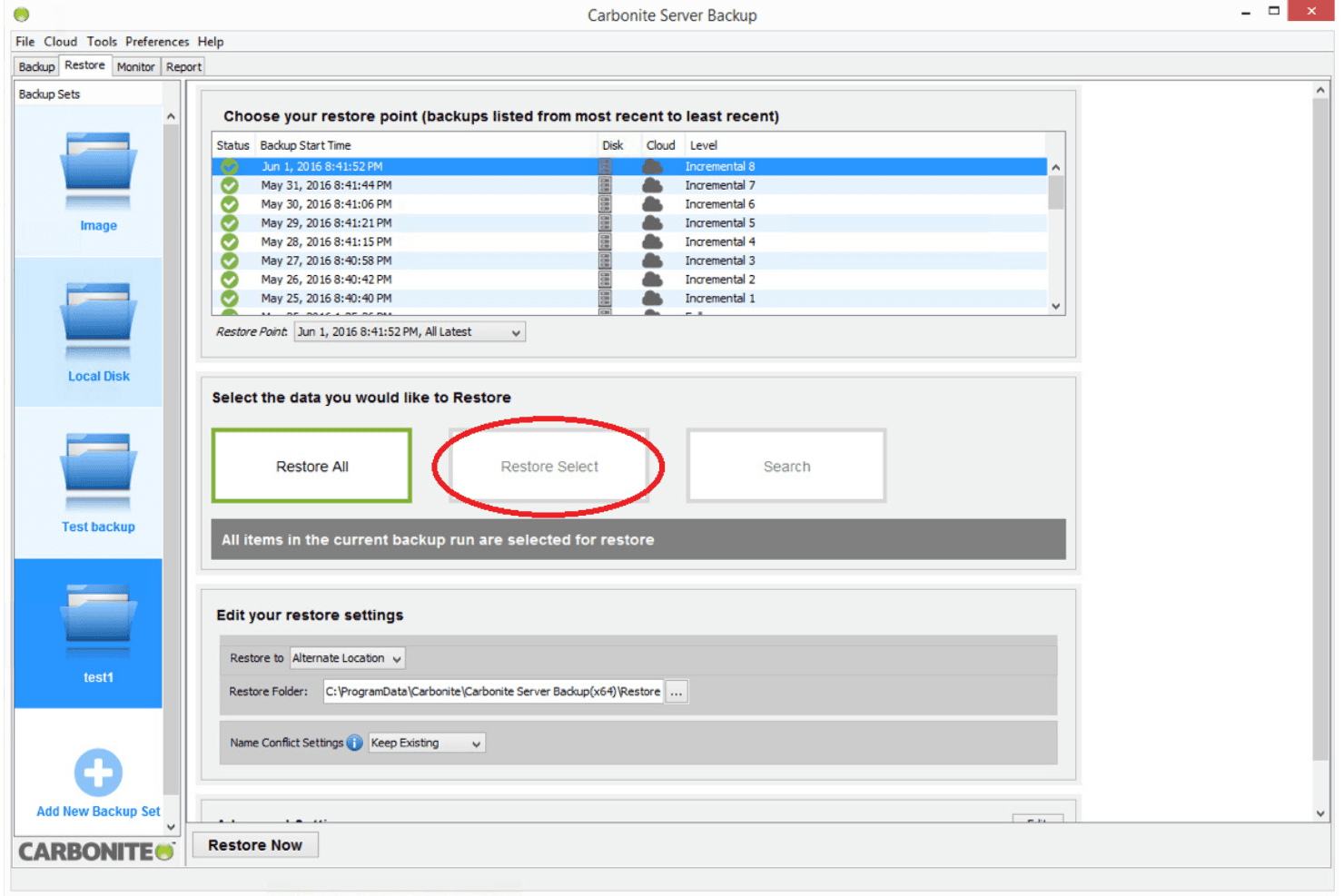
Quickly recover lost files to their original location with a simple restore process. It’s straightforward, saving time when you need to retrieve data.
Ease of Use
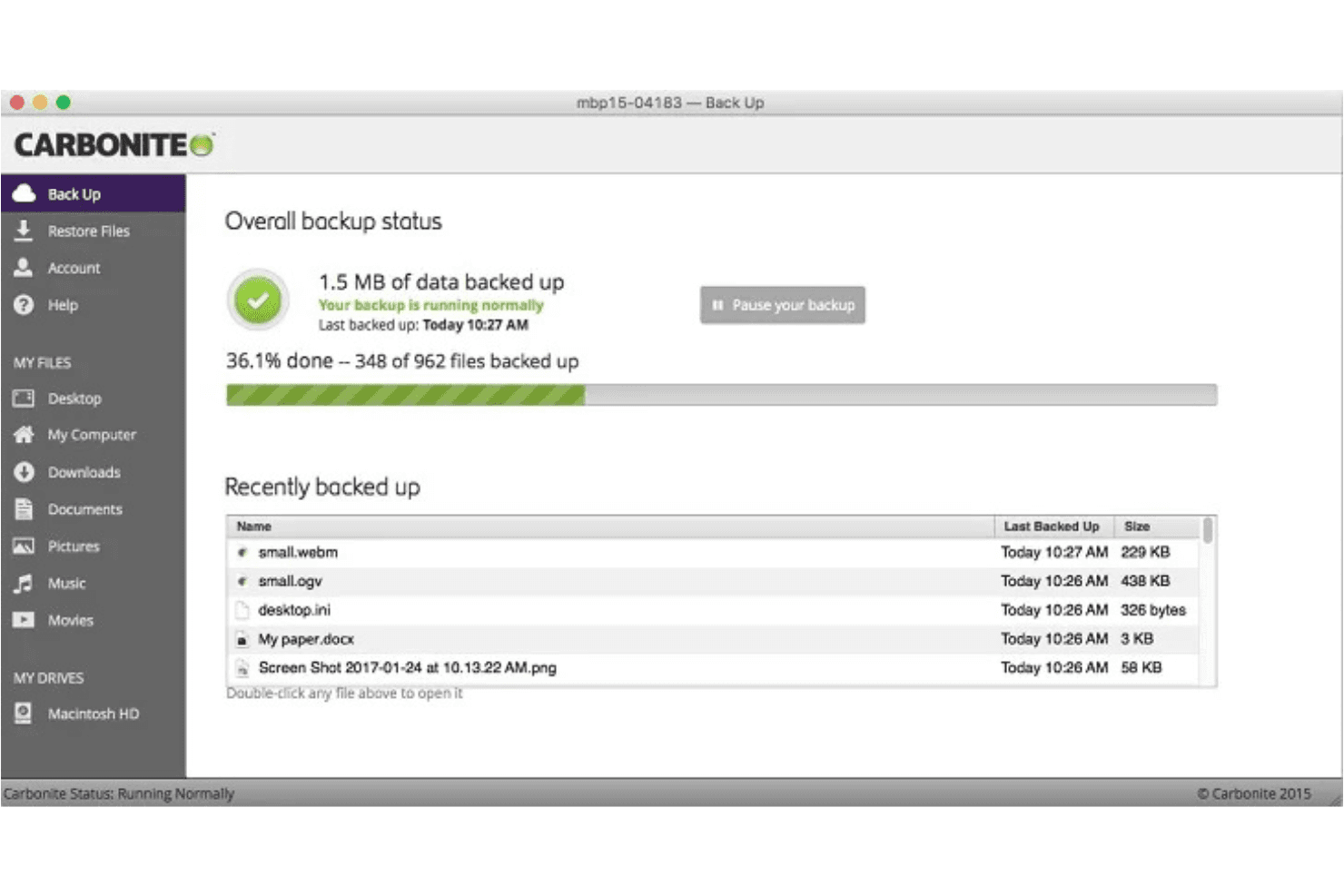
Carbonite is straightforward to use on Windows and macOS, making it ideal for teams without tech expertise. Its interface is intuitive, letting you navigate easily through backup and restore processes. Automatic and continuous backup features mean you don't have to worry about manual updates. Users appreciate the simple setup and reliable performance, which reduces the learning curve. If your team values simplicity and efficiency in data management, Carbonite's user-friendly design delivers just that.
Integrations
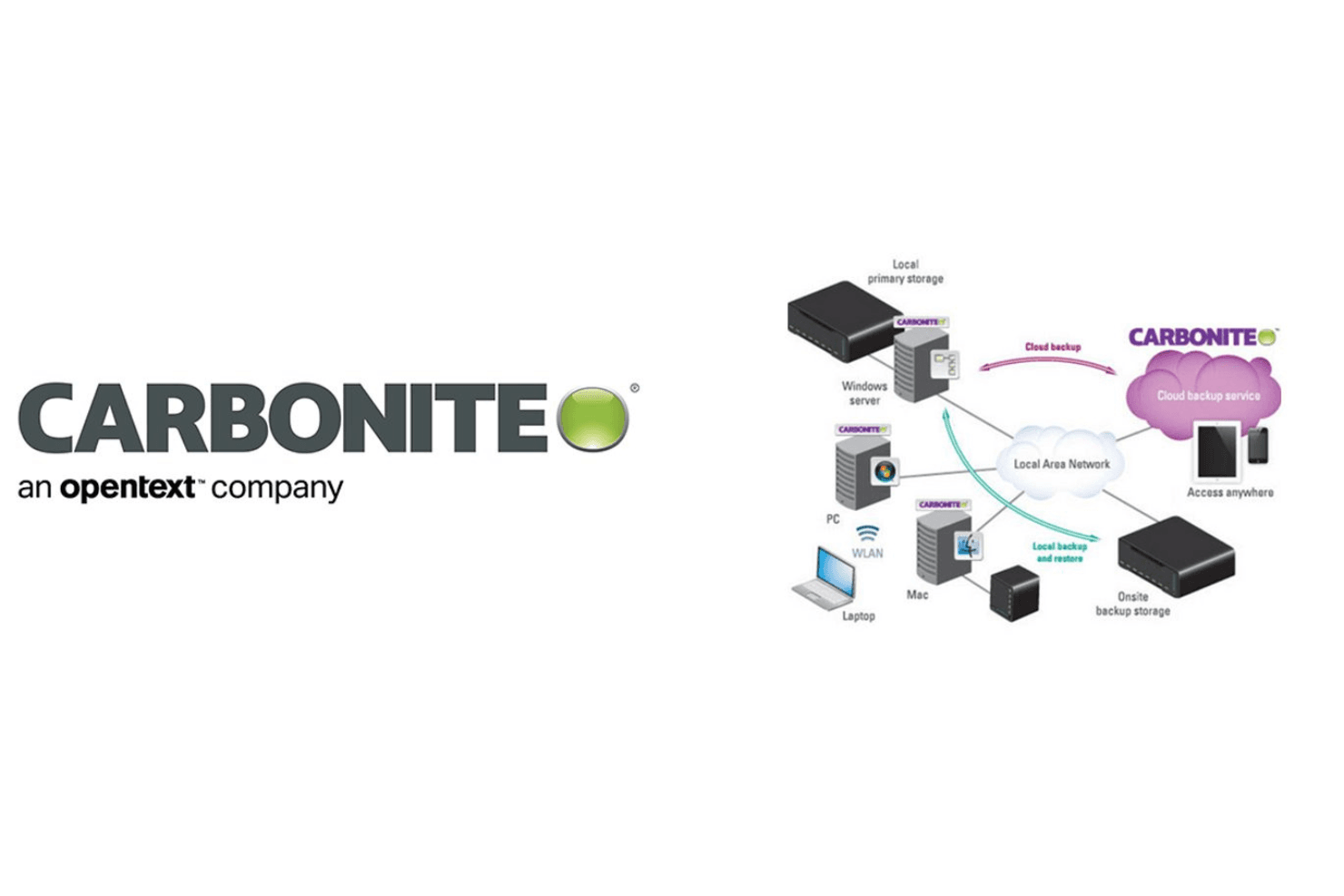
Carbonite integrates with Google Cloud Platform, Amazon Web Services (AWS), Microsoft 365, Microsoft Teams, Microsoft OneDrive, Microsoft Outlook, VMware ESXi, and other providers. Carbonite also provides an API and connects with third-party integration tools.
Carbonite Specs
- Anti-Virus: No
- API: Yes
- Dashboard: Yes
- Data Export: Yes
- Data Import: Yes
- Document Comparison: No
- External Integrations: Yes
- File Sharing: Yes
- File Transfer: Yes
- Multi-User: No
- Notifications: Yes


