

Bubble-recension 2026: Viktiga funktioner, fördelar, nackdelar och priser
Bubble gör det möjligt för personer utan kodningskunskaper att visuellt bygga robusta webbappar, men flexibiliteten innebär en inlärningskurva och begränsningar vid skalning jämfört med traditionella kodningsplattformar.

We review tools independently, and commissions help fund our testing. See our transparency policy, our methodology, or suggest a tool.
Bubble is an application development software for teams that need to build and ship functional web apps without writing code. It gives you a visual editor for designing interfaces alongside a logic and database layer for handling real app behavior. I'd consider it over something like OutSystems if you want that same flexibility to build custom workflows and data structures, but without the enterprise pricing and heavy implementation overhead that comes with it.
Bubble Evaluation Summary

4.4/5
- From $29/month (billed annually)
- Free plan + free trial available
Varför du kan lita på våra programvarurekommendationer
6,700+
Reviews
20
Industry experts
16+
Evaluation factors
14
Years
Vårt team har testat och recenserat programvara sedan 2012. Som teknikledare själva vet vi hur svårt — och viktigt — det är att välja rätt programvara.
För den här guiden utvärderade vi verktyg genom praktisk testning och oberoende research, och betygsatte verktygen enligt våra urvalskriterier.
Våra recensioner speglar vårt mänskliga redaktionella omdöme, inte ett säljbudskap.
Expertgranskare:
- Paulo Gardini MiguelTeknikdirektör
 Tim FisherVP för AI
 Gabriel RosasTech Lead & mjukvaruarkitekt
 Christhian GruhnTech Lead & plattformsarkitekt

Bubble Overview
When judging Bubble against other development software, its visual editor and no-code logic make it a top pick for rapid prototyping and launching MVPs. The pricing is transparent, and the interface is approachable for non-developers, though advanced integrations and scaling can be limiting. Onboarding is straightforward, with strong documentation and community support. Bubble excels for startups, internal tools, and teams prioritizing speed over deep customization.
If you’re selecting a platform for quick iteration and easy updates, Bubble stands out, but those needing complex backend logic or high-traffic scalability may find its limits sooner than with code-based solutions.
Pros
- Active community and extensive documentation for troubleshooting
- Built-in hosting, security, and database management included
- Visual editor supports full-stack web and mobile app creation
Cons
- Pricing increases sharply as app usage scales
- Performance can lag with complex or high-traffic apps
- No source code export creates vendor lock-in
Is Bubble Right For Your Needs?
Who Would be a Good Fit for Bubble?
Startups and small businesses looking to quickly prototype and launch web apps without heavy investment in development teams would thrive with Bubble. Marketing teams can benefit from its visual editor to tailor campaigns, while HR departments can create internal portals without coding expertise. Bubble’s ability to customize apps aligns well with industries that require specific workflows, such as education or healthcare. Its no-code platform empowers non-tech-savvy users to bring ideas to life, making it ideal for entrepreneurs with limited resources.
- FreelancersFreelancers can deliver client web apps quickly using Bubble’s templates and plugins.
- Education TechnologyEducators can create interactive learning platforms without coding resources.
- Product ManagementProduct managers can test features and gather feedback before full-scale development.
- Small BusinessesOwners can launch customer portals or booking systems without hiring developers.
- Internal ToolsDepartments can build custom dashboards and workflows without IT bottlenecks.
- Startup MVPsBubble enables fast prototyping and iteration for early-stage product validation.
Who Would be a Bad Fit for Bubble?
Large enterprises needing highly scalable, complex applications might struggle with Bubble due to its limited scalability options. Tech-heavy industries like fintech or gaming, which require intricate backend processes and real-time data handling, could find Bubble’s no-code approach insufficient. Development teams focused on building highly customized and performance-intensive applications may also find the platform restrictive, as Bubble’s performance can lag with complex apps.
- Large EnterprisesYou might find Bubble’s scalability limitations a hindrance for growing applications.
- DevOps TeamsNo direct access to infrastructure or source code for custom workflows.
- Game DevelopmentBubble does not support real-time graphics or game engine features.
- Complex SaaS ProductsAdvanced backend logic and custom APIs are harder to implement.
- Regulated IndustriesLimited support for HIPAA, SOC 2, or other strict compliance standards.
- Large EnterprisesBubble lacks advanced compliance and scalability for enterprise-grade deployments.
Our Review Methodology
How We Test & Score Tools
We’ve spent years building, refining, and improving our software testing and scoring system. The rubric is designed to capture the nuances of software selection and what makes a tool effective, focusing on critical aspects of the decision-making process.
Below, you can see exactly how our testing and scoring works across seven criteria. It allows us to provide an unbiased evaluation of the software based on core functionality, standout features, ease of use, onboarding, customer support, integrations, customer reviews, and value for money.
Core Functionality (25% of final scoring)
The starting point of our evaluation is always the core functionality of the tool. Does it have the basic features and functions that a user would expect to see? Are any of those core features locked to higher-tiered pricing plans? At its core, we expect a tool to stand up against the baseline capabilities of its competitors.
Standout Features (25% of final scoring)
Next, we evaluate uncommon standout features that go above and beyond the core functionality typically found in tools of its kind. A high score reflects specialized or unique features that make the product faster, more efficient, or offer additional value to the user.
We also evaluate how easy it is to integrate with other tools typically found in the tech stack to expand the functionality and utility of the software. Tools offering plentiful native integrations, 3rd party connections, and API access to build custom integrations score best.
Ease of Use (10% of final scoring)
We consider how quick and easy it is to execute the tasks defined in the core functionality using the tool. High scoring software is well designed, intuitive to use, offers mobile apps, provides templates, and makes relatively complex tasks seem simple.
Onboarding (10% of final scoring)
We know how important rapid team adoption is for a new platform, so we evaluate how easy it is to learn and use a tool with minimal training. We evaluate how quickly a team member can get set up and start using the tool with no experience. High scoring solutions indicate little or no support is required.
Customer Support (10% of final scoring)
We review how quick and easy it is to get unstuck and find help by phone, live chat, or knowledge base. Tools and companies that provide real-time support score best, while chatbots score worst.
Customer Reviews (10% of final scoring)
Beyond our own testing and evaluation, we consider the net promoter score from current and past customers. We review their likelihood, given the option, to choose the tool again for the core functionality. A high scoring software reflects a high net promoter score from current or past customers.
Value for Money (10% of final scoring)
Lastly, in consideration of all the other criteria, we review the average price of entry level plans against the core features and consider the value of the other evaluation criteria. Software that delivers more, for less, will score higher.
Core Features
Visual Editor
Design web app interfaces by dragging and dropping elements onto a canvas. Users can customize layouts, workflows, and logic without writing code.
Workflow Automation
Set up custom workflows to automate app logic, user actions, and data processing. Trigger events based on user input, scheduled times, or system changes.
Built-In Database
Create, manage, and query structured data directly within Bubble’s platform. Store user profiles, transactions, or any custom data types securely.
Responsive Design Tools
Adjust layouts for different devices using Bubble’s responsive settings. Preview and fine-tune how your app looks on mobile, tablet, and desktop.
User Authentication
Add sign-up, login, and password reset flows with built-in authentication. Control user access and roles without external plugins.
Hosting and Deployment
Launch your app to the web instantly with Bubble’s managed hosting. No need to configure servers or manage infrastructure.
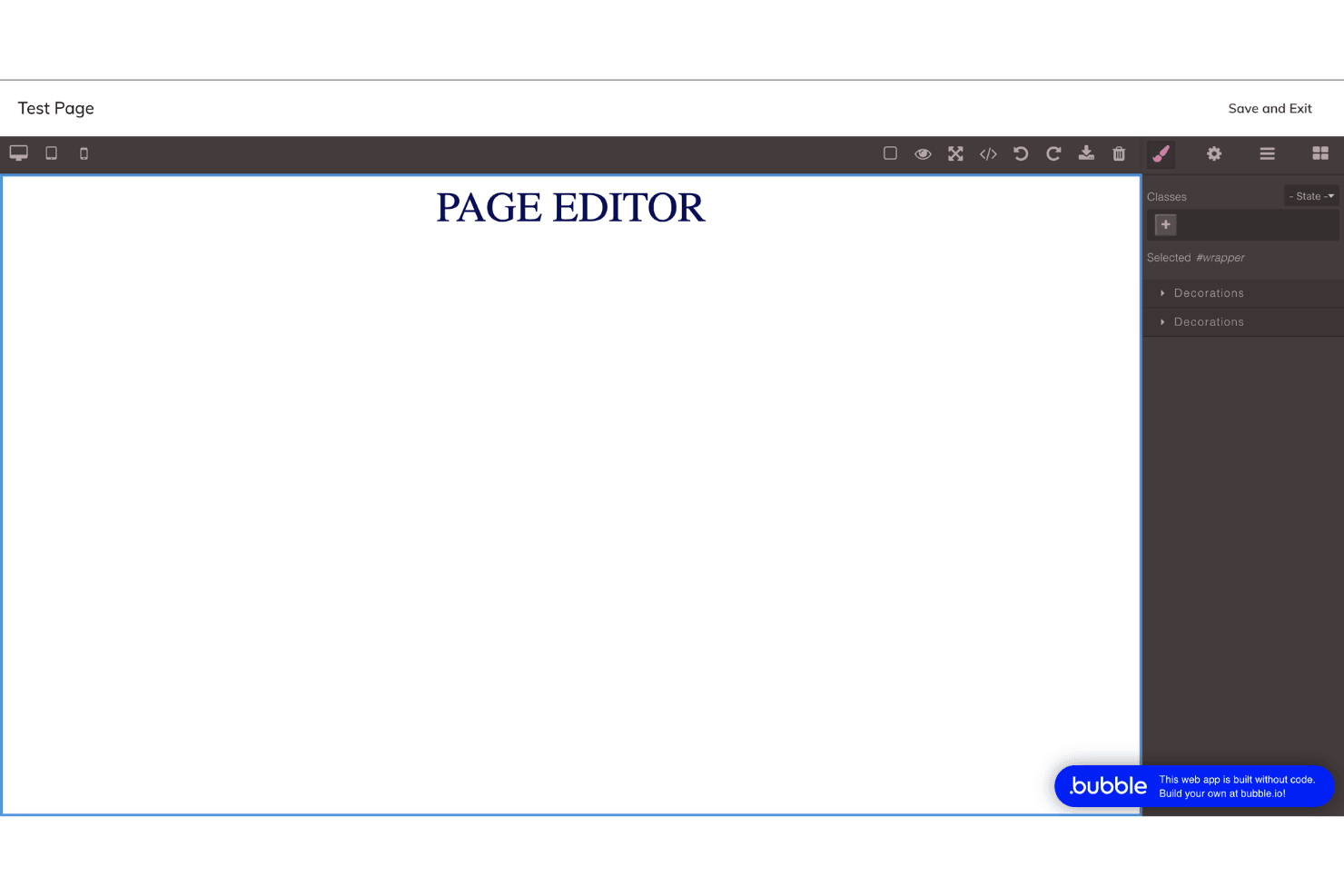
Ease of Use
Bubble stands out for its approachable drag-and-drop interface and visual workflow builder, making app creation accessible to non-developers. Users consistently praise the clear documentation and active community, which help flatten the initial learning curve. While mastering advanced features takes time, most users find the platform intuitive for building prototypes and launching simple apps.
The ability to see changes in real time and avoid manual coding makes Bubble notably user-friendly compared to traditional development tools.

Integrations
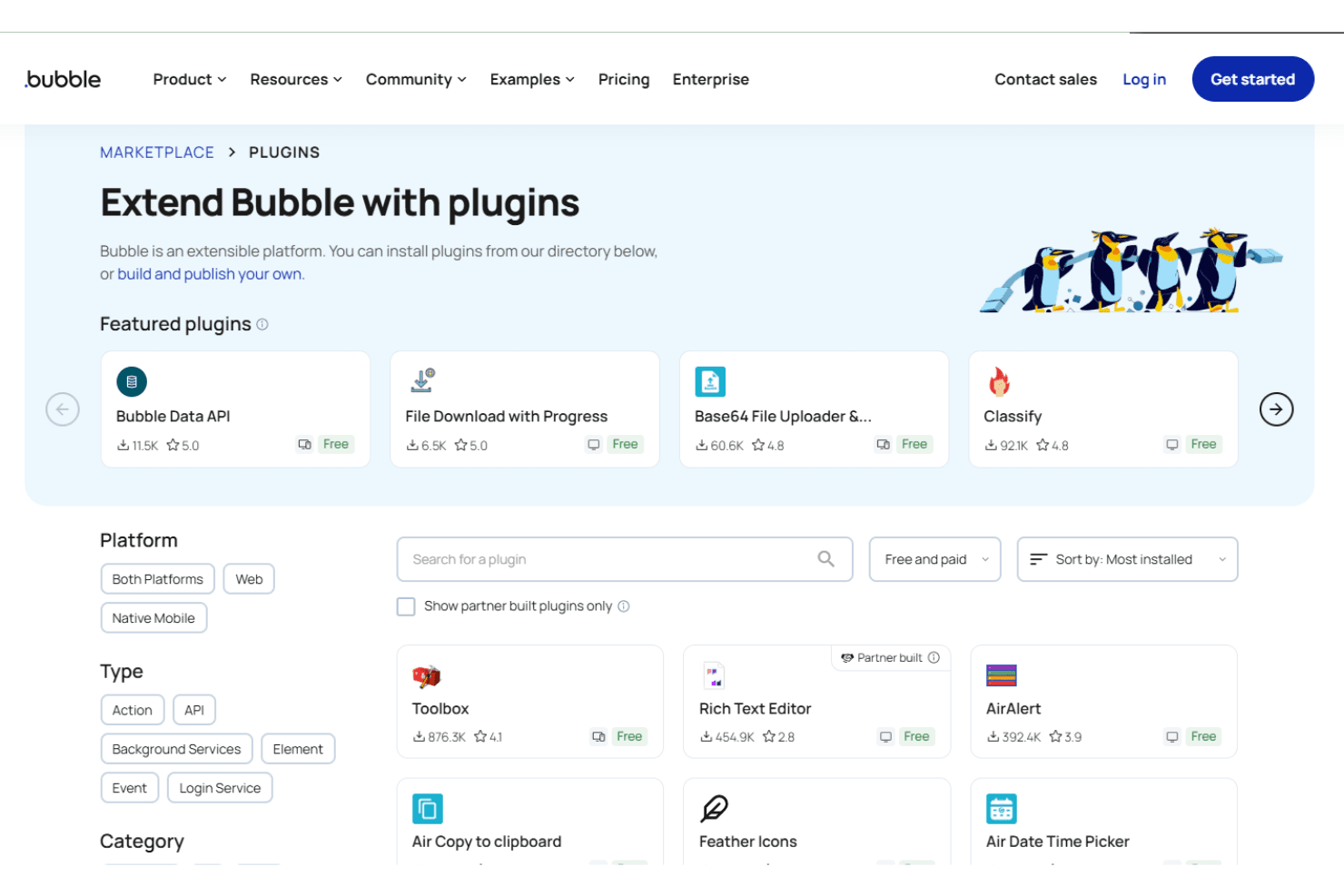
Bubble integrates with Stripe, Google Analytics, Mailchimp, Airtable, Algolia, Twilio, SendGrid, Slack, Facebook, and Google Maps, among others.
Bubble also provides a Data API and supports connecting with third-party integration tools for custom workflows and external data sources.
Bubble Specs
- Analytics: No
- API: Yes
- Calendar Management: No
- Chat: No
- Click-to-Dial: No
- CRM Integration: No
- Customer Management: No
- Customer Service: No
- Dashboard: Yes
- Dashboards: Yes
- Data Export: Yes
- Data Import: Yes
- Data Visualization: No
- External Integrations: Yes
- Feedback Management: No
- Knowledge Base: No
- Lead Management: No
- Lead Scoring: No
- Multi-Source Feedback: No
- Multi-User: Yes
- Net Promoter Score: No
- Notifications: Yes
- Omnichannel Referrals: No
- Online Surveys: No
- Review Moderation: No
- Scheduling: No
- Sentiment Analysis: No
- Social Media Monitoring: No


