

Instrumentele pentru lacuri de date vă permit să stocați, să organizați și să analizați cantități uriașe de date structurate și nestructurate din întreaga organizație. Dacă comparați cele mai bune instrumente pentru lacuri de date, nu vă puteți permite să alegeți la întâmplare — ce platformă vă va ajuta echipa să păstreze controlul asupra costurilor, conformității și performanței pe măsură ce volumul de date crește?
În acest ghid, vă voi prezenta opțiuni testate care îi ajută pe liderii IT să asigure guvernanța, scalabilitatea, integrarea și pregătirea pentru viitor, astfel încât să puteți alege cu încredere fundația potrivită pentru sarcinile de lucru de analiză și AI în 2026.
Why Trust Our Software Recommendations
6,700+
Reviews
20
Industry experts
16+
Evaluation factors
14
Years
Our team has been testing and reviewing software since 2012. As tech leaders ourselves, we know how difficult—and important—it is to choose the right software.
For this guide, we evaluated tools using hands-on testing and independent research, scoring tools using our selection criteria.
Our reviews reflect our human editorial judgment, not a sales pitch.
Expert reviewers:
- Paulo Gardini MiguelTech Director
 Tim FisherVP of AI
 Gabriel RosasTech Lead & Software Architect
 Christhian GruhnTech Lead & Platform Architect

Tabel comparativ al instrumentelor pentru lacuri de date
Acest tabel comparativ rezumă detaliile privind prețurile pentru selecțiile mele de top de instrumente pentru lacuri de date:
Score legend (out of 5)
- Excellent4.5–5
- Good4–4.4
- Average3–3.9
- Below average2–2.9
- Poor1–1.9
Sorted by: Default
| Tool | Starting Price | Website | |||||||
|---|---|---|---|---|---|---|---|---|---|
Best for auto-optimized Apache Iceberg lakehouses | 4.8 out of 5 | 5 | 5 | 5 | 5 | 4 | 5 | $300/month 30-day free trial | Website |
Best for regulated enterprise hybrid lake governance | 4.8 out of 5 | 5 | 5 | 5 | 5 | 4 | 5 | $0.04/CCU/hour 60-day free trial | Website |
Best for cross-engine governance on open lake tables | 5.0 out of 5 | 5 | 5 | 5 | 5 | 5 | 5 | $0.12 per DCU-hour 90-day free trial | Website |
Best for open Iceberg lakehouse without lock-in | 4.7 out of 5 | 5 | 4 | 4 | 5 | 5 | 5 | $0.20/DCU 30-day free trial | Website |
Best for regulated-industry data lake governance | 5.0 out of 5 | 5 | 5 | 5 | 5 | 5 | 5 | Pricing upon request Free demo available | Website |
Best for GCP-native lakehouse with tiered storage | 5.0 out of 5 | 5 | 5 | 5 | 5 | 5 | 5 | $0.020/GB/month Free plan available | Website |
Best for zero-copy data sharing across clouds | 5.0 out of 5 | 5 | 5 | 5 | 5 | 5 | 5 | Pricing upon request 30-day free trial | Website |
Best for lakehouse built on open table formats | 5.0 out of 5 | 5 | 5 | 5 | 5 | 5 | 5 | $0.22/DBU 14-day free trial | Website |
Best for object storage at the core of AWS data lakes | 5.0 out of 5 | 5 | 5 | 5 | 5 | 5 | 5 | $0.023/GB/month Not available | Website |
Best for Microsoft-native enterprise data lakes | 4.8 out of 5 | 5 | 5 | 5 | 5 | 4 | 5 | $0.023/GB/month $200 credit for 30 days | Website |





Recenzii ale instrumentelor pentru lacuri de date
Mai jos sunt rezumatele mele detaliate ale celor mai bune instrumente pentru lacuri de date care au ajuns pe lista mea scurtă. Recenziile mele oferă o privire detaliată asupra funcțiilor, capacităților și celor mai bune cazuri de utilizare pentru fiecare platformă, pentru a vă ajuta să o găsiți pe cea mai potrivită pentru dumneavoastră.
 1Best for auto-optimized Apache Iceberg lakehouses
Qlik
- 30-day free trial
- From $300/month (billed annually)
Visit WebsiteCustomer Rating:4.4/5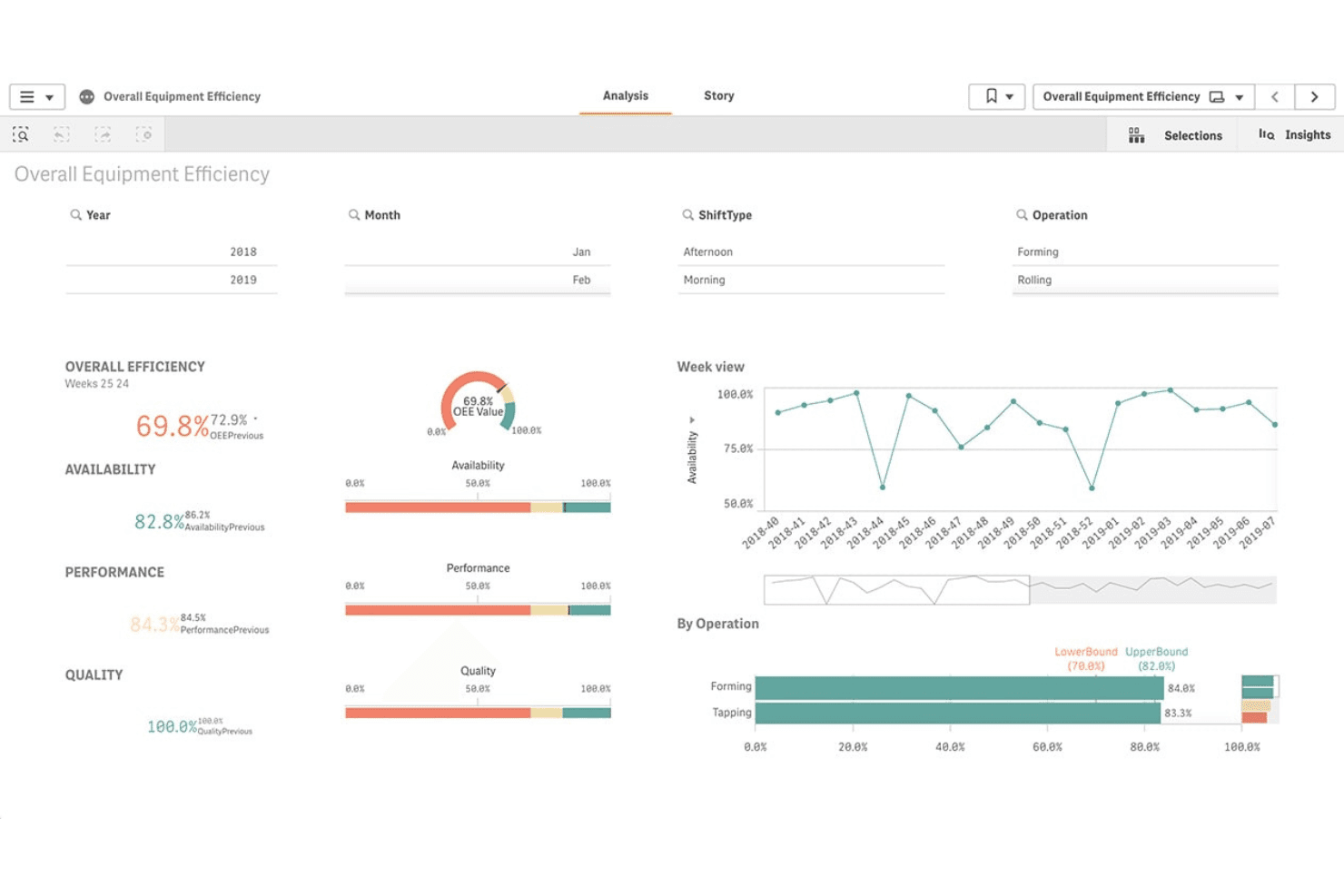
Qlik tracks overall equipment efficiency with live KPI dashboards. Qlik is a data integration and lakehouse platform built natively on Apache Iceberg that combines CDC-based ingestion, automated schema evolution, multi-format data pipelines, and built-in governance across cloud object storage environments.
Who Is Qlik Best For?
Qlik is a strong fit for large enterprises in regulated industries that need end-to-end data integration, governance, and lakehouse management on a single platform.
Why I Picked Qlik
I picked Qlik because its Adaptive Iceberg Optimizer sets it apart: it continuously runs compaction, indexing, and snapshot cleanup on your Iceberg tables without any manual tuning, delivering 2.5x–5x faster query speeds and up to 50% storage cost savings. I also rely on its zero-copy mirroring to push live Iceberg tables directly into Snowflake without duplicating data or adding pipeline complexity.
Qlik Key Features
- Log-based CDC replication: Qlik Replicate captures changes directly from database transaction logs with no agents required, keeping lake data current without impacting source system performance.
- Multi-format ingestion pipeline: Ingest data in Parquet, Avro, ORC, JSON, and CSV from 200+ sources—including databases, SaaS apps, SAP, mainframes, and streaming platforms like Kafka and Kinesis.
- Column-level lineage and impact analysis: Track data from source to consumption at the column level, giving you a clear audit trail for governance and compliance reporting.
- Automated bronze/silver/gold zone management: Qlik Compose for Data Lakes automates schema generation, Hive Catalog creation, and continuous zone updates via CDC—eliminating manual pipeline coding for multi-tier lake architectures.
Qlik Integrations
Qlik supports 200+ ingestion sources, including Amazon S3, Azure Data Lake Storage, Google Cloud Storage, Snowflake, Kafka, Oracle, SAP, and Salesforce. Its Iceberg tables integrate with Spark, Amazon Athena, Trino, Presto, Databricks, Dremio, and Tableau.
Pros and Cons
Pros:
- Deep enterprise compliance and governance controls
- Advanced real-time log-based CDC replication
- Auto-optimized Apache Iceberg table management
Cons:
- Opaque licensing and cost estimation process
- Complex platform with steep technical requirements
Learn more about Qlik: Best for regulated enterprise hybrid lake governance
- 60-day free trial
- From $0.04/CCU/hour
Visit WebsiteCustomer Rating:4.1/5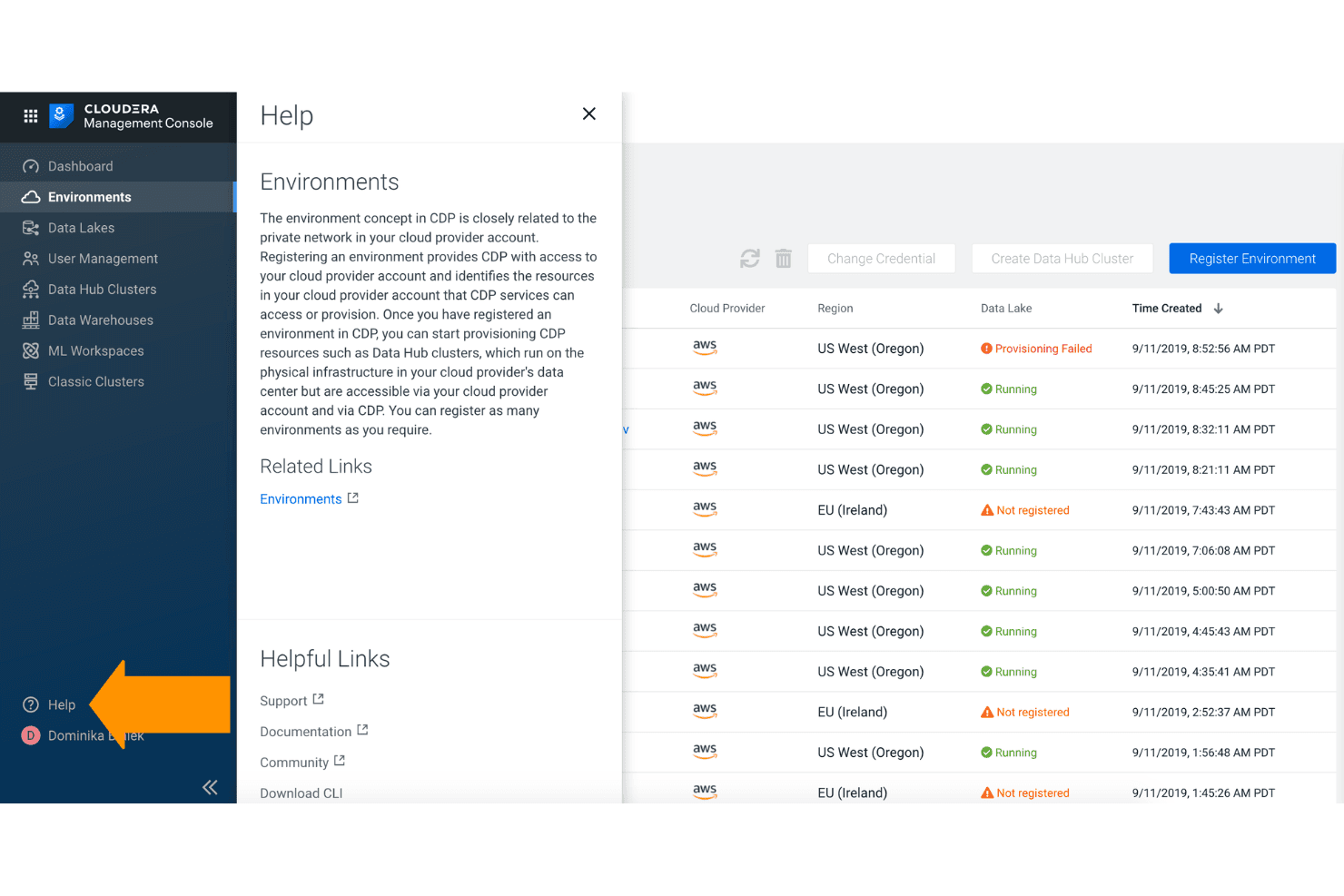
Cloudera lets users manage and monitor cloud environments across regions. Cloudera is an open data lakehouse platform that covers scalable multi-cloud and on-premises storage, multi-format data ingestion via 450+ connectors, Apache Iceberg-based schema-on-read, and centralized governance across hybrid environments.
Who Is Cloudera Best For?
Cloudera is a strong fit for large enterprises in regulated industries—banking, government, telecom—that need unified governance across on-premises and multi-cloud environments.
Why I Picked Cloudera
Cloudera earns its spot on my shortlist because no other platform matches its governance depth across hybrid environments. I'm particularly impressed by Cloudera SDX, which applies Apache Ranger and Apache Atlas policies once and enforces them everywhere, whether your data sits in an on-premises HDFS cluster, Azure ADLS, or AWS S3. Banks and government agencies running mixed infrastructure can define column-level masking rules and ABAC policies centrally, with FedRAMP Moderate and PCI DSS 4.0 certifications backing the compliance story.
Cloudera Key Features
- Apache Iceberg time travel: Query historical snapshots of your data at any point in time using Iceberg's built-in versioning and time travel capabilities.
- Lakehouse Optimizer: Automates Iceberg table compaction, Z-ordering, and partition pruning to improve query performance and reduce compute costs.
- Cloudera Data Flow (NiFi) visual pipeline builder: Design and deploy data ingestion pipelines using a drag-and-drop interface with 450+ pre-built processors and connectors.
- Zero-copy data sharing via Iceberg REST Catalog: External engines like Databricks, Snowflake, and Athena can query Cloudera-managed Iceberg tables directly without data movement or duplication.
Cloudera Integrations
Cloudera Data Flow provides 450+ pre-built connectors, including Apache Kafka, MongoDB, Salesforce, Snowflake, and Google BigQuery. It also integrates with AWS, Microsoft Azure, Google Cloud Platform, Databricks, Tableau, and Power BI through its Iceberg REST Catalog.
Pros and Cons
Pros:
- Zero-copy sharing across external query engines
- Enterprise governance for strict compliance needs
- Hybrid and on-premises support is unmatched
Cons:
- Metadata management satisfaction below competitor average
- Initial configuration often requires expert skills
Learn more about Cloudera: Best for cross-engine governance on open lake tables
- 90-day free trial
- From $0.12 per DCU-hour
Visit WebsiteCustomer Rating:4.4/5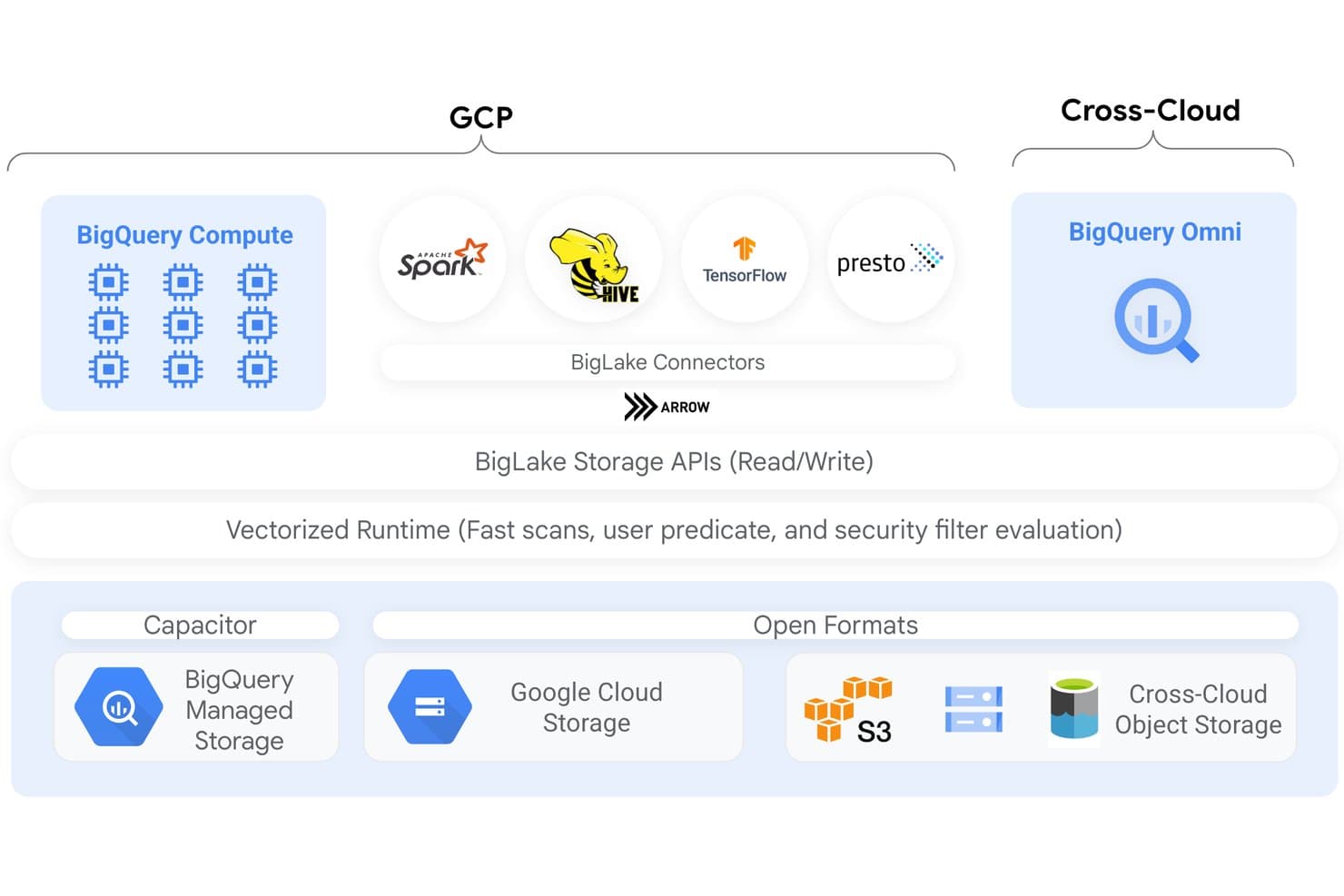
BigLake unifies compute and storage across GCP and cross-cloud environments. BigLake is Google Cloud's lakehouse platform that extends BigQuery with open-format table support, cross-engine query access, unified metadata management, and fine-grained governance across GCS, S3, and Azure Blob Storage.
Who Is BigLake Best For?
BigLake is a strong fit for data engineering and architecture teams already invested in Google Cloud who need consistent governance across multiple query engines and open table formats.
Why I Picked BigLake
I picked BigLake as one of the best because it's the only lakehouse platform I've seen that enforces row- and column-level access policies consistently across BigQuery, Spark, Trino, and Presto, not just within a single engine. That means a policy tag applied to a sensitive column follows the data regardless of which engine your team queries it through. The Lakehouse Iceberg REST Catalog makes this possible by serving as a single governance-aware endpoint for all open-source engines reading and writing the same Iceberg tables.
BigLake Key Features
- Automated table maintenance: BigLake automatically handles file compaction, clustering, garbage collection, and metadata generation for Iceberg tables stored in GCS.
- Multi-format ingestion: Ingest data in Parquet, ORC, Avro, CSV, JSON, and open table formats like Apache Iceberg, Delta Lake, and Apache Hudi via manifest files.
- BigQuery Omni cross-cloud querying: Run BigQuery SQL queries directly against data stored in Amazon S3 or Azure Data Lake Storage Gen 2 without moving it to GCS.
- Change Data Capture replication: Stream operational data from Cloud Spanner, AlloyDB, and Cloud SQL directly into BigLake tables for near-real-time analytics.
BigLake Integrations
BigLake has native integrations with BigQuery, Apache Spark, Apache Flink, Trino, Presto, Google Cloud Storage, Amazon S3, Azure Data Lake Storage Gen2, Looker, and Vertex AI. Its Iceberg REST Catalog connects open-source engines to shared lake tables.
Pros and Cons
Pros:
- Catalog federation for multi-cloud metadata management
- Open table formats with full Iceberg support
- Row and column security enforced across engines
Cons:
- CMEK unavailable for S3 or Azure cached tables
- DML not supported for non-Iceberg external tables
Learn more about BigLake:
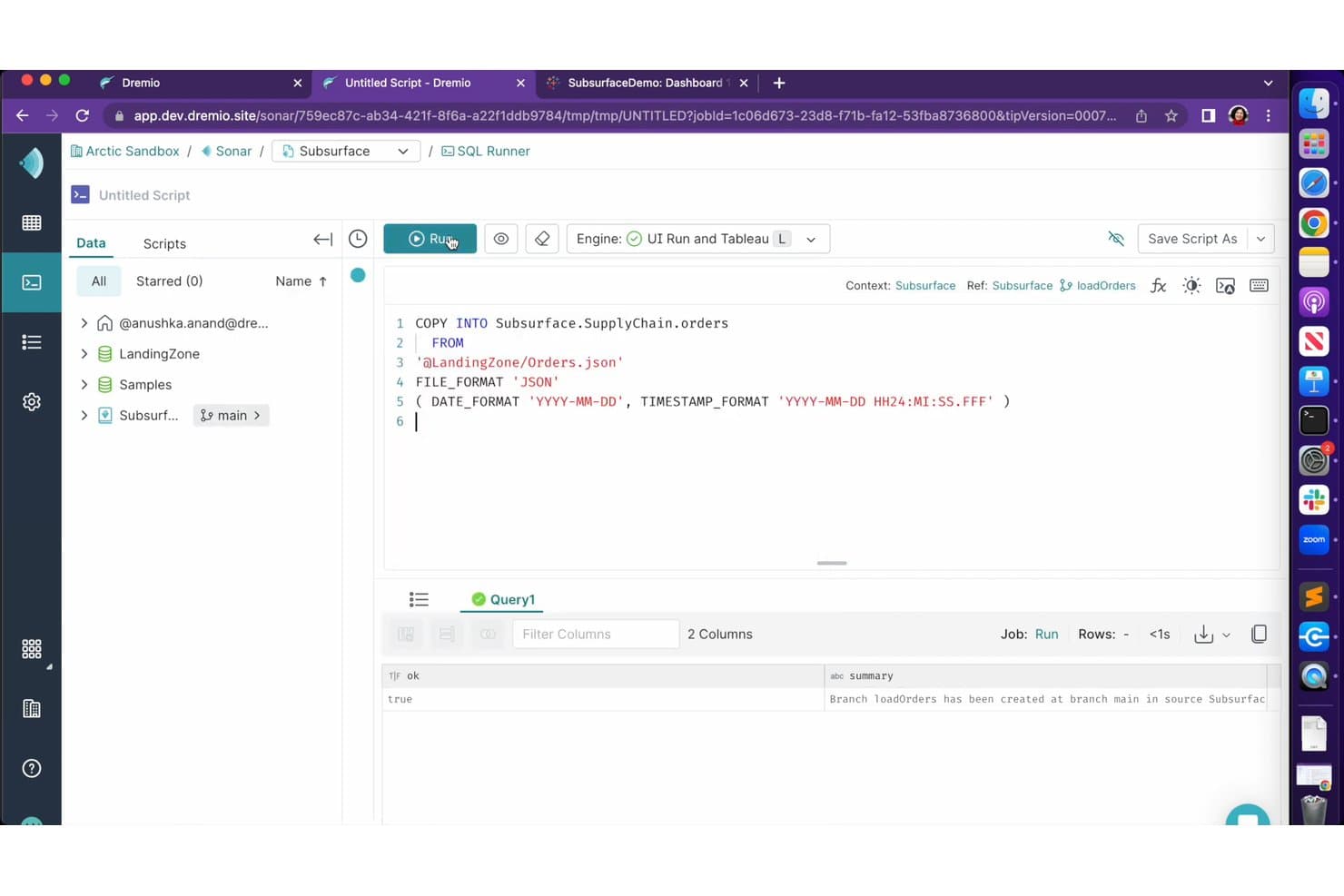
Dremio lets users load JSON data into tables using SQL COPY INTO commands. Dremio is an open lakehouse platform built natively on Apache Iceberg and Apache Arrow, combining a SQL query engine, federated data access, automated query acceleration, Git-style data versioning, and a multi-engine open catalog.
Who Is Dremio Best For?
Dremio is a strong fit for data engineering and architecture teams building open lakehouses on Apache Iceberg who need multi-engine query access without being locked into a proprietary catalog or storage format.
Why I Picked Dremio
Dremio earns its spot on my shortlist because it's built natively on Apache Iceberg, meaning your data stays in your own S3 or ADLS buckets and any engine (Spark, Flink, Trino, DuckDB) can read and write it through the open Polaris catalog without format conversion. I especially like Autonomous Reflections, which silently observe query patterns and materialize accelerations in the background, so your BI dashboards get fast results without manual tuning or proprietary extracts.
Dremio Key Features
- Open Catalog (Apache Polaris): A multi-engine catalog built on Apache Polaris that lets Spark, Flink, Trino, and DuckDB read and write Iceberg tables through a standard REST API.
- Data as Code branching: Git-style version control via Project Nessie creates zero-copy isolated data branches for development, testing, and ML experimentation with atomic merges and rollbacks.
- COPY INTO ingestion: A native SQL command that bulk-loads CSV, JSON, and Parquet files from object storage directly into Iceberg tables with schema evolution and partition handling.
- Fine-grained access control: Row-level security and column masking enforced at query time, applied consistently across every engine querying the catalog.
Dremio Integrations
Dremio integrates with Apache Spark, Apache Flink, Trino, DuckDB, Tableau, Power BI, dbt Core, Amazon S3, Azure Data Lake Storage, and Google Cloud Storage. Its Polaris REST Catalog, ODBC, JDBC, and Arrow Flight interfaces support custom engine and application connections.
Pros and Cons
Pros:
- Open REST catalog connects any query engine
- Git-style data branching for time travel
- Processes Apache Iceberg natively with no conversion
Cons:
- No dedicated built-in ML feature store
- Administration complexity higher than peer tools
Learn more about Dremio: Best for regulated-industry data lake governance
- Free demo available
- Pricing upon request
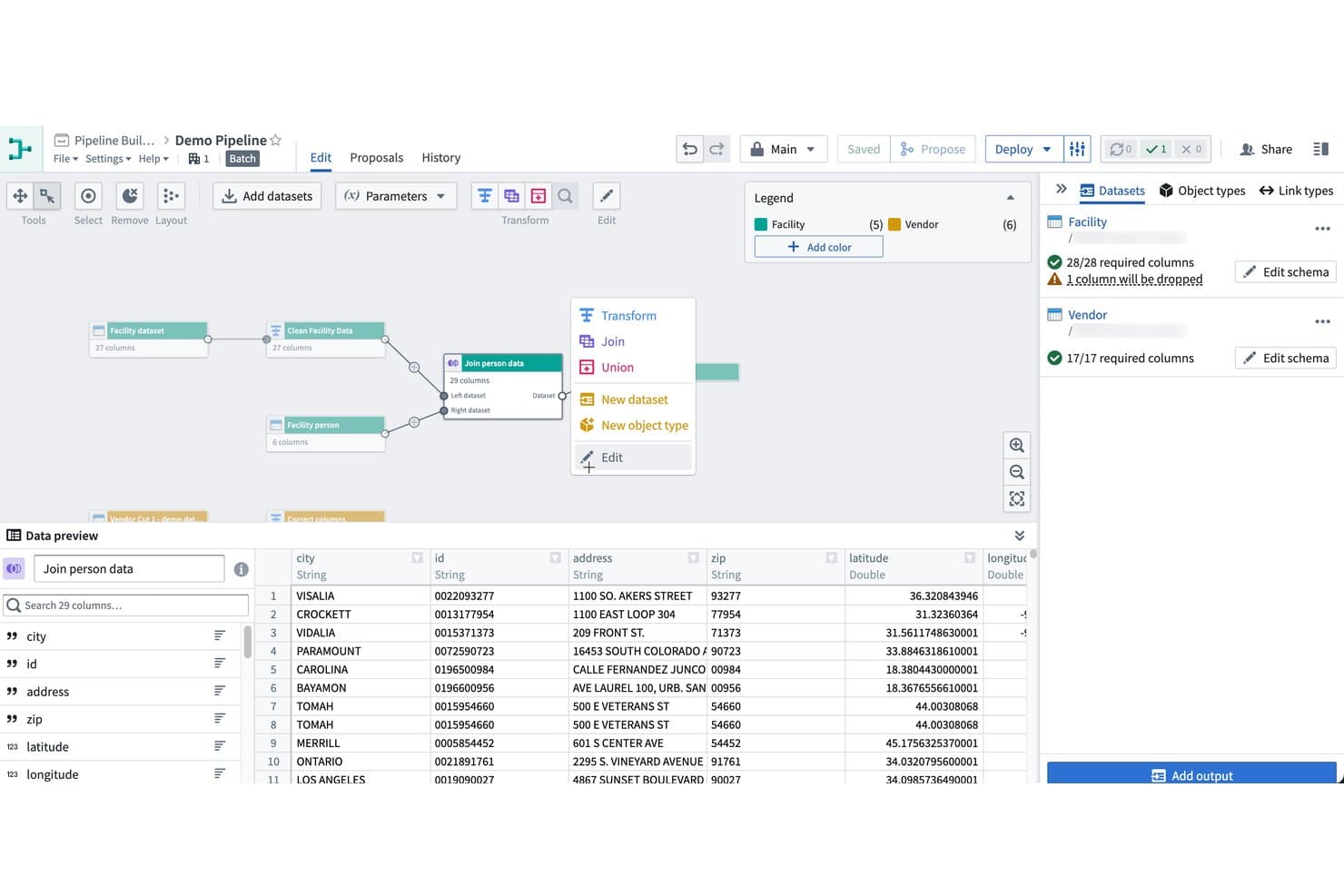
Palantir Foundry lets users build and join datasets visually in pipelines. Palantir Foundry is a data lake platform that combines multi-format ingestion, pipeline orchestration, semantic data modeling via its Ontology layer, and built-in governance controls across cloud, on-premises, and air-gapped environments.
Who Is Palantir Foundry Best For?
Palantir Foundry is purpose-built for large enterprises in regulated industries—finance, healthcare, defense, and government—that need granular data governance across complex, multi-source environments.
Why I Picked Palantir Foundry
I picked Palantir Foundry because its governance architecture genuinely has no peer in regulated industries. The platform layers purpose-based, classification-based, and role-based access controls together, with data markings that propagate automatically through lineage so a PII tag on a source dataset follows the data through every downstream transform. Pair that with FedRAMP High, HIPAA, ITAR, and SOC 2 Type 2 certifications, and the Ontology layer that maps raw lake data to auditable business objects, and you have a platform built from the ground up for environments where governance isn't optional.
Palantir Foundry Key Features
- 200+ prebuilt data connectors: Connect to databases, data warehouses, streaming platforms, ERP systems, cloud storage, IoT sources, and geospatial tools through a single ingestion interface.
- Apache Iceberg REST Catalog: Expose Foundry datasets to external Iceberg-compatible compute engines—including Trino, Spark, Flink, Databricks, and Snowflake—without duplicating data.
- Virtual tables for zero-copy federation: Query external tables in Databricks, Snowflake, and S3-compatible stores directly from Foundry without ingesting or moving the underlying data.
- AIP model studio: Build, train, evaluate, and serve ML models within Foundry, with native access to LLMs and support for Python and R development environments.
Palantir Foundry Integrations
Palantir Foundry offers 200+ native data connectors, including Amazon S3, Snowflake, Databricks, PostgreSQL, SAP, Apache Kafka, Amazon Kinesis, Tableau, and Power BI. It also supports custom connectivity through its S3-compatible API, Iceberg REST Catalog, and virtual tables.
Pros and Cons
Pros:
- Zero-copy data sharing with virtual tables
- Ontology layer enables business-user data access
- Best-in-class data governance for compliance
Cons:
- Platform lock-in risk due to proprietary models
- High contract pricing with unclear totals
Learn more about Palantir Foundry: Best for GCP-native lakehouse with tiered storage
- Free plan available
- From $0.020/GB/month
Visit WebsiteCustomer Rating:4.7/5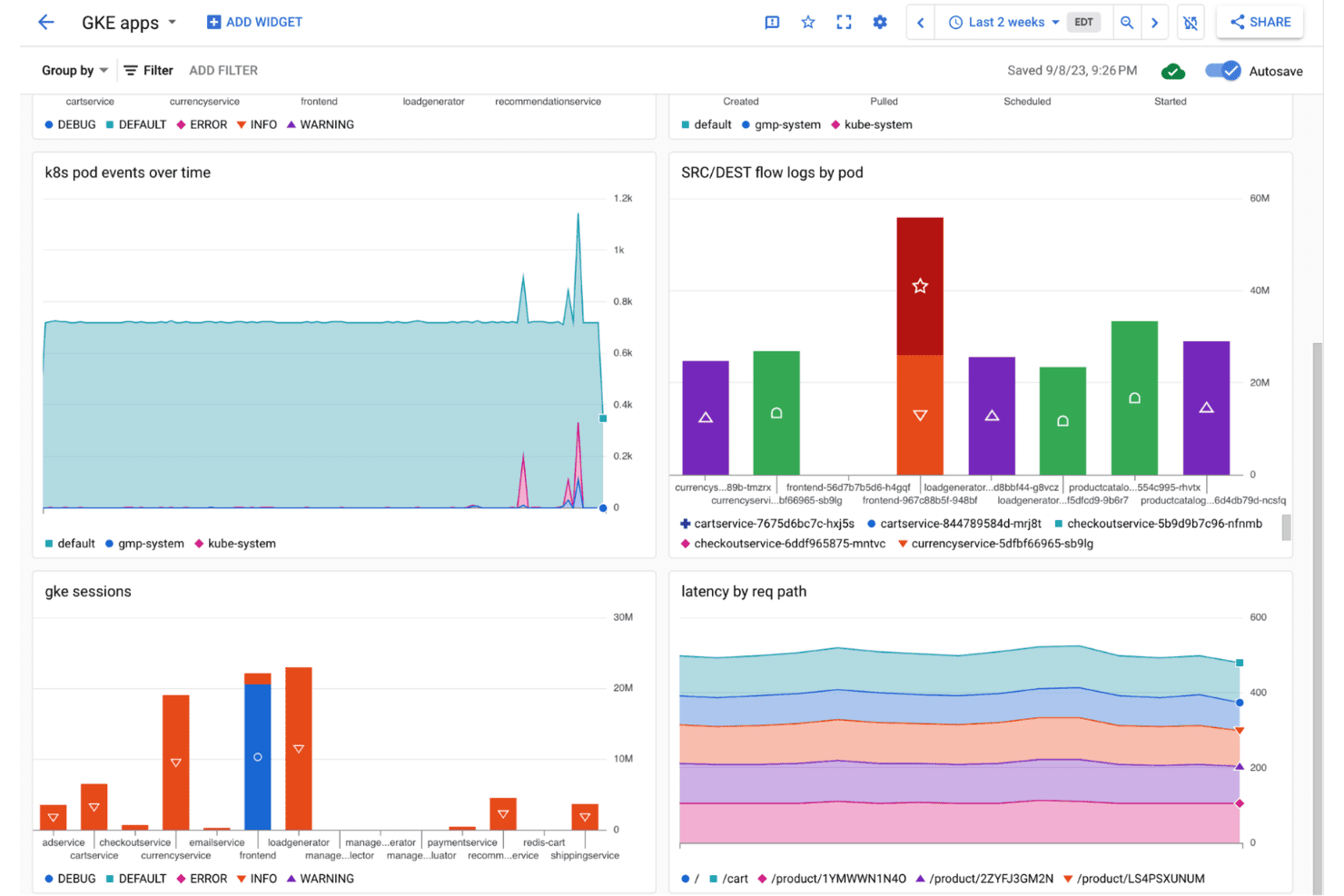
Google Cloud Storage displays GKE app monitoring dashboards with pod events and latency metrics. Google Cloud Storage is a managed object storage service built for data lake architectures, offering tiered storage classes, open table format support via Apache Iceberg and BigLake, and deep integration with BigQuery, Dataflow, Dataproc, and Vertex AI.
Who Is Google Cloud Storage Best For?
Google Cloud Storage is a strong fit for data engineering and infrastructure teams already operating within the GCP ecosystem who need a scalable object store as the foundation of a lakehouse architecture.
Why I Picked Google Cloud Storage
I picked Google Cloud Storage because it's the native foundation for a GCP-based lakehouse, with tiered storage classes (Standard down to Archive at $0.0012/GB/month) and Autoclass automatically shifting objects between tiers based on access patterns. What I find compelling is BigLake: it layers ACID transactions, time travel, and schema evolution directly onto GCS-backed Apache Iceberg tables, turning raw object storage into a queryable lakehouse without moving data. BigQuery then queries those same Iceberg tables in place, with no export required.
Google Cloud Storage Key Features
- Multi-format ingestion: Storage Transfer Service, Dataflow, Pub/Sub, and Datastream support batch, streaming, and CDC ingestion from databases like MySQL, PostgreSQL, and Oracle into GCS.
- Governance and access controls: IAM-based permissions, CMEK/CSEK encryption, VPC Service Controls, Cloud DLP, and audit logging enforce security across all stored data.
- Metadata discovery via Knowledge Catalog: Dataplex automatically scans GCS buckets to extract schemas, build business glossaries, and generate end-to-end data lineage across GCS and BigQuery.
- Multi-engine query support: GCS-backed Iceberg tables are queryable by BigQuery, Serverless Spark, Trino, Flink, and Presto via the Iceberg REST Catalog.
Google Cloud Storage Integrations
Google Cloud Storage has native integrations with BigQuery, Dataproc, Dataflow, Pub/Sub, Datastream, Vertex AI, Looker, and Knowledge Catalog. REST, XML, gRPC, and client-library APIs support custom integrations with data platforms and processing engines.
Pros and Cons
Pros:
- Automated archival and storage tiering options
- Multi-engine analytics with BigQuery and Spark
- Lakehouse support with Apache Iceberg tables
Cons:
- Complex billing with separate operation and egress fees
- Most features require multiple GCP services
Learn more about Google Cloud Storage: Best for zero-copy data sharing across clouds
- 30-day free trial
- Pricing upon request
Visit WebsiteCustomer Rating:4.6/5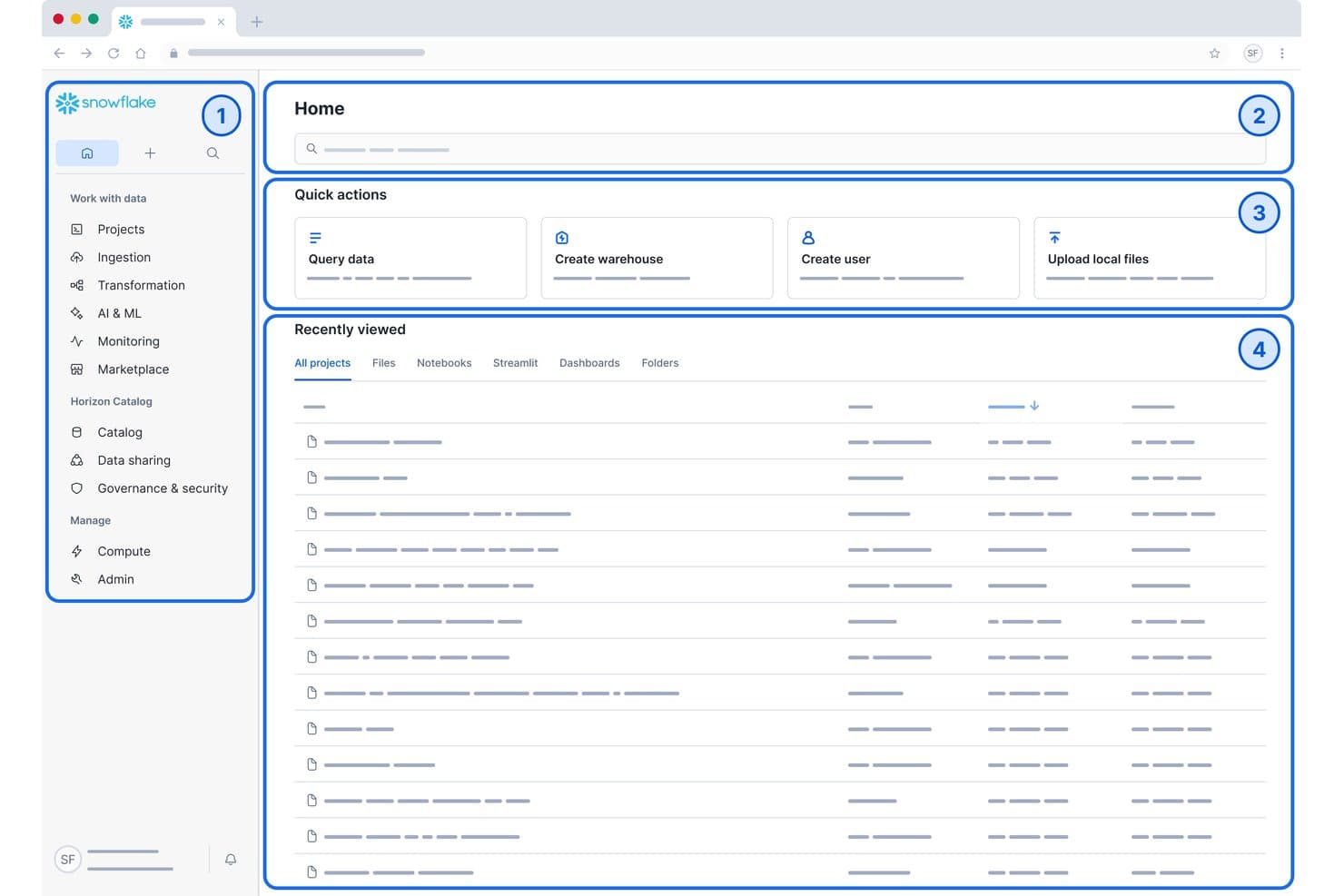
Snowflake's home dashboard centralizes data queries, warehouse creation, and recent projects. Snowflake is a cloud-native data lake and analytics platform that combines elastic storage, a built-in SQL query engine, Snowpark for Python/Java/Scala workloads, Apache Iceberg support, and zero-copy data sharing across AWS, Azure, and GCP.
Who Is Snowflake Best For?
Snowflake is a strong fit for enterprise data teams managing large-scale, multi-cloud environments where governance, compliance, and cross-organizational data sharing are non-negotiable requirements.
Why I Picked Snowflake
Snowflake earns its spot on my shortlist because its zero-copy data sharing lets you share live datasets across AWS, Azure, and GCP accounts without duplicating or moving a single byte. I've worked with its Snowflake Marketplace, which connects to 820+ data providers, and the cross-cloud auto-fulfillment makes sharing across regions genuinely frictionless. Pair that with native Apache Iceberg support and Snowpipe Streaming handling over 1M TPS, and you get a lake platform built for real enterprise scale.
Snowflake Key Features
- Snowpark multi-language runtime: Write data engineering and ML workloads in Python, Java, or Scala and run them directly inside Snowflake's query engine without moving data out.
- Apache Iceberg table support: Store and manage data in open Iceberg table format on Snowflake-managed storage, with schema evolution, Time Travel, and interoperability with Spark, Trino, and Flink.
- Horizon Catalog: A built-in governance layer with column-level lineage tracking, automated PII classification, AI-assisted metadata enrichment, and Data Metric Functions for continuous data quality monitoring.
- Snowpipe Streaming: Ingest row-level data in real time at over 1M transactions per second directly into Snowflake or Apache Iceberg tables without batching delays.
Snowflake Integrations
Snowflake offers native integrations with Apache Kafka, dbt, Tableau, Microsoft Power BI, Looker, and Apache Airflow. It connects to Apache Spark, Trino, Amazon S3, Azure Blob Storage, and Google Cloud Storage, with APIs for custom integrations.
Pros and Cons
Pros:
- Elastic separation of storage and compute
- Built-in governance and column-level lineage
- Zero-copy data sharing across clouds
Cons:
- Cost tracking can be challenging
- No on-premises deployment support
Learn more about Snowflake: Best for lakehouse built on open table formats
- 14-day free trial
- From $0.22/DBU
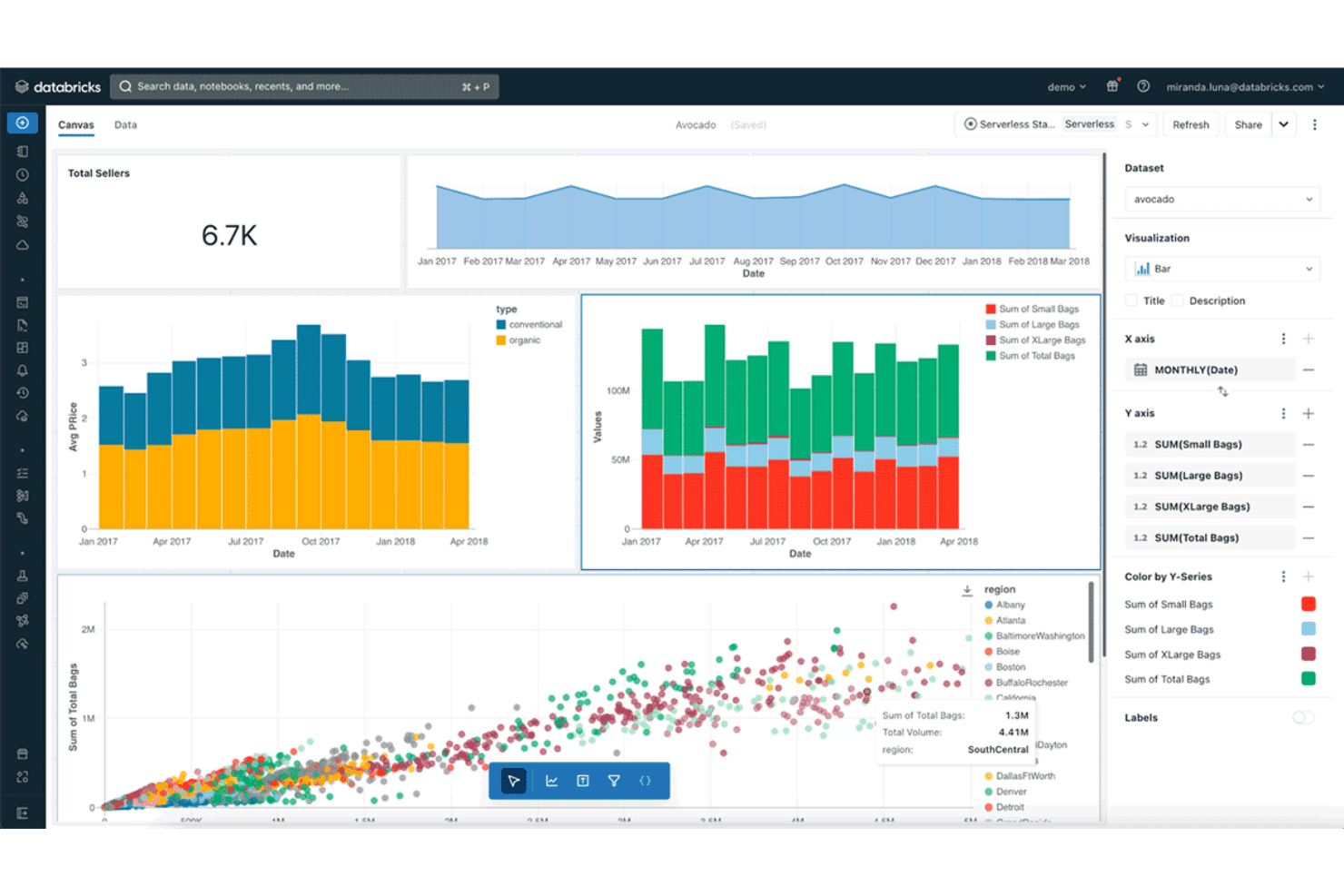
Databricks visualizes avocado sales data across interactive dashboard charts. Databricks Lakehouse Platform is a cloud-native data lakehouse platform that unifies data engineering, SQL analytics, machine learning, and AI development on open table formats like Delta Lake, Apache Iceberg, and Apache Hudi.
Who Is Databricks Lakehouse Platform Best For?
Databricks is a strong fit for enterprise data and ML teams that need to run engineering pipelines, SQL analytics, and AI workloads on a single platform without moving data between systems.
Why I Picked Databricks Lakehouse Platform
Databricks earns its spot on my shortlist because it's the team that literally invented Delta Lake, and that origin story matters when you're evaluating open table format support. I've worked with the platform's native Delta Lake, Iceberg, and Hudi support, and what sets it apart is that ACID transactions, time travel, and schema evolution aren't bolt-ons. Unity Catalog layers automated column-level lineage and attribute-based access control directly on top, so governance travels with the data across clouds.
Databricks Lakehouse Platform Key Features
- Lakeflow Connect: A managed, serverless ingestion layer with 100+ native connectors for SaaS apps, databases, cloud storage, and streaming sources including Kafka, Kinesis, and Event Hubs.
- Apache Spark Declarative Pipelines: A framework for building batch and real-time streaming ETL pipelines with built-in constraint-based data quality enforcement and automated CDC.
- Databricks SQL Warehouses: A Photon-accelerated SQL engine that supports ANSI SQL for analytics workloads, with JDBC/ODBC connectivity for BI tools like Tableau, Power BI, and Looker.
- MLflow integration: A managed MLflow environment for experiment tracking, model registry, and deployment, co-located with your lake data and connected to the Feature Store and Model Serving.
Databricks Lakehouse Platform Integrations
Databricks offers 100+ native Lakeflow Connect connectors, including Salesforce Sales Cloud, Workday, HubSpot, Jira, ServiceNow, Microsoft SQL Server, Google Drive, and Google Analytics. It also connects to Kafka, Kinesis, Event Hubs, S3, ADLS, and GCS, with JDBC/ODBC and APIs for custom connectivity.
Pros and Cons
Pros:
- Built-in MLflow and unified AI platform
- Automated column-level lineage with Unity Catalog
- Native Delta Lake, Iceberg, and Hudi support
Cons:
- No on-premises deployment option available
- DBU plus cloud costs can escalate quickly
Learn more about Databricks Lakehouse Platform: Best for object storage at the core of AWS data lakes
- Not available
- From $0.023/GB/month
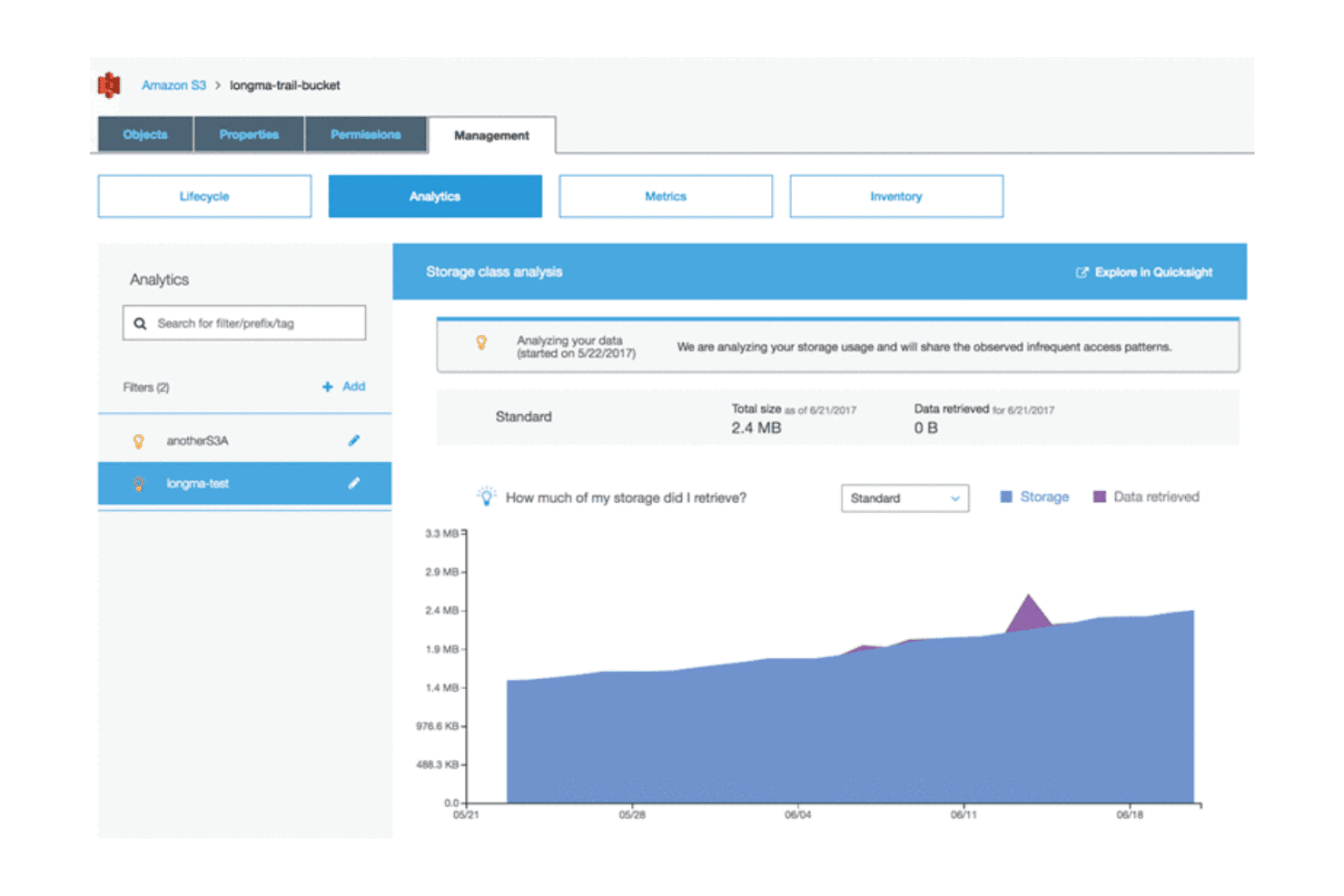
Amazon S3 analyzes storage usage patterns to optimize data retrieval costs. Amazon S3 is AWS's object storage service that functions as the foundational storage layer for data lakes, supporting any data format at exabyte scale with tiered storage classes, native Apache Iceberg table management via S3 Tables, and deep integration across the AWS analytics ecosystem.
Who Is Amazon S3 Best For?
Amazon S3 is the right fit for data engineering and infrastructure teams building analytics pipelines on AWS who need a proven, exabyte-scale storage foundation that connects directly to the rest of the AWS ecosystem.
Why I Picked Amazon S3
Amazon S3 earns its spot on my shortlist because it's the object storage layer that most production data lakes are already built on. I love that S3 Tables delivers native Apache Iceberg support with ACID transactions, time travel, and auto-compaction built in, solving the small-files problem that plagues most lake architectures. Pair that with S3 Intelligent-Tiering automatically shifting cold data down to $0.00099/GB/month, and you get serious storage cost control without manual intervention.
Amazon S3 Key Features
- Multi-format ingestion: S3 accepts any file type—Parquet, ORC, Avro, JSON, CSV, and unstructured formats—via batch uploads, streaming through Kinesis and MSK, or event-driven triggers using S3 Event Notifications.
- Lake Formation fine-grained access control: Enforce data access policies at the table, column, row, and cell level across your entire S3-backed data lake without duplicating data.
- S3 Vectors: A native vector index storage and querying service built directly into S3, designed for semantic search and retrieval-augmented generation workloads at up to 90% lower cost than traditional approaches.
- S3 Inventory: Generate scheduled reports on object attributes, storage class, encryption status, and replication state across your buckets for auditing and governance workflows.
Amazon S3 Integrations
Amazon S3 offers native integrations across AWS, including AWS Glue, Amazon Athena, Amazon EMR, AWS Lake Formation, Amazon Kinesis, Amazon Redshift Spectrum, and Amazon SageMaker. It also connects with Apache Spark, Trino, Snowflake, Databricks, Tableau, and Power BI through documented connectors and APIs.
Pros and Cons
Pros:
- 143 compliance certifications and object-level access control
- Built-in ACID Iceberg tables with auto-compaction
- Exabyte-scale object storage supports any data format
Cons:
- Data lake builds require assembling multiple AWS services
- Pricing is complex and requires close management
Learn more about Amazon S3: Best for Microsoft-native enterprise data lakes
- $200 credit for 30 days (no dedicated free tier)
- From $0.023/GB/month
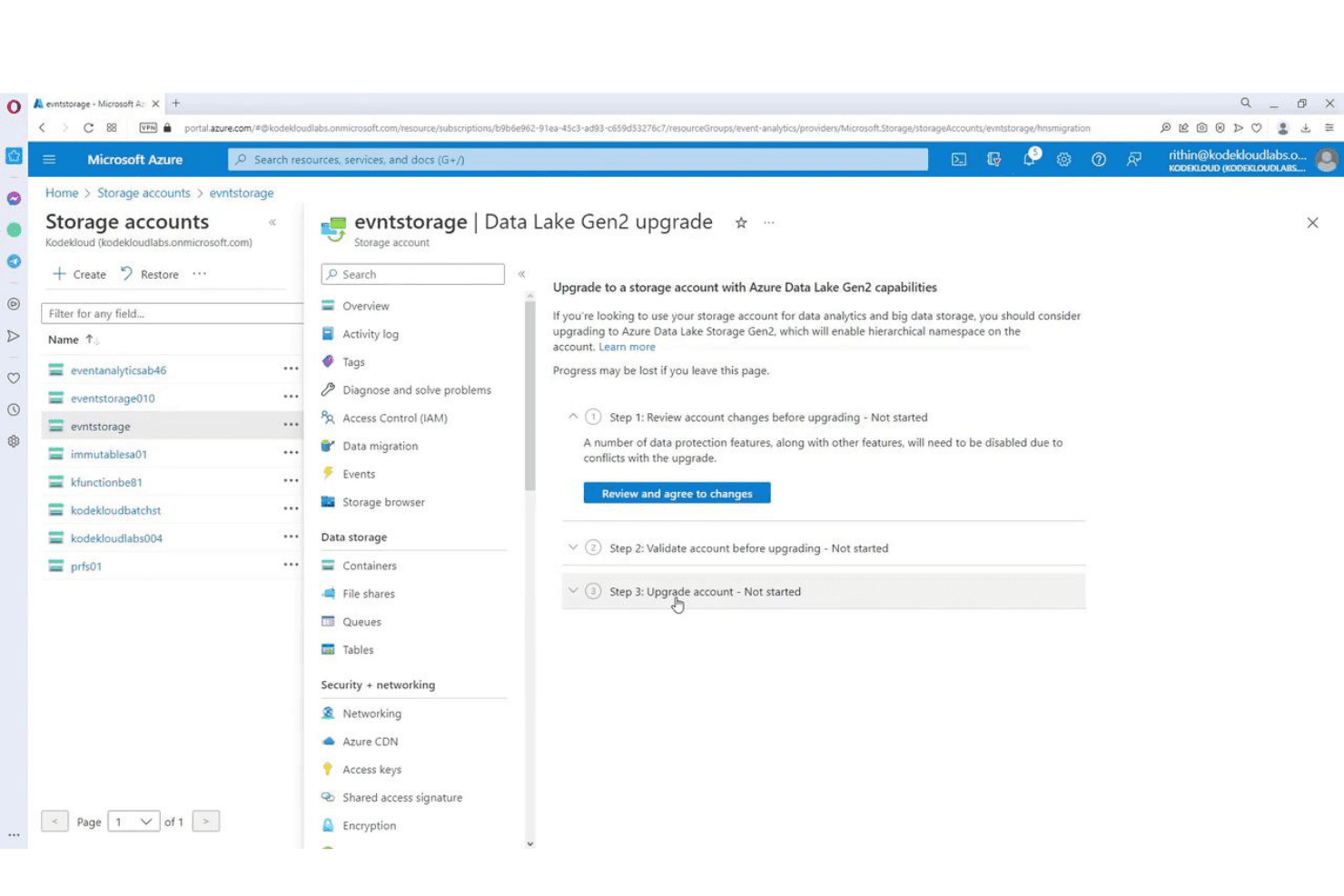
Azure Storage lets users upgrade accounts to Data Lake Gen2 capabilities. Azure Data Lake Storage Gen2 is Microsoft's cloud-based data lake storage service, built on Azure Blob Storage with a hierarchical namespace, that supports exabyte-scale storage, multi-format data ingestion, POSIX-compliant access controls, and native integration with Azure's analytics and ML ecosystem.
Who Is Azure Data Lake Storage Best For?
Azure Data Lake Storage Gen2 is the natural fit for enterprise IT and data teams already running on Microsoft Azure who need exabyte-scale storage tightly wired into Synapse, Databricks, and Microsoft Fabric.
Why I Picked Azure Data Lake Storage
I picked Azure Data Lake Storage Gen2 as one of the best because it's the native storage foundation for the entire Microsoft analytics stack, and that tight wiring matters at enterprise scale. When your org runs Synapse, Databricks, and Microsoft Fabric, ADLS Gen2 is already the substrate underneath all of it, meaning one copy of data is queryable by every engine via the ABFS driver. I especially like the POSIX-compliant ACLs, which let you set read/write/execute permissions at the individual file and directory level, not just the container.
Azure Data Lake Storage Key Features
- Automated lifecycle tiering: Set policies that automatically move data across Hot, Cool, Cold, and Archive tiers based on age or last-access time to manage storage costs at scale.
- ABFS driver compatibility: The Azure Blob File System driver gives Hadoop, Spark, Hive, and HDFS-based workloads native read/write access to ADLS Gen2 without code changes.
- OneLake Shortcuts: Create live references to data in other OneLake workspaces, Amazon S3, or Azure Blob Storage containers without copying or moving the underlying data.
- Azure Machine Learning datastore integration: Register ADLS Gen2 containers directly as datastores in Azure ML workspaces, giving data scientists direct access to lake data for model training and experimentation.
Azure Data Lake Storage Integrations
Azure Data Lake Storage has native integrations across the Microsoft ecosystem, including Azure Data Factory, Azure Databricks, Azure Synapse Analytics, Microsoft Fabric, Microsoft Purview, Azure Machine Learning, and Azure Event Hubs. It also supports Apache Spark and Kafka through documented connectors, plus ABFS and APIs for custom data access.
Pros and Cons
Pros:
- Open table formats via compute layer
- Hierarchical namespace supports granular access control
- Native integration across Microsoft analytics tools
Cons:
- Only available on Microsoft Azure
- Requires Purview for advanced data cataloging
Learn more about Azure Data Lake Storage:
Alte instrumente pentru lacuri de date
Iată câteva opțiuni suplimentare de instrumente pentru lacuri de date care nu au ajuns pe lista mea scurtă, dar care merită totuși luate în considerare:
- 11IBM watsonx.dataBest for open lakehouse with mainframe data access
- 12Microsoft FabricBest for Microsoft-stack data lake integration
- 13StarburstBest for federated SQL across multi-cloud lakes
- 14Alibaba Cloud Hybrid CloudBest for APAC hybrid cloud data lake deployments
- 15Teradata VantageBest for AI/ML workloads on petabyte-scale lake data
- 16MinIOBest for AI and on-prem lakehouse storage
How I Evaluate Data Lake Tools
When a pipeline needs to land petabytes of raw events reliably and make them queryable without locking your team into one vendor's schema, the platform underneath that decision matters enormously—so I split my evaluation into baseline capabilities every tool must cover and the differentiators that separate a good fit from the wrong one.
Core Functionality (Table Stakes For This List)
When I'm selecting tools for my list, I rank each one on a scale from 0 (does not offer the functionality) to 5 (excels in this area) for each core functionality listed below. I then calculate the tool's total score into a percentage, using 75% as a benchmark to help assess its overall fit for the list.
- Scalable Object Storage: I check whether the platform can handle petabyte-scale volumes and support tiered or cold storage options across cloud and on-prem environments.
- Schema-on-Read Support: The tool needs to let teams land raw data and apply structure at query time, with schema evolution and format-level versioning like Delta Lake or Iceberg.
- Multi-Format Data Ingestion: I look for broad format coverage (Parquet, Avro, JSON, ORC, CSV) plus both batch and real-time streaming ingestion with prebuilt connectors.
- Query Engine Integration: Each tool should integrate with engines like Spark, Trino, Presto, or Athena so analytics and ML teams can query lake data without extra middleware.
- Metadata and Catalog Management: I evaluate whether the platform offers a data catalog with search, lineage tracking, and tagging to keep lake assets discoverable as data volumes grow.
- Governance and Access Controls: Fine-grained permissions matter here—row- and column-level access, encryption, audit logging, and compliance certifications like HIPAA or SOC 2.
Once I have a list of tools that meet the criteria, I consider what sets each platform apart.
Differentiating Factors (What Sets Vendors Apart)
Here's how I compare and contrast different vendors:
Standout Features
I check whether a platform supports open table formats like Delta Lake or Apache Iceberg, since ACID transactions and time travel on object storage turn a basic lake into a reliable lakehouse. Zero-copy data sharing matters just as much—when teams can share live datasets across business units or clouds without duplicating data, you cut storage costs and eliminate pipeline sprawl. I also evaluate auto-optimization capabilities like file compaction, partition pruning, and query cost governance, because at petabyte scale, performance and budgets fall apart without them.
Beyond Features
I evaluate each platform's deployment model first—whether it runs across AWS, Azure, GCP, and on-prem matters when your data residency requirements span multiple regions. Compliance posture is just as important; I check for SOC 2 Type II, HIPAA, and GDPR certifications, plus customer-managed encryption keys, since a missing certification can disqualify a tool before you even trial it. I also look at ecosystem depth, specifically native connectors to orchestrators like Airflow and BI tools like Tableau, because gaps there mean your team builds and maintains custom glue code indefinitely.
Cum să alegeți instrumentele pentru lacuri de date
Ce factori influențează de fapt capacitatea unui instrument pentru lacuri de date de a asigura scalabilitatea, guvernanța și integrarea de care echipa dumneavoastră are nevoie pentru sarcini de lucru analitice din lumea reală?
| Dacă prioritatea dumneavoastră este... | Căutați... |
|---|---|
| Dacă prioritatea dumneavoastră este...Conformitatea cu reglementările | Căutați...Jurnalizare de audit integrată și politici de acces |
| Dacă prioritatea dumneavoastră este...Implementare în mai multe clouduri sau hibridă | Căutați...Compatibilitate nativă cu mai mulți furnizori de cloud |
| Dacă prioritatea dumneavoastră este...Independența față de furnizor | Căutați...Compatibilitate cu formatele deschise de tabele |
| Dacă prioritatea dumneavoastră este...Performanța analizelor la scară largă | Căutați...Stocare pe niveluri și integrare nativă cu interogările |
| Dacă prioritatea dumneavoastră este...Pregătirea pentru AI și ML | Căutați...Conectori direcți către instrumente și motoare AI/ML |
Cum să vă evaluați lista scurtă
- Confirmați funcțiile de guvernanță: Solicitați capturi de ecran ale consolei de administrare care să afișeze controlul accesului bazat pe roluri și configurarea jurnalului de audit.
- Testați compatibilitatea cu formatele deschise: Executați o ingestie live de fișiere Parquet sau Iceberg și verificați evoluția schemei într-un mediu de testare.
- Validați afirmațiile privind utilizarea mai multor clouduri: Solicitați documentație publică care să prezinte pașii de implementare pentru cel puțin doi furnizori de cloud.
- Verificați integrarea pentru analiză: Solicitați un exemplu de flux de lucru sau de configurare pentru Spark, Trino sau Presto, împreună cu rezultate documentate ale interogărilor.
- Compromis — suită pentru întreprinderi sau lakehouse deschis: Decideți dacă aveți nevoie de conformitate și asistență oferite de o suită completă sau dacă flexibilitatea și compatibilitatea cu o stivă deschisă sunt mai valoroase pentru arhitectura dumneavoastră.
Ce sunt instrumentele pentru lacuri de date?
Instrumentele pentru lacuri de date sunt platforme și programe software care vă ajută să stocați, să gestionați și să analizați volume mari de date structurate și nestructurate într-un depozit centralizat. Aceste instrumente permit echipei dumneavoastră să ingereze date brute, să aplice schema atunci când este necesar și să organizeze activele pentru proiecte de analiză sau AI. Vă puteți aștepta la funcții care sprijină guvernanța, scalabilitatea și integrarea cu motoare de interogare și platforme de analiză populare.
Funcțiile instrumentelor pentru lacuri de date
Când selectați instrumente pentru lacuri de date, urmăriți următoarele funcții esențiale:
- Stocare scalabilă a obiectelor: Vă permite să stocați și să gestionați petabytes de date structurate și nestructurate, cu opțiuni pentru stocare pe niveluri sau la rece, pentru a controla costurile pe măsură ce nevoile dvs. de stocare cresc.
- Compatibilitate cu schema la citire: Vă permite să încărcați mai întâi datele brute și să aplicați o schemă ulterior, în momentul interogării, facilitând gestionarea seturilor de date diverse și în continuă evoluție fără reîncărcare.
- Preluarea datelor în mai multe formate: Acceptă importul datelor în diverse formate, precum Parquet, Avro, JSON, ORC și CSV, și este compatibilă atât cu surse de date procesate în loturi, cât și cu surse de date în flux continuu, oferind o flexibilitate mai mare în modul în care sosesc datele.
- Integrarea cu motoare de interogare: Oferă compatibilitate cu motoare precum Spark, Trino, Presto sau Athena, astfel încât să puteți rula direct sarcini de analiză și raportare asupra lacului de date, fără componente middleware suplimentare.
- Gestionarea metadatelor și a cataloagelor: Include instrumente pentru catalogarea datelor, căutarea resurselor, urmărirea originii datelor și etichetare, ajutându-vă să păstrați datele organizate și ușor de găsit pe măsură ce sunt adăugate noi seturi de date.
- Guvernanță și controale de acces: Oferă permisiuni granulare, criptare și jurnalizare pentru audit, astfel încât să puteți controla cine accesează anumite date, să monitorizați utilizarea și să respectați cerințele de reglementare.
- Versiuni ale datelor și călătorie în timp: Vă permite să urmăriți modificările, să reveniți la versiuni anterioare ale seturilor de date și să păstrați vizualizări istorice, aspecte valoroase pentru audit, recuperare și reproductibilitate.
- Integrarea cu instrumentele de orchestrare: Se conectează nativ la orchestratoare de fluxuri de lucru precum Apache Airflow, permițându-vă să automatizați conductele de date și să coordonați sarcini între sisteme.
- Instrumente de monitorizare și gestionare a costurilor: Oferă tablouri de bord și alerte pentru utilizarea stocării, tiparele de acces și costuri, astfel încât să vă puteți menține mediul eficient și în limitele bugetului.
- Compatibilitate cu formatele deschise de tabele: Acceptă formate precum Delta Lake sau Apache Iceberg, permițând funcții avansate precum tranzacțiile ACID și interoperabilitatea cu mai multe instrumente de analiză.
Funcții AI comune ale instrumentelor pentru lacuri de date
Pe lângă funcțiile standard ale instrumentelor pentru lacuri de date enumerate mai sus, multe dintre aceste soluții integrează IA prin funcții precum:
- Clasificarea automată a datelor: Utilizează modele de IA pentru a scana și categorisi datele primite pe baza conținutului, sensibilității sau cerințelor de conformitate. Acest lucru ajută echipa să organizeze mai rapid resursele și să aplice controalele de acces potrivite fără etichetare manuală.
- Detectarea anomaliilor pentru calitatea datelor: Aplică algoritmi de învățare automată pentru a monitoriza fluxurile de date și a semnala tipare neobișnuite, valori lipsă sau valori aberante. Astfel, puteți identifica din timp problemele de integritate a datelor și reduce riscul analizelor incorecte sau al erorilor ulterioare.
- Optimizarea predictivă a sarcinilor de lucru: Utilizează IA pentru a analiza tiparele istorice de interogare și utilizarea stocării, apoi recomandă sau aplică automat optimizări precum partiționarea, memorarea în cache sau scalarea resurselor. Acest lucru vă ajută să mențineți performanța și să controlați costurile pe măsură ce utilizarea crește.
- Interfețe de interogare în limbaj natural: Integrează instrumente de chat sau de căutare bazate pe IA, care le permit utilizatorilor să pună întrebări despre date folosind limbaj obișnuit. Acest lucru reduce bariera pentru utilizatorii fără pregătire tehnică, permițându-le să exploreze seturi de date și să genereze informații utile fără să scrie SQL sau cod.
- Îmbogățirea automată a metadatelor: Utilizează IA pentru a extrage contextul, relațiile și termenii de afaceri din datele brute, apoi completează catalogul de date cu descrieri mai bogate și informații despre originea datelor. Acest lucru facilitează descoperirea, validarea și reutilizarea resurselor de date de către echipe.
Beneficiile instrumentelor pentru lacuri de date
Implementarea instrumentelor pentru lacuri de date oferă mai multe beneficii echipei și companiei dvs. Iată câteva dintre avantajele pe care le puteți anticipa:
- Gestionarea centralizată a datelor: Instrumentele pentru lacuri de date vă permit să stocați date structurate și nestructurate într-un singur loc, facilitând organizarea resurselor și susținând proiectele de analiză sau de IA.
- Scalabilitate pentru sarcini de lucru la nivel de petabytes: Aceste platforme pot gestiona volume masive de date și acceptă niveluri de stocare atât în cloud, cât și local, astfel încât să vă puteți adapta cerințelor în creștere fără reproiectarea arhitecturii.
- Preluarea flexibilă a datelor: Puteți prelua date dintr-o gamă largă de formate și surse și puteți gestiona atât fluxuri procesate în loturi, cât și fluxuri în timp real, datorită conectorilor integrați și compatibilității cu diverse formate.
- Guvernanță și control granular al accesului: Permisiunile granulare, criptarea și jurnalizarea pentru audit vă ajută să mențineți securitatea și conformitatea cu standarde precum HIPAA, SOC 2 și GDPR.
- Integrarea cu instrumentele de analiză și IA: Compatibilitatea nativă cu motoare de interogare precum Spark, Trino și Presto, precum și conectorii direcți către instrumentele de IA/ML, înseamnă că puteți analiza datele fără întârzieri sau efort suplimentar de integrare.
- Gestionarea automată a metadatelor și a calității datelor: Multe platforme includ cataloage, urmărirea originii datelor și instrumente bazate pe IA care vă ajută să îmbogățiți metadatele, să clasificați datele și să detectați anomalii pentru a menține integritatea datelor.
- Compatibilitate cu formatele deschise de tabele și cazuri de utilizare avansate: Funcții precum compatibilitatea cu Delta Lake sau Apache Iceberg permit tranzacții ACID, versiuni ale datelor și partajarea datelor fără copiere, pentru a susține analize mai avansate și arhitecturi multi-cloud.
Costurile și prețurile instrumentelor pentru lacuri de date
Selectarea instrumentelor pentru lacuri de date necesită înțelegerea diferitelor modele de prețuri și planuri disponibile. Costurile variază în funcție de funcții, dimensiunea echipei, suplimente și multe altele. Tabelul de mai jos rezumă planurile comune, prețurile medii ale acestora și funcțiile incluse de obicei în soluțiile de instrumente pentru lacuri de date:
Tabel comparativ al planurilor pentru instrumentele pentru lacuri de date
| Tip de plan | Preț mediu | Funcții comune |
|---|---|---|
| Tip de planPlan gratuit | Preț mediu$0 | Funcții comuneStocare de bază a obiectelor, ingestie limitată a datelor, suport pentru scheme la citire și integrare cu un singur motor de interogare. |
| Tip de planPlan personal | Preț mediu$50–$300/lună | Funcții comuneLimite de stocare mai mari, suport pentru mai multe formate de date, catalogare de bază și integrare cu instrumente de analiză. |
| Tip de planPlan de afaceri | Preț mediu$1,000–$5,000/lună | Funcții comuneStocare la scară de petaocteți, controale avansate de guvernanță, opțiuni multi-cloud și funcții de catalogare a datelor. |
| Tip de planPlan pentru întreprinderi | Preț mediu$10,000+/lună | Funcții comuneStocare nelimitată, funcții complete de conformitate, automatizare bazată pe inteligență artificială, integrare cu instrumente de orchestrare și asistență premium. |
Întrebări frecvente despre instrumentele pentru lacuri de date
Iată câteva răspunsuri la întrebările frecvente despre instrumentele pentru lacuri de date:
Cum gestionează instrumentele pentru lacuri de date cerințele de securitate și conformitate?
Instrumentele pentru lacuri de date aplică măsuri de securitate prin controale de acces, criptare și jurnalizarea auditurilor. Majoritatea platformelor importante acceptă permisiuni granulare până la nivel de rând sau coloană, precum și integrări cu SSO și furnizorii de identitate. Pentru conformitate, căutați certificări ale furnizorilor precum SOC 2, HIPAA sau GDPR și opțiuni pentru chei de criptare gestionate de client. Aceste funcții vă ajută să îndepliniți cerințele de reglementare fără a construi niveluri suplimentare.
Se pot integra instrumentele pentru lacuri de date cu platformele de analiză sau BI existente?
Da, majoritatea instrumentelor pentru lacuri de date oferă conectori direcți pentru platformele de analiză și BI. Ar trebui să vă așteptați la suport integrat pentru Spark, Trino, Presto și Athena, precum și la integrări cu Tableau și Power BI. Dacă echipele dumneavoastră folosesc instrumente specializate, verificați existența unor API-uri deschise sau a unor drivere ODBC/JDBC care vă permit să conectați fluxuri de lucru personalizate.
Care este diferența dintre instrumentele pentru lacuri de date și depozitele de date?
Instrumentele pentru lacuri de date se concentrează pe stocarea datelor brute, semi-structurate și nestructurate, folosind scheme la citire, în timp ce depozitele de date stochează date structurate cu scheme predefinite (scheme la scriere). Lacurile de date sunt mai potrivite pentru ingestia flexibilă și sarcinile de lucru de inteligență artificială/învățare automată, în timp ce depozitele sunt potrivite pentru analize curate, cu performanță optimizată a interogărilor. Unii furnizori oferă acum arhitecturi de tip lakehouse care combină ambele abordări.
Acceptă instrumentele pentru lacuri de date mai multe formate de date și tipuri de ingestie?
Da, majoritatea instrumentelor pentru lacuri de date acceptă o gamă largă de formate, precum Parquet, Avro, JSON, ORC și CSV. Veți găsi, de asemenea, suport atât pentru surse de date procesate în loturi, cât și pentru surse de date transmise în flux, ceea ce face posibilă gestionarea tuturor operațiunilor, de la sarcini zilnice de ingestie până la fluxuri de evenimente în timp real, folosind conectori preconfigurați sau personalizați.
Cum evaluați scalabilitatea instrumentelor pentru lacuri de date?
Analizez opțiunile de stocare a obiectelor oferite de fiecare platformă, performanța la încărcări de ordinul petaocteților și suportul multi-cloud. Capacitatea de a organiza stocarea pe niveluri, de a procesa date în regiuni diferite și de a evita blocajele folosind formate precum Delta Lake sau Iceberg este esențială. Asigurați-vă că verificați evaluările comparative documentate și că solicitați referințe de la clienți cu volume de date similare cu ale dumneavoastră.
Sunt importante formatele deschise de tabele, precum Delta Lake sau Apache Iceberg?
Da, formatele deschise de tabele sunt importante dacă doriți tranzacții ACID, versionare și gestionarea datelor independentă de furnizor. Acestea vă permit să activați funcții precum călătoria în timp și partajarea datelor fără copiere. Dacă urmăriți un model lakehouse sau doriți să vă protejați arhitectura pentru viitor, insistați asupra compatibilității cu formatele deschise în cadrul instrumentului dumneavoastră pentru lacuri de date.