


QA.tech versus QA Wolf: Vergelijking en beoordelingen door experts voor 2026
Ik vergelijk QA.tech en QA Wolf op het gebied van automatisering, testworkflows en geschiktheid voor teams om je te helpen bepalen welke end-to-endtestoplossing aansluit bij je behoeften in 2026.

We review tools independently, and commissions help fund our testing. See our transparency policy, our methodology, or suggest a tool.
Keeping your test coverage reliable gets harder as applications grow and testing demands increase. The right testing platform should reduce manual maintenance while helping teams catch issues before they reach production.
If you're comparing end-to-end testing tools, QA.tech and QA Wolf both use AI to improve software testing, but they take different approaches. QA.tech uses autonomous AI agents that create and run tests based on application context, while QA Wolf combines AI-powered testing with a managed QA service that creates, runs, and maintains tests on your behalf.
In this comparison, I'll break down QA.tech and QA Wolf across features, pricing, security, usability, and use cases to help you decide which platform best fits your team's testing needs.
QA.tech
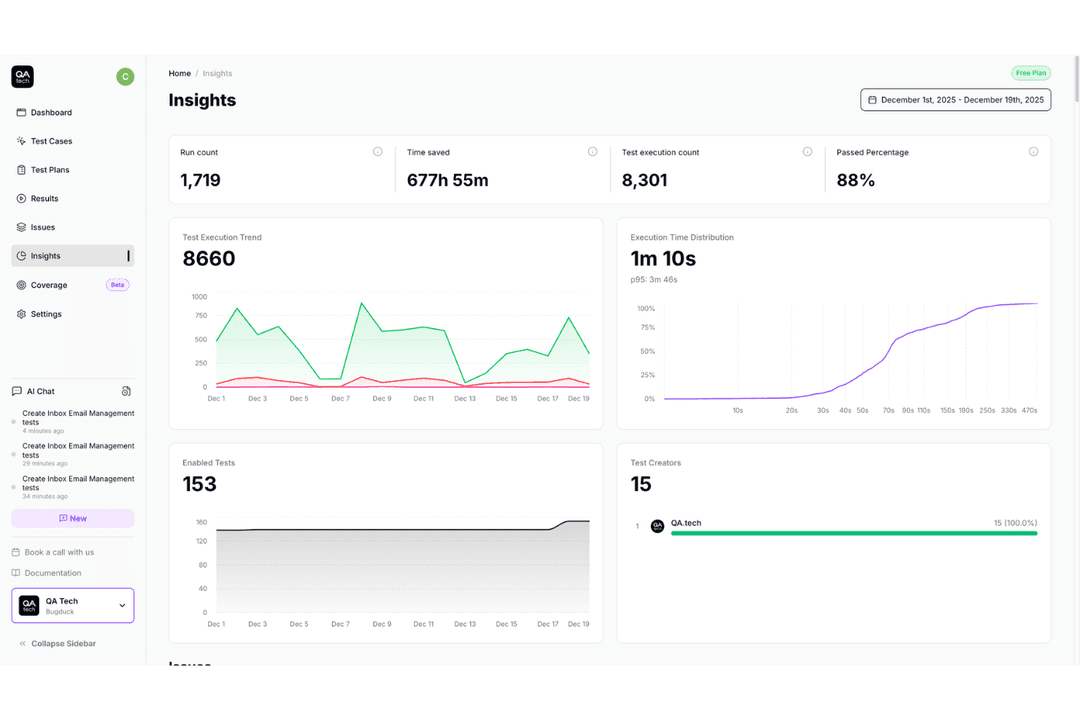
4.8/5
- Free demo available
- Pricing upon request
QA Wolf
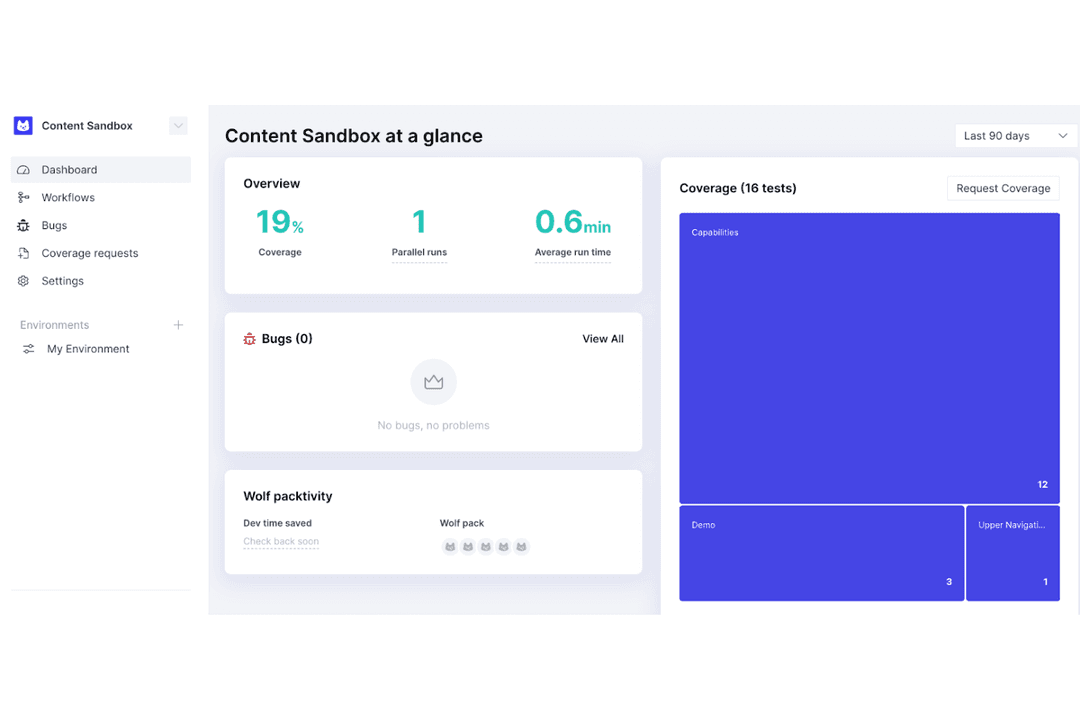
4.9/5
- Free demo available
- From 1¢/AI credit
Waarom u onze softwareaanbevelingen kunt vertrouwen
6,700+
Reviews
20
Industry experts
16+
Evaluation factors
14
Years
Ons team test en beoordeelt software sinds 2012. Als technologieleiders weten we zelf hoe moeilijk — en belangrijk — het is om de juiste software te kiezen.
Voor deze gids hebben we tools geëvalueerd met behulp van praktijktests en onafhankelijk onderzoek, waarbij we tools beoordeeden aan de hand van onze selectiecriteria.
Onze reviews weerspiegelen ons menselijke redactionele oordeel, geen verkooppraatje.
Deskundige beoordelaars:
- Paulo Gardini MiguelTechnisch directeur
 Tim FisherVP AI
 Gabriel RosasTech Lead & software-architect
 Christhian GruhnTech Lead & platformarchitect

| QA.tech | QA Wolf | |
|---|---|---|
| Free Trial | Free demo available | Free demo available |
| Pricing | Pricing upon request | From 1¢/AI credit |
QA.tech versus QA Wolf: prijzen en verborgen kosten
QA.tech en QA Wolf hanteren beide prijsmodellen op basis van een offerte, maar geven op verschillende manieren vorm aan hun waarde. QA.tech biedt Starter-, Growth- en Enterprise-abonnementen die schalen op basis van gebruikers, parallelle testruns, omgevingen, integraties, beveiligingsvereisten en ondersteuningsniveau. QA Wolf hanteert daarentegen een prijsmodel op basis van testdekking dat gekoppeld is aan zijn beheerde QA-service. Daarbij zijn het platform, de testinfrastructuur en QA-ondersteuning inbegrepen, in plaats van alleen toegang tot de software.
Houd bij het vergelijken van de kosten rekening met de mate waarin je wilt dat je team eigenaar is van het testen. QA.tech kan een goede keuze zijn voor teams die AI-gestuurd testen willen opschalen binnen hun engineeringworkflow, terwijl de prijsstelling van QA Wolf een meer beheerd servicemodel weerspiegelt. Houd rekening met de frequentie van releases, de gewenste testdekking, de interne QA-middelen en de ondersteuningsvereisten voordat je een keuze maakt.
| QA.tech | QA Wolf | |
|---|---|---|
| A/B Testing | No | No |
| API | Yes | Yes |
| Automated Testing | Yes | No |
| Browser Compatibility Testing | Yes | No |
| Bug Tracking | Yes | Yes |
| Calendar Management | No | Yes |
| CI/CD Integration | Yes | No |
| Dashboard | Yes | Yes |
| Data Export | Yes | Yes |
| Data Import | Yes | Yes |
| Data Visualization | Yes | Yes |
| Developer Tools | Yes | No |
| External Integrations | Yes | Yes |
| History/Version Control | Yes | No |
| Manual Testing | No | No |
| Multi-User | Yes | Yes |
| Notifications | Yes | Yes |
| Performance Testing | No | No |
| Regression Testing | Yes | No |
| Scheduling | Yes | Yes |
| Status Notifications | Yes | No |
| Third-Party Plugins/Add-Ons | Yes | Yes |
| Integratie | QA.tech | QA Wolf |
|---|---|---|
| IntegratieGitHub | QA.tech✅ | QA Wolf✅ |
| IntegratieGitLab | QA.tech✅ | QA Wolf✅ |
| IntegratieSlack | QA.tech✅ | QA Wolf✅ |
| IntegratieJira | QA.tech✅ | QA Wolf✅ |
| IntegratieCircleCI | QA.tech✅ | QA Wolf❌ |
| IntegratieAzure DevOps | QA.tech✅ | QA Wolf✅ |
| IntegratieMicrosoft Teams | QA.tech✅ | QA Wolf✅ |
| IntegratieLinear | QA.tech✅ | QA Wolf✅ |
| IntegratieTestRail | QA.tech❌ | QA Wolf✅ |
| IntegratieAPI | QA.tech✅ | QA Wolf✅ |
Zowel QA.tech als QA Wolf integreert met veelgebruikte ontwikkel-, samenwerkings- en CI/CD-tools om teams te helpen testen te verbinden met hun bestaande workflows. QA.tech biedt een bredere directe integratiedekking voor engineeringpijplijnen en issuebeheer, terwijl QA Wolf zich richt op het verbinden van zijn beheerde testworkflow met de tools die teams al gebruiken om releases, bugs en de voortgang van de ontwikkeling bij te houden.
| Factor | QA.tech | QA Wolf |
|---|---|---|
| FactorGegevensversleuteling | QA.techAES-256-versleuteling voor gegevens in rust en TLS 1.2/1.3-versleuteling tijdens overdracht. | QA WolfVersleutelt gegevens in rust en tijdens overdracht met moderne beveiligingsprotocollen. |
| FactorNaleving van regelgeving | QA.techGetoetst volgens SOC 2 Type II, voldoet aan de AVG, gegevensopslag uitsluitend in de EU, met ISO 27001 op de routekaart. | QA WolfVoldoet aan SOC 2 Type II en HIPAA, met beschikbare auditrapporten. |
| FactorUptimegarantie | QA.techOndersteuning op basis van een SLA, beheerde parallelle testuitvoering en betrouwbaarheidsengineering voor grote ondernemingen. | QA WolfArchitectuur met hoge beschikbaarheid, automatische omschakeling bij uitval en realtimebewaking. |
| FactorToegangsbeheer | QA.techVerplichte MFA, SAML SSO, rolgebaseerde toegangscontroles en beheerde teamtoegang. | QA WolfRolgebaseerde toegang, toegangscontroles volgens het principe van minimale rechten, gebruikersbeoordelingen en SSO via WorkOS. |
| FactorBeveiligingsbeheer | QA.techVolledig ISMS, beveiligingsbeoordelingen en tests zonder toegang tot de broncode. | QA WolfGegevensclassificatie, bewaarbeleid en procedures voor het reageren op datalekken. |
Beide platforms bieden een sterke beveiligingsbasis, waaronder versleuteling, toegangsbeheer, SSO en nalevingsprogramma's. QA.tech onderscheidt zich met een SOC 2 Type II-attestatie, naleving van de AVG, gegevensopslag uitsluitend in de EU en testen zonder toegang tot de broncode. QA Wolf combineert SOC 2 Type II- en HIPAA-naleving met privacycontroles voor gegevens en betrouwbaarheidspraktijken die de beheerde QA-service ondersteunen.
De meeste softwareteams beschikken met beide platforms over een sterke beveiligingsdekking. QA.tech kan goed passen bij teams die prioriteit geven aan autonoom testen zonder toegang tot de broncode, terwijl QA Wolf geschikt kan zijn voor teams die op zoek zijn naar beheerde QA-ondersteuning met strenge nalevingsvereisten.
| Factor | QA.tech | QA Wolf |
|---|---|---|
| FactorGebruikersinterface | QA.techConversationele werkruimte voor het maken, bewerken en beheren van tests met AI-agents. | QA WolfPlatforminterface met voortdurende samenwerking met QA-technici en gedeelde kanalen. |
| FactorIntroductie | QA.techBegeleide introductie met implementatiespecialisten, workshops en ondersteuning bij de configuratie. | QA WolfBegeleide introductie met QA-technici die helpen testdekking op te bouwen en werkstromen in te richten. |
| FactorTestonderhoud | QA.techAI-agents beheren tests op basis van doelen en applicatiecontext in plaats van vaste scripts. | QA WolfTests worden gemaakt en onderhouden door het team van QA Wolf met behulp van AI en menselijk toezicht. |
| FactorOndersteuning | QA.techE-mail, Slack-/Teams-kanalen, implementatiespecialisten en ondersteuningsopties voor grote ondernemingen. | QA WolfEen geïntegreerd QA-team dat doorlopende ondersteuning en testonderhoud biedt. |
| FactorLeercurve | QA.techTeams moeten zich aanpassen aan het aansturen van AI-agents in plaats van handmatig tests te schrijven. | QA WolfSamenwerkingsmodel met gedeelde kanalen en voortdurende ondersteuning door het QA-team. |
QA.tech en QA Wolf zijn beide ontworpen om tests van begin tot eind eenvoudiger te maken, maar op verschillende manieren. QA.tech vermindert handmatig testwerk met autonome AI-agents die tests maken en onderhouden op basis van de applicatiecontext, terwijl QA Wolf de interne QA-inspanning vermindert door zijn platform te combineren met een toegewijd QA-team.
Als je een agentgestuurde aanpak wilt waarbij testen binnen je ontwikkelworkflow blijft, kan QA.tech de betere keuze lijken. Als je de voorkeur geeft aan een volledig beheerd, samenwerkend testproces, biedt QA Wolf meer ondersteuning van QA-technici.
QA.tech
- AI agents automate end-to-end test creation and execution
- Strong CI/CD integrations with automated pull request testing
- Parallel test execution speeds up regression testing workflows
- Limited cross-browser testing beyond Chromium
- Tests cannot be exported as code-based scripts
- Teams may need time to adapt to autonomous testing workflows
QA Wolf
- AI generates and maintains tests, reducing manual testing and QA workload significantly.
- 100% parallel test execution delivers fast results within minutes.
- Platform-enabled service eliminates the need for in-house automation expertise.
- Less control over test logic compared to fully in-house frameworks.
- Requires trust in the external team to manage critical QA processes.
- Onboarding may require coordination and an initial knowledge transfer effort.
QA.tech
- B2B SaaS CompaniesSaaS companies can use QA.tech to maintain test coverage across frequent product releases and changing application workflows.
- Software Development CompaniesDevelopment teams can automate end-to-end testing and integrate quality checks directly into CI/CD and pull request workflows.
- Fintech CompaniesFintech companies can validate critical user flows involving accounts, transactions, and complex authentication requirements.
- Healthtech PlatformsHealthtech platforms can automate regression testing as their applications, features, and user workflows continue to evolve.
- HR Tech and Recruiting PlatformsHR and recruiting platforms can test multi-step processes like onboarding, profiles, and user management across different roles.
- Ecommerce BusinessesEcommerce businesses can validate important customer journeys like account flows and checkout experiences during frequent updates.
QA Wolf
- High-Growth SaaS TeamsRapid release cycles benefit from fast, parallel test execution and continuous maintenance across evolving product features.
- Product-Led Companies Shipping FrequentlyRun full regression suites on every deploy without slowing down engineering velocity or delaying feature rollouts.
- Teams Struggling with Flaky or Broken TestsQA Wolf handles ongoing test maintenance, eliminating common reliability issues and reducing debugging time for engineers.
- Companies Without Dedicated QA Automation EngineersOffload test creation, debugging, and maintenance to a fully managed QA team without hiring specialized resources.
- Multi-Platform Products (Web + Mobile)Supports complex workflows across web, iOS, and Android with shared coverage and consistent testing across environments.
- Engineering TeamsReduce QA time from hours to minutes with fully parallel test infrastructure and faster feedback loops for developers.
Wie zou QA.tech moeten gebruiken en wie QA Wolf?
Als je tests van begin tot eind wilt opschalen en tegelijkertijd testwerkstromen binnen je engineeringteam wilt houden, zou ik voor QA.tech kiezen. Het past goed als je al CI/CD-pipelines gebruikt en autonome AI-agents wilt die je applicatiecontext begrijpen, tests maken op basis van gebruikersdoelen en wijzigingen valideren zonder afhankelijk te zijn van traditionele testscripts. Als je meer testdekking wilt bereiken en tegelijkertijd het handmatig maken en onderhouden van tests wilt verminderen, sluit QA.tech goed aan bij dat doel.
QA Wolf is beter geschikt als je een beheerde aanpak voor QA-automatisering wilt zonder het volledige testproces intern te hoeven opbouwen. Het platform combineert AI-gestuurd testen met een toegewijd QA-team dat namens jou tests maakt, uitvoert, verifieert en onderhoudt. Als je de voorkeur geeft aan een servicemodel met menselijk toezicht en tegelijkertijd inzicht wilt houden in resultaten en dekking, sluit QA Wolf beter aan bij die workflow.
| QA.tech | QA Wolf | |
|---|---|---|
| Execution Model | QA.tech Runs agent-driven testing workflows with parallel execution and PR validation. | QA Wolf Provides fully managed cloud execution with parallel test runs and QA review. |
| Team Involvement | QA.tech Requires teams to define testing goals and guide AI agents as part of their workflow. | QA Wolf Reduces internal QA involvement by providing engineers who manage testing operations. |
| Test Authoring | QA.tech Uses autonomous AI agents that create and run tests based on user goals and application context. | QA Wolf Combines AI testing workflows with a managed QA team that creates and maintains tests. |
| Test Framework | QA.tech Tests are created and maintained through QA.tech’s agent-based testing system using application context. | QA Wolf Uses open-source Playwright and Appium tests that can be exported. |
| Test Ownership | QA.tech Teams guide AI agents and manage testing within their engineering workflows. | QA Wolf QA Wolf engineers handle test creation, verification, and ongoing maintenance. |
| Cloud-Based Platform | Both provide cloud-based test execution to help teams run and manage end-to-end testing workflows. |
|---|---|
| Development Integrations | Both connect with common development, CI/CD, and collaboration tools to support existing engineering workflows. |
| Parallel Test Runs | Both support parallel test execution to help teams shorten feedback cycles and speed up regression testing. |
| Security Controls | Both provide security features such as encryption, access management options, and SOC 2 compliance for managing testing data. |
| Test Reporting | Both provide test results, failure details, and reporting tools to help teams investigate issues and track testing outcomes. |