


ThreatLocker vs. SentinelOne: Confronto e Recensioni degli Esperti per il 2026
Scegliere la giusta piattaforma di sicurezza per gli endpoint è fondamentale mentre le organizzazioni cercano un equilibrio fra prevenzione, rilevamento e complessità operativa. Analizzo ThreatLocker e SentinelOne per aiutarti a decidere la soluzione migliore per te.

Recensiamo gli strumenti in modo indipendente e le commissioni ci aiutano a finanziare i nostri test. Consulta la nostra politica sulla trasparenza, la nostra metodologia, oppure suggerisci uno strumento.
Se stai confrontando ThreatLocker e SentinelOne in questo momento, probabilmente senti la pressione dei titoli sui ransomware e delle domande del consiglio di amministrazione sul rischio informatico. Gli episodi confermati di ransomware continuano a crescere e spesso il recupero dei dati costa più del riscatto stesso—quindi scegliere una protezione degli endpoint con il giusto software di sicurezza informatica non è più un semplice optional ma una decisione fondamentale per la continuità aziendale.
In questo articolo ti guiderò nel confronto tra l’approccio Zero Trust a negazione predefinita di ThreatLocker e l’EDR autonomo e guidato dall’IA di SentinelOne, spiegando cosa significa davvero per le operazioni quotidiane di sicurezza, il budget e la capacità del tuo team. Capirai dove ciascuna piattaforma si distingue, dove mostra i suoi limiti e in quali scenari una soluzione prevale sull’altra, così potrai fare una scelta sicura e difendibile per la tua organizzazione.
ThreatLocker


4.8/5
- 30-day free trial + free demo available
- Pricing upon request
SentinelOne
4.7/5
- Free demo available
- From $179.99/endpoint (billed annually)
Perché fidarsi dei nostri consigli sui software
6,700+
Reviews
20
Industry experts
16+
Evaluation factors
14
Years
Il nostro team testa e recensisce software dal 2012. In quanto leader tecnologici noi stessi, sappiamo quanto sia difficile — e importante — scegliere il software giusto.
Per questa guida, abbiamo valutato gli strumenti attraverso test praticie ricerche indipendenti, assegnando un punteggio agli strumenti in base ai nostri criteri di selezione.
Le nostre recensioni riflettono il nostro giudizio editoriale umano, non un discorso di vendita.
Revisori esperti:
- Paulo Gardini MiguelDirettore tecnico
 Tim FisherVP dell'IA
 Gabriel RosasTech Lead e architetto software
 Christhian GruhnTech Lead e architetto della piattaforma

| ThreatLocker | SentinelOne | |
|---|---|---|
| Free Trial | 30-day free trial + free demo available | Free demo available |
| Pricing | Pricing upon request | From $179.99/endpoint (billed annually) |
Prezzi e costi nascosti di ThreatLocker vs. SentinelOne
ThreatLocker utilizza un modello di abbonamento personalizzato basato sull’ambiente anziché sul prezzo pubblico per endpoint. I preventivi vengono creati attorno a fattori come il numero di endpoint, il panorama applicativo e i controlli Zero Trust richiesti come allowlisting delle applicazioni e ringfencing. Capacità aggiuntive, come il controllo di rete o la gestione delle patch, sono solitamente incluse nel piano complessivo invece che aggiunte successivamente come spese a sorpresa.
SentinelOne offre prezzi pubblici annuali per endpoint, suddivisi in livelli come Core, Control, Complete, Commercial ed Enterprise. I costi aumentano man mano che si sale di livello per accedere a funzionalità come la conservazione estesa dei dati, il threat hunting gestito, i servizi MDR e la protezione dei carichi di lavoro in cloud.
Il punto di forza di ThreatLocker è l’applicazione del modello Zero Trust, che opera su una logica di negazione predefinita e consente solo software e azioni approvati esplicitamente. I suoi controlli principali includono Allowlisting, Ringfencing, Controllo dell’Elevazione, Controllo dello Storage e Controllo della Rete per determinare cosa può essere eseguito, come si comporta e a cosa può accedere, limitando così l’abuso living-off-the-land e i movimenti laterali non autorizzati, abilitando al contempo controlli tecnici di conformità veri e propri.
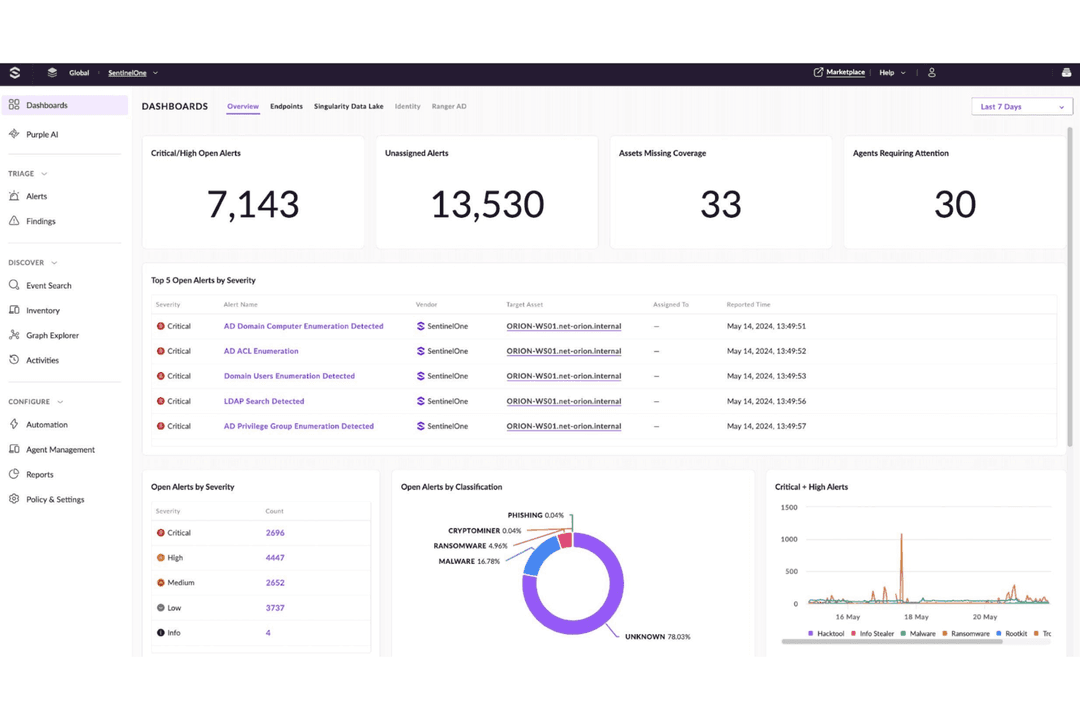
La piattaforma Singularity di SentinelOne si basa su EPP/EDR/XDR guidati dall’intelligenza artificiale, impiegando motori IA statici e comportamentali per individuare e rispondere autonomamente a minacce note e sconosciute. Le sue capacità includono prevenzione, rilevamento e rimedio automatico in tempo reale sugli endpoint (e i livelli avanzati estendono il supporto a cloud, identità e servizi gestiti), con tecnologie come Storyline che collega attività sospette correlate per offrire un contesto più ricco. Singularity offre anche funzionalità di rollback e forensi per ripristinare sistemi colpiti da ransomware o attacchi distruttivi senza interventi manuali.
| ThreatLocker | SentinelOne | |
|---|---|---|
| 2-Factor Authentication | No | Yes |
| Access Management | No | Yes |
| Anti-Virus | No | Yes |
| API | Yes | Yes |
| Audit Management | Yes | Yes |
| Audit Trail | Yes | Yes |
| Batch Permissions & Access | No | Yes |
| Compliance Tracking | No | Yes |
| Dashboard | No | Yes |
| Data Export | No | Yes |
| Data Import | No | Yes |
| DDoS Protection | No | Yes |
| External Integrations | Yes | Yes |
| File Sharing | Yes | Yes |
| File Transfer | No | Yes |
| Firewall | No | Yes |
| Incident Management | No | Yes |
| Malware Protection | Yes | Yes |
| Multi-User | Yes | Yes |
| Notifications | Yes | Yes |
| Password & Access Management | No | Yes |
| Policy Management | Yes | Yes |
| Real-time Alerts | Yes | Yes |
| Report & Compliance | Yes | Yes |
| Risk Assessment | No | Yes |
| Security Migration | No | Yes |
| Threat Detection | Yes | Yes |
| Workflow Management | Yes | Yes |
| Strumento | ThreatLocker | SentinelOne |
| ConnectWise | ✅ | ✅ |
| Datto RMM | ✅ | ✅ |
| Kaseya | ✅ | ✅ |
| N-able | ✅ | ✅ |
| Autotask | ✅ | ✅ |
| ServiceNow | ✅ | ✅ |
| Splunk | ✅ | ✅ |
| Microsoft Sentinel | ✅ | ✅ |
| Cribl Stream | ❌ | ✅ |
| Okta | ✅ | ✅ |
| Azure AD | ✅ | ✅ |
| Jira | ✅ | ✅ |
| Elastic | ✅ | ✅ |
Entrambe le piattaforme si integrano bene con una moderna SecOps, ma con filosofie diverse: ThreatLocker punta a una forte integrazione con gli strumenti MSP come RMM e PSA così da poter applicare politiche Zero Trust all’interno dei flussi di lavoro già esistenti, mentre SentinelOne si inserisce in ecosistemi XDR e AI SIEM più ampi, offrendo flussi dati più ricchi verso SIEM, SOAR e pipeline cloud-native, ideale se vuoi costruire un’architettura di sicurezza più centralizzata e guidata dai dati analitici.
| Fattore | ThreatLocker | SentinelOne |
| Protezione dei dati e Crittografia | Crittografa i dati in transito e a riposo; applica accessi minimi privilegiati ad applicazioni e archiviazione tramite controlli Zero Trust. | Crittografa i dati in transito e a riposo con solidi controlli di accesso su endpoint e carichi di lavoro cloud. |
| Supporto alla Conformità | Aiuta a mappare i controlli su NIST, CIS, HIPAA, PCI, ISO 27001 e SOC 2 tramite policy e controlli di configurazione. | Supporta HIPAA, SOC 2, PCI DSS, GDPR e altri standard; offre guide e strumenti per audit e conformità cloud. |
| Controllo Accessi e Zero Trust | Modello Zero Trust "nega come impostazione predefinita" con enforcement granulare di policy su applicazioni, archiviazione e rete. | Protezione di endpoint e identità allineata a Zero Trust con intelligenza comportamentale e controlli di policy dettagliati. |
| Registrazione Audit e Visibilità | Log dettagliati di esecuzione applicativa, decisioni sulle policy e accesso ai dati per indagini e audit. | Profonda visibilità e telemetria per evidenze SOC 2 e HIPAA, threat hunting e forensi su endpoint e cloud. |
| Affidabilità e Disponibilità | Pagina pubblica di stato mostra uptime del portale costantemente superiore al 99,9% negli ultimi mesi. | Disponibilità enterprise garantita da infrastruttura cloud globale e controlli allineati agli standard TSC per la disponibilità. |
ThreatLocker applica un modello Zero Trust rigoroso con negazione predefinita e controlli granulari che supportano gli sforzi di conformità tramite la generazione di log di audit chiari e l’applicazione di salvaguardie tecniche allineate a framework come NIST, HIPAA e ISO 27001. La piattaforma Singularity basata sull’AI di SentinelOne offre visibilità e protezione più ampia su endpoint, carichi cloud e identità, con telemetria e reportistica centralizzate che aiutano le organizzazioni a raccogliere evidenze di audit per framework come SOC 2, HIPAA e PCI-DSS anche in ambienti complessi.
| Fattore | ThreatLocker | SentinelOne |
| Interfaccia Admin | L’interfaccia di ThreatLocker è intuitiva e semplice una volta definite le policy. | Dispone di una console moderna e unificata; potente ma può risultare complessa per utenti meno tecnici. |
| Configurazione e Deploy | Agente leggero e modalità di apprendimento semplificano la distribuzione e la definizione della baseline delle policy. | Un unico agente per endpoint, cloud e identità semplifica il deployment su vaste aree aziendali. |
| Esperienza di Onboarding | Onboarding guidato ed efficace con “learning mode” e frequenti check-in di successo da parte del team ThreatLocker. | Offre onboarding e formazione strutturati ma può richiedere più affinamenti per le funzionalità avanzate. |
| Gestione Quotidiana | Il workflow basato su policy è semplice da modificare ma può aumentare il carico amministrativo in ambienti molto dinamici. | Alert centralizzati e automazione riducono il triage manuale, anche se le funzionalità avanzate di threat hunting aggiungono complessità. |
| Qualità del Supporto | Spesso lodato per il supporto estremamente rapido e diretto: spesso bastano pochi minuti per parlare con un ingegnere. | Supporto e documentazione molto apprezzati, anche se la reattività è leggermente inferiore rispetto a ThreatLocker. |
Nella pratica, molti team trovano ThreatLocker accessibile una volta completata la sintonizzazione iniziale delle policy, soprattutto se apprezzano l’onboarding guidato, l’accesso rapido all’assistenza e un’interfaccia orientata alle policy. SentinelOne offre una console raffinata e unificata che si adatta bene a team di sicurezza più grandi o maturi, ma il suo ampio set di funzionalità e la caccia alle minacce comportano di solito una curva di apprendimento più ripida prima di sfruttarne appieno il valore.
ThreatLocker
- Delivers strong prevention against ransomware and zero-days.
- Granular control over applications, storage, and network access.
- Detailed logging supports compliance, audits, and forensic investigations.
- Steep initial learning curve and tuning period, requires upfront policy work to avoid blocking legitimate apps.
- Not a set-and-forget security solution for most environments.
- End-user friction arises from strict controls that block routine software installs.
SentinelOne
- AI-driven detection stops advanced threats quickly
- Automated rollback restores endpoints after ransomware attacks
- Minimal system impact on user devices
- Higher cost than many competitors
- Occasional false positives require manual review
- Console outages reported during updates
ThreatLocker
- MSPs Managing Multiple ClientsCentralized cloud portal and RMM integrations let you deploy and tune policies across diverse environments without constant per-client tweaks.
- Healthcare OrganizationsGranular storage and elevation controls protect patient data on USBs, shares, and apps while meeting HIPAA compliance through audit trails.
- Educational InstitutionsLocks down student devices and servers against unauthorized software, reducing risks from unvetted apps in shared environments.
- Midmarket EnterprisesBalances strong prevention with learning modes to build allowlists quickly, minimizing disruption during rollout.
- High-Compliance IndustriesRingfencing and network controls limit lateral movement and data exfiltration, simplifying audits with detailed enforcement logs.
- Remote/Hybrid WorkforcesDynamic network ACLs secure traveling endpoints by whitelisting specific IPs or keywords without VPN overhead.
SentinelOne
- Healthcare ProvidersSentinelOne's automated response and compliance features help protect sensitive patient data.
- Financial ServicesReal-time threat detection supports strict regulatory requirements and high-value assets.
- Remote WorkforcesCloud-based management and low device impact suit distributed teams.
- Education InstitutionsAutomated rollback and easy deployment help protect large, diverse device fleets.
- IT DepartmentsCentralized console and broad OS support simplify endpoint management.
- Mid-Size EnterprisesScalable licensing and automation reduce the need for large security teams.
Chi dovrebbe usare ThreatLocker e chi dovrebbe usare SentinelOne?
ThreatLocker è adatto a team che desiderano controlli rigorosi con negazione predefinita e una governance applicativa solida, come MSP, organizzazioni regolamentate e gruppi IT che gestiscono sistemi legacy o molti piccoli tenant. L’approccio all’allowlisting e la focalizzazione sulle policy aiutano a ridurre la superficie di attacco e facilitano la raccolta di prove di conformità senza la necessità di un grande SOC.
SentinelOne è indicato per organizzazioni più grandi o orientate al cloud che hanno bisogno di soluzioni EPP/EDR/XDR avanzate e alimentate da AI su endpoint, identità e carichi cloud. La piattaforma unificata Singularity è ideale per team che desiderano rilevamento automatizzato, risposta e ricerca su vasta scala, con telemetria approfondita e visibilità centralizzata invece che la gestione allowlist applicativa per singolo elemento.
| ThreatLocker | SentinelOne | |
|---|---|---|
| Control | ThreatLocker ThreatLocker gives you surgical control over applications and storage, helping dictate which processes run, what network connections they make, and how the access data—particularly when you’re looking to lock down critical servers or specialized applications with strict compliance requirements. | SentinelOne SentinelOne covers more territory, from laptops to servers to cloud workloads, while pulling in security telemetry from across your tech stack with a unified view that gives you the comprehensive oversight you need. |
| MSP Compatibility | ThreatLocker ThreatLocker’s multi-tenant console lets MSPs handle dozens of clients in one place, with plug-and-play integrations, saving teams hours of management time every week. | SentinelOne SentinelOne caters to enterprises with full security teams with SOC analysts loving its API-first design that plugs right into multiple tools, beefing up investigations and putting response playbooks on autopilot. |
| Policy Configuration | ThreatLocker ThreatLocker requires users to invest time building policies, approving legitimate apps, and managing exceptions—particularly if users are constantly installing new software or your dev team pushes frequent updates. | SentinelOne With SentinelOne, automation reduces manual blocking decisions, yet you’ll invest more effort in triaging alerts, tuning detection rules, and using hunting features to get full value from the platform. |
| Zero Trust | ThreatLocker ThreatLocker uses a Zero Trust, default-deny model that prevents threats by only allowing approved applications and behaviors to run, blocking malicious code before execution. | SentinelOne SentinelOne relies on AI-driven behavioral analysis to prevent and detect threats, focusing on identifying and automatically stopping malicious activity in real time rather than enforcing strict default-deny policies. |
| Agent Architectures | Both offer lightweight agents that protect devices, even when they’re offline, then sync with the cloud when reconnected, protecting remote teams from anywhere they work with no system slowdowns. |
|---|---|
| Behavior Visibility | Each platform provides detailed visibility into application and process behavior, helping teams understand what is running and why actions are allowed or blocked. |
| Compliance | Both automatically track and document security events across major compliance frameworks, with detailed records that satisfy the most thorough auditors. |
| Endpoint Protection | Both go beyond detection to proactively block ransomware, malware, and zero-day attacks across your devices. |
| Real-Time Protection | Both respond to emerging threats, automatically isolating compromised systems and blocking lateral movement. |