
Recensione Sauce Labs: Pro, Contro, Caratteristiche e Prezzi Spiegati
Se desideri test cross-browser affidabili su larga scala, Sauce Labs si distingue—ma non è l’opzione più economica né la più semplice. Ecco la mia opinione su dove brilla davvero (e dove invece manca).

Recensiamo gli strumenti in modo indipendente e le commissioni ci aiutano a finanziare i nostri test. Consulta la nostra politica sulla trasparenza, la nostra metodologia, oppure suggerisci uno strumento.
Sauce Labs is an end to end testing tool for engineering teams that run automated tests across browsers, devices, and operating systems at scale. It's worth a close look if your team runs large test suites in CI/CD pipelines and needs detailed visibility into test failures and flakiness. If you're deciding between Sauce Labs and BrowserStack, Sauce Labs goes further on test observability and pipeline orchestration. BrowserStack covers cross-browser testing well, but Sauce Labs gives you more when diagnosing what's breaking and why.
Sauce Labs Evaluation Summary
4.3/5
- From $39/month (billed annually)
- 28-day free trial + free demo available
Perché fidarsi dei nostri consigli sui software
6,700+
Reviews
20
Industry experts
16+
Evaluation factors
14
Years
Il nostro team testa e recensisce software dal 2012. In quanto leader tecnologici noi stessi, sappiamo quanto sia difficile — e importante — scegliere il software giusto.
Per questa guida, abbiamo valutato gli strumenti attraverso test praticie ricerche indipendenti, assegnando un punteggio agli strumenti in base ai nostri criteri di selezione.
Le nostre recensioni riflettono il nostro giudizio editoriale umano, non un discorso di vendita.
Revisori esperti:
- Paulo Gardini MiguelDirettore tecnico
 Tim FisherVP dell'IA
 Gabriel RosasTech Lead e architetto software
 Christhian GruhnTech Lead e architetto della piattaforma

Sauce Labs Overview
When I compare Sauce Labs to other end-to-end testing tools, I think its real device cloud, wide browser coverage, and strong integration options set it apart. The interface is straightforward, and onboarding is quick for most teams. Pricing can be higher, especially for large-scale mobile testing, but the reliability and support justify it for many. I’d suggest Sauce Labs for teams who need to test across multiple environments without managing hardware. If you’re judging by scalability and ecosystem fit, Sauce Labs is a top pick for enterprise and fast-moving QA teams.
Pros
- Provides extensive cross-browser and real device testing without internal infrastructure.
- Includes rich debugging artifacts like video recordings, logs, and screenshots for failed tests.
- Offers secure testing of private environments via encrypted tunneling and enterprise VPN options.
Cons
- Pricing can become expensive quickly, especially for small teams or limited testing needs.
- Advanced configurations and scaling automation workflows introduce a noticeable learning curve.
- Less direct control over test code when using AI/low-code workflows.
Is Sauce Labs Right For Your Needs?
Who Would be a Good Fit for Sauce Labs?
Sauce Labs is a strong choice for teams that need to test across many browsers, devices, and operating systems without managing their own infrastructure. It’s especially well-suited for organizations with complex web or mobile applications, high release velocity, or strict security requirements. With its combination of cloud infrastructure, AI-driven testing, and end-to-end quality coverage, Sauce Labs works best for teams that need scalable, automated, and enterprise-ready testing workflows.
- Enterprise QA TeamsRun high-volume parallel tests with detailed reporting across complex application workflows.
- Regulated IndustriesSecure, compliant testing infrastructure supports strict regulatory and data protection requirements.
- Mobile App DevelopersTest across thousands of real devices and OS versions to ensure broad compatibility and consistent user experience.
- Ecommerce & High-Traffic PlatformsCatch cross-browser and device issues before impacting revenue or customer experience.
- Global SaaS ProvidersSupport frequent releases with scalable automation across distributed users and environments.
- DevOps & CI/CD-Driven TeamsIntegrate automated testing directly into pipelines to accelerate continuous delivery cycles and reduce deployment risks significantly.
Who Would be a Bad Fit for Sauce Labs?
Sauce Labs is not ideal for teams with simple testing needs, limited budgets, or minimal automation requirements. Its pricing model, platform complexity, and enterprise-focused features can be excessive for smaller teams or those not running tests at scale. Organizations that don’t need cross-device coverage, parallel execution, or advanced AI-driven workflows may find lighter-weight or local testing solutions more practical and cost-effective.
- Small Software Development TeamsLimited testing needs don’t justify platform cost, complexity, and unused enterprise-level testing capabilities.
- Budget-Constrained StartupsHigh pricing and concurrency-based scaling can quickly exceed tight budgets without consistent testing demand.
- Projects With Minimal Browser Coverage NeedsSimple applications targeting few browsers or devices can be tested efficiently with local tools.
- Teams Without Test Automation ExperienceLack of automation expertise makes setup, scaling, and maintenance difficult without internal testing knowledge.
- Teams Requiring Extensive Code-Level CustomizationNot ideal for teams that need full control over test architecture, custom logic, and low-level debugging.
- Local-First Development WorkflowsTeams relying heavily on local environments may find cloud execution slower and less efficient.
La Nostra Metodologia di Recensione
Come Testiamo e Valutiamo gli Strumenti
Abbiamo trascorso anni a costruire, perfezionare e migliorare il nostro sistema di testing e valutazione del software. Il nostro schema è progettato per cogliere le sfumature della selezione software e cosa rende efficace uno strumento, focalizzandosi sugli aspetti critici del processo decisionale.
Di seguito, puoi vedere esattamente come funziona il nostro testing e punteggio su sette criteri. Ci permette di offrire una valutazione imparziale del software basata su funzionalità principali, caratteristiche distintive, facilità d’uso, onboarding, assistenza clienti, integrazioni, recensioni dei clienti e rapporto qualità-prezzo.
Funzionalità Principali (25% del punteggio finale)
Il punto di partenza della nostra valutazione è sempre la funzionalità principale dello strumento. Ha le funzioni e caratteristiche base che ci si aspetta? Alcune di queste caratteristiche sono limitate ai piani tariffari superiori? Fondamentalmente, ci aspettiamo che uno strumento regga il confronto rispetto alle capacità di base dei concorrenti.
Caratteristiche Distintive (25% del punteggio finale)
Successivamente, valutiamo le caratteristiche distintive e non comuni che vanno oltre la funzionalità base tipicamente trovata negli strumenti di questa categoria. Un punteggio alto riflette funzionalità specializzate o uniche che rendono il prodotto più veloce, efficiente o offrono ulteriore valore all’utente.
Valutiamo inoltre quanto sia semplice integrare altri strumenti tipicamente utilizzati nell’infrastruttura tecnologica per espandere la funzionalità e l’utilità del software. Gli strumenti che offrono numerose integrazioni native, connessioni di terze parti e accesso API per creare integrazioni personalizzate ottengono i punteggi migliori.
Facilità d’Uso (10% del punteggio finale)
Consideriamo quanto sia rapido e semplice svolgere i compiti definiti nella funzionalità principale utilizzando lo strumento. Il software con punteggio alto è ben progettato, intuitivo da usare, offre app mobili, fornisce modelli e rende semplici attività relativamente complesse.
Onboarding (10% del punteggio finale)
Sappiamo quanto sia importante l’adozione rapida da parte del team per una nuova piattaforma, quindi valutiamo quanto sia facile imparare e utilizzare uno strumento con formazione minima. Valutiamo quanto velocemente un membro del team possa iniziare a usare lo strumento anche senza esperienza. Soluzioni con punteggio alto indicano che sono richiesti pochi o nessun supporto.
Assistenza Clienti (10% del punteggio finale)
Esaminiamo quanto sia veloce e facile ricevere assistenza e risolvere problemi tramite telefono, live chat o knowledge base. Gli strumenti e le aziende che garantiscono supporto in tempo reale ottengono il miglior punteggio, mentre i chatbot ottengono il peggiore.
Recensioni dei Clienti (10% del punteggio finale)
Oltre ai nostri test e valutazioni, prendiamo in considerazione il net promoter score dei clienti attuali e passati. Valutiamo la probabilità che, data la scelta, selezionerebbero nuovamente lo strumento per la funzionalità principale. Un software con punteggio alto riflette un alto net promoter score da parte dei clienti attuali o passati.
Rapporto Qualità-Prezzo (10% del punteggio finale)
Infine, considerando tutti gli altri criteri, analizziamo il prezzo medio dei piani base rispetto alle funzionalità principali e consideriamo il valore degli altri criteri di valutazione. Il software che offre di più a meno otterrà un punteggio più alto.
Core Features
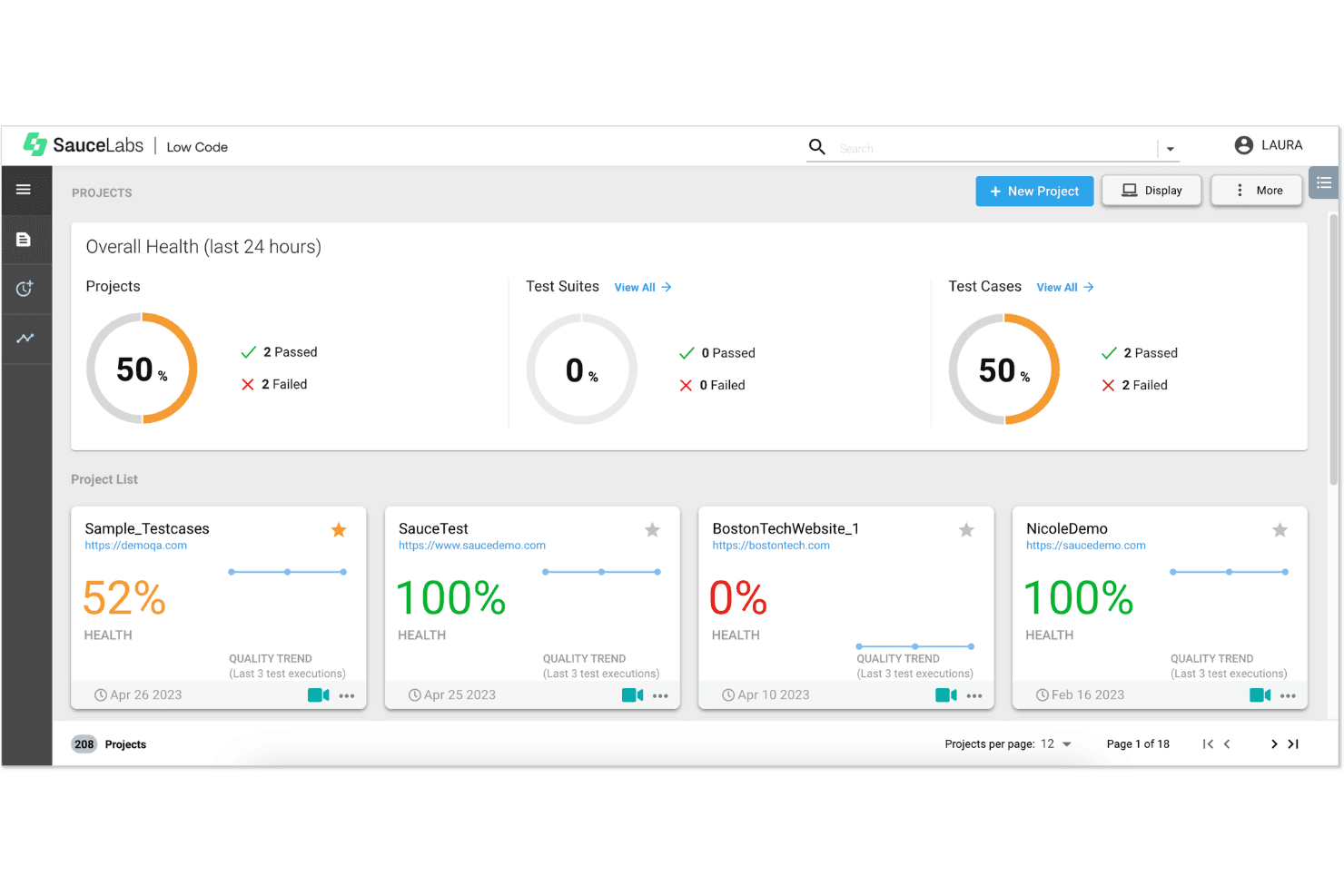
Cross-Browser and Cross-Device Testing
Test web and mobile applications across thousands of browsers, devices, and operating systems reliably.
Real and Virtual Device Cloud
Access real devices, emulators, and simulators without maintaining expensive in-house testing infrastructure.
Parallel Test Execution
Run multiple automated tests simultaneously to accelerate feedback cycles and improve release velocity significantly.
CI/CD Integrations & Framework Support
Integrate seamlessly with CI/CD pipelines and frameworks like Selenium, Appium, Cypress, and Playwright.
Debugging Artifacts and Test Observability
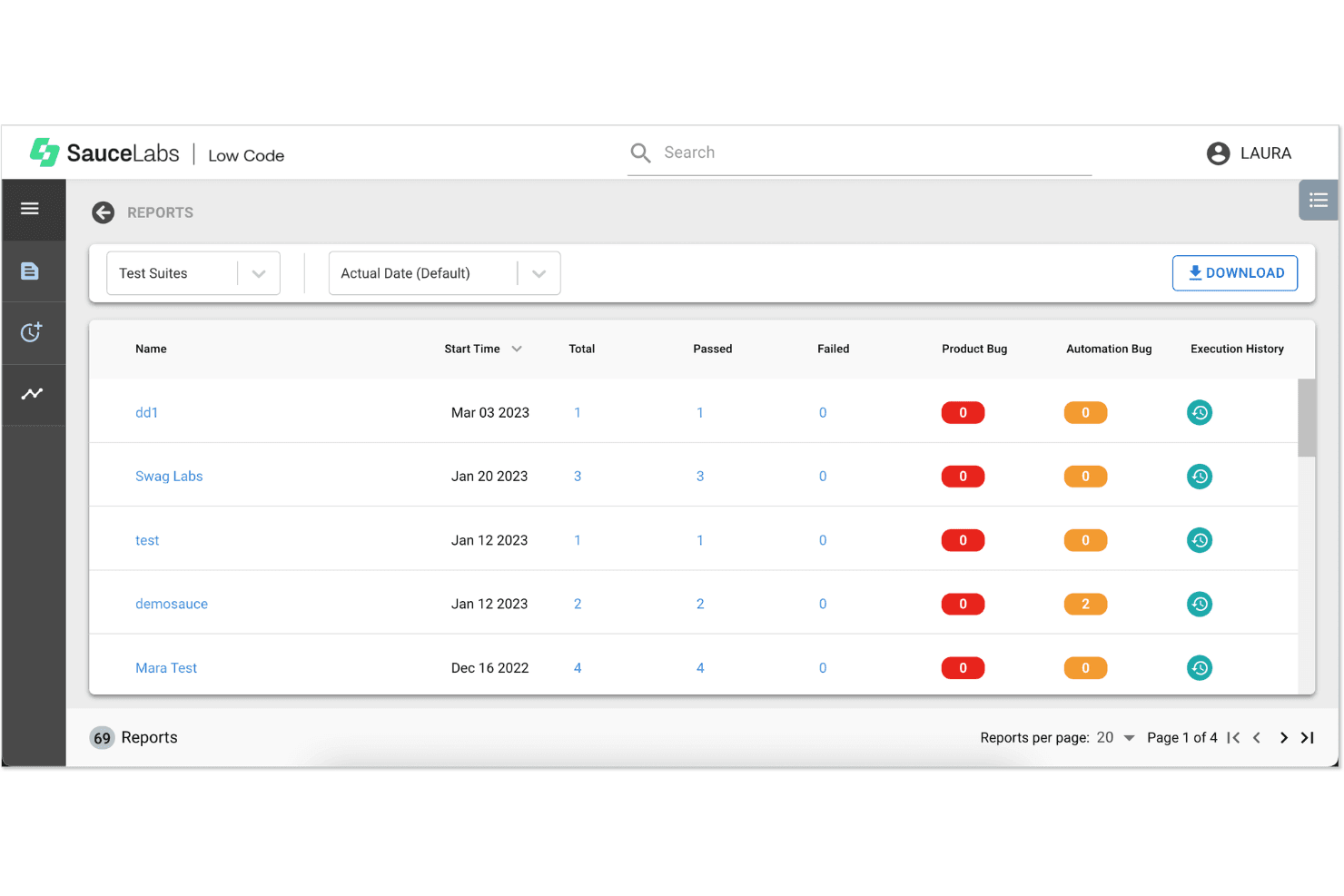
Capture videos, screenshots, logs, and metadata for every test to simplify debugging and collaboration.
Unified Platform Across the SDLC
Combine testing, analytics, distribution, and production monitoring into a single continuous quality platform.
Ease of Use
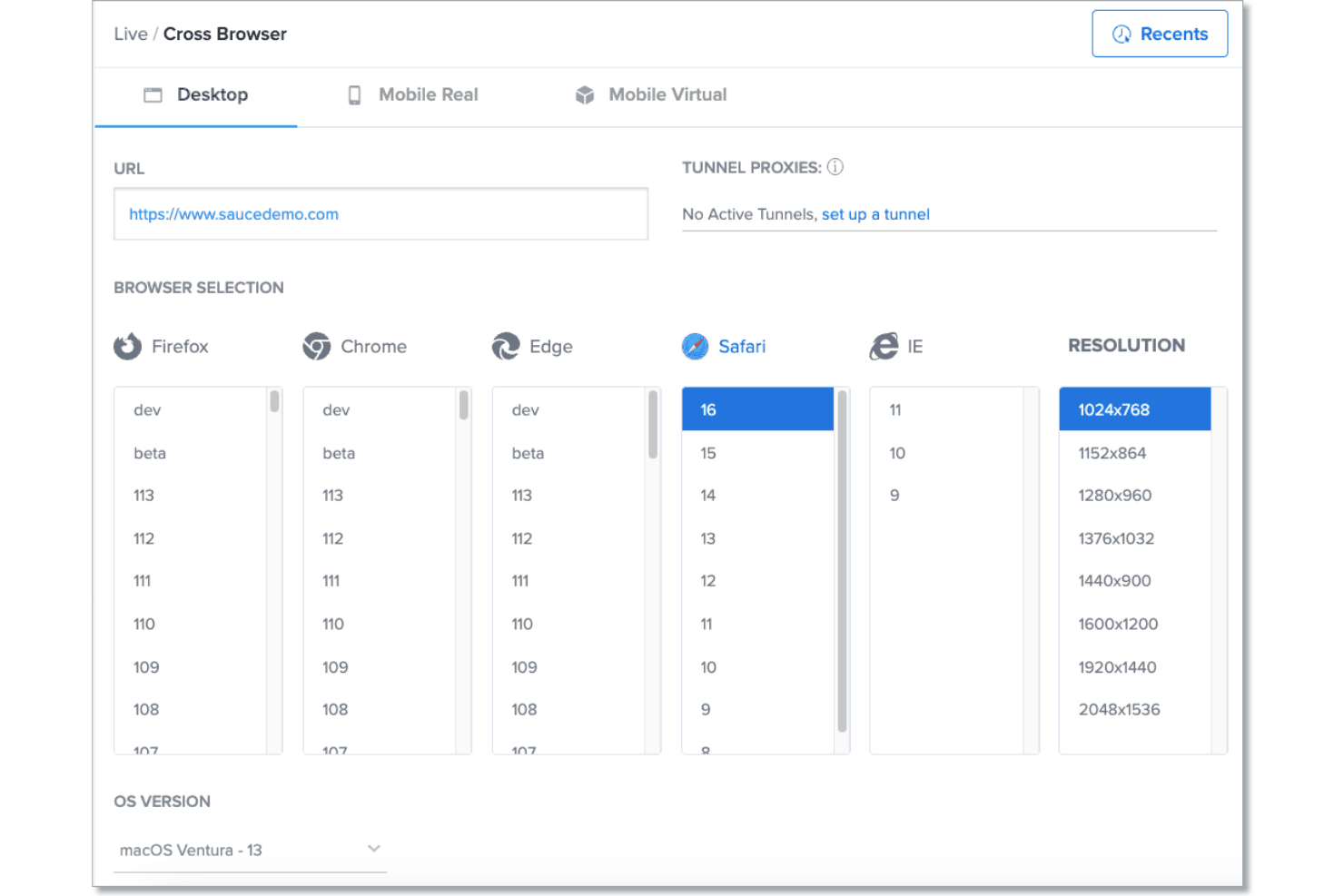
Sauce Labs is user-friendly for both new and experienced QA teams, with a clean dashboard and clear test result reporting. I think the onboarding process is straightforward, and the documentation is thorough, which helps teams get started quickly. Users often mention that setting up parallel tests and accessing real devices is intuitive. However, some advanced features require more technical setup, so teams with complex needs may need extra ramp-up time.
Integrations
Sauce Labs integrates with Jenkins, CircleCI, GitHub Actions, GitLab CI, Azure DevOps, Bitbucket Pipelines, TeamCity, Slack, Jira, and Selenium, among others.
Sauce Labs also offers a REST API for custom integrations and workflow extensions.

Sauce Labs Specs
- A/B Testing: No
- API: Yes
- Automated Testing: Yes
- Browser Compatibility Testing: Yes
- Bug Tracking: Yes
- Calendar Management: No
- CI/CD Integration: Yes
- Dashboard: Yes
- Data Export: Yes
- Data Import: Yes
- Data Visualization: Yes
- Developer Tools: Yes
- External Integrations: Yes
- History/Version Control: Yes
- Manual Testing: Yes
- Multi-User: Yes
- Notifications: Yes
- Performance Testing: Yes
- Regression Testing: Yes
- Scheduling: No
- Status Notifications: Yes
- Third-Party Plugins/Add-Ons: Yes


