Recensione di Resolve 2026: funzionalità di automazione IT, prezzi, vantaggi e svantaggi
Resolve combines IT automation and orchestration to help enterprise IT teams automate service workflows across complex environments. Find out whether Resolve is the right fit for your IT operations and service management needs in my expert review.

Recensiamo gli strumenti in modo indipendente e le commissioni ci aiutano a finanziare i nostri test. Consulta la nostra politica sulla trasparenza, la nostra metodologia, oppure suggerisci uno strumento.
Managing IT services across a hybrid environment gets complicated when workflows span ticketing, monitoring, cloud, and legacy systems. As incidents grow, IT teams need more than alerts and routing—they need automation that can actually act across the stack.
Resolve is an IT automation and service management software designed to orchestrate workflows across ITSM, observability, cloud, networking, and on-premises systems. I see its biggest appeal in complex enterprise environments where teams want to automate remediation and service workflows without being tied to a single ITSM ecosystem.
In this review, I cover Resolve’s features, pricing, strengths, limitations, and best use cases to help you decide if it fits your IT operations.
Resolve Evaluation Summary
5/5
- Pricing upon request
- Free demo available
Perché fidarsi dei nostri consigli sui software
6,700+
Reviews
20
Industry experts
16+
Evaluation factors
14
Years
Il nostro team testa e recensisce software dal 2012. In quanto leader tecnologici noi stessi, sappiamo quanto sia difficile — e importante — scegliere il software giusto.
Per questa guida, abbiamo valutato gli strumenti attraverso test praticie ricerche indipendenti, assegnando un punteggio agli strumenti in base ai nostri criteri di selezione.
Le nostre recensioni riflettono il nostro giudizio editoriale umano, non un discorso di vendita.
Revisori esperti:
- Paulo Gardini MiguelDirettore tecnico
 Tim FisherVP dell'IA
 Gabriel RosasTech Lead e architetto software
 Christhian GruhnTech Lead e architetto della piattaforma

Resolve Overview
In my opinion, Resolve is a strong fit for enterprise IT teams that need automation across complex hybrid environments. Its platform-agnostic orchestration, governed AI agents, deterministic workflows, and broad integrations support incident remediation and service automation across ITSM, cloud, network, and legacy systems. The main tradeoff is that it lacks native ticketing and monitoring.
Pros
- Orchestrates workflows across ITSM, observability, cloud, network, and legacy systems
- Combines deterministic workflows with governed AI agents for more predictable execution
- Uses flat pricing that avoids variable usage- or token-based automation costs
Cons
- No native ticketing, so teams still need a separate ITSM platform
- No built-in monitoring, requiring existing observability tools
- Smaller market presence than larger vendors like ServiceNow and BMC
Is Resolve Right For Your Needs?
Who Would be a Good Fit for Resolve?
Resolve is best suited to organizations with 1,000+ employees and complex hybrid IT environments spanning cloud, on-premises, and legacy systems. I see the strongest fit in enterprises that need automation to work across multiple IT tools rather than stay confined to a single platform.
- Large EnterprisesOrganizations with large, complex IT environments can use Resolve to automate workflows across ITSM, cloud, infrastructure, and legacy systems.
- Financial ServicesBanks and financial institutions can automate incident response, access management, compliance workflows, and other processes where uptime and auditability matter.
- ManufacturingManufacturers can automate service requests, infrastructure remediation, and cross-system workflows across plants, sites, and enterprise systems.
- PharmaceuticalsPharmaceutical companies can use governed automation across regulated environments, including access, incident, infrastructure, and service workflows.
- RetailLarge retailers can automate IT operations across distributed stores, e-commerce systems, infrastructure, and service desks.
- TelecommunicationsTelecom teams managing large networks and hybrid environments can automate operational workflows, remediation, and service processes across multiple systems.
Who Would be a Bad Fit for Resolve?
Resolve is less suitable for smaller organizations with limited IT budgets or relatively simple technology environments. It may also be a poor fit for teams that want native ticketing, monitoring, or a quick self-service setup rather than an automation layer built around existing enterprise systems.
- Small and Midsize BusinessesSMBs with limited IT budgets may struggle to justify a platform designed for larger, more complex environments.
- Organizations With Simple IT StacksCompanies using only a few systems may have little need for Resolve’s cross-platform orchestration capabilities.
- Businesses Seeking an All-in-One ITSM PlatformTeams that want built-in ticketing will still need a separate ITSM system alongside Resolve.
- Organizations Without Existing Monitoring ToolsTeams that need native monitoring or observability will require additional tools, since Resolve does not provide these capabilities itself.
- Companies With Limited Automation NeedsOrganizations with only a few repeatable IT workflows may not get enough value from Resolve’s enterprise automation capabilities.
- Teams Wanting Self-Service SetupResolve’s guided onboarding and integration requirements may be more involved than teams looking for a lightweight, plug-and-play tool need.
La Nostra Metodologia di Recensione
Come Testiamo e Valutiamo gli Strumenti
Abbiamo trascorso anni a costruire, perfezionare e migliorare il nostro sistema di testing e valutazione del software. Il nostro schema è progettato per cogliere le sfumature della selezione software e cosa rende efficace uno strumento, focalizzandosi sugli aspetti critici del processo decisionale.
Di seguito, puoi vedere esattamente come funziona il nostro testing e punteggio su sette criteri. Ci permette di offrire una valutazione imparziale del software basata su funzionalità principali, caratteristiche distintive, facilità d’uso, onboarding, assistenza clienti, integrazioni, recensioni dei clienti e rapporto qualità-prezzo.
Funzionalità Principali (25% del punteggio finale)
Il punto di partenza della nostra valutazione è sempre la funzionalità principale dello strumento. Ha le funzioni e caratteristiche base che ci si aspetta? Alcune di queste caratteristiche sono limitate ai piani tariffari superiori? Fondamentalmente, ci aspettiamo che uno strumento regga il confronto rispetto alle capacità di base dei concorrenti.
Caratteristiche Distintive (25% del punteggio finale)
Successivamente, valutiamo le caratteristiche distintive e non comuni che vanno oltre la funzionalità base tipicamente trovata negli strumenti di questa categoria. Un punteggio alto riflette funzionalità specializzate o uniche che rendono il prodotto più veloce, efficiente o offrono ulteriore valore all’utente.
Valutiamo inoltre quanto sia semplice integrare altri strumenti tipicamente utilizzati nell’infrastruttura tecnologica per espandere la funzionalità e l’utilità del software. Gli strumenti che offrono numerose integrazioni native, connessioni di terze parti e accesso API per creare integrazioni personalizzate ottengono i punteggi migliori.
Facilità d’Uso (10% del punteggio finale)
Consideriamo quanto sia rapido e semplice svolgere i compiti definiti nella funzionalità principale utilizzando lo strumento. Il software con punteggio alto è ben progettato, intuitivo da usare, offre app mobili, fornisce modelli e rende semplici attività relativamente complesse.
Onboarding (10% del punteggio finale)
Sappiamo quanto sia importante l’adozione rapida da parte del team per una nuova piattaforma, quindi valutiamo quanto sia facile imparare e utilizzare uno strumento con formazione minima. Valutiamo quanto velocemente un membro del team possa iniziare a usare lo strumento anche senza esperienza. Soluzioni con punteggio alto indicano che sono richiesti pochi o nessun supporto.
Assistenza Clienti (10% del punteggio finale)
Esaminiamo quanto sia veloce e facile ricevere assistenza e risolvere problemi tramite telefono, live chat o knowledge base. Gli strumenti e le aziende che garantiscono supporto in tempo reale ottengono il miglior punteggio, mentre i chatbot ottengono il peggiore.
Recensioni dei Clienti (10% del punteggio finale)
Oltre ai nostri test e valutazioni, prendiamo in considerazione il net promoter score dei clienti attuali e passati. Valutiamo la probabilità che, data la scelta, selezionerebbero nuovamente lo strumento per la funzionalità principale. Un software con punteggio alto riflette un alto net promoter score da parte dei clienti attuali o passati.
Rapporto Qualità-Prezzo (10% del punteggio finale)
Infine, considerando tutti gli altri criteri, analizziamo il prezzo medio dei piani base rispetto alle funzionalità principali e consideriamo il valore degli altri criteri di valutazione. Il software che offre di più a meno otterrà un punteggio più alto.
Core Features
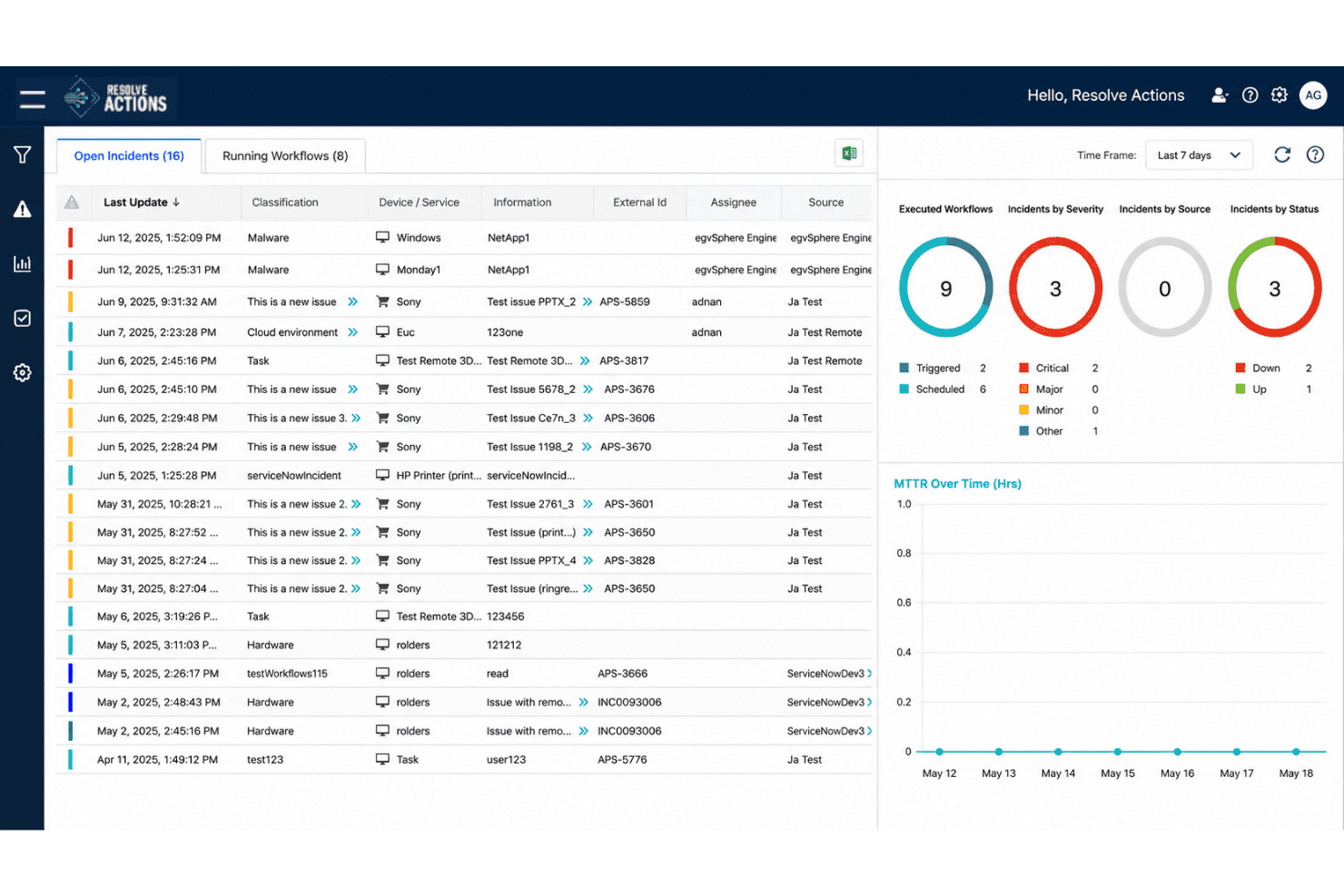
Workflow Orchestration
Coordinate workflows across ITSM, observability, networking, cloud, and on-premises systems without tying automation to one vendor. I like this for teams whose processes already span several tools.
Automation Agent
The Automation Agent executes approved workflows to diagnose and resolve IT issues. This helps teams use AI while keeping repeatable actions governed and predictable.
Agent Assist
Agent Assist gives service desk technicians diagnostics, context, and recommended actions during incidents. It can also surface approved automations to speed up resolution.
Employee Assistant
Employees can use conversational support for common IT questions and service requests. Where automation is available, it can take action instead of just pointing users to documentation.
Pre-Built Integrations & APIs
Pre-built integrations connect ITSM, observability, cloud, networking, security, and infrastructure tools. APIs and an open integration framework also support custom and legacy systems.
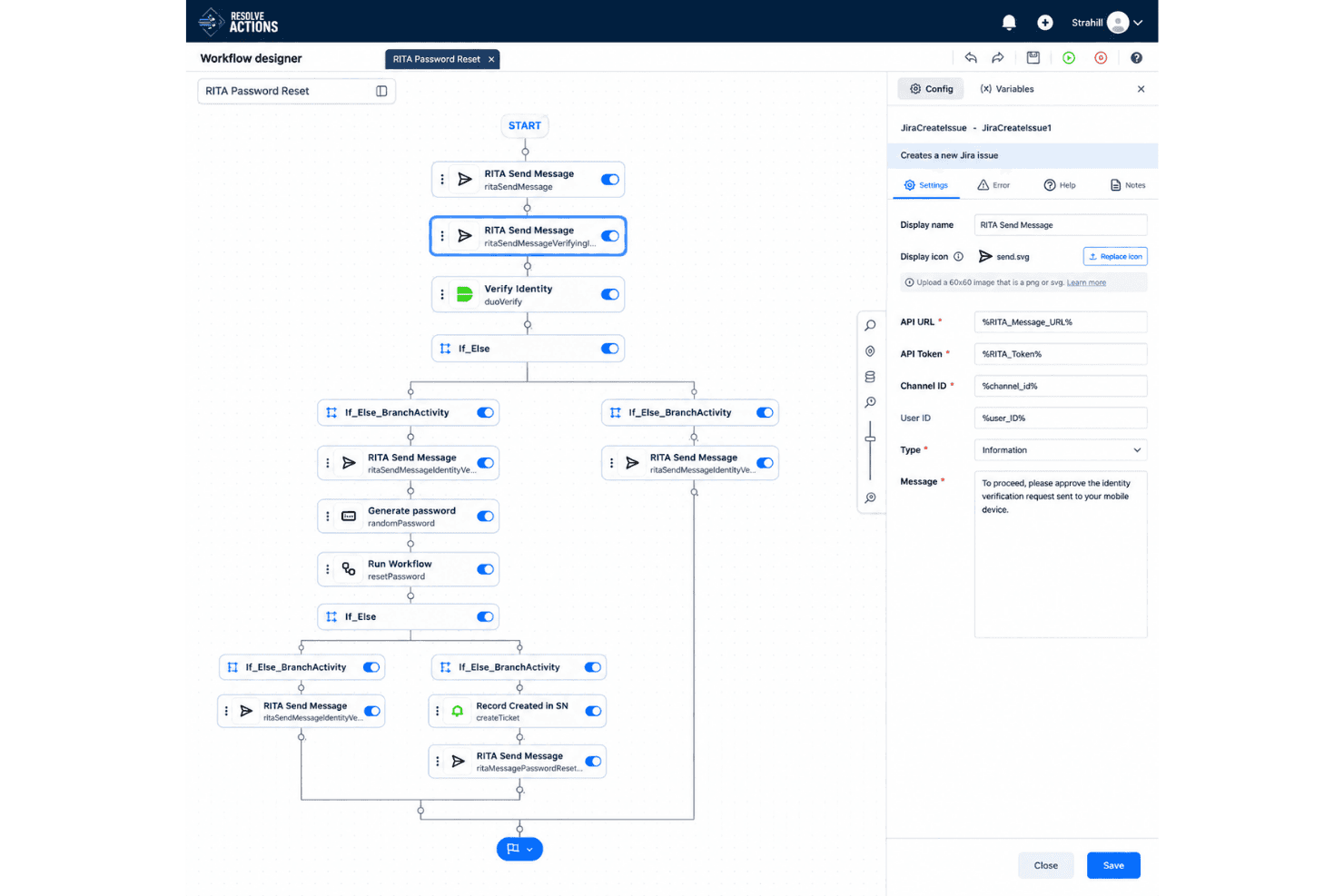
No-Code/Low-Code Workflow Building
Teams can build automations visually, use AI-assisted workflow creation, or bring in existing scripts and code. This works for both simple service workflows and more technical automation.
Standout Features
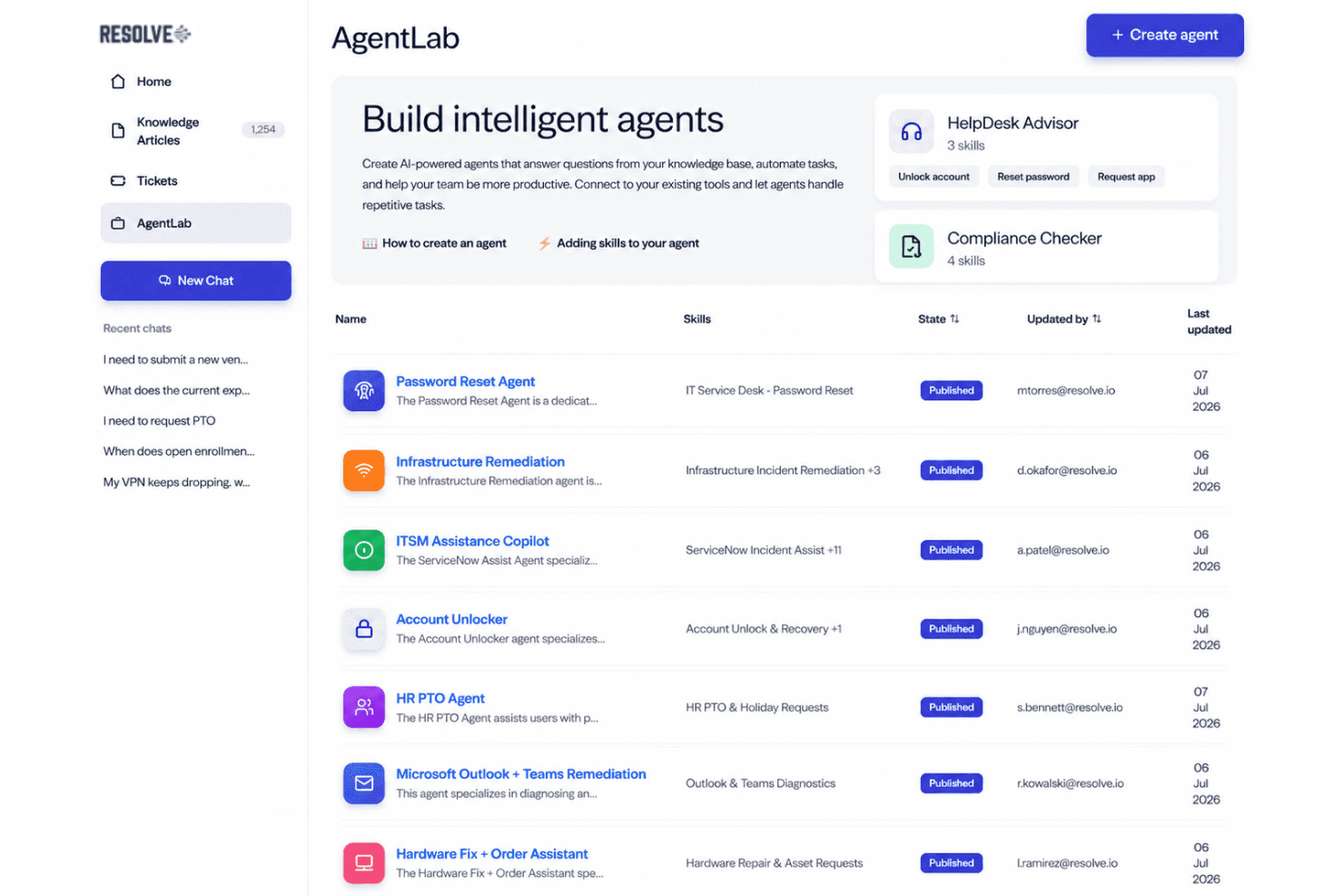
AgentLab
AgentLab lets teams create limited-scope AI agents using natural language while setting skills, permissions, and guardrails. I like the focus on controlled execution rather than just AI-generated suggestions.
Automation Exchange & Governance
Automation Exchange gives teams reusable workflows and automation content they can adapt instead of starting from scratch. Governance controls around permissions, approvals, and audit trails help keep those automations controlled.
Ease of Use
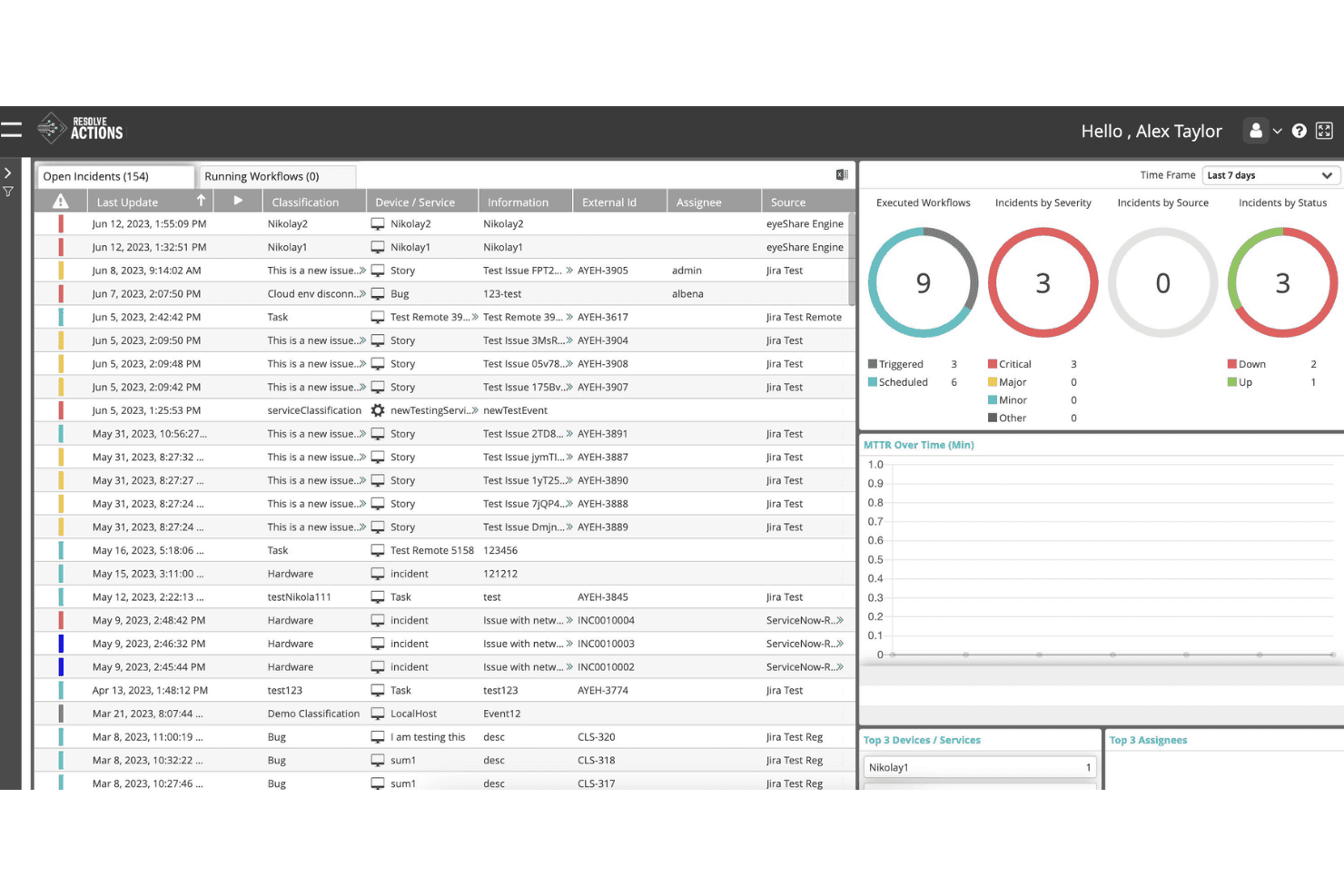
Resolve’s ease of use depends on the complexity of your IT environment and the integrations involved. Setup complexity varies depending on the number and depth of integrations involved. Dedicated onboarding support helps here, with Resolve assisting customers in setting up their first use cases and integrations.
Onboarding
Resolve takes a guided approach to onboarding, with a professional services team member helping set up the first five use cases or agents at no extra cost. The process typically takes five days to one month, depending on company size, environment complexity, and the integrations that need to be configured. This hands-on support should be especially useful for teams working across hybrid or legacy systems.
Resolve also offers an Employee Adoption Program that supports rollout planning, employee communications, training assets, and ongoing engagement to help organizations drive adoption after implementation.
Customer Support
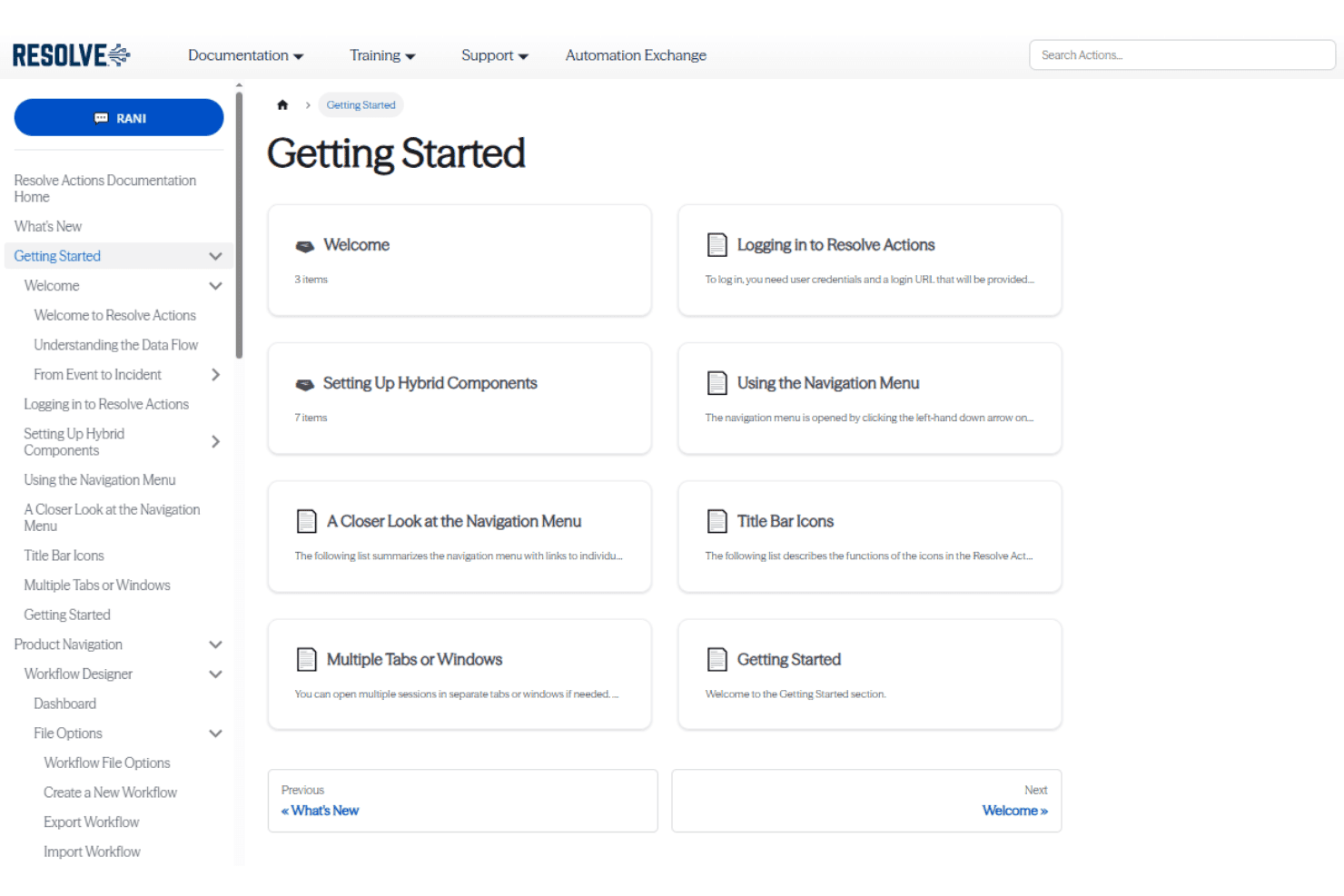
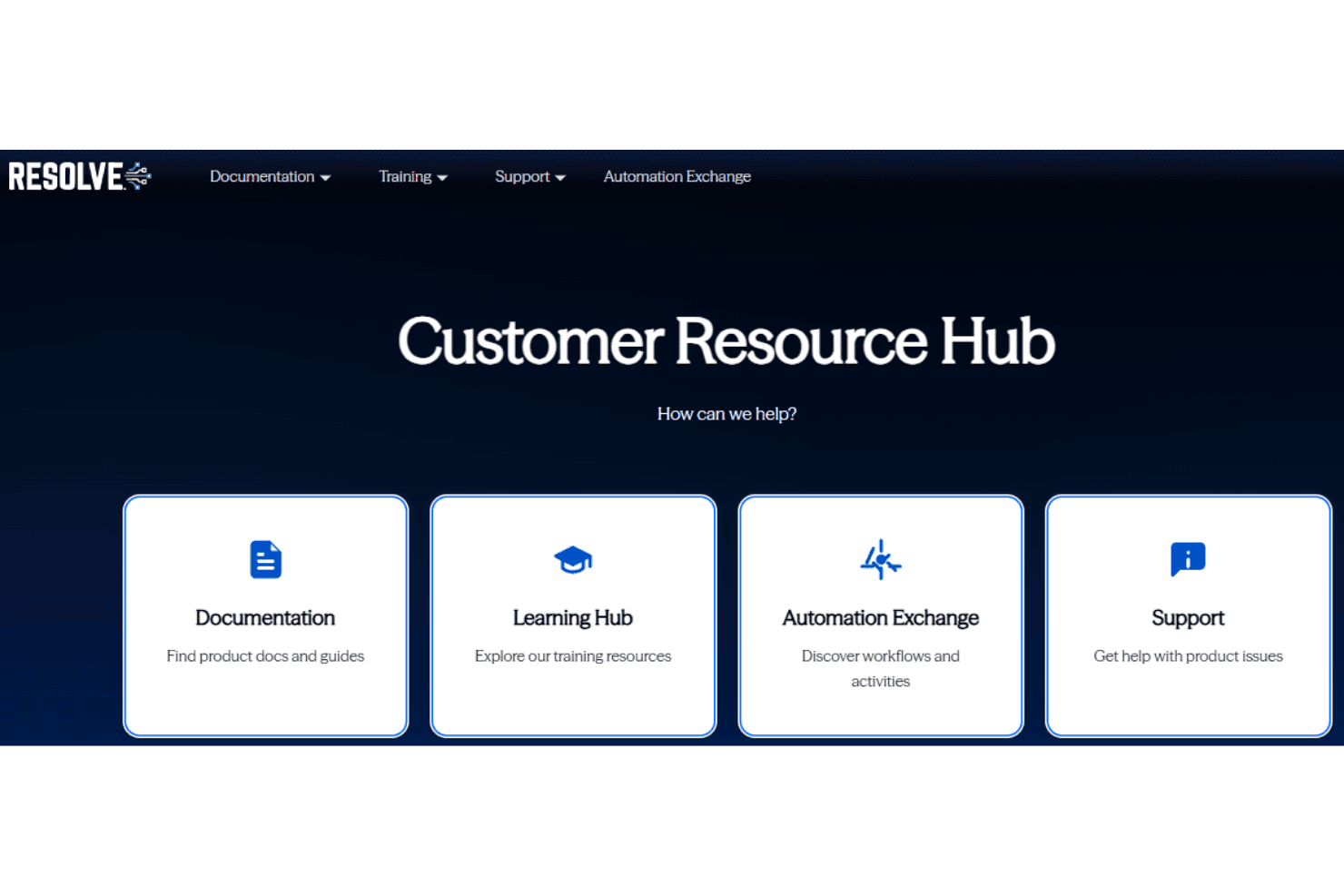
Resolve provides several customer support resources, including a dedicated support portal, product documentation, training materials, and technical guidance for troubleshooting and platform use. Customers also receive hands-on professional services during onboarding, with support for configuring their first use cases, agents, and integrations. This is especially useful for larger teams working through more complex hybrid environments and automation requirements.
Integrations
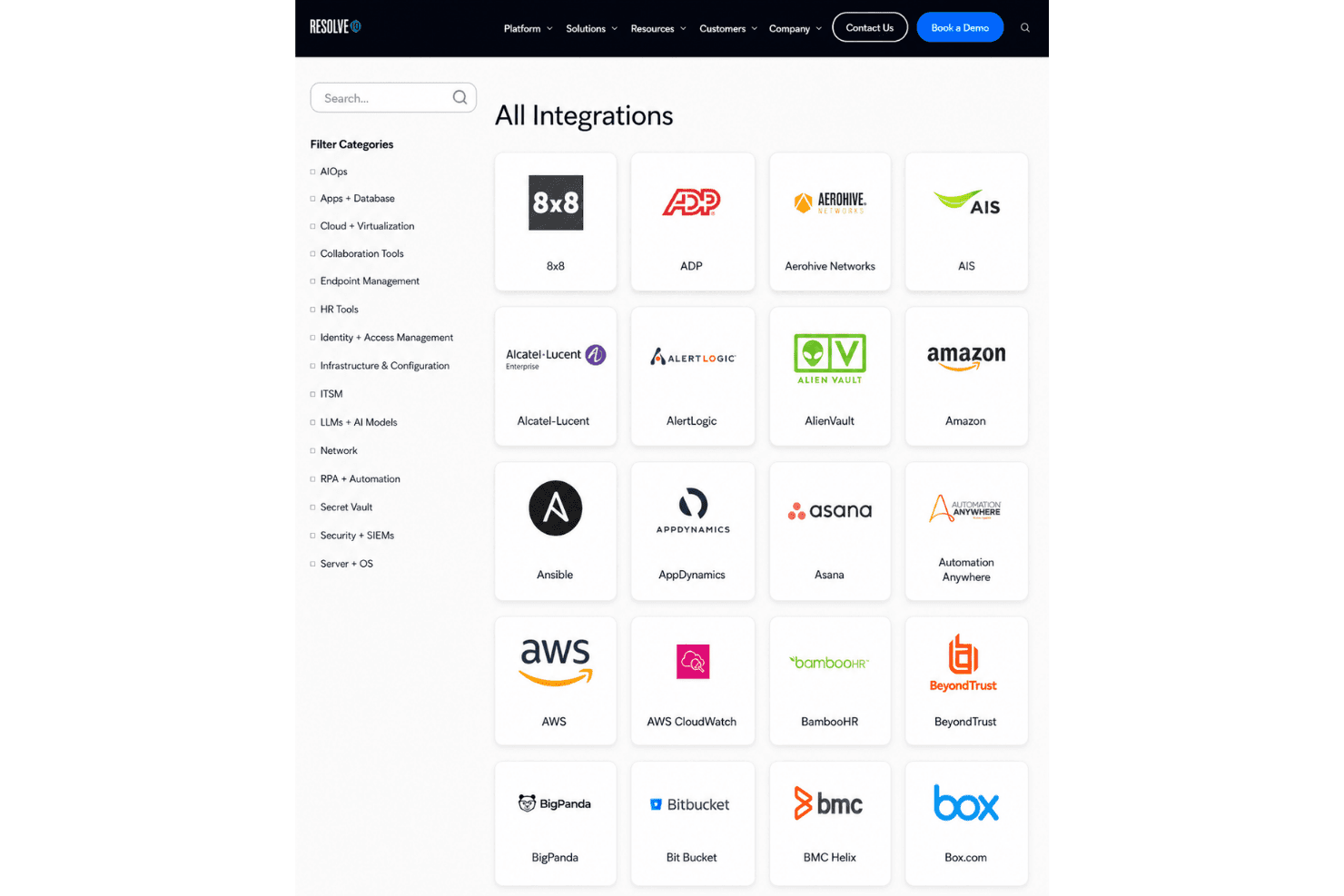
Integrations include ServiceNow, Jira, Microsoft 365 and Active Directory, Microsoft Exchange, Azure, Intune, Microsoft Teams, Slack, Workday, Datadog, Splunk, AWS, and more. An API is available through Resolve’s open integration framework, which also supports custom and legacy connections via REST APIs, SNMP, SSH, TCP, SMTP, and SOAP.
Value for Money
Resolve’s value is strongest for larger IT teams that can make full use of its cross-domain automation and orchestration capabilities. I like that its pricing is positioned as flat and predictable, avoiding per-user, per-ticket, workflow, or AI token fees that can make automation costs harder to forecast.
Specific pricing is not published publicly, so organizations need to contact Resolve for a custom quote. Given its enterprise focus and ideal fit for organizations with 1,000+ employees, smaller teams or companies with limited automation needs may find it harder to justify the investment.
Resolve Specs
- API: Yes
- Approval Workflows: Yes
- Batch Permissions & Access: Yes
- Compliance Tracking: Yes
- Contact Management: No
- Custom Reports: Yes
- Dashboard: Yes
- Data Export: Yes
- Data Import: Yes
- Data Visualization: Yes
- Document Management: No
- External Integrations: Yes
- Inventory Tracking: No
- Marketing Automation: No
- Notifications: Yes
- Process Modeling: Yes
- Process Reporting: Yes
- Project Management: No
- Roadmapping: No
- Sales Automation: No
- Supplier Management: No
- Third-Party Plugins/Add-Ons: Yes
- Workflow Management: Yes
Resolve FAQs
Resolve Company Overview & History
Resolve Systems is an IT automation and orchestration software company founded in Irvine, California, and currently headquartered in Campbell, California. Established under the Resolve Systems name in 2014 following the rebrand of gen-E, the company focuses on automating incident response, service management, network operations, and other IT workflows. Today, Resolve serves large enterprises across industries including financial services, retail, manufacturing, pharmaceuticals, and telecommunications and is majority-owned by Insight Partners.
Resolve Major Milestones
- 2014: gen-E rebranded as Resolve Systems as the company shifted its focus from software consulting to incident resolution and automation software.
- 2015: Resolve earned ServiceNow certification for its platform integration, expanding its role in IT service management automation.
- 2017: Insight Venture Partners, now Insight Partners, acquired Resolve Systems to support further product development and growth.
- 2021: Acquired Ayehu, expanding its no-code and intelligent IT automation capabilities.
- 2022: Launched its IT Automation as a Service offering, providing a SaaS option for enterprise automation.
- 2025: Acquired Espressive, adding conversational and agentic AI capabilities to its automation portfolio.
Resolve Partner Spotlight

Come Resolve combina il ragionamento dell’IA con flussi di lavoro deterministici per una risoluzione IT governata
Come la piattaforma Resolve porta il lavoro IT dall'intento alla risoluzione verificata.