
Recensione MongoDB Atlas: Pro, Contro, Caratteristiche e Prezzi
MongoDB Atlas eccelle in flessibilità e scalabilità, rendendolo ideale per gli sviluppatori che creano app moderne e cercano una soluzione di database cloud versatile.

Recensiamo gli strumenti in modo indipendente e le commissioni ci aiutano a finanziare i nostri test. Consulta la nostra politica sulla trasparenza, la nostra metodologia, oppure suggerisci uno strumento.
MongoDB Atlas is a fully managed database management software built on a document-based NoSQL model, designed for teams that need to store, query, and scale flexible or semi-structured data across multi-cloud environments. I'd put it at the top of your list over something like Amazon RDS when your data doesn't fit neatly into rigid relational tables—Atlas gives you far more flexibility in how you model and evolve your data structures without the schema constraints that come with a traditional relational setup.
MongoDB Atlas Evaluation Summary
4.5/5
- From $0.011/hour
- Free plan available
Perché fidarsi dei nostri consigli sui software
6,700+
Reviews
20
Industry experts
16+
Evaluation factors
14
Years
Il nostro team testa e recensisce software dal 2012. In quanto leader tecnologici noi stessi, sappiamo quanto sia difficile — e importante — scegliere il software giusto.
Per questa guida, abbiamo valutato gli strumenti attraverso test praticie ricerche indipendenti, assegnando un punteggio agli strumenti in base ai nostri criteri di selezione.
Le nostre recensioni riflettono il nostro giudizio editoriale umano, non un discorso di vendita.
Revisori esperti:
- Paulo Gardini MiguelDirettore tecnico
 Tim FisherVP dell'IA
 Gabriel RosasTech Lead e architetto software
 Christhian GruhnTech Lead e architetto della piattaforma

MongoDB Atlas Overview
In my opinion, MongoDB Atlas is a solid choice for teams needing a scalable and flexible database solution. Its standout features, such as automated scaling, replica set configuration, and multi-cloud support for sharded cluster deployments, set it apart from other platforms. While it excels in handling complex data structures, its onboarding may require more effort. Its easy integration with popular tools and Amazon Web Services is a plus, though the Atlas UI can be a bit overwhelming for first-time users. Compared to competitors, MongoDB Atlas offers a good balance of price and performance. It's best suited for tech-driven businesses, startups, and development teams looking for a reliable cloud database solution without the hassle of managing infrastructure.
Pros
- Automated scaling and caching help your team handle traffic spikes without manual intervention.
- Multicloud support gives you flexibility to deploy across different providers.
- Advanced security capabilities protect your data with built-in encryption, authentication, and access controls.
Cons
- The Atlas UI can overwhelm new users with its complexity.
- Onboarding may take longer for teams new to this database structure.
- Customer support response times can vary.
Is MongoDB Atlas Right For Your Needs?
Who Would be a Good Fit for MongoDB Atlas?
MongoDB Atlas is a great fit for tech startups and agile development teams that need a flexible, scalable database solution. Its automated scaling, replica set architecture, high availability, and multicloud support allow your team to adapt quickly to changing demands. E-commerce platforms benefit from its advanced security and authentication capabilities, ensuring excellent customer data protection. If your work involves complex data structures, MongoDB Atlas allows efficient data management and retrieval.
- Tech StartupsMongoDB Atlas is a database-as-a-service software that provides flexibility and scalability using managed database clusters, helping your team to grow without worrying about infrastructure limits.
- E-Commerce PlatformsAdvanced security features ensure your customer data stays safe, making it ideal for online retail businesses.
- Agile DevelopmentAutomated scaling supports fast-paced projects and DevOps workflows, allowing your team to focus on coding rather than database management.
- Healthcare ProvidersMongoDB Atlas handles complex data structures and secure authentication, making it suitable for storing and retrieving medical records.
- Financial ServicesThe platform's multicloud support offers reliability and security, essential for handling sensitive financial data.
- Media and EntertainmentIts ability to manage large amounts of data makes it perfect for content-heavy industries needing quick access to media files.
Who Would be a Bad Fit for MongoDB Atlas?
MongoDB Atlas may not suit small businesses or teams with limited technical expertise. Its complex interface and advanced features can overwhelm those not familiar with database management. Traditional industries that rely on simple, structured data may find its capabilities excessive. If your team requires straightforward, out-of-the-box solutions without the need for scalability or multicloud support, MongoDB Atlas could be more than you need.
- Small BusinessesThe complexity and advanced features may overwhelm your team if you're lacking technical expertise.
- Traditional IndustriesIf your data is simple and structured, you may find MongoDB Atlas's capabilities excessive.
- Non-Technical TeamsThe interface can be daunting without a background in database management.
- Budget-Conscious CompaniesThe advanced features may not justify the cost for your limited needs.
- Educational InstitutionsIf you focus on basic database functions, simpler solutions may suit your needs better.
- Local RetailersWithout the need for multicloud support, MongoDB Atlas could be more than you need.
La Nostra Metodologia di Recensione
Come Testiamo e Valutiamo gli Strumenti
Abbiamo trascorso anni a costruire, perfezionare e migliorare il nostro sistema di testing e valutazione del software. Il nostro schema è progettato per cogliere le sfumature della selezione software e cosa rende efficace uno strumento, focalizzandosi sugli aspetti critici del processo decisionale.
Di seguito, puoi vedere esattamente come funziona il nostro testing e punteggio su sette criteri. Ci permette di offrire una valutazione imparziale del software basata su funzionalità principali, caratteristiche distintive, facilità d’uso, onboarding, assistenza clienti, integrazioni, recensioni dei clienti e rapporto qualità-prezzo.
Funzionalità Principali (25% del punteggio finale)
Il punto di partenza della nostra valutazione è sempre la funzionalità principale dello strumento. Ha le funzioni e caratteristiche base che ci si aspetta? Alcune di queste caratteristiche sono limitate ai piani tariffari superiori? Fondamentalmente, ci aspettiamo che uno strumento regga il confronto rispetto alle capacità di base dei concorrenti.
Caratteristiche Distintive (25% del punteggio finale)
Successivamente, valutiamo le caratteristiche distintive e non comuni che vanno oltre la funzionalità base tipicamente trovata negli strumenti di questa categoria. Un punteggio alto riflette funzionalità specializzate o uniche che rendono il prodotto più veloce, efficiente o offrono ulteriore valore all’utente.
Valutiamo inoltre quanto sia semplice integrare altri strumenti tipicamente utilizzati nell’infrastruttura tecnologica per espandere la funzionalità e l’utilità del software. Gli strumenti che offrono numerose integrazioni native, connessioni di terze parti e accesso API per creare integrazioni personalizzate ottengono i punteggi migliori.
Facilità d’Uso (10% del punteggio finale)
Consideriamo quanto sia rapido e semplice svolgere i compiti definiti nella funzionalità principale utilizzando lo strumento. Il software con punteggio alto è ben progettato, intuitivo da usare, offre app mobili, fornisce modelli e rende semplici attività relativamente complesse.
Onboarding (10% del punteggio finale)
Sappiamo quanto sia importante l’adozione rapida da parte del team per una nuova piattaforma, quindi valutiamo quanto sia facile imparare e utilizzare uno strumento con formazione minima. Valutiamo quanto velocemente un membro del team possa iniziare a usare lo strumento anche senza esperienza. Soluzioni con punteggio alto indicano che sono richiesti pochi o nessun supporto.
Assistenza Clienti (10% del punteggio finale)
Esaminiamo quanto sia veloce e facile ricevere assistenza e risolvere problemi tramite telefono, live chat o knowledge base. Gli strumenti e le aziende che garantiscono supporto in tempo reale ottengono il miglior punteggio, mentre i chatbot ottengono il peggiore.
Recensioni dei Clienti (10% del punteggio finale)
Oltre ai nostri test e valutazioni, prendiamo in considerazione il net promoter score dei clienti attuali e passati. Valutiamo la probabilità che, data la scelta, selezionerebbero nuovamente lo strumento per la funzionalità principale. Un software con punteggio alto riflette un alto net promoter score da parte dei clienti attuali o passati.
Rapporto Qualità-Prezzo (10% del punteggio finale)
Infine, considerando tutti gli altri criteri, analizziamo il prezzo medio dei piani base rispetto alle funzionalità principali e consideriamo il valore degli altri criteri di valutazione. Il software che offre di più a meno otterrà un punteggio più alto.
Core Features
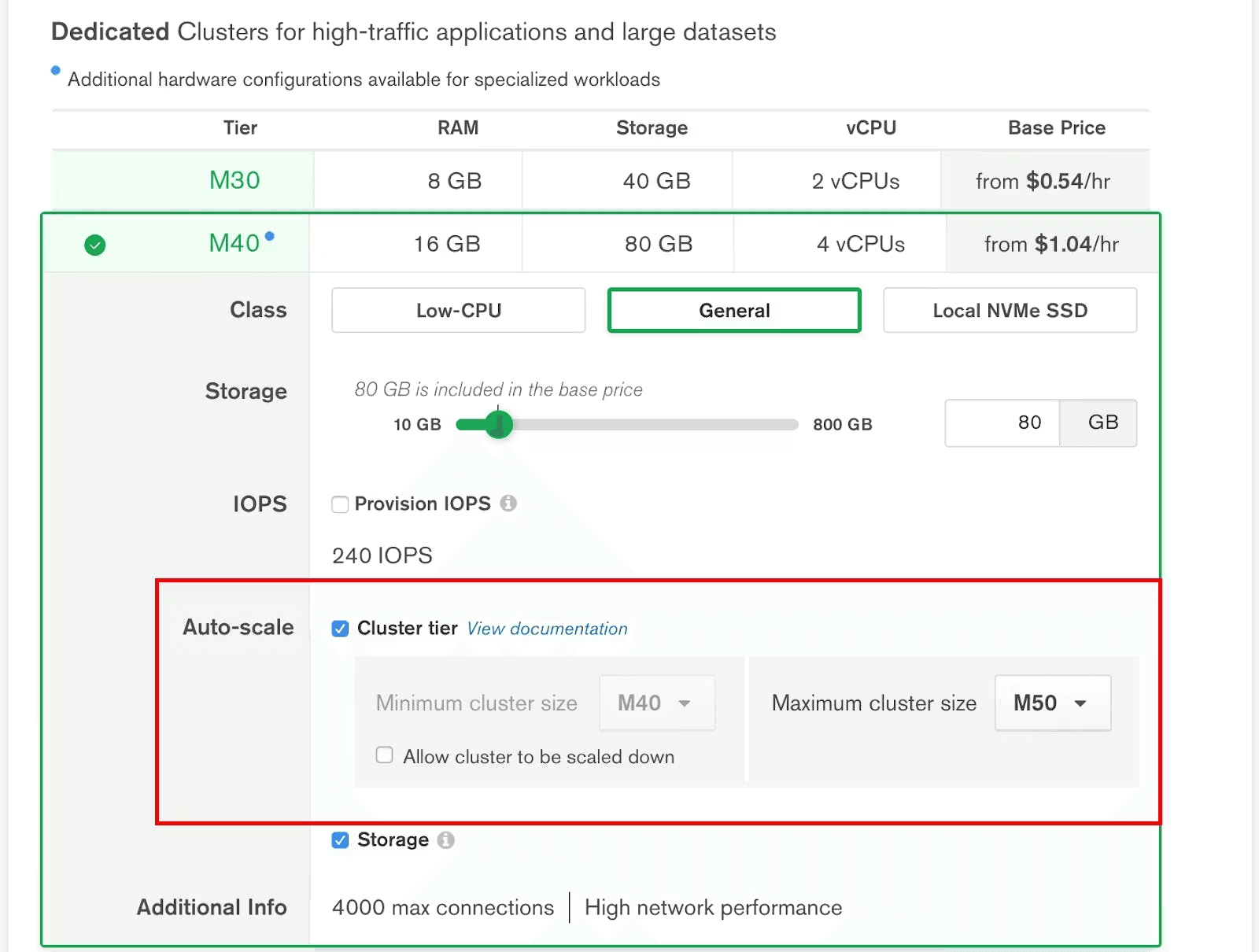
Automated Scaling: MongoDB Atlas automatically adjusts resources based on your workload, so your team doesn't have to worry about traffic spikes. This ensures your applications run smoothly without downtime.
Multicloud Support: Deploy your database across multiple cloud providers, giving your work flexibility and redundancy. It ensures your data is accessible and secure, no matter where it's stored.
Advanced Security: Built-in encryption and access controls keep your data safe from unauthorized access. Your team can focus on development, knowing that security is handled.
Data Sharding: MongoDB Atlas divides your database into smaller pieces, improving performance and scalability. This feature is valuable for large datasets needing quick access.
Backup and Recovery: Automatic backups ensure that your data is safe, and recovery options let you restore it when needed. This provides peace of mind that your work won't be lost.
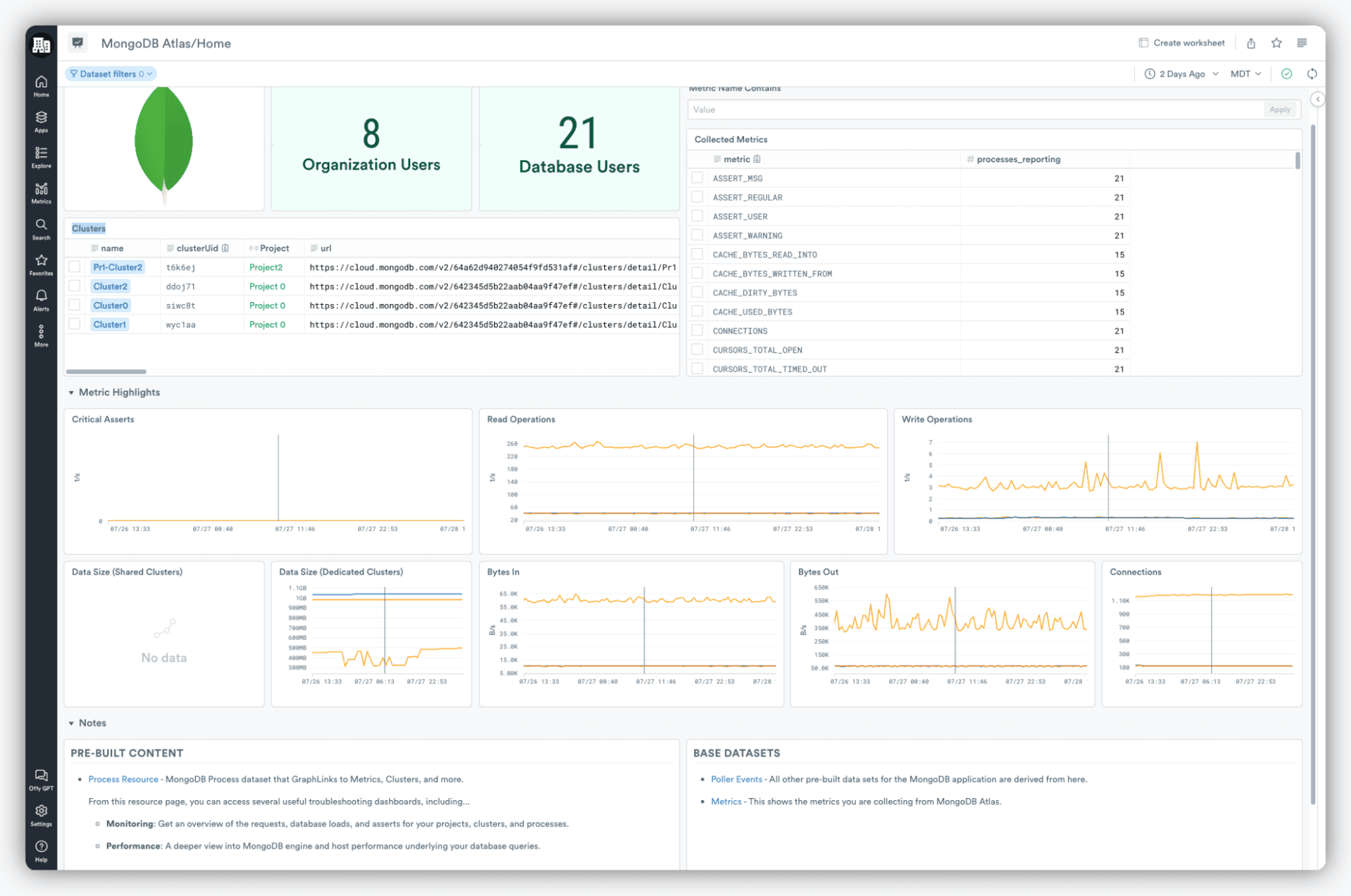
Monitoring Tools: Real-time monitoring helps you track database performance, so you can quickly address any issues. It keeps your team informed and proactive.
Ease of Use
Although MongoDB Atlas offers a user-friendly platform, its complexity can be a hurdle for beginners. The complex interface and extensive capabilities may initially overwhelm your team. However, once you're familiar with it, the intuitive design aids efficient task navigation. Automated scaling and monitoring tools simplify management, allowing your team to focus on development. Compared to other solutions, MongoDB Atlas balances powerful features with usability, though a learning curve is expected.
Integrations
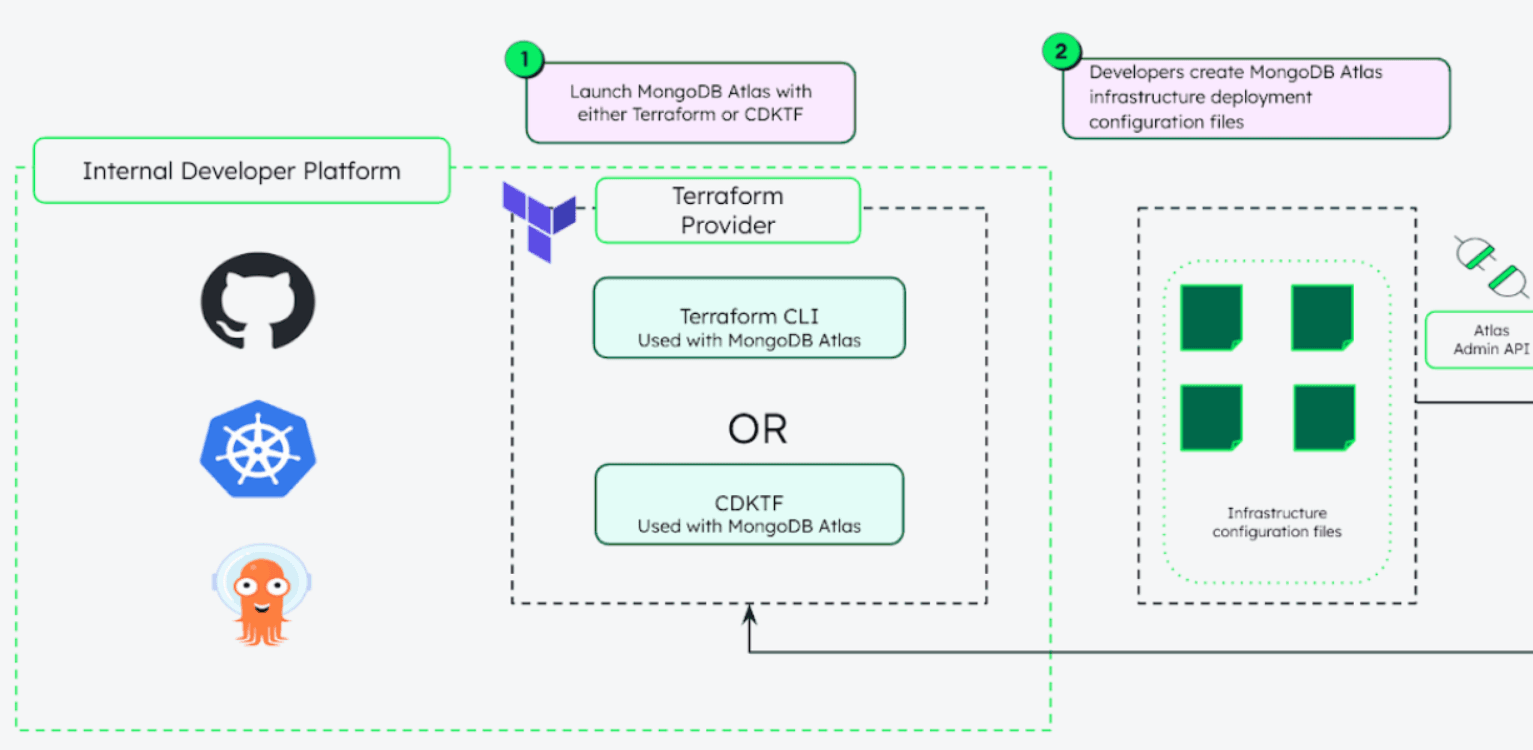
MongoDB Atlas integrates with AWS, Google Cloud, Microsoft Azure, Vercel, Netlify, Render, Datadog, Slack, HashiCorp Terraform, and Prisma.
It also has an API and connects with third-party integration tools, allowing for flexible customization and automation.
MongoDB Atlas Specs
- 2-Factor Authentication: Yes
- Access Management: Yes
- Anti-Virus: No
- API: Yes
- Audit Trail: Yes
- Bug Tracking: No
- Calendar Management: No
- Customer Management: No
- Dashboard: Yes
- Data Export: Yes
- Data Import: Yes
- Data Visualization: Yes
- Email Integration: Yes
- External Integrations: Yes
- File Sharing: No
- File Transfer: No
- Firewall: Yes
- Google Apps Integration: Yes
- Inventory Tracking: No
- Malware Protection: No
- Multi-User: Yes
- Network Device Performance Monitoring: No
- Network Traffic Monitoring: No
- Network Visualization: No
- Notifications: Yes
- Project Management: No
- Remote Access: Yes
- Risk Assessment: Yes
- SAP Integration: No
- Scheduling: No
- Software Integration: Yes
- Third-Party Plugins/Add-Ons: Yes
- Ticket Management: No


