
Recensione di Heroku 2026: Vantaggi, Svantaggi, Caratteristiche e Prezzi
Heroku si distingue per la sua semplicità orientata agli sviluppatori e il rapido deployment delle app, ma potrebbe non essere adatto a esigenze complesse e su larga scala rispetto ad altre soluzioni cloud PaaS.

Recensiamo gli strumenti in modo indipendente e le commissioni ci aiutano a finanziare i nostri test. Consulta la nostra politica sulla trasparenza, la nostra metodologia, oppure suggerisci uno strumento.
Heroku is a cloud platform as a service for development teams that want to deploy, run, and scale applications without managing the underlying infrastructure. I'd consider it if your team needs a fast, developer-friendly deployment environment that's easier to get started with than AWS Elastic Beanstalk—without requiring deep cloud infrastructure knowledge to use well. This review covers what Heroku does, where it fits, and who'll get the most out of it.
Heroku Evaluation Summary
4.6/5
- Pricing upon request
- Not available
Perché fidarsi dei nostri consigli sui software
6,700+
Reviews
20
Industry experts
16+
Evaluation factors
14
Years
Il nostro team testa e recensisce software dal 2012. In quanto leader tecnologici noi stessi, sappiamo quanto sia difficile — e importante — scegliere il software giusto.
Per questa guida, abbiamo valutato gli strumenti attraverso test praticie ricerche indipendenti, assegnando un punteggio agli strumenti in base ai nostri criteri di selezione.
Le nostre recensioni riflettono il nostro giudizio editoriale umano, non un discorso di vendita.
Revisori esperti:
- Paulo Gardini MiguelDirettore tecnico
 Tim FisherVP dell'IA
 Gabriel RosasTech Lead e architetto software
 Christhian GruhnTech Lead e architetto della piattaforma

Heroku Overview
When judging Heroku as a cloud PaaS, its intuitive interface, fast onboarding, and strong integration ecosystem make it a top pick for teams prioritizing speed and simplicity. Pricing can be higher for production workloads, and advanced customization is limited compared to some alternatives. However, for startups, prototypes, and teams seeking quick deployment without deep infrastructure management, Heroku consistently outperforms with its developer experience and responsive support.
If you’re selecting a platform for rapid iteration or teaching environments, Heroku’s ease of use and clear documentation set it apart.
Pros
- You can deploy apps quickly without managing infrastructure.
- Its simple interface makes it easy for your team to focus on development.
- Heroku's scalability supports your growing projects seamlessly.
Cons
- Limited customization options might restrict complex projects.
- Dyno sleeping can slow down your apps during periods of inactivity.
- Some users find the performance inconsistent with high traffic.
Is Heroku Right For Your Needs?
Who Would be a Good Fit for Heroku?
Heroku is ideal for startups, small businesses, and agile teams that need to deploy apps rapidly without the hassle of managing infrastructure. If your team values simplicity and needs to focus on coding rather than server management, Heroku’s straightforward interface is perfect. Tech startups and digital agencies benefit from its ability to scale effortlessly, allowing you to handle growth without technical headaches.
- Tech StartupsHeroku lets you launch and iterate apps quickly, crucial for fast-paced startup environments.
- Digital AgenciesYou can focus on creative development without worrying about backend complexities.
- Small BusinessesHeroku’s user-friendly platform helps you deploy apps without needing a large IT team.
- Educational InstitutionsHeroku simplifies project hosting for students and educators, fostering learning and experimentation.
- FreelancersYou can manage multiple client projects efficiently with Heroku’s easy deployment.
- Prototyping TeamsHeroku supports rapid prototyping, enabling quick testing and iteration of new ideas.
Who Would be a Bad Fit for Heroku?
Large enterprises with complex, highly customized infrastructure needs might not find Heroku suitable. If your team requires extensive control over server configurations or needs to integrate deeply with legacy systems, Heroku’s limited customization could be a hurdle. Companies that rely on high-performance apps with constant uptime might face challenges with Heroku’s dyno sleeping feature, which can affect app responsiveness.
- Large EnterprisesHeroku’s limited customization options don’t fit the complex infrastructure needs of big companies.
- High-Traffic SitesDyno sleeping can lead to slow response times, making Heroku unsuitable for sites needing constant uptime.
- Financial ServicesIf you need strict data control and compliance, Heroku’s shared environment might not meet your security requirements.
- Gaming CompaniesReal-time performance demands in gaming can be hampered by Heroku’s inconsistent response times.
- Healthcare ProvidersHeroku’s shared infrastructure may not align with the stringent data privacy and control needed in healthcare.
- Custom Software FirmsThe lack of deep server control can limit the customization required for complex software solutions.
La Nostra Metodologia di Recensione
Come Testiamo e Valutiamo gli Strumenti
Abbiamo trascorso anni a costruire, perfezionare e migliorare il nostro sistema di testing e valutazione del software. Il nostro schema è progettato per cogliere le sfumature della selezione software e cosa rende efficace uno strumento, focalizzandosi sugli aspetti critici del processo decisionale.
Di seguito, puoi vedere esattamente come funziona il nostro testing e punteggio su sette criteri. Ci permette di offrire una valutazione imparziale del software basata su funzionalità principali, caratteristiche distintive, facilità d’uso, onboarding, assistenza clienti, integrazioni, recensioni dei clienti e rapporto qualità-prezzo.
Funzionalità Principali (25% del punteggio finale)
Il punto di partenza della nostra valutazione è sempre la funzionalità principale dello strumento. Ha le funzioni e caratteristiche base che ci si aspetta? Alcune di queste caratteristiche sono limitate ai piani tariffari superiori? Fondamentalmente, ci aspettiamo che uno strumento regga il confronto rispetto alle capacità di base dei concorrenti.
Caratteristiche Distintive (25% del punteggio finale)
Successivamente, valutiamo le caratteristiche distintive e non comuni che vanno oltre la funzionalità base tipicamente trovata negli strumenti di questa categoria. Un punteggio alto riflette funzionalità specializzate o uniche che rendono il prodotto più veloce, efficiente o offrono ulteriore valore all’utente.
Valutiamo inoltre quanto sia semplice integrare altri strumenti tipicamente utilizzati nell’infrastruttura tecnologica per espandere la funzionalità e l’utilità del software. Gli strumenti che offrono numerose integrazioni native, connessioni di terze parti e accesso API per creare integrazioni personalizzate ottengono i punteggi migliori.
Facilità d’Uso (10% del punteggio finale)
Consideriamo quanto sia rapido e semplice svolgere i compiti definiti nella funzionalità principale utilizzando lo strumento. Il software con punteggio alto è ben progettato, intuitivo da usare, offre app mobili, fornisce modelli e rende semplici attività relativamente complesse.
Onboarding (10% del punteggio finale)
Sappiamo quanto sia importante l’adozione rapida da parte del team per una nuova piattaforma, quindi valutiamo quanto sia facile imparare e utilizzare uno strumento con formazione minima. Valutiamo quanto velocemente un membro del team possa iniziare a usare lo strumento anche senza esperienza. Soluzioni con punteggio alto indicano che sono richiesti pochi o nessun supporto.
Assistenza Clienti (10% del punteggio finale)
Esaminiamo quanto sia veloce e facile ricevere assistenza e risolvere problemi tramite telefono, live chat o knowledge base. Gli strumenti e le aziende che garantiscono supporto in tempo reale ottengono il miglior punteggio, mentre i chatbot ottengono il peggiore.
Recensioni dei Clienti (10% del punteggio finale)
Oltre ai nostri test e valutazioni, prendiamo in considerazione il net promoter score dei clienti attuali e passati. Valutiamo la probabilità che, data la scelta, selezionerebbero nuovamente lo strumento per la funzionalità principale. Un software con punteggio alto riflette un alto net promoter score da parte dei clienti attuali o passati.
Rapporto Qualità-Prezzo (10% del punteggio finale)
Infine, considerando tutti gli altri criteri, analizziamo il prezzo medio dei piani base rispetto alle funzionalità principali e consideriamo il valore degli altri criteri di valutazione. Il software che offre di più a meno otterrà un punteggio più alto.
Core Features
Dynos (Smart Containers)
Heroku runs applications in isolated, fully managed containers called dynos that handle scaling and failover automatically. This lets you deploy and scale apps without managing servers.
Heroku Postgres
Heroku offers a fully managed PostgreSQL database service with automated backups and scaling. You can provision, monitor, and restore databases directly from the Heroku dashboard.
Heroku Key-Value Store
Heroku provides a managed Redis service for caching and real-time data needs. It’s integrated with the platform for easy setup and scaling.
Fast Rollback
Instantly revert your code or database to a previous state if something goes wrong. This feature reduces downtime and risk during deployments.
App Metrics
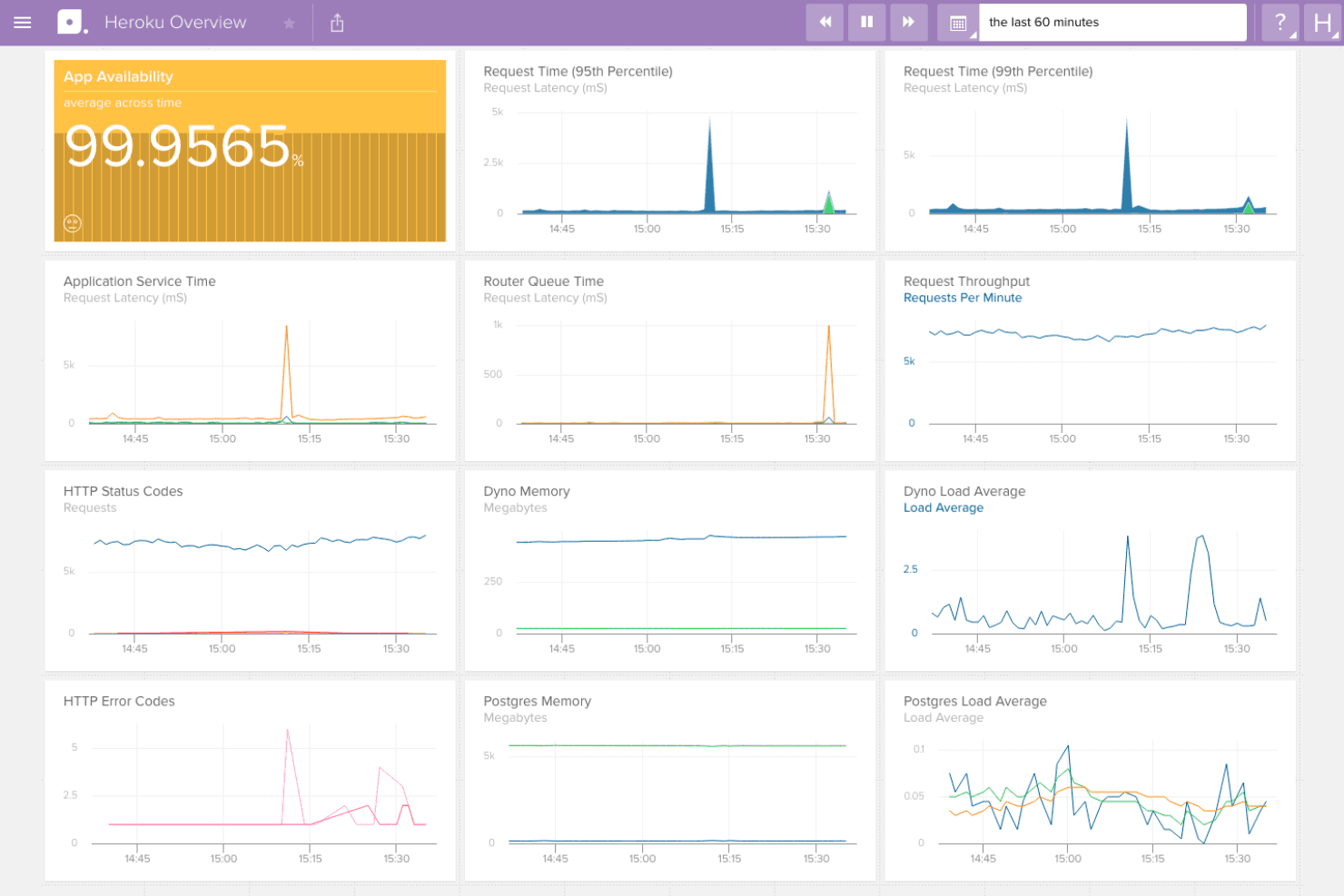
Heroku Metrics delivers real-time insights into app performance, resource usage, and errors. You can monitor CPU, memory, and response times from a single dashboard.
Continuous Delivery (Heroku Flow)
Heroku Flow supports visual, automated deployment pipelines with review apps for every pull request. This streamlines code review, testing, and production releases.
.png&w=3840&q=75)
Ease of Use
Heroku is widely recognized for its user-friendly interface and straightforward deployment process, making it accessible even for those new to cloud platforms. The dashboard is intuitive, documentation is clear, and features like one-command deployments and automated scaling reduce operational friction. User reviews consistently highlight how quickly teams can launch and manage applications, with minimal configuration or infrastructure knowledge required. This simplicity is a key reason many choose Heroku for rapid development cycles.
Integrations
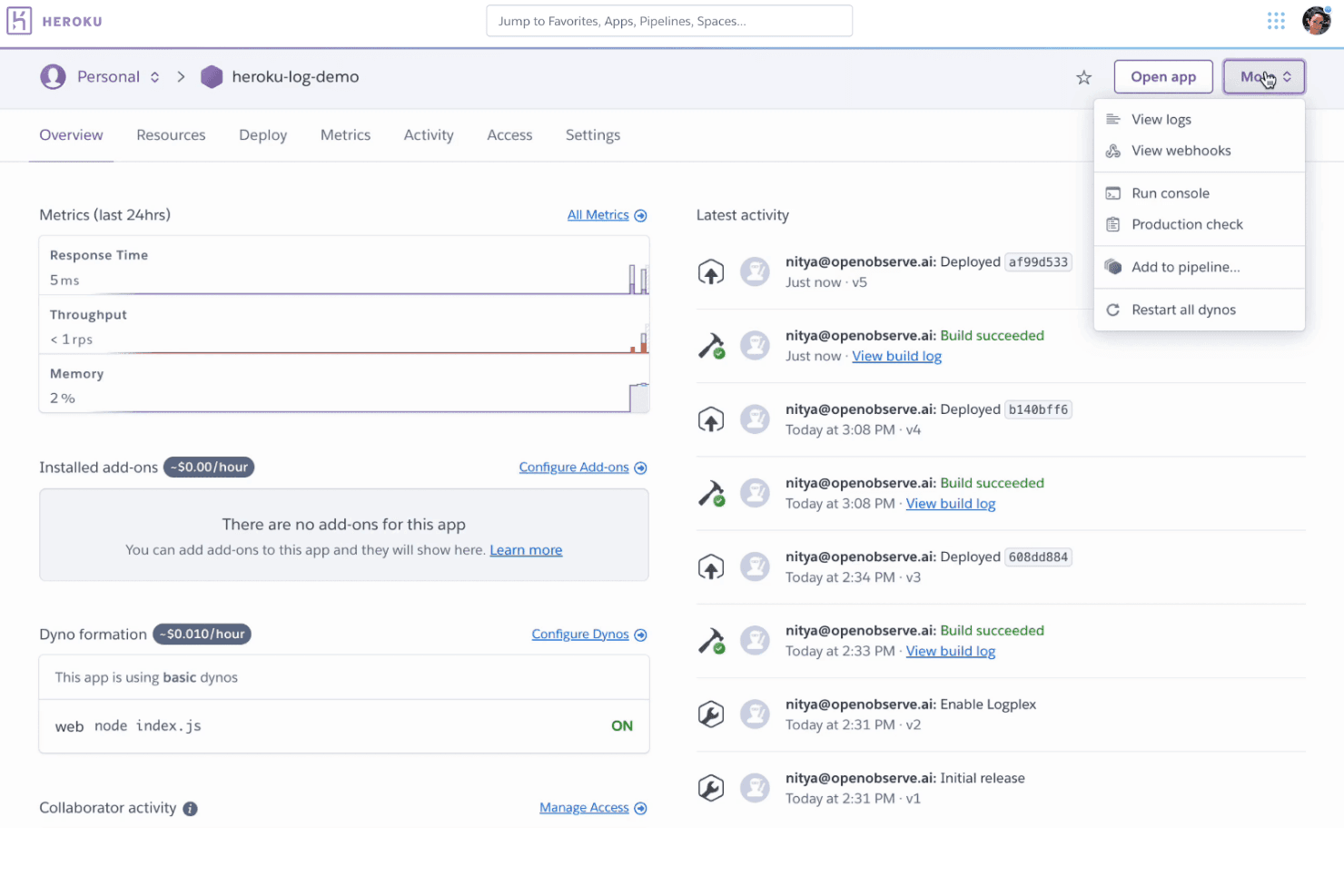
Heroku integrates with Heroku Postgres, Heroku Redis, Apache Kafka on Heroku, Heroku Connect, New Relic APM, Papertrail, Mailgun, CloudAMQP, S3-compatible storage, and Sentry, among others.
Heroku also provides a REST API and supports connections with third-party integration tools for custom workflows and automation.
Heroku Specs
- API: Yes
- Bug Tracking: No
- CI/CD Integration: Yes
- Cloud Deployment: Yes
- Code Review: Yes
- Code Transformation: No
- Collaboration Support: No
- Data Export: No
- Data Import: No
- Developer Tools: Yes
- External Integrations: No
- Git Integration: Yes
- History/Version Control: No
- IDE Plugins: No
- Local Deployment: No
- Multi-User: No
- Notifications: No
- Project Management: No
- Release Management: No
- Static Analysis: No
- Task Scheduling/Tracking: No
- Testing: Yes


