
Recensione GoodBarber: Pro, Contro, Caratteristiche e Prezzi
GoodBarber si distingue per la sua interfaccia intuitiva e le potenti opzioni di personalizzazione, rendendo lo sviluppo di app accessibile a team di tutte le dimensioni.

Recensiamo gli strumenti in modo indipendente e le commissioni ci aiutano a finanziare i nostri test. Consulta la nostra politica sulla trasparenza, la nostra metodologia, oppure suggerisci uno strumento.
GoodBarber is an app development software for teams that need to ship native iOS, Android, or Progressive Web Apps without writing code. It's a strong fit if you're building content-driven or ecommerce apps and want design output that looks intentional, not templated. I'd pick it over Appy Pie if visual control and PWA support are priorities—GoodBarber gives you more flexibility over the user interface experience without needing a developer to make it work.
GoodBarber Evaluation Summary
3.9/5
- From $30/month (billed annually)
- 30-day free trial
Perché fidarsi dei nostri consigli sui software
6,700+
Reviews
20
Industry experts
16+
Evaluation factors
14
Years
Il nostro team testa e recensisce software dal 2012. In quanto leader tecnologici noi stessi, sappiamo quanto sia difficile — e importante — scegliere il software giusto.
Per questa guida, abbiamo valutato gli strumenti attraverso test praticie ricerche indipendenti, assegnando un punteggio agli strumenti in base ai nostri criteri di selezione.
Le nostre recensioni riflettono il nostro giudizio editoriale umano, non un discorso di vendita.
Revisori esperti:
- Paulo Gardini MiguelDirettore tecnico
 Tim FisherVP dell'IA
 Gabriel RosasTech Lead e architetto software
 Christhian GruhnTech Lead e architetto della piattaforma

GoodBarber Overview
In my opinion, GoodBarber offers a solid app development experience, particularly for small businesses and creative agencies. Its standout features, like customizable design templates, make it appealing for those without extensive coding skills. The GoodBarber app has a great feature that allows you to preview designs. It also has robust e-commerce add-ons. Compared to competitors like Appy Pie, GoodBarber excels in ease of use but falls short in integration options. If your team prioritizes user-friendly design and quick setup, GoodBarber is worth considering. But if extensive features and deep integrations are crucial, you might want to explore other options.
Pros
- Create apps without coding skills using its intuitive interface.
- Customizable templates for design flexibility.
Cons
- Customer support response time may be slower than expected.
- Limited advanced features compared to other platforms.
- The onboarding process may feel a bit challenging for first-time users.
Is GoodBarber Right For Your Needs?
Who Would be a Good Fit for GoodBarber?
GoodBarber is a great choice for small to medium-sized businesses and creative agencies focused on rapid app deployment. If your team lacks extensive coding experience, you'll benefit from its user-friendly interface and customizable templates. It's ideal for marketing departments wanting to create engaging apps without waiting on IT. The ability to quickly launch apps is a significant advantage for startups eager to get their products to market.
- Small BusinessesYour small business can benefit from GoodBarber's easy-to-use tools to create apps without needing a tech team.
- Creative AgenciesCreative agencies can use GoodBarber's design flexibility to craft unique apps that reflect client branding.
- Marketing TeamsMarketing teams can launch promotional apps quickly, thanks to GoodBarber's simple app-building process.
- StartupsStartups can get their apps to market fast, using GoodBarber's no-code platform to save time and resources.
- Event PlannersEvent planners can create event-specific apps to enhance attendee engagement using GoodBarber's customizable features.
- Educational InstitutionsEducational institutions can develop educational apps to engage students with interactive content through GoodBarber's intuitive design tools.
Who Would be a Bad Fit for GoodBarber?
GoodBarber might not suit large enterprises or tech-heavy industries needing complex integrations and advanced features. If your team relies on deep customization and extensive third-party integrations, GoodBarber's limitations in these areas could hinder your projects. Companies with extensive IT resources looking for sophisticated app functionalities may find GoodBarber's capabilities too basic for their needs.
- Large EnterprisesLarge enterprises might struggle with GoodBarber's limited feature set and lack of advanced integration options.
- Tech CompaniesTech companies needing cutting-edge technology won't find the advanced features they require in GoodBarber.
- Finance SectorThe finance sector may find GoodBarber insufficient for handling complex data security and regulatory compliance needs.
- Healthcare ProvidersHealthcare providers needing secure, HIPAA-compliant solutions might find GoodBarber lacks the necessary security features.
- E-commerce GiantsE-commerce giants requiring sophisticated shopping features won't find the tools they need with GoodBarber.
- Research InstitutionsResearch institutions needing data-intensive applications may find GoodBarber's capabilities too limited for their projects.
La Nostra Metodologia di Recensione
Come Testiamo e Valutiamo gli Strumenti
Abbiamo trascorso anni a costruire, perfezionare e migliorare il nostro sistema di testing e valutazione del software. Il nostro schema è progettato per cogliere le sfumature della selezione software e cosa rende efficace uno strumento, focalizzandosi sugli aspetti critici del processo decisionale.
Di seguito, puoi vedere esattamente come funziona il nostro testing e punteggio su sette criteri. Ci permette di offrire una valutazione imparziale del software basata su funzionalità principali, caratteristiche distintive, facilità d’uso, onboarding, assistenza clienti, integrazioni, recensioni dei clienti e rapporto qualità-prezzo.
Funzionalità Principali (25% del punteggio finale)
Il punto di partenza della nostra valutazione è sempre la funzionalità principale dello strumento. Ha le funzioni e caratteristiche base che ci si aspetta? Alcune di queste caratteristiche sono limitate ai piani tariffari superiori? Fondamentalmente, ci aspettiamo che uno strumento regga il confronto rispetto alle capacità di base dei concorrenti.
Caratteristiche Distintive (25% del punteggio finale)
Successivamente, valutiamo le caratteristiche distintive e non comuni che vanno oltre la funzionalità base tipicamente trovata negli strumenti di questa categoria. Un punteggio alto riflette funzionalità specializzate o uniche che rendono il prodotto più veloce, efficiente o offrono ulteriore valore all’utente.
Valutiamo inoltre quanto sia semplice integrare altri strumenti tipicamente utilizzati nell’infrastruttura tecnologica per espandere la funzionalità e l’utilità del software. Gli strumenti che offrono numerose integrazioni native, connessioni di terze parti e accesso API per creare integrazioni personalizzate ottengono i punteggi migliori.
Facilità d’Uso (10% del punteggio finale)
Consideriamo quanto sia rapido e semplice svolgere i compiti definiti nella funzionalità principale utilizzando lo strumento. Il software con punteggio alto è ben progettato, intuitivo da usare, offre app mobili, fornisce modelli e rende semplici attività relativamente complesse.
Onboarding (10% del punteggio finale)
Sappiamo quanto sia importante l’adozione rapida da parte del team per una nuova piattaforma, quindi valutiamo quanto sia facile imparare e utilizzare uno strumento con formazione minima. Valutiamo quanto velocemente un membro del team possa iniziare a usare lo strumento anche senza esperienza. Soluzioni con punteggio alto indicano che sono richiesti pochi o nessun supporto.
Assistenza Clienti (10% del punteggio finale)
Esaminiamo quanto sia veloce e facile ricevere assistenza e risolvere problemi tramite telefono, live chat o knowledge base. Gli strumenti e le aziende che garantiscono supporto in tempo reale ottengono il miglior punteggio, mentre i chatbot ottengono il peggiore.
Recensioni dei Clienti (10% del punteggio finale)
Oltre ai nostri test e valutazioni, prendiamo in considerazione il net promoter score dei clienti attuali e passati. Valutiamo la probabilità che, data la scelta, selezionerebbero nuovamente lo strumento per la funzionalità principale. Un software con punteggio alto riflette un alto net promoter score da parte dei clienti attuali o passati.
Rapporto Qualità-Prezzo (10% del punteggio finale)
Infine, considerando tutti gli altri criteri, analizziamo il prezzo medio dei piani base rispetto alle funzionalità principali e consideriamo il valore degli altri criteri di valutazione. Il software che offre di più a meno otterrà un punteggio più alto.
Core Features
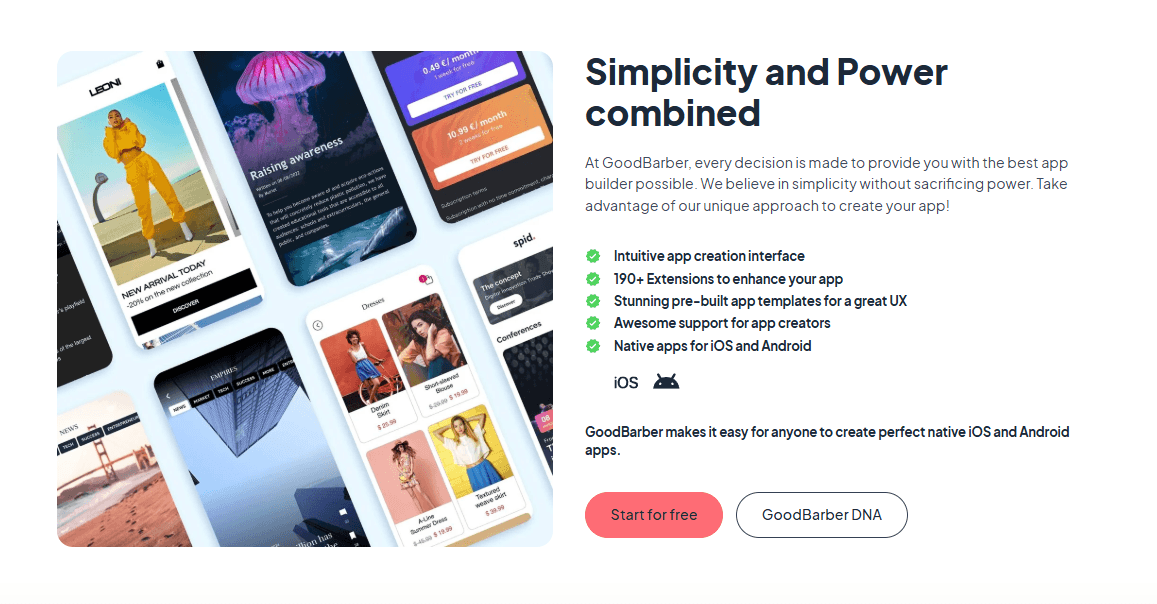
Drag-and-Drop Builder: You can create apps with ease using GoodBarber's intuitive drag-and-drop builder. This feature lets your team design app layouts without writing a single line of code.
Customizable Templates: GoodBarber provides a variety of templates that you can tailor to your brand's needs. These templates save you time and help maintain a consistent design across your apps.
Push Notifications: Keep your users engaged with real-time push notifications. You can send targeted messages directly to users' devices to boost interaction.
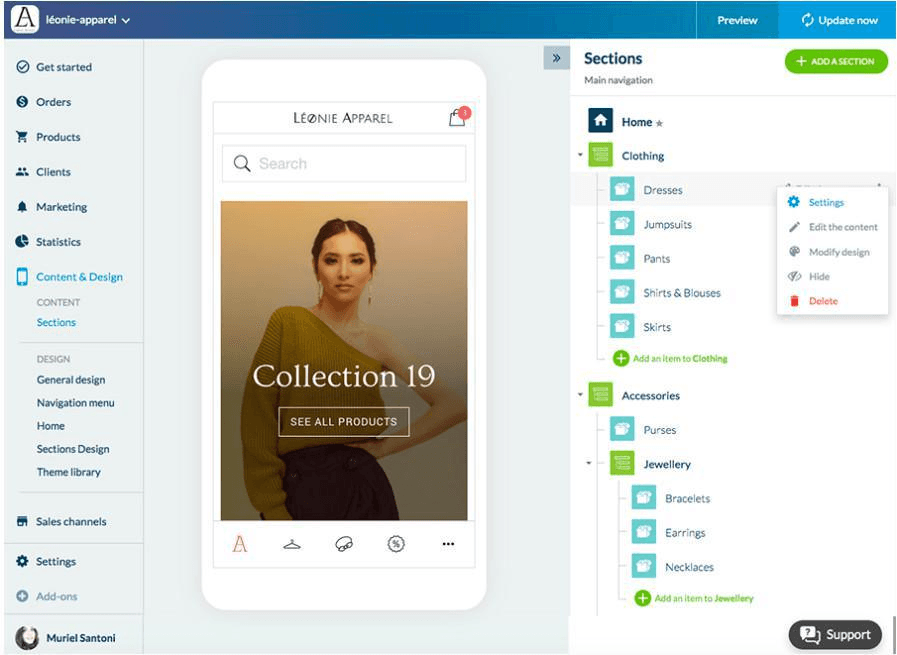
Content Management System: Manage your app's content effortlessly with GoodBarber's built-in CMS. This feature allows you to update and organize content without technical help.
Offline Mode: Your users can access content even when they're offline, thanks to GoodBarber's offline mode. This ensures continuous user engagement, regardless of internet connectivity.
App Previewer: Test your app before launching with the app previewer. This feature lets you see exactly how your app will function on different devices.
Ease of Use
GoodBarber is relatively easy to use, especially for teams without coding expertise. Its drag-and-drop builder simplifies app creation, letting you design without technical barriers. However, some users note that the onboarding process could be smoother, which might slow down initial setup. Compared to other options, GoodBarber offers a straightforward interface, but your team might need time to fully grasp all its features. Overall, it's user-friendly but with room for improvement in getting started.
Integrations
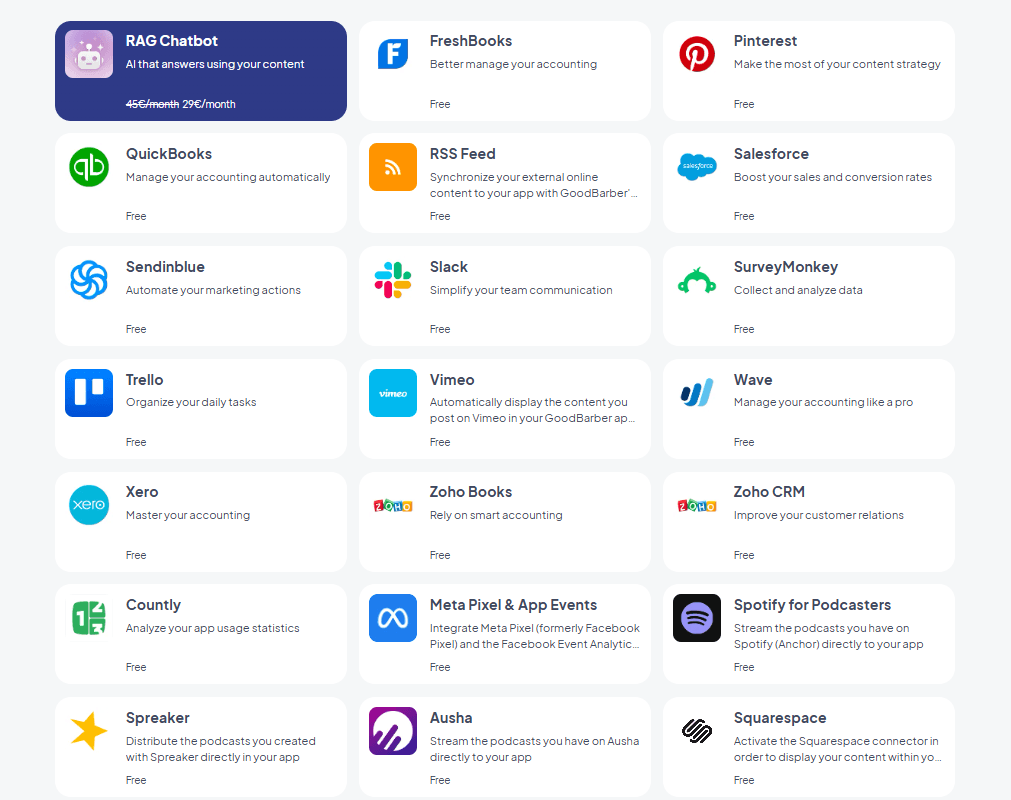
GoodBarber integrates with Vimeo, Dailymotion, Google Analytics, Facebook, Twitter, Instagram, Mailchimp, Microsoft Outlook, and Slack.
GoodBarber also offers an API and connects with third-party integration tools like Zapier and Make, enabling enhanced app functionality and workflow automation for more efficient operations.
GoodBarber Specs
- A/B Testing: No
- API: Yes
- External Integrations: Yes
- Multi-User: Yes
- Third-Party Plugins/Add-Ons: Yes


