
Recensione Cloudkeeper: Pro, Contro, Caratteristiche e Prezzi Spiegati



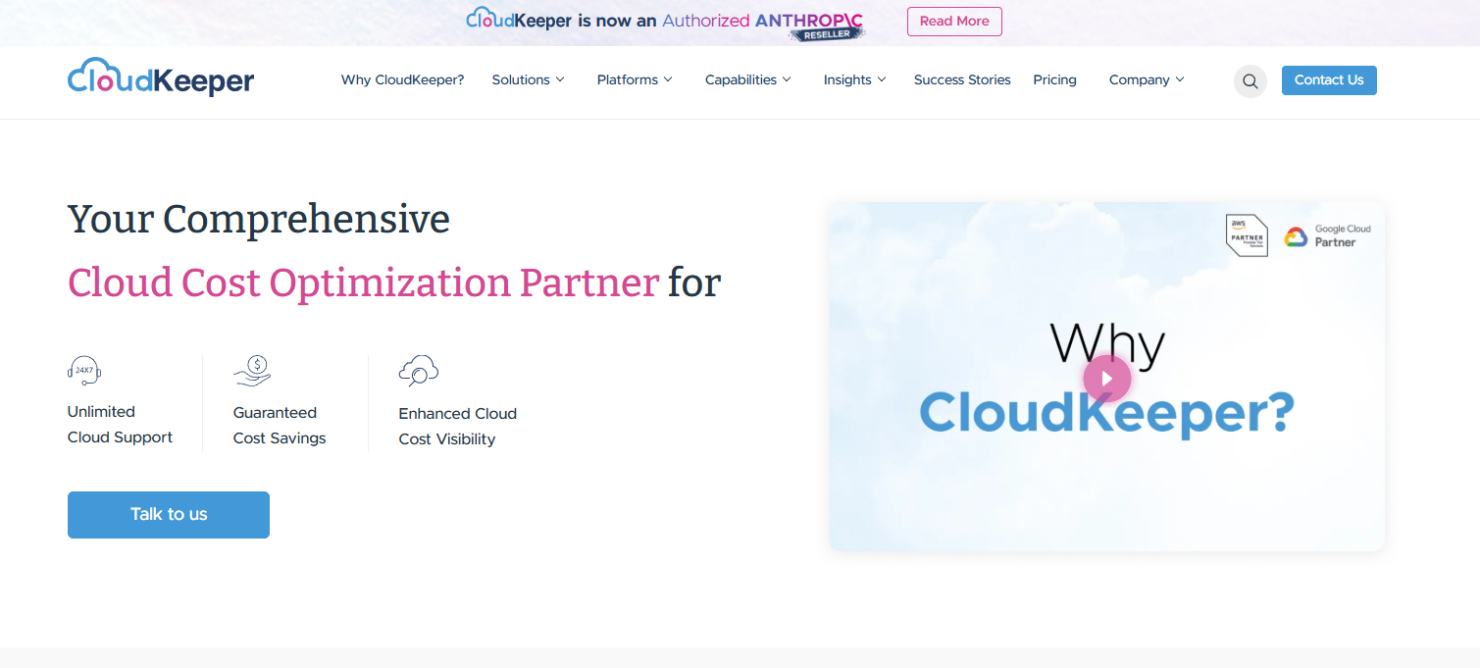
CloudKeeper is a cloud management platform built around AWS cost optimization, giving teams visibility into cloud spend alongside automated Reserved Instance management. I'd mainly consider it if your infrastructure is heavily AWS-dependent and rising cloud costs are starting to demand real attention. Compared to something like CloudHealth by VMware, CloudKeeper is more focused—it won't pull you into multi-cloud dashboards you don't need, and its RI pooling approach tends to deliver faster, more tangible cost reductions for AWS-first teams.
CloudKeeper Evaluation Summary
- Pricing upon request
- Free trial available
Perché fidarsi dei nostri consigli sui software
Il nostro team testa e recensisce software dal 2012. In quanto leader tecnologici noi stessi, sappiamo quanto sia difficile — e importante — scegliere il software giusto.
Per questa guida, abbiamo valutato gli strumenti attraverso test praticie ricerche indipendenti, assegnando un punteggio agli strumenti in base ai nostri criteri di selezione.
Le nostre recensioni riflettono il nostro giudizio editoriale umano, non un discorso di vendita.
Revisori esperti:
CloudKeeper Overview
When judging Cloudkeeper against other cloud management platforms, its guaranteed savings model and automated cost optimization set it apart for teams prioritizing budget control. The interface is straightforward, onboarding is quick, and support is responsive, making it easy to adopt. While its automation is strong, those needing deep customization or granular policy controls may find it less flexible. Pricing is transparent and performance-focused, which appeals to organizations seeking predictable outcomes. Cloudkeeper is best suited for businesses that want hands-off savings and clear ROI, especially those managing large AWS, Azure, or Google Cloud environments.
pros
-
Guarantees cost savings on AWS and Google Cloud bills
-
Provides 24/7 access to certified cloud experts
-
Offers granular, resource-level cloud cost visibility
cons
-
Limited support for private or hybrid cloud environments
-
Advanced policy controls are less configurable than some competitors
-
Some users report occasional delays in dashboard data refreshes




La Nostra Metodologia di Recensione
Come Testiamo e Valutiamo gli Strumenti
Abbiamo trascorso anni a costruire, perfezionare e migliorare il nostro sistema di testing e valutazione del software. Il nostro schema è progettato per cogliere le sfumature della selezione software e cosa rende efficace uno strumento, focalizzandosi sugli aspetti critici del processo decisionale.
Di seguito, puoi vedere esattamente come funziona il nostro testing e punteggio su sette criteri. Ci permette di offrire una valutazione imparziale del software basata su funzionalità principali, caratteristiche distintive, facilità d’uso, onboarding, assistenza clienti, integrazioni, recensioni dei clienti e rapporto qualità-prezzo.
Funzionalità Principali (25% del punteggio finale)
Il punto di partenza della nostra valutazione è sempre la funzionalità principale dello strumento. Ha le funzioni e caratteristiche base che ci si aspetta? Alcune di queste caratteristiche sono limitate ai piani tariffari superiori? Fondamentalmente, ci aspettiamo che uno strumento regga il confronto rispetto alle capacità di base dei concorrenti.
Caratteristiche Distintive (25% del punteggio finale)
Successivamente, valutiamo le caratteristiche distintive e non comuni che vanno oltre la funzionalità base tipicamente trovata negli strumenti di questa categoria. Un punteggio alto riflette funzionalità specializzate o uniche che rendono il prodotto più veloce, efficiente o offrono ulteriore valore all’utente.
Valutiamo inoltre quanto sia semplice integrare altri strumenti tipicamente utilizzati nell’infrastruttura tecnologica per espandere la funzionalità e l’utilità del software. Gli strumenti che offrono numerose integrazioni native, connessioni di terze parti e accesso API per creare integrazioni personalizzate ottengono i punteggi migliori.
Facilità d’Uso (10% del punteggio finale)
Consideriamo quanto sia rapido e semplice svolgere i compiti definiti nella funzionalità principale utilizzando lo strumento. Il software con punteggio alto è ben progettato, intuitivo da usare, offre app mobili, fornisce modelli e rende semplici attività relativamente complesse.
Onboarding (10% del punteggio finale)
Sappiamo quanto sia importante l’adozione rapida da parte del team per una nuova piattaforma, quindi valutiamo quanto sia facile imparare e utilizzare uno strumento con formazione minima. Valutiamo quanto velocemente un membro del team possa iniziare a usare lo strumento anche senza esperienza. Soluzioni con punteggio alto indicano che sono richiesti pochi o nessun supporto.
Assistenza Clienti (10% del punteggio finale)
Esaminiamo quanto sia veloce e facile ricevere assistenza e risolvere problemi tramite telefono, live chat o knowledge base. Gli strumenti e le aziende che garantiscono supporto in tempo reale ottengono il miglior punteggio, mentre i chatbot ottengono il peggiore.
Recensioni dei Clienti (10% del punteggio finale)
Oltre ai nostri test e valutazioni, prendiamo in considerazione il net promoter score dei clienti attuali e passati. Valutiamo la probabilità che, data la scelta, selezionerebbero nuovamente lo strumento per la funzionalità principale. Un software con punteggio alto riflette un alto net promoter score da parte dei clienti attuali o passati.
Rapporto Qualità-Prezzo (10% del punteggio finale)
Infine, considerando tutti gli altri criteri, analizziamo il prezzo medio dei piani base rispetto alle funzionalità principali e consideriamo il valore degli altri criteri di valutazione. Il software che offre di più a meno otterrà un punteggio più alto.
Core Features
Guaranteed Savings
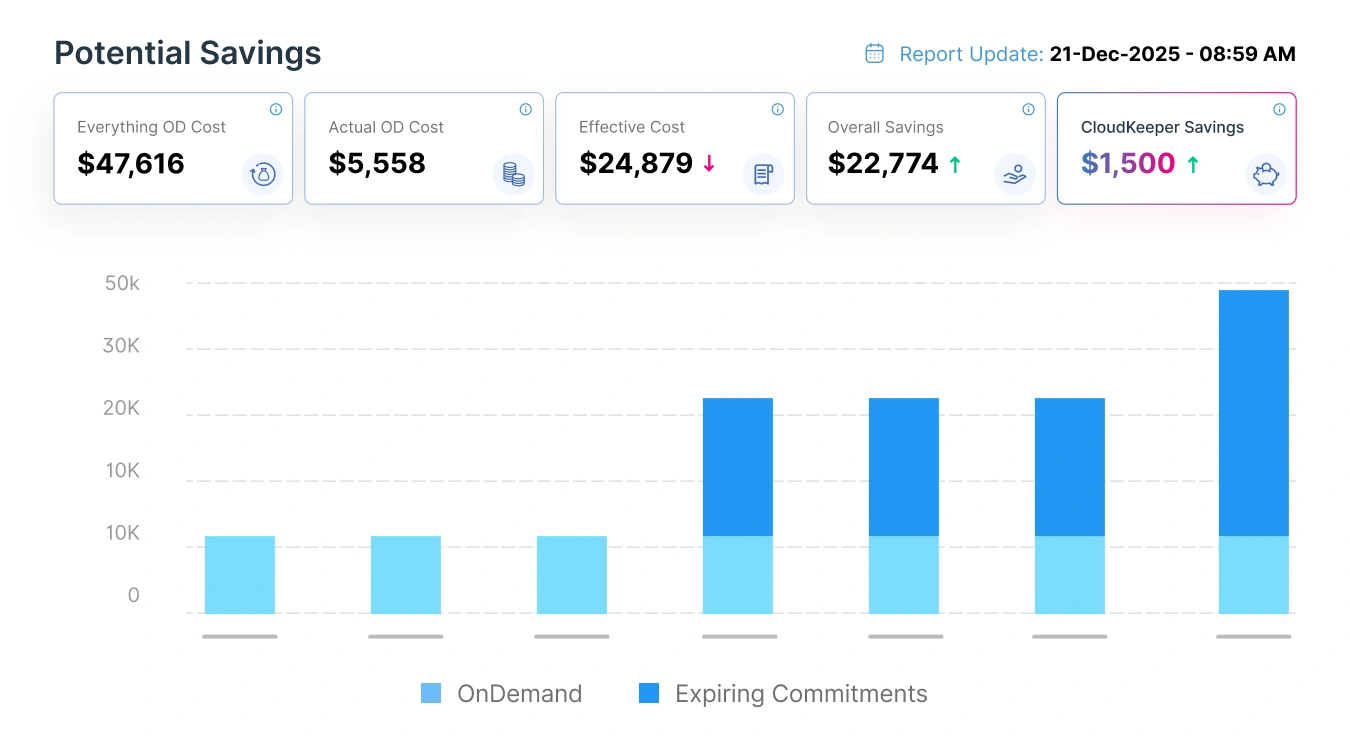
Cloudkeeper commits to delivering a fixed percentage of cloud cost savings. This model gives users predictable financial outcomes and reduces budget uncertainty.
Resource-Level Cost Visibility
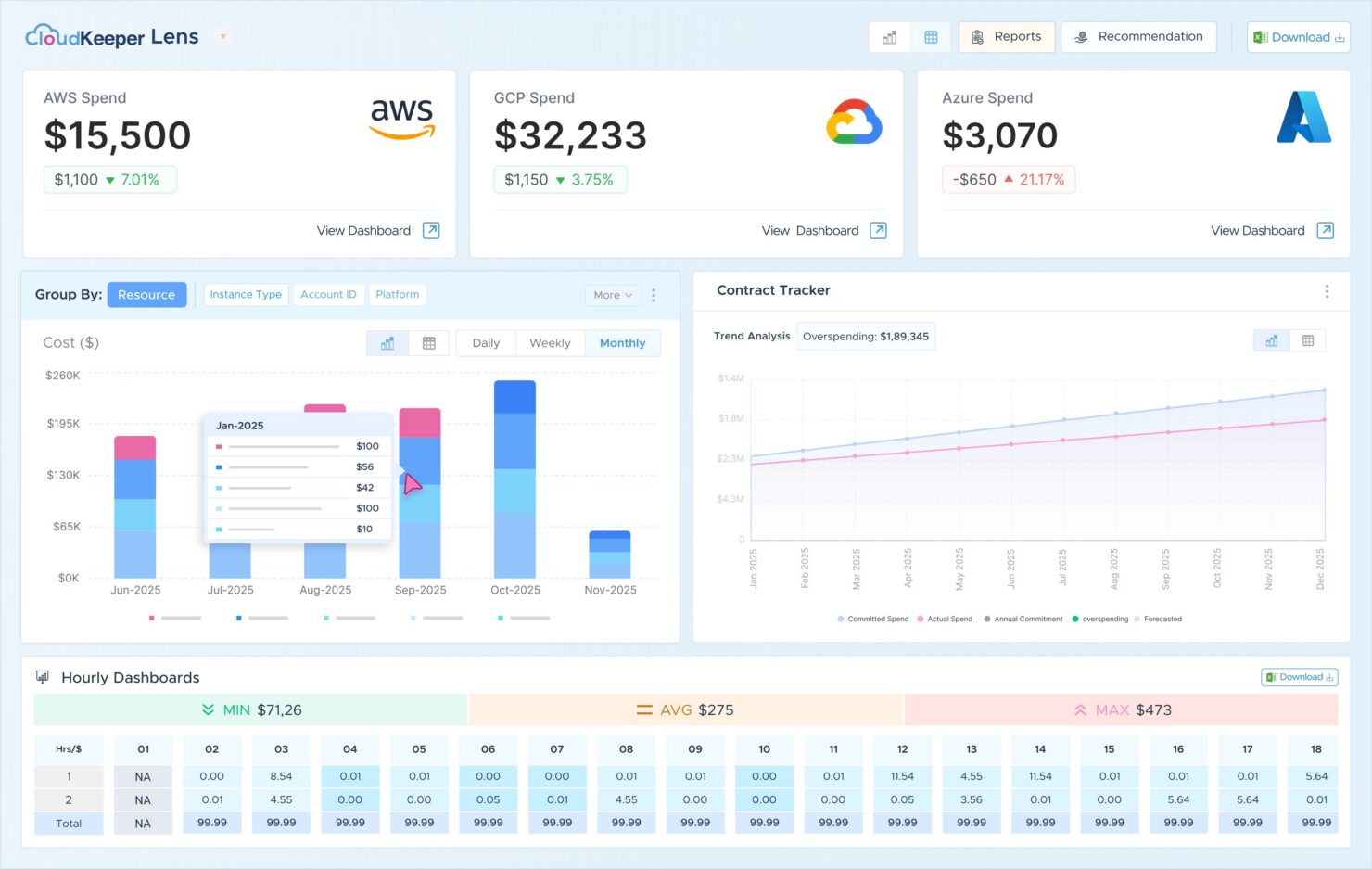
Users can track cloud spend down to individual resources and services. This granularity helps teams identify cost drivers and optimize usage.
Automated Cloud Optimization
Cloudkeeper automatically identifies and implements savings opportunities, such as reserved instance purchases and right-sizing. This reduces manual effort and ensures ongoing cost efficiency.
24/7 Cloud Expert Support
Certified cloud professionals are available around the clock to answer questions and resolve issues. This support is included at no extra cost for all customers.
Multi-Cloud Management
The platform supports AWS, Azure, and Google Cloud from a single dashboard. Users can monitor and optimize multiple cloud environments without switching tools.
Customizable Reporting and Alerts
Cloudkeeper provides tailored reports and real-time alerts on spend, usage, and cost anomaly detection. This helps teams stay informed and act quickly on unexpected changes.
Ease of Use
Cloudkeeper is widely regarded as user-friendly, with a clean interface and intuitive navigation that make onboarding fast for most teams. Users appreciate the clear dashboards and actionable insights, which simplify complex cost data without overwhelming detail. The platform's automated optimization and responsive support further reduce manual effort, allowing IT teams to focus on higher-value work. Some users note occasional dashboard refresh delays, but overall usability remains a strong point.
Integrations
Cloudkeeper integrates with AWS, Azure, Google Cloud Platform, and Splunk, among others.
Cloudkeeper also offers an API for custom integrations and connects with select third-party integration tools.
CloudKeeper Specs
- API
- Bug Tracking
- CI/CD Integration
- Cloud Deployment
- Code Review
- Code Transformation
- Collaboration Support
- Data Export
- Data Import
- Developer Tools
- External Integrations
- Git Integration
- History/Version Control
- IDE Plugins
- Local Deployment
- Multi-User
- Notifications
- Project Management
- Release Management
- Static Analysis
- Task Scheduling/Tracking
- Testing