


QA.tech vs. testRigor: Confronto e Recensioni degli Esperti per il 2026
Ecco la mia opinione su QA.tech vs. testRigor. Scopri come il testing guidato da agenti si confronta con l'automazione dei test con IA generativa e quale approccio è più adatto al tuo team nel 2026.

Recensiamo gli strumenti in modo indipendente e le commissioni ci aiutano a finanziare i nostri test. Consulta la nostra politica sulla trasparenza, la nostra metodologia, oppure suggerisci uno strumento.
As applications grow, maintaining reliable end-to-end test coverage becomes more challenging. The right testing platform should reduce manual effort while helping teams catch issues before they reach production.
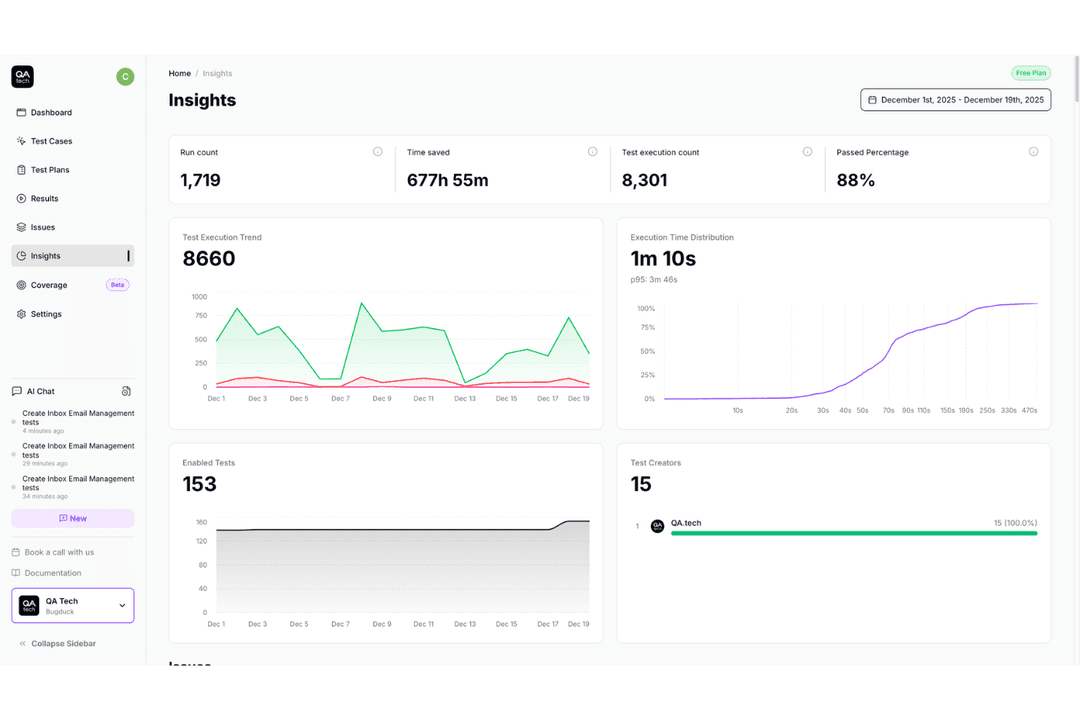
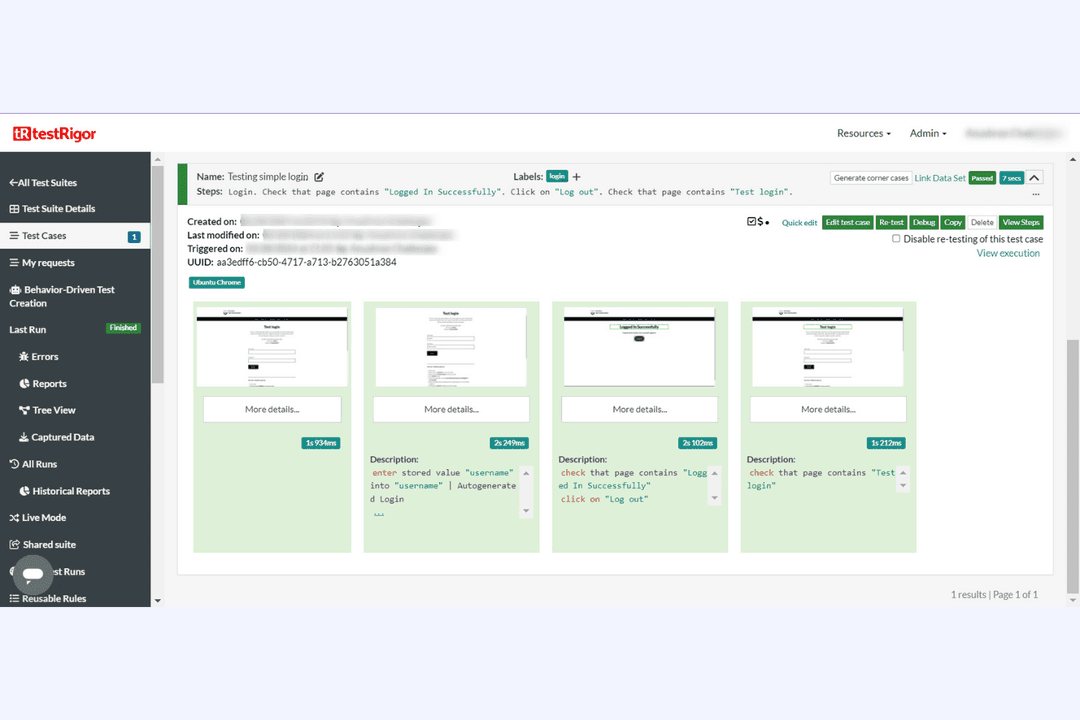
If you're comparing end-to-end testing tools, QA.tech and testRigor both use AI to improve software testing, but they take different approaches. QA.tech uses autonomous AI agents to create and run tests based on application context, while testRigor uses generative AI and plain-English test creation to simplify test automation.
In this comparison, I'll break down QA.tech and testRigor across features, pricing, security, usability, and use cases to help you decide which platform best fits your testing needs.
QA.tech
4.7/5
- Free demo available
- Pricing upon request
testRigor
4.8/5
- Free plan + 14-day free trial + free demo available
- Pricing upon request
Perché fidarsi dei nostri consigli sui software
6,700+
Reviews
20
Industry experts
16+
Evaluation factors
14
Years
Il nostro team testa e recensisce software dal 2012. In quanto leader tecnologici noi stessi, sappiamo quanto sia difficile — e importante — scegliere il software giusto.
Per questa guida, abbiamo valutato gli strumenti attraverso test praticie ricerche indipendenti, assegnando un punteggio agli strumenti in base ai nostri criteri di selezione.
Le nostre recensioni riflettono il nostro giudizio editoriale umano, non un discorso di vendita.
Revisori esperti:
- Paulo Gardini MiguelDirettore tecnico
 Tim FisherVP dell'IA
 Gabriel RosasTech Lead e architetto software
 Christhian GruhnTech Lead e architetto della piattaforma

| QA.tech | testRigor | |
|---|---|---|
| Free Trial | Free demo available | Free plan + 14-day free trial + free demo available |
| Pricing | Pricing upon request | Pricing upon request |
QA.tech vs. testRigor: Prezzi e Costi Nascosti
QA.tech e testRigor offrono entrambe strutture di prezzo che si adattano alle esigenze di testing, ma confezionano le funzionalità in modo diverso. QA.tech propone i piani Starter, Growth ed Enterprise, con livelli superiori che aggiungono funzionalità come esecuzioni di test in parallelo, test su dispositivi mobili, test su pull request, integrazioni, sicurezza avanzata e supporto dedicato. testRigor offre i piani Free Public, Private Complete ed Enterprise, con opzioni a pagamento che includono test privati, supporto per un maggiore numero di piattaforme, integrazioni, controlli di accesso e funzionalità enterprise.
Quando confronti i costi, considera il volume di test, i requisiti di sicurezza, la necessità di supporto e l'approccio del tuo team all'automazione. La tariffazione di QA.tech può adattarsi meglio ai team che scalano i test AI autonomi all'interno dei flussi di lavoro di ingegneria, mentre la tariffazione di testRigor dipende da esigenze come test privati, controlli enterprise, supporto dedicato, o funzionalità avanzate di sicurezza e distribuzione.
| QA.tech | testRigor | |
|---|---|---|
| A/B Testing | No | Yes |
| API | Yes | Yes |
| Automated Testing | Yes | Yes |
| Browser Compatibility Testing | Yes | Yes |
| Bug Tracking | Yes | No |
| Calendar Management | No | No |
| CI/CD Integration | Yes | Yes |
| Dashboard | Yes | Yes |
| Data Export | Yes | Yes |
| Data Import | Yes | Yes |
| Data Visualization | Yes | Yes |
| Developer Tools | Yes | Yes |
| External Integrations | Yes | Yes |
| History/Version Control | Yes | Yes |
| Manual Testing | No | No |
| Multi-User | Yes | Yes |
| Notifications | Yes | Yes |
| Performance Testing | No | No |
| Regression Testing | Yes | Yes |
| Scheduling | Yes | Yes |
| Status Notifications | Yes | Yes |
| Third-Party Plugins/Add-Ons | Yes | Yes |
| Integrazione | QA.tech | testRigor |
|---|---|---|
| IntegrazioneJira | QA.tech✅ | testRigor✅ |
| IntegrazioneGitHub | QA.tech✅ | testRigor✅ |
| IntegrazioneSlack | QA.tech✅ | testRigor❌ |
| IntegrazioneAzure DevOps | QA.tech✅ | testRigor✅ |
| IntegrazioneGitLab | QA.tech✅ | testRigor✅ |
| IntegrazioneTestRail | QA.tech❌ | testRigor✅ |
| IntegrazioneCircleCI | QA.tech✅ | testRigor✅ |
| IntegrazioneTrello | QA.tech✅ | testRigor❌ |
| IntegrazioneMicrosoft Teams | QA.tech✅ | testRigor❌ |
| IntegrazioneAPI | QA.tech✅ | testRigor✅ |
Sia QA.tech che testRigor offrono opzioni di integrazione che collegano il testing automatizzato ai flussi di sviluppo esistenti. QA.tech pone l'accento sulle integrazioni focalizzate sull'ingegneria all'interno delle pipeline CI/CD, degli strumenti di collaborazione e dei sistemi di ticketing, mentre testRigor si integra con strumenti di sviluppo e gestione dei test per supportare processi QA più ampi.
I team dovrebbero scegliere in base al fatto che diano priorità a flussi di lavoro ingegneristici guidati da agenti o a un'automazione dei test accessibile nell'ambito dei processi QA.
| Fattore | QA.tech | testRigor |
|---|---|---|
| FattoreCifratura dei dati | QA.techCifratura AES-256 a riposo e cifratura TLS 1.2/1.3 in transito. | testRigorUtilizza protocolli di cifratura per proteggere i dati durante l'esecuzione e l'archiviazione dei test. |
| FattoreConformità & Certificazioni | QA.techSOC 2 Type II attestato, conforme al GDPR, residenza dei dati solo in UE, con ISO 27001 in roadmap. | testRigorConforme SOC 2 Type II, conforme GDPR, conforme HIPAA e certificato ISO/IEC 27001:2022. |
| FattoreControllo degli Accessi | QA.techMFA obbligatoria, SAML SSO, controlli d’accesso basati sui ruoli e gestione degli accessi ai team. | testRigorFornisce funzioni di gestione degli accessi aziendali, inclusa SSO sui piani supportati. |
| FattoreAffidabilità | QA.techSupporto coperto da SLA, esecuzione di test paralleli gestiti e ingegneria di affidabilità per l’Enterprise. | testRigorSupporta l’affidabilità di testing enterprise con opzioni SLA ed esecuzione scalabile in ambienti supportati. |
| FattoreGestione della Sicurezza | QA.techISMS completo, revisioni di sicurezza e test senza necessità di accesso al codice sorgente. | testRigorSupporta pratiche DevSecOps, gestione delle vulnerabilità e test di sicurezza esterni regolari. |
Nel complesso, QA.tech pone l’accento su test guidati dall’AI sicuri con una forte protezione dei dati, accesso controllato e garanzie sul trattamento dei dati applicativi. testRigor si concentra sulla sicurezza dell’automazione dei test pronta per aziende enterprise, con programmi di conformità, gestione degli accessi e pratiche di sicurezza pensate per team che testano su diversi ambienti.
Entrambi offrono solide basi di sicurezza, ma QA.tech evidenzia flussi di lavoro di testing autonomi e sicuri, mentre testRigor dà priorità a una governance più ampia e al supporto per la conformità.
| Fattore | QA.tech | testRigor |
|---|---|---|
| FattoreInterfaccia Utente | QA.techWorkspace conversazionale per creare, modificare e gestire i test con agenti AI. | testRigorInterfaccia no-code per creare e gestire test tramite istruzioni in inglese naturale. |
| FattoreCreazione Test | QA.techGli agenti AI generano i test dagli obiettivi utente e dal contesto applicativo senza script tradizionali. | testRigorL’AI generativa aiuta i team a creare test con comandi in inglese semplice senza scrivere codice. |
| FattoreOnboarding | QA.techOnboarding guidato con solution engineer, workshop e supporto in fase di setup. | testRigorFornisce documentazione e risorse di supporto per favorire l’adozione del testing basato su AI. |
| FattoreRisorse di Supporto | QA.techEmail, canali Slack/Teams, solution engineer, e opzioni di supporto Enterprise. | testRigorSupporto standard nei piani a pagamento, con customer success dedicato e supporto Slack/Teams su Enterprise. |
| FattoreProcesso di Setup | QA.techScansione del prodotto e supporto all’impostazione aiutano gli agenti a costruire un contesto di test accurato. | testRigorSemplifica la configurazione dell’automazione riducendo la necessità di codice e supportando componenti di test riutilizzabili. |
Dal punto di vista della facilità d’uso, QA.tech si concentra su un'esperienza guidata da agenti AI, dove i team indirizzano i test attraverso obiettivi e contesto applicativo anziché costruire manualmente gli script. testRigor punta sull’accessibilità tramite AI generativa e creazione di test in inglese naturale, facilitando l’automazione anche a team con diverse competenze tecniche.
I team che desiderano test autonomi integrati nei flussi di lavoro di ingegneria possono preferire QA.tech, mentre chi cerca un approccio no-code per creare e gestire i test può trovare testRigor più semplice da adottare.
QA.tech
- AI agents automate end-to-end test creation and execution
- Strong CI/CD integrations with automated pull request testing
- Parallel test execution speeds up regression testing workflows
- Limited cross-browser testing beyond Chromium
- Tests cannot be exported as code-based scripts
- Teams may need time to adapt to autonomous testing workflows
testRigor
- You can create tests using plain English, which makes it easy for non-technical users.
- It reduces errors by automating complex test cases efficiently.
- Your team saves time by managing tests without extensive coding knowledge.
- It might have a learning curve for those new to automation testing.
- Your team may find limited customization options compared to some competitors.
- You might experience occasional delays in customer support response times.
QA.tech
- B2B SaaS CompaniesSaaS companies can use QA.tech to maintain test coverage across frequent product releases and changing application workflows.
- Software Development CompaniesDevelopment teams can automate end-to-end testing and integrate quality checks directly into CI/CD and pull request workflows.
- Fintech CompaniesFintech companies can validate critical user flows involving accounts, transactions, and complex authentication requirements.
- Healthtech PlatformsHealthtech platforms can automate regression testing as their applications, features, and user workflows continue to evolve.
- HR Tech and Recruiting PlatformsHR and recruiting platforms can test multi-step processes like onboarding, profiles, and user management across different roles.
- Ecommerce BusinessesEcommerce businesses can validate important customer journeys like account flows and checkout experiences during frequent updates.
testRigor
- E-commerce CompaniesYour e-commerce business will benefit from testRigor’s ability to handle complex test scenarios and frequent updates with ease.
- Finance DepartmentsYour finance team can rely on testRigor for its robust testing capabilities, ensuring compliance and reducing errors.
- QA TeamsYour QA department will appreciate testRigor’s user-friendly interface, allowing for quick test creation and management.
- Non-Technical UsersYour team members without coding skills can effectively create and manage tests using testRigor’s plain language approach.
- Medium-Sized EnterprisesYour medium-sized business will find testRigor cost-effective while offering comprehensive testing features.
- StartupsYour startup can quickly set up and execute tests, helping you focus on growth without getting bogged down in technical details.
Chi dovrebbe usare QA.tech e chi dovrebbe usare testRigor?
QA.tech è ideale per i team di ingegneria che vogliono test end-to-end autonomi, integrati direttamente nei flussi di sviluppo. Consiglio QA.tech a chi rilascia frequentemente, utilizza pipeline CI/CD e desidera che agenti AI creino i test, validino i cambiamenti e riducano la manutenzione manuale senza affidarsi agli script tradizionali.
testRigor è più indicato per chi desidera automazione dei test con AI senza richiedere competenze di programmazione approfondite. Lo consiglio a team QA, aziende ecommerce, team dei servizi finanziari, startup e realtà in crescita che vogliono che i membri meno tecnici possano creare e gestire test in inglese naturale, mantenendo ampia copertura di test.
| QA.tech | testRigor | |
|---|---|---|
| Team Workflow | QA.tech Built around engineering workflows, CI/CD pipelines, and PR validation. | testRigor Designed to make test automation accessible across QA teams, developers, and non-technical users. |
| Test Approach | QA.tech Uses autonomous AI agents that create and execute tests based on goals and application context. | testRigor Uses generative AI to help users create and maintain automated tests using plain English instructions. |
| Test Coverage | QA.tech Focuses on autonomous end-to-end testing for web and mobile applications. | testRigor Supports broader test automation across web, mobile, desktop, API, visual, and data-driven testing. |
| Test Creation | QA.tech Agents generate tests from application understanding and user-defined goals. | testRigor Users create no-code tests by writing natural language test instructions. |
| User Involvement | QA.tech Teams guide AI agents by defining goals and reviewing testing outcomes. | testRigor Teams directly define test scenarios in plain English while AI helps reduce maintenance. |
| Access Management | Both provide team management and access control options for managing testing collaboration. |
|---|---|
| AI-Powered Automation | Both use AI to reduce manual test creation and maintenance work across testing workflows. |
| Cloud-Based Platform | Both provide cloud-based testing capabilities to help teams create, run, and manage automated tests. |
| Development Integrations | Both connect with development, CI/CD, and test management workflows to support existing processes. |
| Test Reporting | Both provide test results and reporting capabilities to help teams review issues and improve test coverage. |