

QA.tech vs. QA Wolf: Confronto e Recensioni degli Esperti per il 2026
Confronto QA.tech e QA Wolf su automazione, flussi di lavoro di test e adattabilità al team, per aiutarti a decidere quale soluzione di test end-to-end risponde meglio alle tue esigenze nel 2026.

Recensiamo gli strumenti in modo indipendente e le commissioni ci aiutano a finanziare i nostri test. Consulta la nostra politica sulla trasparenza, la nostra metodologia, oppure suggerisci uno strumento.
Keeping your test coverage reliable gets harder as applications grow and testing demands increase. The right testing platform should reduce manual maintenance while helping teams catch issues before they reach production.
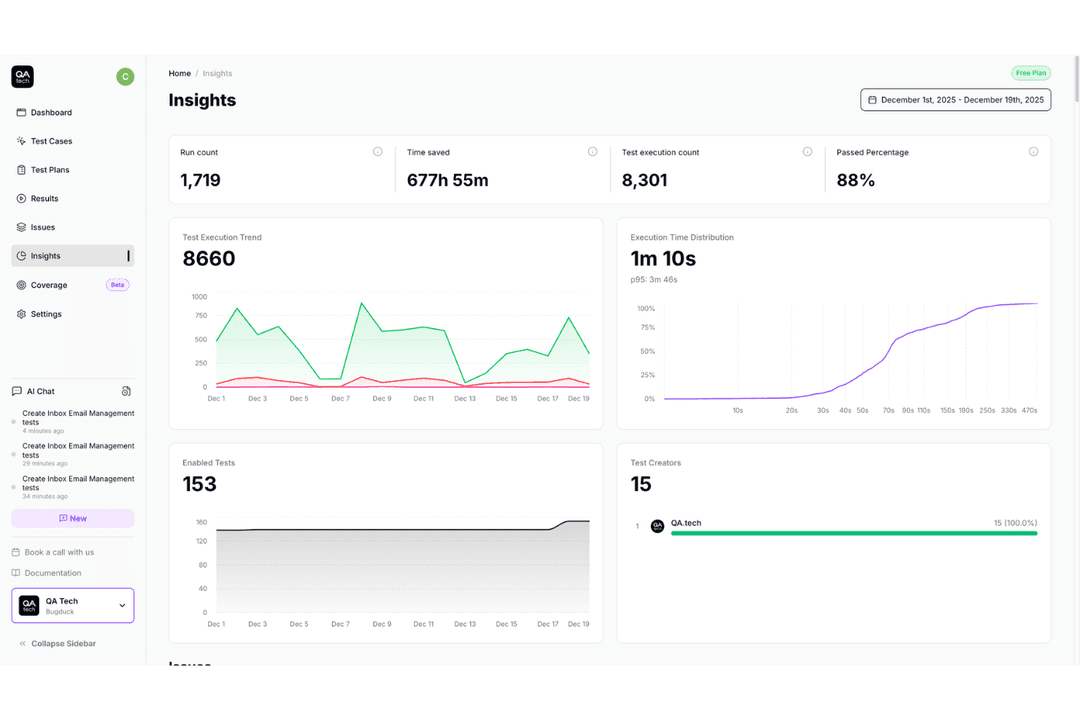
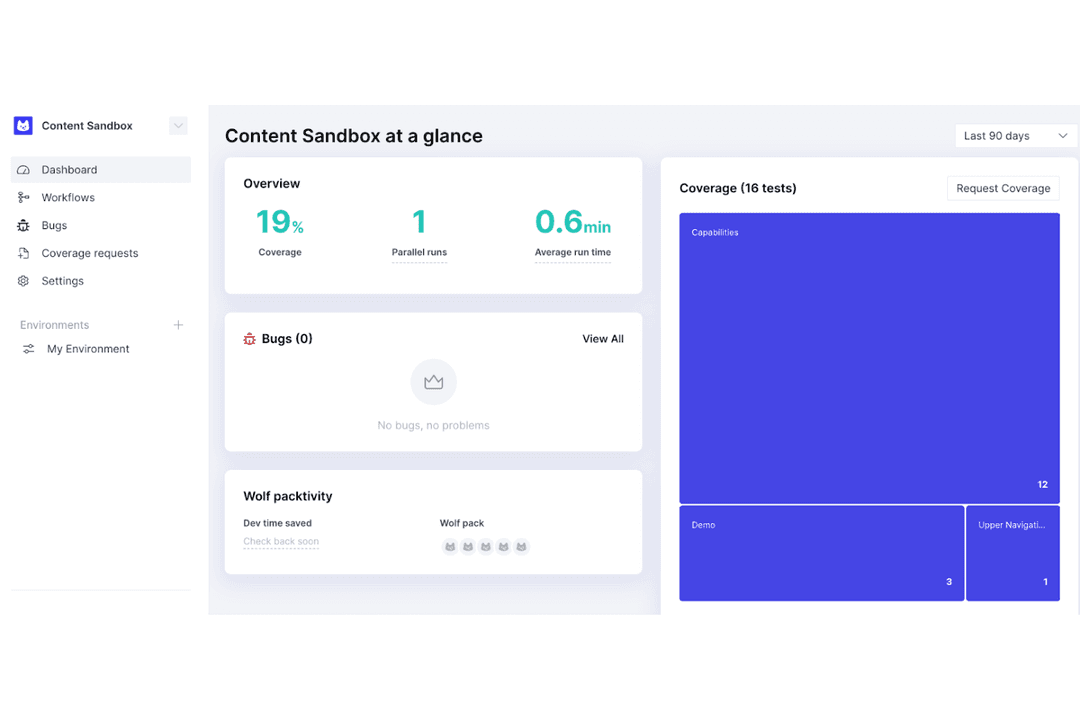
If you're comparing end-to-end testing tools, QA.tech and QA Wolf both use AI to improve software testing, but they take different approaches. QA.tech uses autonomous AI agents that create and run tests based on application context, while QA Wolf combines AI-powered testing with a managed QA service that creates, runs, and maintains tests on your behalf.
In this comparison, I'll break down QA.tech and QA Wolf across features, pricing, security, usability, and use cases to help you decide which platform best fits your team's testing needs.
QA.tech
4.8/5
- Free demo available
- Pricing upon request
QA Wolf
4.9/5
- Free demo available
- From 1¢/AI credit
Perché fidarsi dei nostri consigli sui software
6,700+
Reviews
20
Industry experts
16+
Evaluation factors
14
Years
Il nostro team testa e recensisce software dal 2012. In quanto leader tecnologici noi stessi, sappiamo quanto sia difficile — e importante — scegliere il software giusto.
Per questa guida, abbiamo valutato gli strumenti attraverso test praticie ricerche indipendenti, assegnando un punteggio agli strumenti in base ai nostri criteri di selezione.
Le nostre recensioni riflettono il nostro giudizio editoriale umano, non un discorso di vendita.
Revisori esperti:
- Paulo Gardini MiguelDirettore tecnico
 Tim FisherVP dell'IA
 Gabriel RosasTech Lead e architetto software
 Christhian GruhnTech Lead e architetto della piattaforma

| QA.tech | QA Wolf | |
|---|---|---|
| Free Trial | Free demo available | Free demo available |
| Pricing | Pricing upon request | From 1¢/AI credit |
QA.tech Vs. QA Wolf: Prezzi e Costi Nascosti
QA.tech e QA Wolf adottano entrambi un modello di prezzi su preventivo, ma strutturano il valore in modo diverso. QA.tech propone piani Starter, Growth ed Enterprise che crescono in base al numero di utenti, esecuzioni di test in parallelo, ambienti, integrazioni, esigenze di sicurezza e livello di supporto. QA Wolf, invece, usa un modello di prezzo basato sulla copertura legato al suo servizio gestito di QA, in cui il costo include la piattaforma, l'infrastruttura di test e il supporto QA, e non soltanto l’accesso al software.
Quando si confrontano i costi, considera quanto vuoi che il tuo team si occupi in autonomia dei test. QA.tech può essere la scelta giusta per i team che desiderano integrare il testing basato su AI nei propri processi di ingegneria, mentre il prezzo di QA Wolf riflette un modello di servizio maggiormente gestito. Valuta la frequenza dei tuoi rilasci, le esigenze di copertura, le risorse di QA interne e le richieste di supporto prima di scegliere.
| QA.tech | QA Wolf | |
|---|---|---|
| A/B Testing | No | No |
| API | Yes | Yes |
| Automated Testing | Yes | No |
| Browser Compatibility Testing | Yes | No |
| Bug Tracking | Yes | Yes |
| Calendar Management | No | Yes |
| CI/CD Integration | Yes | No |
| Dashboard | Yes | Yes |
| Data Export | Yes | Yes |
| Data Import | Yes | Yes |
| Data Visualization | Yes | Yes |
| Developer Tools | Yes | No |
| External Integrations | Yes | Yes |
| History/Version Control | Yes | No |
| Manual Testing | No | No |
| Multi-User | Yes | Yes |
| Notifications | Yes | Yes |
| Performance Testing | No | No |
| Regression Testing | Yes | No |
| Scheduling | Yes | Yes |
| Status Notifications | Yes | No |
| Third-Party Plugins/Add-Ons | Yes | Yes |
| Fattore | QA.tech | QA Wolf |
|---|---|---|
| FattoreCrittografia dei dati | QA.techCrittografia AES-256 a riposo e crittografia TLS 1.2/1.3 in transito. | QA WolfCrittografia dei dati a riposo e in transito utilizzando protocolli di sicurezza moderni. |
| FattoreConformità normativa | QA.techAttestato SOC 2 Tipo II, conforme al GDPR, residenza dei dati solo UE, con ISO 27001 in programma. | QA WolfConforme a SOC 2 Tipo II e HIPAA, con report di audit disponibili. |
| FattoreGaranzia di disponibilità | QA.techSupporto con SLA, esecuzione parallela dei test gestita e ingegneria dell'affidabilità a livello Enterprise. | QA WolfArchitettura ad alta disponibilità con failover automatico e monitoraggio in tempo reale. |
| FattoreControlli di accesso | QA.techMFA obbligatoria, SAML SSO, controlli di accesso basati sui ruoli e gestione degli accessi del team. | QA WolfAccesso basato sui ruoli, controlli di minimo privilegio, revisione degli utenti e SSO tramite WorkOS. |
| FattoreGestione della sicurezza | QA.techISMS completo, revisioni di sicurezza e test senza necessità di accesso al codice sorgente. | QA WolfClassificazione dei dati, politiche di conservazione e processi di risposta agli incidenti di sicurezza. |
Entrambe le piattaforme offrono solide basi di sicurezza, inclusi crittografia, controlli di accesso, SSO e programmi di conformità. QA.tech si distingue con attestazione SOC 2 Tipo II, conformità GDPR, residenza dei dati solo nell'UE e possibilità di testare senza necessità di accesso al codice sorgente. QA Wolf abbina la conformità SOC 2 Tipo II e HIPAA a controlli sulla privacy dei dati e pratiche di affidabilità che supportano il suo servizio di QA gestito.
La maggior parte dei team di sviluppo software avrà una copertura di sicurezza solida con entrambe le piattaforme. QA.tech può essere preferibile per team che danno priorità a test autonomi senza accesso al codice sorgente, mentre QA Wolf può essere più adatto per team che cercano supporto QA gestito con forti requisiti di conformità.
| Fattore | QA.tech | QA Wolf |
|---|---|---|
| FattoreInterfaccia utente | QA.techAmbiente di lavoro conversazionale per creare, modificare e gestire test con agenti IA. | QA WolfInterfaccia della piattaforma con collaborazione continua tramite ingegneri QA e canali condivisi. |
| FattoreOnboarding | QA.techOnboarding guidato con solutions engineer, workshop e supporto all'implementazione. | QA WolfOnboarding guidato con ingegneri QA che aiutano a costruire la copertura dei test e a configurare i workflow. |
| FattoreMantenimento dei test | QA.techAgenti IA gestiscono i test in base agli obiettivi e al contesto applicativo invece che tramite script fissi. | QA WolfI test sono creati e mantenuti dal team QA Wolf usando IA e supervisione umana. |
| FattoreSupporto | QA.techEmail, canali Slack/Teams, solutions engineer e opzioni di supporto Enterprise. | QA WolfTeam QA integrato che fornisce supporto continuo e manutenzione dei test. |
| FattoreCurva di apprendimento | QA.techRichiede ai team di adattarsi a dirigere agenti IA invece che scrivere manualmente i test. | QA WolfModello collaborativo con canali condivisi e supporto continuativo del team QA. |
QA.tech e QA Wolf sono entrambi progettati per semplificare i test end-to-end, ma in modo diverso. QA.tech riduce il lavoro manuale nei test tramite agenti IA autonomi che creano e mantengono i test in base al contesto dell'applicazione, mentre QA Wolf riduce il carico QA interno combinando la propria piattaforma con un team QA dedicato.
Se vuoi un approccio guidato da agenti che mantiene i test all'interno del flusso di lavoro ingegneristico, QA.tech potrebbe essere la scelta migliore. Se invece preferisci un processo di test completamente gestito e collaborativo, QA Wolf offre maggiore supporto da parte degli ingegneri QA.
QA.tech
- AI agents automate end-to-end test creation and execution
- Strong CI/CD integrations with automated pull request testing
- Parallel test execution speeds up regression testing workflows
- Limited cross-browser testing beyond Chromium
- Tests cannot be exported as code-based scripts
- Teams may need time to adapt to autonomous testing workflows
QA Wolf
- AI generates and maintains tests, reducing manual testing and QA workload significantly.
- 100% parallel test execution delivers fast results within minutes.
- Platform-enabled service eliminates the need for in-house automation expertise.
- Less control over test logic compared to fully in-house frameworks.
- Requires trust in the external team to manage critical QA processes.
- Onboarding may require coordination and an initial knowledge transfer effort.
QA.tech
- B2B SaaS CompaniesSaaS companies can use QA.tech to maintain test coverage across frequent product releases and changing application workflows.
- Software Development CompaniesDevelopment teams can automate end-to-end testing and integrate quality checks directly into CI/CD and pull request workflows.
- Fintech CompaniesFintech companies can validate critical user flows involving accounts, transactions, and complex authentication requirements.
- Healthtech PlatformsHealthtech platforms can automate regression testing as their applications, features, and user workflows continue to evolve.
- HR Tech and Recruiting PlatformsHR and recruiting platforms can test multi-step processes like onboarding, profiles, and user management across different roles.
- Ecommerce BusinessesEcommerce businesses can validate important customer journeys like account flows and checkout experiences during frequent updates.
QA Wolf
- High-Growth SaaS TeamsRapid release cycles benefit from fast, parallel test execution and continuous maintenance across evolving product features.
- Product-Led Companies Shipping FrequentlyRun full regression suites on every deploy without slowing down engineering velocity or delaying feature rollouts.
- Teams Struggling with Flaky or Broken TestsQA Wolf handles ongoing test maintenance, eliminating common reliability issues and reducing debugging time for engineers.
- Companies Without Dedicated QA Automation EngineersOffload test creation, debugging, and maintenance to a fully managed QA team without hiring specialized resources.
- Multi-Platform Products (Web + Mobile)Supports complex workflows across web, iOS, and Android with shared coverage and consistent testing across environments.
- Engineering TeamsReduce QA time from hours to minutes with fully parallel test infrastructure and faster feedback loops for developers.
Chi dovrebbe usare QA.tech e chi dovrebbe usare QA Wolf?
Se vuoi scalare i test end-to-end mantenendo i workflow di test all'interno del team di sviluppo, sceglierei QA.tech. È particolarmente adatto se utilizzi già pipeline CI/CD e vuoi agenti IA autonomi che comprendano il contesto della tua applicazione, creino test partendo dagli obiettivi utente e validino le modifiche senza affidarsi a script di test tradizionali. Se il tuo obiettivo è aumentare la copertura dei test riducendo la creazione e manutenzione manuale, QA.tech è perfettamente in linea con questa esigenza.
QA Wolf è più adatto se desideri un approccio gestito all'automazione QA senza dover costruire internamente l'intero processo di testing. La piattaforma combina test guidati da IA con un team QA dedicato che crea, esegue, verifica e mantiene i test per tuo conto. Se preferisci un modello orientato al servizio, con supervisione umana ma mantenendo visibilità su risultati e copertura, QA Wolf è più adatto a questo flusso di lavoro.
| QA.tech | QA Wolf | |
|---|---|---|
| Execution Model | QA.tech Runs agent-driven testing workflows with parallel execution and PR validation. | QA Wolf Provides fully managed cloud execution with parallel test runs and QA review. |
| Team Involvement | QA.tech Requires teams to define testing goals and guide AI agents as part of their workflow. | QA Wolf Reduces internal QA involvement by providing engineers who manage testing operations. |
| Test Authoring | QA.tech Uses autonomous AI agents that create and run tests based on user goals and application context. | QA Wolf Combines AI testing workflows with a managed QA team that creates and maintains tests. |
| Test Framework | QA.tech Tests are created and maintained through QA.tech’s agent-based testing system using application context. | QA Wolf Uses open-source Playwright and Appium tests that can be exported. |
| Test Ownership | QA.tech Teams guide AI agents and manage testing within their engineering workflows. | QA Wolf QA Wolf engineers handle test creation, verification, and ongoing maintenance. |
| Cloud-Based Platform | Both provide cloud-based test execution to help teams run and manage end-to-end testing workflows. |
|---|---|
| Development Integrations | Both connect with common development, CI/CD, and collaboration tools to support existing engineering workflows. |
| Parallel Test Runs | Both support parallel test execution to help teams shorten feedback cycles and speed up regression testing. |
| Security Controls | Both provide security features such as encryption, access management options, and SOC 2 compliance for managing testing data. |
| Test Reporting | Both provide test results, failure details, and reporting tools to help teams investigate issues and track testing outcomes. |