

10 meilleures alternatives à Intercom évaluées en 2026

Sélection des meilleures alternatives à Intercom


Intercom ne répond peut-être pas aux besoins spécifiques de toutes les équipes. De nombreux experts techniques rencontrent des difficultés liées à la personnalisation, à l’évolutivité ou au coût lorsqu’ils utilisent Intercom. Que vous gériez les demandes des clients ou que vous cherchiez une meilleure intégration avec vos systèmes existants, il est important de trouver la solution adaptée.
D’après mon expérience, la bonne plateforme de service client peut transformer le fonctionnement de votre équipe, en améliorant la communication et en augmentant l’efficacité. J’ai testé et évalué de manière indépendante diverses alternatives à Intercom, en me concentrant sur ce qui compte vraiment pour vous.
Dans cet article, vous trouverez des avis impartiaux sur les meilleures alternatives, chacune proposant des fonctionnalités uniques pour répondre à vos défis professionnels spécifiques. Explorons les options qui peuvent mieux correspondre à vos objectifs et améliorer le flux de travail de votre équipe.
Qu’est-ce qu’Intercom ?
Intercom est une plateforme de service client conçue pour améliorer la communication entre les entreprises et leurs clients. Elle est couramment utilisée par les équipes d’assistance client, les spécialistes du marketing et les chefs de produit qui doivent interagir efficacement avec les utilisateurs. Grâce à des fonctionnalités telles que le chat en direct, la messagerie automatisée et le suivi des données clients, Intercom aide votre équipe à gérer les interactions et à améliorer l’expérience utilisateur. Globalement, Intercom offre une solution centralisée pour optimiser la communication et l’assistance client.
Tableau comparatif des alternatives à Intercom
Ce tableau comparatif récapitule les informations tarifaires de ma sélection des meilleures alternatives à Intercom :
| Tool | Best For | Trial Info | Price | ||
|---|---|---|---|---|---|
| 1 | Idéal pour un nombre illimité de contacts | Essai gratuit de 14 jours + démonstration gratuite disponible | À partir de $9.6/mois | Website | |
| 2 | Idéal pour un système de gestion des tickets simple | Essai gratuit de 30 jours disponible | À partir de $24/utilisateur/mois (facturé annuellement) | Website | |
| 3 | Idéal pour l'intégration au commerce électronique | Essai gratuit de 30 jours + démo gratuite disponible | À partir de $40/mois | Website | |
| 4 | Idéal pour l'automatisation de la gestion des tickets | Forfait gratuit + démo gratuite disponible | À partir de $39.99/mois | Website | |
| 5 | Idéal pour l'interaction pilotée par l'IA | Démo gratuite disponible | Tarification sur demande | Website | |
| 6 | Idéal pour mettre l'accent sur la confidentialité des données | Démo gratuite disponible | Tarifs sur demande | Website | |
| 7 | Idéal pour les agents d'IA personnalisables | Essai gratuit de 14 jours + forfait gratuit disponible | À partir de 45 $/mois | Website | |
| 8 | Idéal pour le support omnicanal | Démo gratuite disponible | À partir de $59/siège/mois (facturé annuellement) | Website | |
| 9 | Idéal pour une intégration fluide | Essai gratuit de 14 jours | À partir de $20/utilisateur/mois | Website | |
| 10 | Idéal pour une évolutivité abordable | Forfait gratuit disponible | À partir de $29.75/mois (facturé annuellement) | Website |
Pourquoi faire confiance à nos recommandations de logiciels
Notre équipe teste et évalue des logiciels depuis 2012. En tant que leaders technologiques nous-mêmes, nous savons à quel point il est difficile — et important — de choisir le bon logiciel.
Pour ce guide, nous avons évalué les outils grâce à des tests pratiques et une recherche indépendante, en notant les outils selon nos critères de sélection.
Nos avis reflètent notre jugement éditorial humain, et non un argumentaire de vente.
Réviseurs experts:
Avis sur les meilleures alternatives à Intercom
Vous trouverez ci-dessous mes résumés détaillés des meilleures alternatives à Intercom qui figurent dans ma sélection. Mes avis présentent en détail les principales fonctionnalités, les avantages et les inconvénients, les intégrations ainsi que les cas d’utilisation idéaux de chaque outil, afin de vous aider à trouver celui qui vous convient le mieux.

Idéal pour un nombre illimité de contacts

HelpCrunch est un logiciel de service client axé sur le chat en direct et le marketing par e-mail, conçu pour les startups et les petites équipes qui gèrent la communication et l'assistance client.
Pourquoi HelpCrunch est une bonne alternative à Intercom : HelpCrunch offre un nombre illimité de contacts, permettant à votre équipe de gérer les interactions avec les clients sans restrictions. Sa fonctionnalité de chat en direct est un outil d'assistance personnalisable, offrant un engagement en temps réel adapté à l'apparence et à l'identité de votre marque. De plus, la base de connaissances de HelpCrunch aide votre équipe à créer un portail en libre-service pour vos clients.
Fonctionnalités et intégrations remarquables :
Les fonctionnalités comprennent un widget de chat personnalisable qui permet à votre équipe d'adapter l'apparence du chat à votre image de marque. L'automatisation du marketing par e-mail vous permet d'envoyer des messages ciblés, tandis que le générateur de base de connaissances vous aide à créer des articles utiles pour vos clients.
Les intégrations comprennent Slack, WordPress, Shopify, Google Analytics et bien d'autres.
Pros and Cons
Pros:
- Nombre illimité de contacts
- Popups personnalisables
- Automatisation des e-mails
Cons:
- Fonctionnalités de reporting avancées limitées
- Une assistance technique peut être nécessaire pour la configuration

Groove
Idéal pour un système de gestion des tickets simple
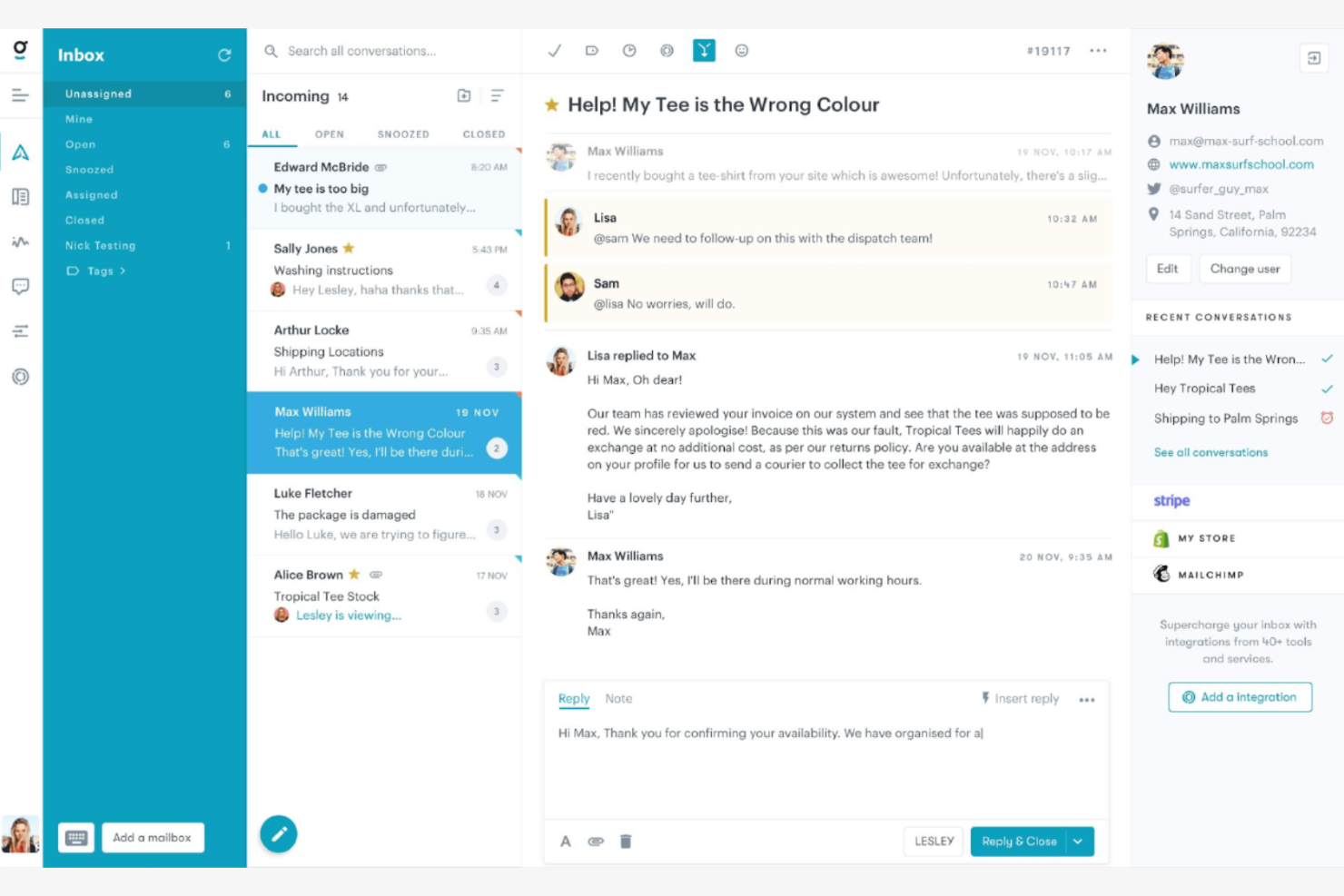
Groove est une plateforme de service client qui aide les équipes à gérer les demandes des clients grâce à une boîte de réception partagée et à un système de gestion des tickets, principalement utilisée par les petites et moyennes entreprises.
Pourquoi Groove est une bonne alternative à Intercom : Groove propose un système de gestion des tickets simple qui aide votre équipe à gérer les demandes des clients. Sa fonctionnalité de boîte de réception partagée permet aux membres de l’équipe d’accéder aux mêmes informations, ce qui réduit les réponses en double. De plus, ses outils de rapports fournissent des informations sur les performances de l’équipe et la satisfaction des clients.
Fonctionnalités et intégrations remarquables :
Les fonctionnalités comprennent des outils d’automatisation des tickets qui permettent à votre équipe de traiter automatiquement les demandes courantes, libérant ainsi du temps pour les problèmes plus complexes. Le système d’évaluation de la satisfaction client de Groove fournit des retours sur les performances de votre équipe.
Les intégrations comprennent Slack, Facebook, Shopify, Jira, Mailchimp et bien plus encore.
Pros and Cons
Pros:
- Système de gestion des tickets simple
- Boîte de réception partagée
- Capacités d’automatisation
Cons:
- Options de personnalisation basiques
- Évolutivité limitée

Gorgias
Idéal pour l'intégration au commerce électronique
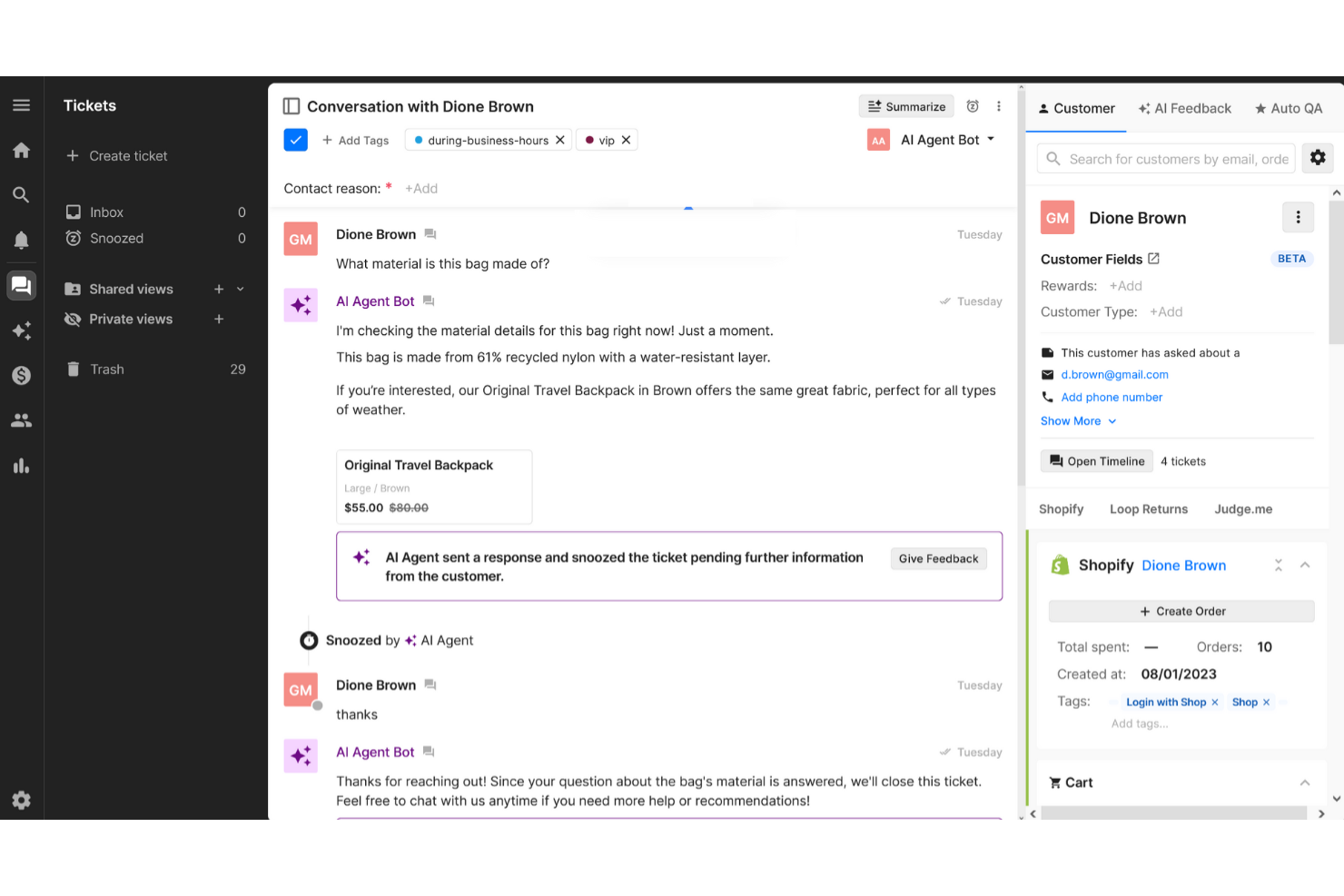
Gorgias est une plateforme de support client pour les entreprises de commerce électronique, qui aide les détaillants en ligne à gérer les demandes et à fournir efficacement une assistance multicanal.
Pourquoi Gorgias est une bonne alternative à Intercom : Gorgias excelle dans l'intégration au commerce électronique, permettant à votre équipe de gérer le support client directement depuis la plateforme de votre boutique. Ses fonctionnalités d'automatisation contribuent à réduire les tâches répétitives, afin que votre équipe puisse se concentrer sur les demandes plus complexes. La vue centralisée des clients de la plateforme aide votre équipe à accéder aux informations nécessaires pour fournir une assistance personnalisée. De plus, Gorgias fournit des analyses détaillées pour suivre les performances du support et améliorer la satisfaction client.
Fonctionnalités et intégrations remarquables :
Les fonctionnalités comprennent des macros qui permettent à votre équipe de gagner du temps en automatisant les réponses aux questions fréquentes. La plateforme fournit une assistance multicanal, permettant de traiter toutes les demandes des clients depuis une seule plateforme. Le tableau de bord centralisé offre à votre équipe une vue complète des interactions avec les clients.
Les intégrations comprennent Shopify, Adobe Commerce, Facebook, Instagram, WhatsApp et bien plus encore.
Pros and Cons
Pros:
- Intégration poussée au commerce électronique
- Automatisation des tâches répétitives
- Assistance multicanal
Cons:
- Les macros et l'automatisation nécessitent une maintenance
- Mobilise beaucoup de ressources pour les petites équipes

Idéal pour l'automatisation de la gestion des tickets
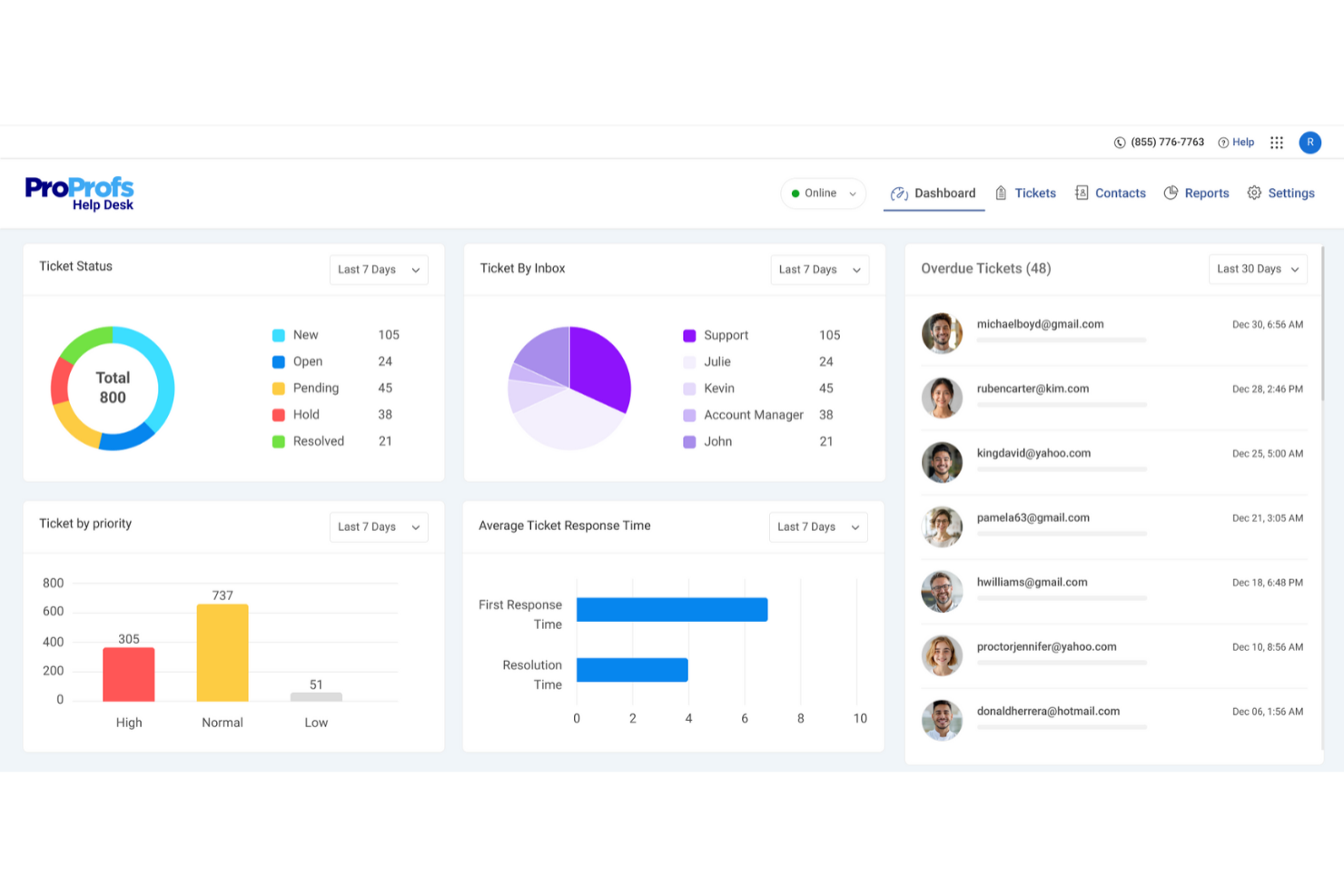
ProProfs Help Desk est un logiciel de support client qui utilise un système de tickets et l'automatisation pour aider les équipes d'assistance à gérer les demandes et à répondre plus rapidement.
Pourquoi ProProfs Help Desk est une bonne alternative à Intercom : ProProfs Help Desk automatise l'attribution des tickets afin que les questions soient transmises au bon membre de l'équipe, ce qui aide votre équipe à répondre efficacement. La boîte de réception collaborative de la plateforme permet à votre équipe de travailler efficacement ensemble et de réduire le temps de réponse. De plus, ses outils de création de rapports vous aident à suivre les indicateurs du support et à améliorer les performances.
Fonctionnalités et intégrations remarquables :
Les fonctionnalités incluent des réponses prédéfinies permettant à votre équipe de répondre rapidement aux questions fréquentes. Les outils de gestion des SLA de la plateforme contribuent au respect des attentes en matière de service, tandis que la fonctionnalité de base de connaissances vous permet de créer des ressources utiles pour les clients.
Les intégrations incluent Salesforce, Slack, Shopify, Jira, Microsoft Dynamics CRM, et bien plus encore.
Pros and Cons
Pros:
- Attribution automatisée des tickets
- Boîte de réception collaborative
- Gestion des SLA
Cons:
- Fonctionnalités avancées limitées
- Les options d'automatisation sont relativement basiques
Drift
Idéal pour l'interaction pilotée par l'IA
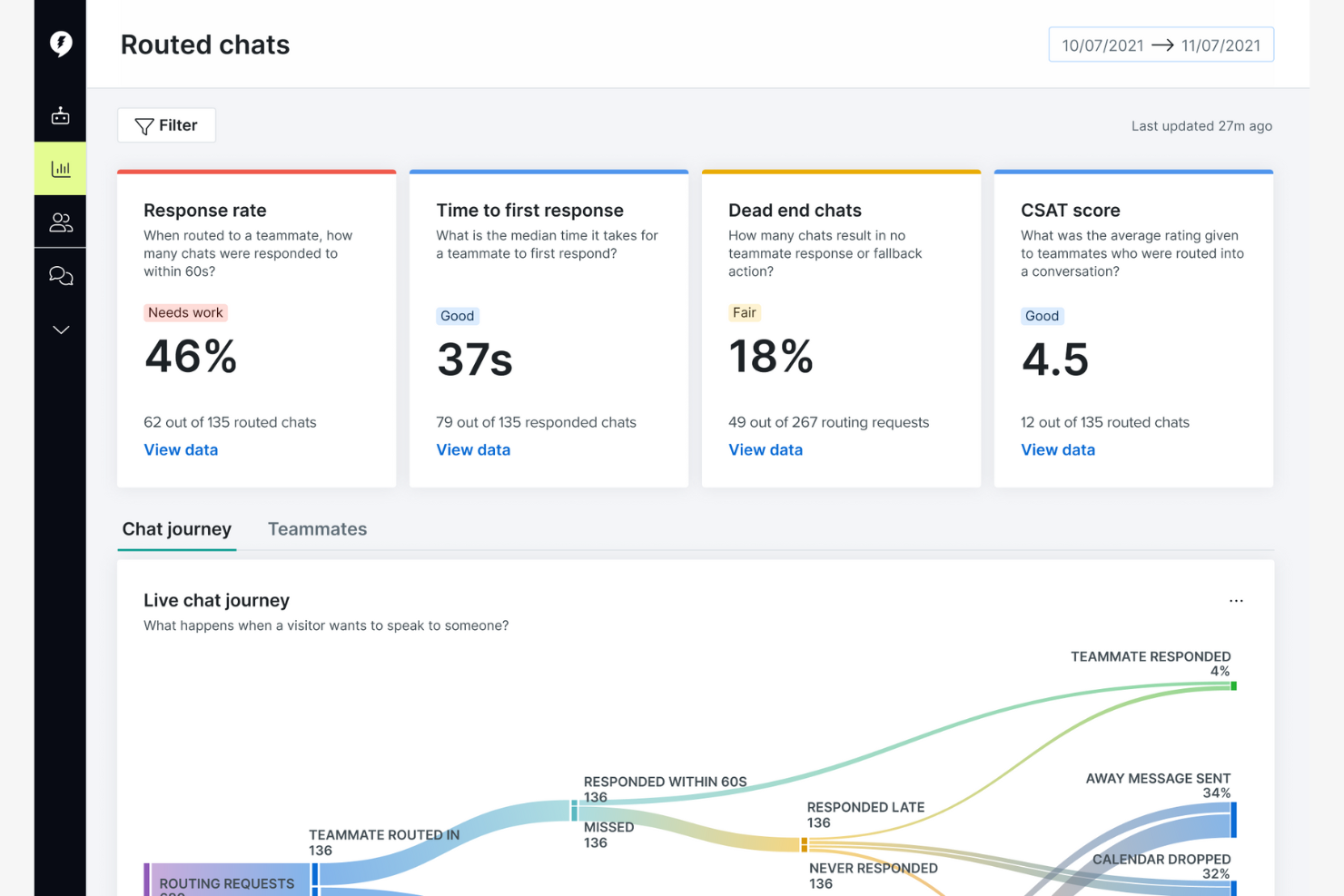
Drift est une plateforme de marketing conversationnel axée sur les robots conversationnels fondés sur l'IA et la messagerie en direct, utilisée par les équipes commerciales et marketing pour interagir avec les prospects et qualifier les clients potentiels.
Pourquoi Drift est une bonne alternative à Intercom : Drift propose des outils d'interaction pilotés par l'IA qui aident votre équipe à entrer efficacement en contact avec les clients. Ses robots conversationnels sont conçus pour qualifier automatiquement les clients potentiels, ce qui fait gagner du temps et des efforts à votre équipe. Les fonctionnalités de messagerie en temps réel de Drift permettent de répondre rapidement, ce qui améliore la satisfaction client. De plus, Drift fournit des analyses détaillées pour vous aider à suivre et à optimiser les performances de votre équipe.
Fonctionnalités et intégrations remarquables :
Les fonctionnalités comprennent des pages d'atterrissage conversationnelles, qui permettent à votre équipe d'interagir directement avec les visiteurs du site web. Les scénarios d'e-mails de la plateforme contribuent à automatiser les suivis personnalisés par e-mail, et les robots personnalisés peuvent être adaptés aux besoins spécifiques de votre entreprise.
Les intégrations incluent Salesforce, HubSpot, Slack et bien d'autres.
Pros and Cons
Pros:
- Robots conversationnels pilotés par l'IA
- Messagerie en temps réel
- Automatisation de la qualification des clients potentiels
Cons:
- Utilité limitée pour les équipes d'assistance
- Prise en charge limitée des langues

Kustomer
Idéal pour mettre l'accent sur la confidentialité des données

Kustomer est une plateforme de service client qui centralise les interactions avec les clients dans une chronologie unique, utilisée par les équipes d'assistance pour gérer les conversations et fournir une assistance personnalisée.
Pourquoi Kustomer est une bonne alternative à Intercom : Kustomer met l'accent sur la confidentialité des données et assure la sécurité de vos interactions avec les clients. Sa vue chronologique offre une vision des interactions avec les clients, aidant ainsi votre équipe à comprendre le parcours de chaque client. Les capacités d'automatisation de la plateforme réduisent les tâches manuelles, permettant à votre équipe de se concentrer sur les problèmes les plus importants. De plus, les rapports avancés de Kustomer fournissent des informations sur les performances de votre équipe et la satisfaction des clients.
Fonctionnalités et intégrations remarquables :
Les fonctionnalités comprennent l'analyse des sentiments, qui aide votre équipe à évaluer les émotions des clients lors des interactions afin d'améliorer les relations avec eux. Les fonctionnalités de gestion des accords de niveau de service de Kustomer aident votre équipe à respecter les délais de réponse et les attentes en matière de service. Son routage intelligent dirige les demandes vers le membre de l'équipe approprié en fonction de critères spécifiques.
Les intégrations comprennent Salesforce, Shopify, Slack, WhatsApp, Instagram, Facebook et bien plus encore.
Pros and Cons
Pros:
- Fonctionnalités solides de confidentialité des données
- Outils de chronologie client
- Analyse des sentiments
Cons:
- L'agent d'IA est un module complémentaire, non inclus dans les forfaits de base
- Options de personnalisation limitées

Crisp
Idéal pour les agents d'IA personnalisables
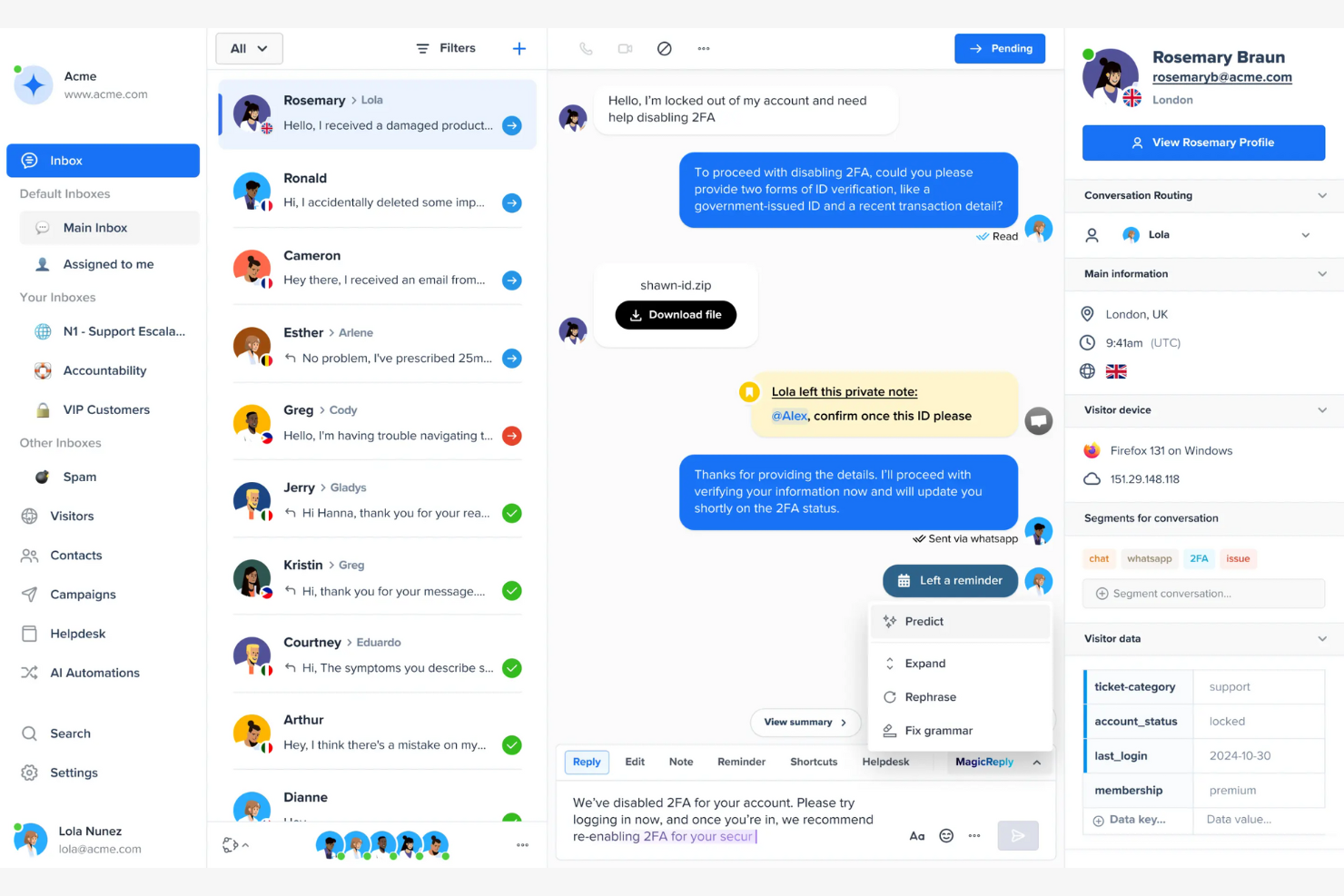
Crisp est une plateforme de messagerie client qui aide les équipes d'assistance et de vente à interagir avec les utilisateurs et à gérer le service client.
Pourquoi Crisp est une bonne alternative à Intercom : Crisp propose des agents d'IA personnalisables, permettant à votre équipe d'adapter les chatbots à ses besoins spécifiques. La fonctionnalité de chat en direct de la plateforme prend en charge les échanges en temps réel, ce qui permet à votre équipe de répondre rapidement aux demandes des clients. La boîte de réception partagée de Crisp regroupe plusieurs canaux de communication dans une seule interface, facilitant ainsi la gestion des conversations par votre équipe. De plus, sa base de connaissances vous aide à créer une section FAQ permettant aux clients de trouver eux-mêmes des réponses.
Fonctionnalités et intégrations remarquables :
Les fonctionnalités comprennent un outil de visioconférence intégré qui permet à votre équipe d'échanger en face à face avec les clients et d'améliorer la communication. Ses outils de co-navigation permettent aux membres de l'équipe de parcourir un site web avec les clients afin de leur fournir une assistance pratique. La fonctionnalité de navigation intelligente offre des informations sur le comportement des clients en temps réel.
Les intégrations comprennent WordPress, Slack, Shopify, Mailchimp, Facebook Messenger, WhatsApp, HubSpot et bien plus encore.
Pros and Cons
Pros:
- Fonctionnalité de boîte de réception partagée
- Création d'une base de connaissances
- Option de visioconférence
Cons:
- Limitations de l'application mobile
- Prise en charge limitée des langues

Pylon
Idéal pour le support omnicanal
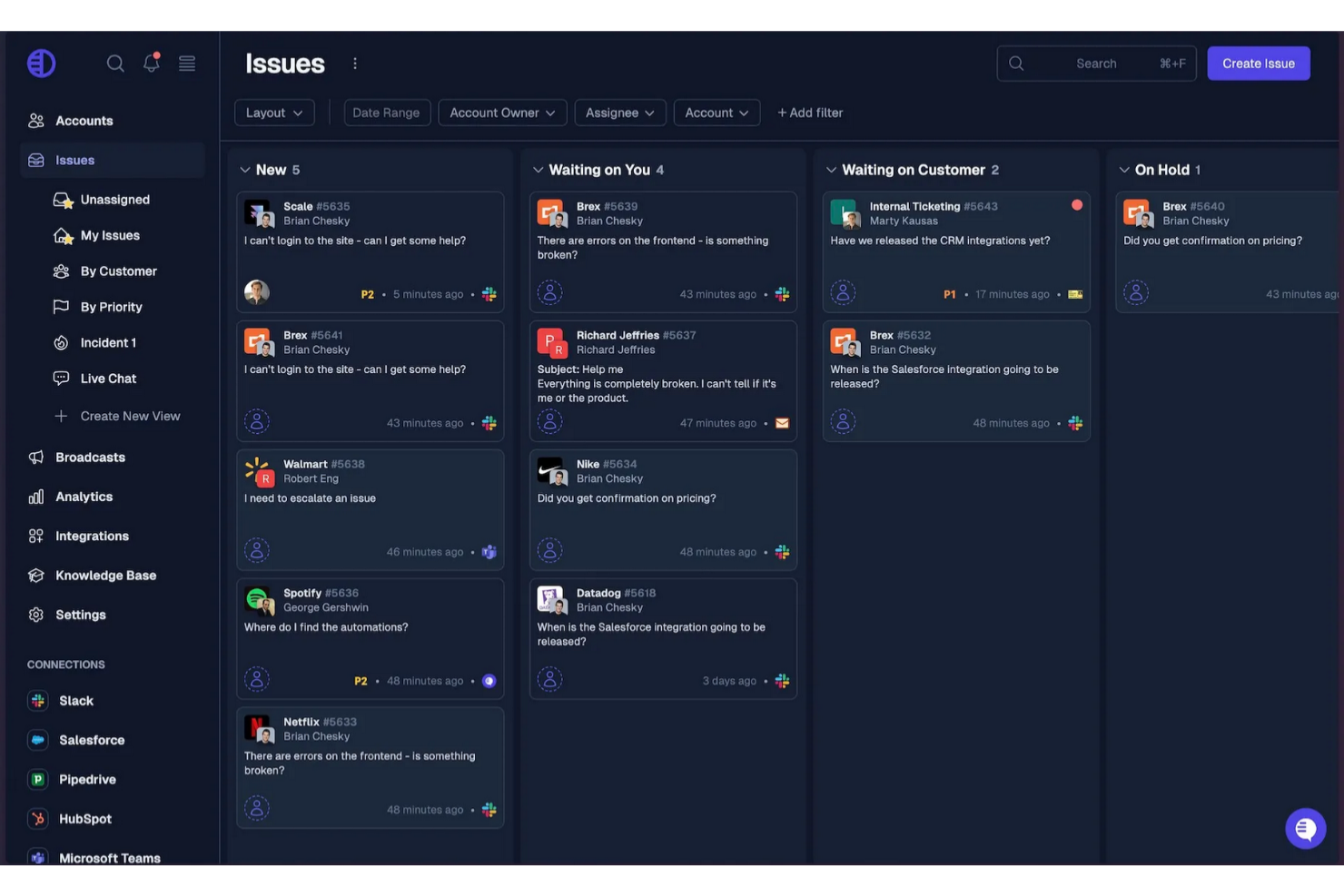
Pylon est une plateforme de support client qui aide les équipes à gérer les interactions sur plusieurs canaux, améliorant ainsi le service et la communication.
Pourquoi Pylon est une bonne alternative à Intercom : Pylon offre un support omnicanal, permettant à votre équipe de gérer les communications provenant de différentes plateformes en un seul endroit. Sa boîte de réception unifiée permet à votre équipe de répondre efficacement aux demandes sans passer d’un outil à l’autre. De plus, ses outils de création de rapports fournissent des informations sur les interactions avec les clients, aidant votre équipe à améliorer la qualité du service.
Fonctionnalités et intégrations remarquables :
Fonctionnalités : gestion des tickets, analyses en temps réel et flux de travail personnalisables. La gestion des tickets aide votre équipe à organiser et à hiérarchiser les demandes des clients. Les analyses en temps réel fournissent des informations sur les performances de l’équipe et la satisfaction des clients. Les flux de travail personnalisables permettent à votre équipe d’automatiser les tâches courantes et d’améliorer son efficacité.
Intégrations : Slack, Salesforce, HubSpot, Microsoft Teams, Asana, et bien plus encore.
Pros and Cons
Pros:
- Support omnicanal performant
- Fonctionnalité de boîte de réception unifiée
- Flux de travail personnalisables
Cons:
- Tarif par siège plus élevé
- Profondeur limitée des rapports

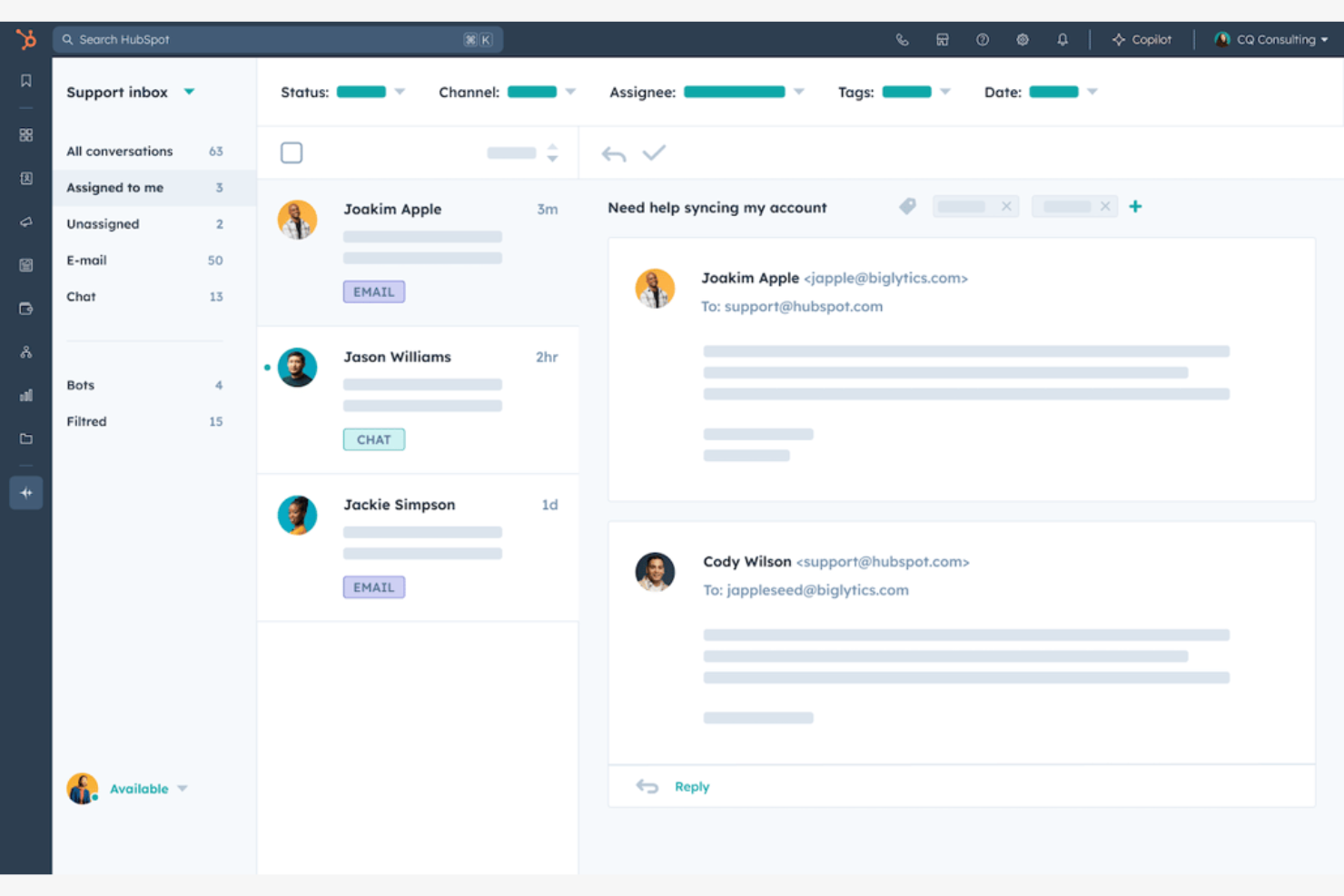
HubSpot Service Hub est une plateforme de support client axée sur la gestion des tickets, l’automatisation et les retours des clients, utilisée par les équipes d’assistance pour gérer et améliorer les interactions avec les clients.
Pourquoi HubSpot Service Hub constitue une bonne alternative à Intercom : HubSpot Service Hub s’intègre facilement aux autres outils HubSpot, offrant une expérience tout-en-un à votre équipe. Ses fonctionnalités d’automatisation contribuent à réduire les tâches répétitives. De plus, le système de gestion des tickets permet de suivre et de résoudre efficacement les problèmes.
Fonctionnalités et intégrations remarquables :
Les fonctionnalités comprennent un outil de création de base de connaissances qui aide votre équipe à constituer une bibliothèque d’articles utiles pour les clients. Les enquêtes de satisfaction client de la plateforme fournissent des informations sur la satisfaction des clients et les domaines à améliorer.
Les intégrations comprennent Salesforce, Slack, Shopify, Mailchimp, Microsoft Teams, SurveyMonkey, Eventbrite, Google Calendar, Facebook Messenger, et bien plus encore.
Pros and Cons
Pros:
- Intégration fluide avec les outils HubSpot
- Système de gestion des tickets
- Création d’une base de connaissances
Cons:
- Dépendance à l’écosystème HubSpot
- Analyses avancées limitées dans les niveaux inférieurs

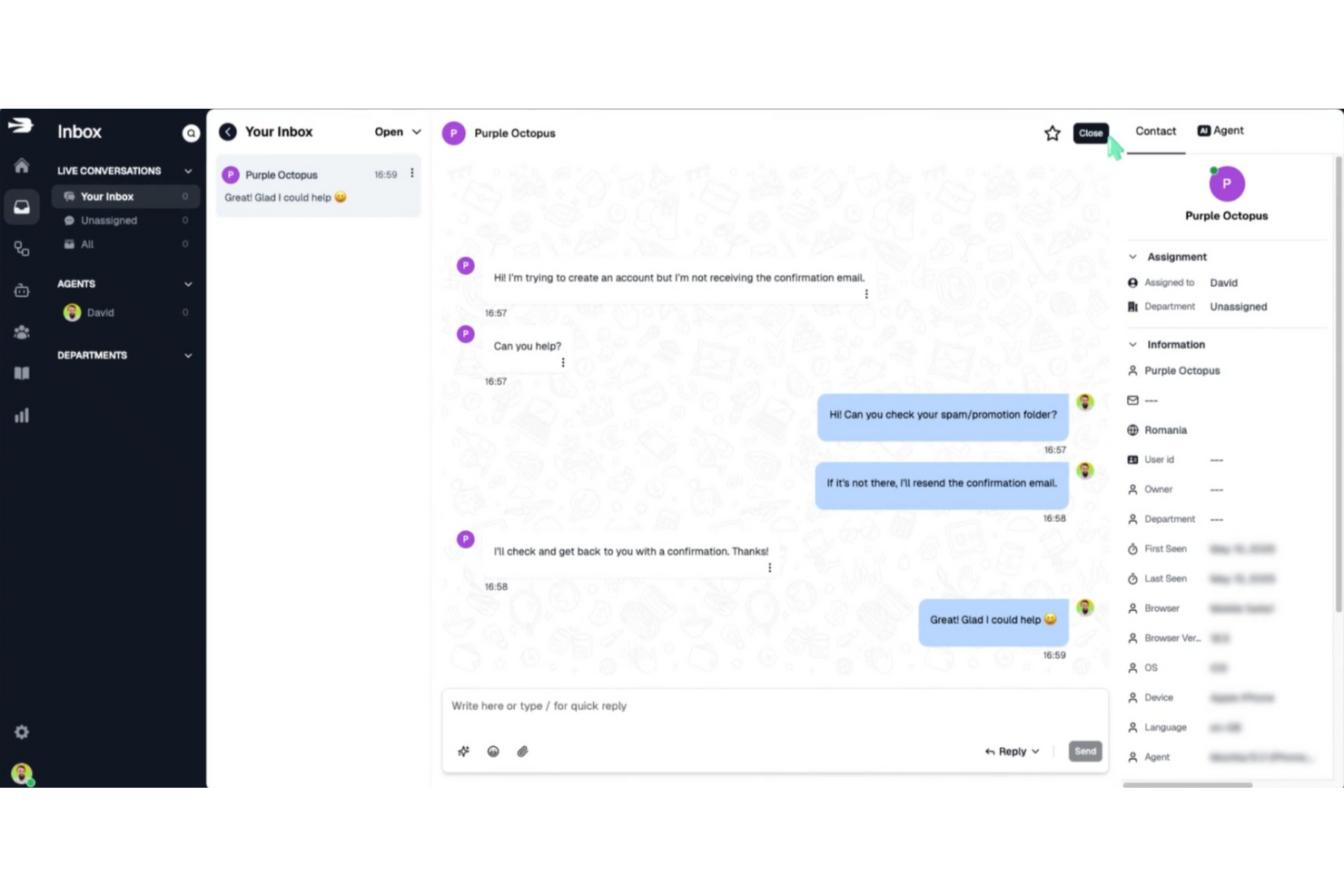
Chatabird est une plateforme de support client qui combine chat en direct et automatisation par l'IA, aidant les petites entreprises à améliorer l'efficacité de leur support et à réduire leurs coûts.
Pourquoi Chatabird constitue une bonne alternative à Intercom : Chatabird offre une évolutivité abordable, permettant à votre équipe de gérer un nombre illimité de conversations et d'utilisateurs sans frais supplémentaires. Ses agents d'IA sont personnalisables, ce qui permet à votre équipe d'automatiser les réponses et de réduire la charge de travail. L'automatisation des flux de travail de la plateforme rend les tâches de support plus efficaces, améliorant les délais de réponse et la satisfaction client. De plus, Chatabird fournit des analyses détaillées pour surveiller les performances de l'équipe et optimiser les opérations.
Fonctionnalités et intégrations remarquables :
Les fonctionnalités comprennent des outils de base de connaissances qui permettent à votre équipe de créer des ressources en libre-service pour les clients et de réduire le volume des demandes de support. La fonctionnalité de chat en direct de Chatabird permet d'interagir avec les clients en temps réel et d'améliorer la qualité du service.
Les intégrations comprennent Shopify, Slack, Facebook, Instagram, WhatsApp, Mailchimp, Google Analytics et WordPress.
Pros and Cons
Pros:
- Agents d'IA personnalisables
- Conversations et utilisateurs illimités
- Automatisation des flux de travail
Cons:
- Courbe d'apprentissage pour l'automatisation par l'IA
- Écosystème plus restreint
Alternatives à Intercom évaluées
Voici quelques alternatives supplémentaires à Intercom qui ne figurent pas dans ma sélection, mais qui méritent tout de même d’être examinées :


Comment j'évalue les alternatives à Intercom
J'examine les alternatives à Intercom sous deux angles : les exigences de base comme le chat en direct, la gestion des tickets et le routage par bot, puis les différenciateurs comme l’auto-hébergement, la richesse de l’API et la structure tarifaire.
Fonctionnalités essentielles (Critères obligatoires pour cette liste)
Lorsque je sélectionne des outils pour ma liste, j’attribue à chacun une note de 0 (ne propose pas la fonctionnalité) à 5 (excelle dans ce domaine) pour chaque fonctionnalité essentielle ci-dessous. Ensuite, je calcule le score total de l’outil en pourcentage. Chaque outil doit atteindre un score total minimum de 65 % pour être pris en considération.
- Chat en direct & messagerie : Je vérifie la présence d’un chat en temps réel sur web, mobile et email, avec un historique de conversation persistant, et non seulement un simple widget contextuel.
- Tickets & helpdesk : Chaque outil doit proposer l'attribution des tickets, le suivi des SLA et des boîtes de réception partagées afin que les équipes IT puissent gérer des files d’attente au-delà d’un fil de discussion unique.
- Chatbots IA & automatisation : J'évalue si les bots savent gérer des cas de tri à plusieurs étapes, comme rediriger une réinitialisation de mot de passe ou une alerte d’incident, sans nécessiter de règles manuelles pour chaque scénario.
- Intégrations développeur & IT : Les connexions natives à des outils comme Jira, Slack, GitHub et PagerDuty sont importantes ici, ainsi que la disponibilité d’une API publique et la prise en charge des webhooks.
- Base de connaissances & libre-service : Un centre d’aide intégré, avec recherche et articles classés, permet aux utilisateurs de résoudre des problèmes courants avant d’ouvrir un ticket.
- Données clients & segmentation : Le suivi des attributs et des événements utilisateur permet de cibler les messages, par exemple en informant uniquement les comptes concernés lors d’une dégradation de service.
Une fois que j’ai identifié des outils répondant à ces critères, j’examine ce qui distingue chaque plateforme.
Facteurs différenciants (Ce qui distingue les fournisseurs)
Voici comment je compare et différencie les différents fournisseurs :
Fonctionnalités remarquables
L’auto-hébergement est crucial pour les équipes qui gèrent des données d’infrastructure sensibles : je vérifie donc qu’une plateforme peut être déployée sur vos propres serveurs ou dans un cloud privé. Un code open source va encore plus loin, en permettant à vos ingénieurs d’auditer le code et de créer des extensions personnalisées. J’évalue aussi la messagerie proactive dans l’application : les outils qui déclenchent des bannières d’incident ou des notes de mise à jour en fonction du comportement utilisateur évitent d’encombrer le support de questions répétitives.
Au-delà des fonctionnalités
La structure tarifaire compte beaucoup lors du passage d’Intercom, donc j’évalue si les plateformes facturent par utilisateur, par conversation ou selon le volume MAU. Le support à la migration est un autre facteur important : importer des années d’historique, de macros et de contacts dans un nouvel outil peut bloquer un déploiement s’il n’existe pas d’outil dédié ou d’aide à l’onboarding. La sécurité et la conformité, avec des certifications comme SOC 2 Type II et conformité RGPD, méritent aussi d’être vérifiées, notamment pour les équipes qui gèrent des données d’incident ou des demandes IT internes.
Pourquoi rechercher une alternative à Intercom ?
Bien qu’Intercom soit un bon choix de plateforme de service client, plusieurs raisons peuvent pousser certains utilisateurs à rechercher d’autres solutions. Vous cherchez peut-être une alternative à Intercom parce que :
- Vous avez besoin d’une tarification plus abordable
- Votre équipe a besoin d’une personnalisation avancée
- Vous recherchez une intégration initiale plus simple
- Vous avez besoin d’une meilleure intégration avec vos outils existants
- Votre entreprise exerce ses activités dans des régions qu’Intercom ne prend pas en charge
- Vous souhaitez des options d’évolutivité plus flexibles
Si vous vous reconnaissez dans l’une de ces situations, vous êtes au bon endroit. Ma liste comprend plusieurs options de plateformes de service client mieux adaptées aux équipes confrontées à ces difficultés et à la recherche de solutions alternatives.
Principales fonctionnalités d’Intercom
Voici quelques-unes des principales fonctionnalités d’Intercom, pour vous aider à comparer les solutions alternatives et à évaluer ce qu’elles proposent :
- Agent d’IA : Automatise les réponses aux demandes des clients.
- Boîte de réception partagée : Centralise toutes les communications avec les clients en un seul endroit pour en faciliter l’accès.
- Assistance omnicanale : Gère les interactions sur différents canaux tels que les e-mails, le chat et les réseaux sociaux.
- Centre d’aide : Propose une option en libre-service permettant aux clients de trouver eux-mêmes les réponses à leurs questions.
- Flux de travail : Automatise les tâches répétitives afin d’améliorer l’efficacité de l’équipe et les délais de réponse.
- Rapports : Fournit des informations sur les performances de l’équipe et les indicateurs de satisfaction client.
- Centre de connaissances : Centralise les informations pour aider votre équipe à rester informée et efficace.
- Communication sortante : Permet d’interagir de manière proactive avec les clients grâce à des campagnes.
- Assistant : Aide les agents grâce à des informations et des recommandations optimisées par l’IA pendant les interactions.
Et ensuite :
Si vous êtes en train de chercher une plateforme de service client, contactez gratuitement un conseiller SoftwareSelect pour obtenir des recommandations.
Vous remplissez un formulaire et échangez brièvement avec un conseiller, qui examine en détail vos besoins. Vous recevrez ensuite une sélection de logiciels à étudier. Les conseillers vous accompagneront même tout au long du processus d’achat, notamment pour négocier les prix.