
GFI LanGuard -arvostelu: hyvät ja huonot puolet, ominaisuudet ja hinnoittelu
GFI LanGuard erottuu edukseen helppokäyttöisellä käyttöliittymällään ja automaatiollaan, mikä antaa sille kilpailuetua haavoittuvuuksien arvioinnissa ja korjausten hallinnassa.

We review tools independently, and commissions help fund our testing. See our transparency policy, our methodology, or suggest a tool.
GFI LanGuard is a threat intelligence solution that combines network vulnerability scanning with patch management in a single agent-based tool. It's worth considering if your team needs to audit devices, identify missing patches, and track open ports across your network without managing multiple tools. I'd lean toward GFI LanGuard over something like Tenable Nessus if you're working in a mid-sized environment where you want built-in patch remediation alongside scanning—rather than paying separately for a standalone patch management layer on top of your vulnerability data.
GFI Languard Evaluation Summary
4/5
- Pricing upon request
- Free demo available
Why Trust Our Software Recommendations
6,700+
Reviews
20
Industry experts
16+
Evaluation factors
14
Years
Our team has been testing and reviewing software since 2012. As tech leaders ourselves, we know how difficult—and important—it is to choose the right software.
For this guide, we evaluated tools using hands-on testing and independent research, scoring tools using our selection criteria.
Our reviews reflect our human editorial judgment, not a sales pitch.
Expert reviewers:
- Paulo Gardini MiguelTech Director
 Tim FisherVP of AI
 Gabriel RosasTech Lead & Software Architect
 Christhian GruhnTech Lead & Platform Architect

GFI Languard Overview
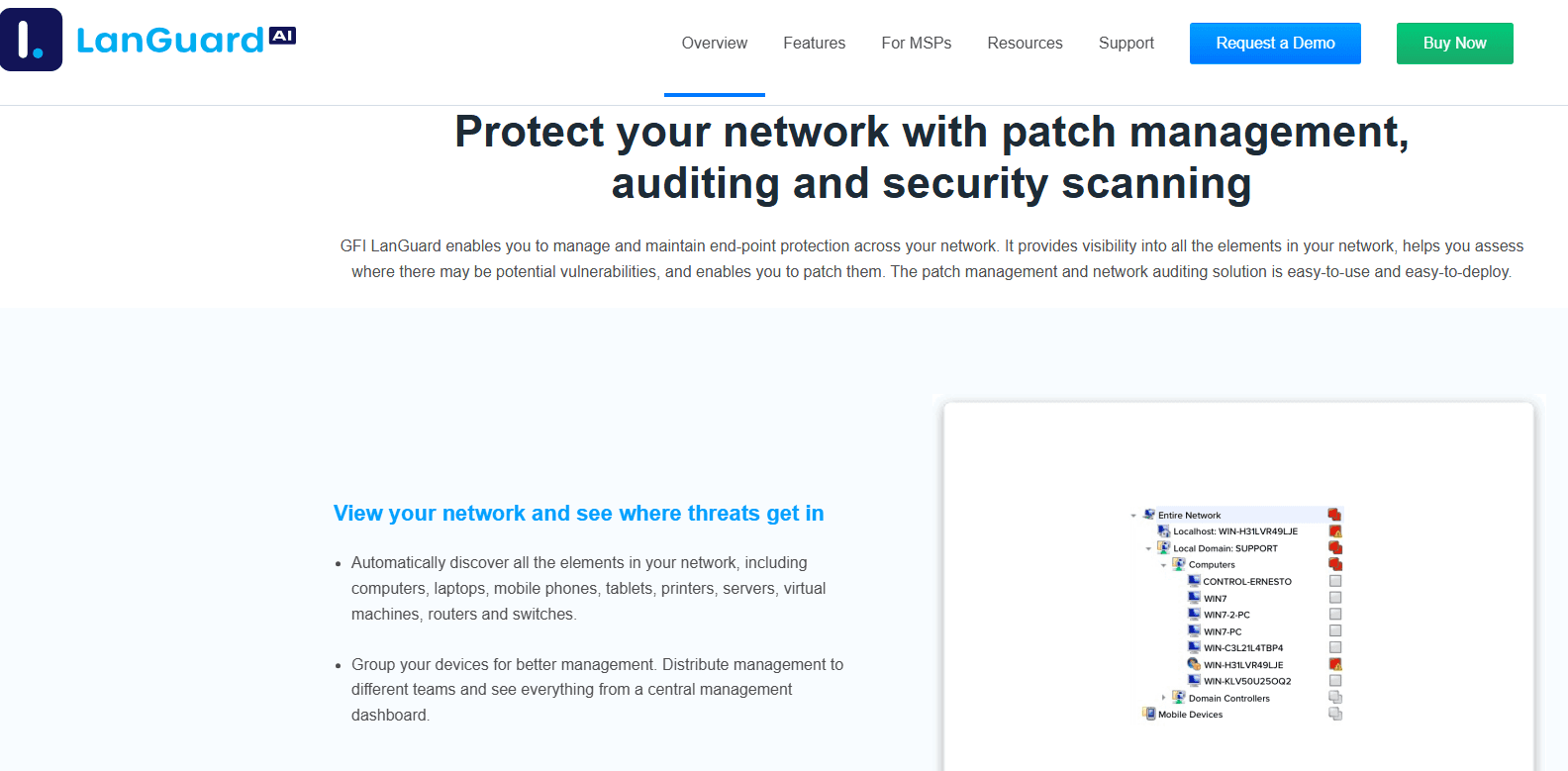
In my opinion, GFI LanGuard is a strong fit for IT departments that need a reliable network security scanner and centralized vulnerability scanner for on-premises environments. It performs well in medium to large enterprises that manage hundreds of workstations and require automated patch deployment across Windows-heavy infrastructures. The SNMP-based discovery and agentless scanning add value, although integrations are narrower compared to platforms like Nessus or Tenable. If you want a solution that balances usability with operational depth, LanGuard remains a dependable choice.
Pros
- Single-pane-of-glass dashboard for fast visibility into network vulnerabilities.
- Combines vulnerability assessment with automated patching for Microsoft
- Generates detailed, regulation-aligned compliance reports for audits
- Supports agentless deployment to ease rollout and and reduce overhead
Cons
- Agentless scanning can become CPU-heavy and network-intensive at scale
- Outdated and visually clunky UI compared to modern SaaS tools
- Provides weaker support and more manual setup requirements for Linux, macOS
- Limited customization options can restrict your team's flexibility.
Is GFI Languard Right For Your Needs?
Who Would be a Good Fit for GFI Languard?
GFI LanGuard is ideal for medium to large enterprises, especially in sectors like finance and healthcare, where security is paramount. Its automated patch management and detailed reporting are perfect for IT departments needing efficient vulnerability management. If your team requires a user-friendly interface and reliable security tools, GFI LanGuard can meet those needs effectively.
- Finance DepartmentsGFI LanGuard offers detailed reporting and automated patch management, which is crucial for security and compliance in financial operations. It helps organizations meet PCI DSS and HIPAA requirements by maintaining a centralized audit trail of vulnerabilities, severity scores, and patch activity across all devices.
- Healthcare OrganizationsIts vulnerability management ensures sensitive patient data remains protected, making it a strong choice for healthcare IT teams.
- Medium to Large EnterprisesIdeal for IT teams managing 100 to 1,500 Windows-based assets who need to consolidate vulnerability scanning and automated patching into a streamlined, non-SaaS solution.
- IT Security TeamsGFI LanGuard’s automated discovery and reporting features streamline proactive threat detection for IT teams. With agentless scanning and automated remediation, even small teams can maintain security across hundreds of endpoints without heavy manual intervention.
- Educational InstitutionsWith its ease of use, GFI LanGuard helps educational IT departments maintain secure networks without extensive resources.
- Government AgenciesIts robust security features align with the stringent security requirements of government IT infrastructures.
Who Would be a Bad Fit for GFI Languard?
GFI LanGuard offers detailed reporting and automated patch management, which is crucial for security and compliance in financial operations. It helps organizations meet PCI DSS and HIPAA requirements by maintaining a centralized audit trail of vulnerabilities, severity scores, and patch activity across all devices.
- Small StartupsThe per-IP licensing model and the requirement for a dedicated server to run the scan engine make the cost and resource demands disproportionately high for very small businesses.
- Creative AgenciesGFI LanGuard's focus on security may not align with the flexible, creative workflows of design and marketing teams.
- Retail ChainsThe software's limited customization might not suit retail chains needing tailored security solutions for diverse locations. Retails orgs with highly heterogeneous networks (e.g., large Linux server farms or complex multi-cloud infrastructure) will find GFI LanGuard's scanning scope and patching capabilities restrictive.
- Non-Tech DepartmentsFor teams without dedicated IT support, GFI LanGuard's features may seem overwhelming and unnecessary.
- FreelancersThe tool's extensive security features and costs don't align with the needs of individual freelancers managing smaller operations.
- Non-Profit OrganizationsWith tight budgets, non-profits might find GFI LanGuard's pricing and complexity unsuitable for their operations.
Our Review Methodology
How We Test & Score Tools
We’ve spent years building, refining, and improving our software testing and scoring system. The rubric is designed to capture the nuances of software selection and what makes a tool effective, focusing on critical aspects of the decision-making process.
Below, you can see exactly how our testing and scoring works across seven criteria. It allows us to provide an unbiased evaluation of the software based on core functionality, standout features, ease of use, onboarding, customer support, integrations, customer reviews, and value for money.
Core Functionality (25% of final scoring)
The starting point of our evaluation is always the core functionality of the tool. Does it have the basic features and functions that a user would expect to see? Are any of those core features locked to higher-tiered pricing plans? At its core, we expect a tool to stand up against the baseline capabilities of its competitors.
Standout Features (25% of final scoring)
Next, we evaluate uncommon standout features that go above and beyond the core functionality typically found in tools of its kind. A high score reflects specialized or unique features that make the product faster, more efficient, or offer additional value to the user.
We also evaluate how easy it is to integrate with other tools typically found in the tech stack to expand the functionality and utility of the software. Tools offering plentiful native integrations, 3rd party connections, and API access to build custom integrations score best.
Ease of Use (10% of final scoring)
We consider how quick and easy it is to execute the tasks defined in the core functionality using the tool. High scoring software is well designed, intuitive to use, offers mobile apps, provides templates, and makes relatively complex tasks seem simple.
Onboarding (10% of final scoring)
We know how important rapid team adoption is for a new platform, so we evaluate how easy it is to learn and use a tool with minimal training. We evaluate how quickly a team member can get set up and start using the tool with no experience. High scoring solutions indicate little or no support is required.
Customer Support (10% of final scoring)
We review how quick and easy it is to get unstuck and find help by phone, live chat, or knowledge base. Tools and companies that provide real-time support score best, while chatbots score worst.
Customer Reviews (10% of final scoring)
Beyond our own testing and evaluation, we consider the net promoter score from current and past customers. We review their likelihood, given the option, to choose the tool again for the core functionality. A high scoring software reflects a high net promoter score from current or past customers.
Value for Money (10% of final scoring)
Lastly, in consideration of all the other criteria, we review the average price of entry level plans against the core features and consider the value of the other evaluation criteria. Software that delivers more, for less, will score higher.
Core Features
Vulnerability Scanning: Scans the network using agentless technology to identify security configuration weaknesses, missing patches, and known vulnerabilities on hosts and network devices.
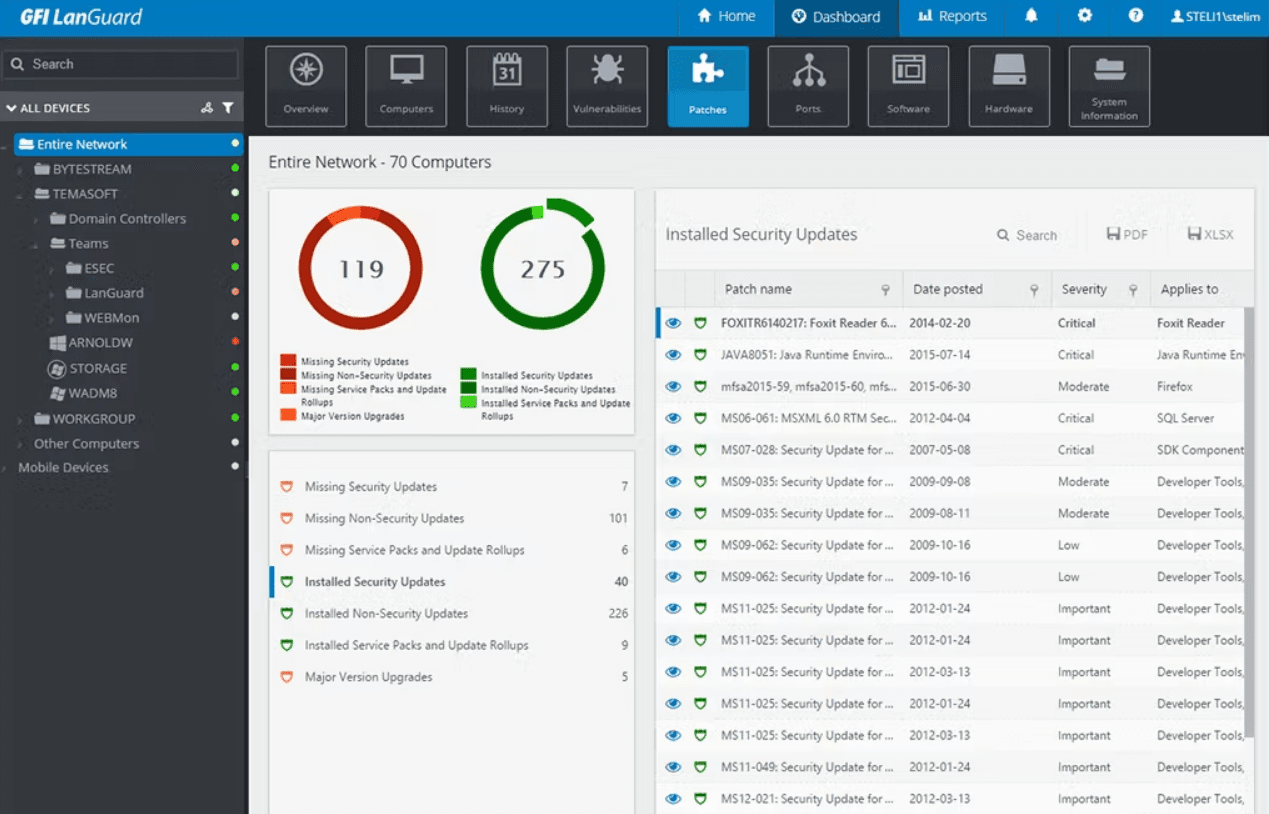
Patch Management: Automate patching for Microsoft operating systems and over 60 major third-party applications (e.g., Adobe, Java, browsers) from a single console.
Network Device Security: Monitor and secure all devices connected to your network, ensuring comprehensive coverage. This feature helps you manage and secure the growing number of devices in your environment.
Inventory Assessment: Provides a detailed, always-up-to-date inventory of all installed hardware, software, and running services on the network. Crucial for license management and risk assessment.
Compliance Reporting: Generate detailed reports to ensure your organization meets industry-specific compliance standards. These reports simplify audits and help you maintain regulatory compliance.
Security Alerts: Provides real-time alerts integrated with current vulnerability databases (CVEs) and prioritizes remediation based on the detected severity and exploitability.
Ease of Use
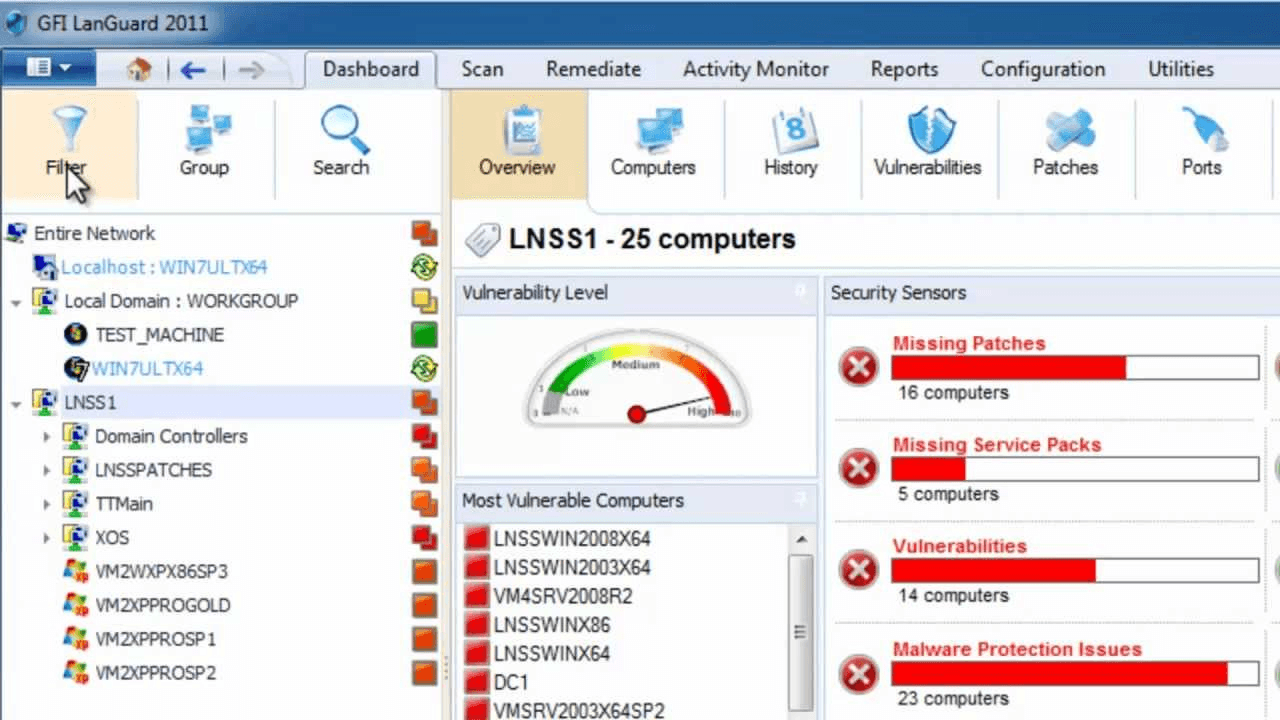
GFI LanGuard is rated highly for its ease of administration and deployment, with a centralized dashboard that provides a clear view of network status and patch compliance. However, many users note that the interface feels outdated and cumbersome compared to modern SaaS tools. As a result, while initial deployment is simple, interpreting and customizing complex compliance reports often requires significant manual effort.
Integrations
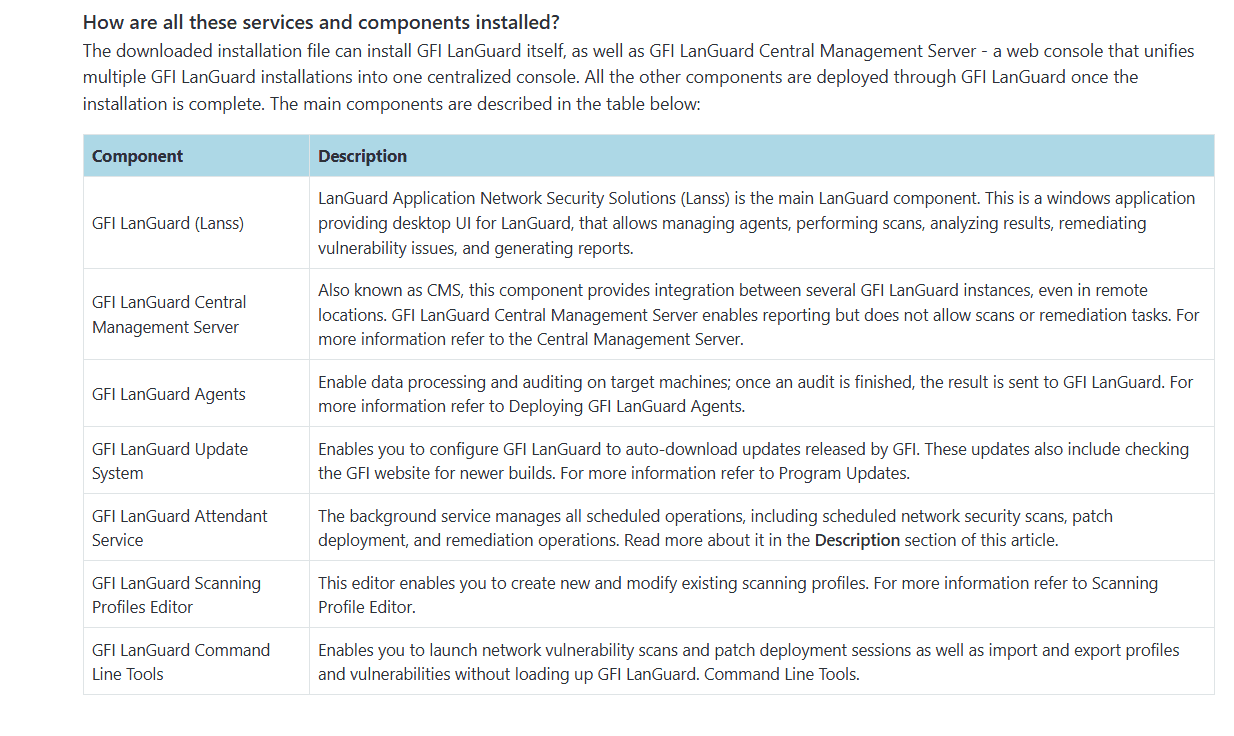
GFI LanGuard integrates with antivirus applications, anti-spyware tools, firewalls, patch management systems, vulnerability assessment solutions, and network monitoring tools.
GFI LanGuard also provides an API for custom integrations and connects with third-party integration tools.
GFI Languard Specs
- A/B Testing: No
- API: Yes
- Automated Testing: No
- Browser Compatibility Testing: No
- Bug Tracking: No
- Calendar Management: No
- CI/CD Integration: No
- Dashboard: Yes
- Data Export: Yes
- Data Import: Yes
- Data Visualization: Yes
- Developer Tools: No
- External Integrations: Yes
- History/Version Control: No
- Manual Testing: No
- Multi-User: Yes
- Notifications: Yes
- Performance Testing: No
- Regression Testing: No
- Scheduling: Yes
- Status Notifications: Yes
- Third-Party Plugins/Add-Ons: Yes


