

Análisis de PowerDMARC 2026: ventajas, desventajas, características principales y detalles de precios



Email authentication can quickly become difficult to manage as organizations add more domains, third-party senders, and authentication records. Without clear visibility into what is sending on your behalf, teams can struggle to identify spoofing risks, fix authentication failures, and know when it is safe to move toward DMARC enforcement.
PowerDMARC is a DMARC software platform designed for organizations that need better visibility and control over their email authentication, combining DMARC analysis, monitoring, and reporting with tools for SPF, DKIM, BIMI, MTA-STS, TLS-RPT, and hosted record management.
In this review, I’ll assess PowerDMARC’s features, pricing, strengths, and limitations to help you decide if it’s the right fit.
PowerDMARC Evaluation Summary
- From $8/month (billed annually)
- Free plan available
Por qué confiar en nuestras recomendaciones de software
Nuestro equipo lleva probando y evaluando software desde 2012. Como líderes tecnológicos, sabemos lo difícil —y lo importante— que es elegir el software adecuado.
Para esta guía, evaluamos las herramientas mediante pruebas prácticas e investigación independiente, puntuando las herramientas según nuestros criterios de selección.
Nuestras reseñas reflejan nuestro criterio editorial humano, no un discurso de ventas.
PowerDMARC Overview
In my opinion, PowerDMARC stands out as a capable DMARC analysis, monitoring, and email authentication platform for IT and security teams managing multiple domains or more complex sending environments. Its hosted authentication services, detailed reporting, AI-assisted troubleshooting, and policy guidance give teams more control over moving from monitoring toward enforcement, while multi-tenant and role-based management make it especially useful for enterprises and MSPs. The platform is relatively easy to use despite its broad feature set, although some of its more advanced capabilities, including deeper analytics, MCP access, API access, and SIEM support, sit on higher-tier plans.
pros
-
AI-assisted analysis helps identify authentication issues, policy blockers, and unusual sending activity without requiring deep DMARC expertise.
-
Hosted DMARC, PowerSPF, DKIM, BIMI, MTA-STS, and TLS-RPT reduce repeated DNS work and simplify authentication management.
-
Multi-tenant controls, white labeling, domain grouping, and partner tools support MSPs and organizations managing large domain portfolios.
cons
-
The breadth of features can create a steeper learning curve for teams that only need basic DMARC reporting.
-
Advanced capabilities such as MCP access, threat intelligence, reputation monitoring, API access, and SIEM support are limited to higher-tier plans.
-
Teams that only need basic DMARC reporting may find the platform’s broader authentication and security feature set more than they need.
Is PowerDMARC Right For Your Needs?
Who Would be a Good Fit for PowerDMARC?
PowerDMARC is a good fit for organizations managing their own business domains that require comprehensive email authentication solutions beyond basic DMARC reporting. It is particularly suited for teams looking to monitor and manage email authentication services such as DMARC, SPF, DKIM, BIMI, MTA-STS, and TLS-RPT, or those wanting to move toward enforcement without a dedicated DMARC specialist. It is especially relevant for industries like financial services, insurance, government, healthcare, education, retail, technology, telecom, manufacturing, logistics, and MSP/MSSP environments.
-
MSPs and MSSPs
Service providers can leverage the multi-tenant control panel, white labeling, tenant-level API, PSA integrations, and centralized domain management to manage authentication for multiple clients.
-
Enterprises With Multiple Domains
Large organizations can monitor authentication centrally, organize domains into groups, delegate access, and manage policies across complex domain portfolios.
-
Financial Services and Insurance
Banks and insurers can use powerful reporting, access controls, audit logs, SIEM integrations, and PGP-protected reports to meet strict governance needs.
-
Technology and SaaS Companies
Tech teams with multiple products or services can utilize hosted authentication protocols to maintain control as infrastructure changes.
-
Retail and Ecommerce Brands
High-volume senders can track DMARC and sender reputation, gather threat intelligence, and distinguish legitimate sources from spoofing attempts.
-
Teams Without Dedicated DMARC Expertise
IT admins can use AI guidance, hosted services, and recommendations to troubleshoot and achieve enforcement without a DMARC specialist.
Who Would be a Bad Fit for PowerDMARC?
PowerDMARC is less suitable for organizations that do not own or control their domains/DNS, are seeking only basic DMARC reporting, require inbound email security instead of outbound authentication, or expect a fully hands-off solution without administrator involvement.
-
Organizations Without Custom Domains
Teams using only provider-owned domains like Gmail or Outlook have no custom domain for DMARC to protect.
-
Inbound Email Security Buyers
PowerDMARC does not replace secure email gateways or inbound security tools such as spam filters, encryption, or DLP.
-
Organizations Without DNS Control
Teams unable to make DNS changes or publish records will struggle to deploy PowerDMARC.
-
Basic DMARC Reporting Users
Teams simply needing DMARC XML to readable report conversion may prefer a narrower tool.
-
Hands-Off Enforcement Teams
While automation is strong, administrators must still approve key changes like moving to stricter policies.
-
Businesses With No Email Security Budget
The free tier is not for commercial use, so organizations with no budget for authentication are not a good fit.
Nuestra metodología de revisión
Cómo probamos y puntuamos las herramientas
Hemos invertido años construyendo, refinando y mejorando nuestro sistema de pruebas y puntuación de software. La rúbrica está diseñada para captar los matices de la selección de software y lo que hace a una herramienta efectiva, enfocándose en aspectos críticos del proceso de toma de decisiones.
A continuación, puedes ver exactamente cómo nuestro sistema de prueba y puntuación funciona a través de siete criterios. Esto nos permite ofrecer una evaluación imparcial del software basada en funcionalidad central, características destacadas, facilidad de uso, incorporación, soporte al cliente, integraciones, reseñas de clientes y relación calidad-precio.
Funcionalidad principal (25% de la puntuación final)
El punto de partida de nuestra evaluación siempre es la funcionalidad central de la herramienta. ¿Tiene las características y funciones básicas que un usuario esperaría encontrar? ¿Alguna de esas funciones principales está limitada a planes de precios superiores? Esperamos que una herramienta esté a la altura de las capacidades básicas de sus competidores.
Características destacadas (25% de la puntuación final)
Luego, evaluamos las características poco comunes y sobresalientes que van más allá de la funcionalidad principal que normalmente se encuentra en herramientas de su tipo. Una puntuación alta refleja características especializadas o únicas que hacen el producto más rápido, eficiente o que ofrecen valor adicional al usuario.
También evaluamos qué tan fácil es integrar con otras herramientas que normalmente forman parte del ecosistema tecnológico para expandir la funcionalidad y utilidad del software. Las herramientas que ofrecen abundantes integraciones nativas, conexiones de terceros y acceso API para crear integraciones personalizadas obtienen la mejor puntuación.
Facilidad de uso (10% de la puntuación final)
Consideramos cuán rápido y sencillo es ejecutar las tareas definidas por la funcionalidad principal usando la herramienta. El software con mejor puntuación está bien diseñado, es intuitivo, ofrece aplicaciones móviles, proporciona plantillas y hace que tareas relativamente complejas parezcan sencillas.
Incorporación (10% de la puntuación final)
Sabemos lo importante que es la adopción rápida por parte del equipo para una nueva plataforma, por lo que evaluamos cuán fácil es aprender y usar una herramienta con entrenamiento mínimo. Evaluamos cuán rápido un miembro del equipo puede configurarla y comenzar a utilizarla sin experiencia previa. Las soluciones con mayor puntuación requieren poco o ningún soporte.
Soporte al cliente (10% de la puntuación final)
Revisamos qué tan rápido y sencillo es resolver dudas y encontrar ayuda por teléfono, chat en vivo o base de conocimientos. Las herramientas y compañías que proporcionan soporte en tiempo real obtienen la mejor puntuación, mientras que los chatbots obtienen la peor.
Reseñas de clientes (10% de la puntuación final)
Además de nuestras pruebas y evaluaciones, consideramos la puntuación neta de promotores por parte de clientes actuales y anteriores. Revisamos la probabilidad de que elijan la herramienta de nuevo para la funcionalidad principal. Una puntuación alta refleja una alta puntuación neta de promotores actuales o pasados.
Relación calidad-precio (10% de la puntuación final)
Por último, considerando todos los demás criterios, revisamos el precio promedio de los planes de nivel básico comparado con las funciones principales y consideramos el valor de los demás criterios de evaluación. El software que ofrezca más, por menos, obtendrá una puntuación mayor.
Core Features
Hosted Email Authentication
PowerDMARC provides hosted management for DMARC, SPF, DKIM, BIMI, MTA-STS, and TLS-RPT, helping teams manage authentication policies without repeatedly editing DNS records. PowerSPF also helps address SPF's 10-DNS-lookup limit for organizations with complex sending environments.
Reporting and Analytics
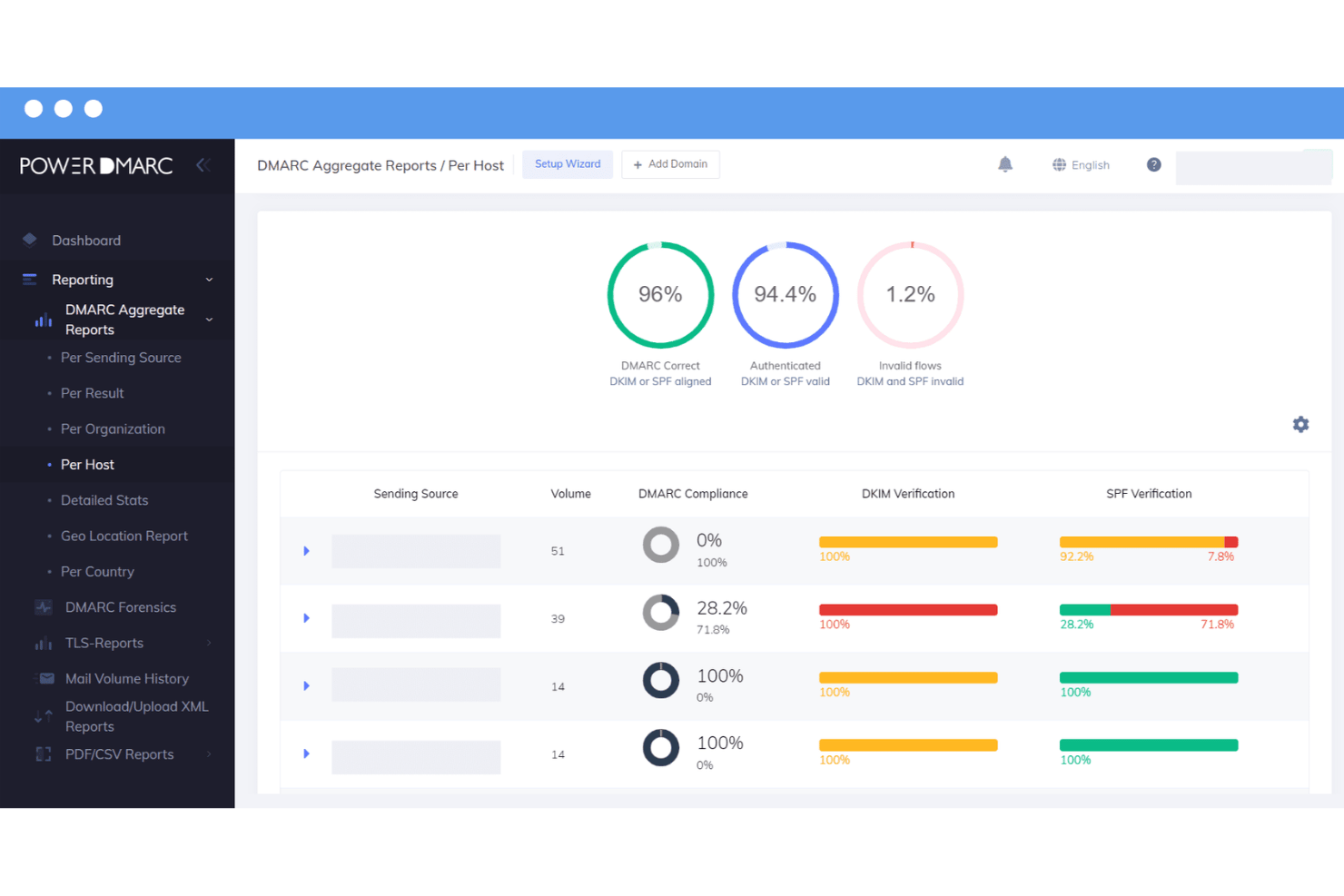
DMARC reporting turns aggregate and failure data into readable insights on sending sources and authentication results. PowerDMARC also provides dedicated SPF, DKIM, BIMI, and TLS-RPT reporting for deeper visibility across the authentication stack.
DMARC AI Agent
The in-dashboard AI Agent helps teams troubleshoot DMARC, SPF, and DKIM issues using plain-language questions. Higher-tier AI capabilities add Anomaly Detection and Smart Policy Advisor to flag unusual activity, identify enforcement blockers, and recommend next steps toward stricter DMARC policies.
MCP Server
PowerDMARC's MCP server connects live authentication data to compatible AI clients such as Claude and Cursor. Teams can query domain health, analyze reports, perform DNS and WHOIS lookups, generate records, and access supported account data from their existing AI workflows.
DNS Security and Reputation Monitoring
DNS Security Compliance checks domain and DNS configurations for security issues, while reputation monitoring tracks blocklists and sender reputation. Alerts and monitoring add visibility into changes and authentication problems that may require investigation.
API, Integrations, and Email Deliverability
APIs and integrations let teams connect PowerDMARC with existing security and operational workflows, while email deliverability tools help test authentication and inbox placement. The platform also includes developer tools for organizations that need to work with authentication data programmatically.
Standout Features
AI-Driven Threat Intelligence
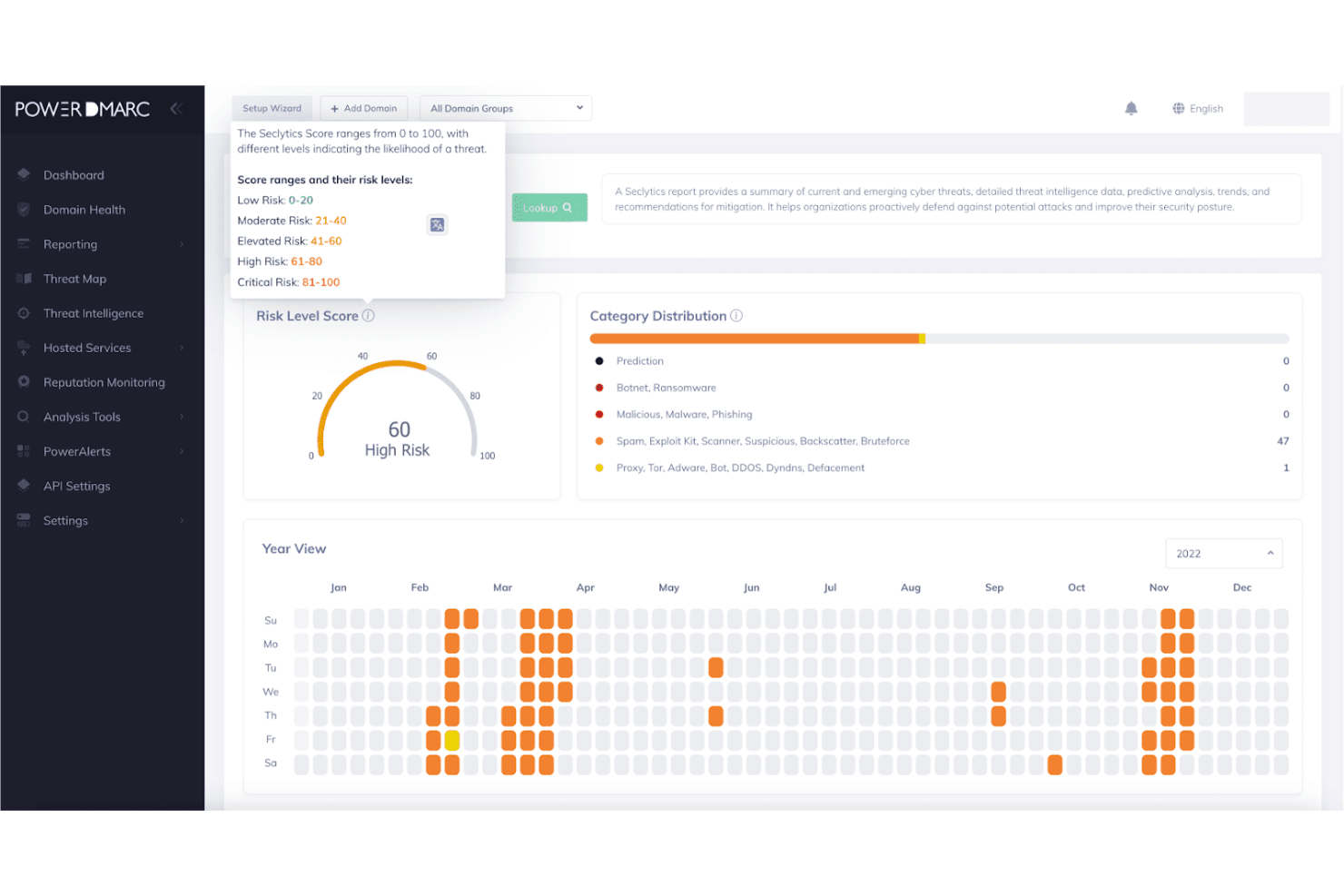
PowerDMARC analyzes sending sources to help identify spoofing, suspicious activity, and other domain-level threats. Risk analysis and threat visibility help security teams distinguish potentially malicious senders from legitimate sources that simply need authentication fixes.
MSP and MSSP Management
PowerDMARC provides multi-tenant management, white labeling, consolidated domain views, tenant-level APIs, and PSA integrations for service providers. MSPs and MSSPs can manage multiple client environments without maintaining separate PowerDMARC accounts for each organization.
Ease of Use
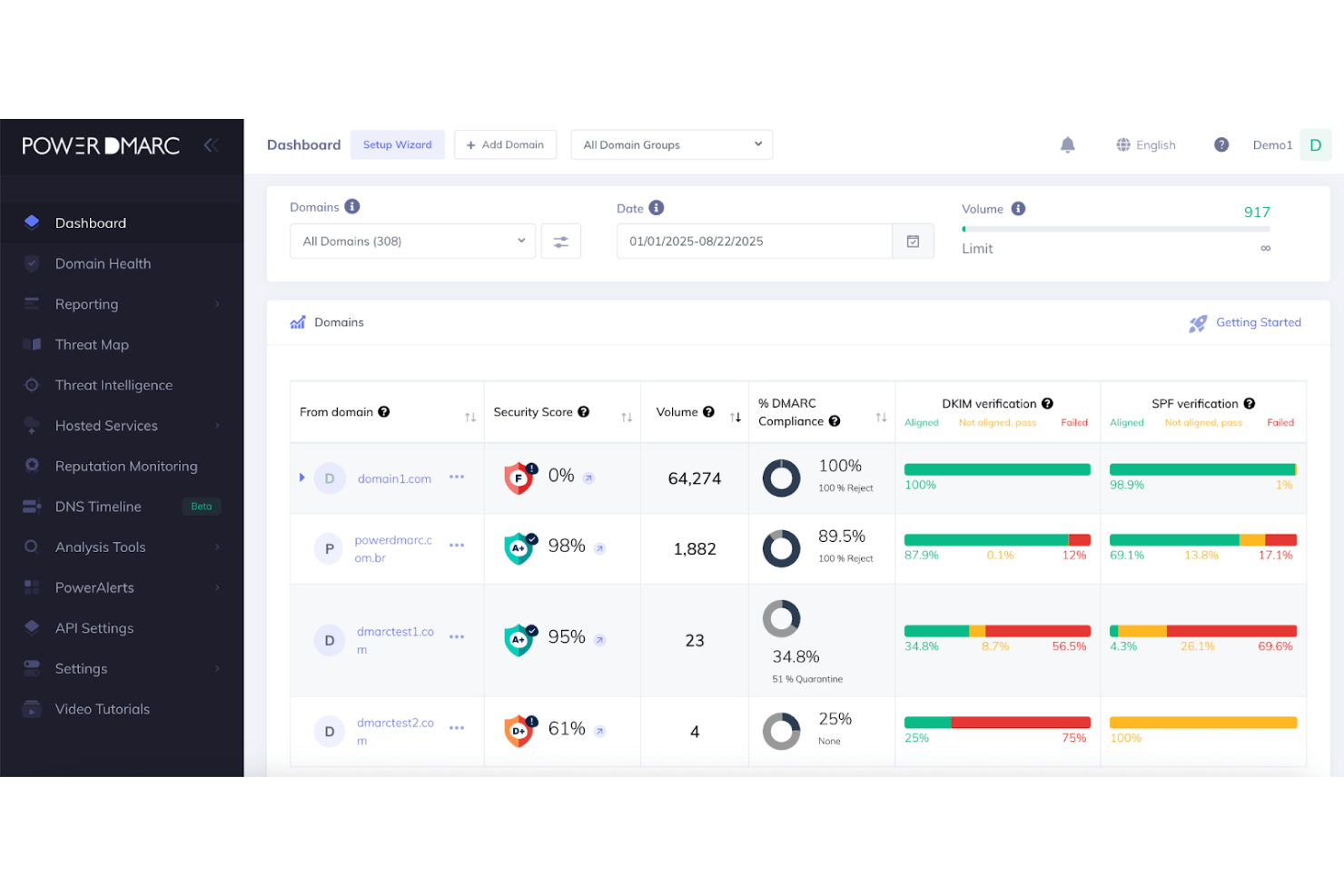
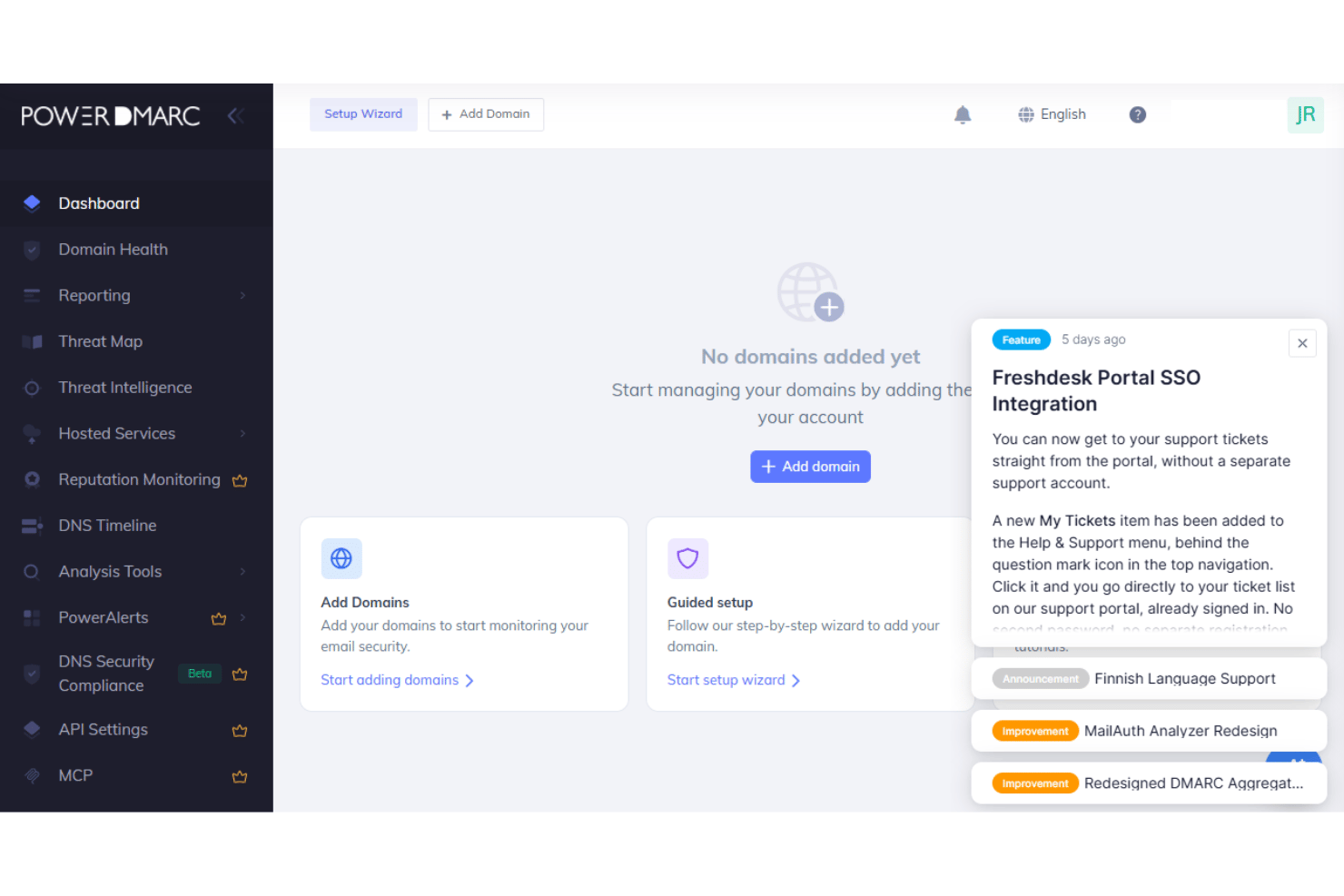
PowerDMARC is relatively easy to use, with a structured dashboard that keeps reports, alerts, and authentication issues organized. Inline recommendations help explain misconfigurations without forcing teams to interpret raw DMARC data, while hosted services reduce repeated DNS work. The AI Agent also makes troubleshooting more approachable by answering authentication questions in plain language. Multi-domain management and role-based access work well for larger teams, although the platform’s broad feature set may take some time to learn.
Onboarding
PowerDMARC offers both self-serve and guided onboarding, depending on how much help your team needs. Self-serve setup starts with a domain assessment that identifies security gaps and guides you through publishing DMARC records, with One-Click Auto DNS Publishing available for 40+ supported providers. Automatic subdomain detection, bulk domain uploads, and hosted records reduce manual setup, and there’s no historical data migration required when switching from another DMARC provider.
Initial setup can take minutes to hours, although reaching full enforcement may take weeks or longer depending on the complexity of your sending environment.
Customer Support
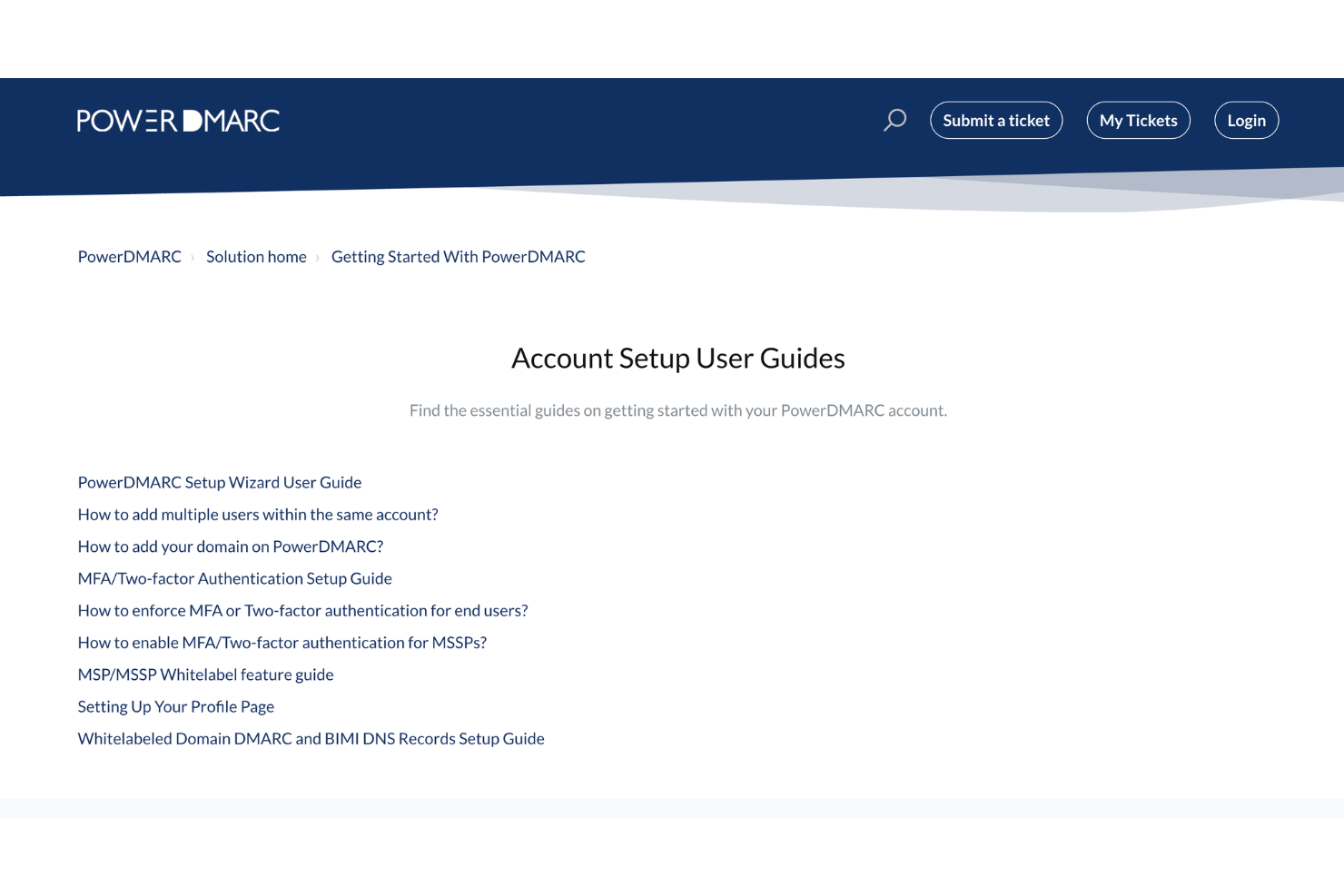
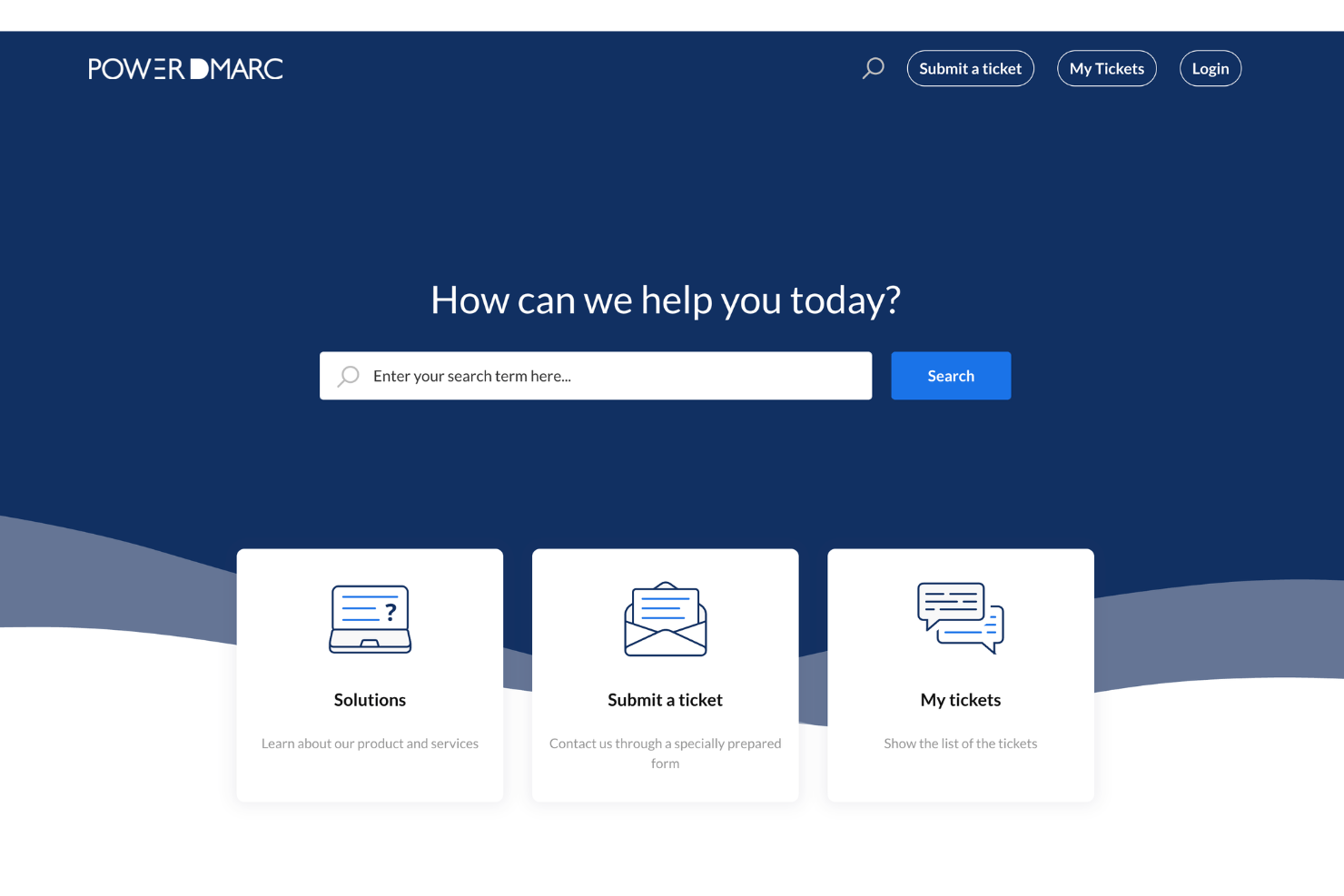
PowerDMARC offers 24/7 human support, a knowledge base, and ticket-based help for setup and troubleshooting. Higher-tier plans add dedicated account management and extended support options, while teams can also move from the in-dashboard AI Agent to human assistance for more complex authentication or DNS issues.
Integrations
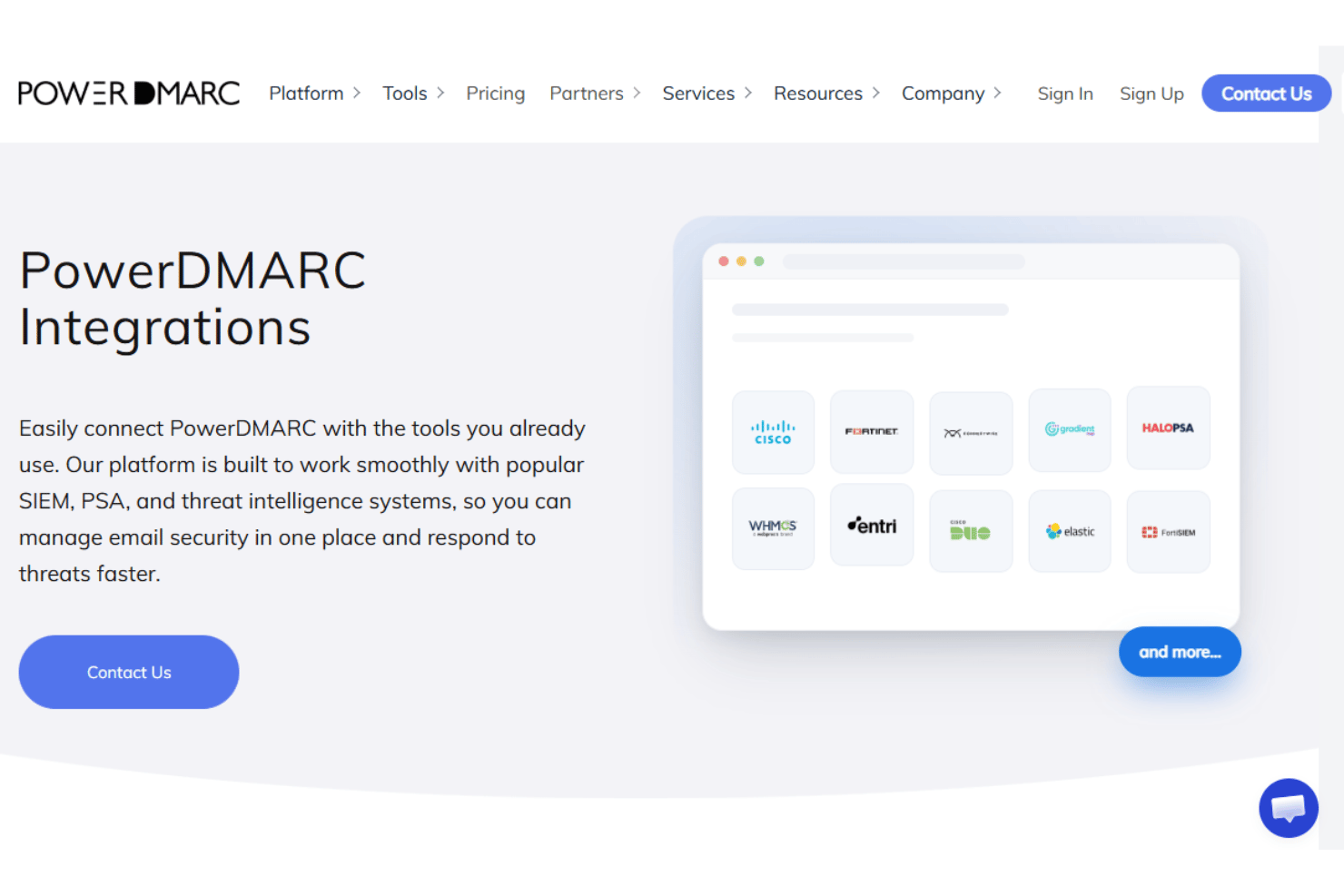
PowerDMARC integrates with Splunk, Microsoft Sentinel, Elastic, FortiSIEM, Cisco Threat Grid, Fortinet, ConnectWise, HaloPSA, Autotask PSA, AWS, Entri, and Duo Security, among others.
PowerDMARC also provides a REST API for custom integrations and supports connections with SIEM, PSA, marketplace, and threat intelligence tools.
Value for Money
PowerDMARC offers solid value for teams that need more than basic DMARC reporting, with hosted authentication, AI assistance, and multi-domain management available before the enterprise tier. The main tradeoff is that deeper analytics, API access, SIEM support, advanced AI capabilities, and reputation monitoring sit on higher plans, so costs can rise as security and integration requirements become more complex.
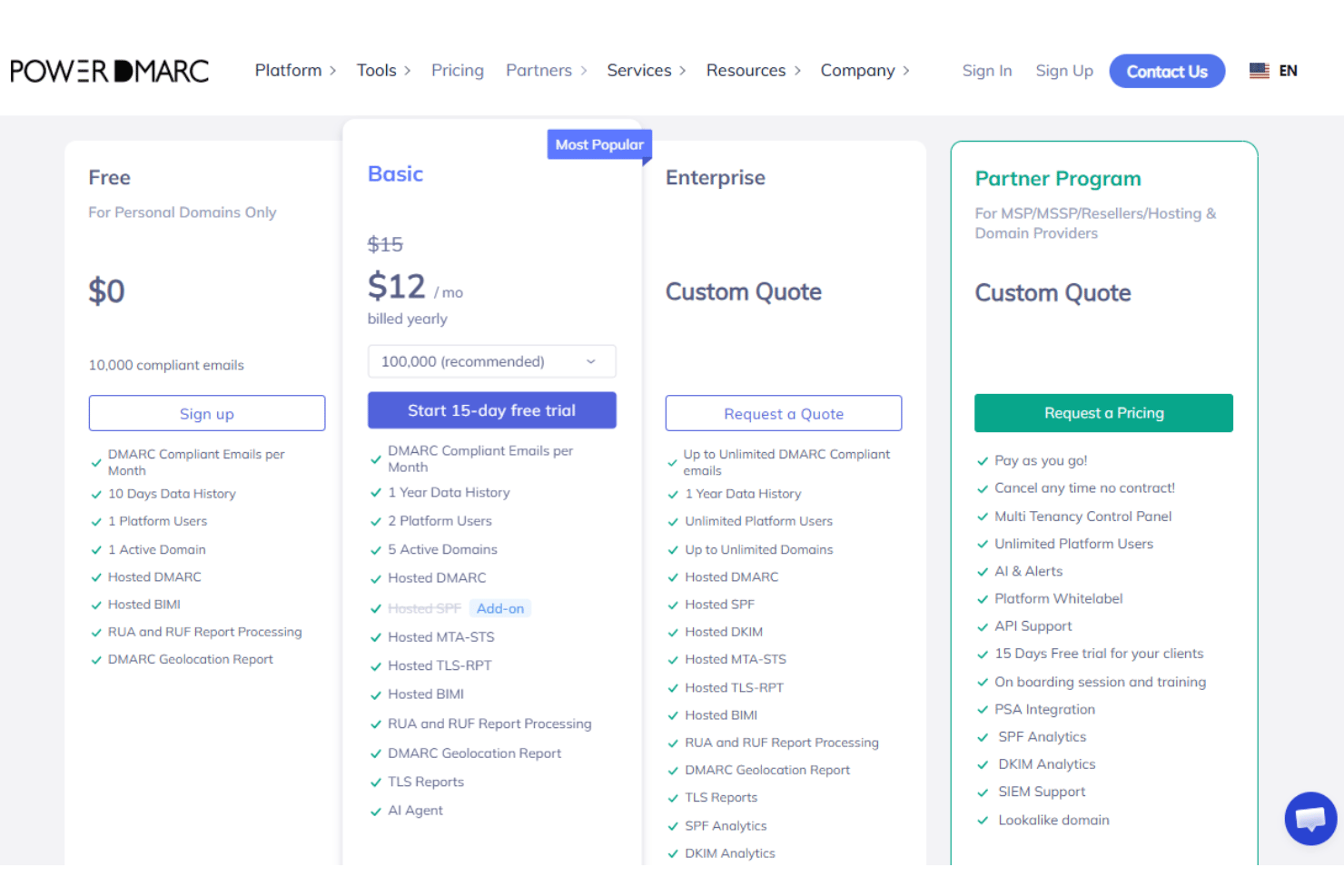
- Free: Supports one active domain plus unlimited inactive domains, 10,000 compliant emails, one user, and 10 days of data history. It also includes Hosted DMARC, Hosted BIMI, RUA and RUF processing, and geolocation reports.
- Basic: Adds multiple active domains, longer data history, Hosted MTA-STS and TLS-RPT, scheduled reporting, role-based access, and the AI Agent, with Hosted SPF available as an add-on.
- Enterprise: Adds Hosted SPF and DKIM, advanced SPF and DKIM analytics, reputation monitoring, alerts, third-party integrations, advanced AI advisors, MCP access, API access, SAML SSO, SCIM, audit logs, and SIEM support.
- API: Designed for organizations that need programmatic access to PowerDMARC capabilities and authentication data through its API.
- Partner Program: Built for MSPs, MSSPs, resellers, and hosting providers with multi-tenancy, white labeling, tenant-level API access, PSA integration, unlimited platform users, and partner onboarding and training.
PowerDMARC Specs
- 2-Factor Authentication
- Access Management
- Anti-Virus
- API
- Audit Management
- Audit Trail
- Batch Permissions & Access
- Compliance Tracking
- Dashboard
- Data Export
- Data Import
- DDoS Protection
- External Integrations
- File Sharing
- File Transfer
- Firewall
- Incident Management
- Malware Protection
- Multi-User
- Notifications
- Password & Access Management
- Policy Management
- Real-time Alerts
- Report & Compliance
- Risk Assessment
- Security Migration
- Threat Detection
- Workflow Management
PowerDMARC FAQs
How quickly can teams get up and running with PowerDMARC?
Does PowerDMARC help with ongoing domain and DNS management?
Does PowerDMARC require a dedicated DMARC specialist?
How does PowerDMARC handle data security and compliance requirements?
Does PowerDMARC provide real-time DMARC reporting?
Is PowerDMARC only designed for enterprise organizations?
Is PowerDMARC pricing entirely quote-based?
Does PowerDMARC replace an inbound email security platform?
Does PowerDMARC support SPF flattening?
What kind of customer support does PowerDMARC provide?
What are the white-label and MSP features like in PowerDMARC?
PowerDMARC Company Overview & History
Founded in 2020 and headquartered in Middletown, Delaware, PowerDMARC is a computer and network security company focused on domain and email authentication. Its SaaS platform combines DMARC, SPF, DKIM, BIMI, MTA-STS, TLS-RPT, threat intelligence, and related domain security capabilities. PowerDMARC reports serving more than 10,000 organizations and 2,000 MSPs across 130+ countries, with a growing international presence.
PowerDMARC Major Milestones
- 2020: Founded in Middletown, Delaware.
- 2024: Named a G2 Summer Leader in DMARC software.
- 2024: Recognized as a G2 Winter Leader 2025 in December.
- 2025: Included in G2’s Top 100 Fastest Growing Software Companies.
- 2025: Achieved AWS Qualified Software status after completing the AWS Foundational Technical Review, validating the platform against AWS best practices for security, reliability, and operational excellence.
- 2026: Reported serving 10,000+ organizations, 2,000+ MSPs, and protecting more than 100,000 domains across 130+ countries.
- 2026: Reported five office locations across Plano, Yerevan, Dubai, Muscat, and Doha.
PowerDMARC Partner Spotlight

10 formas en que PowerDMARC ofrece cumplimiento de DMARC y protección de dominios de nivel empresarial