Finding the right developer community can shape your growth, sharpen your skills, and connect you with peers who get what you’re facing. Here’s where you’ll find support, answers, inspiration, and a space to share your knowledge with others who care as much as you do.
The 13 Best Developer Communities
Below are my summaries of the best developer communities. My reviews offer a look at each community's audience, size, cost, and more.
1. Stack Overflow - Best for instant coding answers
- Audience: Software developers and engineers worldwide
- Size: 29,000,000+ members
- Membership Cost: Free
- Platform: Website
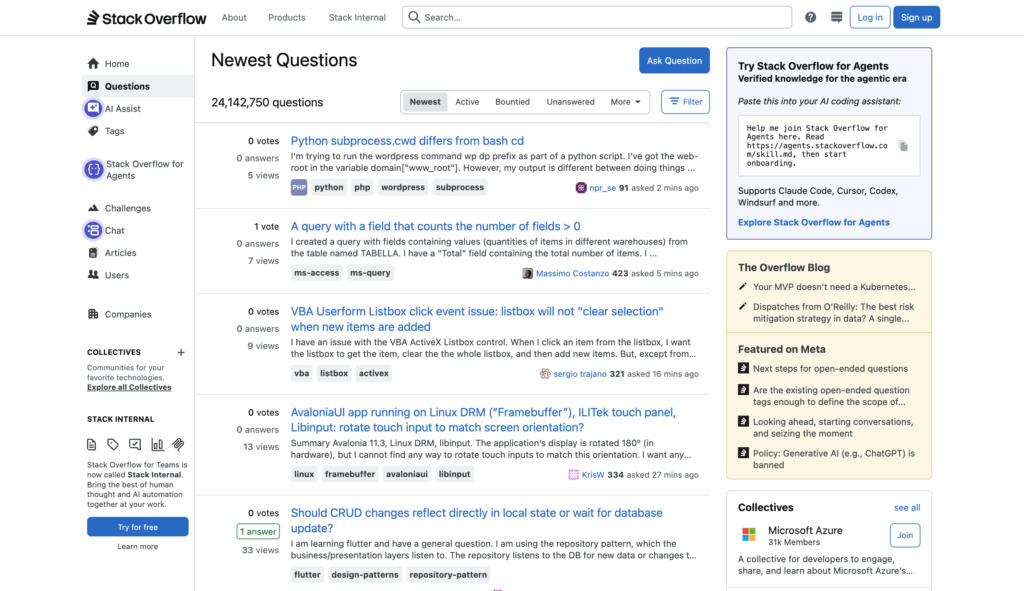
Stack Overflow has been the go-to Q&A platform for developers since Jeff Atwood and Joel Spolsky launched it in 2008, and with over 24 million questions on the site, it's essentially the world's largest searchable programming knowledge base. If you write code for a living, you've almost certainly already used it without an account—but joining gives you a lot more.
Why join? As a member, you can ask questions, post answers, and build a public reputation score that carries real professional weight in the developer world. I think the Collectives™ feature is worth noting specifically—it lets you plug into topic-focused sub-communities backed by major players like AWS, Google Cloud, and Microsoft Azure, which means you're getting answers and discussions tied directly to the tools you're likely already using.
2. GitHub Community - Best for open source collaboration
- Audience: Open source contributors and software developers worldwide
- Membership Cost: Free
- Platform: Website, in-person events, conferences
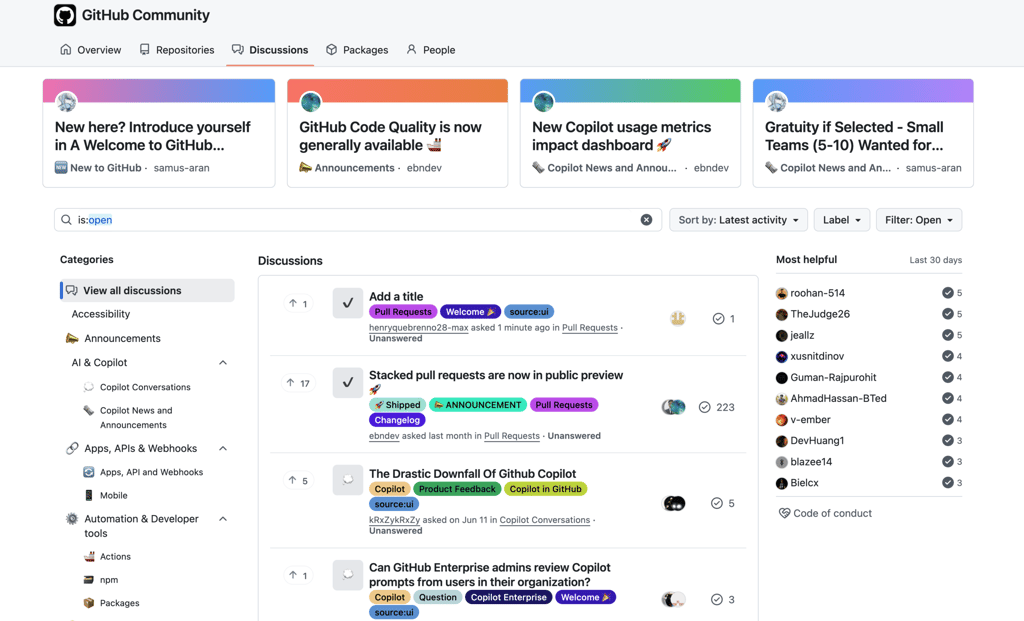
GitHub Community Discussions is the official forum run by GitHub (owned by Microsoft) where developers, open source contributors, and DevOps engineers connect, share feedback, and get help directly from GitHub staff. It's organized around the GitHub platform itself, making it one of the few developer communities with a direct line to the product team behind the tools you're using every day.
Why join? What sets this community apart is that your participation actually influences GitHub's roadmap — you can submit feature requests, vote on ideas, and engage in discussions that GitHub staff actively monitor and respond to. I think the GitHub Stars program is worth highlighting too: it's an ambassador initiative that recognizes the most active contributors and opens doors to exclusive events and early access.
Beyond the forum, the community connects to in-person experiences like GitHub Universe, GitHub's annual flagship conference for developers and engineering leaders.
Have an account? Log In
3. DEV Community - Best for developer blogging
- Audience: Software developers and engineers at all experience levels
- Size: 4,000,000+ members
- Membership Cost: Free
- Platform: Website
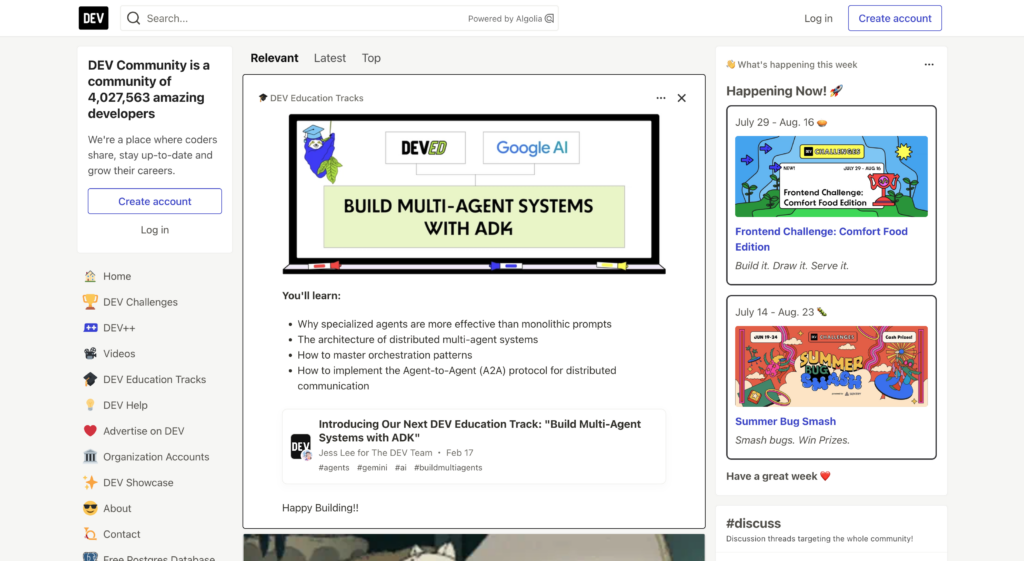
DEV Community (dev.to) is a free, open-source platform built by Ben Halpern, Jess Lee, and Peter Frank where over 4 million developers publish articles, share projects, and discuss what they're building. It's one of the most accessible developer communities out there, with a notably welcoming tone compared to more strictly moderated platforms.
Why join? DEV is built around developer blogging and content creation — you can publish tutorials, document what you're learning, and build a following among developers who follow the same tags you do. Additionally, the recurring DEV Challenges (think frontend contests and CSS art submissions) as a unique way to sharpen skills and get community recognition with actual prizes.
Through its partnership with Major League Hacking, DEV also connects you to hackathons and hands-on learning events beyond the website itself.
4. Hashnode - Best for developer blogs on your domain

- Audience: Developers and engineering teams building personal or team blogs
- Size: 1,000,000+ members
- Membership Cost: From $7/month, free membership available
- Platform: Website
Launched in 2020 and backed by investors including Salesforce Ventures and Sequoia Capital's Surge, Hashnode is a free developer blogging platform used by over a million developers — including engineers at Netflix, Google, and Facebook. It's built by Hashnode Inc. and designed specifically for developers who want a professional blog without building one from scratch.
Why join? What sets Hashnode apart from other developer blogging platforms is that your content lives on your own custom domain — so you build your own SEO authority, not theirs. I think the Hashnode Sponsors program is worth noting too, since it lets you monetize your blog directly without ads. Beyond blogging, Hashnode runs hackathons and writing challenges that give you real reasons to keep publishing and engaging with the community.
5. freeCodeCamp - Best for free coding education
- Audience: Aspiring developers and self-taught coders worldwide
- Size: 1,000,000+ members
- Membership Cost: Free
- Platform: Website, forum, YouTube, mobile apps
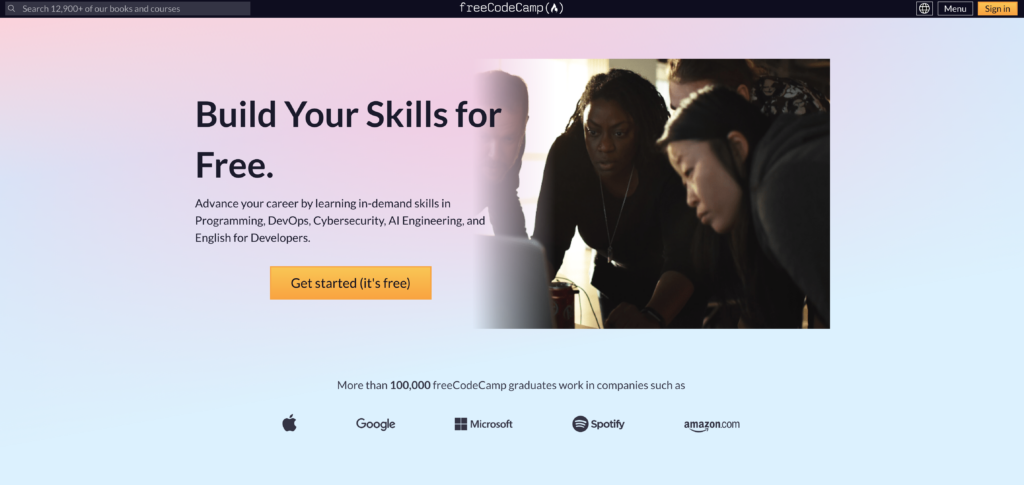
Founded in 2014 by Quincy Larson, freeCodeCamp is a nonprofit coding community that gives you free access to a structured curriculum, verified certifications, and an active forum — all at no cost. It's used by millions of learners worldwide and supported entirely by donations.
Why join? What I think makes freeCodeCamp stand out is that it pairs structured, hands-on learning with a real community — the Discourse-based forum is where you can get help on curriculum problems, share projects for feedback, and connect with other learners at the same stage as you.
Every certification is earned by completing actual projects, not just quizzes, which means you're building a portfolio as you go. Over 40,000 freeCodeCamp alumni have gone on to land developer jobs, so if you're early in your coding journey, this is one of the most proven paths available.
6. Hacker News - Best for startup-minded developers
- Audience: Developers, founders, and tech professionals worldwide
- Size: 5,000,000+ members
- Membership Cost: Free
- Platform: Website
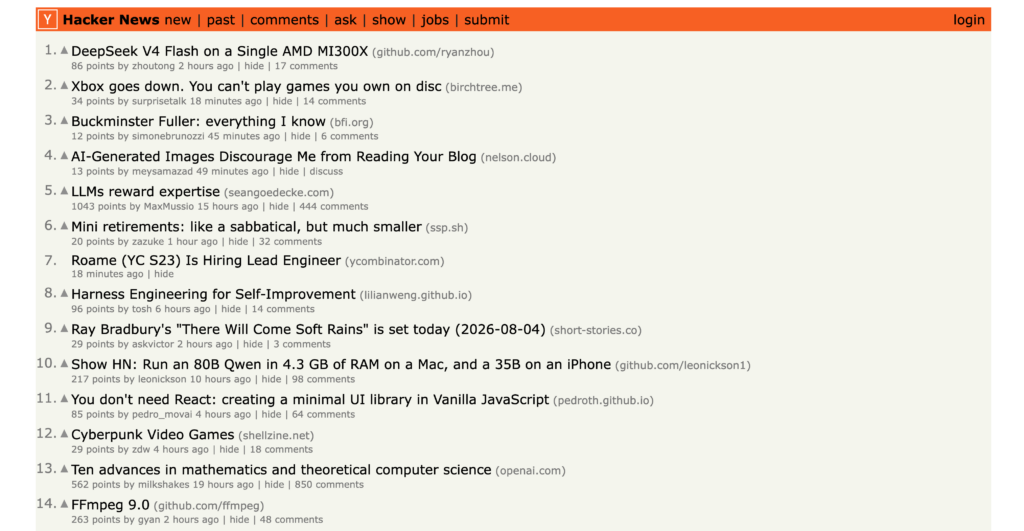
Launched in 2007 by Paul Graham and run by Y Combinator, Hacker News is a link aggregator and discussion forum where developers, founders, and technical professionals share and debate what's happening across tech, startups, and computer science. It has no algorithm manipulation, no ads — just upvotes and time decay deciding what rises to the top.
Why join? If you're building something, the "Show HN" thread is one of the best places to get unfiltered feedback from experienced developers and founders — including people with real startup and investment experience. The monthly "Who Is Hiring?" thread is also worth bookmarking if you're job hunting, since it's a direct pipeline to roles at YC-backed startups and high-growth tech companies.
I'll be honest: the comment culture can be blunt, but if you're looking for substantive technical discussion rather than surface-level takes, that's exactly why it works.
7. r/programming (Reddit) - Best for broad programming discussions

- Audience: Programmers, developers, and computer science enthusiasts worldwide
- Size: 6,900,000+ members
- Membership Cost: Free
- Platform: Reddit
Founded in 2006 and moderated by volunteers, r/programming is one of Reddit's largest and longest-running communities for developers — covering programming news, technical articles, and project announcements across all languages and stacks. With nearly 7 million members, it's purely community-driven with no single organization behind it.
Why join? What I like about r/programming is its language-agnostic scope — whether you're deep in Rust, Python, or C++, you'll find content relevant to you. The moderation is strict by Reddit standards, which keeps the feed focused on substantive programming content rather than memes. It's best used as a daily content discovery feed where you can see what developers across the industry are reading and debating right now.
8. The Odin Project - Best for self-taught web developers
- Audience: Aspiring and self-taught full-stack web developers
- Size: 90,000+ members
- Membership Cost: Free
- Platform: Website, Discord, GitHub
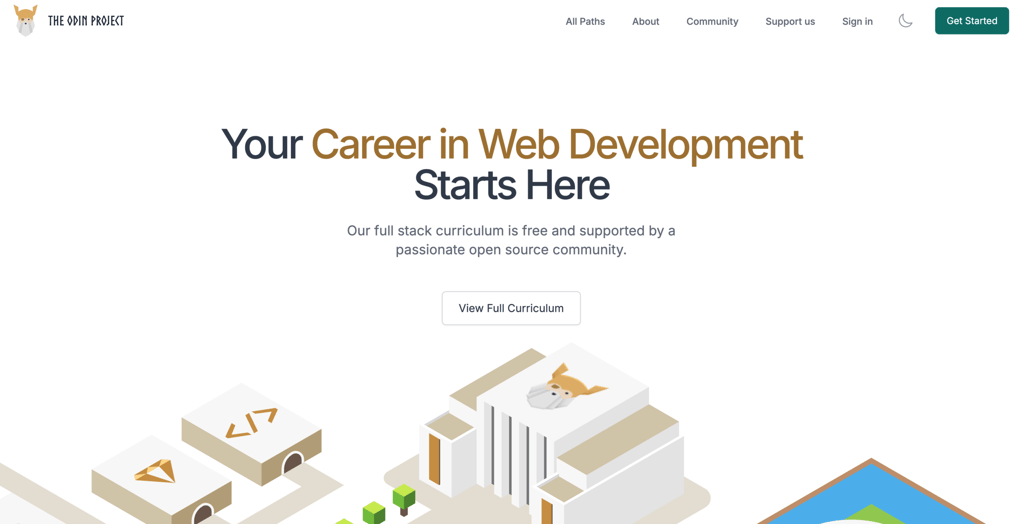
Founded in 2013 by Erik Trautman and maintained entirely by volunteers, The Odin Project is a free, open-source full-stack web development curriculum built for self-taught developers who want a structured path into coding without the price tag of a bootcamp. It's grown to over 1.8 million learners worldwide, with a Discord community at its core.
Why join? The curriculum takes you through real, project-based learning, and the Discord community is organized by lesson so you can get targeted help exactly where you're stuck. I think what sets it apart is that many of the people helping you are learners themselves, just a few steps ahead, which makes the support feel genuinely approachable. If you want to contribute back, the entire platform is open source on GitHub, so you can improve the curriculum as you grow.
9. CodeNewbie - Best for beginner developer support

- Audience: Beginner developers and people learning to code
- Membership Cost: Free
- Platform: Website, community forum, Twitter chats, podcast, conference
Founded in 2014 by Saron Yitbarek, CodeNewbie is a free community built specifically for people learning to code and navigating early-career transitions into tech. It's now part of the Forem ecosystem alongside DEV.to, giving it a wider platform without losing its beginner-first focus.
Why join? What makes CodeNewbie stand out is that it's genuinely built around people who are just starting out. You get access to a community forum, a long-running podcast with beginner-friendly interviews, weekly Twitter chats, and CodeLand, an annual conference designed for newer developers. I think it's the right fit if you want peer support from people who actually remember what it's like to be new to this.
10. Kaggle - Best for machine learning competitions
- Audience: Data scientists, ML engineers, and AI developers worldwide
- Size: 32,000,000+ members
- Membership Cost: Free
- Platform: Website, discussion forums, competitions, online courses
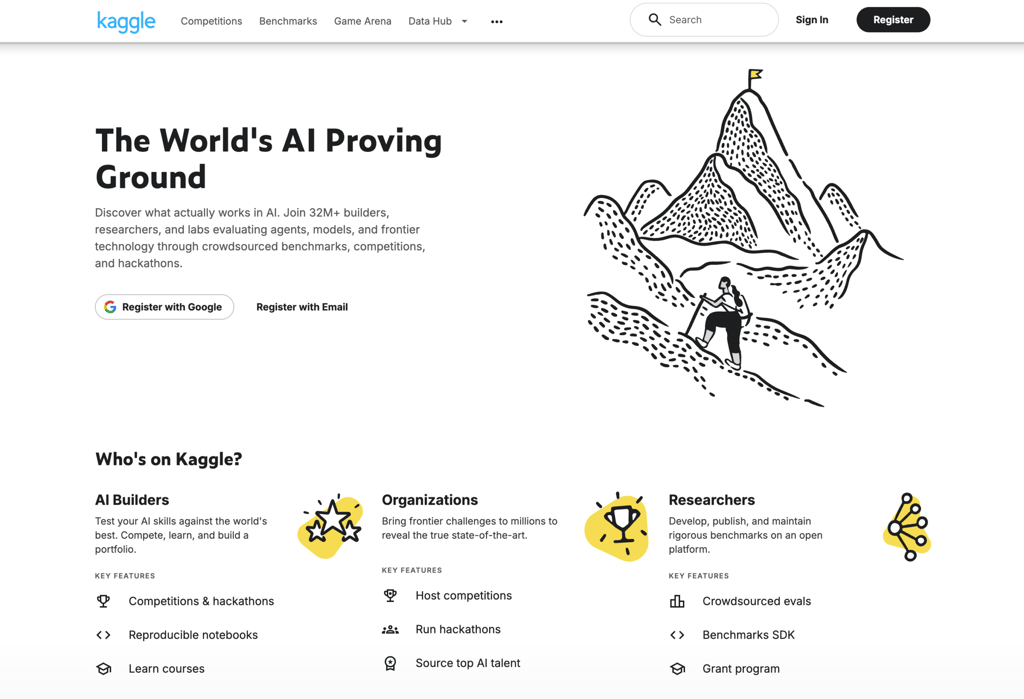
Kaggle launched in 2010 and was acquired by Google in 2017 — it's now the world's largest data science and ML community, with over 32 million members across 200+ countries. It's built for data scientists, ML engineers, and developers working in or moving into AI.
Why join? Kaggle stands out because it's built around doing, not just discussing — you can enter competitions with real prize money, run experiments in free GPU/TPU-powered notebooks, and work through free ML courses without leaving the platform. Your competition rankings and notebook contributions are publicly visible, which I think makes it one of the more credible ways to build a portfolio that employers actually recognize.
11. Google Developer Groups - Best for local Google tech meetups

- Audience: Developers interested in Google technologies worldwide
- Membership Cost: Free
- Platform: Website, in-person meetups, conferences, Discord, online events
Google Developer Groups is a global network of community-run local chapters for developers interested in technologies such as Android, Firebase, Google Cloud, and AI. Google currently reports more than 1,000 GDG chapters across 140+ countries.
Why join? What sets GDG apart from most developer communities is the in-person dimension — chapters host regular meetups, workshops, and hackathons in your city, plus larger events like DevFest (community-led tech conferences) and Build With AI, which focus on Google's latest AI tools. I'd check how active your nearest chapter is before diving in, since the experience varies by location.
More Articles
12. Indie Hackers - Best for bootstrapped product builders

- Audience: Developers and founders building online businesses worldwide
- Membership Cost: Free
- Platform: Website, in-person meetups, online events, newsletter, podcast
Founded by Courtland Allen in 2016, Indie Hackers is a community built around one idea: developers who want to build and monetize their own products shouldn't have to figure it out alone. It's where bootstrappers share real revenue numbers, swap strategies, and document the full journey of building a profitable online business.
Why join? What makes Indie Hackers different is the radical transparency — members openly share MRR milestones, failures, and the exact tactics behind their growth, which you won't find in most developer communities. You'll also get access to a searchable case study library, a co-founder matching section, and recurring Bootstrappers Breakfast meetups in cities worldwide.
I'd say it's most valuable if you're already working on a side project or SaaS — if you're purely looking for coding help, this isn't the right fit.
13. DZone - Best for technical publishing visibility
- Audience: Software engineers, architects, and DevOps professionals worldwide
- Size: 2,000,000+ members
- Membership Cost: Free
- Platform: Website, webinars, virtual events, newsletter
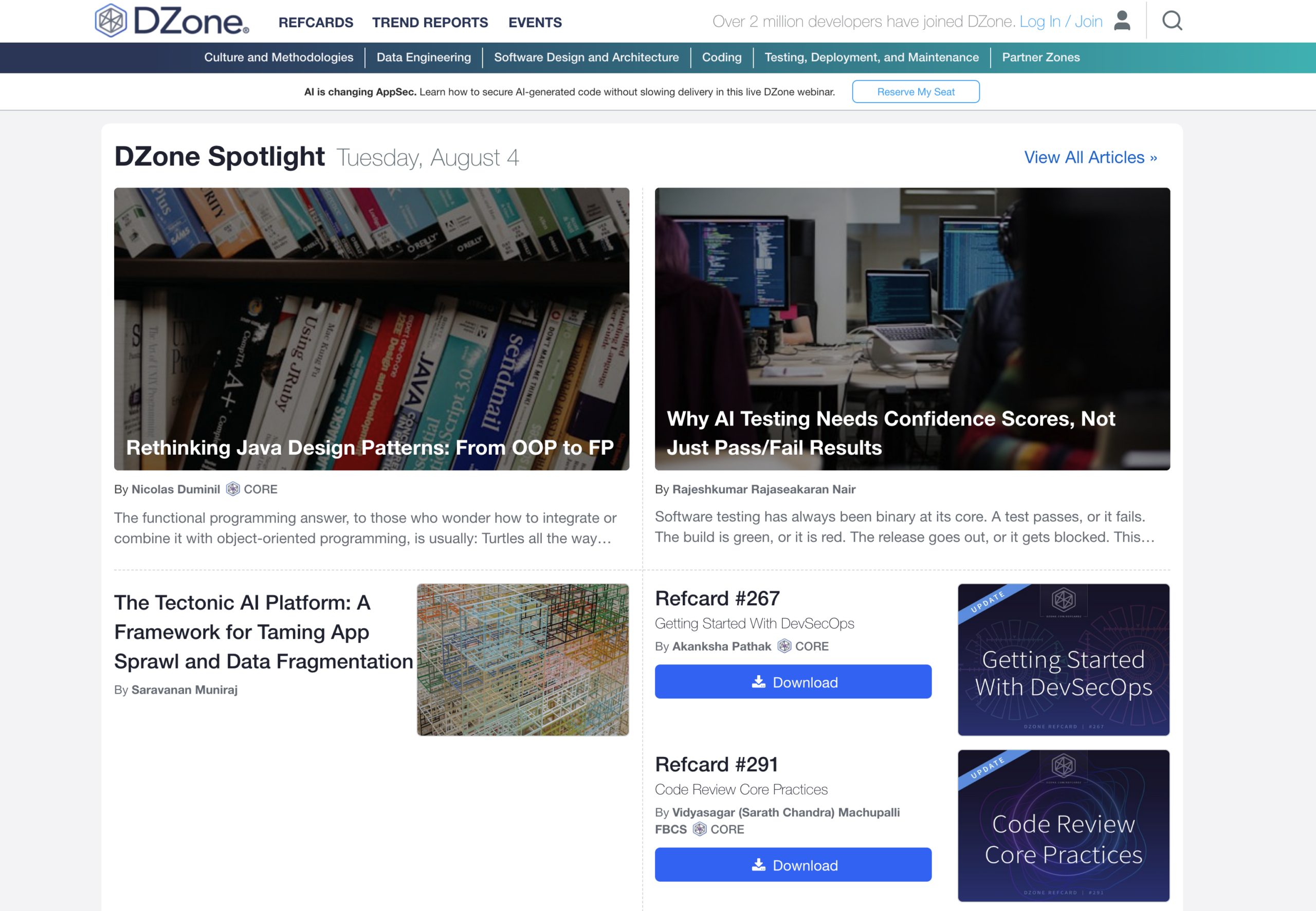
DZone started as Javalobby in 1997 before evolving into the broader developer platform it is today, and it's now one of the largest software engineering knowledge communities in the world, with over 2 million members. It's run by founder Rick Ross and draws contributors from across the global developer and engineering community.
Why join? What sets DZone apart is its Writer's Zone — if you want to publish technical articles and build a professional profile in front of millions of developers, this is one of the highest-reach platforms to do it. You'll also get access to Refcards (free downloadable tech cheat sheets) and Trend Reports that combine community survey data with expert analysis across topics like AI/ML, DevOps, cloud, and security.
I think it's especially worth joining if you're looking to grow your visibility as a practitioner, not just consume content.
What’s Next?
Boost your SaaS growth and leadership skills. Subscribe to our newsletter for the latest insights from CTOs and aspiring tech leaders. We'll help you scale smarter and lead stronger with guides, resources, and strategies from top experts!