Staying current in coding gets harder every day with endless new tools, languages, and updates. I’ve rounded up the best newsletters so you can get clear, reliable insights and hands-on tips—right in your inbox—to help you save time, stay sharp, and keep building your skills.
The 18 Best Coding Newsletters
Below are my summaries of the best coding newsletters. My reviews offer a look at each newsletter's audience, frequency, cost, and more.
1. The Pragmatic Engineer - Best for modern software engineering

- Audience: Software engineers and engineering managers at tech companies
- Size: 1,100,000+ members
- Frequency: Weekly for free subscribers and twice a week for paying subscribers
- Cost: Free or $15 per month
The Pragmatic Engineer is written by Gergely Orosz—a former engineer at Uber and Microsoft—and has grown into the #1 technology newsletter on Substack, with over 1.1 million subscribers. It's built for software engineers and engineering managers who want substantive, insider-level coverage of Big Tech and startups.
Why subscribe? If you want surface-level news roundups, this isn't it—Gergely writes long-form deep dives that go well beyond headlines, covering real engineering decisions, team structures, and industry shifts from someone who's lived them. Free subscribers get a taste each Tuesday, but paid subscribers unlock the full picture: complete deep dives, Thursday "Pulse" pieces on timely industry trends, and access to templates and resources.
2. ByteByteGo Newsletter - Best for visual system design explanations

- Audience: Software engineers and developers focused on system design
- Size: 1,000,000+ members
- Frequency: Weekly for free subscribers and multiple times per week for paying subscribers
- Cost: Free or $15 per month
ByteByteGo Newsletter is run by Alex Xu—author of the best-selling System Design Interview book series—and launched in early 2022 alongside a team of experienced engineers. It's aimed at software engineers who want to understand how large-scale systems actually work.
Why subscribe? What sets ByteByteGo apart is its heavy use of visuals: diagrams, charts, and illustrated breakdowns that make complex distributed systems concepts genuinely easy to follow. Each Saturday issue tackles a specific system design topic, from API gateways to database internals, in a way that's useful whether you're prepping for interviews or just deepening your technical knowledge.
It’s particularly valuable if you're a mid-to-senior engineer who learns better by seeing how something works rather than just reading about it.
3. JavaScript Weekly - Best for JavaScript news

- Audience: JavaScript developers and front-end or full-stack engineers
- Size: 169,000+ members
- Frequency: Weekly
- Cost: Free
JavaScript Weekly has been running since November 2010, making it one of the longest-standing developer newsletters around, published by Cooperpress and edited by Peter Cooper. It's a weekly roundup built for JavaScript developers who want a reliable digest of what's happening across the ecosystem.
Why subscribe? Each issue pulls together articles, tutorials, new releases, and tooling updates spanning the full JavaScript landscape—from React and Vue to Node.js and beyond—so you're not hunting across dozens of sources yourself.
It's curated rather than opinionated, which makes it a solid weekly reference point rather than a read-every-word publication. If you work in JavaScript in any capacity, it's worth having in your inbox.
Have an account? Log In
4. TLDR Web Dev - Best for dev news summary
- Audience: Web developers, full-stack engineers, and engineering managers
- Size: 470,000+ members
- Frequency: Daily
- Cost: Free
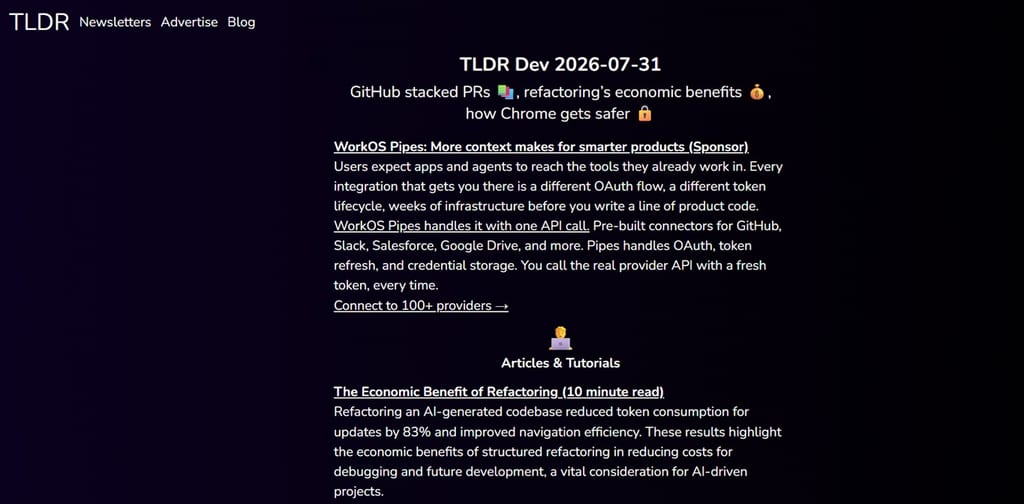
TLDR Web Dev is a daily weekday newsletter from TLDR—founded by Dan Ni in 2018—covering the most important news across frontend, backend, DevOps, and the open-source ecosystem. It's built for developers who want to stay informed without spending a lot of time doing it.
Why subscribe? Each issue takes about five minutes to read and surfaces the stories that actually matter that day, with short summaries and links to dig deeper when you want to. I think it's a particularly good fit if you work across the full stack and want broad coverage rather than a deep dive into one area.
5. PyCoder's Weekly - Best for Python news and projects

- Audience: Python developers and enthusiasts of all experience levels
- Size: 174,000+ members
- Frequency: Weekly
- Cost: Free
PyCoder's Weekly has been a go-to resource for the Python community since 2012, delivering a free weekly roundup of Python news, tutorials, projects, and ecosystem updates. It has a close relationship with Real Python, so you'll regularly see high-quality tutorials from that platform alongside community-sourced content.
Why subscribe? Each issue covers a genuinely wide range of Python topics—from Django and FastAPI to NumPy and PyPI packaging news—so it works whether you're building web apps, doing data work, or just keeping your Python skills sharp.
What sets it apart is the mix of practical tutorials, new project releases, and community events all in one place. It's free and weekly, which makes it easy to stay connected to the Python ecosystem without any ongoing commitment.
6. Frontend Focus - Best for front-end development news and resources

- Audience: Front-end web developers and designers of all experience levels
- Size: 71,000+ members
- Frequency: Weekly
- Cost: Free
Frontend Focus is a weekly front-end newsletter published by Cooperpress—the same team behind JavaScript Weekly and several other well-regarded developer newsletters—and has been running since 2011.
It's curated by Editorial Director Chris Brandrick and covers CSS, HTML, browser technology, and the broader web platform.
Why subscribe? Each issue pulls together news, tutorials, and tools from across the web, so you get a solid weekly snapshot of what's moving in front-end development without having to track dozens of sources yourself.
It's especially useful if you care about browser standards and the underlying web platform, not just frameworks and libraries. It's free and has been consistent for well over a decade, which speaks to its quality.
7. Bytes - Best for fun JavaScript news

- Audience: JavaScript and web developers wanting industry updates
- Size: 100,000+ members
- Frequency: Twice a week
- Cost: Free
Bytes is a JavaScript newsletter launched in 2020 by Tyler McGinnis and the team at ui.dev, covering the JS ecosystem—React, TypeScript, Next.js, Bun, Deno, and more—twice a week.
Why subscribe? What sets Bytes apart from other JS newsletters is its writing style—it's genuinely funny and engaging, making it easier to actually read rather than skim and archive. You'll get coverage of new releases, framework drama, and ecosystem shifts, plus recurring features like "Spot the Bug" that make it interactive.
It's the best option if you want to stay current on JavaScript without reading something that feels like release notes.
8. Console - Best for developer tool reviews

- Audience: Experienced developers looking for new tools and betas
- Size: 30,000+ members
- Frequency: Weekly
- Cost: Free
Console is a weekly devtools newsletter run by David Mytton—co-founder of Console Ltd and previously co-founder of Server Density—covering the most interesting new developer tools and early-access releases.
It's built specifically for experienced developers who want to discover what's worth paying attention to before it hits the mainstream.
Why subscribe? Each issue reviews 2–3 tools with an honest "what we like / what we don't like" breakdown, which I think is far more useful than the promotional write-ups you see elsewhere. You'll also get a dedicated section on beta and early-access releases, so you're seeing tools at the ground floor.
9. Software Lead Weekly - Best for engineering leadership insights

- Audience: Tech leads, engineering managers, and aspiring engineering leaders
- Size: 31,000+ members
- Frequency: Weekly
- Cost: Free
Software Lead Weekly is a free weekly newsletter curated by Oren Ellenbogen, a veteran engineering leader and author of "Leading Snowflakes," covering the people side of building software.
With over 31,000 subscribers and hundreds of issues published, it's a long-running resource for developers stepping into leadership.
Why subscribe? Most coding newsletters focus on technical skills, but Software Lead Weekly fills the gap on what it actually takes to lead engineering teams—think management practices, team culture, and organizational dynamics. The content is curated from across the web, so each issue surfaces the best writing on engineering leadership rather than recycling the same sources.
If you're a senior developer moving into a tech lead or EM role, I think this is one of the most practical newsletters you can add to your reading list.
10. Pointer - Best for engineering management

- Audience: Software engineers and leaders seeking technical and leadership insights
- Size: 60,500+ members
- Frequency: Twice a week
- Cost: Free
Pointer is a free twice-weekly newsletter for software engineers and engineering leaders, curating the best writing on technical growth, leadership, and career development into a 5-minute read.
With over 60,500 subscribers and 726 issues published, it's one of the more established curation-focused newsletters in the engineering space.
Why subscribe? What sets Pointer apart is its focus on staff+ and senior engineering topics—things like engineering productivity, tech debt strategy, and the manager-to-director transition—that most purely technical newsletters don't cover. Each issue summarizes the linked articles, so you can quickly decide what's worth reading in full.
11. Hacker Newsletter - Best for highlights from Hacker News

- Audience: Developers, founders, and tech professionals interested in top Hacker News links
- Size: 60,000+ members
- Frequency: Weekly
- Cost: Free
Hacker Newsletter is a free weekly digest run by Kale Davis that hand-curates the best links from Hacker News and delivers them every Friday.
It's been running since 2010 and has grown to 60,000+ subscribers across the tech and developer community.
Why subscribe? If you find Hacker News valuable but don't want to scroll it daily, this newsletter does the filtering for you—pulling the most interesting stories on programming, startups, science, and tech culture into one tidy Friday email. I
It's not opinionated or editorial; it's purely a curated list, which means the value is in the selection, not the commentary. I'd recommend it as a low-effort way to stay plugged into what the broader tech community is reading and talking about each week.
12. CSS Weekly - Best for frontend and CSS resources

- Audience: Frontend developers and designers focused on CSS
- Size: 40,000+ members
- Frequency: Weekly
- Cost: Free
CSS Weekly is a free weekly newsletter curated by Zoran Jambor since 2012, rounding up the best CSS articles, tutorials, tools, and resources from across the web. It's built specifically for frontend developers who want to stay current with what's happening in the CSS world.
Why subscribe? CSS Weekly is one of the few newsletters that stays laser-focused on CSS and frontend development—you won't get general tech news or JavaScript-heavy content mixed in. Each issue surfaces hand-picked tutorials and tools, so it's genuinely useful whether you're learning a new layout technique or keeping tabs on spec changes.
13. Python Weekly - Best for Python updates, tools, and articles

- Audience: Python developers at any experience level
- Frequency: Weekly
- Cost: Free
Python Weekly is a free, hand-curated newsletter run by Rahul Chaudhary that rounds up the best Python articles, new releases, libraries, tools, and community news each week.
With over 750 issues published, it's one of the longest-running Python-focused newsletters around.
Why subscribe? Every issue covers the full Python ecosystem—from beginner tutorials to advanced library releases—so it's useful regardless of where you are in your Python journey. You're getting a focused, consistent digest that saves you from hunting across blogs, GitHub, and forums yourself.
14. Node Weekly - Best for Node.js articles and news

- Audience: Node.js and backend JavaScript developers
- Frequency: Weekly
- Cost: Free
Node Weekly is a free weekly newsletter from Cooperpress—the team behind JavaScript Weekly and several other developer-focused publications—covering Node.js news, articles, and releases since 2013. It's built for backend JavaScript developers who want a consistent pulse on the Node.js ecosystem.
Why subscribe? Each issue pulls together the most relevant Node.js content from across the web, including new releases, tutorials, and tooling updates, so you don't have to piece it together yourself. Because it comes from Cooperpress, you can expect the same editorial consistency and quality that makes JavaScript Weekly one of the most trusted names in developer newsletters.
I'd recommend it if Node.js is a regular part of your stack and you want a no-fuss weekly digest that keeps you current.
15. Ruby Weekly - Best for Ruby programming updates and resources

- Audience: Ruby and Ruby on Rails developers
- Frequency: Weekly
- Cost: Free
Ruby Weekly is a free weekly newsletter from Cooperpress—the same team behind JavaScript Weekly and Node Weekly—that has been covering Ruby news, articles, and releases since 2010.
It's the go-to digest for Ruby and Ruby on Rails developers who want a single, reliable source for what's happening in the ecosystem.
Why subscribe? Each issue covers new gem releases, tutorials, community discussions, and language updates, giving you a well-rounded picture of the Ruby world in one place. The longevity of this newsletter—700+ issues—speaks to how consistently useful it is for Ruby developers at any level.
16. Go Weekly - Best for Go language news and tips

- Audience: Go developers and backend engineers
- Frequency: Weekly
- Cost: Free
Go Weekly is a free weekly newsletter from Cooperpress that has been covering the Go programming language for 500+ issues, curating news, tutorials, and articles for Go developers.
It's run by the same editorial team behind JavaScript Weekly and Ruby Weekly, so you can expect the same consistent, well-organized format.
Why subscribe? Each issue covers Go releases, tooling updates, community projects, and practical tutorials—everything you need to stay current with the language without digging through forums and blogs yourself. I think it's especially useful if Go is your primary backend language, since the content stays tightly focused on the ecosystem rather than spreading across general programming topics.
It's one of the most reliable Go-specific resources available, and the price being free makes it an easy addition to your reading list.
More Articles
17. Android Weekly - Best for Android development news

- Audience: Android developers working with Kotlin and mobile platforms
- Size: 80,000+ members
- Frequency: Weekly
- Cost: Free
Android Weekly is a free, independently run newsletter that has been curating Android development content for 737+ issues, reaching over 80,000 developers worldwide. It covers everything relevant to Android development, from tutorials and screencasts to the latest platform news.
Why subscribe? Each issue pulls together practical tutorials, open-source projects, tools, and Kotlin-focused content—so you get a broad but focused view of the Android ecosystem in one place. It's particularly valuable if you're working with Kotlin or Kotlin Multiplatform, since the newsletter tracks those areas closely alongside core Android development.
For Android developers who want to stay sharp without piecing together content from multiple sources, this is one of the most well-established options out there.
18. Programming Digest - Best for programming and engineering articles

- Audience: Software engineers and developers interested in programming topics
- Size: 21,000+ members
- Frequency: Weekly
- Cost: Free
Programming Digest is a weekly newsletter published by Bonobo Press, curating the best programming and software engineering articles for developers. It's been running since 2013 and has built a following of over 21,000 subscribers.
Why subscribe? Each issue features a handful of handpicked articles with short summaries, covering topics such as algorithms, systems engineering, APIs, containers, security, and AI engineering. It's a good fit if you want a low-effort way to stay current without having to hunt down quality reading yourself.
What’s Next?
Boost your SaaS growth and leadership skills. Subscribe to our newsletter for the latest insights from CTOs and aspiring tech leaders. We'll help you scale smarter and lead stronger with guides, resources, and strategies from top experts!