


Zendesk vs. ServiceNow: Comparison and Expert Reviews for 2026
Explore how Zendesk and ServiceNow stack up in service management, with expert insights on features, usability, and which solution suits different business needs.

We review tools independently, and commissions help fund our testing. See our transparency policy, our methodology, or suggest a tool.
Teams today face growing pressure to deliver fast, personalized support across multiple channels while keeping costs and complexity under control. As organizations scale, many struggle with fragmented tools, rising ticket volumes, siloed data, and increasing expectations from both customers and employees.
Choosing the right service management software can make the difference between efficient, streamlined service operations and a backlog of unresolved issues. Two of the most prominent solutions in this space. Zendesk and ServiceNow approach service management from different angles, offering distinct strengths for businesses looking to modernize their support infrastructure. This article breaks down how each platform handles core service management tasks, where they shine, and what to watch out for, so you can make a confident, informed decision.
Zendesk
4.3/5
- 14-day free trial
- From $19/user/month (billed annually)
ServiceNow
4.4/5
- Free demo available
- Pricing upon request
Why Trust Our Software Recommendations
6,700+
Reviews
20
Industry experts
16+
Evaluation factors
14
Years
Our team has been testing and reviewing software since 2012. As tech leaders ourselves, we know how difficult—and important—it is to choose the right software.
For this guide, we evaluated tools using hands-on testing and independent research, scoring tools using our selection criteria.
Our reviews reflect our human editorial judgment, not a sales pitch.
Expert reviewers:
- Paulo Gardini MiguelTech Director
 Tim FisherVP of AI
 Gabriel RosasTech Lead & Software Architect
 Christhian GruhnTech Lead & Platform Architect

| Zendesk | ServiceNow | |
|---|---|---|
| Free Trial | 14-day free trial | Free demo available |
| Pricing | From $19/user/month (billed annually) | Pricing upon request |
Zendesk Vs. ServiceNow Pricing & Hidden Costs
Zendesk uses a tiered subscription model, with plans that scale based on features and user count. Add-ons for advanced analytics, AI, or integrations can increase your total cost. ServiceNow, in contrast, offers custom pricing based on modules, user roles, and deployment size, often requiring a sales conversation to get a full quote. With both platforms, costs can rise quickly if you need premium support, custom integrations, or extra automation features.
To choose the right pricing model, start by noting your current and future service management needs, think about the number of users, required integrations, and compliance requirements. Ask vendors for a detailed breakdown of all potential costs, including implementation, training, and ongoing support. Comparing the total cost of ownership over several years, not just the initial price, will help you avoid surprises and pick a solution that fits your long-term plans.
Both Zendesk and ServiceNow give you the core tools you need to manage service requests at scale. With either platform, you can capture issues as tickets or cases, route them to the right team, automate workflows, and track performance with built-in reporting and dashboards. You also get omnichannel support, so you can manage requests from email, chat, web portals, and other channels in one place.
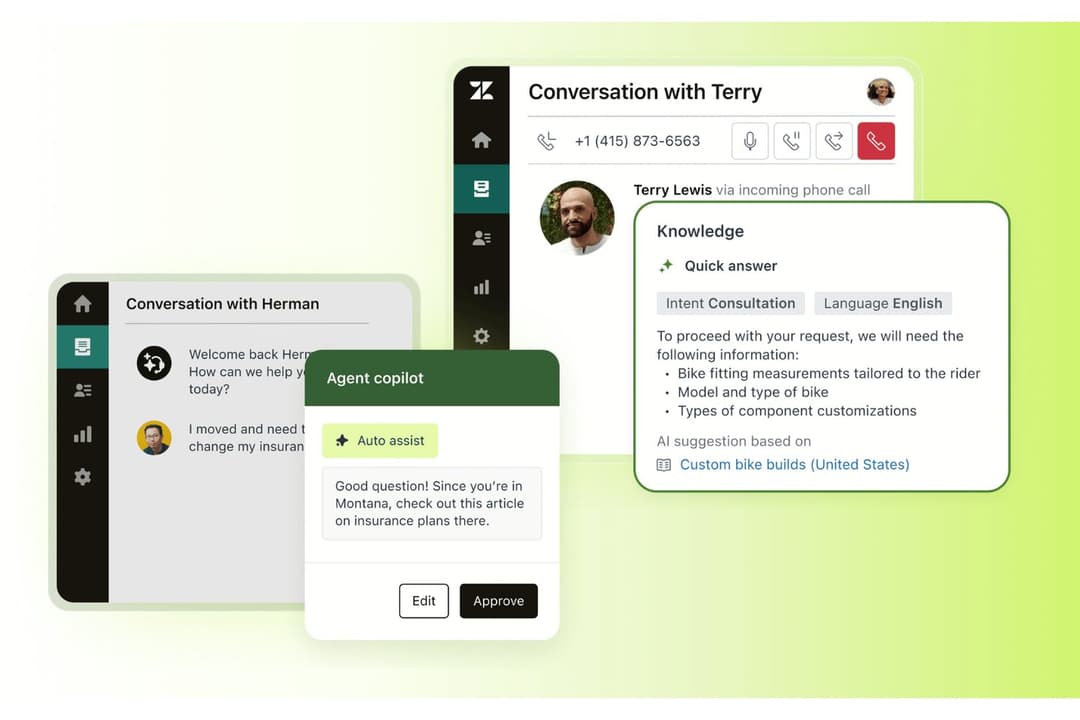
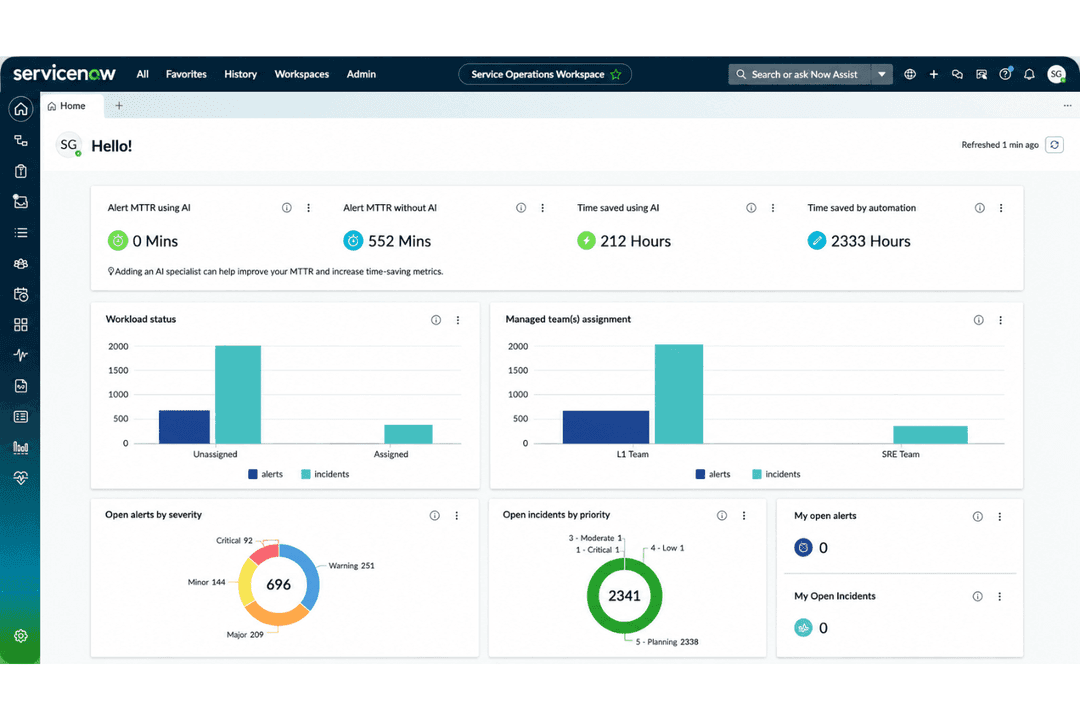
Where they stand out is in their focus. Zendesk is built specifically for customer support, giving you an intuitive interface, fast deployment, and strong omnichannel engagement tools that help agents respond quickly and manage high ticket volumes. ServiceNow, on the other hand, excels in enterprise service management. You can automate complex workflows across IT, HR, and other departments, making it ideal if your support processes are deeply connected to internal systems and operations.
| Zendesk | ServiceNow | |
|---|---|---|
| Analytics | Yes | Yes |
| API | Yes | Yes |
| Batch Permissions & Access | No | Yes |
| Call Integration | Yes | Yes |
| Chat | Yes | Yes |
| Contact Management | Yes | Yes |
| CRM Integration | Yes | Yes |
| Customer Management | Yes | Yes |
| Data Export | Yes | Yes |
| Data Import | Yes | Yes |
| Email Integration | Yes | Yes |
| Escalation Management | Yes | Yes |
| External Integrations | Yes | Yes |
| Instant Chat Integration | Yes | Yes |
| Knowledge Base | Yes | Yes |
| Multi-User | Yes | Yes |
| Notifications | Yes | Yes |
| Real-time Alerts | Yes | Yes |
| Self-service Portal | Yes | Yes |
| Social Media Integration | Yes | Yes |
| Support Forum | Yes | Yes |
| Ticket Management | Yes | Yes |
| Workflow Management | Yes | Yes |
| Integration | Zendesk | ServiceNow |
|---|---|---|
| IntegrationSlack | Zendesk✅ | ServiceNow✅ |
| IntegrationSalesforce | Zendesk✅ | ServiceNow✅ |
| IntegrationMicrosoft Teams | Zendesk✅ | ServiceNow✅ |
| IntegrationJira | Zendesk✅ | ServiceNow✅ |
| IntegrationShopify | Zendesk✅ | ServiceNow❌ |
| IntegrationZoom | Zendesk✅ | ServiceNow✅ |
| IntegrationOkta | Zendesk✅ | ServiceNow✅ |
| IntegrationWorkday | Zendesk❌ | ServiceNow✅ |
| IntegrationAPI | Zendesk✅ | ServiceNow✅ |
| IntegrationZapier | Zendesk✅ | ServiceNow✅ |
Zendesk and ServiceNow both integrate with many of the tools you already use, including collaboration platforms like Slack and Microsoft Teams, development tools like Jira, and CRM systems such as Salesforce. Each platform also provides robust APIs that let you build custom integrations and automate data sharing between systems.
The main differences show up in the ecosystems they prioritize: Zendesk integrates heavily with customer support and ecommerce tools like Shopify, while ServiceNow focuses more on enterprise systems such as Workday and identity platforms used for IT and HR workflows.
| Factor | Zendesk | ServiceNow |
|---|---|---|
| FactorData Encryption | ZendeskEncrypts data in transit (TLS) and at rest using industry-standard encryption and secure infrastructure. | ServiceNowEncrypts data in transit and at rest, with advanced options such as customer-controlled key management. |
| FactorRegulatory Compliance | ZendeskCertifications include SOC 2 Type II, ISO 27001, ISO 27017, ISO 27018, ISO 27701, and support for GDPR, HIPAA, and FedRAMP (low-impact). | ServiceNowExtensive enterprise compliance including SOC 1/2/3, ISO 27001, HIPAA, FedRAMP (including higher authorization levels), and other industry frameworks. |
| FactorAccess Controls | ZendeskRole-based access controls, SSO, and optional multi-factor authentication (2FA). | ServiceNowGranular role-based access controls, SSO, MFA, and enterprise identity integrations. |
| FactorUptime Guarantees | ZendeskPublicly reports service status and targets around 99.9% availability for most services. | ServiceNowEnterprise SLAs commonly provide up to 99.99% availability with detailed service monitoring and dashboards. |
Zendesk and ServiceNow both provide enterprise-grade security foundations, including encryption for data in transit and at rest, role-based access controls, and support for single sign-on and multi-factor authentication. Overall, ServiceNow is known for a broader set of compliance frameworks and higher-tier government certifications, making it a stronger fit for highly regulated industries.
| Factor | Zendesk | ServiceNow |
|---|---|---|
| FactorUser Interface | ZendeskClean, modern interface with intuitive navigation for new users. | ServiceNowFeature-rich dashboard with a steeper learning curve for first-time users. |
| FactorOnboarding | ZendeskGuided setup and in-app tutorials help teams get started quickly. | ServiceNowRequires more training and configuration, especially for custom workflows. |
| FactorCustomization | ZendeskSimple drag-and-drop tools for basic workflow changes. | ServiceNowDeep customization options for complex processes, but setup is more involved. |
| FactorSupport Resources | ZendeskExtensive knowledge base and responsive chat support. | ServiceNowOffers detailed documentation and community forums, but support can be slower. |
| FactorMobile Access | ZendeskMobile app is easy to use for ticket management on the go. | ServiceNowMobile app supports advanced features but can feel overwhelming. |
Zendesk is easier for most teams to pick up and use right away, while ServiceNow is better suited for organizations willing to invest in training for advanced capabilities. Zendesk’s straightforward interface and onboarding stand out, while ServiceNow’s flexibility comes with a learning curve that pays off for complex environments.
Zendesk
- Your team can easily manage customer interactions with its intuitive interface.
- It offers powerful reporting tools to help you track and improve performance.
- Zendesk provides excellent support, ensuring your issues are addressed promptly.
- You might find the initial setup process a bit complex.
- Customization options can feel limited for advanced users.
- Some users report occasional delays in loading times.
ServiceNow
- Built-in policy management automates complex governance processes
- Detailed audit trails support regulatory and compliance needs
- Centralized dashboard provides clear visibility into AI workflows
- Advanced governance features require significant setup and training
- Pricing is not transparent for most AI-specific modules
- Custom automation can strain IT resources during deployment
Zendesk
- Large EnterprisesZendesk scales well for companies with high customer support volumes and complex workflows.
- E-commerceThe platform integrates with online stores and provides tools for managing high volumes of customer inquiries.
- SaaS CompaniesZendesk's features align well with subscription-based businesses needing to manage ongoing customer relationships.
- IT DepartmentsThe software offers IT service management capabilities suitable for handling internal tech support requests.
- Multichannel SupportZendesk excels in unifying customer interactions across various channels like email, chat, and social media.
- Global TeamsThe platform supports multiple languages and time zones, making it suitable for international customer service operations.
ServiceNow
- Financial ServicesServiceNow’s deep audit trails and policy automation help meet strict regulatory requirements for banking and insurance operations.
- Healthcare OrganizationsCentralized governance and compliance workflows support HIPAA needs and ensure patient data protection.
- Global EnterprisesServiceNow scales well for globally distributed teams needing unified oversight and secure model management.
- Government AgenciesBuilt-in controls and policy management align with complex government information technology standards and public sector risk controls.
- IT DepartmentsIntegrated governance in ITSM workflows makes ServiceNow a natural fit for teams already using incident and change management.
- Data Science LeadersCentralized model tracking and risk scoring make software development teams and AI leaders more efficient at cross-team collaboration and regulatory reporting.
Who Should Use Zendesk, and Who Should Use ServiceNow?
Zendesk is a great fit for customer support teams, small to midsize businesses, and organizations that want a straightforward, easy-to-adopt service management solution without heavy IT overhead. ServiceNow is best for large enterprises, IT departments, and regulated industries that need advanced workflow automation, deep customization, and strict compliance controls. If your team values quick setup and a user-friendly experience, Zendesk is the way to go. If you need to orchestrate complex processes across multiple departments or meet demanding regulatory requirements, ServiceNow is the stronger choice.
| Zendesk | ServiceNow | |
|---|---|---|
| Automation | Zendesk Basic workflow automation for ticket routing and responses. | ServiceNow Advanced automation for ITSM, HR, and custom business processes. |
| Customization | Zendesk Limited to pre-built options and simple workflow changes. | ServiceNow Highly customizable with scripting and integration capabilities. |
| IT Service Management | Zendesk Basic ITSM features suitable for small teams. | ServiceNow Enterprise ITSM capabilities with ITIL alignment. |
| Pricing Model | Zendesk Tiered subscription pricing per agent with predictable plans and add-ons. | ServiceNow Custom enterprise pricing based on modules, users, and scale. |
| User Interface | Zendesk Simple, modern UI designed for quick adoption. | ServiceNow Complex dashboard with advanced options for power users. |
| Cloud-Based Delivery | Both are delivered as cloud-based platforms, allowing teams to access service management tools from anywhere. |
|---|---|
| Integration Options | Each solution connects with popular tools like Slack, Salesforce, and Jira, and offers API access for custom integrations. |
| Multichannel Support | Each platform supports email, chat, and web forms for capturing and managing service requests from multiple channels. |
| Reporting & Analytics | Both provide built-in dashboards and reporting tools to monitor performance, trends, and team productivity. |
| Ticket Management | Both offer centralized ticketing systems for tracking, assigning, and resolving requests, with customizable workflows. |