


Resolve vs. ServiceNow: Comparison & Expert Reviews for 2026
Resolve and ServiceNow both support enterprise IT service management but take different approaches. Compare their automation, ITSM features, pricing, and best-fit use cases.

We review tools independently, and commissions help fund our testing. See our transparency policy, our methodology, or suggest a tool.
Service disruptions rarely come from one system alone. As IT environments grow across cloud, on-premises, observability, and service desk tools, teams need a clear way to manage incidents and automate what happens next.
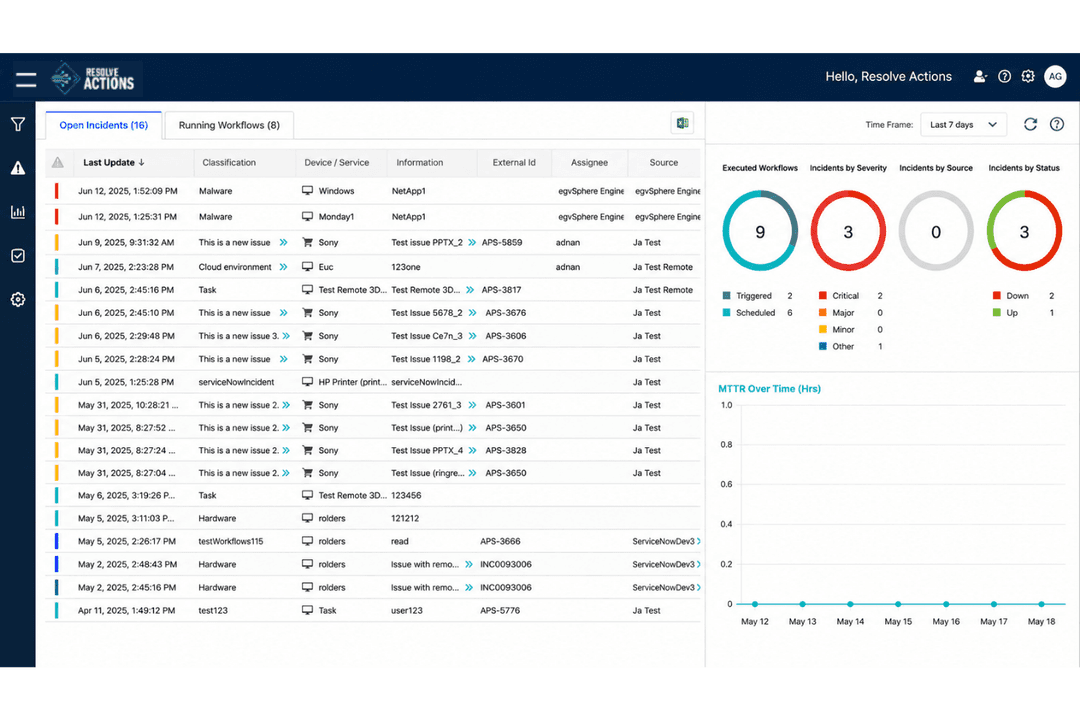
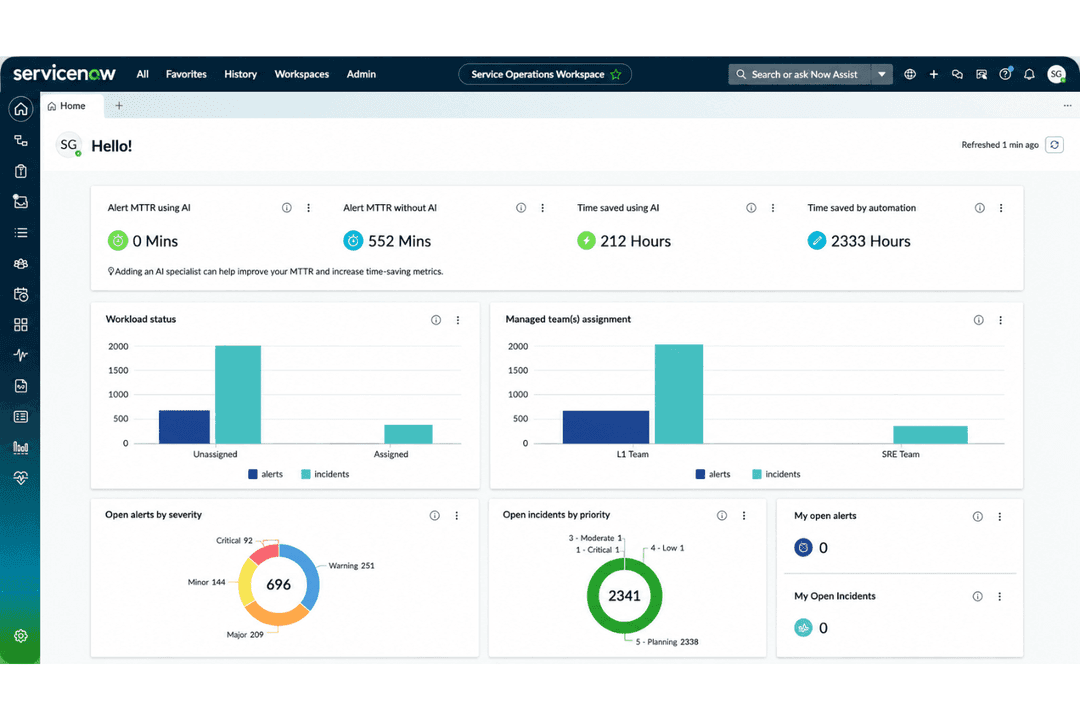
If you’re comparing Resolve and ServiceNow, the challenge is that they approach IT service management differently. Resolve focuses on automation and orchestration across the tools you already use, while ServiceNow centers IT service management within its own platform ecosystem.
In this article, I compare their features, pricing, security, usability, and best use cases to help you choose the better fit.
Resolve
5/5
- Free demo available
- Pricing upon request
ServiceNow
4.4/5
- Free demo available
- Pricing upon request
Why Trust Our Software Recommendations
6,700+
Reviews
20
Industry experts
16+
Evaluation factors
14
Years
Our team has been testing and reviewing software since 2012. As tech leaders ourselves, we know how difficult—and important—it is to choose the right software.
For this guide, we evaluated tools using hands-on testing and independent research, scoring tools using our selection criteria.
Our reviews reflect our human editorial judgment, not a sales pitch.
Expert reviewers:
- Paulo Gardini MiguelTech Director
 Tim FisherVP of AI
 Gabriel RosasTech Lead & Software Architect
 Christhian GruhnTech Lead & Platform Architect

| Resolve | ServiceNow | |
|---|---|---|
| Free Trial | Free demo available | Free demo available |
| Pricing | Pricing upon request | Pricing upon request |
Resolve vs. ServiceNow Pricing & Hidden Costs
Resolve uses custom, flat pricing with no per-user, per-ticket, per-workflow, or AI token fees, keeping costs more predictable as automation scales. ServiceNow also uses custom pricing, but AI usage can introduce consumption-based costs alongside software, implementation, and configuration expenses. Neither vendor publishes exact pricing publicly, so you’ll need a tailored quote.
The bigger difference is how costs can grow after deployment. Resolve includes professional services for the first five use cases or agents and provides thousands of prebuilt automations, while ServiceNow may require additional configuration, consulting, and AI consumption as requirements expand. I’d compare total automation costs over time, not just the initial software quote.
| Resolve | ServiceNow | |
|---|---|---|
| API | Yes | Yes |
| Batch Permissions & Access | Yes | Yes |
| Contact Management | No | Yes |
| Data Export | Yes | Yes |
| Data Import | Yes | Yes |
| External Integrations | Yes | Yes |
| Notifications | Yes | Yes |
| Project Management | No | Yes |
| Workflow Management | Yes | Yes |
| Integration | Resolve | ServiceNow |
|---|---|---|
| IntegrationMicrosoft Teams | Resolve✅ | ServiceNow✅ |
| IntegrationSlack | Resolve✅ | ServiceNow✅ |
| IntegrationJira | Resolve✅ | ServiceNow✅ |
| IntegrationDatadog | Resolve✅ | ServiceNow✅ |
| IntegrationAWS | Resolve✅ | ServiceNow✅ |
| IntegrationAzure | Resolve✅ | ServiceNow✅ |
| IntegrationPagerDuty | Resolve✅ | ServiceNow✅ |
| IntegrationZoom | Resolve✅ | ServiceNow✅ |
| IntegrationOkta | Resolve✅ | ServiceNow✅ |
| IntegrationBMC Remedy | Resolve✅ | ServiceNow✅ |
| IntegrationAPI | Resolve✅ | ServiceNow✅ |
| IntegrationZapier | Resolve❌ | ServiceNow✅ |
Both Resolve and ServiceNow offer strong integration ecosystems, but they use them differently. Resolve connects ITSM, observability, cloud, network, and legacy systems so automation can execute across the existing stack. ServiceNow uses integrations to extend workflows within its service management environment. Overall, Resolve leans more heavily into cross-system orchestration.
| Factor | Resolve | ServiceNow |
|---|---|---|
| FactorAccess Controls | ResolveUses RBAC and permission controls to restrict access to automated actions and platform resources. | ServiceNowUses RBAC, MFA, SSO, encryption controls, and platform-level security policies. |
| FactorData Encryption | ResolveProtects data in transit and at rest using industry-standard encryption controls. | ServiceNowEncrypts data in transit and at rest, with additional encryption options for sensitive enterprise data. |
| FactorRegulatory Compliance | ResolveSupports SOC 2, ISO 27001, GDPR, EU-US DPF, HIPAA/HITRUST, and CCPA requirements. | ServiceNowSupports major frameworks including ISO 27001, SOC 2, GDPR, and other industry and regional standards. |
| FactorHosting & Data Residency | ResolveOffers AWS GovCloud regional hosting and global data residency options for regulated and distributed organizations. | ServiceNowOffers regional hosting and data residency options for geographic or regulatory requirements. |
| FactorAutomation Governance | ResolveUses approval gates, audit trails, rollback rules, and policy controls to govern automated and AI-driven actions. | ServiceNowProvides governance and policy controls for workflows, AI, and other platform processes. |
Overall, Resolve combines strong compliance coverage with governance controls designed for automated and AI-driven actions, including RBAC, approvals, rollback rules, audit trails, AWS GovCloud hosting, and global data residency. Meanwhile, ServiceNow combines identity, encryption, hosting, and governance controls within its platform. Both suit regulated environments; however, Resolve puts particular emphasis on controlling what automation and AI agents can execute across systems.
| Factor | Resolve | ServiceNow |
|---|---|---|
| FactorUser Interface | ResolveFocuses on automation workflows, agents, and operational tasks, with low-code tools for building processes. | ServiceNowProvides a highly configurable ITSM interface, though its range of modules can create a steeper learning curve. |
| FactorSetup | ResolveComplexity depends on the number and depth of integrations, especially in hybrid environments. | ServiceNowTypically requires more planning and configuration across applications, workflows, roles, and integrations. |
| FactorOnboarding | ResolveIncludes guided onboarding, with professional services helping configure the first five use cases or agents. | ServiceNowProvides structured implementation resources, expert services, partners, and recommended training paths for ITSM teams. |
| FactorSupport | ResolveOffers a support portal, documentation, training resources, and hands-on professional services during onboarding. | ServiceNowProvides documentation, training, certification, community resources, and implementation partner support. |
| FactorCustomization | ResolveSupports no-code/low-code workflows, AI-assisted building, APIs, and bring-your-own-code automation. | ServiceNowSupports configurable workflows and processes across its native ITSM environment. |
From an ease-of-use perspective, Resolve combines guided onboarding, low-code workflow building, and 5,000+ prebuilt automations to reduce build-from-scratch work. Meanwhile, ServiceNow can require more setup and platform expertise because workflows are configured within its ITSM environment. For teams focused on cross-system automation, Resolve may be quicker to put into action, while ServiceNow suits teams that want service processes managed primarily within its own platform.
Resolve
- Orchestrates workflows across ITSM, observability, cloud, network, and legacy systems
- Combines deterministic workflows with governed AI agents for more predictable execution
- Uses flat pricing that avoids variable usage- or token-based automation costs
- No native ticketing, so teams still need a separate ITSM platform
- No built-in monitoring, requiring existing observability tools
- Smaller market presence than larger vendors like ServiceNow and BMC
ServiceNow
- Built-in policy management automates complex governance processes
- Detailed audit trails support regulatory and compliance needs
- Centralized dashboard provides clear visibility into AI workflows
- Advanced governance features require significant setup and training
- Pricing is not transparent for most AI-specific modules
- Custom automation can strain IT resources during deployment
Resolve
- Large EnterprisesOrganizations with large, complex IT environments can use Resolve to automate workflows across ITSM, cloud, infrastructure, and legacy systems.
- Financial ServicesBanks and financial institutions can automate incident response, access management, compliance workflows, and other processes where uptime and auditability matter.
- ManufacturingManufacturers can automate service requests, infrastructure remediation, and cross-system workflows across plants, sites, and enterprise systems.
- PharmaceuticalsPharmaceutical companies can use governed automation across regulated environments, including access, incident, infrastructure, and service workflows.
- RetailLarge retailers can automate IT operations across distributed stores, e-commerce systems, infrastructure, and service desks.
- TelecommunicationsTelecom teams managing large networks and hybrid environments can automate operational workflows, remediation, and service processes across multiple systems.
ServiceNow
- Financial ServicesServiceNow’s deep audit trails and policy automation help meet strict regulatory requirements for banking and insurance operations.
- Healthcare OrganizationsCentralized governance and compliance workflows support HIPAA needs and ensure patient data protection.
- Global EnterprisesServiceNow scales well for globally distributed teams needing unified oversight and secure model management.
- Government AgenciesBuilt-in controls and policy management align with complex government information technology standards and public sector risk controls.
- IT DepartmentsIntegrated governance in ITSM workflows makes ServiceNow a natural fit for teams already using incident and change management.
- Data Science LeadersCentralized model tracking and risk scoring make software development teams and AI leaders more efficient at cross-team collaboration and regulatory reporting.
Who Should Use Resolve, and Who Should Use ServiceNow?
Resolve is best suited to large enterprises with complex hybrid environments that need automation across ITSM, observability, cloud, network, and legacy systems. It’s especially useful for IT operations and service desk teams that want to reduce ticket volume, automate remediation, and coordinate actions across existing tools without replacing their ITSM platform.
ServiceNow, meanwhile, is a fit for organizations that want native ticketing, service workflows, governance, and cross-department processes centered within one ITSM platform. It can work well in regulated environments where centralized service records and controls are important. Ultimately, I’d choose Resolve for deeper cross-system automation and ServiceNow when native ITSM management is the priority.
| Resolve | ServiceNow | |
|---|---|---|
| Automation Model | Resolve Combines governed AI agents with deterministic workflows for repeatable, predictable execution. | ServiceNow Uses agentic AI and workflow automation across incident, request, change, and other service processes. |
| Cross-System Resolution | Resolve Executes remediation across multiple tools, letting agents diagnose issues and trigger approved actions end to end. | ServiceNow Automates service workflows primarily within the Now Platform and its connected applications. |
| Implementation Approach | Resolve Includes 5,000+ prebuilt workflows and activities that can reduce build-from-scratch configuration. | ServiceNow Often requires more configuration and customization across its broader platform and modules. |
| Pricing Model | Resolve Uses flat pricing without per-user, per-ticket, per-workflow, or AI token fees. | ServiceNow Uses custom pricing, with AI consumption measured through allocated assists. |
| Primary Platform Role | Resolve Acts as an automation and orchestration layer across existing ITSM, cloud, network, observability, and legacy systems. | ServiceNow Acts as a native ITSM platform and system of record for managing service operations. |
| APIs & Integrations | Both provide integrations and API access for connecting ITSM, cloud, collaboration, identity, and infrastructure tools. |
|---|---|
| Employee Self-Service | Both provide visual or low-code tools for building workflows that reduce manual work and speed up service resolution. |
| Enterprise Focus | Both are built for large organizations managing complex IT environments, distributed systems, and high service volumes. |
| Governance Controls | Both support permissions, approvals, and policy controls to manage how users and automated processes interact with enterprise systems. |
| Hybrid IT Support | Both support IT operations across cloud, on-premises, and other enterprise infrastructure environments. |