


QA.tech vs. testRigor: Comparison and Expert Reviews for 2026
Here’s my take on QA.tech vs. testRigor. See how agent-driven testing compares with generative AI test automation, and which approach fits your team in 2026.

We review tools independently, and commissions help fund our testing. See our transparency policy, our methodology, or suggest a tool.
As applications grow, maintaining reliable end-to-end test coverage becomes more challenging. The right testing platform should reduce manual effort while helping teams catch issues before they reach production.
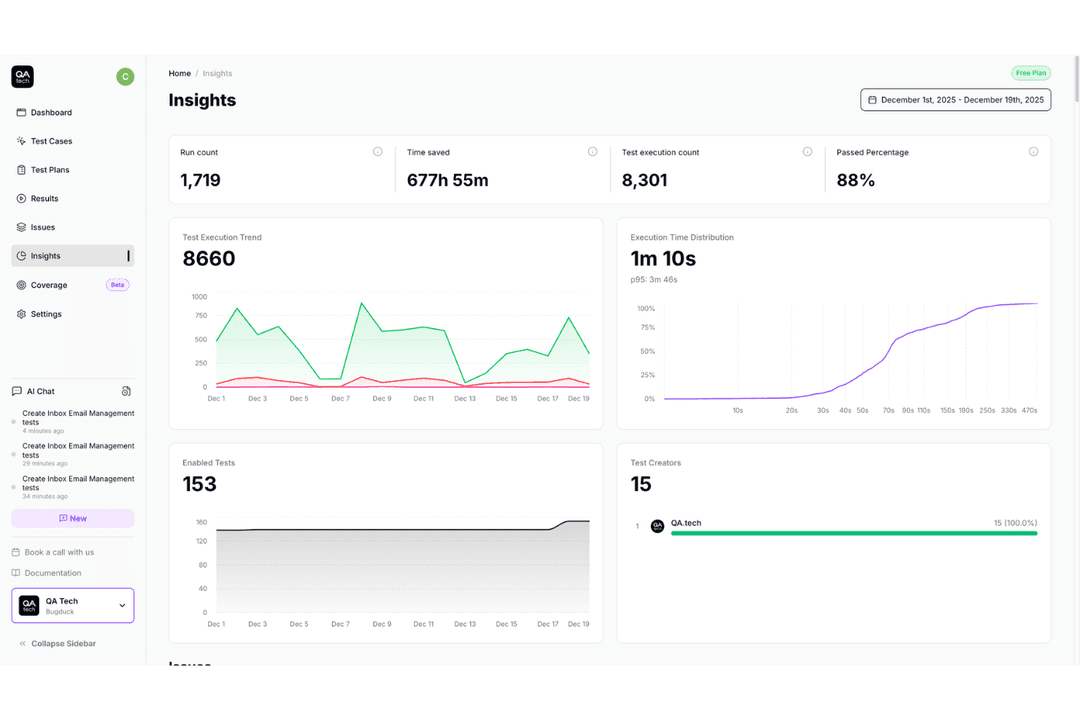
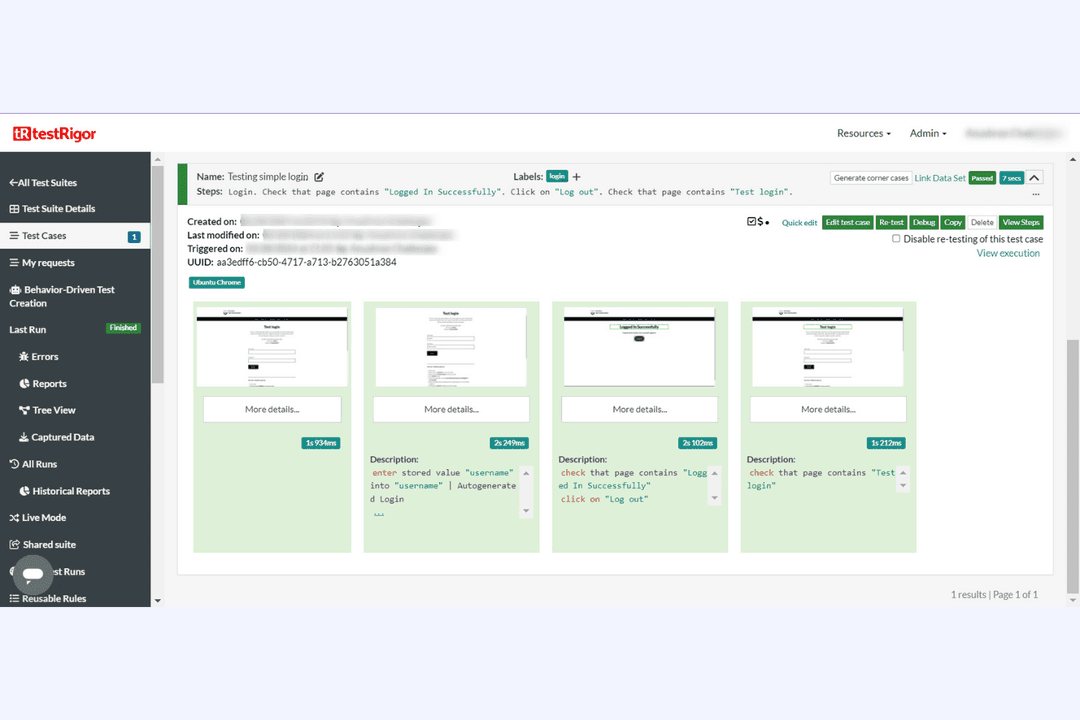
If you're comparing end-to-end testing tools, QA.tech and testRigor both use AI to improve software testing, but they take different approaches. QA.tech uses autonomous AI agents to create and run tests based on application context, while testRigor uses generative AI and plain-English test creation to simplify test automation.
In this comparison, I'll break down QA.tech and testRigor across features, pricing, security, usability, and use cases to help you decide which platform best fits your testing needs.
QA.tech
4.7/5
- Free demo available
- Pricing upon request
testRigor
4.8/5
- Free plan + 14-day free trial + free demo available
- Pricing upon request
Why Trust Our Software Recommendations
6,700+
Reviews
20
Industry experts
16+
Evaluation factors
14
Years
Our team has been testing and reviewing software since 2012. As tech leaders ourselves, we know how difficult—and important—it is to choose the right software.
For this guide, we evaluated tools using hands-on testing and independent research, scoring tools using our selection criteria.
Our reviews reflect our human editorial judgment, not a sales pitch.
Expert reviewers:
- Paulo Gardini MiguelTech Director
 Tim FisherVP of AI
 Gabriel RosasTech Lead & Software Architect
 Christhian GruhnTech Lead & Platform Architect

| QA.tech | testRigor | |
|---|---|---|
| Free Trial | Free demo available | Free plan + 14-day free trial + free demo available |
| Pricing | Pricing upon request | Pricing upon request |
QA.tech vs. testRigor Pricing & Hidden Costs
QA.tech and testRigor both offer pricing structures that scale with testing needs, but they package capabilities differently. QA.tech provides Starter, Growth, and Enterprise plans, with higher tiers adding capabilities like more parallel test runs, mobile testing, PR testing, integrations, advanced security, and dedicated support. testRigor offers Free Public, Private Complete, and Enterprise plans, with paid options adding private tests, broader platform support, integrations, access controls, and enterprise features.
When comparing costs, consider your testing volume, security requirements, support needs, and your team's approach to automation. QA.tech pricing may align better with teams scaling autonomous AI testing inside engineering workflows, while testRigor pricing depends on whether you need private testing, enterprise controls, dedicated support, or advanced security and deployment options.
| QA.tech | testRigor | |
|---|---|---|
| A/B Testing | No | Yes |
| API | Yes | Yes |
| Automated Testing | Yes | Yes |
| Browser Compatibility Testing | Yes | Yes |
| Bug Tracking | Yes | No |
| Calendar Management | No | No |
| CI/CD Integration | Yes | Yes |
| Dashboard | Yes | Yes |
| Data Export | Yes | Yes |
| Data Import | Yes | Yes |
| Data Visualization | Yes | Yes |
| Developer Tools | Yes | Yes |
| External Integrations | Yes | Yes |
| History/Version Control | Yes | Yes |
| Manual Testing | No | No |
| Multi-User | Yes | Yes |
| Notifications | Yes | Yes |
| Performance Testing | No | No |
| Regression Testing | Yes | Yes |
| Scheduling | Yes | Yes |
| Status Notifications | Yes | Yes |
| Third-Party Plugins/Add-Ons | Yes | Yes |
| Integration | QA.tech | testRigor |
|---|---|---|
| IntegrationJira | QA.tech✅ | testRigor✅ |
| IntegrationGitHub | QA.tech✅ | testRigor✅ |
| IntegrationSlack | QA.tech✅ | testRigor❌ |
| IntegrationAzure DevOps | QA.tech✅ | testRigor✅ |
| IntegrationGitLab | QA.tech✅ | testRigor✅ |
| IntegrationTestRail | QA.tech❌ | testRigor✅ |
| IntegrationCircleCI | QA.tech✅ | testRigor✅ |
| IntegrationTrello | QA.tech✅ | testRigor❌ |
| IntegrationMicrosoft Teams | QA.tech✅ | testRigor❌ |
| IntegrationAPI | QA.tech✅ | testRigor✅ |
Both QA.tech and testRigor provide integration options that connect automated testing with existing development workflows. QA.tech emphasizes engineering-focused integrations across CI/CD pipelines, collaboration tools, and issue tracking systems, while testRigor connects with development and test management tools to support broader QA processes.
Teams should choose based on whether they prioritize agent-driven engineering workflows or accessible test automation across QA processes.
| Factor | QA.tech | testRigor |
|---|---|---|
| FactorData Encryption | QA.techAES-256 encryption at rest and TLS 1.2/1.3 encryption in transit. | testRigorUses encryption protocols to protect data during test execution and storage. |
| FactorCompliance & Certifications | QA.techSOC 2 Type II attested, GDPR compliant, EU-only data residency, with ISO 27001 on the roadmap. | testRigorSOC 2 Type II compliant, GDPR compliant, HIPAA compliant, and ISO/IEC 27001:2022 certified. |
| FactorAccess Controls | QA.techEnforced MFA, SAML SSO, role-based access controls, and managed team access. | testRigorProvides enterprise access management features, including SSO on supported plans. |
| FactorReliability | QA.techSLA-backed support, managed parallel test execution, and Enterprise reliability engineering. | testRigorSupports enterprise testing reliability with SLA options and scalable execution across supported environments. |
| FactorSecurity Management | QA.techFull ISMS, security reviews, and testing without requiring source code access. | testRigorSupports DevSecOps practices, vulnerability management, and regular external security testing. |
Overall, QA.tech emphasizes secure AI-driven testing with strong data protection, controlled access, and safeguards around how application data is handled. testRigor focuses on enterprise-ready test automation security with compliance programs, access management, and security practices designed for teams running tests across different environments.
Both provide strong security foundations, but QA.tech highlights secure autonomous testing workflows, while testRigor prioritizes broader governance and compliance support.
| Factor | QA.tech | testRigor |
|---|---|---|
| FactorUser Interface | QA.techConversational workspace for creating, editing, and managing tests with AI agents. | testRigorNo-code interface for creating and managing tests using plain English instructions. |
| FactorTest Creation | QA.techAI agents create tests from user goals and application context without traditional scripts. | testRigorGenerative AI helps teams create tests using plain English commands without writing code. |
| FactorOnboarding | QA.techGuided onboarding with solutions engineers, workshops, and setup support. | testRigorProvides documentation and support resources to help teams adopt AI-based testing. |
| FactorSupport Resources | QA.techEmail, Slack/Teams channels, solutions engineers, and Enterprise support options. | testRigorStandard support on paid plans, with dedicated customer success and Slack/Teams support on Enterprise. |
| FactorSetup Process | QA.techProduct crawl and initial setup help agents build accurate test context. | testRigorSimplifies automation setup by reducing coding requirements and supporting reusable test components. |
From an ease-of-use perspective, QA.tech focuses on an AI-agent-driven experience in which teams guide testing using goals and application context rather than manually building test scripts. testRigor emphasizes accessibility through generative AI and plain English test creation, making automation easier for teams with different technical skill levels.
Teams that want autonomous testing embedded into engineering workflows may prefer QA.tech, while those looking for a no-code approach to creating and managing tests may find testRigor easier to adopt.
QA.tech
- AI agents automate end-to-end test creation and execution
- Strong CI/CD integrations with automated pull request testing
- Parallel test execution speeds up regression testing workflows
- Limited cross-browser testing beyond Chromium
- Tests cannot be exported as code-based scripts
- Teams may need time to adapt to autonomous testing workflows
testRigor
- You can create tests using plain English, which makes it easy for non-technical users.
- It reduces errors by automating complex test cases efficiently.
- Your team saves time by managing tests without extensive coding knowledge.
- It might have a learning curve for those new to automation testing.
- Your team may find limited customization options compared to some competitors.
- You might experience occasional delays in customer support response times.
QA.tech
- B2B SaaS CompaniesSaaS companies can use QA.tech to maintain test coverage across frequent product releases and changing application workflows.
- Software Development CompaniesDevelopment teams can automate end-to-end testing and integrate quality checks directly into CI/CD and pull request workflows.
- Fintech CompaniesFintech companies can validate critical user flows involving accounts, transactions, and complex authentication requirements.
- Healthtech PlatformsHealthtech platforms can automate regression testing as their applications, features, and user workflows continue to evolve.
- HR Tech and Recruiting PlatformsHR and recruiting platforms can test multi-step processes like onboarding, profiles, and user management across different roles.
- Ecommerce BusinessesEcommerce businesses can validate important customer journeys like account flows and checkout experiences during frequent updates.
testRigor
- E-commerce CompaniesYour e-commerce business will benefit from testRigor’s ability to handle complex test scenarios and frequent updates with ease.
- Finance DepartmentsYour finance team can rely on testRigor for its robust testing capabilities, ensuring compliance and reducing errors.
- QA TeamsYour QA department will appreciate testRigor’s user-friendly interface, allowing for quick test creation and management.
- Non-Technical UsersYour team members without coding skills can effectively create and manage tests using testRigor’s plain language approach.
- Medium-Sized EnterprisesYour medium-sized business will find testRigor cost-effective while offering comprehensive testing features.
- StartupsYour startup can quickly set up and execute tests, helping you focus on growth without getting bogged down in technical details.
Who Should Use QA.tech, and Who Should Use testRigor?
QA.tech is best suited for engineering teams that want autonomous end-to-end testing built into their development workflows. I recommend QA.tech if your team ships frequently, uses CI/CD pipelines, and wants AI agents to create tests, validate changes, and reduce manual test maintenance without relying on traditional scripts.
testRigor is a better fit for teams that want AI-powered test automation without requiring deep coding expertise. I’d recommend it for QA teams, ecommerce companies, financial services teams, startups, and growing businesses that want non-technical team members to create and manage tests using plain English while supporting broad test coverage.
| QA.tech | testRigor | |
|---|---|---|
| Team Workflow | QA.tech Built around engineering workflows, CI/CD pipelines, and PR validation. | testRigor Designed to make test automation accessible across QA teams, developers, and non-technical users. |
| Test Approach | QA.tech Uses autonomous AI agents that create and execute tests based on goals and application context. | testRigor Uses generative AI to help users create and maintain automated tests using plain English instructions. |
| Test Coverage | QA.tech Focuses on autonomous end-to-end testing for web and mobile applications. | testRigor Supports broader test automation across web, mobile, desktop, API, visual, and data-driven testing. |
| Test Creation | QA.tech Agents generate tests from application understanding and user-defined goals. | testRigor Users create no-code tests by writing natural language test instructions. |
| User Involvement | QA.tech Teams guide AI agents by defining goals and reviewing testing outcomes. | testRigor Teams directly define test scenarios in plain English while AI helps reduce maintenance. |
| Access Management | Both provide team management and access control options for managing testing collaboration. |
|---|---|
| AI-Powered Automation | Both use AI to reduce manual test creation and maintenance work across testing workflows. |
| Cloud-Based Platform | Both provide cloud-based testing capabilities to help teams create, run, and manage automated tests. |
| Development Integrations | Both connect with development, CI/CD, and test management workflows to support existing processes. |
| Test Reporting | Both provide test results and reporting capabilities to help teams review issues and improve test coverage. |