
Lovable 2026 Review: Pros, Cons, Features and Pricing



Lovable is an AI app builder designed to help your team create smart applications without the usual development bottlenecks. For IT professionals and tech leaders weighed down by resource constraints, project timelines, and rising expectations around AI, Lovable offers a no-code approach that gets ideas to market faster.
In this Lovable AI review, I’ll cover Lovable’s core features, best use cases, pricing, and what stands out—or falls short—compared to other solutions in the space.
Lovable Evaluation Summary
- From $21/month (billed annually)
- Free plan + free demo available
Why Trust Our Software Reviews
We’ve been testing and reviewing software since 2023. As tech leaders ourselves, we know how critical and difficult it is to make the right decision when selecting software.
We invest in deep research to help our audience make better software purchasing decisions. We’ve tested more than 2,000 tools for different tech use cases and written over 1,000 comprehensive software reviews. Learn how we stay transparent & our software review methodology.
Lovable Overview
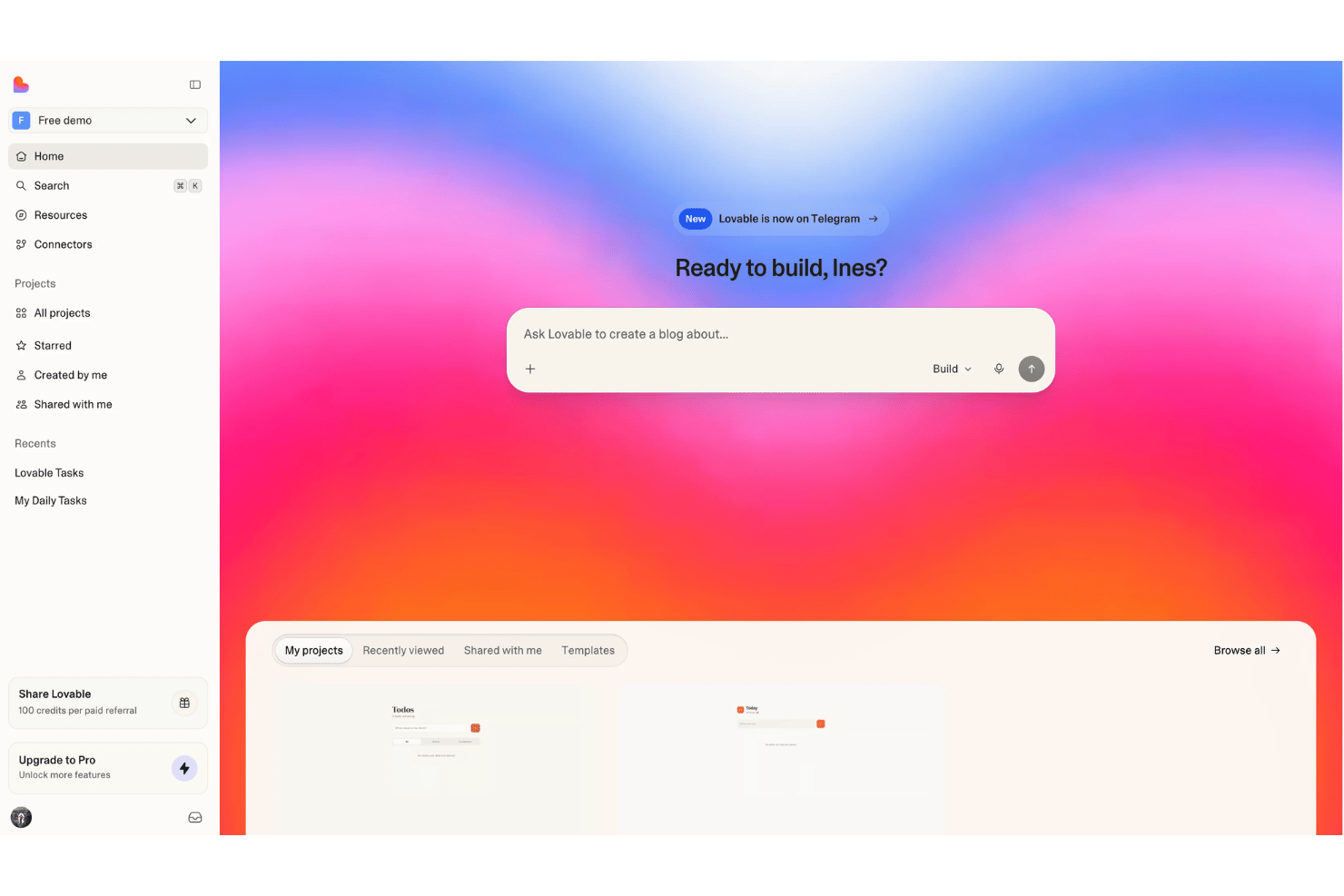
When judging Lovable among AI app builders, I think its interface and onboarding are a step ahead—clear navigation and guided setup help new users build apps in hours. While its integration options lag behind bigger names, Lovable’s straightforward pricing and strong support tilt the balance for teams building landing pages, internal tools, and AI prototypes without the overhead. If you’re selecting a tool for rapid prototyping, low-code workflows, or getting a proof of concept in front of stakeholders, Lovable should be high on your list.
pros
-
Automated workflows simplify deploying AI features to apps fast
-
Visual editor handles real-time changes and instant preview, no redeploy
-
Transparent pricing with pay-as-you-go and clear resource limits
cons
-
Documentation lacks detail on troubleshooting more complex builds
-
API customization options are limited for advanced data handling
-
Exporting projects to self-hosted environments is not supported
-

TestDevLab
Visit Website -
Site24x7
Visit WebsiteThis is an aggregated rating for this tool including ratings from Crozdesk users and ratings from other sites.4.7 -
GitHub Actions
Visit WebsiteThis is an aggregated rating for this tool including ratings from Crozdesk users and ratings from other sites.4.8



Our Review Methodology
How We Test & Score Tools
We’ve spent years building, refining, and improving our software testing and scoring system. The rubric is designed to capture the nuances of software selection and what makes a tool effective, focusing on critical aspects of the decision-making process.
Below, you can see exactly how our testing and scoring works across seven criteria. It allows us to provide an unbiased evaluation of the software based on core functionality, standout features, ease of use, onboarding, customer support, integrations, customer reviews, and value for money.
Core Functionality (25% of final scoring)
The starting point of our evaluation is always the core functionality of the tool. Does it have the basic features and functions that a user would expect to see? Are any of those core features locked to higher-tiered pricing plans? At its core, we expect a tool to stand up against the baseline capabilities of its competitors.
Standout Features (25% of final scoring)
Next, we evaluate uncommon standout features that go above and beyond the core functionality typically found in tools of its kind. A high score reflects specialized or unique features that make the product faster, more efficient, or offer additional value to the user.
We also evaluate how easy it is to integrate with other tools typically found in the tech stack to expand the functionality and utility of the software. Tools offering plentiful native integrations, 3rd party connections, and API access to build custom integrations score best.
Ease of Use (10% of final scoring)
We consider how quick and easy it is to execute the tasks defined in the core functionality using the tool. High scoring software is well designed, intuitive to use, offers mobile apps, provides templates, and makes relatively complex tasks seem simple.
Onboarding (10% of final scoring)
We know how important rapid team adoption is for a new platform, so we evaluate how easy it is to learn and use a tool with minimal training. We evaluate how quickly a team member can get set up and start using the tool with no experience. High scoring solutions indicate little or no support is required.
Customer Support (10% of final scoring)
We review how quick and easy it is to get unstuck and find help by phone, live chat, or knowledge base. Tools and companies that provide real-time support score best, while chatbots score worst.
Customer Reviews (10% of final scoring)
Beyond our own testing and evaluation, we consider the net promoter score from current and past customers. We review their likelihood, given the option, to choose the tool again for the core functionality. A high scoring software reflects a high net promoter score from current or past customers.
Value for Money (10% of final scoring)
Lastly, in consideration of all the other criteria, we review the average price of entry level plans against the core features and consider the value of the other evaluation criteria. Software that delivers more, for less, will score higher.
Core Features
Visual Workflow Editor
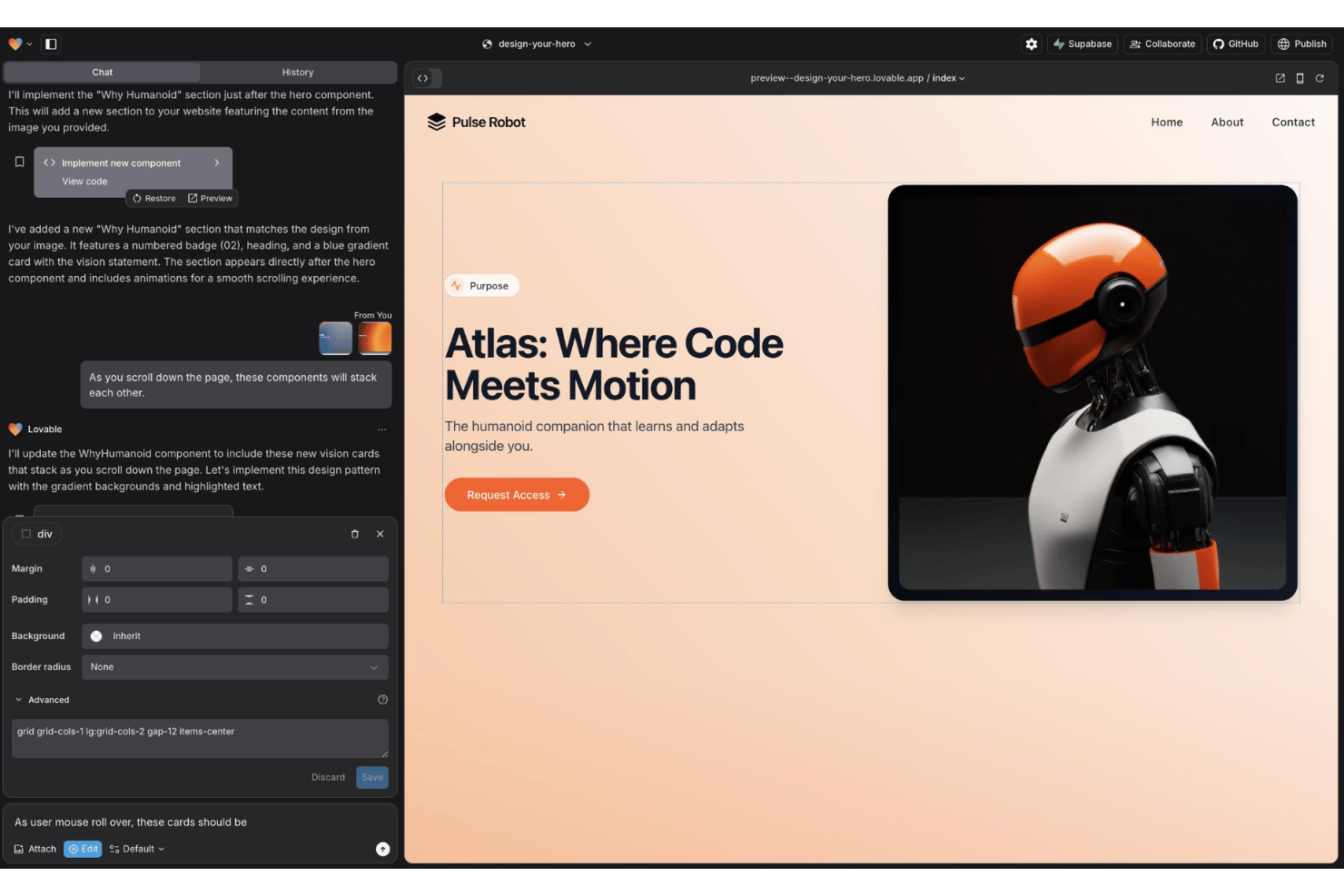
Drag-and-drop interface lets you connect logic, models, and data sources visually. You can see app changes in real time as you build.
Built-In AI Model Hosting
Host and deploy open-source AI models directly inside Lovable. Skip separate cloud setup and run models side-by-side with your app.
Instant App Deployment
One-click publish launches your React.js web applications to a live, shareable URL. You can update TypeScript components, preview changes instantly, and deploy without downtime.
Secure Data Connectors
Native connectors link your app to common databases and SaaS services securely. Database tables and data stay in your control with clear access settings and field-level permissions.
API Endpoint Generation
Auto-generate custom REST APIs from app logic for external triggers. Expose just the functions you want with configurable endpoints.
Role-Based Access Control
Set permissions with user authentication controls and built-in roles for teammates and stakeholders. This keeps sensitive app functions and data restricted as you scale access.
Ease of Use
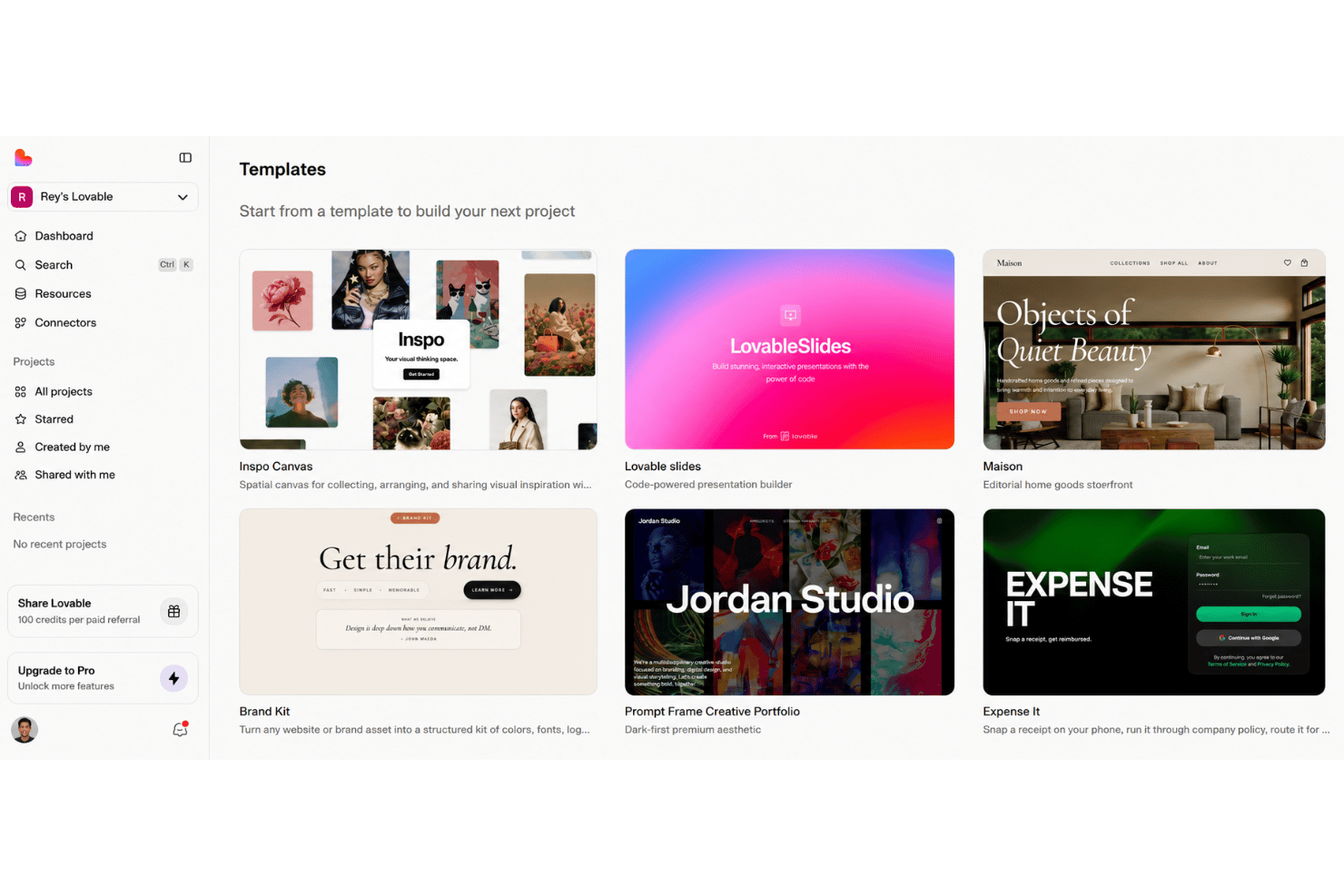
Lovable stands out as a go-to platform for vibe coding—its drag-and-drop interface and instant preview make it easy to test ideas fast. I like how onboarding is guided step-by-step, and users mention building simple AI workflows in an afternoon. Some advanced workflows do require more digging in the docs, but Lovable is one of the more accessible no-code platforms for startup founders and non-developers alike.
Integrations
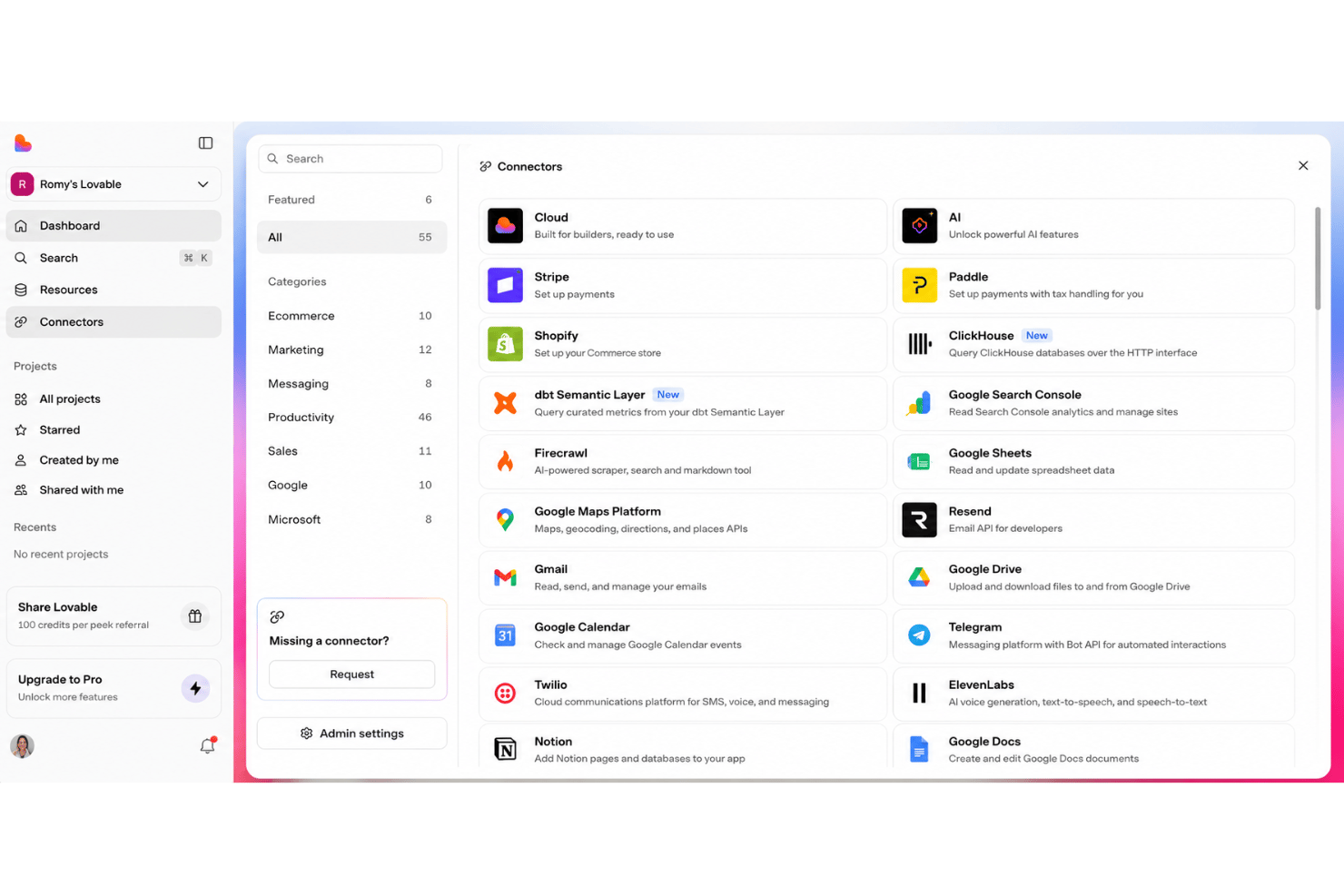
Lovable integrations with Notion, Miro, Aikido, Supabase, Claude Code, Asana, Stripe, and Shopify, among others.
Lovable supports a full Supabase backend integration for data management, Stripe integration for payment processing, and a flexible API for custom workflow automation.
Lovable Specs
- API
- Calendar Management
- Contact Management
- Dashboards
- Data Export
- Data Import
- Document Management
- External Integrations
- Multi-User
- Notifications
- Payment Gateway Integration
- Scheduling
- Workflow Management