

HeadSpin Review 2026: Pros, Cons, Features, and Pricing Explained
HeadSpin stands out as a test management tool with real device testing, AI insights, and performance analytics. Learn how it helps teams improve app quality.

We review tools independently, and commissions help fund our testing. See our transparency policy, our methodology, or suggest a tool.
HeadSpin is a test management software built for teams who need to test mobile and web apps on real devices under real-world network conditions. It uses AI to surface performance issues tied to actual user experience data across a globally distributed device network. I'd consider it over BrowserStack if you need more than device and browser compatibility coverage—HeadSpin goes deeper into performance diagnostics, giving you actionable data on what's degrading the user experience and exactly where it's happening.
HeadSpin Evaluation Summary

4.6/5
- From $39/month (billed annually)
- Free demo available
Why Trust Our Software Recommendations
6,700+
Reviews
20
Industry experts
16+
Evaluation factors
14
Years
Our team has been testing and reviewing software since 2012. As tech leaders ourselves, we know how difficult—and important—it is to choose the right software.
For this guide, we evaluated tools using hands-on testing and independent research, scoring tools using our selection criteria.
Our reviews reflect our human editorial judgment, not a sales pitch.
Expert reviewers:
- Paulo Gardini MiguelTech Director
 Tim FisherVP of AI
 Gabriel RosasTech Lead & Software Architect
 Christhian GruhnTech Lead & Platform Architect

HeadSpin Overview
When judging test management options, I think HeadSpin stands out if you want device diversity, integrated performance analytics, and AI-driven insights in one place. Its deep integrations, detailed reporting, and real-world network testing set it apart, especially for mobile and IoT QA. Pricing is on the higher side, and onboarding can challenge new users, but teams prioritizing advanced analytics and global coverage will appreciate what HeadSpin offers.
For fast-paced environments and businesses with a distributed qa footprint, I’d select HeadSpin over more basic testing platforms.
Pros
- Offers real device cloud for global testing coverage.
- Detailed performance and user experience analytics are included.
- Supports automation for mobile, web, and IoT testing.
Cons
- Pricing can be higher than many alternatives.
- UI can feel cluttered when running complex tests.
- API documentation lacks depth for custom workflows.
Is HeadSpin Right For Your Needs?
Who Would be a Good Fit for HeadSpin?
HeadSpin is best suited for organizations that need real-world device testing, advanced analytics, or global test coverage with strict reliability requirements. It serves industries where mobile performance and cross-device quality directly affect user satisfaction.
Teams with significant QA workloads and those handling high-frequency, production-grade releases typically get the most value from its deep diagnostics and AI-driven insights.
- Mobile App DevelopersMobile teams needing global device access and real-world user scenario simulation will benefit from HeadSpin’s robust device lab and session recording capabilities.
- Telecom ProvidersTelecom companies can use HeadSpin’s network simulation and cross-region device testing to optimize apps for varying connectivity environments.
- Financial ServicesBanks and fintech companies value HeadSpin’s security-focused diagnostics and analytics when testing secure, transaction-heavy mobile apps.
- Enterprise QA TeamsLarge-scale QA operations that require automated regression, device health tracking, and cross-platform transparency thrive with HeadSpin’s workflow automation.
- IoT Solution ProvidersCompanies testing IoT devices benefit from HeadSpin’s ability to simulate user journeys and troubleshoot device-to-app interactions.
- Media & Streaming FirmsVideo and content streaming platforms use HeadSpin’s performance analytics to ensure high-quality playback across many devices and networks.
Who Would be a Bad Fit for HeadSpin?
Smaller businesses or teams with limited automation needs, basic QA requirements, or a narrow device focus may find HeadSpin’s pricing and complexity excessive. It may also overwhelm organizations that don’t need cross-geography, multi-device functionality or prefer simpler test management software. Light use cases rarely justify the investment required to take full advantage of HeadSpin’s platform depth.
- Small StartupsTeams with light QA needs or limited budgets won’t maximize HeadSpin’s advanced analytics or device cloud features.
- Manual Test TeamsBusinesses relying mostly on manual testing won’t benefit from the automation and AI workflow tools HeadSpin provides.
- Single-Platform TeamsCompanies building for just one platform or device type don’t need HeadSpin’s cross-platform device infrastructure.
- Local Service ProvidersOrganizations operating in a single geographic region rarely make use of HeadSpin’s global device labs or network condition simulation.
- Education & NonprofitsSectors where simple compliance or low-complexity flows are priority may find the cost and features misaligned.
- Freelance TestersIndependent QA consultants or small agencies may be overwhelmed or priced out by the enterprise-focused capabilities.
Our Review Methodology
How We Test & Score Tools
We’ve spent years building, refining, and improving our software testing and scoring system. The rubric is designed to capture the nuances of software selection and what makes a tool effective, focusing on critical aspects of the decision-making process.
Below, you can see exactly how our testing and scoring works across seven criteria. It allows us to provide an unbiased evaluation of the software based on core functionality, standout features, ease of use, onboarding, customer support, integrations, customer reviews, and value for money.
Core Functionality (25% of final scoring)
The starting point of our evaluation is always the core functionality of the tool. Does it have the basic features and functions that a user would expect to see? Are any of those core features locked to higher-tiered pricing plans? At its core, we expect a tool to stand up against the baseline capabilities of its competitors.
Standout Features (25% of final scoring)
Next, we evaluate uncommon standout features that go above and beyond the core functionality typically found in tools of its kind. A high score reflects specialized or unique features that make the product faster, more efficient, or offer additional value to the user.
We also evaluate how easy it is to integrate with other tools typically found in the tech stack to expand the functionality and utility of the software. Tools offering plentiful native integrations, 3rd party connections, and API access to build custom integrations score best.
Ease of Use (10% of final scoring)
We consider how quick and easy it is to execute the tasks defined in the core functionality using the tool. High scoring software is well designed, intuitive to use, offers mobile apps, provides templates, and makes relatively complex tasks seem simple.
Onboarding (10% of final scoring)
We know how important rapid team adoption is for a new platform, so we evaluate how easy it is to learn and use a tool with minimal training. We evaluate how quickly a team member can get set up and start using the tool with no experience. High scoring solutions indicate little or no support is required.
Customer Support (10% of final scoring)
We review how quick and easy it is to get unstuck and find help by phone, live chat, or knowledge base. Tools and companies that provide real-time support score best, while chatbots score worst.
Customer Reviews (10% of final scoring)
Beyond our own testing and evaluation, we consider the net promoter score from current and past customers. We review their likelihood, given the option, to choose the tool again for the core functionality. A high scoring software reflects a high net promoter score from current or past customers.
Value for Money (10% of final scoring)
Lastly, in consideration of all the other criteria, we review the average price of entry level plans against the core features and consider the value of the other evaluation criteria. Software that delivers more, for less, will score higher.
Core Features
Real Device Cloud
Test across a vast network of real mobile devices and browsers. This ensures true-to-life results in various geographies.
Automated Test Execution
Schedule and run tests automatically across devices and platforms. Save time and eliminate manual intervention for release cycles.
Performance Analytics
Receive in-depth analytics on app performance, responsiveness, and stability. Visualize network, device, and user metrics in one dashboard.
Session Recording and Replay
Capture, replay, and debug test sessions with granular logs. Pinpoint issues by retracing steps on actual devices.
AI-Driven Issue Detection
Get automatic insights into failures and performance bottlenecks with AI. The platform prioritizes issues so you know what to tackle first.
Network Condition Simulation
Test how apps behave under different network scenarios, like 3G or LTE. Identify and solve connectivity problems before users experience them.

Ease of Use
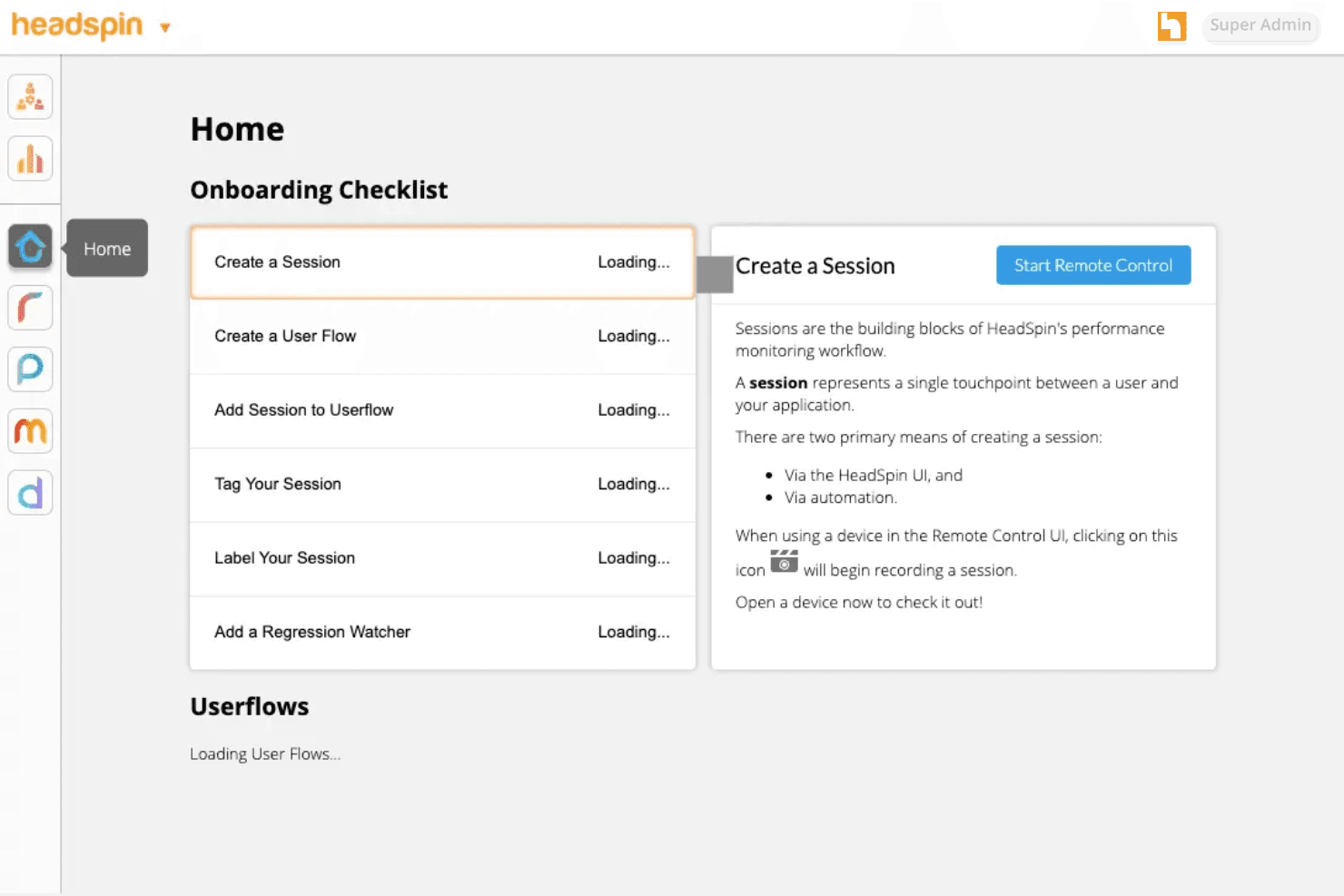
HeadSpin’s dashboard provides unmatched device and test visibility, but its complex feature set can overwhelm new users. In my experience, navigating advanced performance analytics and filtering logs takes extra effort.
Power users appreciate the depth for debugging, while teams without dedicated QA engineers may need more ramp-up time before it feels intuitive.
Integrations
HeadSpin integrates with Appium, Selenium, Jenkins, Jira, GitHub, GitLab, Azure, Slack, CircleCI, and Tricentis Tosca, among others.
HeadSpin also offers a comprehensive API and supports custom integrations for advanced workflows.

HeadSpin Specs
- A/B Testing: Yes
- API: Yes
- Automated Testing: Yes
- Browser Compatibility Testing: Yes
- Bug Tracking: No
- Calendar Management: No
- CI/CD Integration: Yes
- Dashboard: Yes
- Data Export: Yes
- Data Import: Yes
- Data Visualization: Yes
- Developer Tools: Yes
- External Integrations: Yes
- History/Version Control: No
- Manual Testing: Yes
- Multi-User: Yes
- Notifications: Yes
- Performance Testing: Yes
- Regression Testing: Yes
- Scheduling: No
- Status Notifications: No
- Third-Party Plugins/Add-Ons: Yes


