
Cloudkeeper Review: Pros, Cons, Features, and Pricing Explained
Cloudkeeper stands out for its guaranteed cloud savings and automation, making it ideal for cost-focused teams, but may not suit those needing highly customizable cloud management.

We review tools independently, and commissions help fund our testing. See our transparency policy, our methodology, or suggest a tool.
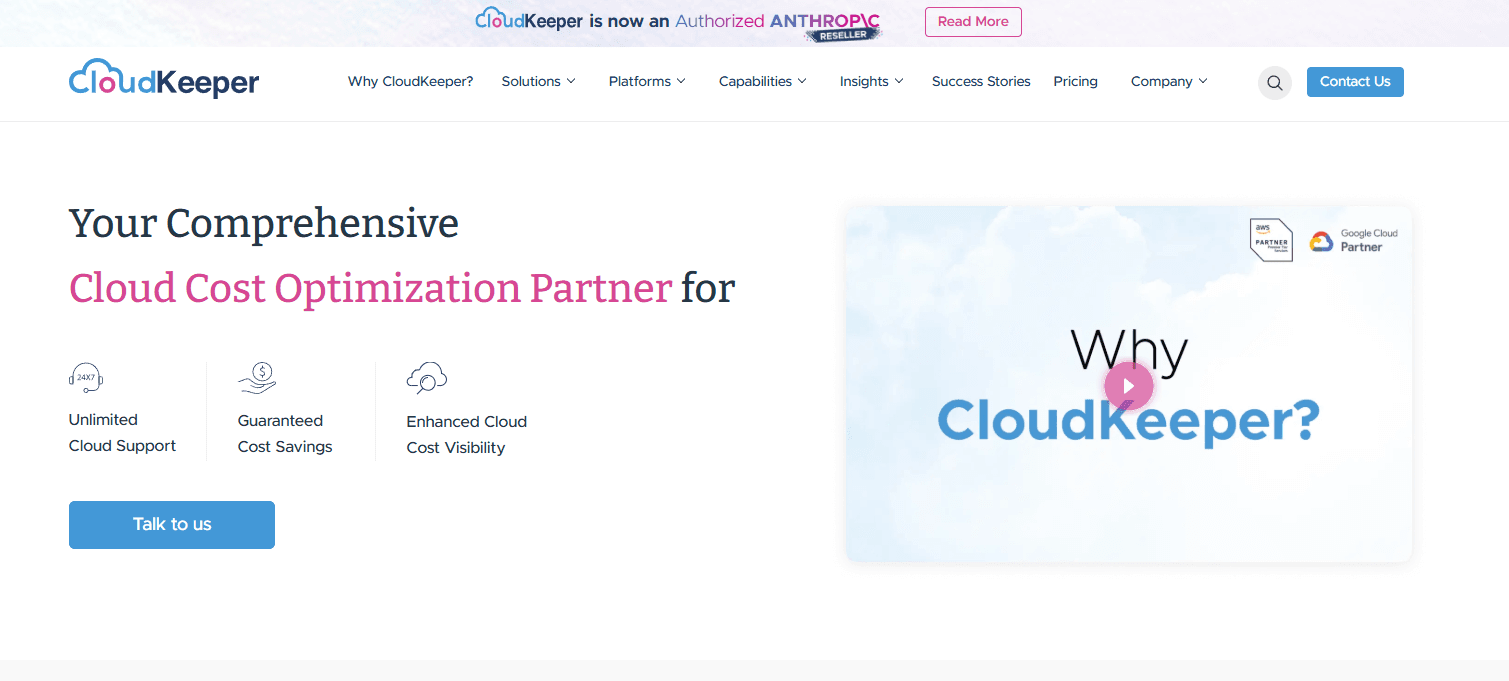
CloudKeeper is a cloud management platform built around AWS cost optimization, giving teams visibility into cloud spend alongside automated Reserved Instance management. I'd mainly consider it if your infrastructure is heavily AWS-dependent and rising cloud costs are starting to demand real attention. Compared to something like CloudHealth by VMware, CloudKeeper is more focused—it won't pull you into multi-cloud dashboards you don't need, and its RI pooling approach tends to deliver faster, more tangible cost reductions for AWS-first teams.
CloudKeeper Evaluation Summary
4.7/5
- Pricing upon request
- Free trial available
Why Trust Our Software Recommendations
6,700+
Reviews
20
Industry experts
16+
Evaluation factors
14
Years
Our team has been testing and reviewing software since 2012. As tech leaders ourselves, we know how difficult—and important—it is to choose the right software.
For this guide, we evaluated tools using hands-on testing and independent research, scoring tools using our selection criteria.
Our reviews reflect our human editorial judgment, not a sales pitch.
Expert reviewers:
- Paulo Gardini MiguelTech Director
 Tim FisherVP of AI
 Gabriel RosasTech Lead & Software Architect
 Christhian GruhnTech Lead & Platform Architect

CloudKeeper Overview
When judging Cloudkeeper against other cloud management platforms, its guaranteed savings model and automated cost optimization set it apart for teams prioritizing budget control. The interface is straightforward, onboarding is quick, and support is responsive, making it easy to adopt. While its automation is strong, those needing deep customization or granular policy controls may find it less flexible. Pricing is transparent and performance-focused, which appeals to organizations seeking predictable outcomes. Cloudkeeper is best suited for businesses that want hands-off savings and clear ROI, especially those managing large AWS, Azure, or Google Cloud environments.
Pros
- Guarantees cost savings on AWS and Google Cloud bills
- Provides 24/7 access to certified cloud experts
- Offers granular, resource-level cloud cost visibility
Cons
- Limited support for private or hybrid cloud environments
- Advanced policy controls are less configurable than some competitors
- Some users report occasional delays in dashboard data refreshes
Is CloudKeeper Right For Your Needs?
Who Would be a Good Fit for CloudKeeper?
Cloudkeeper is a strong choice for organizations that prioritize cloud cost optimization, need clear visibility into cloud spend. It's especially well-suited for teams managing large-scale public cloud deployments, where guaranteed savings and automated resource management can deliver measurable value. CTOs and engineering leaders overseeing cloud infrastructure with predictable usage patterns and a focus on financial governance will benefit most from Cloudkeeper's approach.
- SaaS ProvidersCloudkeeper's automated savings and resource-level insights help SaaS companies control cloud costs as they scale.
- Fintech FirmsFinancial governance features and guaranteed savings align with strict budget controls in fintech.
- IT Operations Teams24/7 access to certified cloud experts and dedicated cloud support suits always-on environments.
- Enterprises with Multi-CloudCloudkeeper's support for AWS, Azure, and Google Cloud fits multi-cloud strategies.
- E-Commerce BusinessesGranular cost visibility helps e-commerce teams manage fluctuating cloud usage.
- Cloud-Native StartupsStartups benefit from predictable savings and fast onboarding without needing deep cloud expertise.
- Manufacturing FirmsHybrid or on-premises infrastructure needs are not addressed by Cloudkeeper.
- Security-Focused EnterprisesAdvanced policy controls and compliance features are less configurable than some alternatives.
Who Would be a Bad Fit for CloudKeeper?
Cloudkeeper may not suit organizations with highly specialized infrastructure needs, private or hybrid cloud environments, or those requiring deep customization of policy controls. Teams with unpredictable or experimental cloud workloads, or those outside the supported public cloud providers, may find limited value. Companies with strict data residency or compliance requirements may also need more tailored solutions.
- Government AgenciesCloudkeeper lacks support for private or on-premises cloud environments common in government.
- Healthcare ProvidersStrict compliance and data residency needs may exceed Cloudkeeper's capabilities.
- Small Local BusinessesSmaller teams with minimal cloud spend may not see significant savings.
- DevOps ExperimentationTeams with highly variable or experimental workloads may not benefit from guaranteed savings.
Our Review Methodology
How We Test & Score Tools
We’ve spent years building, refining, and improving our software testing and scoring system. The rubric is designed to capture the nuances of software selection and what makes a tool effective, focusing on critical aspects of the decision-making process.
Below, you can see exactly how our testing and scoring works across seven criteria. It allows us to provide an unbiased evaluation of the software based on core functionality, standout features, ease of use, onboarding, customer support, integrations, customer reviews, and value for money.
Core Functionality (25% of final scoring)
The starting point of our evaluation is always the core functionality of the tool. Does it have the basic features and functions that a user would expect to see? Are any of those core features locked to higher-tiered pricing plans? At its core, we expect a tool to stand up against the baseline capabilities of its competitors.
Standout Features (25% of final scoring)
Next, we evaluate uncommon standout features that go above and beyond the core functionality typically found in tools of its kind. A high score reflects specialized or unique features that make the product faster, more efficient, or offer additional value to the user.
We also evaluate how easy it is to integrate with other tools typically found in the tech stack to expand the functionality and utility of the software. Tools offering plentiful native integrations, 3rd party connections, and API access to build custom integrations score best.
Ease of Use (10% of final scoring)
We consider how quick and easy it is to execute the tasks defined in the core functionality using the tool. High scoring software is well designed, intuitive to use, offers mobile apps, provides templates, and makes relatively complex tasks seem simple.
Onboarding (10% of final scoring)
We know how important rapid team adoption is for a new platform, so we evaluate how easy it is to learn and use a tool with minimal training. We evaluate how quickly a team member can get set up and start using the tool with no experience. High scoring solutions indicate little or no support is required.
Customer Support (10% of final scoring)
We review how quick and easy it is to get unstuck and find help by phone, live chat, or knowledge base. Tools and companies that provide real-time support score best, while chatbots score worst.
Customer Reviews (10% of final scoring)
Beyond our own testing and evaluation, we consider the net promoter score from current and past customers. We review their likelihood, given the option, to choose the tool again for the core functionality. A high scoring software reflects a high net promoter score from current or past customers.
Value for Money (10% of final scoring)
Lastly, in consideration of all the other criteria, we review the average price of entry level plans against the core features and consider the value of the other evaluation criteria. Software that delivers more, for less, will score higher.
Core Features
Guaranteed Savings
Cloudkeeper commits to delivering a fixed percentage of cloud cost savings. This model gives users predictable financial outcomes and reduces budget uncertainty.
Resource-Level Cost Visibility
Users can track cloud spend down to individual resources and services. This granularity helps teams identify cost drivers and optimize usage.
Automated Cloud Optimization
Cloudkeeper automatically identifies and implements savings opportunities, such as reserved instance purchases and right-sizing. This reduces manual effort and ensures ongoing cost efficiency.
24/7 Cloud Expert Support
Certified cloud professionals are available around the clock to answer questions and resolve issues. This support is included at no extra cost for all customers.
Multi-Cloud Management
The platform supports AWS, Azure, and Google Cloud from a single dashboard. Users can monitor and optimize multiple cloud environments without switching tools.
Customizable Reporting and Alerts
Cloudkeeper provides tailored reports and real-time alerts on spend, usage, and cost anomaly detection. This helps teams stay informed and act quickly on unexpected changes.
Ease of Use
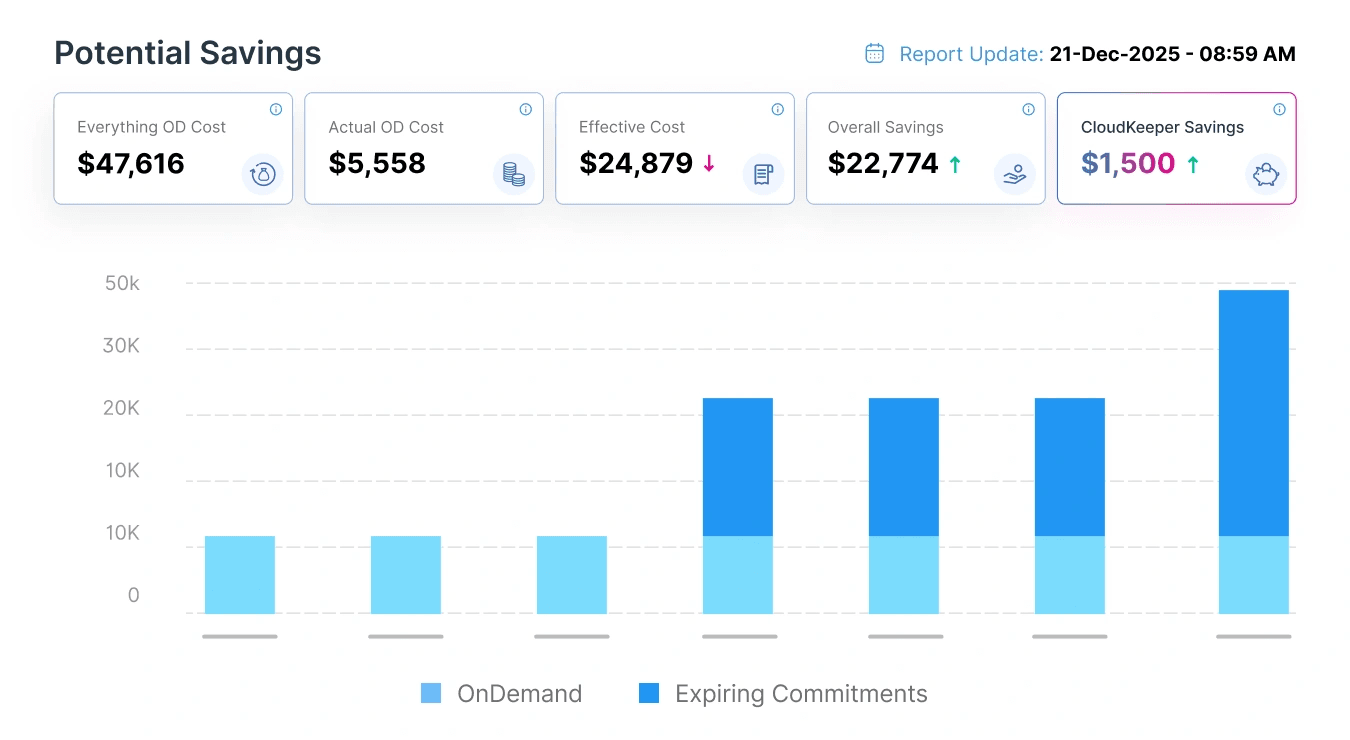
Cloudkeeper is widely regarded as user-friendly, with a clean interface and intuitive navigation that make onboarding fast for most teams. Users appreciate the clear dashboards and actionable insights, which simplify complex cost data without overwhelming detail. The platform's automated optimization and responsive support further reduce manual effort, allowing IT teams to focus on higher-value work. Some users note occasional dashboard refresh delays, but overall usability remains a strong point.
Integrations
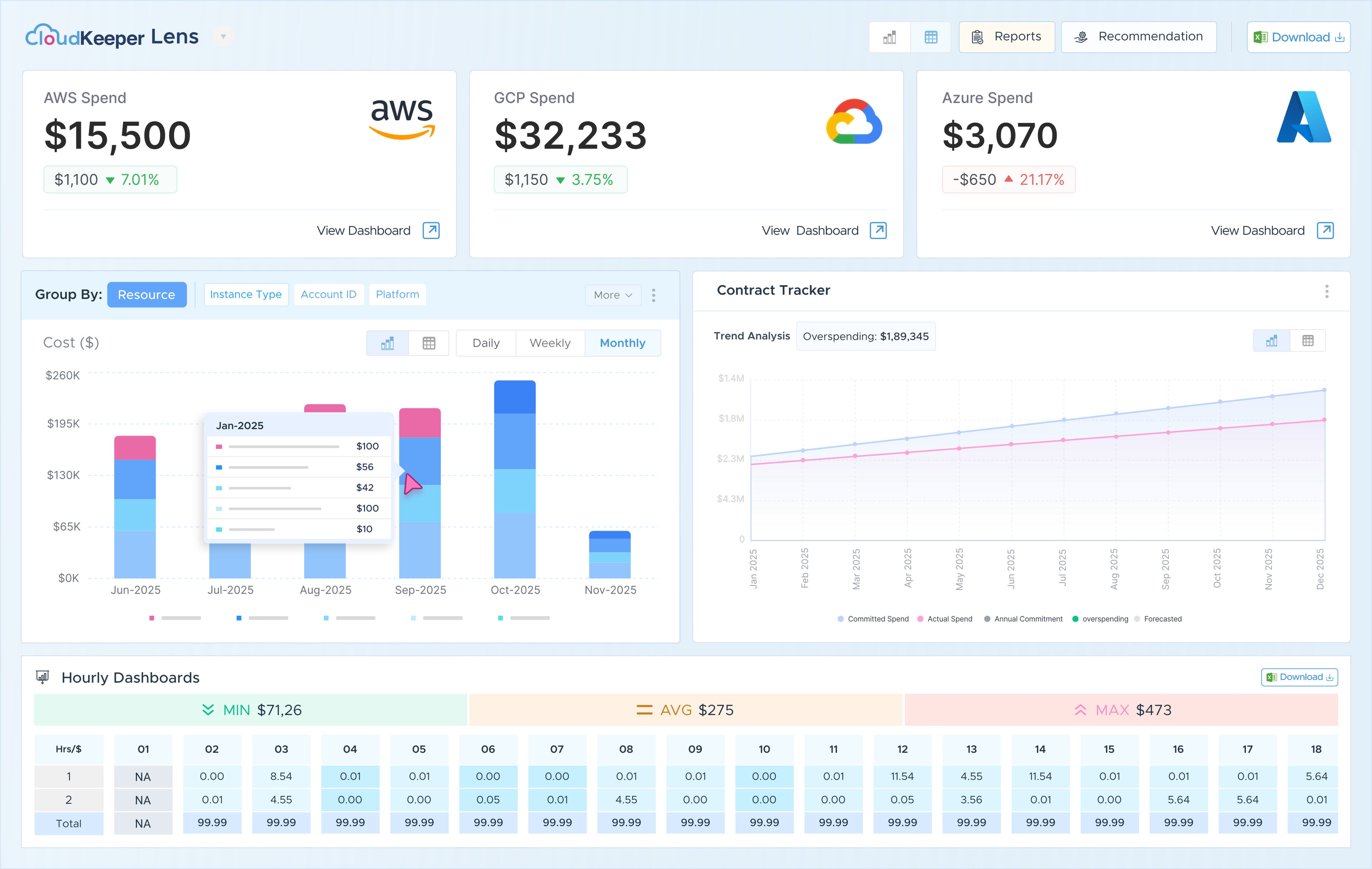
Cloudkeeper integrates with AWS, Azure, Google Cloud Platform, and Splunk, among others.
Cloudkeeper also offers an API for custom integrations and connects with select third-party integration tools.
CloudKeeper Specs
- API: Yes
- Bug Tracking: No
- CI/CD Integration: No
- Cloud Deployment: Yes
- Code Review: No
- Code Transformation: No
- Collaboration Support: No
- Data Export: Yes
- Data Import: Yes
- Developer Tools: No
- External Integrations: Yes
- Git Integration: No
- History/Version Control: No
- IDE Plugins: No
- Local Deployment: No
- Multi-User: Yes
- Notifications: Yes
- Project Management: No
- Release Management: No
- Static Analysis: No
- Task Scheduling/Tracking: No
- Testing: No


