

Bynder Review: Pros, Cons, Features, and Pricing
Bynder excels in offering intuitive collaboration and branding tools, making it ideal for large marketing teams focused on maintaining brand consistency.

We review tools independently, and commissions help fund our testing. See our transparency policy, our methodology, or suggest a tool.
Bynder is an asset management software built for teams that need to organize, store, and distribute brand content at scale—marketing files, product imagery, approved templates, and more. I'd consider it over something like Canto if your team needs deeper brand portal customization and stronger API integrations for connecting your asset library to the rest of your tech stack.
Bynder Evaluation Summary
4.5/5
- Pricing upon request
- Free demo available
Why Trust Our Software Recommendations
6,700+
Reviews
20
Industry experts
16+
Evaluation factors
14
Years
Our team has been testing and reviewing software since 2012. As tech leaders ourselves, we know how difficult—and important—it is to choose the right software.
For this guide, we evaluated tools using hands-on testing and independent research, scoring tools using our selection criteria.
Our reviews reflect our human editorial judgment, not a sales pitch.
Expert reviewers:
- Paulo Gardini MiguelTech Director
 Tim FisherVP of AI
 Gabriel RosasTech Lead & Software Architect
 Christhian GruhnTech Lead & Platform Architect

Bynder Overview
In my opinion, Bynder is a solid choice for organizations looking to maintain brand consistency and manage digital brand assets efficiently. Its branding and collaboration tools set it apart, making it ideal for marketing teams and creative agencies. However, the pricing may be a concern for smaller teams, and onboarding could be smoother. Compared to other asset management software, Bynder excels in user interface and customer support, but it could improve in offering more flexible pricing and integrations. It's best suited for large enterprises focused on brand management, but may not be the first choice for cost-conscious teams.
Pros
- It offers intuitive branding tools.
- The user interface is clean and easy to navigate.
- Collaboration features boost productivity and communication.
Cons
- Initial onboarding can be a bit complex.
- Some users find the customization options limited for their needs.
- It may not offer enough flexibility for smaller teams' workflows.
Is Bynder Right For Your Needs?
Who Would be a Good Fit for Bynder?
The Bynder digital asset management tool is a great fit for large marketing teams and creative agencies focused on maintaining brand consistency. The branding and collaboration features make it ideal for industries such as media, retail, and advertising, where visual content is key. If your team needs to manage and share digital assets efficiently, Bynder's user-friendly interface and strong branding capabilities can streamline your processes and enhance your team's productivity.
- Marketing TeamsBynder's branding and collaboration tools help your team maintain brand consistency across all campaigns.
- Creative AgenciesIts intuitive interface and asset management capabilities make it easier to manage your clients' visual content.
- Retail CompaniesBynder supports your brand's visual consistency, which is crucial for engaging your customers across different channels.
- Media IndustryWith Bynder, you can efficiently manage and distribute your digital assets, which is essential for your fast-paced environment.
- Brand ManagersBynder's tools ensure your brand guidelines are adhered to, keeping your visuals consistent.
- Large EnterprisesBynder's scalability and comprehensive asset management features are ideal for complex project management needs.
Who Would be a Bad Fit for Bynder?
Bynder may not be suitable for small businesses or startups with limited budgets, as its pricing can be steep. If you're in a nonvisual industry or have minimal digital asset needs, Bynder's extensive features might be too much. Teams that need substantial customization or specific integrations could find Bynder's limited options lacking.
- Small StartupsThe cost of Bynder can be prohibitive if you're budget-conscious.
- Non-Visual IndustriesIf your work doesn't heavily rely on digital assets, Bynder's features may be unnecessary.
- Highly Customizable NeedsBynder's limited customization options may not meet your specific workflow requirements.
- FreelancersThe extensive features and pricing are more than you'd need for individual projects.
- Tech-Savvy TeamsIf your team requires advanced integrations, Bynder's limitations could hinder your work.
- Budget-Conscious DepartmentsIf cost is a major factor, Bynder's pricing may not align with your financial goals.
Our Review Methodology
How We Test & Score Tools
We’ve spent years building, refining, and improving our software testing and scoring system. The rubric is designed to capture the nuances of software selection and what makes a tool effective, focusing on critical aspects of the decision-making process.
Below, you can see exactly how our testing and scoring works across seven criteria. It allows us to provide an unbiased evaluation of the software based on core functionality, standout features, ease of use, onboarding, customer support, integrations, customer reviews, and value for money.
Core Functionality (25% of final scoring)
The starting point of our evaluation is always the core functionality of the tool. Does it have the basic features and functions that a user would expect to see? Are any of those core features locked to higher-tiered pricing plans? At its core, we expect a tool to stand up against the baseline capabilities of its competitors.
Standout Features (25% of final scoring)
Next, we evaluate uncommon standout features that go above and beyond the core functionality typically found in tools of its kind. A high score reflects specialized or unique features that make the product faster, more efficient, or offer additional value to the user.
We also evaluate how easy it is to integrate with other tools typically found in the tech stack to expand the functionality and utility of the software. Tools offering plentiful native integrations, 3rd party connections, and API access to build custom integrations score best.
Ease of Use (10% of final scoring)
We consider how quick and easy it is to execute the tasks defined in the core functionality using the tool. High scoring software is well designed, intuitive to use, offers mobile apps, provides templates, and makes relatively complex tasks seem simple.
Onboarding (10% of final scoring)
We know how important rapid team adoption is for a new platform, so we evaluate how easy it is to learn and use a tool with minimal training. We evaluate how quickly a team member can get set up and start using the tool with no experience. High scoring solutions indicate little or no support is required.
Customer Support (10% of final scoring)
We review how quick and easy it is to get unstuck and find help by phone, live chat, or knowledge base. Tools and companies that provide real-time support score best, while chatbots score worst.
Customer Reviews (10% of final scoring)
Beyond our own testing and evaluation, we consider the net promoter score from current and past customers. We review their likelihood, given the option, to choose the tool again for the core functionality. A high scoring software reflects a high net promoter score from current or past customers.
Value for Money (10% of final scoring)
Lastly, in consideration of all the other criteria, we review the average price of entry level plans against the core features and consider the value of the other evaluation criteria. Software that delivers more, for less, will score higher.
Core Features
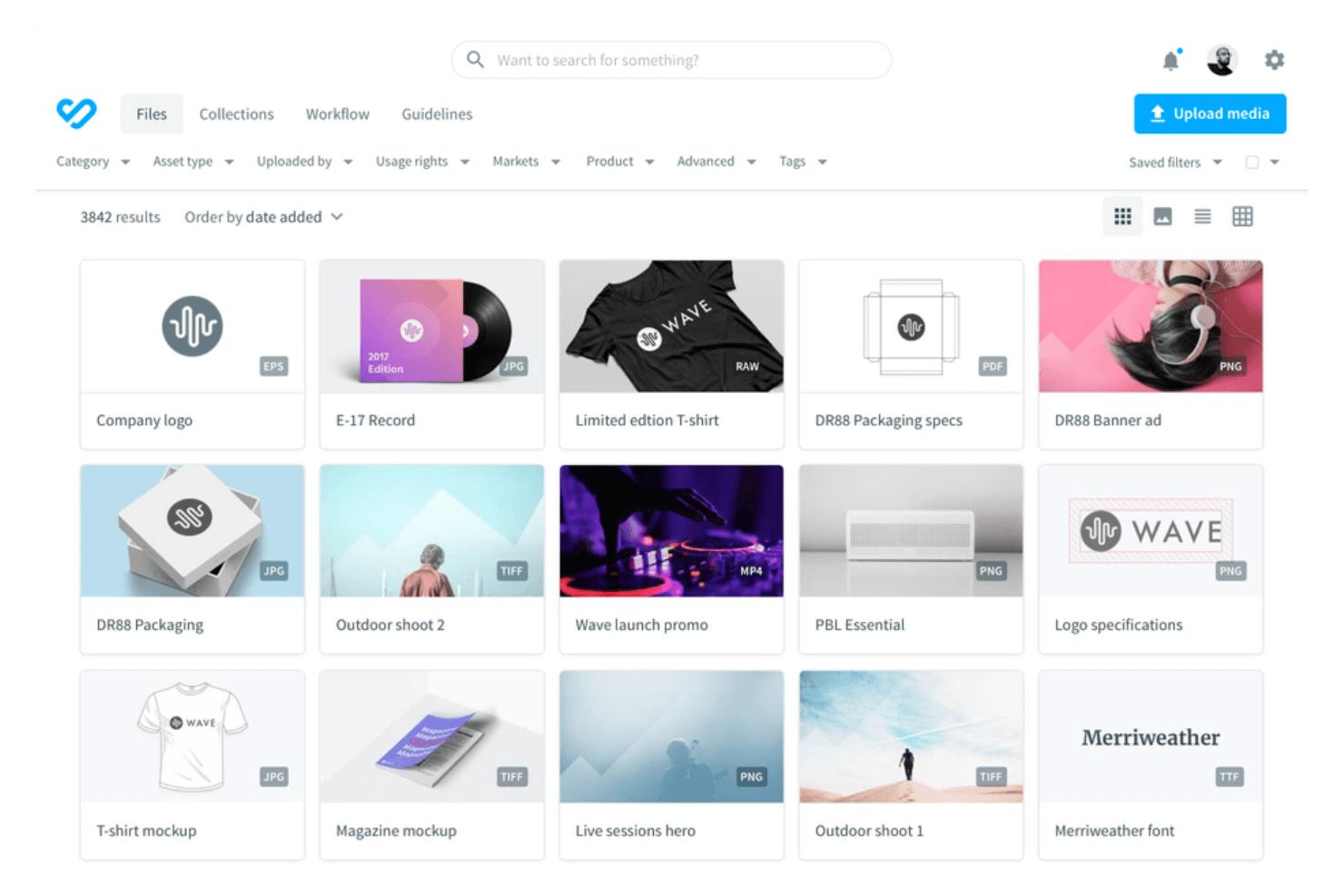
Digital Asset Management: Bynder helps your team store, organize, and retrieve digital assets efficiently. Its accessible interface makes finding and using your assets quick and easy.
Brand Guidelines: You can maintain consistency with Bynder's centralized brand guidelines, ensuring that your team adheres to the same visual and messaging standards.
Version Control: You can use Bynder to track changes and revert to previous versions if needed. Your team can manage asset revisions without losing valuable work.
User Permissions: Control who can access or edit assets within your team. Bynder's permissions keep your digital assets secure.
Workflow Automation: Simplify your asset approval process with Bynder's workflow automation, which saves time and reduces manual tasks.
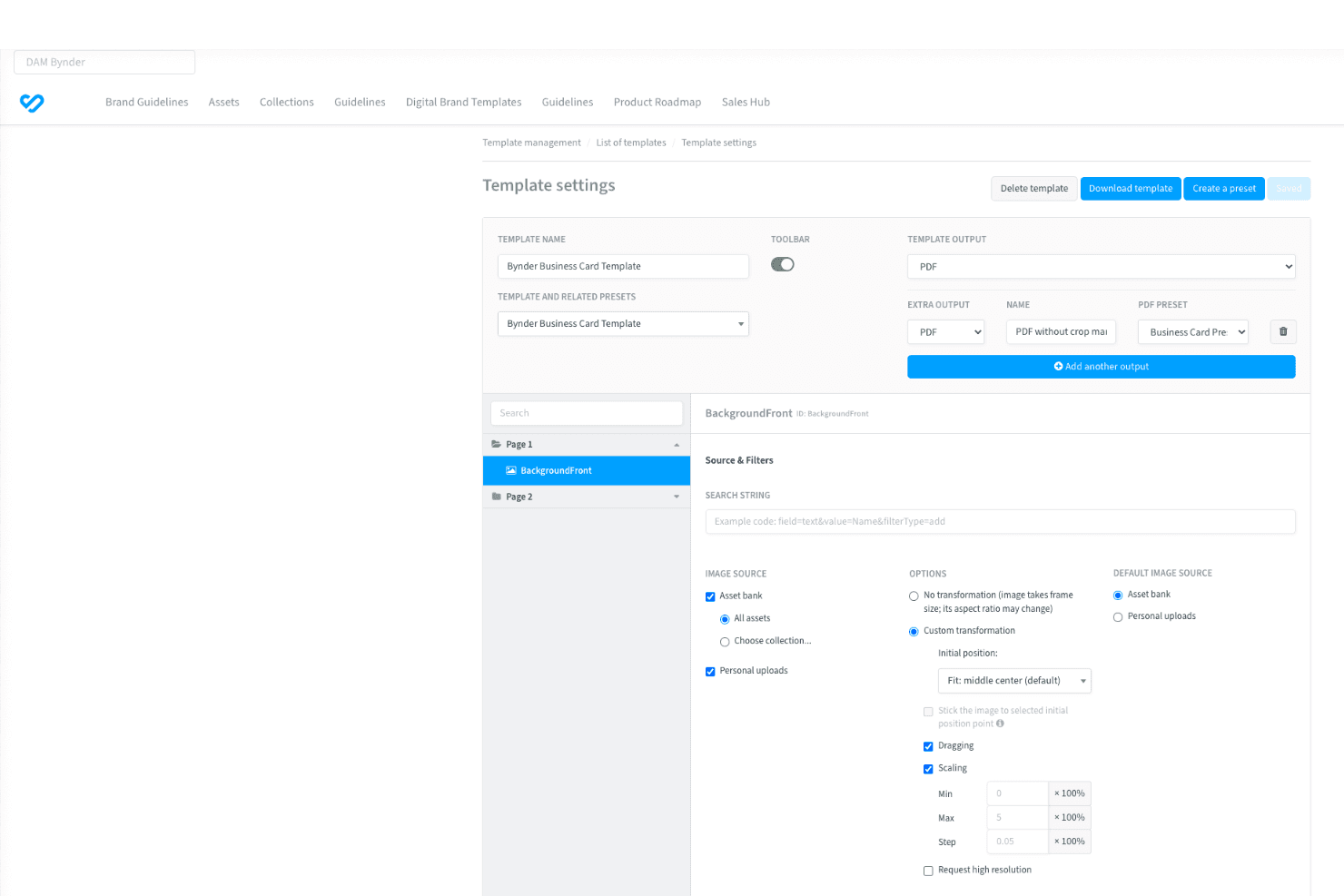
Content Templates: Bynder provides customizable content templates, allowing you to create consistent marketing materials quickly and without hassle.
Ease of Use
Bynder's user-friendly interface makes it easy to navigate and manage digital assets, so even those new to asset management can quickly get up to speed. The drag-and-drop functionality simplifies uploading and organizing files, while clear menus guide your team through tasks without confusion. Compared to other digital asset management platforms, Bynder stands out for its straightforward usability, helping your team focus on creativity rather than technical hurdles.

Integrations
Bynder integrates with Unsplash, Workato, Stensul, Trello, Hootsuite, Templafy, Akamai, Azure Active Directory, Box, and Getty Images.
The software also offers an API and connects with third-party integration tools to extend its functionalities.
Bynder Specs
- Access Management: Yes
- API: Yes
- Asset Tagging: Yes
- Automatic Transcription: Yes
- Batch Permissions & Access: Yes
- Brand Asset Creation: Yes
- Brand Management: Yes
- Dashboards: Yes
- Database Search: Yes
- Document Comparison: Yes
- Document Sharing: Yes
- Downloading: Yes
- External Integrations: Yes
- File Format Conversion: Yes
- File Sharing: Yes
- File Transfer: Yes
- History/Version Control: Yes
- Keyword Tracking: Yes
- Materials Library: Yes
- Metadata Management: Yes
- Multi-User: Yes
- Product Catalog: Yes
- Reports: Yes
- Review Monitoring: Yes
- Template Designer: Yes


