

Platformele interne pentru dezvoltatori sau IDP-urile sunt sisteme personalizabile care te ajută să creezi, să testezi și să livrezi software mai rapid, prin standardizarea fluxurilor de lucru pentru inginerie în întregul tău teanc tehnologic. Dacă ești în căutarea unor modalități de a reduce munca manuală repetitivă, de a simplifica gestionarea cloudului și de a le oferi dezvoltatorilor tăi medii de lucru mai eficiente, aceste instrumente sunt esențiale.
Această listă îți prezintă cele mai performante platforme interne pentru dezvoltatori pentru 2026 — fiecare aleasă cu atenție pentru punctele sale forte reale în implementare, automatizare și productivitatea echipei. Vei găsi detaliile de care ai nevoie pentru a alege o platformă care se potrivește cerințelor echipei tale și îți menține proiectele în grafic.
Why Trust Our Software Recommendations
6,700+
Reviews
20
Industry experts
16+
Evaluation factors
14
Years
Our team has been testing and reviewing software since 2012. As tech leaders ourselves, we know how difficult—and important—it is to choose the right software.
For this guide, we evaluated tools using hands-on testing and independent research, scoring tools using our selection criteria.
Our reviews reflect our human editorial judgment, not a sales pitch.
Expert reviewers:
- Paulo Gardini MiguelTech Director
 Tim FisherVP of AI
 Gabriel RosasTech Lead & Software Architect
 Christhian GruhnTech Lead & Platform Architect

Tabel comparativ al platformelor interne pentru dezvoltatori
Acest tabel comparativ rezumă detaliile despre prețuri pentru selecțiile mele de top de platforme interne pentru dezvoltatori:
Sorted by: Default
| Tool | Starting Price | Website | |
|---|---|---|---|
Best for governed AI infrastructure operations | Not rated | $3,500/month Free demo available | Website |
Best feature-rich CI/CD automation solution | 4.6 out of 5 | Pricing upon request Free plan available | Website |
Best for policy-driven IaC management | Not rated | $399/month Free plan + 14-day trial + demo available | Website |
Best environment provisioning with cost controls | Not rated | $1,500/month Free trial available | Website |
Best infrastructure automation for dev teams | Not rated | $899/month Free trial available | Website |
Best Kubernetes access management controls | 5.0 out of 5 | £399/month Free plan available | Website |
Best integration of cloud and DevOps workflows | Not rated | $29/user/month Free demo available | Website |
Best for rapid microservices deployment | Not rated | $6/GB/month Free plan available | Website |
Best plug-and-play microservices toolkit | Not rated | Pricing upon request Free demo available | Website |
Best workflow for full-stack product teams | Not rated | Pricing upon request Free demo available | Website |


Recenzii ale celor mai bune platforme interne pentru dezvoltatori
 Best for governed AI infrastructure operations
- Free demo available
- From $3,500/month

DuploCloud tracks security compliance standards with scored dashboards. DuploCloud is an agentic DevOps platform that lets teams build, deploy, and manage AI-driven agents for cloud infrastructure provisioning, Kubernetes operations, CI/CD automation, and compliance enforcement across AWS, GCP, and Azure.
Who Is DuploCloud Best For?
DuploCloud fits platform engineering teams that need AI-driven infrastructure automation with built-in compliance guardrails across AWS, GCP, or Azure.
Why I Picked DuploCloud
I picked DuploCloud as one of the best because it's the only platform on my list where AI agents handle governed infrastructure operations end to end, not just assist. I particularly like how agents default to read-only access, use temporary scoped credentials per ticket, and require human approval before any Terraform change is applied, so your team gets self-service provisioning without losing control over production. On top of that, operational standards can be encoded as versioned Skills, meaning guardrails travel with every workflow automatically.
DuploCloud Key Features
- Multi-channel developer access: Developers can interact with agents and request resources through Slack, Teams, a browser portal, an IDE extension, CLI, and MCP interfaces.
- ARMOR multiplayer AI sessions: Teams collaborate inside shared tickets with unified context, letting multiple users view and contribute to the same agent workflow simultaneously.
- Drift detection and Terraform pull request workflows: The platform continuously monitors infrastructure for configuration drift and opens pull requests for detected changes, with plan, review, apply, and rollback steps.
- Workspace-based multi-environment segmentation: Teams, environments, and business units each get dedicated workspaces with scoped personas, users, and context controlled through RBAC.
DuploCloud Integrations
DuploCloud supports integrations with Terraform, Kubernetes, GitHub, GitLab, CircleCI, Datadog, Prometheus, PagerDuty, and ServiceNow. REST APIs, a Terraform provider, CLI, and MCP interfaces support custom CI/CD and infrastructure workflows.
Pros and Cons
Pros:
- Workspace controls support compliance enforcement
- Scoped approvals protect production workflows
- Reviewers report faster developer provisioning
Cons:
- Reviewers want clearer audit-log search
- Some onboarding has stalled before production
Learn more about DuploCloud: Best feature-rich CI/CD automation solution
- Free plan available
- Pricing upon request
Visit WebsiteCustomer Rating:4.6/5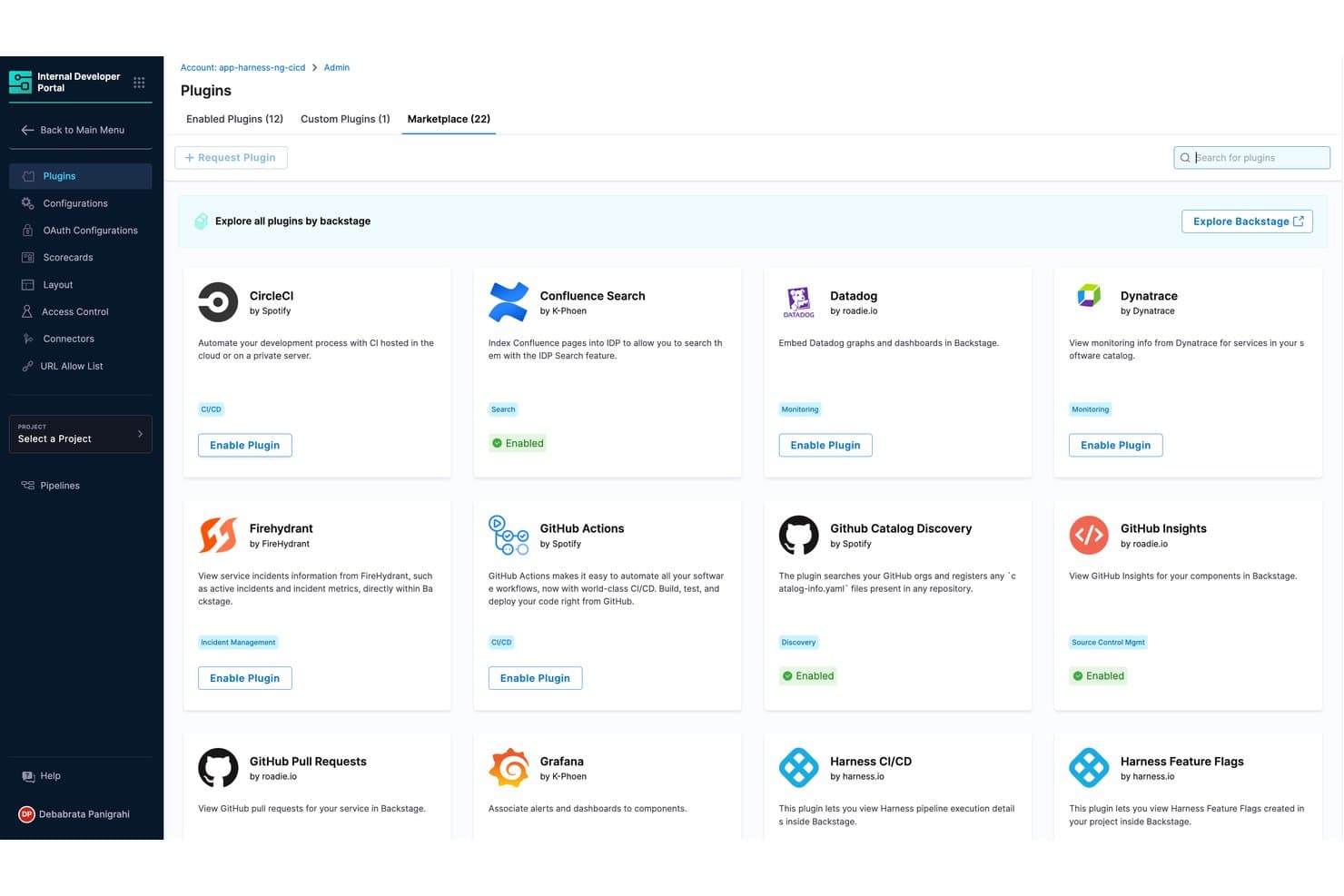
Harness offers a plugin marketplace within its Internal Developer Portal, allowing teams to enable integrations like GitHub Actions, Datadog, and CircleCI directly from a centralized admin interface. Harness is an internal developer platform that brings together advanced CI/CD pipeline automation, cloud infrastructure orchestration, developer self-service, and governance in a single solution.
Who Is Harness Best For?
Harness is a solid choice for platform engineering teams and DevOps leads at mid-size to enterprise organizations seeking to unify and automate software delivery processes.
Why I Picked Harness
I picked Harness as one of the best because I use its feature-rich CI/CD automation to unify deployments, enforce pipelines through policy-as-code, and provide developers with a flexible self-service portal built for modern platform teams.
Harness Key Features
- Environment management: Lets you define, spin up, and control custom environments for development, testing, and production.
- Role-based access control: Offers granular permissions for users, teams, and projects, with support for SSO and audit trails.
- Service catalog: Maintains a centralized inventory of applications, components, ownership, and deployment metadata.
- Cloud cost management: Tracks cloud usage within deployments and provides visibility into infrastructure spending.
Harness Integrations
Harness offers native integrations with GitHub and Jira. An API is available for custom integrations.
Pros and Cons
Pros:
- Supports complex multi-cloud deployment strategies
- Built-in service catalog with ownership tracking
- Granular role-based access controls
Cons:
- Advanced features can require extensive setup
- Software catalog less detailed
Learn more about Harness: Best for policy-driven IaC management
- Free plan + 14-day trial + demo available
- From $399/month (billed annually)
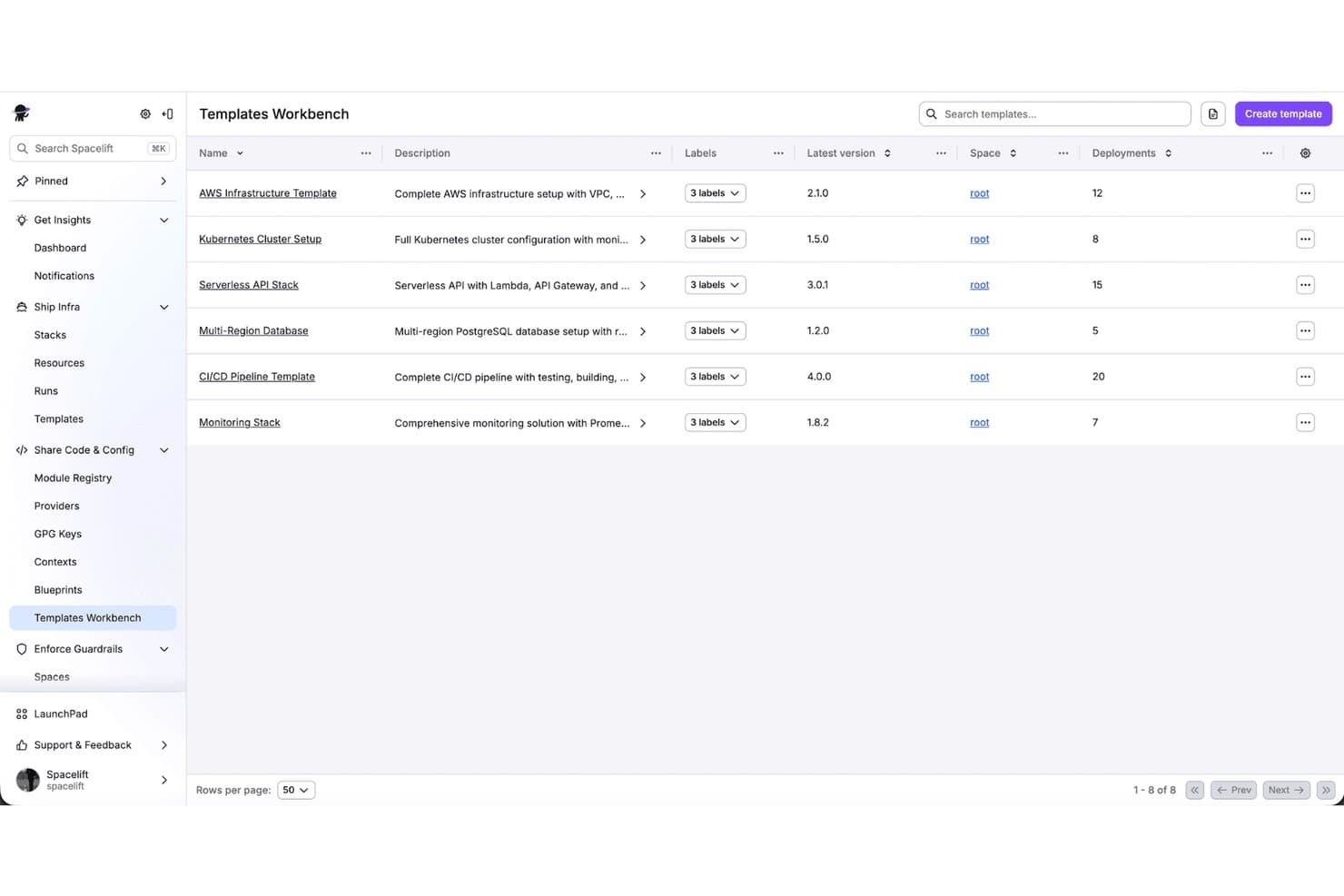
Spacelift offers a Templates Workbench where platform teams can manage and deploy reusable infrastructure templates like AWS, Kubernetes, and CI/CD pipelines. Spacelift is an infrastructure automation platform for internal developer platforms, offering policy-driven management of IaC workflows, role-based access controls, and integration with Terraform, Pulumi, CloudFormation, Kubernetes, and major cloud providers.
Who Is Spacelift Best For?
Platform engineering, DevOps, or SRE teams at organizations needing strict policy enforcement and scalable infrastructure automation across multiple cloud providers.
Why I Picked Spacelift
I picked Spacelift as one of the best because I rely on its policy-driven IaC management to enforce OPA policies across Terraform, Pulumi, and Kubernetes. In practice, my team can automate infrastructure changes with precise access controls and audit every action for compliance.
Spacelift Key Features
- Stack dependencies management: Define relationships and automate ordering between infrastructure stacks.
- Integrated drift detection: Continuously monitor cloud resources for state drift and trigger alerts when detected.
- Multi-cloud provider support: Deploy and manage resources across AWS, Azure, GCP, and more from a single platform.
- Custom notifications: Integrate with Slack and Microsoft Teams to receive updates about stack activity and workflow status.
Spacelift Integrations
Spacelift offers native integrations with GitHub, GitLab, Bitbucket, AWS, Azure, Google Cloud, Slack, Microsoft Teams, and Okta. An API is available for custom integrations.
Pros and Cons
Pros:
- Granular access control for teams
- Automated stack dependencies and orchestration
- Policy-driven workflows for infrastructure automation
Cons:
- Limited customization for stack visualization
- No built-in developer self-service portal
Learn more about Spacelift:
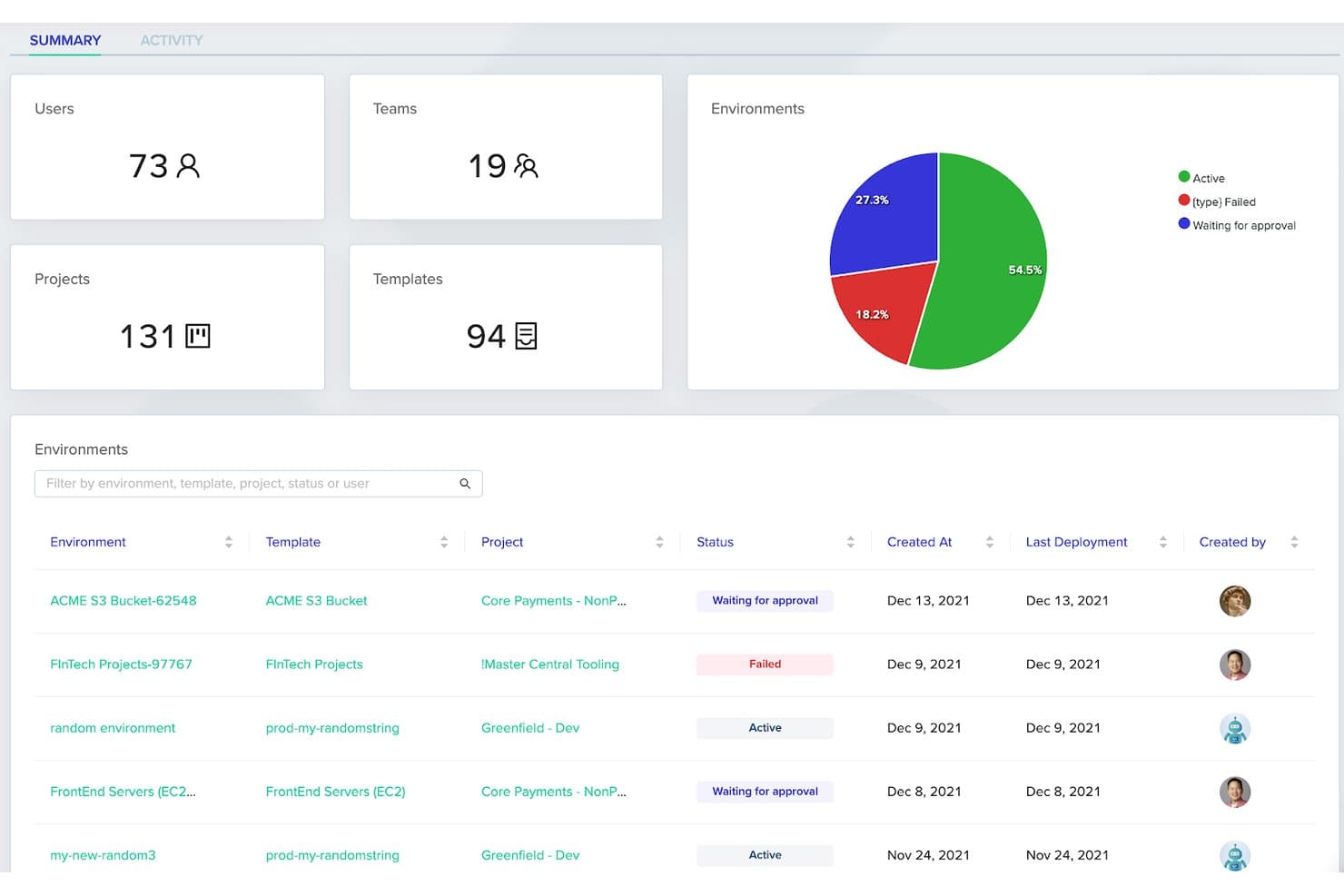
env0 offers a centralized summary dashboard displaying users, teams, projects, templates, and environment deployment statuses with visual breakdowns. env0 or env zero is a cloud infrastructure automation platform designed for internal developer platforms, offering self-service environment provisioning, guardrails, multi-cloud support, policy-as-code, and cost management capabilities.
Who Is env0 Best For?
Platform engineering and DevOps teams at mid-size to large organizations seeking centralized environment automation and policy-driven infrastructure control.
Why I Picked env0
I picked env0 because I can automate environment provisioning through reusable templates and enforce policy-as-code across clouds, all while giving my team full visibility and control over infrastructure spend. The cost controls are unmatched for internal developer platforms.
env0 Key Features
- Multi-IaC workflow support: Run and manage Terraform, OpenTofu, Terragrunt, CloudFormation, and Pulumi in a unified platform.
- Drift detection and remediation: Automatically detect and remediate infrastructure drift across environments.
- Granular role-based access control: Assign permissions at the project, environment, and template levels.
- Integrated approvals and notifications: Configure custom approval flows and notifications for environment actions.
env0 Integrations
env0 offers native integrations with GitHub, GitLab, Bitbucket, Azure DevOps, AWS, Google Cloud Platform, Helm, Okta, and Slack. An API is available for custom integrations.
Pros and Cons
Pros:
- Enforces policy-as-code for deployments
- Automated drift detection and remediation
- Real-time environment cost visibility and guardrails
Cons:
- Workflow complexity for large monorepo projects
- Limited built-in software catalog capabilities
Learn more about env0:
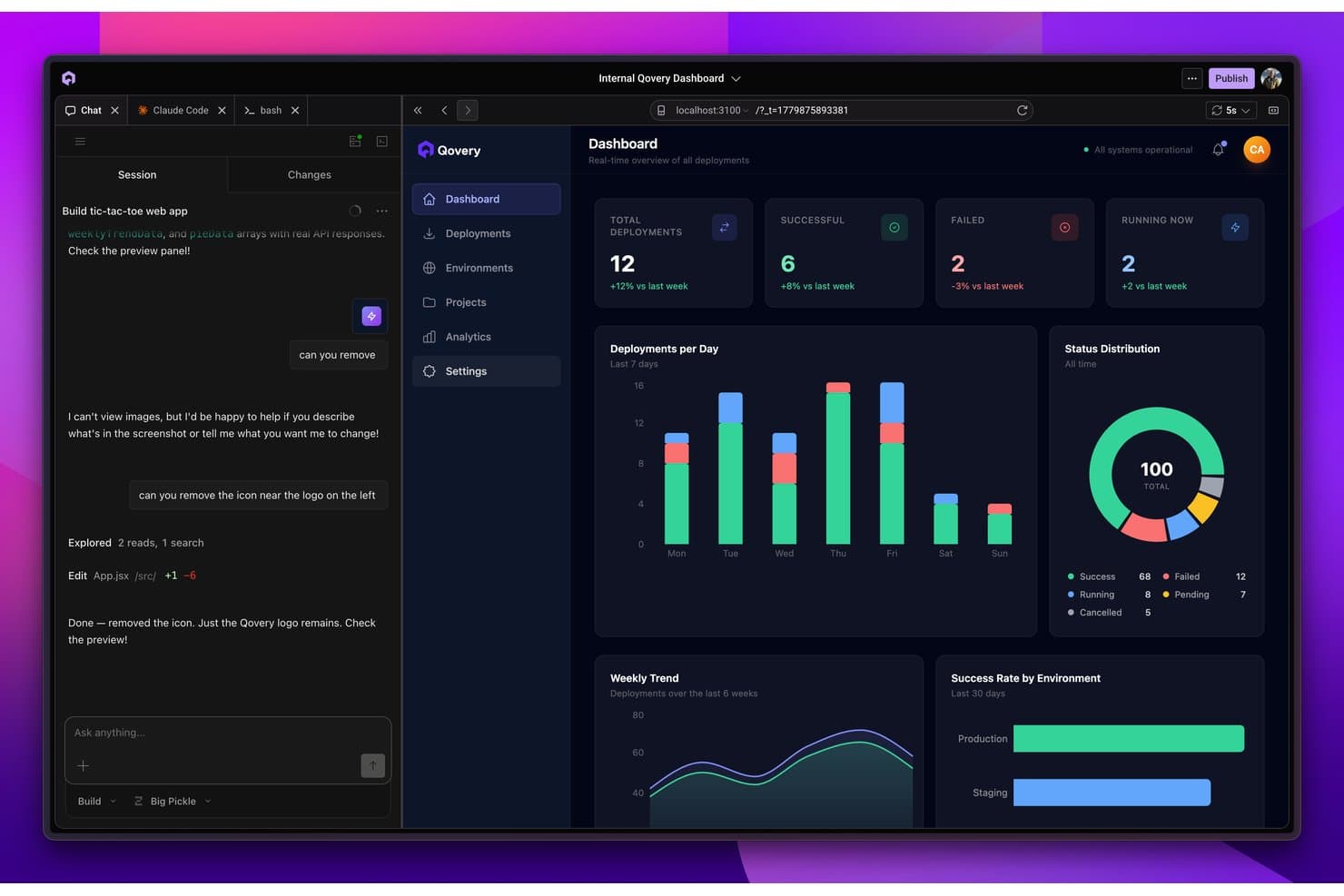
Qovery offers an internal developer platform dashboard with real-time deployment tracking, status distribution, and environment-level success metrics. Qovery is an internal developer platform (IDP) designed for cloud-native teams, delivering unified infrastructure automation, environment provisioning, CI/CD integration, and deep governance in one centralized control plane.
Who Is Qovery Best For?
Platform engineering teams at growing SaaS companies or enterprises building and operating modern, Kubernetes-based cloud infrastructure.
Why I Picked Qovery
I picked Qovery as one of the best internal developer platforms because I can automate multi-cloud Kubernetes infrastructure, enforce detailed RBAC and policy-as-code, and enable developers to self-serve cloud resources directly from a unified portal. Best infrastructure automation for dev teams.
Qovery Key Features
- Ephemeral environments: Quickly spin up and destroy pre-configured, full-stack testing environments for every pull request.
- Native CI/CD integrations: Connect with GitHub Actions, GitLab CI, and other pipeline tools for automated deployments.
- Secrets management: Securely manage, inject, and rotate secrets across applications and environments.
- Real-time activity logging: Monitor live deployment activity, audit trails, and system events within the platform.
Qovery Integrations
Qovery offers an API for custom integrations.
Pros and Cons
Pros:
- Unified control plane for multi-cloud management
- Rapid rollout of ephemeral environments
- Strong RBAC and policy-as-code controls
Cons:
- Can be overkill for non-Kubernetes workloads
- Catalog feature is less advanced than peers
Learn more about Qovery: Best Kubernetes access management controls
- Free plan available
- £399/month
Visit WebsiteCustomer Rating:5/5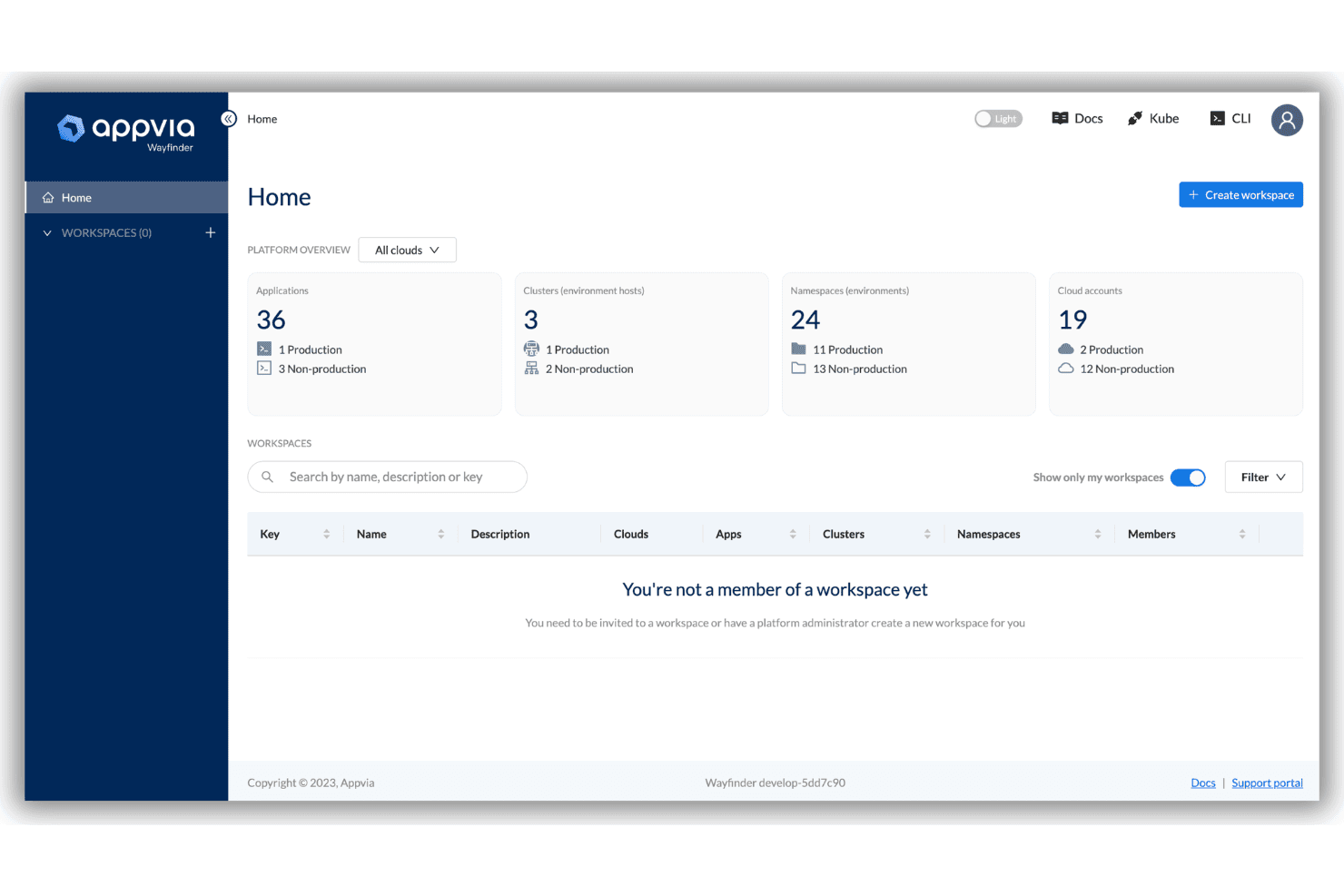
Appvia Wayfinder centralizes Kubernetes self-service and cloud provisioning. Appvia Wayfinder is an internal developer platform focused on Kubernetes and multi-cloud environments, offering a centralized self-service portal, policy-driven infrastructure automation, strong access controls, and cloud-native resource provisioning for enterprise teams.
Who Is Appvia Wayfinder Best For?
Platform engineering teams at enterprises and heavily regulated organizations that need to manage Kubernetes access and infrastructure governance at scale.
Why I Picked Appvia Wayfinder
I picked Appvia Wayfinder because I trust its granular Kubernetes access controls, strong RBAC policy enforcement, and automated guardrails for secure multi-cloud environment management. I use it to define golden paths and secure developer self-service at scale.
Appvia Wayfinder Key Features
- AI-driven infrastructure automation: Uses AI agents to automate environment setup and resource provisioning.
- Service catalog templating: Offers a library of reusable templates for application and cloud resources.
- Drift detection and lifecycle management: Monitors and manages infrastructure for configuration drift across environments.
- Cloud-agnostic provisioning: Supports AWS, Azure, and Google Cloud for multi-cloud workflows and deployments.
Appvia Wayfinder Integrations
Appvia Wayfinder offers native integrations with AWS, Azure, Google Cloud Platform, Kubernetes, and Terraform. An API is available for custom integrations.
Pros and Cons
Pros:
- Policy-driven compliance for regulated industries
- Automated golden path environment provisioning
- Kubernetes RBAC and access auditing
Cons:
- Limited self-serve integrations beyond cloud providers
- Service catalog is less extensible than Backstage
Learn more about Appvia Wayfinder: Best integration of cloud and DevOps workflows
- Free demo available
- From $29/user/month (billed annually)
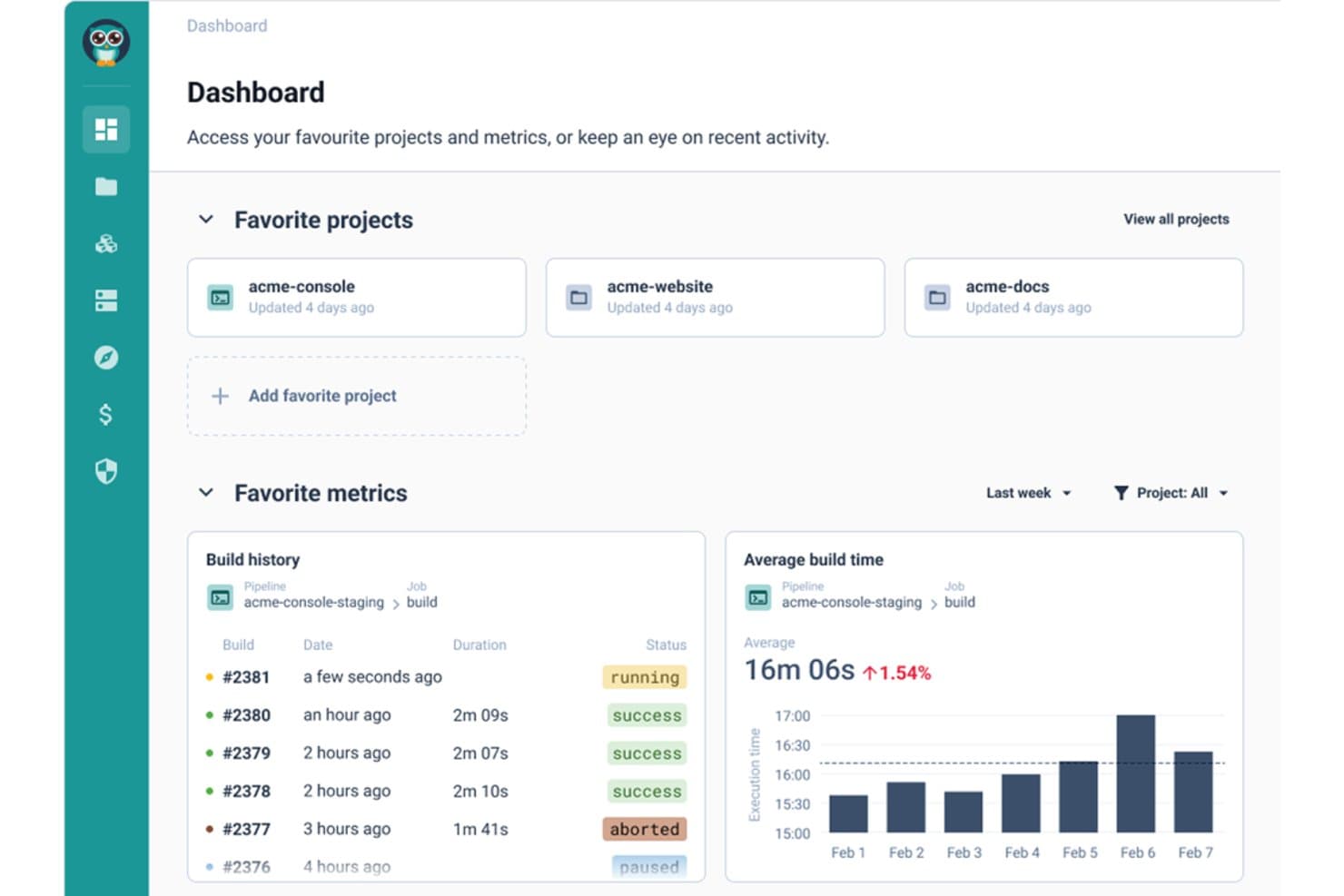
Cycloid offers a developer dashboard with favorite projects, build history tracking, and average build time metrics visualized over time. Cycloid is an internal developer platform that brings together cloud automation, infrastructure orchestration, self-service provisioning, and customizable service catalogs for platform teams managing hybrid and multi-cloud environments.
Who Is Cycloid Best For?
Platform engineering and DevOps teams in midsize to large enterprises managing multi-cloud and hybrid infrastructure.
Why I Picked Cycloid
I picked Cycloid as one of the best because I rely on its seamless integration of multi-cloud and DevOps workflows. My team uses the customizable portal to unify provisioning, infrastructure orchestration, and CI/CD automation across cloud environments.
Cycloid Key Features
- Asset inventory: Tracks ownership, dependencies, and metadata across all deployed services.
- Role-based access control: Supports fine-grained permissions and policy enforcement for platform governance.
- GreenOps and FinOps integrations: Surfaces cloud usage, cost, and carbon impact analytics in the platform UI.
- Stack library: Offers versioned, reusable templates for standardized infrastructure provisioning and service setup.
Cycloid Integrations
Cycloid provides an API for custom integrations.
Pros and Cons
Pros:
- Customizable portal with plugin support
- Built-in asset inventory with dependency mapping
- Hybrid and multi-cloud environment orchestration
Cons:
- Integrations require custom plugin development
- Suited mainly for medium and large teams
Learn more about Cycloid:
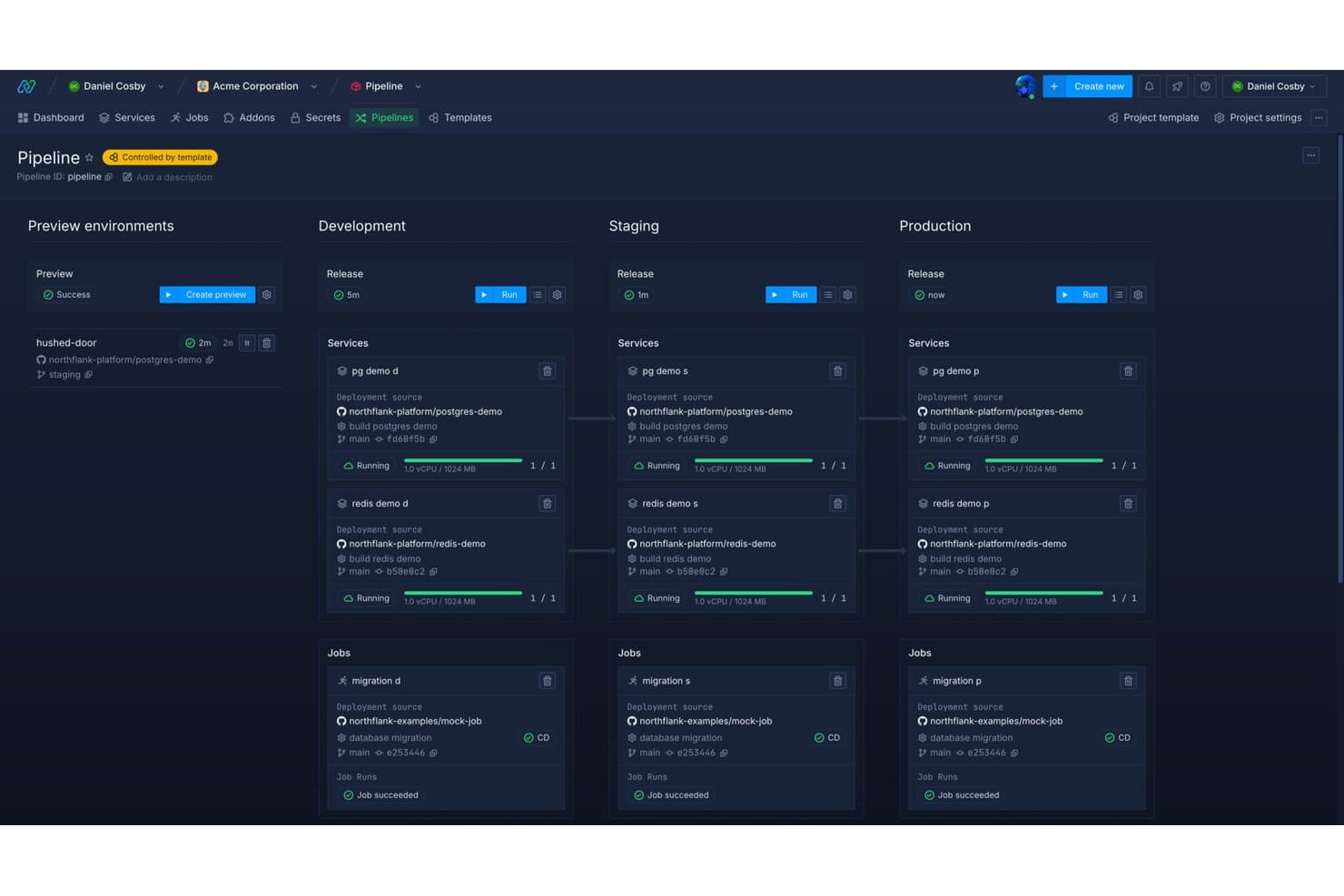
Northflank offers a visual pipeline overview that maps services and jobs across Preview, Development, Staging, and Production environments in a single dashboard. Northflank is an internal developer platform that delivers managed Kubernetes, integrated CI/CD pipelines, developer self-service portals, and environment provisioning tools designed for microservices and cloud-native application teams.
Who Is Northflank Best For?
Platform engineering teams and DevOps leads at startups or scale-ups building cloud-native microservices architectures.
Why I Picked Northflank
I picked Northflank as one of the best because my team can instantly provision managed Kubernetes environments and launch microservices with Git-backed deployments. I love how their platform automates end-to-end CI/CD and supports rapid microservices deployment with prebuilt blueprints.
Northflank Key Features
- Role-based access control: Set permissions for users and teams to manage access across projects and environments.
- Integrated secrets management: Store and manage environment secrets directly within service configurations.
- Auto-provisioned databases: Instantly spin up managed databases like PostgreSQL, MySQL, and MongoDB from the platform interface.
- Service dependency mapping: Visualize and track relationships between microservices and supporting resources.
Northflank Integrations
Northflank offers native integrations with GitHub, GitLab, Bitbucket, and provides an API for custom integrations.
Pros and Cons
Pros:
- Built-in secrets and database management
- Granular RBAC for multi-team environments
- Rapid deployment of container-based microservices
Cons:
- Fewer workflow customization options
- Limited support for on-prem deployments
Learn more about Northflank: Best plug-and-play microservices toolkit
- Free demo available
- Pricing upon request
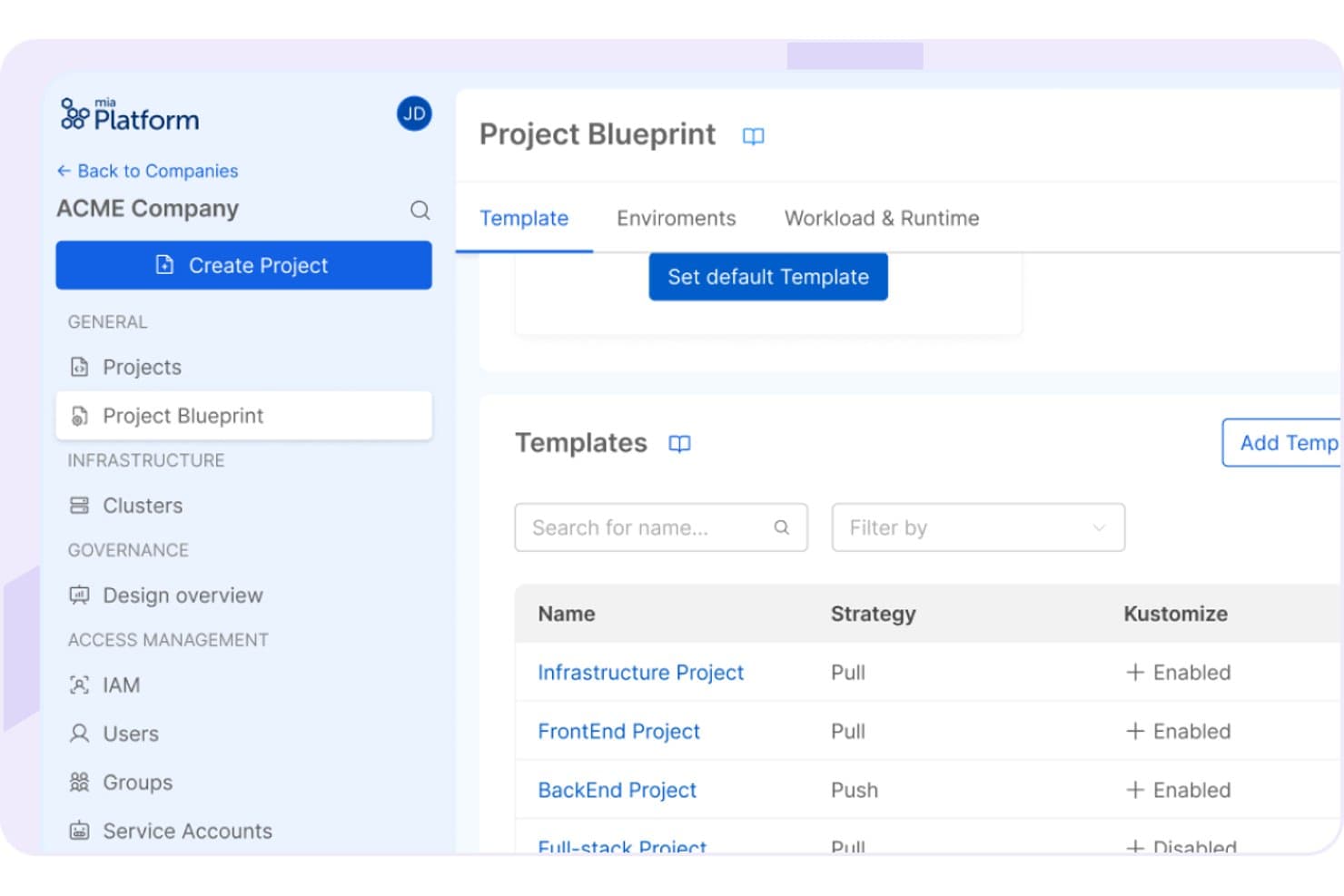
Mia-Platform offers a Project Blueprint section where platform teams can manage and configure project templates with strategy and Kustomize settings. Mia-Platform is an internal developer platform that provides a unified environment for building, deploying, and managing microservices, featuring a modular service catalog, customizable self-service portal, and infrastructure orchestration tools.
Who Is Mia-Platform Best For?
Platform engineering teams and DevOps leads at mid-sized to large enterprises building microservices on Kubernetes.
Why I Picked Mia-Platform
I picked Mia-Platform as one of the best because I can deploy new microservices using its plug-and-play toolkit, launch prebuilt service templates from the marketplace, and manage everything from a customizable self-service portal.
Mia-Platform Key Features
- API gateway management: Centralizes API routing, security policies, and monitoring through a built-in API gateway.
- Real-time service catalog: Automatically tracks services, dependencies, metadata, and ownership for all deployed components.
- Role-based access control: Lets platform teams set granular permissions for users, groups, and resources across environments.
- Audit logging and compliance: Captures detailed change and access history to support governance and regulatory needs.
Mia-Platform Integrations
Mia-Platform offers native integration with GitHub. An API is available for custom integrations.
Pros and Cons
Pros:
- Built-in tools for compliance and audit trails
- Self-service portal for team autonomy
- Easily deployable microservices with prebuilt templates
Cons:
- Most community resources are in European languages
- Platform requires Kubernetes knowledge for setup
Learn more about Mia-Platform: Best workflow for full-stack product teams
- Free demo available
- Pricing upon request
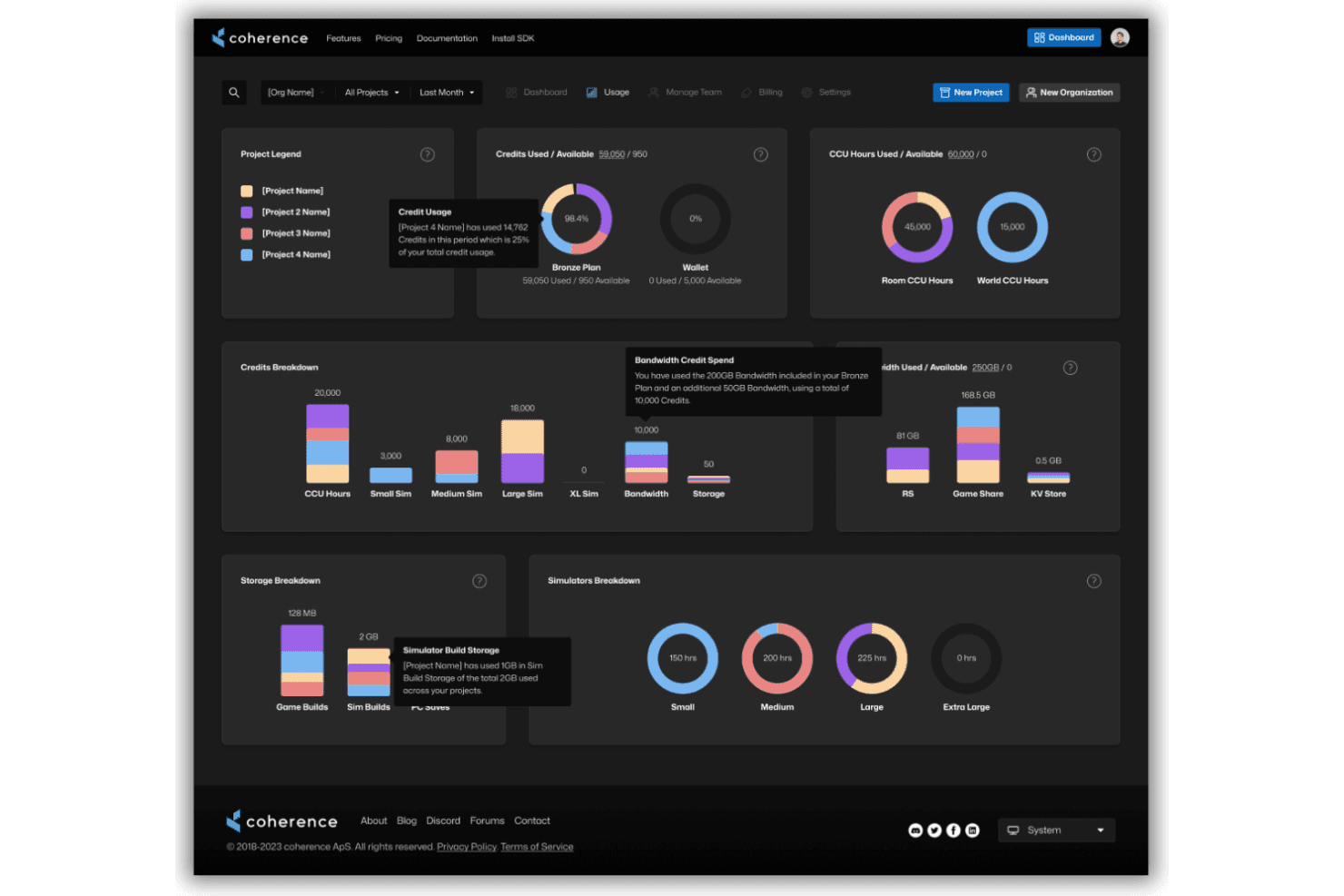
Coherence automates CI/CD, infrastructure, and cloud deployments. Coherence is a cloud-based internal developer platform designed for full-stack product teams, offering automated CI/CD pipelines, self-service infrastructure provisioning, and reusable blueprints for cloud environments.
Who Is Coherence Best For?
Platform engineering teams at technology companies who need to simplify and standardize cloud workflows for full-stack application development.
Why I Picked Coherence
I picked Coherence as one of the best because I can manage full-stack workflows using automated preview environments, reusable infrastructure templates, and a unified developer portal. For product teams, that means everything from provisioning to deployment stays tightly coordinated.
Coherence Key Features
- Role-based access controls: Assign permissions to users and teams for secure environment management.
- Cloud provider integrations: Connect directly with AWS and GCP for automated provisioning.
- Service catalog: Maintain a library of infrastructure blueprints and service templates.
- Environment teardown automation: Remove environments and resources cleanly when they’re no longer needed.
Coherence Integrations
Coherence offers an API for custom integrations.
Pros and Cons
Pros:
- Centralized portal for team collaboration
- Blueprint templates for environment configuration
- Automated cloud resource provisioning workflows
Cons:
- Documentation less detailed than major competitors
- Few options for platform extensibility
Learn more about Coherence:
Alte platforme interne pentru dezvoltatori
Iată câteva opțiuni suplimentare de platforme interne pentru dezvoltatori care nu au ajuns pe lista mea scurtă, dar care merită totuși analizate:
- 11WSO2Best built-in API and identity governance
- 12Atlassian CompassBest tool integration visibility at scale
- 13NullstoneBest modular blueprint-based cloud setup
- 14BunnyshellBest environment automation for complex apps
- 15HumanitecBest dynamic environment management tools
- 16Morpheus DataBest for hybrid cloud orchestration capabilities
- 17PortBest customizable developer self-service portal
- 18Encore CloudBest code-centric backend application platform
- 19mogeniusBest simplified containerized deployments
How I Evaluate Internal Developer Platforms
I split my evaluation into two layers: baseline capabilities like self-service provisioning and RBAC, and differentiators like golden path templates and policy-as-code enforcement.
Core Functionality (Table Stakes for This List)
When I'm selecting tools for my list, I rank each one on a scale from 0 (does not offer the functionality) to 5 (excels in this area) for each core functionality listed below. Then, I calculate the tool's total score into a percentage. Each tool needs to achieve a minimum total score of 75% to be considered for inclusion.
- Developer self-service portal: I evaluate whether developers can provision environments, spin up services, and access resources from a single UI without waiting on ops tickets.
- Service catalog and templates: Golden path templates should let teams scaffold new microservices with pre-approved configs, similar to how Backstage or Humanitec handle service creation.
- CI/CD pipeline integration: I check for native connections to tools like GitHub Actions, GitLab CI, Jenkins, or ArgoCD so builds and deployments stay within one workflow.
- Infrastructure orchestration: The platform should abstract Kubernetes clusters, Terraform modules, and cloud resources across multiple environments and providers.
- Software catalog and component tracking: A living catalog that maps service ownership, dependencies, and API relationships helps teams trace issues across distributed architectures.
- Role-based access and governance: I look for RBAC with environment scoping, audit logging, and SSO integration so platform teams can enforce guardrails without blocking developers.
Once I have a list of tools that meet the criteria, I consider what sets each platform apart.
Differentiating Factors (What Sets Vendors Apart)
Here's how I compare and contrast different vendors:
Standout Features
Dynamic environments are a big differentiator—I look for platforms that spin up ephemeral preview environments tied to pull requests so teams can test feature branches in production-like conditions before merging. Policy-as-code guardrails matter just as much, especially when your platform needs to block non-compliant Terraform plans or container images from reaching production using tools like OPA or Sentinel. I also evaluate scorecards that track service maturity and production readiness, which help platform teams spot gaps across dozens of microservices.
Beyond Features
Extensibility is a major factor—I check whether the platform offers a plugin architecture or API-first design that lets your team build custom integrations without vendor lock-in. Deployment flexibility matters too, especially for regulated industries where you need SaaS, self-hosted, or air-gapped options alongside certifications like SOC 2 Type II. I also consider pricing models, since per-developer pricing scales very differently than per-service or consumption-based plans as your engineering org grows.
Cum să alegi platforme interne pentru dezvoltatori
Este ușor să te pierzi în liste lungi de funcții și structuri complexe de prețuri. Pentru a te ajuta să rămâi concentrat în timp ce parcurgi procesul tău unic de selectare a software-ului, iată o listă de verificare cu factorii de care trebuie să ții cont:
| Factor | Ce trebuie luat în considerare |
|---|---|
| FactorScalabilitate | Ce trebuie luat în considerareVa susține platforma dezvoltarea echipei tale de la zeci la sute de ingineri și se va adapta la noi echipe, servicii sau medii cloud? |
| FactorIntegrări | Ce trebuie luat în considerareSe conectează la instrumentele tale CI/CD existente, la sistemele de control al versiunilor, la instrumentele de gestionare a incidentelor și la furnizorii cloud sau va trebui să refaci fluxurile de lucru deja stabilite? |
| FactorPosibilități de personalizare | Ce trebuie luat în considerarePoți adapta fluxurile de lucru, șabloanele și permisiunile pentru a corespunde nevoilor organizației tale de inginerie — și acceptă pluginuri sau integrări API pentru cazuri de utilizare personalizate? |
| FactorUșurință în utilizare | Ce trebuie luat în considerareEste platforma intuitivă atât pentru inginerii DevOps cu experiență, cât și pentru dezvoltatorii de aplicații sau adoptarea va fi îngreunată de o curbă de învățare abruptă? |
| FactorImplementare și integrare inițială | Ce trebuie luat în considerareCât timp va dura implementarea — săptămâni sau luni? De ce resurse vei avea nevoie pentru instruire, migrare sau dezvoltare personalizată la început? |
| FactorCost | Ce trebuie luat în considerarePlătești pentru fiecare dezvoltator, pentru fiecare serviciu sau în funcție de utilizare? Ia în calcul costurile ascunse generate de cerințele de găzduire proprie sau de necesitatea unor ingineri de platformă suplimentari. |
| FactorMăsuri de protecție a securității | Ce trebuie luat în considerareAcceptă soluția SSO, RBAC, înregistrarea auditurilor și gestionarea secretelor pentru a se alinia la politicile de securitate și guvernanță ale companiei tale? |
| FactorCerințe de conformitate | Ce trebuie luat în considerareSunt necesare certificări precum SOC 2 Type II sau ISO 27001 în industria ta și furnizorul oferă documentație pentru audituri și conformitate continuă? |
Ce sunt platformele interne pentru dezvoltatori?
Platformele interne pentru dezvoltatori sunt sisteme centralizate care ajută echipele tale de inginerie să automatizeze gestionarea infrastructurii, să standardizeze fluxurile de lucru și să permită dezvoltatorilor să creeze, să implementeze și să opereze software în regim de autoservire. Aceste platforme unifică de obicei resursele cloud, instrumentele de orchestrare și cele de guvernanță, facilitând aplicarea bunelor practici și gestionarea mediilor complexe în cadrul mai multor echipe.
Funcțiile platformelor interne pentru dezvoltatori
Atunci când alegi platforme interne pentru dezvoltatori, fii atent la următoarele funcții esențiale:
- Portal de autoservire pentru dezvoltatori: Le permite dezvoltatorilor să creeze medii, servicii sau resurse dintr-o interfață centralizată, reducând timpii de așteptare și numărul de solicitări restante.
- Catalog de servicii: Organizează șabloane de servicii reutilizabile, planuri pentru infrastructură și trasee standard, astfel încât echipele să poată lansa mai rapid aplicații conforme și cu mai puține impedimente.
- Integrarea conductelor CI/CD: Se conectează la instrumentele de control al versiunilor și de implementare, automatizând procesele de compilare, testare și lansare atunci când sunt transmise modificări ale codului.
- Orchestrarea infrastructurii: Abstrahează și automatizează aprovizionarea resurselor cloud, a clusterelor Kubernetes și a infrastructurii ca cod (IaC) în diferite medii.
- Controlul accesului bazat pe roluri: Permite echipelor responsabile de platformă să configureze permisiuni granulare și să definească limite de siguranță, asigurând accesul persoanelor potrivite la resursele potrivite.
- Medii dinamice: Permite utilizarea unor medii temporare sau de previzualizare pentru testarea funcționalităților noi sau a solicitărilor de integrare, fără a afecta sistemele de producție.
- Jurnale de audit și conformitate: Urmărește activitatea utilizatorilor, modificările serviciilor și utilizarea resurselor, aspect esențial pentru îndeplinirea cerințelor de reglementare și securitate.
- Integrarea gestionării secretelor: Protejează acreditările, cheile și datele de configurare sensibile prin instrumente native sau terțe pentru gestionarea secretelor.
- Tablouri de bord pentru monitorizare și stare: Oferă vizibilitate în timp real asupra disponibilității serviciilor, performanței și stării implementărilor, reducând durata ciclurilor de depanare.
- Extensibilitate prin module sau API-uri: Acceptă extensii personalizate, fluxuri de lucru avansate sau integrări cu instrumente terțe, permițând echipelor să adapteze platforma la nevoile în schimbare.
Beneficiile platformelor interne pentru dezvoltatori
Implementarea platformelor interne pentru dezvoltatori oferă mai multe beneficii echipei și companiei dumneavoastră. Iată câteva dintre avantajele pe care le puteți aștepta:
- Cicluri de implementare mai rapide: Portalurile de autoservire și integrările CI/CD automatizate ajută echipele să livreze cod și funcționalități cu mai puțină intervenție manuală.
- Reducerea sarcinii cognitive: Șabloanele preaprobate și traseele standard îi scutesc pe dezvoltatori de gestionarea detaliilor complexe ale infrastructurii.
- Securitate și conformitate îmbunătățite: Politicile integrate ca cod, controlul accesului bazat pe roluri și jurnalele de audit asigură respectarea standardelor din industrie și a cerințelor de reglementare.
- Fluxuri de lucru consecvente: Instrumentele, șabloanele și cataloagele standardizate mențin echipele de inginerie aliniate în toate mediile și proiectele.
- Vizibilitate mai bună asupra resurselor: Cataloagele centralizate și tablourile de bord pentru monitorizare vă ajută să urmăriți responsabilitatea pentru servicii, dependențele și starea sistemelor.
- Scalabilitate între echipe: Funcții precum orchestrarea și extensibilitatea permit platformei să se adapteze pe măsură ce organizația dumneavoastră de inginerie se extinde și evoluează.
- Costuri operaționale mai mici: Gestionarea automatizată a infrastructurii și integrarea gestionării secretelor eliberează echipele responsabile de platformă de sarcinile repetitive și reduc efortul de întreținere.
Costurile și prețurile platformelor interne pentru dezvoltatori
Selectarea platformelor interne pentru dezvoltatori necesită înțelegerea diferitelor modele și planuri de tarifare disponibile. Costurile variază în funcție de funcții, dimensiunea echipei, suplimente și alți factori. Tabelul de mai jos sintetizează planurile uzuale, prețurile medii ale acestora și funcțiile incluse de obicei în soluțiile de platforme interne pentru dezvoltatori:
Tabel comparativ al planurilor pentru platformele interne pentru dezvoltatori
| Tipul planului | Preț mediu | Funcții comune |
|---|---|---|
| Tipul planuluiPlan gratuit | Preț mediu$0 | Funcții comuneAcces limitat pentru utilizatori, catalog de servicii de bază, asistență din partea comunității și funcții de bază pentru orchestrare. |
| Tipul planuluiPlan personal | Preț mediu$10-$25/user/month | Funcții comuneAsistență pentru un singur utilizator, portaluri de autoservire, acces la șabloane, integrare CI/CD de bază și controale bazate pe roluri. |
| Tipul planuluiPlan pentru companii | Preț mediu$30-$70/user/month | Funcții comuneAcces pentru mai mulți utilizatori, control avansat al accesului bazat pe roluri, medii dinamice, înregistrarea auditurilor, instrumente de conformitate și asistență premium. |
| Tipul planuluiPlan pentru întreprinderi | Preț mediu$80-$150/user/month | Funcții comuneUtilizatori și servicii nelimitați, integrare inițială dedicată, integrări personalizate, opțiuni izolate de rețea sau găzduite intern și acorduri SLA pentru întreprinderi. |
Întrebări frecvente despre platformele interne pentru dezvoltatori
Iată câteva răspunsuri la întrebările frecvente despre platformele interne pentru dezvoltatori:
Cum sprijină platformele interne pentru dezvoltatori autoservirea dezvoltatorilor?
Platformele interne pentru dezvoltatori (IDP) sunt concepute pentru a îmbunătăți semnificativ experiența generală a dezvoltatorilor, oferind echipelor de dezvoltare control direct asupra mediilor lor de dezvoltare. În loc să aștepte după echipele de operațiuni suprasolicitate, inginerii pot furniza resurse la cerere, pot implementa cod sau pot accesa șabloane standardizate.
Această abordare de tip autoservire elimină obstacolele din ciclul de viață al dezvoltării, sporind productivitatea generală a dezvoltatorilor și permițând principiilor DevOps să se manifeste cu adevărat în fluxurile de lucru zilnice.
La ce integrări ar trebui să mă aștept de la o platformă internă pentru dezvoltatori?
Majoritatea platformelor funcționează ca portaluri interne centralizate pentru dezvoltatori, conectând instrumentele preferate ale dezvoltatorilor într-un singur loc. Ar trebui să vă așteptați la integrări cu conducte CI/CD, depozite de cod sursă și principalii furnizori de servicii cloud.
În plus, IDP-urile moderne se conectează direct la sistemele de observabilitate pentru monitorizare în timp real, gestionarea secretelor și răspunsul la incidente. Este esențial să vă asigurați că platforma se potrivește stivei tehnologice actuale, protejează infrastructura subiacentă și sprijină planurile viitoare de optimizare.
Sunt platformele interne pentru dezvoltatori potrivite pentru echipele de inginerie mai mici?
Echipele mai mici pot beneficia de aceste platforme, însă valoarea crește de obicei pe măsură ce cresc numărul membrilor echipei și numărul serviciilor. Pentru configurații simple de dezvoltare software sau echipe foarte mici, configurarea unei platforme de nivel pentru întreprinderi poate depăși inițial nevoile imediate ale dezvoltatorilor. Multe echipe mai mici încep cu instrumente ușoare, cu sursă deschisă, înainte de a se angaja la o platformă completă.
Cât de personalizabile sunt platformele interne pentru dezvoltatori pentru fluxurile noastre de lucru?
Majoritatea soluțiilor acceptă șabloane, fluxuri de lucru și permisiuni personalizate, iar unele oferă arhitecturi bazate pe pluginuri pentru personalizare aprofundată — permițându-vă să adaptați platforma la procesele și cerințele de conformitate ale organizației.
Ce funcții de securitate sunt oferite în platformele interne pentru dezvoltatori?
Căutați funcții precum integrarea SSO, controale de acces bazate pe roluri, jurnale de audit, aplicarea politicilor sub formă de cod și gestionarea secretelor, pentru a contribui la asigurarea unor operațiuni de infrastructură sigure și conforme.