

Instrumentele de securitate pentru lanțul de aprovizionare software vă ajută să detectați, monitorizați și preveniți amenințările din codul, dependențele și procesul dumneavoastră de dezvoltare. Aceste instrumente se concentrează pe securitatea aplicațiilor și securitatea surselor deschise, identificând vulnerabilitățile cunoscute înainte ca acestea să afecteze mediul de producție. Acestea includ adesea funcții precum analiza compoziției software și testarea automată a securității pentru a proteja datele sensibile și a asigura livrarea mai sigură a software-ului. Prin integrarea în fluxul dumneavoastră de lucru, le oferă echipelor vizibilitate și control asupra riscurilor din întregul lanț de aprovizionare. Această listă vă oferă o perspectivă clară și actualizată asupra celor mai bune instrumente de încredere pentru echipele IT care doresc să securizeze fiecare verigă a lanțului de aprovizionare software. Veți găsi opțiuni pentru diferite medii, profiluri de risc și fluxuri de lucru, astfel încât să puteți alege soluția potrivită pentru nevoile echipei dumneavoastră.
Why Trust Our Software Recommendations
6,700+
Reviews
20
Industry experts
16+
Evaluation factors
14
Years
Our team has been testing and reviewing software since 2012. As tech leaders ourselves, we know how difficult—and important—it is to choose the right software.
For this guide, we evaluated tools using hands-on testing and independent research, scoring tools using our selection criteria.
Our reviews reflect our human editorial judgment, not a sales pitch.
Expert reviewers:
- Paulo Gardini MiguelTech Director
 Tim FisherVP of AI
 Gabriel RosasTech Lead & Software Architect
 Christhian GruhnTech Lead & Platform Architect

Tabel comparativ al instrumentelor de securitate pentru lanțul de aprovizionare software
Acest tabel comparativ sintetizează detaliile privind prețurile pentru selecția mea de top de instrumente de securitate pentru lanțul de aprovizionare software:
Sorted by: Default
| Tool | Starting Price | Website | |
|---|---|---|---|
Best for install-time malware blocking | 4.3 out of 5 | $300/month Free plan + free demo available | Book Demo |
Best for reachability-based open-source risk | 4.7 out of 5 | $1,000/dev/year Free demo available | Website |
Best for extensive language and framework coverage | 4.4 out of 5 | Pricing upon request Free trial available | Website |
Best for developer-first vulnerability scanning | 4.6 out of 5 | $25/contributing developer/month Free plan + free demo available | Website |
Best for AI-powered code security | 4.2 out of 5 | Pricing upon request Free demo available | Website |
Best for end-to-end supply chain security | Not rated | $135/user/month + consumption 14-day free trial + free plan + free demo available | Website |
Best for customizable security scanning rules | Not rated | $30/contributor/month Free plan + free demo available | Website |
Best for policy-based container security | Not rated | Pricing upon request 14-day free trial + free demo available | Website |
Best for risk-based code-to-cloud visibility | Not rated | Pricing upon request Free demo available | Website |
Best for advanced supply chain threat detection | Not rated | $500/month 14-day free trial + free plan + free demo available | Website |


Recenzii ale instrumentelor de securitate pentru lanțul de aprovizionare software
Mai jos sunt rezumatele mele detaliate ale instrumentelor de securitate pentru lanțul de aprovizionare software care au ajuns pe lista mea scurtă. Recenziile mele oferă o privire detaliată asupra funcțiilor, capacităților și integrărilor fiecărei platforme, pentru a vă ajuta să găsiți cea mai potrivită opțiune pentru dumneavoastră.
 Best for install-time malware blocking
- Free plan + free demo available
- From $300/month
Visit WebsiteCustomer Rating:4.3/5
Aikido Security surfaces CVE details and fix paths for vulnerable dependencies. Aikido Security is an application security platform that combines SCA, SAST, secrets detection, malware scanning, SBOM generation, and CI/CD pipeline gating to secure code and open-source dependencies across the software development lifecycle.
Who Is Aikido Security Best For?
Aikido Security is a strong fit for DevSecOps teams at growing software companies that need install-time malware blocking and developer-native SCA built into their existing CI/CD and IDE workflows.
Why I Picked Aikido Security
I picked Aikido Security as one of the best because its Safe Chain feature blocks malicious packages at install time, before compromised code ever reaches a developer's machine. It hooks into npm, yarn, pnpm, pip, and other package managers to check every install, including nested dependencies, against Aikido Intel's database of 12,000+ known malicious packages. I also like that reachability analysis cuts through alert noise by mapping actual code paths to vulnerable dependencies, so findings without a reachable entry point get downgraded automatically.
Aikido Security Key Features
- SBOM generation and export: Generates software bills of materials in CycloneDX 1.6, SPDX 2.3, and CSV formats, with optional VEX export in CycloneDX for vulnerability status disclosure.
- CI/CD pipeline gating: Blocks pull requests and releases when new findings meet or exceed a configured severity threshold, with native support for GitHub, GitLab, Bitbucket, and Azure.
- Secret liveness detection: Checks exposed secrets to determine whether they're still active and adjusts issue severity based on the result.
- Role-based permissions and approval inbox: Controls who can ignore or snooze findings, and logs every request, reviewer decision, and timestamp for audit purposes.
Aikido Security Integrations
Native integrations include GitHub, GitLab, Bitbucket, Azure Repos, Azure Pipelines, CircleCI, Jira, Slack, Microsoft Teams, and VS Code. It also provides REST and webhook APIs, plus Safe Chain support for private registries.
Pros and Cons
Pros:
- AutoFix offers actionable dependency remediation
- Safe Chain blocks malicious packages during installation
- Reachability analysis cuts dependency alert noise
Cons:
- Safe Chain can block newer legitimate packages without override
- No artifact provenance or signing verification
Learn more about Aikido Security: Best for reachability-based open-source risk
- Free demo available
- Up to $1,000/dev/year (billed annually)
Visit WebsiteCustomer Rating:4.7/5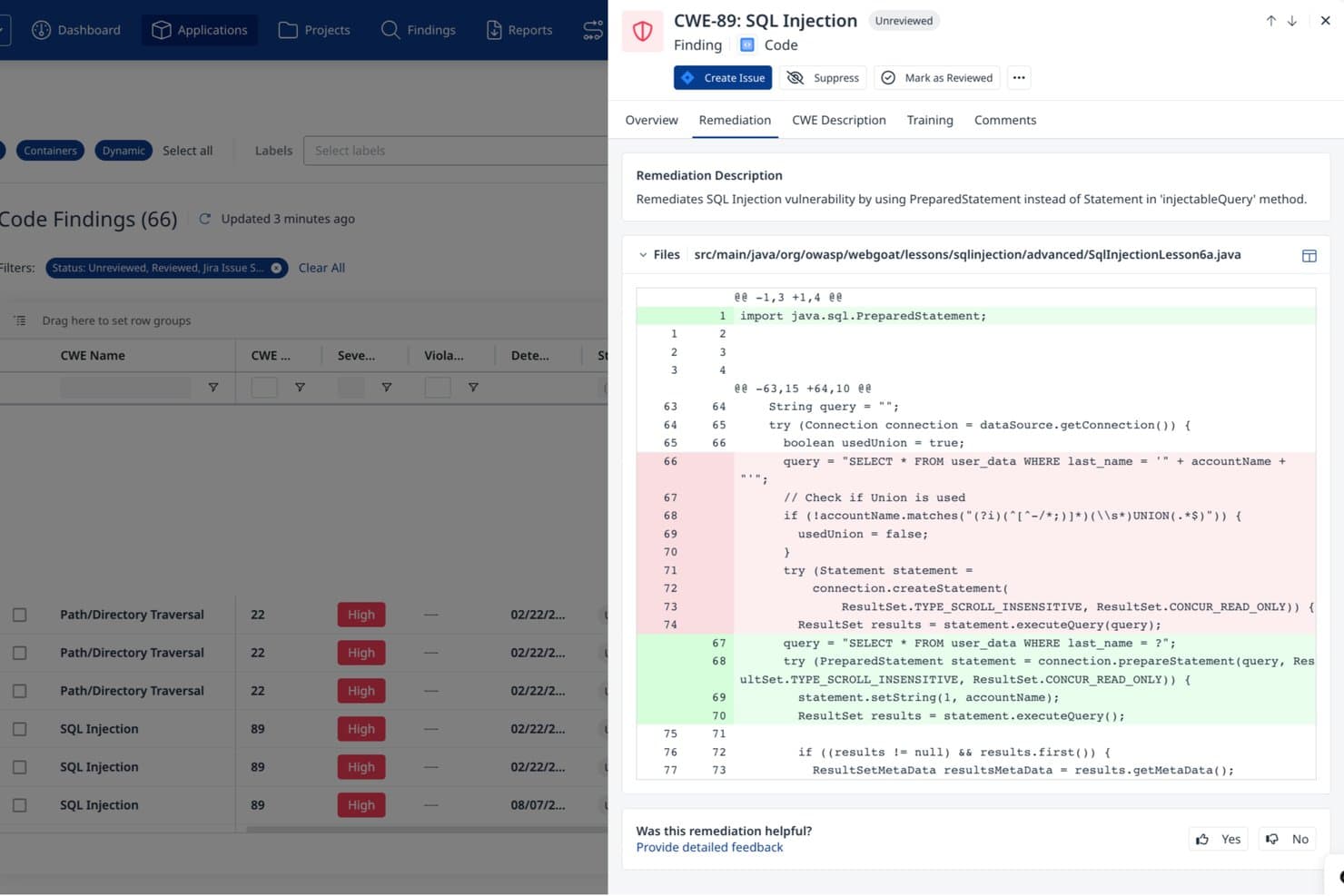
Mend.io provides AI-generated SQL injection remediation with code diff previews. Mend.io is an application security platform that combines SCA, SAST, and container scanning to detect vulnerabilities in open-source dependencies, proprietary code, and container images—with reachability analysis, SBOM generation, and automated dependency remediation built in.
Who Is Mend.io Best For?
Mend.io is a strong fit for application security managers and security-conscious engineering teams that need to prioritize open-source risk based on actual exploitability, not just CVE severity scores.
Why I Picked Mend.io
I picked Mend.io as one of the best because it goes beyond flagging CVEs and actually traces whether your application code calls into a vulnerable function, which is reachability analysis in practice. That distinction matters when you're triaging a backlog of dependency alerts: instead of treating every high-severity finding equally, Mend SCA surfaces only the risks your code can actually reach, using CVSS 4.0 and EPSS data alongside that reachability signal. I also like that malicious package detection covers typosquats, dependency-confusion attacks, and backdoor code, not just known CVEs.
Mend.io Key Features
- Malicious package detection: Scans dependencies for typosquats, dependency-confusion attacks, protestware, and packages containing backdoor or data-exfiltration code.
- SBOM generation and import: Produces SBOMs in SPDX and CycloneDX formats with VEX support, and imports third-party SBOMs for continuous monitoring.
- Unified policy engine: Enforces shared severity, license, and remediation-SLA rules across SAST, SCA, and dependencies, with support for build-blocking and pull-request gating.
- Automated fix pull requests: Opens remediation pull requests targeting the lowest non-vulnerable dependency version, on demand or via configurable workflow rules.
Mend.io Integrations
Mend.io integrates with GitHub, GitLab, Azure DevOps, Jenkins, AWS ECR, Docker, and JFrog Artifactory. Mend API 3.0 supports custom integrations.
Pros and Cons
Pros:
- SBOM exports support SPDX and CycloneDX
- Automated fixes open dependency pull requests
- Reachability narrows dependency triage
Cons:
- Some reviewers report noisy vulnerability alerts
- No documented build provenance verification
Learn more about Mend.io: Best for extensive language and framework coverage
- Free trial available
- Pricing upon request
Visit WebsiteCustomer Rating:4.4/5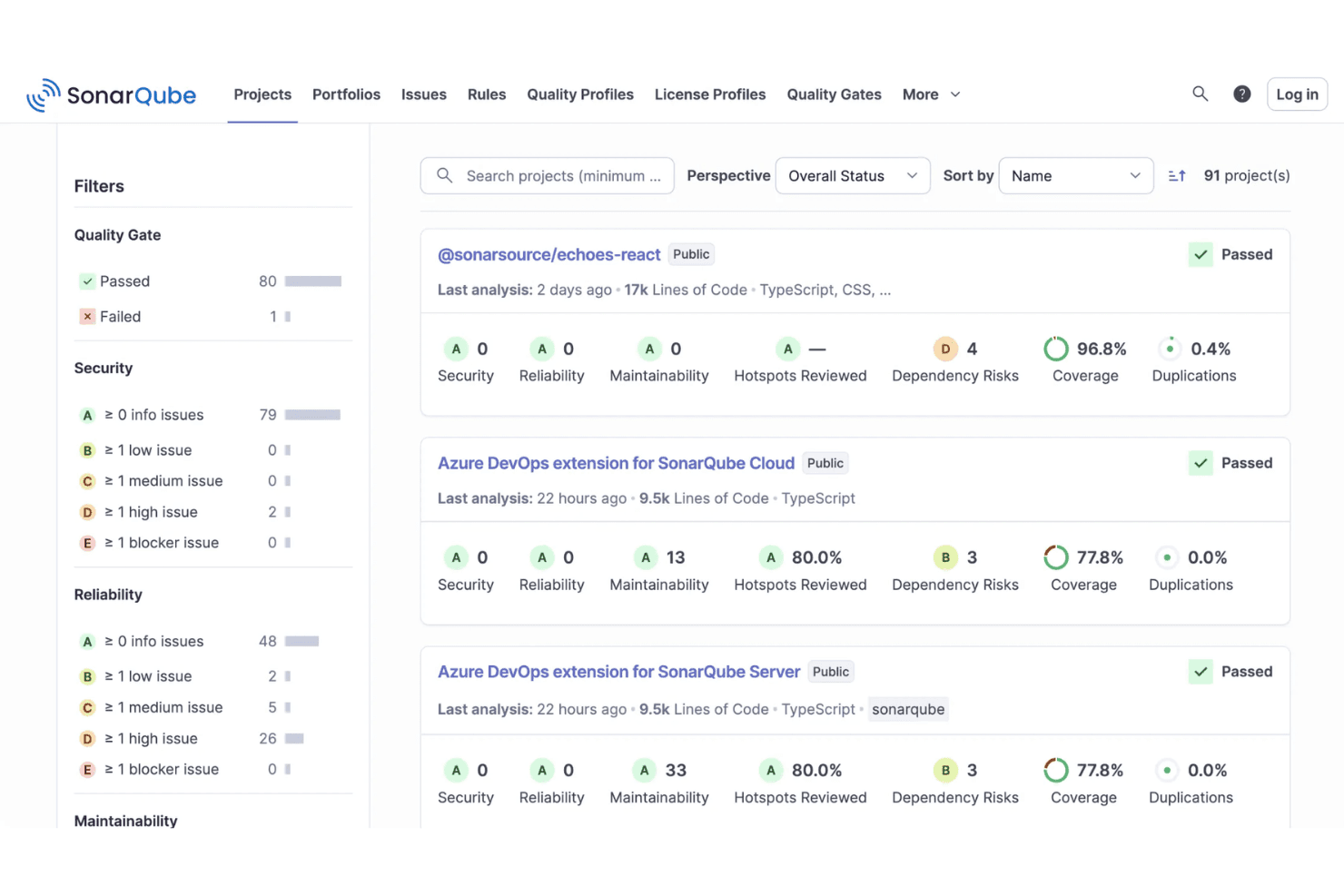
SonarQube displays a project's dashboard with quality gate statuses, security ratings, coverage percentages, and maintainability metrics. SonarQube is a code security and quality analysis platform that combines SAST, SCA, secrets detection, and SBOM generation to scan first-party code, AI-generated code, and open source dependencies.
Who Is SonarQube Best For?
SonarQube is a strong fit for enterprise engineering teams managing large, polyglot codebases across multiple languages, frameworks, and environments.
Why I Picked SonarQube
I picked SonarQube because no other tool on my shortlist covers 40+ languages, frameworks, and IaC technologies in a single platform. I like that it extends to legacy languages like COBOL and ABAP, since supply chain compromises don't discriminate by stack age. Its dependency-aware taint analysis traces data flows from your code into third-party libraries, catching vulnerabilities that a language-siloed scanner would miss.
SonarQube Key Features
- Secrets detection: Finds hard-coded credentials, tokens, and sensitive data before code reaches your repository.
- SBOM generation: Automatically creates and updates a Software Bill of Materials for every project.
- Quality gates: Enforces customized security and quality thresholds in your CI/CD pipeline.
- IDE integration: Delivers instant code insights within popular editors like Visual Studio Code and IntelliJ.
SonarQube Integrations
SonarQube offers native integrations with GitHub, GitLab, Bitbucket, Azure DevOps, Jenkins, Jira, Slack, and supports Visual Studio Code, IntelliJ, and Eclipse. An API is available for custom integrations.
Pros and Cons
Pros:
- Automated SBOM generation and export
- Supports legacy and modern programming languages
- Offers SAST, SCA, and secrets scanning
Cons:
- Secrets scanning sometimes misses encrypted values
- Reports can overwhelm with non-critical findings
Learn more about SonarQube: 4Best for developer-first vulnerability scanning
Snyk
- Free plan + free demo available
- From $25/contributing developer/month
Visit WebsiteCustomer Rating:4.6/5
Snyk asset dashboard displays repository coverage, technology breakdown, and open source risk metrics. Snyk is a software supply chain security platform that provides automated vulnerability detection, code scanning, license compliance, and remediation tools for developers and security teams.
Who Is Snyk Best For?
Development teams and security engineers at technology-driven companies who want automated vulnerability detection and remediation in their software supply chain.
Why I Picked Snyk
I picked Snyk as one of the best because I rely on its developer-first approach to catch vulnerabilities early in the coding process. I like that it scans for malicious code across open source dependencies, container images, and infrastructure as code, helping secure the broader development ecosystem. My team also benefits from insights like dependency metadata and automated remediation suggestions, which make it easier to fix issues quickly without leaving our workflow.
Snyk Key Features
- License compliance management: Tracks and flags open source license issues in dependencies.
- SBOM generation: Automatically creates software bills of materials for every project.
- Custom security policies: Lets you define and enforce organization-specific security rules.
- Integration with CI/CD pipelines: Connects directly to build tools for continuous monitoring.
Snyk Integrations
Snyk offers native integrations with GitHub, GitLab, Bitbucket, Azure DevOps, Jenkins, Jira, Docker Hub, CircleCI, Travis CI, and Slack. An API is available for custom integrations.
Pros and Cons
Pros:
- License compliance tracking for third-party packages
- Automated remediation for detected vulnerabilities
- Real-time scanning of open source dependencies
Cons:
- Advanced features require higher-tier plans
- Limited reporting options for compliance audits
Learn more about Snyk: Best for AI-powered code security
- Free demo available
- Pricing upon request
Visit WebsiteCustomer Rating:4.2/5
Checkmarx dashboard shows project risk levels, policy violations, and dependency-based vulnerability tracking. Checkmarx is a software supply chain security platform that provides automated code scanning, open source risk analysis, and AI-driven threat detection for development teams.
Who Is Checkmarx Best For?
Security and DevOps teams at large enterprises who need automated code and supply chain risk analysis.
Why I Picked Checkmarx
I picked Checkmarx as one of the best because I rely on its AI-driven supply chain risk detection to surface threats that traditional scanners miss. My team uses its automated code analysis and open source risk management to catch vulnerabilities early in our pipelines. I like how it correlates findings across code, dependencies, and infrastructure for a unified risk view.
Checkmarx Key Features
- SBOM generation: Automatically creates software bills of materials for all tracked components.
- Policy management: Lets you define and enforce security policies across projects.
- Dependency graph visualization: Maps relationships and risk across your software supply chain.
- Audit logging: Tracks all user actions and policy enforcement for compliance.
Checkmarx Integrations
Checkmarx offers native integration into the Checkmarx One platform and supports developer workflows with integrations into CI/CD pipelines and source code repositories. An API is available for custom integrations.
Pros and Cons
Pros:
- Supports multi-language and multi-framework projects
- Provides detailed SBOM and dependency mapping
- AI-driven detection of supply chain threats
Cons:
- Reporting customization options are restricted
- False positives can require manual review
Learn more about Checkmarx: Best for end-to-end supply chain security
- 14-day free trial + free plan + free demo available
- From $135/user/month + consumption (billed annually)

Sonatype dashboard shows policy violations, component risk scores, and dependency tracking across applications. Sonatype is a software supply chain security platform that helps organizations identify and reduce security risks across the software development lifecycle. It provides automated policy enforcement, continuous monitoring, vulnerability detection, and license compliance for both open source and proprietary components.
Who Is Sonatype Best For?
Enterprise security and DevOps teams who need automated policy enforcement and monitoring across complex software supply chains.
Why I Picked Sonatype
I picked Sonatype as one of the best because I rely on its automated policy enforcement to keep our software supply chain compliant at every stage. I like that it continuously monitors open source and proprietary components for vulnerabilities and license risks. My team uses its granular policy controls to block risky dependencies before they ever reach production.
Sonatype Key Features
- SBOM generation: Automatically creates software bills of materials for every build.
- Continuous dependency scanning: Monitors third-party libraries for new vulnerabilities.
- Role-based access control: Lets you manage user permissions and restrict sensitive actions.
- Audit logging: Tracks all security events and changes within your CI/CD environment.
Sonatype Integrations
Sonatype offers native integrations with Jenkins, GitHub, GitLab, Bitbucket, Azure DevOps, Bamboo, Nexus Repository, Jira, and Slack. An API is available for custom integrations.
Pros and Cons
Pros:
- License risk detection for third-party libraries
- Detailed SBOM generation for every build
- Automated policy enforcement for open source components
Cons:
- Documentation can be sparse for complex setups
- Limited reporting customization for compliance needs
Learn more about Sonatype: Best for customizable security scanning rules
- Free plan + free demo available
- From $30/contributor/month

Semgrep dashboard displays code findings, secrets detection, and supply chain risk trends over time. Semgrep is a software supply chain security tool that combines code scanning, dependency analysis, and policy enforcement to help teams identify and manage risks across their development workflows.
Who Is Semgrep Best For?
Security engineers and DevSecOps teams at technology-driven companies who need automated code and dependency security across their software supply chain.
Why I Picked Semgrep
I picked Semgrep as one of the best because I rely on its automated code and dependency security to catch vulnerabilities before they reach production. I use its supply chain insights to track open source risks and policy violations across our repositories. My team benefits from its actionable findings, which help us prioritize and remediate issues quickly.
Semgrep Key Features
- Custom rule creation: Lets you write and enforce your own security policies.
- CI/CD pipeline integration: Connects directly with build and deployment workflows.
- SBOM generation: Produces software bills of materials for dependency tracking.
- Third-party package monitoring: Continuously scans for risks in open source libraries.
Semgrep Integrations
Semgrep offers native integrations with GitHub, GitLab, Bitbucket, Azure DevOps, Jenkins, and Jira, and provides an API for custom integrations.
Pros and Cons
Pros:
- Community-driven rule library for rapid updates
- Customizable rules for dependency risk detection
- Fast, code-aware supply chain scanning engine
Cons:
- No native support for binary artifact scanning
- Advanced rule writing requires YAML proficiency
Learn more about Semgrep: Best for policy-based container security
- 14-day free trial + free demo available
- Pricing upon request

Anchore system dashboard displays service health, image scans, and policy enforcement status. Anchore is a software supply chain security platform that provides automated container image scanning, policy enforcement, vulnerability detection, and compliance checks for containerized applications.
Who Is Anchore Best For?
Security and DevOps teams at enterprises running containerized workloads in regulated industries.
Why I Picked Anchore
I picked Anchore as one of the best because I rely on its automated container image scanning and policy enforcement to catch vulnerabilities before deployment. My team uses it alongside SCA tools to analyze open source software and enforce rules that support risk mitigation at every stage of our CI/CD pipeline. I also like that it provides detailed reports on vulnerabilities and policy violations, helping us maintain a secure software supply chain.
Anchore Key Features
- SBOM generation: Automatically creates software bills of materials for container images.
- Multi-registry scanning: Scans images across multiple container registries for vulnerabilities.
- Role-based access control: Lets you manage user permissions and access within the platform.
- REST API: Enables integration with external tools and custom workflows.
Anchore Integrations
Anchore offers native integrations with Jenkins, GitHub, GitLab, Azure DevOps, and Jira, and provides an API for custom integrations. It also supports CI/CD workflows through its API.
Pros and Cons
Pros:
- Supports automated remediation workflows
- Open source engine available for customization
- Strong policy-based container image scanning
Cons:
- Scan speeds can be slow on large images
- Limited support for non-container artifacts
Learn more about Anchore: Best for risk-based code-to-cloud visibility
- Free demo available
- Pricing upon request

Apiiro risk dashboard tracks discovered risks, MTTR metrics, SLA status, and security trends. Apiiro is a software supply chain security platform that provides code risk analysis, CI/CD pipeline monitoring, and automated remediation for development and security teams.
Who Is Apiiro Best For?
Security and engineering teams at large enterprises needing end-to-end risk visibility and remediation across their software supply chain.
Why I Picked Apiiro
I picked Apiiro as one of the best because I rely on its end-to-end risk visibility and remediation across the software supply chain. I use its code risk analysis to identify vulnerabilities early, and its automated remediation workflows help my team address issues before they reach production. I also like how Apiiro maps risks to business context, so we can prioritize what matters most.
Apiiro Key Features
- SBOM management: Lets you generate, track, and manage software bills of materials for all components.
- Policy-driven controls: Enable you to enforce custom security and compliance policies across your pipelines.
- Third-party dependency scanning: Identifies vulnerabilities in open-source and third-party libraries.
- Audit trail and reporting: Provides detailed logs and reports for all risk and remediation activities.
Apiiro Integrations
Apiiro offers native integrations with GitHub, GitLab, Bitbucket, Azure DevOps, Jenkins, Jira, and Slack, and provides an API for custom integrations.
Pros and Cons
Pros:
- Supports SBOM management and export
- Context-aware risk prioritization
- Native integration with major CI/CD tools
- Automated remediation for code and dependencies
- End-to-end risk mapping across pipelines
Cons:
- Scan speeds can be slow on large images
- Limited support for non-container artifacts
Learn more about Apiiro: Best for advanced supply chain threat detection
- 14-day free trial + free plan + free demo available
- From $500/month

ReversingLabs analysis panel shows file risk grading, CVE findings, and extracted component details. ReversingLabs is a software supply chain security platform that delivers advanced threat detection, binary analysis, and continuous monitoring for software artifacts and components.
Who Is ReversingLabs Best For?
Security teams at large enterprises and software vendors who need advanced threat detection and analysis for their software supply chain.
Why I Picked ReversingLabs
I picked ReversingLabs as one of the best because I rely on its advanced threat detection and deep binary analysis to uncover hidden risks across third-party components. My team uses its continuous monitoring to strengthen our cybersecurity posture and catch supply chain threats early, similar to high-profile risks seen in incidents like SolarWinds. I also value its detailed file reputation and malware analysis, which give me confidence in securing both open source and proprietary software.
ReversingLabs Key Features
- Automated policy enforcement: Enforces security policies across the software supply chain.
- SBOM management: Generates and manages software bills of materials for all artifacts.
- Tamper detection: Identifies unauthorized changes in software packages.
- Integration with CI/CD pipelines: Connects directly to build and deployment workflows.
ReversingLabs Integrations
Native integrations are not currently listed. The tool supports integrations via API for custom workflows and can connect to CI/CD pipelines.
Pros and Cons
Pros:
- Tamper detection for software packages
- Automated SBOM generation and management
- Deep binary analysis for software artifacts
Cons:
- Limited open source vulnerability scanning features
- High resource usage for deep analysis
Learn more about ReversingLabs:
Alte instrumente de securitate pentru lanțul de aprovizionare software
Iată câteva opțiuni suplimentare de instrumente de securitate pentru lanțul de aprovizionare software care nu au ajuns pe lista mea scurtă, dar merită totuși analizate:
- 11JFrog XrayBest for continuous binary and container scanning
- 12AikidoBest for CI/CD supply chain protection
- 13ChainguardBest for secure container image supply chains
- 14CycodeBest for unified code and pipeline security
- 15KusariBest for open-source supply chain integrity
- 16ZscalerBest for zero-trust cloud security
- 17VeracodeBest for application supply chain security
- 18WizBest for cloud supply chain visibility
- 19BitsightBest for third-party cyber risk management
- 20IntegrityNextBest for supply chain compliance automation
- 21Nudge SecurityBest for SaaS supply chain discovery
- 22ExigerBest for AI supply chain risk analysis
- 23Everstream AnalyticsBest for predictive supply chain risk insights
- 24ReflectizBest for web supply chain monitoring
How I Evaluate Software Supply Chain Security Tools
I split evaluation into two layers: baseline requirements—SBOM generation, CVE scanning, artifact signing—and the differentiators that show which tools are actually built for supply chain defense.
Core Functionality (Table Stakes For This List)
When I'm selecting tools for my list, I rank each one on a scale from 0 (does not offer the functionality) to 5 (excels in this area) for each core functionality listed below. Then, I calculate the tool's total score into a percentage. Each tool needs to achieve a minimum total score of 65% to be considered for inclusion.
- SBOM Generation & Management: I check whether a tool can auto-generate SBOMs in SPDX and CycloneDX formats per build, since many procurement and compliance workflows now require them at release time.
- Dependency & Vulnerability Scanning: SCA depth matters here—I evaluate language ecosystem coverage, transitive dependency resolution, and whether the tool maps CVEs with context like reachability or EPSS scores.
- Malicious Package Detection: Beyond CVE feeds, I look for proprietary threat intelligence that catches typosquats and dependency confusion attacks across registries like npm, PyPI, and Maven Central.
- CI/CD Pipeline Security: A tool should cover pipeline misconfigurations, exposed secrets, and build integrity checks across platforms like GitHub Actions, GitLab CI, or Jenkins.
- Artifact Integrity & Provenance: I evaluate whether the tool supports signing workflows (Cosign, Sigstore) and generates provenance attestations aligned with SLSA framework levels.
- Policy Enforcement & Compliance: Customizable policy-as-code with CI/CD gating is what I look for—teams need to block builds that violate license or vulnerability thresholds before anything ships.
Once I have a list of tools that meet the criteria, I consider what sets each platform apart.
Differentiating Factors (What Sets Vendors Apart)
Here's how I compare and contrast different vendors:
Standout Features
Reachability analysis is a major differentiator—I look for tools that can tell you whether a flagged CVE actually touches an execution path in your code, not just that it exists in your dependency tree. A curated package firewall adds another layer by letting teams proxy public registries and block risky packages before developers ever pull them. I also evaluate developer-native remediation, like auto-generated fix PRs, since security findings that sit in dashboards instead of reaching devs tend to go unresolved.
Beyond Features
Integration with the DevSecOps stack is one of the first things I evaluate—tools need native CI/CD plugins for platforms like GitHub Actions or GitLab CI, plus connections to artifact registries and ticketing systems like Jira. Compliance alignment matters just as much, especially for teams shipping to regulated buyers who expect NIST SSDF or SLSA attestation documentation. I also consider threat intelligence depth, checking whether a vendor maintains an in-house research team that publishes original findings on emerging package-level threats.
Cum să alegeți instrumentele de securitate pentru lanțul de aprovizionare software
Este ușor să vă pierdeți în liste lungi de funcții și structuri complexe de prețuri. Pentru a vă ajuta să rămâneți concentrat în timp ce parcurgeți procesul dumneavoastră unic de selectare a software-ului, iată o listă de verificare cu factorii de care trebuie să țineți cont:
| Factor | Ce trebuie avut în vedere |
|---|---|
| FactorScalabilitate | Ce trebuie avut în vedereVa putea instrumentul să gestioneze dimensiunea actuală și estimată a bazei dumneavoastră de cod, numărul de utilizatori și numărul de integrări pe măsură ce organizația dumneavoastră se dezvoltă? |
| FactorIntegrări | Ce trebuie avut în vedereSe conectează nativ la sistemele dumneavoastră CI/CD, la depozitele de cod, la sistemele de gestionare a tichetelor și de alertare? Sunt disponibile API-uri pentru fluxuri de lucru personalizate? |
| FactorPosibilitate de personalizare | Ce trebuie avut în vederePuteți adapta politicile, alertele și rapoartele la profilul de risc și la nevoile de conformitate ale organizației dumneavoastră? |
| FactorUșurință în utilizare | Ce trebuie avut în vedereEste interfața intuitivă atât pentru echipele de securitate, cât și pentru cele de dezvoltare? Va necesita instruire extinsă sau asistență continuă pentru utilizarea zilnică? |
| FactorImplementare și integrare inițială | Ce trebuie avut în vedereCât durează configurarea și ce resurse sunt necesare? Există instrumente de migrare, ghiduri pentru integrarea inițială sau asistență dedicată pentru lansare? |
| FactorCost | Ce trebuie avut în vedereSunt nivelurile de preț transparente și previzibile? Costul variază în funcție de utilizare, numărul de utilizatori sau funcții? Fiți atenți la taxele ascunse sau la suplimente. |
| FactorMăsuri de protecție a securității | Ce trebuie avut în vedereCe certificări, standarde de criptare și practici de gestionare a datelor respectă furnizorul? Există jurnale de audit și controale ale accesului? |
| FactorCerințe de conformitate | Ce trebuie avut în vedereInstrumentul respectă standardele de reglementare din industria dumneavoastră (de exemplu, SOC 2, ISO 27001, GDPR)? Poate genera rapoarte pregătite pentru verificarea conformității? |
Ce sunt instrumentele de securitate pentru lanțul de aprovizionare software?
Instrumentele de securitate pentru lanțul de aprovizionare software sunt platforme specializate care ajută organizațiile să identifice, monitorizeze și reducă riscurile din componentele, dependențele și procesele utilizate pentru a construi și livra software. Aceste instrumente scanează codul, bibliotecile terțe și infrastructura pentru a identifica vulnerabilități, urmăresc listele materialelor software și sprijină conformitatea cu standardele de securitate pe parcursul ciclului de viață al dezvoltării.
Funcțiile instrumentelor de securitate pentru lanțul de aprovizionare software
Atunci când selectați instrumente de securitate pentru lanțul de aprovizionare software, urmăriți următoarele funcții esențiale:
- Scanarea vulnerabilităților: Scanează codul sursă, dependențele și containerele pentru vulnerabilități de securitate cunoscute și emergente pe parcursul întregului ciclu de dezvoltare.
- Generarea SBOM: Creează automat o listă a materialelor software pentru a inventaria toate componentele și dependențele din aplicațiile dvs.
- Urmărirea dependențelor: Monitorizează bibliotecile terțe și cu sursă deschisă pentru actualizări, riscuri și probleme de conformitate a licențelor.
- Aplicarea politicilor: Vă permite să definiți și să automatizați politicile de securitate pentru a împiedica pătrunderea codului sau componentelor riscante în mediul dvs.
- Prioritizarea riscurilor: Utilizează contextul și gravitatea pentru a clasifica vulnerabilitățile, ajutând echipele să se concentreze mai întâi asupra celor mai urgente amenințări.
- Integrarea CI/CD: Se conectează direct la fluxurile dvs. de compilare și implementare pentru a automatiza verificările de securitate și pașii de remediere.
- Jurnalizarea auditurilor: Înregistrează acțiunile utilizatorilor, modificările politicilor și evenimentele de securitate pentru conformitate și analiză criminalistică.
- Alerte și raportare: Notifică echipele cu privire la problemele critice și generează rapoarte detaliate pentru părțile interesate și auditori.
- Orientări pentru remediere: Oferă pași aplicabili sau remedieri automatizate pentru a rezolva vulnerabilitățile și configurările incorecte identificate.
Beneficiile instrumentelor de securitate a lanțului de aprovizionare cu software
Implementarea instrumentelor de securitate a lanțului de aprovizionare cu software oferă mai multe beneficii pentru echipa și compania dvs. Iată câteva dintre acestea:
- Reducerea riscului de vulnerabilități: Scanarea și monitorizarea automatizate vă ajută să identificați și să remediați problemele de securitate înainte ca acestea să vă afecteze software-ul sau utilizatorii.
- Conformitate îmbunătățită: Aplicarea integrată a politicilor și jurnalizarea auditurilor facilitează îndeplinirea cerințelor de reglementare și promovarea auditurilor de securitate.
- Răspuns mai rapid la incidente: Alertele în timp real și prioritizarea riscurilor permit echipei dvs. să identifice și să remedieze rapid cele mai urgente amenințări.
- Vizibilitate sporită: Generarea SBOM și urmărirea dependențelor vă oferă o imagine clară a tuturor componentelor din lanțul dvs. de aprovizionare cu software.
- Fluxuri de lucru simplificate: Integrările CI/CD și pașii automatizați de remediere reduc munca manuală și mențin verificările de securitate sincronizate cu dezvoltarea.
- Luarea unor decizii mai bune: Raportarea detaliată și evaluarea riscurilor ajută părțile interesate să înțeleagă nivelul de securitate și să aloce resursele acolo unde este cea mai mare nevoie de ele.
- Colaborare îmbunătățită: Tablourile de bord centralizate și alertele mențin echipele de securitate, dezvoltare și conformitate aliniate în privința riscurilor și acțiunilor comune.
Costurile și prețurile instrumentelor de securitate a lanțului de aprovizionare cu software
Selectarea instrumentelor de securitate a lanțului de aprovizionare cu software necesită înțelegerea diferitelor modele de prețuri și planuri disponibile. Costurile variază în funcție de funcții, dimensiunea echipei, suplimente și multe altele. Tabelul de mai jos sintetizează planurile comune, prețurile medii ale acestora și funcțiile incluse de obicei în soluțiile de securitate a lanțului de aprovizionare cu software:
Tabel comparativ al planurilor pentru instrumentele de securitate a lanțului de aprovizionare cu software
| Tipul planului | Preț mediu | Funcții comune |
|---|---|---|
| Tipul planuluiPlan gratuit | Preț mediu$0 | Funcții comuneScanare de bază a vulnerabilităților, generare SBOM limitată și asistență din partea comunității. |
| Tipul planuluiPlan personal | Preț mediu$10-$30/utilizator/lună | Funcții comuneScanare avansată, aplicarea de bază a politicilor, integrări limitate și asistență prin e-mail. |
| Tipul planuluiPlan de afaceri | Preț mediu$40-$80/utilizator/lună | Funcții comuneIntegrare CI/CD completă, prioritizarea riscurilor, jurnalizarea auditurilor, raportare și asistență standard pentru clienți. |
| Tipul planuluiPlan pentru întreprinderi | Preț mediu$100-$200/utilizator/lună | Funcții comuneGestionarea personalizată a politicilor, instrumente avansate de conformitate, integrare dedicată, asistență premium și SLA-uri. |
Întrebări frecvente despre instrumentele de securitate a lanțului de aprovizionare software
Iată câteva răspunsuri la întrebările frecvente despre instrumentele de securitate a lanțului de aprovizionare software:
Cum ajută instrumentele de securitate a lanțului de aprovizionare software la prevenirea atacurilor asupra lanțului de aprovizionare?
Aceste instrumente scanează codul, dependențele și procesele de compilare pentru a identifica vulnerabilități și modificări suspecte. Prin monitorizarea amenințărilor cunoscute și aplicarea politicilor de securitate, vă ajută să identificați riscurile din timp și să reduceți probabilitatea ca componente compromise să ajungă în mediul de producție.
Se pot integra instrumentele de securitate a lanțului de aprovizionare software cu conducta mea CI/CD existentă?
Da, majoritatea instrumentelor oferă integrări cu platforme CI/CD populare, precum Jenkins, GitHub Actions și GitLab CI. Astfel, puteți automatiza verificările de securitate ca parte a fluxurilor de compilare și implementare, astfel încât vulnerabilitățile să fie semnalate înainte ca versiunea de cod să fie lansată.
Ce este un inventar al componentelor software (SBOM) și de ce este important?
Un SBOM este un inventar detaliat al tuturor componentelor și dependențelor din software-ul dumneavoastră. Este important deoarece vă oferă vizibilitate asupra elementelor din baza de cod, ajută la urmărirea vulnerabilităților și este solicitat din ce în ce mai des pentru conformitatea cu reglementările.
Acceptă aceste instrumente codul cu sursă deschisă și codul proprietar?
Da, majoritatea soluțiilor pot scana atât baze de cod cu sursă deschisă, cât și baze de cod proprietare. De obicei, acestea acceptă o gamă largă de limbaje de programare și manageri de pachete, astfel încât să puteți monitoriza toate activele software pentru a identifica riscurile.
Cât de des ar trebui să efectuez scanări cu aceste instrumente?
Ar trebui să efectuați scanări în mod continuu sau la fiecare trimitere de cod, dacă este posibil. Scanările frecvente asigură identificarea rapidă a noilor vulnerabilități și contribuie la menținerea unei poziții solide de securitate pe măsură ce baza de cod evoluează.