

În calitate de expert cu experiență în software pentru gestionarea confidențialității, înțeleg nevoia dumneavoastră de o alternativă OneTrust eficientă, de la un capăt la altul. Această platformă SaaS, cu module care gestionează GRC, CCPA, controlul accesului, API-ul și gestionarea consimțământului, printre alte funcționalități, vă poate eficientiza considerabil operațiunile.
Capacitățile sale de descoperire și cartografiere a datelor facilitează gestionarea datelor cu caracter personal în conformitate cu diverse legislații globale, iar interfața sa ușor de utilizat vă permite să gestionați eficient detaliile persoanelor vizate. Consider că examinarea acestor opțiuni vă poate ajuta semnificativ să vă soluționați problemele.
Ce este o alternativă la OneTrust?
Alternativele la OneTrust sunt instrumente de gestionare a confidențialității și securității utilizate de companiile care caută funcții diferite sau suplimentare față de cele oferite de OneTrust. De la întreprinderi mici la corporații multinaționale, aceste alternative sunt utilizate în industrii care acordă prioritate confidențialității datelor, securității și conformității.
Acestea răspund unor nevoi diverse, precum gestionarea riscurilor terților, supravegherea furnizorilor, gestionarea consimțământului, conformitatea bazată pe inteligență artificială și gestionarea detaliată a datelor clienților. Fie că este vorba despre automatizarea auditurilor de securitate, eficientizarea proceselor de obținere a consimțământului sau oferirea unei gestionări solide a riscurilor furnizorilor, alternativele la OneTrust oferă organizațiilor soluții specializate, adaptate cerințelor lor unice privind confidențialitatea și securitatea.
Tabel comparativ al alternativelor la OneTrust
Acest tabel comparativ sintetizează detaliile privind prețurile pentru selecțiile mele de top de alternative la OneTrust:
Sorted by: Default
| Tool | Starting Price | Website | |
|---|---|---|---|
Best for automated data mapping | 4.5 out of 5 | Pricing upon request Free demo available | Website |
Best for detailed customer data management | 4.5 out of 5 | $120/month Free plan available; 14-day free trial | Website |
Best for comprehensive vendor oversight | 4.8 out of 5 | Pricing upon request Free demo available | Website |
Best for robust vendor risk management | 2.8 out of 5 | $25,000 Not available | Website |
Best for automated security compliance | 4.6 out of 5 | Pricing upon request Free demo available | Website |
Best for extensive privacy program management | Not rated | Pricing upon request Free demo available | Website |
Best for streamlined consent management | Not rated | Pricing upon request 30-day free trial; free plan available; free demo available | Website |
Best for AI-powered privacy and security | Not rated | Pricing upon request Free demo available | Website |
Best for focused object-oriented analysis | Not rated | Pricing upon request Free demo available | Website |
Best for effective security audits | Not rated | Pricing upon request Free demo available | Website |


Why Trust Our Software Recommendations
6,700+
Reviews
20
Industry experts
16+
Evaluation factors
14
Years
Our team has been testing and reviewing software since 2012. As tech leaders ourselves, we know how difficult—and important—it is to choose the right software.
For this guide, we evaluated tools using hands-on testing and independent research, scoring tools using our selection criteria.
Our reviews reflect our human editorial judgment, not a sales pitch.
Expert reviewers:
- Paulo Gardini MiguelTech Director
 Tim FisherVP of AI
 Gabriel RosasTech Lead & Software Architect
 Christhian GruhnTech Lead & Platform Architect

Recenzii ale celor mai bune alternative la OneTrust
 Best for automated data mapping
- Free demo available
- Pricing upon request
Visit WebsiteCustomer Rating:4.5/5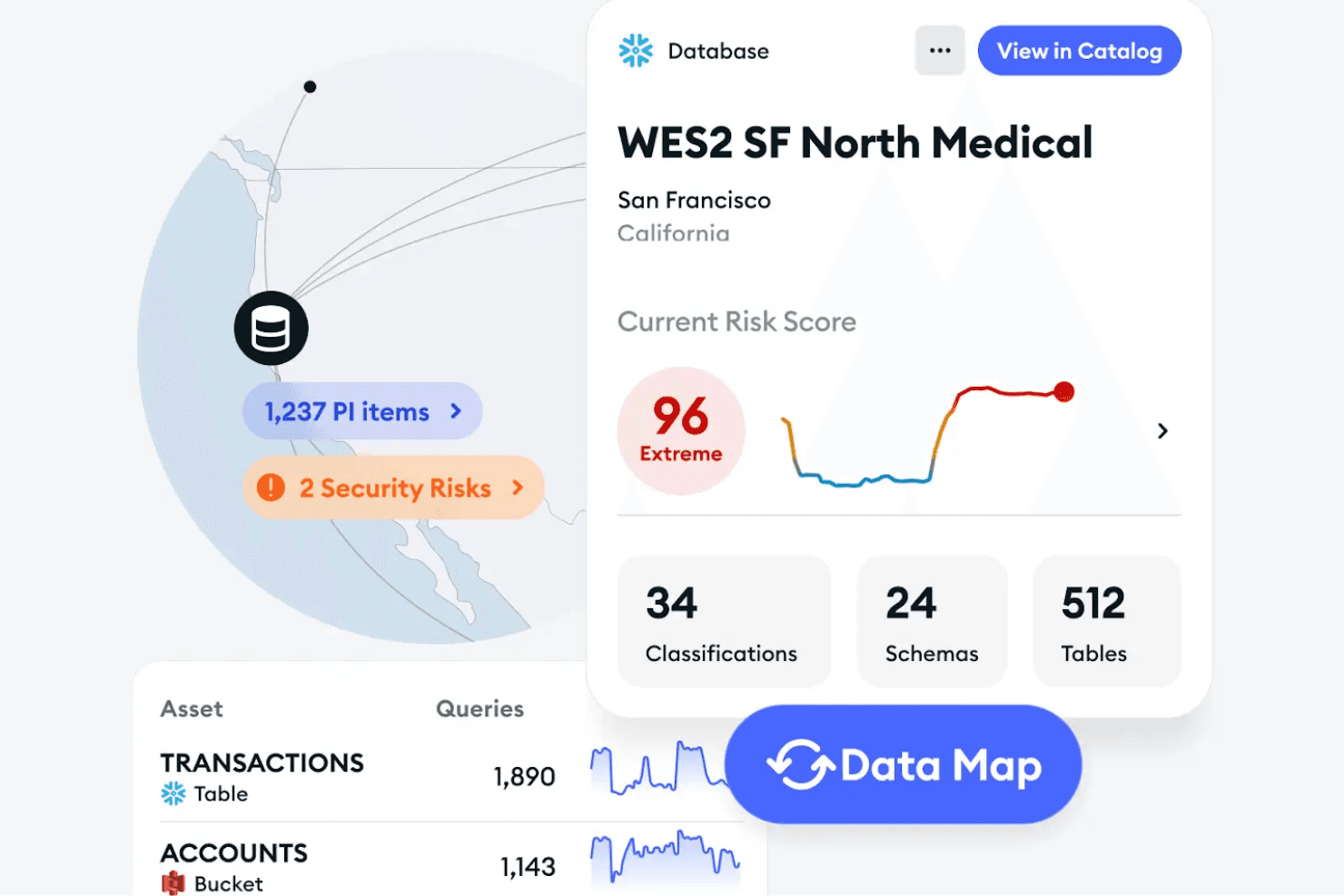
Ketch maps data assets and risk scores across your infrastructure. Ketch is a privacy platform that uses AI agents to automatically discover and classify data across your systems, build a continuously updated data map, and generate records of processing activities for privacy and compliance workflows.
Who Is Ketch Best For?
Ketch is a strong fit for privacy and compliance teams that need to automate data discovery and keep their records of processing activities current across a large, distributed tech stack.
Why I Picked Ketch
I've included Ketch in my top picks because its AI agents do the heavy lifting of data discovery automatically, scanning across 400+ platforms and drilling down from system level to individual data attributes without you having to manually map anything. What I especially like is that the four-phase discovery process keeps your data map continuously updated, so the records of processing activities you generate from it reflect your actual environment rather than a point-in-time snapshot. That real-time ROPA generation is a genuine differentiator when audit season hits.
Ketch Key Features
- Real-time ROPA generation: Automatically produces Records of Processing Activities from live system records in the data map.
- Attribute-level data visibility: Surfaces where sensitive data lives down to the individual column or attribute across connected systems.
- Contract term extraction: Pulls security controls, retention terms, and sub-processor details from contracts and inserts them directly into system records.
- Risk assessment pre-population: Feeds system facts and data categories into DPIA, PIA, TIA, and CCPA assessment workflows automatically.
Ketch Integrations
Ketch lists 1,000+ pre-built data-system integrations, with its directory showing 171, including Snowflake, Google BigQuery, Salesforce, HubSpot, Shopify, Microsoft Entra, Okta, and Google Analytics. It also offers APIs and SDKs for custom integrations.
Pros and Cons
Pros:
- Reviewers praise responsive implementation support
- Attribute-level classification reduces manual inventory work
- Continuous discovery keeps ROPAs current
Cons:
- DSARs and assessments need separate workflows
- Data Mapping doesn't include consent management
Learn more about Ketch: Best for detailed customer data management
- Free plan available; 14-day free trial
- From $120/month
Visit WebsiteCustomer Rating:4.5/5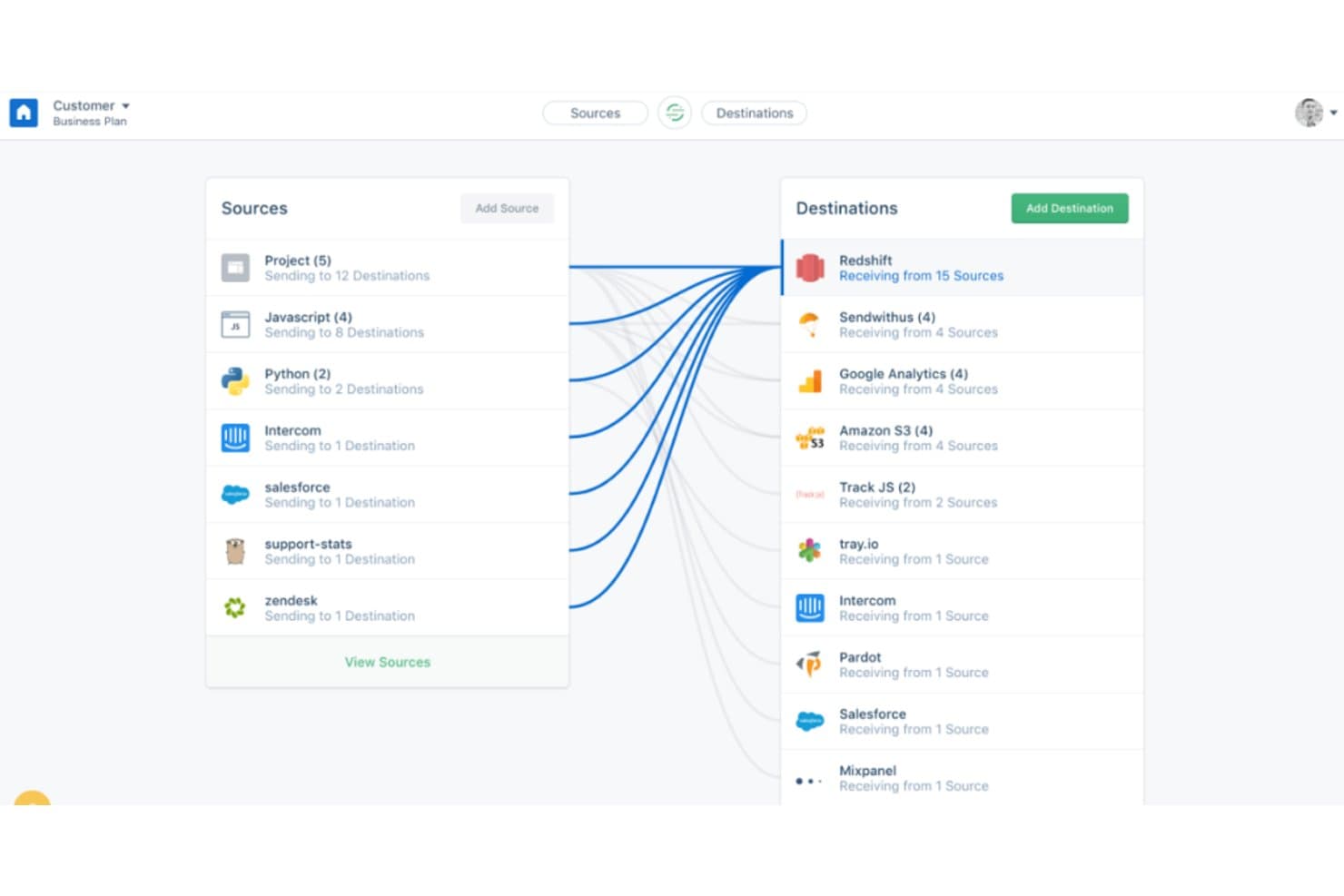
Segment connects multiple data sources to destinations like Redshift. Segment is a customer data pipeline that collects first-party event data from websites, apps, and servers, then routes it to connected tools with consent enforcement and data deletion controls.
Who Is Segment Best For?
Segment is a strong fit for engineering and data teams that need a central pipeline to collect, clean, and route customer event data across a large stack of marketing and analytics tools.
Why I Picked Segment
I've included Segment in my top picks because it gives engineering and data teams a central pipeline to collect, clean, and route first-party customer event data across a large tool stack. I particularly like its data discovery and inventory controls, which let you inspect Sources, Destinations, and Schemas from a single workspace to see exactly what data flows where. Its deletion and suppression API, scoped across all Sources, also lets teams programmatically act on user data rights requests without manual intervention.
Segment Key Features
- Deletion and suppression API: Issue deletion or suppression requests programmatically across all Sources in a workspace, with up to 5,000 user IDs per API call.
- Regional data residency: Choose between US or EU infrastructure to keep customer data stored within a specific geographic region.
- Consent enforcement controls: Map consent categories to destinations so event data only flows to tools that match a user's recorded consent preferences.
- Reverse ETL sync monitoring: Track sync status and delivery rates, view past sync logs, and configure retry settings for failed syncs.
Segment Integrations
Segment offers over 700 integrations, including OneTrust, Snowflake, Databricks, Redshift, BigQuery, and Salesforce. Its Analytics API, Public API, and SDKs support custom event collection and workspace integrations.
Pros and Cons
Pros:
- Deletion APIs support limited privacy requests
- Reviewers praise real-time event debugging
- Centralizes customer events across systems
Cons:
- No formal privacy inventory or risk workflows
- Consent enforcement depends on external CMP
Learn more about Segment: Best for comprehensive vendor oversight
- Free demo available
- Pricing upon request
Visit WebsiteCustomer Rating:4.8/5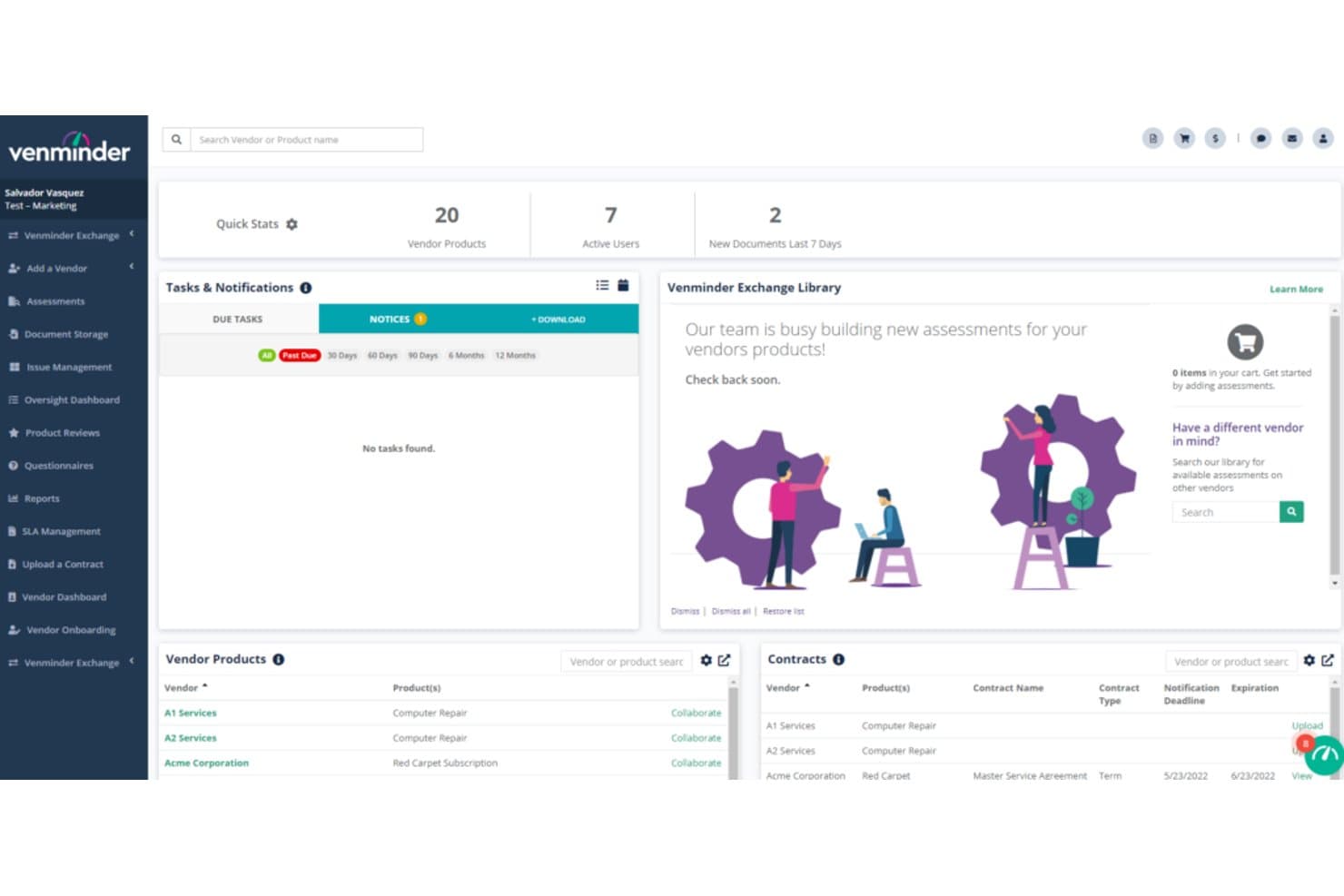
Venminder centralizes vendor products, contracts, and tasks in one dashboard. Venminder is a third-party risk management platform that covers vendor onboarding, risk assessments, contract management, questionnaires, and ongoing oversight across the full vendor lifecycle.
Who Is Venminder Best For?
Venminder fits organizations that need structured vendor lifecycle management, particularly compliance and risk teams handling third-party due diligence across regulated industries.
Why I Picked Venminder
I've included Venminder in my top picks because it handles the full vendor lifecycle in one place, from onboarding and risk assessments to contract management and offboarding. I particularly like its configurable vendor risk assessments, which support inherent and residual scoring, approval workflows, and historical risk-rating storage. One banking team I know cut their annual vendor review cycle from two to three months down to under one month using Venminder's outsourced SOC, financial, and cybersecurity assessments.
Venminder Key Features
- Contract repository: Stores unlimited contracts per vendor with automated renewal and expiration notifications extracted by Venminder paralegals.
- Vendor questionnaire library: Sends, tracks, and scores an unlimited library of questionnaires, including SIG Lite and CAIQ formats, through a secure recipient portal.
- Oversight automation: Auto-assigns oversight tasks based on vendor criticality and risk pairing, with configurable frequency and minimum oversight requirements.
- Continuous vendor monitoring: Tracks vendor risk profiles using vetted intelligence data providers, including integrations with SecurityScorecard and ArgosRisk AR Intelligence.
Venminder Integrations
Venminder has three documented integrations: RSA Archer Third-Party Risk Governance, SecurityScorecard, and ArgosRisk AR Intelligence. An API is available for custom integrations.
Pros and Cons
Pros:
- Reviewers praise responsive support and hands-on training
- Centralizes vendor records, contracts, and risk documents
- Structured vendor risk assessments and due diligence
Cons:
- No privacy-law tracking or dedicated DPIA workflows
- No consent, data mapping, or DSAR automation
Learn more about Venminder: Best for robust vendor risk management
- Not available
- From $25,000 (billing period not stated)
Visit WebsiteCustomer Rating:2.8/5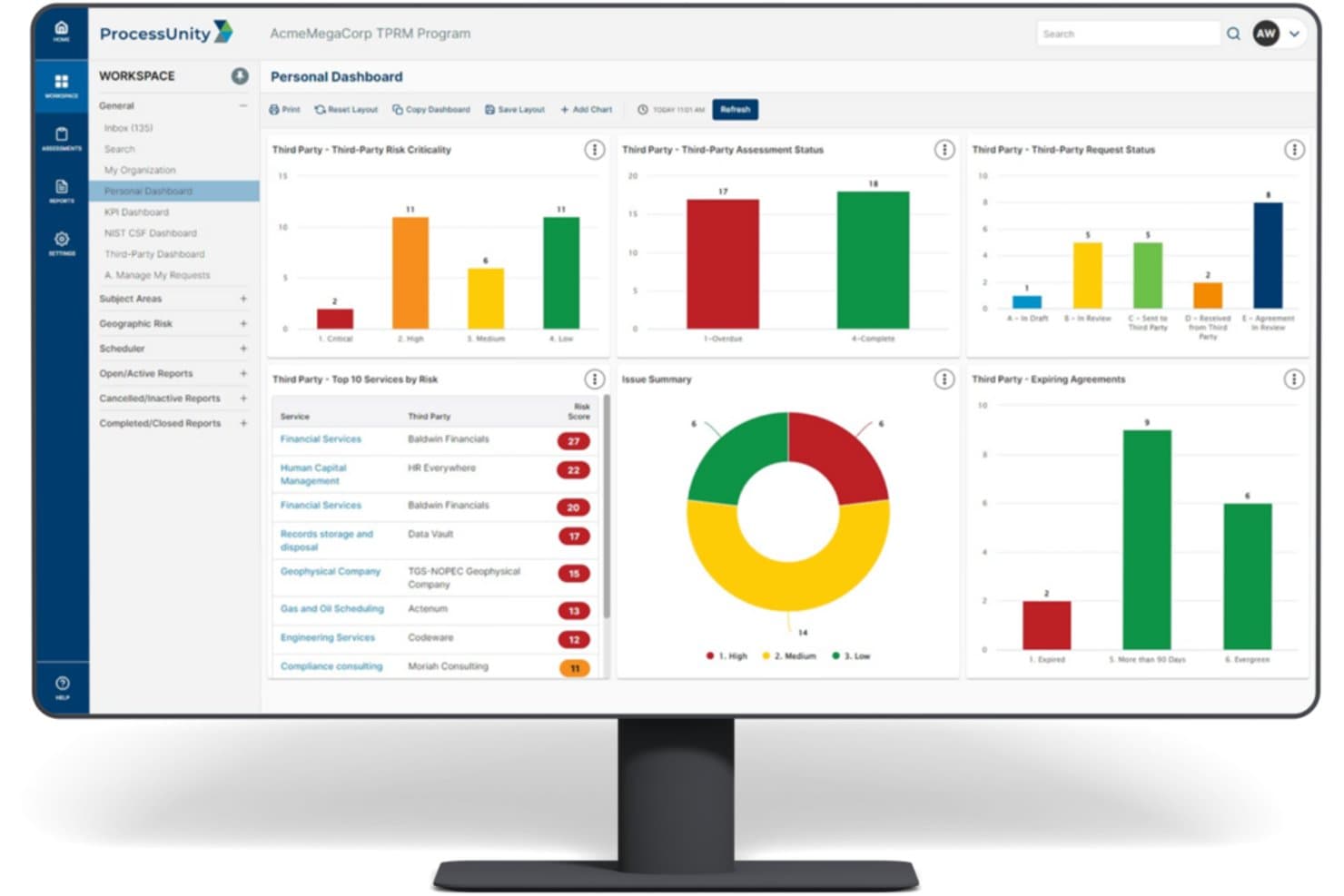
ProcessUnity centralizes third-party risk monitoring in one dashboard. ProcessUnity is a third-party risk management platform that covers vendor onboarding, configurable risk assessments, continuous monitoring, policy lifecycle management, and integration with external risk intelligence providers.
Who Is ProcessUnity Best For?
ProcessUnity suits risk and procurement teams at mid-to-large enterprises that need structured workflows for managing vendor relationships, assessments, and third-party risk programs end to end.
Why I Picked ProcessUnity
I've included ProcessUnity in my top picks because it's one of the strongest dedicated vendor risk management platforms available, and that focus runs deep. I particularly like how the Risk Index combines live threat intelligence with controls data to produce vendor-level risk scores, so your team can prioritize which third parties need immediate attention rather than treating every vendor the same. Its configurable assessment workflows, complete with conditional questionnaires and automated reminders, cover cybersecurity, AI, and resiliency risk domains out of the box.
ProcessUnity Key Features
- Global Risk Exchange: Gives your team access to 18,000+ completed vendor assessments and 370,000+ vendor risk profiles to cut redundant due-diligence work.
- AI Agents: Automated agents pre-screen vendors, analyze SOC 2 reports, gather evidence, and draft remediation communications on your team's behalf.
- Evidence Evaluator: Analyzes submitted vendor documents, maps evidence to controls, and flags gaps so analysts know exactly where to focus their review.
- Policy lifecycle management: Supports policy authoring, version control, distribution, acknowledgment tracking, and escalation alerts for incomplete certifications.
ProcessUnity Integrations
ProcessUnity lists 40+ external risk-data providers and native integrations with OneTrust, ServiceNow, Jira, SAP, Oracle, Workday, Coupa, and Microsoft Active Directory. It also offers an API for custom data feeds.
Pros and Cons
Pros:
- Risk scoring helps prioritize supplier reviews
- Policy workflows create auditable acknowledgments
- Configurable vendor assessments reduce review workload
Cons:
- No DSAR automation or personal-data mapping
- No customer-facing consent or preference management
Learn more about ProcessUnity: Best for automated security compliance
- Free demo available
- Pricing upon request
Visit WebsiteCustomer Rating:4.6/5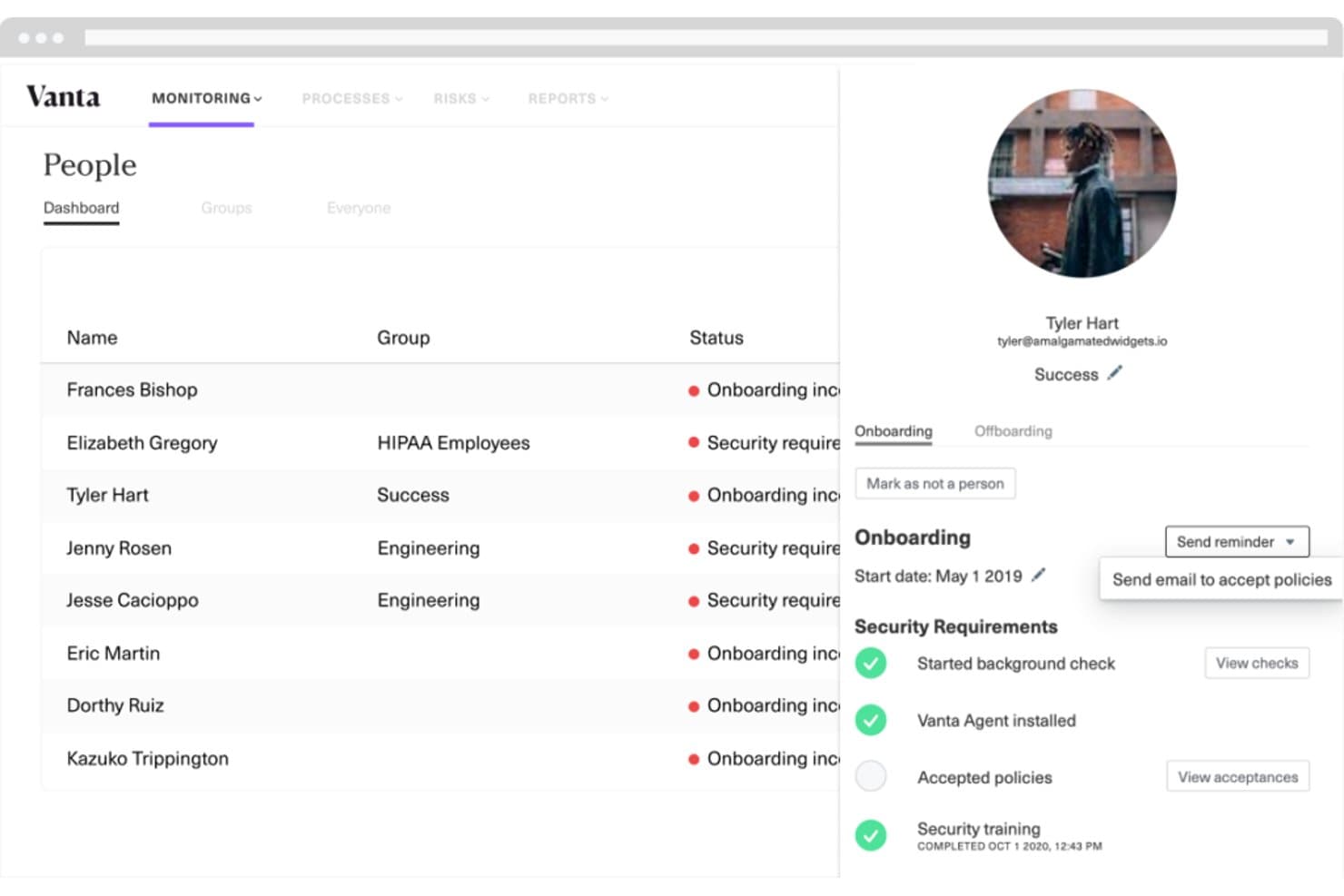
Vanta tracks employee onboarding and security compliance in one place. Vanta is a continuous GRC and security compliance platform that automates evidence collection, controls monitoring, risk assessments, and policy management across frameworks like SOC 2, ISO 27001, and GDPR.
Who Is Vanta Best For?
Vanta is a strong fit for IT security managers and compliance teams at growth-stage companies pursuing or maintaining certifications like SOC 2 and ISO 27001.
Why I Picked Vanta
I've included Vanta in my top picks because it's one of the strongest options available for automated security compliance, particularly if SOC 2 or ISO 27001 certification is on your roadmap. I like how continuous controls monitoring runs in the background, automatically collecting evidence and flagging gaps across 400+ integrations, so your team isn't manually chasing audit artifacts. The AI-powered DPIA and policy generation workflows are genuinely useful when privacy assessments need to move through multi-step approval chains quickly.
Vanta Key Features
- Risk register with vendor linking: Connect third-party vendor findings, including continuous monitoring alerts, directly to risks in a centralized risk register.
- Framework version manager: Review framework changes before publishing updates to your live compliance program, so your team controls when changes take effect.
- Workspaces: Segment compliance programs by business unit within a single Vanta account, with each workspace maintaining its own controls and automation.
- Policy approval chains: Route policies through up to five sequential approval steps, with up to three approvers per step, before tracking employee acceptance.
Vanta Integrations
Vanta reports 400+ pre-built integrations, including AWS, Azure, Google Cloud Platform, GitHub, Jira, Okta, SharePoint, Confluence, and Google Drive. Its REST API supports custom connections to on-premises systems and internal apps.
Pros and Cons
Pros:
- Risk assessments complement security compliance workflows
- Clear dashboards help track compliance status
- Automated evidence collection reduces audit preparation work
Cons:
- DSAR workflows remain early access and manual
- Cookie consent management isn't provided
 Best for extensive privacy program management
- Free demo available
- Pricing upon request
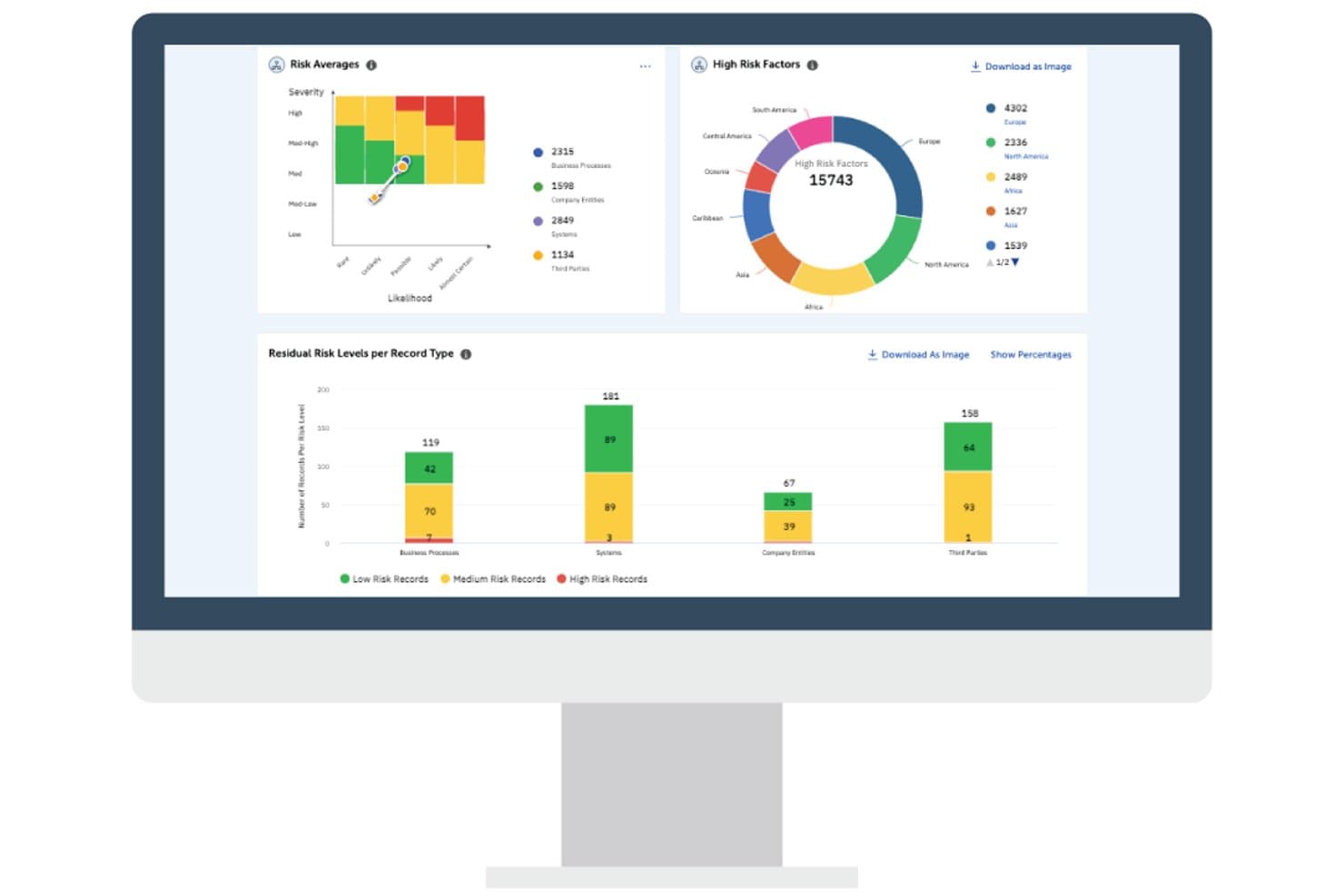
TrustArc visualizes risk levels across business processes and regions. TrustArc is a data privacy management platform that covers consent management, data mapping, individual rights automation, privacy impact assessments, and regulatory compliance tracking across global jurisdictions.
Who Is TrustArc Best For?
TrustArc is a strong fit for privacy and compliance teams at mid-to-large organizations managing programs across multiple jurisdictions and regulatory frameworks.
Why I Picked TrustArc
TrustArc earns its spot on my shortlist because it's built for teams managing privacy programs across many regulations at once, not just one or two. I particularly like how Nymity Research delivers daily alerts on changes across 1,000+ laws and 244+ jurisdictions, so your compliance posture doesn't quietly fall behind when a new regulation drops. The Assessment Manager's 10+ pre-built templates, including DPIAs, transfer impact assessments, and AI risk assessments, give compliance teams a structured way to handle the full assessment lifecycle without building workflows from scratch.
TrustArc Key Features
- Cookie Consent Manager: Scans websites and mobile apps for trackers, categorizes them, and deploys jurisdiction-aware consent banners across 100+ jurisdictions.
- Individual Rights Manager: Automates end-to-end workflows for data subject requests, including identity verification and authorized agent handling.
- Unified Trust Center: A no-code hub for publishing, versioning, and distributing privacy, security, and compliance documents to internal and external audiences.
- 300+ no-code integrations: Connects to tools like Salesforce, HubSpot, Jira, and Microsoft SharePoint via a drag-and-drop integration interface.
TrustArc Integrations
TrustArc offers 300+ no-code integrations and prebuilt connectors, including Salesforce, Microsoft SharePoint, HubSpot, Jira, Google Drive, Marketo, Microsoft Dynamics 365, Adobe Experience Manager, Dropbox, and Salesforce Marketing Cloud. It also provides REST API endpoints for custom integrations.
Pros and Cons
Pros:
- Reviewers praise centralized privacy activity tracking
- Assessment workflows standardize PIA and DPIA reviews
- Daily regulatory alerts cover global jurisdictions
Cons:
- Data mapping may require extensive stakeholder follow-up
- Initial setup can demand substantial IT effort
Learn more about TrustArc: Best for streamlined consent management
- 30-day free trial; free plan available; free demo available
- Pricing upon request
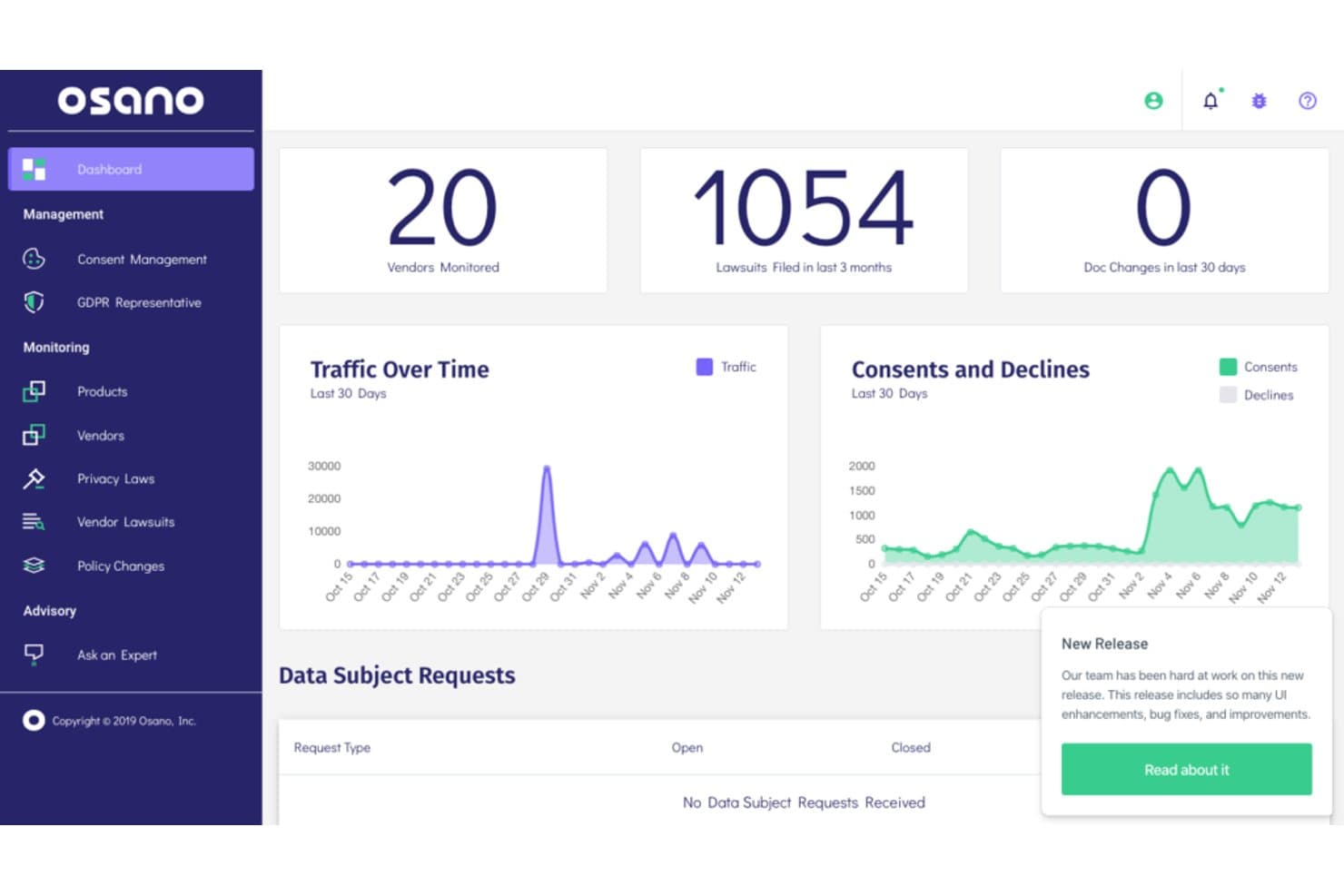
Osano's dashboard lets users monitor vendors, lawsuits, and consent trends. Osano is a data privacy platform that brings together cookie consent, data subject rights, data mapping, vendor risk management, and regulatory compliance monitoring in one place.
Who Is Osano Best For?
Osano is a strong fit for privacy and compliance teams at SMEs that need a focused, faster-to-deploy alternative to enterprise platforms like OneTrust.
Why I Picked Osano
Osano earns its spot on my shortlist because its consent management capabilities are genuinely built around the realities of managing multiple properties across different jurisdictions. I particularly like how its jurisdiction-aware banner rules automatically apply the right consent defaults by country or region, so you're not manually configuring every locale. The platform also blocks unauthorized tags and cookies until consent is given, which means you're not relying on tag managers to do compliance work they weren't designed for.
Osano Key Features
- Data subject request workflow automation: Manages request intake, identity verification, task assignments, due dates, and escalations through a centralized case dashboard.
- Vendor Privacy Risk Score: Scores vendors across 163 privacy criteria and monitors changes to vendor privacy policies and incidents.
- TrustHub policy management: Stores, versions, and auto-generates privacy disclosures with auditable change logs and no-code updates.
- Privacy-law alert subscriptions: Delivers regulatory change summaries by region, covering 95+ privacy laws across 50+ countries.
Osano Integrations
Osano lists 155 Discovery Integrations and 12 Signal Integrations, including native integrations with Google Tag Manager, HubSpot, Mailchimp, and SendGrid. It also supports Vanta and WordPress integrations plus REST APIs, webhooks, and SDKs for custom connectivity.
Pros and Cons
Pros:
- Reviewers praise responsive customer support
- Centralized controls handle many websites
- Jurisdiction-aware consent eases multi-region management
Cons:
- Advanced banner styling options feel limited
- DSAR automation can be difficult to configure
Learn more about Osano: Best for AI-powered privacy and security
- Free demo available
- Pricing upon request
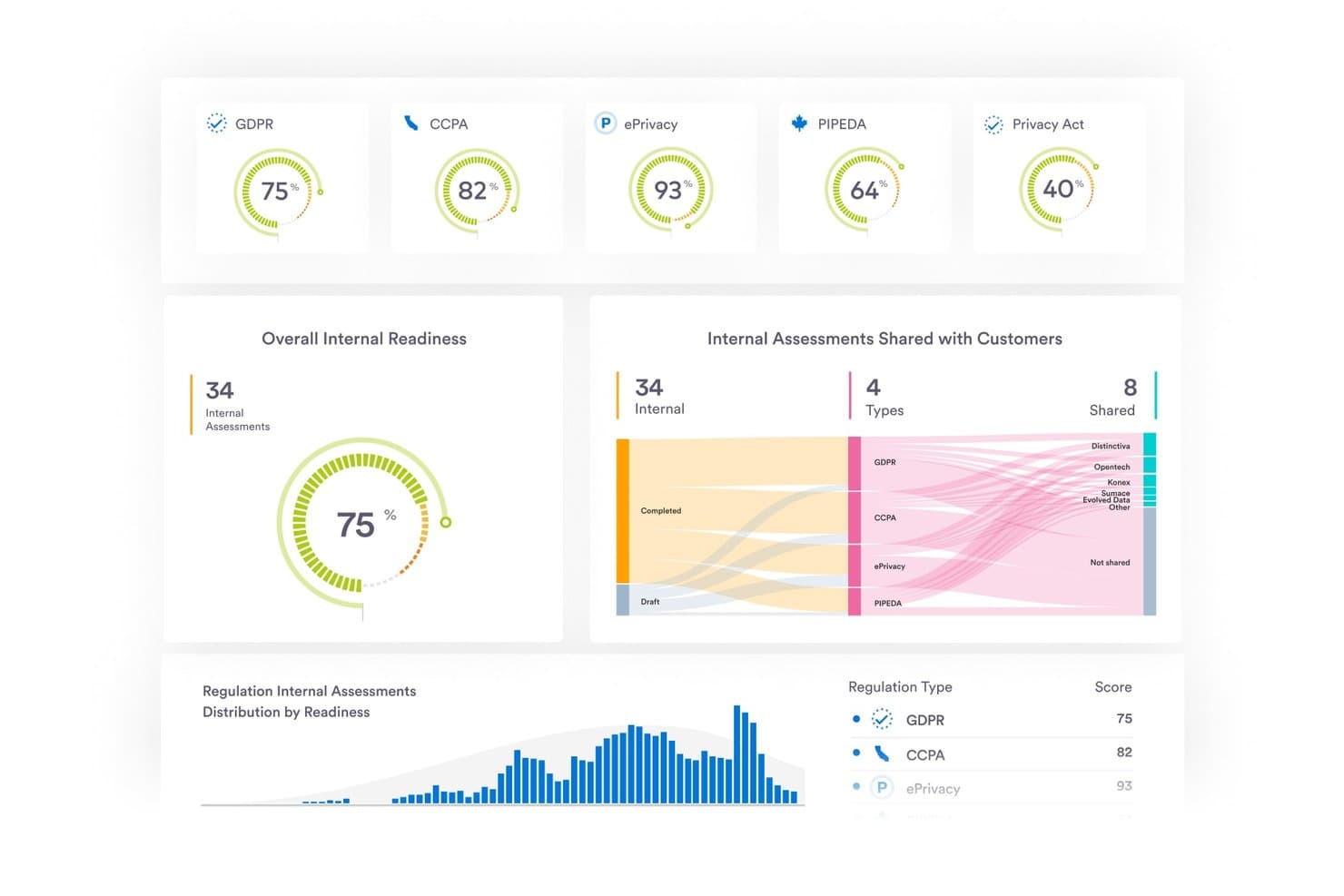
Securiti tracks compliance readiness across GDPR, CCPA, and other regulations. Securiti is a data privacy and security platform that unifies consent management, data subject request automation, AI-powered data discovery and classification, privacy impact assessments, and compliance tracking across hybrid multicloud environments.
Who Is Securiti Best For?
Securiti suits enterprises running data across hybrid multicloud environments that need AI-driven discovery and classification alongside privacy automation.
Why I Picked Securiti
Securiti earns its spot on my shortlist because its AI-powered data discovery goes deeper than most OneTrust alternatives. I'm particularly impressed by how it uses NER, NLP, and contextual analysis to classify sensitive data across structured and unstructured sources, including cloud-native and shadow assets across AWS, Azure, and GCP. Its DataAI Command Graph ties those discoveries to privacy automation like DSAR fulfillment and consent management, so your team isn't just finding data but acting on it.
Securiti Key Features
- Consent management platform: A Google-certified CMP that scans websites, generates customizable cookie banners, blocks unwanted cookies, and maintains a detailed consent audit trail.
- Vendor risk assessment automation: Invites third-party vendors to complete assessments, tracks progress, and generates independent vendor ratings based on security practices and certifications.
- Privacy notice management: Builds, versions, and publishes privacy notices with multi-language auto-translation, stakeholder approval workflows, and scheduled review alerts.
- Data Subject Request workbench: A centralized portal for managing DSR intake, identity verification, task collaboration, encrypted data delivery, and regulatory guidance correlation.
Securiti Integrations
Securiti lists 1,000+ integrations across data and AI systems, including native connections to AWS, Azure, GCP, Databricks, Snowflake, Salesforce, ServiceNow, Okta, and Slack. It also documents 200+ predefined data-repository connectors, custom webhooks, and an API for custom integrations.
Pros and Cons
Pros:
- Centralized consent tracks changes and withdrawals
- Reviewers report faster DSAR turnaround
- AI-driven discovery finds sensitive data across clouds
Cons:
- Assessment workflows reportedly trail OneTrust's maturity
- One reviewer reported inconsistent classification accuracy
Learn more about Securiti:
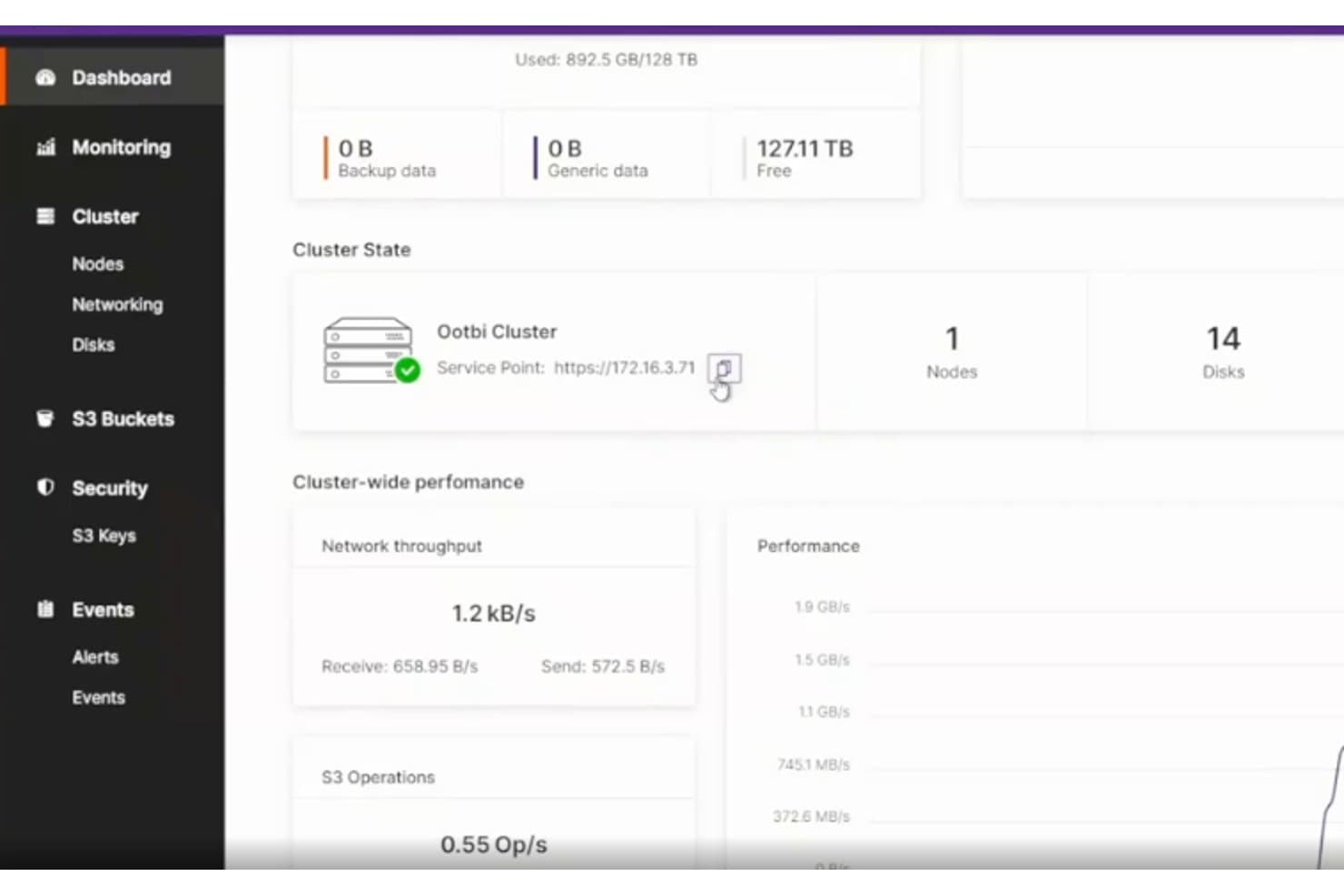
Ootbi provides a real-time cluster dashboard with storage and performance metrics. Ootbi by Object First is a hardened, on-premises backup storage appliance that provides immutable S3 object storage purpose-built for Veeam environments.
Who Is Ootbi Best For?
Ootbi is purpose-built for IT teams running Veeam environments who need hardened, on-premises backup storage with built-in immutability against ransomware.
Why I Picked Ootbi
I've included Ootbi in my top picks because it's purpose-built for focused object-oriented analysis of backup data within Veeam environments. Its S3 Object Lock and Zero Access controls lock backup data at the storage layer, preventing any destructive actions against the firmware, OS, or stored backups. I also like that the Honeypot feature detects suspicious probes and login attempts before they reach your backup infrastructure.
Ootbi Key Features
- Cluster Manager interface: A centralized management console for configuring S3 keys, buckets, MFA settings, and notifications across your Ootbi deployment.
- Fleet Manager dashboard: A cloud-based portal for monitoring storage utilization, hardware health, and threat alerts across multiple Ootbi clusters from a single view.
- Veeam Smart Object Storage API (SOS API) support: Native integration with Veeam's SOS API enables direct-to-object backup jobs without additional configuration layers.
- Multi-node cluster scaling: Supports up to four nodes per cluster with automatic load balancing, scaling from 18 TB to 1.7 PB per cluster.
Ootbi Integrations
Ootbi has native integrations with Veeam Backup & Replication and Microsoft Entra ID. It also provides S3-compatible and Veeam Smart Object Storage APIs for custom connectivity.
Pros and Cons
Pros:
- Reviewers cite fast backup and restore performance
- Reviewers report straightforward appliance setup
- Immutable storage protects backup recovery points
Cons:
- No privacy compliance tracking or risk assessments
- No consent, DSAR, or data-mapping workflows
Learn more about Ootbi:
SecurityPal offers enterprises a trusted security review platform. SecurityPal is a cybersecurity assurance platform that combines AI agents with certified security analysts to handle security questionnaires, vendor risk assessments, and trust center management.
Who Is SecurityPal Best For?
SecurityPal suits security-focused teams that spend significant time completing vendor security questionnaires and managing third-party risk assessments.
Why I Picked SecurityPal
I picked SecurityPal as one of the best because its Vendor Assess module conducts structured, risk-tiered security assessments—Initial, Standard, and Enhanced—where an AI agent researches vendors, maps findings to frameworks, and certified analysts validate the results. Every report includes a risk rating, compliance findings, identified gaps, and recommendations. That's the kind of audit depth that's hard to get from pure software alone.
SecurityPal Key Features
- Security questionnaire concierge: An AI agent drafts responses to incoming security questionnaires using your validated Knowledge Library, and a certified analyst reviews each answer before delivery.
- Trust center: A branded, buyer-facing portal where you can publish security and compliance documents, gate sensitive files behind inline NDAs, and track access activity.
- Knowledge Library: A centralized store for security Q&A pairs, policies, controls, and evidence, with scheduled review cycles, version history, and assigned ownership.
- API access: Three APIs—Concierge, Copilot, and Assurance Profile—let you embed security knowledge and questionnaire workflows into your own tools and systems.
SecurityPal Integrations
SecurityPal claims 700+ native integrations, including Salesforce, HubSpot, Jira, Ironclad, and DocuSign. Its Concierge, Copilot, and Assurance Profile APIs support custom integrations, including Slack and Google Sheets workflows.
Pros and Cons
Pros:
- Trust center shares assurance documentation
- Risk-tiered reports identify security gaps
- Analyst-validated vendor security assessments
Cons:
- No privacy compliance tracking workflows
- No consent or data mapping
Learn more about SecurityPal:
Alte alternative remarcabile la OneTrust
Mai jos este o listă cu alte alternative la OneTrust pe care le-am selectat, dar care nu au ajuns în primele 10. Merită cu siguranță să le analizați.
- 11AravoBest for efficient third-party risk management
- 12MineOSBest for AI-driven privacy compliance
- 13SAI360Best for configurable risk management
- 14EgnyteGood for robust content collaboration
- 15Piwik PROGood for privacy-focused web analytics
- 16LogicGateGood for effective operational risk management
- 17ServiceNow Customer Service ManagementGood for workflow digitization and management
- 18DrataGood for continuous security compliance tracking
- 19LogicManagerGood for risk-based corporate governance
- 20Scrut AutomationGood for streamlining IT processes with automation
- 21SourcepointGood for comprehensive data privacy and compliance
- 22TrustBuilderGood for dynamic identity and access management
- 23DataGrailGood for efficient data privacy management
- 24UpGuardGood for proactive risk management with third-party vendors
- 25SecurityScorecard PlatformGood for comprehensive cyber risk intelligence
- 26CookiebotGood for automated website cookie consent
- 27CookieProGood for global privacy law compliance
- 28ConsentCheqGood for GDPR-compliant customer consent management
How I Evaluate OneTrust Alternatives
I evaluate OneTrust alternatives in two layers: the baseline each tool must meet—consent management, DSAR automation, data mapping—and the differentiators that set the best apart.
Core Functionality (Table Stakes For This List)
When I'm selecting tools for my list, I rank each one on a scale from 0 (does not offer the functionality) to 5 (excels in this area) for each core functionality listed below. Then, I calculate the tool's total score into a percentage. Each tool needs to achieve a minimum total score of 75% to be considered for inclusion.
- Privacy & Consent Management: I check whether the tool handles geo-targeted cookie banners, preference centers, and multi-regulation consent collection across web and mobile properties.
- DSAR Automation: Each platform's ability to automate data subject request intake, identity verification, and fulfillment across connected systems is a key factor I evaluate.
- Data Mapping & Discovery: I look for automated scanning and classification of personal data across cloud and on-prem systems, not just a static spreadsheet-style inventory.
- Risk & Compliance Assessments: The tool should support configurable PIAs, DPIAs, and IT risk assessments mapped to frameworks like ISO 27001, SOC 2, and NIST.
- Third-Party Vendor Risk Management: I evaluate how each platform handles vendor onboarding questionnaires, risk scoring, and ongoing monitoring of supplier compliance posture.
- Policy & Framework Management: Pre-built regulatory frameworks, policy templates, and audit-ready reporting should come ready to use and map controls across multiple standards.
Once I have a list of tools that meet this criteria, I consider what sets each platform apart.
Differentiating Factors (What Sets Vendors Apart)
Here's how I compare and contrast different vendors:
Standout Features
I look for AI-powered automation that handles tasks like data classification and risk scoring without manual intervention. A regulatory intelligence feed matters too, especially for teams tracking evolving privacy laws across multiple jurisdictions. Developer-friendly APIs are another differentiator I evaluate, since DevSecOps teams need to embed compliance checks directly into CI/CD pipelines. Finally, a no-code workflow builder lets privacy and compliance staff configure assessments and processes without filing engineering tickets.
Beyond Features
Integration depth is a major factor I evaluate. Platforms need native connectors to tools like Okta, ServiceNow, and major cloud providers to support DSAR fulfillment and risk workflows. Deployment and data residency options also matter, particularly for global teams that require regional hosting to satisfy sovereignty requirements. I consider pricing transparency too, since OneTrust's bundled enterprise licensing model is a common reason teams start exploring alternatives. Modular pricing that scales as you adopt new modules can significantly reduce total cost of ownership.
Cele mai frecvente întrebări despre alternativele la OneTrust (Întrebări frecvente)
Care sunt beneficiile utilizării alternativelor la OneTrust?
Utilizarea alternativelor la OneTrust poate oferi o serie de beneficii, precum opțiuni de preț diverse, seturi de funcții diferite și orientări distincte către anumite aspecte ale confidențialității și gestionării riscurilor. Unele alternative pot oferi interfețe mai intuitive sau servicii superioare pentru clienți. În plus, diferite instrumente se pot potrivi mai bine anumitor dimensiuni de afaceri sau industrii.
Cât costă de obicei aceste alternative la OneTrust?
Prețurile acestor alternative pot varia foarte mult, în funcție de complexitatea instrumentului și de funcțiile oferite. Unele instrumente pot avea prețuri pe niveluri, astfel încât plătiți mai mult pentru acces la funcții sau capacități suplimentare.
Care sunt modelele de preț obișnuite pentru alternativele la OneTrust?
Modelele de preț pentru aceste alternative depind adesea de numărul de utilizatori, de amploarea operațiunilor și de funcțiile incluse. Multe instrumente oferă structuri de preț pe niveluri, în care funcțiile de bază sunt disponibile la un cost mai redus, iar funcțiile premium au un preț mai ridicat. Unele oferă, de asemenea, abonamente anuale sau lunare.
Care este intervalul de preț obișnuit pentru alternativele la OneTrust?
Prețurile acestor alternative pot varia de la doar 20 $ per utilizator pe lună pentru versiunile de bază până la câteva sute de dolari per utilizator pe lună pentru ofertele mai avansate.
Care sunt cele mai ieftine și cele mai scumpe alternative la OneTrust?
Costul acestor instrumente poate varia semnificativ în funcție de funcțiile și capacitățile specifice oferite. La data limită a cunoștințelor mele, în septembrie 2021, nu erau disponibile informații precise despre instrumentele care sunt cele mai ieftine sau cele mai scumpe. Pentru cele mai exacte informații, trebuie să verificați cele mai recente prețuri pe site-ul fiecărui instrument.
Există alternative gratuite la OneTrust?
Există puține alternative gratuite la OneTrust, dacă există, care să ofere aceeași amploare de funcții. Multe instrumente oferă versiuni de încercare gratuite sau versiuni gratuite cu funcționalități limitate, însă pentru funcții complete de gestionare a confidențialității și a riscurilor este, de obicei, necesar un instrument plătit.
Care sunt cele cinci beneficii ale utilizării alternativelor la OneTrust?
Alternativele la OneTrust pot oferi beneficii precum:
- Opțiuni de preț mai flexibile
- Seturi de funcții diferite, care se potrivesc mai bine nevoilor dumneavoastră specifice
- Interfețe pe care unii utilizatori le pot considera mai intuitive sau mai ușor de utilizat
- Servicii pentru clienți sau asistență potențial mai bune
- O potrivire mai bună pentru anumite dimensiuni de afaceri sau industrii
Oferă alternativele la OneTrust funcții similare?
Multe alternative la OneTrust oferă funcții similare, inclusiv gestionarea conformității, evaluarea riscurilor și gestionarea confidențialității datelor. Totuși, setul exact de funcții poate varia de la un instrument la altul, așa că este important să evaluați cu atenție fiecare alternativă pentru a găsi cea mai potrivită opțiune pentru nevoile dumneavoastră specifice.