


Resolve versus Aisera: Vergelijking & deskundige beoordelingen voor 2026
Resolve en Aisera zijn platforms voor enterprise-servicemanagement en automatisering die AI op verschillende manieren inzetten. Ontdek hoe ze zich tot elkaar verhouden op het gebied van autonome probleemoplossing, workfloworkestratie, prijzen en geschiktheid voor complexe IT-omgevingen.

We review tools independently, and commissions help fund our testing. See our transparency policy, our methodology, or suggest a tool.
IT service management gets harder when incidents span multiple systems, automation requires constant tuning, and service teams still depend on manual handoffs. The right platform should do more than surface answers—it should help move work toward resolution.
If you’re comparing Resolve and Aisera, you’re likely looking for service management software that can reduce ticket volume and automate more of the work behind IT support. Resolve focuses on autonomous resolution and orchestration across ITSM, infrastructure, network, security, and legacy systems, while Aisera emphasizes conversational AI, self-service, and agentic workflows across enterprise support.
In this article, I compare their features, pricing, security, usability, and best use cases to help you choose the better fit.
Resolve
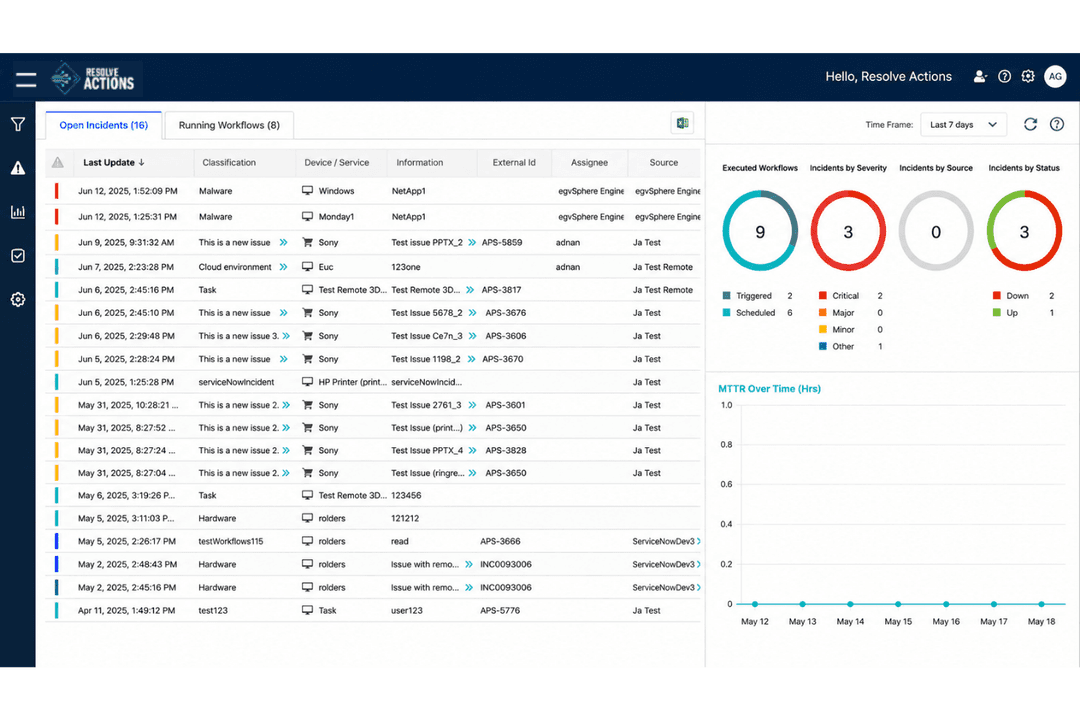
5/5
- Free demo available
- Pricing upon request
Aisera

4.5/5
- Free demo available
- Pricing upon request
Waarom u onze softwareaanbevelingen kunt vertrouwen
6,700+
Reviews
20
Industry experts
16+
Evaluation factors
14
Years
Ons team test en beoordeelt software sinds 2012. Als technologieleiders weten we zelf hoe moeilijk — en belangrijk — het is om de juiste software te kiezen.
Voor deze gids hebben we tools geëvalueerd met behulp van praktijktests en onafhankelijk onderzoek, waarbij we tools beoordeeden aan de hand van onze selectiecriteria.
Onze reviews weerspiegelen ons menselijke redactionele oordeel, geen verkooppraatje.
Deskundige beoordelaars:
- Paulo Gardini MiguelTechnisch directeur
 Tim FisherVP AI
 Gabriel RosasTech Lead & software-architect
 Christhian GruhnTech Lead & platformarchitect

| Resolve | Aisera | |
|---|---|---|
| Free Trial | Free demo available | Free demo available |
| Pricing | Pricing upon request | Pricing upon request |
Prijzen en verborgen kosten van Resolve versus Aisera
Resolve gebruikt aangepaste, vaste prijzen die voorspelbaar blijven naarmate de automatisering wordt uitgebreid, zonder automatiseringskosten op basis van gebruik of tokens. Aisera gebruikt ook aangepaste prijzen, waarbij de offertes worden gebaseerd op de behoeften en implementatievereisten van elke organisatie. Omdat geen van beide exacte prijzen publiceert, moet je contact opnemen met beide leveranciers voor een offerte op maat.
Het belangrijkste verschil is de voorspelbaarheid. Resolve legt de nadruk op een model met vaste kosten en omvat professionele diensten voor de eerste vijf gebruiksscenario's of agents, terwijl de uiteindelijke kosten van Aisera sterker afhangen van de omvang van de implementatie. Ik zou implementatie, integraties, ondersteuning en kosten voor toekomstige uitbreiding vergelijken naast de initiële offerte.
| Resolve | Aisera | |
|---|---|---|
| API | Yes | Yes |
| Batch Permissions & Access | Yes | No |
| Contact Management | No | No |
| Dashboard | Yes | Yes |
| Data Export | Yes | Yes |
| Data Import | Yes | Yes |
| Data Visualization | Yes | Yes |
| External Integrations | Yes | Yes |
| Notifications | Yes | Yes |
| Third-Party Plugins/Add-Ons | Yes | No |
| Workflow Management | Yes | Yes |
| Integratie | Resolve | Aisera |
|---|---|---|
| IntegratieServiceNow | Resolve✅ | Aisera✅ |
| IntegratieJira | Resolve✅ | Aisera❌ |
| IntegratieSalesforce | Resolve✅ | Aisera✅ |
| IntegratieSlack | Resolve✅ | Aisera✅ |
| IntegratieMicrosoft Teams | Resolve✅ | Aisera✅ |
| IntegratieZendesk | Resolve✅ | Aisera✅ |
| IntegratieBMC Helix | Resolve✅ | Aisera✅ |
| IntegratieWorkday | Resolve✅ | Aisera✅ |
| IntegratieOkta | Resolve✅ | Aisera✅ |
| IntegratieAWS | Resolve✅ | Aisera❌ |
| IntegratieAPI | Resolve✅ | Aisera✅ |
Zowel Resolve als Aisera integreren met een breed scala aan ITSM-, cloud-, samenwerkings-, identiteits- en infrastructuurtools, waardoor beide kunnen worden ingepast in een bestaande bedrijfsstack. Resolve richt zich sterker op het gebruik van deze verbindingen voor orkestratie en herstel tussen verschillende systemen, terwijl Aisera integraties gebruikt ter ondersteuning van AI-gestuurde serviceworkflows, selfservice en ticketoplossing binnen verspreide supportomgevingen.
| Factor | Resolve | Aisera |
|---|---|---|
| FactorToegangsbeheer | ResolveMaakt gebruik van RBAC, goedkeuringspoorten, functiescheiding en beleidscontroles om te beperken wat gebruikers, agents en automatiseringen kunnen uitvoeren. | AiseraMaakt gebruik van machtigingshiërarchieën en toegangscontroles om bedrijfsgegevens en AI-interacties te beheren. |
| FactorGegevensversleuteling | ResolveBeschermt gegevens en systeemverbindingen met versleutelingscontroles binnen automatiserings- en integratiewerkstromen. | AiseraMaakt gebruik van versleutelingscontroles voor gegevens tijdens transport en in rust binnen de AI-serviceomgeving. |
| FactorNaleving van regelgeving | ResolveOndersteunt de vereisten van SOC 2, ISO 27001, GDPR, EU-US DPF, HIPAA/HITRUST en CCPA voor gereguleerde bedrijfsomgevingen. | AiseraOndersteunt SOC 2, ISO 27001, GDPR, HIPAA/BAA, CCPA en CSA STAR Level 1. |
| FactorBetrouwbaarheid | ResolveMaakt gebruik van zelfherstellende automatisering, gebeurtenisgestuurde probleemoplossing en failover van gateways met hoge beschikbaarheid om services actief te houden en snel van storingen te herstellen. | AiseraMaakt gebruik van AI-gestuurde probleemdetectie en proactieve incidentanalyse om problemen vroegtijdig te identificeren en serviceonderbrekingen te beperken. |
| FactorBesturing van automatisering en AI | ResolveMaakt gebruik van goedkeuringspoorten, regels voor terugdraaien, audittrails en beleidsgebonden uitvoering om te bepalen wat AI-agents en geautomatiseerde werkstromen mogen doen. | AiseraMaakt gebruik van controles voor AI-besturing op het gebied van gegevenstoegang, privacy, transparantie en verantwoorde AI-praktijken. |
Over het algemeen ondersteunen beide platforms bedrijfsbeveiliging en naleving, maar Resolve geeft IT-leiders directere controle over de manier waarop geautomatiseerde en AI-gestuurde acties in systemen worden uitgevoerd. De combinatie van RBAC, goedkeuringspoorten, regels voor terugdraaien, audittrails, GovCloud-hosting en wereldwijde dataresidentie is bijzonder nuttig in complexe of gereguleerde omgevingen. Aisera biedt ook sterke AI-besturing en flexibele implementatiemogelijkheden, maar de uitvoeringscontroles van Resolve bieden een duidelijker voordeel voor teams die gevoelige IT-activiteiten automatiseren.
| Factor | Resolve | Aisera |
|---|---|---|
| FactorGebruikersinterface | ResolveCombineert AgentLab, visuele automatiseringstools en bouwmogelijkheden voor werkstromen met weinig code om agents en operationele processen binnen IT-systemen te beheren. | AiseraBiedt een AI-gerichte interface met hulpmiddelen in natuurlijke taal en mogelijkheden zonder of met weinig code voor het bouwen van servicewerkstromen. |
| FactorInwerkproces | ResolveOmvat gespecialiseerde professionele diensten voor het configureren van de eerste vijf gebruiksscenario's of agents, waarbij het inwerkproces doorgaans vijf dagen tot een maand duurt. | AiseraBiedt begeleid inwerken voor bedrijven, waarbij de implementatie-inspanning varieert afhankelijk van integraties, agents en implementatieomvang. |
| FactorConfiguratie van werkstromen | ResolveBiedt meer dan 5.000 vooraf gebouwde automatiseringen naast visuele, AI-ondersteunde opties en opties voor eigen code, waardoor er minder vanaf nul hoeft te worden gebouwd. | AiseraBiedt meer dan 1.000 vooraf gebouwde acties en hulpmiddelen zonder of met weinig code voor het creëren van geautomatiseerde werkstromen. |
| FactorOndersteuningsbronnen | ResolveBiedt een speciaal ondersteuningsportaal, documentatie, trainingsmateriaal en praktische professionele diensten tijdens de initiële implementatie. | AiseraBiedt documentatie en platformbronnen voor het instellen en beheren van agents en werkstromen. |
| FactorAanpasbaarheid | ResolveOndersteunt deterministische werkstromen, beheerde AI-agents, API's, aangepaste code en integraties binnen cloud-, netwerk-, ITSM- en oudere omgevingen. | AiseraOndersteunt configuratie van zonder code tot uitgebreide code, herbruikbare werkstromen, integraties en orkestratie van agents. |
Wat gebruiksgemak betreft combineert Resolve begeleid inwerken met een uitgebreide bibliotheek van vooraf gebouwde automatiseringen, waardoor teams minder vanaf nul hoeven te bouwen. Aisera legt ondertussen de nadruk op het creëren van agents in natuurlijke taal en configuratie zonder of met weinig code, waardoor de AI-hulpmiddelen toegankelijk zijn voor verschillende beheerdersrollen. Beide platforms kunnen complexe implementaties ondersteunen, maar Resolve is mogelijk beter geschikt voor IT-teams die sneller toegang willen tot bewezen automatiseringsinhoud en praktische implementatieondersteuning.
Resolve
- Orchestrates workflows across ITSM, observability, cloud, network, and legacy systems
- Combines deterministic workflows with governed AI agents for more predictable execution
- Uses flat pricing that avoids variable usage- or token-based automation costs
- No native ticketing, so teams still need a separate ITSM platform
- No built-in monitoring, requiring existing observability tools
- Smaller market presence than larger vendors like ServiceNow and BMC
Aisera
- AI-driven ticket routing reduces manual triage for IT teams
- Conversational AI chatbot supports advanced self-service workflows
- Strong automation for repetitive support and incident tasks
- Setup and implementation can require significant upfront effort
- Limited real-time analytics compared to some competitors
- Pricing can be high for smaller IT organizations
Resolve
- Large EnterprisesOrganizations with large, complex IT environments can use Resolve to automate workflows across ITSM, cloud, infrastructure, and legacy systems.
- Financial ServicesBanks and financial institutions can automate incident response, access management, compliance workflows, and other processes where uptime and auditability matter.
- ManufacturingManufacturers can automate service requests, infrastructure remediation, and cross-system workflows across plants, sites, and enterprise systems.
- PharmaceuticalsPharmaceutical companies can use governed automation across regulated environments, including access, incident, infrastructure, and service workflows.
- RetailLarge retailers can automate IT operations across distributed stores, e-commerce systems, infrastructure, and service desks.
- TelecommunicationsTelecom teams managing large networks and hybrid environments can automate operational workflows, remediation, and service processes across multiple systems.
Aisera
- Enterprise IT DepartmentsYou get scalable automation for complex internal service requests and system integrations.
- Financial Services FirmsAisera helps manage high compliance demands and strict documentation requirements with robust recordkeeping.
- Healthcare OrganizationsThe platform’s secure, AI-powered responses and audit trails support sensitive patient and operational inquiries.
- Global Customer SupportYou handle high volumes and varied languages, taking advantage of Aisera’s multi-channel and multilingual support.
- SaaS Growth TeamsAisera helps support teams maintain speed and quality as user bases expand rapidly.
- Hybrid or Remote WorkforcesAI-driven self-service is ideal for distributed teams dealing with mixed technical and business needs.
Wie zou Resolve moeten gebruiken en wie Aisera?
Resolve is het meest geschikt voor grote ondernemingen en complexe hybride omgevingen die automatisering nodig hebben voor uitvoering binnen ITSM-, monitoring-, cloud-, netwerk- en oudere systemen. Ik zou het kiezen voor IT- en serviceteams die diepgaandere systeembrede probleemoplossing, beheerde automatisering en voorspelbare kosten willen zonder hun bestaande ITSM-tools te vervangen.
Aisera past daarentegen bij organisaties met grote ticketvolumes, uiteenlopende gegevensbronnen en een sterke behoefte aan AI-gestuurde selfservice. Het kan goed werken voor bedrijfs-IT, gereguleerde sectoren, snelgroeiende SaaS-bedrijven en gedistribueerde supportteams. Uiteindelijk is Resolve de sterkere keuze voor end-to-end-IT-automatisering en orkestratie, terwijl Aisera logischer is wanneer conversationele ondersteuning en AI-gestuurde selfservice de prioriteit zijn.
| Resolve | Aisera | |
|---|---|---|
| Cross-System Resolution | Resolve Executes automation end to end across ITSM, NetOps, infrastructure, SecOps, cloud, and legacy systems using governed agents and deterministic workflows. | Aisera Emphasizes AI-driven service delivery, conversational support, and multi-agent workflows for resolving employee and customer requests. |
| Implementation Approach | Resolve Includes professional services for the first five use cases or agents, with typical onboarding ranging from five days to one month. | Aisera Uses guided enterprise implementation, with scope and effort varying based on integrations, agents, and deployment requirements. |
| Platform Focus | Resolve Centers on IT automation and orchestration for complex hybrid environments where multiple operational systems need to work together. | Aisera Extends AI-driven service experiences across IT, HR, customer service, and other enterprise support functions. |
| Pre-Built Automation Content | Resolve Offers 5,000+ prebuilt automations and activities that teams can deploy or adapt instead of building every workflow from scratch. | Aisera Provides 1,000+ prebuilt actions and workflows that support AI agents, self-service, and enterprise automation. |
| Pricing Predictability | Resolve Uses flat pricing without per-user, per-ticket, per-workflow, or AI token fees, helping costs stay predictable as automation scales. | Aisera Uses custom pricing based on each organization’s needs and implementation requirements, so costs depend more on deployment scope. |
| Agentic AI | Both use AI agents to automate service tasks, assist users, and take approved actions rather than only generating responses. |
|---|---|
| Enterprise Focus | Both target larger organizations managing high service volumes, complex environments, and substantial automation requirements. |
| Integrations & APIs | Both connect with common ITSM, cloud, collaboration, identity, and infrastructure systems and provide API-based extensibility. |
| Security & Governance | Both provide enterprise security, access controls, governance capabilities, and compliance support for sensitive service operations. |
| Workflow Building | Both support no-code or low-code approaches for creating and adapting automated workflows without relying entirely on custom development. |