
Databricks mot Dataiku: Sammenligning og ekspertanmeldelser for 2026
Valget mellom Databricks og Dataiku avhenger av hvor dypt teamet ditt arbeider på tvers av datateknikk, analyse og kunstig intelligens. Jeg sammenligner styrkene, avveiningene og bruksområdene der de passer best, slik at du kan velge riktig plattform for dataoperasjoner.

We review tools independently, and commissions help fund our testing. See our transparency policy, our methodology, or suggest a tool.
Data and analytics projects rarely struggle because teams lack tools. The harder part is keeping ingestion, transformation, governance, analytics, and AI workflows connected as data volumes and teams grow.
Databricks and Dataiku both address that challenge as DataOps tools, but they approach it differently. Databricks centers on a lakehouse architecture for data engineering, analytics, governance, and AI. We’ve also reviewed Dataiku as a machine learning cloud platform, while Dataiku now positions itself as the Platform for AI Success, with an emphasis on people, orchestration, and governance across enterprise AI workflows.
In this comparison, I’ll look at their features, pricing, security, integrations, ease of use, and best-fit use cases to help you decide which platform fits your data environment.
Databricks
4.5/5
- Free edition available + 14-day free trial
- From $0.15/DBU
Dataiku
4.6/5
- 14-day free trial
- Pricing upon request
Why Trust Our Software Recommendations
6,700+
Reviews
20
Industry experts
16+
Evaluation factors
14
Years
Our team has been testing and reviewing software since 2012. As tech leaders ourselves, we know how difficult—and important—it is to choose the right software.
For this guide, we evaluated tools using hands-on testing and independent research, scoring tools using our selection criteria.
Our reviews reflect our human editorial judgment, not a sales pitch.
Expert reviewers:
- Paulo Gardini MiguelTech Director
 Tim FisherVP of AI
 Gabriel RosasTech Lead & Software Architect
 Christhian GruhnTech Lead & Platform Architect

| Databricks | Dataiku | |
|---|---|---|
| Free Trial | Free edition available + 14-day free trial | 14-day free trial |
| Pricing | From $0.15/DBU | Pricing upon request |
Priser og skjulte kostnader for Databricks sammenlignet med Dataiku
Databricks bruker forbruksbasert prising på tvers av datateknikk, datavarehus, analyse og kunstig intelligens, så kostnadene varierer med databehandling, lagring, nettverk og effektiviteten til arbeidsbelastningen. Dataiku bruker tilbudsbasert prising, og de totale kostnadene avhenger av distribusjon, infrastruktur, støtte, implementering og nødvendige funksjoner.
Utover grunnprisen kan kostnadene for Databricks øke gjennom langvarig databehandling, dataoverføring, lagring, støtte og premiumtjenester. Med Dataiku kan de totale kostnadene variere med lisensiering, distribusjonsinfrastruktur, implementering, støtte og funksjonene som er inkludert i bedriftsavtalen. Jeg ville modellert en realistisk produksjonsarbeidsbelastning og bedt Dataiku om et spesifisert tilbud før jeg sammenlignet totalkostnaden.
| Databricks | Dataiku | |
|---|---|---|
| API | Yes | Yes |
| Comparative Reporting | No | No |
| Custom Reports | Yes | Yes |
| Dashboard | Yes | Yes |
| Data Export | Yes | Yes |
| Data Import | Yes | Yes |
| Data Visualization | Yes | Yes |
| External Integrations | Yes | Yes |
| Forecasting | Yes | Yes |
| Historical Data Analysis | Yes | Yes |
| Multi-User | Yes | Yes |
| Notifications | Yes | Yes |
| Scenario Planning | No | No |
| Integrasjon | Databricks | Dataiku |
|---|---|---|
| IntegrasjonMicrosoft Azure | Databricks✅ | Dataiku✅ |
| IntegrasjonAmazon Web Services (AWS) | Databricks✅ | Dataiku✅ |
| IntegrasjonGoogle Cloud Platform (GCP) | Databricks✅ | Dataiku✅ |
| IntegrasjonPostgreSQL | Databricks✅ | Dataiku✅ |
| IntegrasjonServiceNow | Databricks✅ | Dataiku✅ |
| IntegrasjonSAP | Databricks✅ | Dataiku✅ |
| IntegrasjonSalesforce | Databricks✅ | Dataiku✅ |
| IntegrasjonMongoDB | Databricks✅ | Dataiku✅ |
| IntegrasjonOracle Database | Databricks✅ | Dataiku✅ |
| IntegrasjonPower BI | Databricks✅ | Dataiku✅ |
| IntegrasjonAPI | Databricks✅ | Dataiku✅ |
| IntegrasjonZapier | Databricks✅ | Dataiku❌ |
Både Databricks og Dataiku støtter omfattende integrasjonsøkosystemer på tvers av skyplattformer, databaser, BI-verktøy, API-er og datakilder for bedrifter. Databricks knytter disse forbindelsene tett til sin datasjøarkitektur, Lakeflow og administrerte arbeidsflyter for datateknikk, mens Dataiku fokuserer på å koble eksisterende systemer til visuelle og samarbeidsbaserte arbeidsflyter for analyse og kunstig intelligens.
| Faktor | Databricks | Dataiku |
|---|---|---|
| FaktorDatakryptering | DatabricksKrypterer data i hvile og under overføring, med kundeadministrerte nøkler og ytterligere krypteringskontroller tilgjengelig for virksomhetskritiske og regulerte arbeidsbelastninger. | DataikuStøtter krypteringskontroller på tvers av distribusjoner, med ansvar for databeskyttelse som varierer mellom Dataiku Cloud og kundeadministrerte miljøer. |
| FaktorRegulatorisk samsvar | DatabricksStøtter SOC 1 Type II, SOC 2 Type II, ISO 27001, ISO 27017, ISO 27018, HIPAA, PCI DSS, HITRUST samt FedRAMP Moderate og High, avhengig av skyplattform, region og konfigurasjon. | DataikuHar sertifiseringene SOC 1 Type II, SOC 2 Type II, ISO 27001 og ISO 27701, med HIPAA-kontroller tilgjengelig for Dataiku Cloud. |
| FaktorTilgangskontroller | DatabricksUnity Catalog sentraliserer finkornede tillatelser på tvers av data- og AI-ressurser, med identitetsføderering, SSO, rad- og kolonnebaserte kontroller samt begrensninger på arbeidsområdenivå. | DataikuBruker tillatelser på gruppe- og prosjektnivå sammen med SSO, LDAP og integrasjoner med identitetsleverandører for å kontrollere tilgang til prosjekter, data og plattformfunksjoner. |
| FaktorPålitelighet for tjenester | DatabricksStøtter automatisk skalering, serverløs og administrert databehandling, isolering av arbeidsbelastninger og skybasert tilgjengelighet på tvers av AWS, Azure og Google Cloud. | DataikuStøtter skalerbare produksjonsdistribusjoner gjennom Automation- og API-noder, inkludert konfigurasjoner med flere noder, lastbalansering og arkitekturer med høy tilgjengelighet. |
| FaktorRevisjonslogging | DatabricksTilbyr sentralisert revisjonslogging for konto- og arbeidsområdeaktivitet, som kompletterer Unity Catalog-styring og datalinjer på tvers av data- og AI-arbeidsbelastninger. | DataikuOpprettholder et revisjonsspor som omfatter brukerhandlinger, tidsstempler, IP-adresser, autentiseringsmetoder og andre plattformhendelser. |
Begge plattformene tilbyr sikkerhetskontroller for virksomheter, men legger vekt på ulike områder. Databricks kombinerer sikkerhet, samsvar, tilgangskontroll og styring på tvers av data- og AI-arbeidsbelastninger gjennom sin bredere skyplattform og Unity Catalog, mens Dataiku tilbyr detaljerte tillatelser på prosjektnivå, autentiseringskontroller og revisjonsmuligheter på tvers av samarbeidende analyse- og AI-arbeidsflyter. Databricks støtter også et bredere utvalg rammeverk for regulerte arbeidsbelastninger, selv om tilgjengeligheten avhenger av skyplattform, region og konfigurasjon.
| Faktor | Databricks | Dataiku |
|---|---|---|
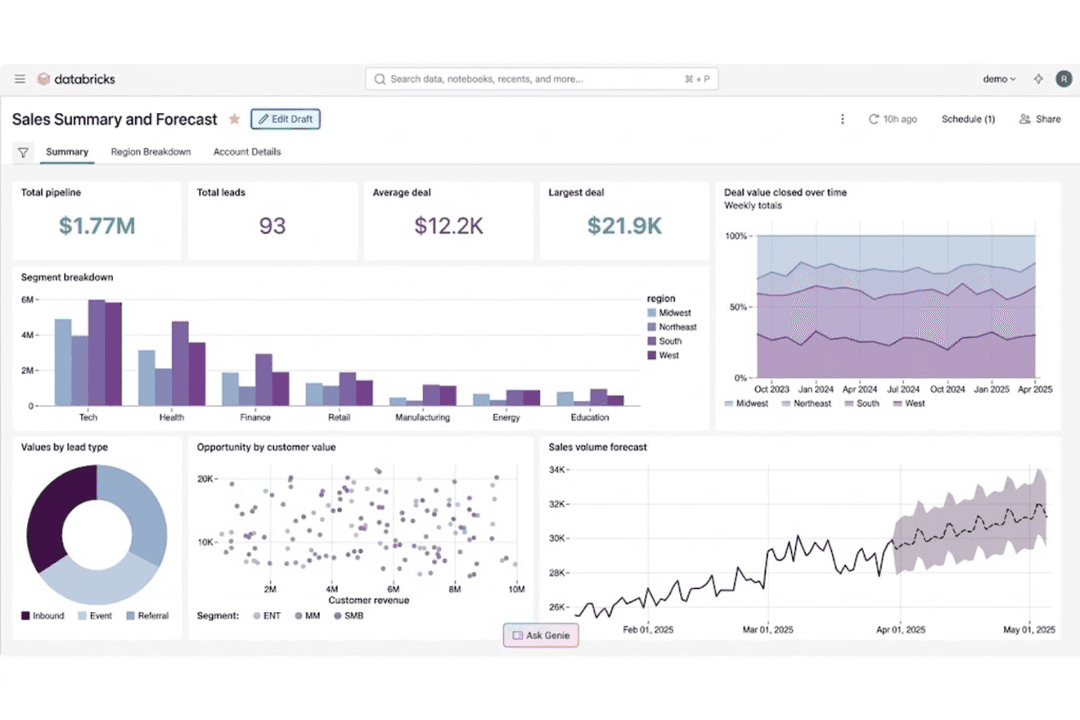
| FaktorBrukergrensesnitt | DatabricksKombinerer samarbeidsnotatbøker, SQL-verktøy, instrumentbord, visuelle arbeidsflyter for datapipelines og AI-assistert utvikling i et enhetlig arbeidsområde for data- og AI-team. | DataikuBruker det visuelle Flow-grensesnittet sammen med notatbøker og kodeeditorer, slik at tekniske og ikke-tekniske brukere får flere måter å bygge arbeidsflyter på. |
| FaktorLæringskurve | DatabricksTilbyr administrerte og serverløse tjenester som reduserer infrastrukturarbeidet, selv om avansert utvikling og AI-arbeidsbelastninger fortsatt har nytte av kompetanse innen SQL, Python, Spark og skyplattformer. | DataikuVisuelle oppskrifter og verktøy uten kode reduserer behovet for programmering i vanlige analyse- og ML-arbeidsflyter. |
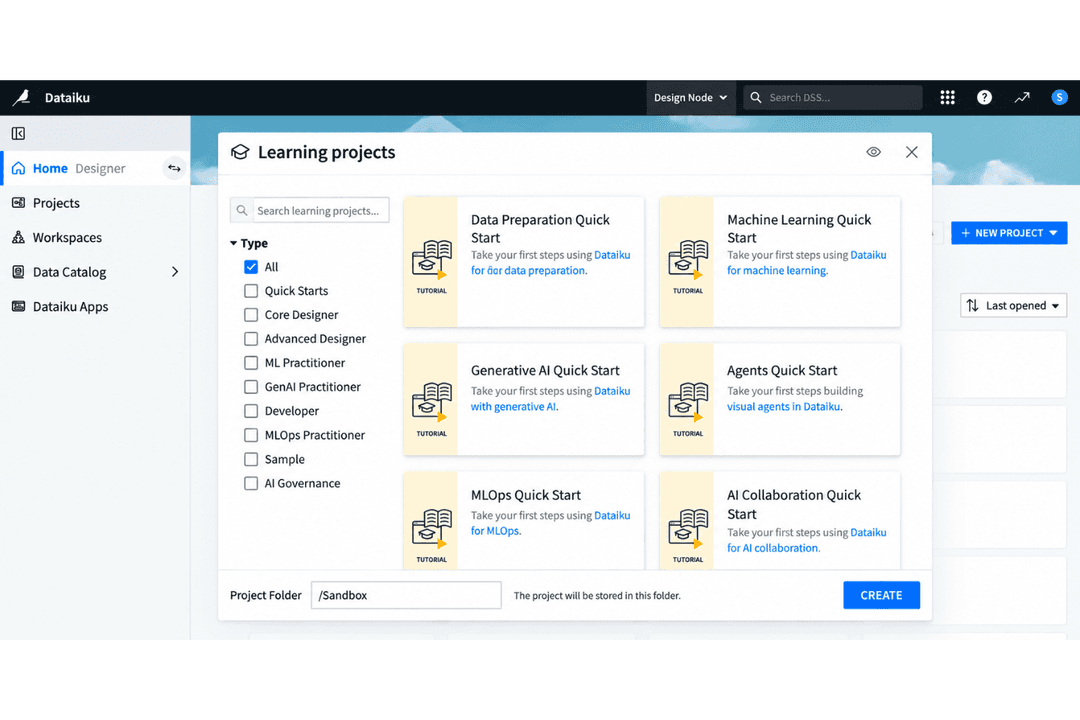
| FaktorIntroduksjon | DatabricksTilbyr veiledet oppsett av arbeidsområder, eksempelnotatbøker, veiledninger, opplæring og administrerte tjenester for overgangen fra utvikling til styrt produksjon. | DataikuTilbyr veiledninger, eksempelprosjekter og veiledede verktøy for å lære dataforberedelse, analyse og ML-arbeidsflyter. |
| FaktorSamarbeid | DatabricksStøtter samarbeid i sanntid i notatbøker, delte datapipelines, instrumentbord, styrt datatilgang og AI-arbeidsflyter på tvers av tekniske team. | DataikuStøtter delte prosjekter som kombinerer visuelt og kodebasert arbeid for analytikere, dataforskere og forretningsbrukere. |
| FaktorStøtteressurser | DatabricksTilbyr omfattende dokumentasjon, opplæring, fellesskapsressurser og trinnvis kundestøtte for virksomheter innen utvikling, analyse, styring og AI. | DataikuTilbyr dokumentasjon, Dataiku Academy, fellesskapsressurser og kundestøtte for virksomheter. |
Med tanke på brukervennlighet kombinerer Databricks administrert infrastruktur, samarbeidsnotatbøker, visuelle datapipelines og AI-assistert utvikling i et enhetlig miljø for data- og AI-team. Dataiku har derimot en mer visuell tilnærming gjennom Flow, oppskrifter uten kode og delte prosjekter som gjør analyse- og ML-arbeidsflyter tilgjengelige for et bredere utvalg brukere. For team som kjører komplekse utviklings-, analyse- og AI-arbeidsbelastninger, tilbyr Databricks større dybde og administrerte tjenester, mens organisasjoner med team med mer variert kompetanse kan foretrekke Dataikus visuelle arbeidsflytmodell.
Databricks
- Unifies data engineering, analytics, governance, and AI workloads, reducing the need to maintain separate platforms and duplicate data
- Built on open technologies like Delta Lake and Apache Spark, giving teams more flexibility and portability than proprietary data formats
- Unity Catalog applies governance and access policies consistently across data and workloads, which is useful for complex or multi-cloud environments
- Usage-based pricing can become difficult to predict as workloads grow, especially without careful compute and query optimization
- Requires strong technical expertise in areas like SQL, Python, Spark, and data engineering to get full value from the platform
- Can be excessive for teams with simple reporting or low-volume analytics needs, where the platform’s complexity may outweigh the benefits
Dataiku
- Visual workflow enables collaboration between technical and non-technical users
- Supports both code and no-code data science projects within one platform
- Offers governed project management with strong version control options
- Real-time deployment capabilities lag behind competitors like Databricks
- Pricing can be high for large-scale production use
- Interface performance slows with extremely complex pipelines
Databricks
- Large EnterprisesOrganizations with multiple data teams and high-volume workloads can use Databricks to centralize data engineering, analytics, governance, and AI while reducing duplicated data and tooling.
- Financial ServicesBanks, insurers, and other financial organizations can use Databricks for governed analytics, fraud detection, risk modeling, and machine learning across sensitive datasets.
- Healthcare and Life SciencesHealthcare and life sciences teams can manage large, sensitive datasets while applying centralized governance to analytics, research, and AI workloads.
- Retail and Consumer GoodsRetailers can combine customer, transaction, inventory, and operational data for forecasting, personalization, supply chain analytics, and machine learning.
- ManufacturingManufacturers can bring together operational, IoT, and enterprise data for predictive maintenance, production analytics, forecasting, and AI-driven optimization.
- Technology and SoftwareTechnology companies with data-intensive products or services can use Databricks for large-scale pipelines, real-time analytics, ML development, and AI applications.
Dataiku
- Financial ServicesDataiku’s security controls, rich audit trails, and integrations with enterprise databases support strict compliance and large, multi-user data teams.
- Retail AnalyticsThe visual flow and data prep features simplify shopper behavior analysis, inventory optimization, and omni-channel reporting for retail BI departments.
- Healthcare ProvidersCollaboration tools and responsible AI features help clinicians and administrators securely build predictive models using sensitive health data.
- Large EnterprisesSupport for governance, workspace management, and automation at scale is designed for organizations with hundreds of users and complex data environments.
- Data Science TeamsPython, R, and SQL integration, combined with visual ML model building, suit data professionals needing flexible, repeatable workflows.
- Manufacturing OperationsNo-code tools and strong cloud integrations help process engineers and analysts optimize supply chain, sensor, and production data without heavy scripting.
Hvem bør bruke Databricks, og hvem bør bruke Dataiku?
Hvis du ser etter en DataOps-plattform for storskala datautvikling, analyse, strømming, styring og AI, er Databricks sannsynligvis det beste valget. Den passer for team som administrerer komplekse datapipelines og store datamiljøer, og som trenger administrert databehandling, samarbeidende utvikling, lakehouse-arkitektur, sentralisert styring gjennom Unity Catalog samt integrerte arbeidsflyter for utvikling, analyse og AI.
Derimot passer Dataiku for organisasjoner som ønsker at analyse- og AI-arbeidsflyter skal være tilgjengelige for team med ulik kompetanse. Den visuelle arbeidsflyten, verktøyene med og uten kode, AutoML og styringsfunksjonene støtter samarbeid om dataklargjøring, analyse og modellutvikling uten at alle brukere hovedsakelig må arbeide i kode.
| Databricks | Dataiku | |
|---|---|---|
| AI & Data Intelligence | Databricks Its Data Intelligence Engine uses organizational metadata and context to improve discovery, optimization, governance, analytics, and AI, alongside MLflow for the ML lifecycle. | Dataiku Combines AutoML, model deployment and monitoring, GenAI tooling, and responsible AI controls with visual and code-based model development. |
| Data Engineering | Databricks Lakeflow supports managed ingestion, batch and streaming pipelines, transformation, orchestration, and monitoring, backed by elastic and serverless compute for large-scale workloads. | Dataiku Uses Visual Flow, recipes, and code-based steps to build data pipelines, with workloads able to run through connected databases, cloud services, and compute engines. |
| Deployment Approach | Databricks Runs as a cloud-native platform across AWS, Azure, and Google Cloud, with Databricks-managed and serverless compute available for different workloads. | Dataiku Can be deployed through Dataiku Cloud or customer-managed cloud, on-premises, and hybrid environments, fitting into existing data infrastructure. |
| Governance Model | Databricks Unity Catalog centralizes access policies, discovery, auditing, classification, and lineage across data, models, applications, and AI assets. | Dataiku Emphasizes governed project management with permissions, documentation, lineage, approvals, and controls across analytics and AI projects. |
| Platform Foundation | Databricks Uses a lakehouse architecture that unifies data engineering, warehousing, analytics, ML, and AI on open technologies such as Delta Lake and Apache Spark. | Dataiku Provides a collaborative data and AI platform that brings preparation, analytics, ML, GenAI, and governance into shared projects and visual workflows. |
| Analytics & Visualization | Both support SQL-based analysis, dashboards, data exploration, and broader analytics workflows alongside their engineering and AI capabilities. |
|---|---|
| Collaboration | Both provide shared environments where data engineers, analysts, and data scientists can work together on data and AI projects, although their collaboration models differ. |
| Data Integration | Both connect to major cloud platforms, databases, enterprise applications, and APIs so teams can work with data across existing systems. |
| Enterprise Security | Both provide role-based permissions, SSO and identity integrations, encryption, auditability, and enterprise governance controls for regulated data environments. |
| Workflow Automation | Both support scheduling, orchestration, monitoring, and repeatable production workflows for moving data and analytics processes from development into operation. |