
Recensione SysAid 2026: Pro, Contro, Funzionalità e Prezzi
Cerchi una piattaforma ITSM basata sull’IA che vada oltre la semplice gestione dei ticket? In questa recensione, analizzerò come SysAid combina help desk, gestione delle risorse, automazione e agenti AI in un’unica piattaforma, rendendolo una scelta valida per team IT in crescita.

Recensiamo gli strumenti in modo indipendente e le commissioni ci aiutano a finanziare i nostri test. Consulta la nostra politica sulla trasparenza, la nostra metodologia, oppure suggerisci uno strumento.
If your IT team is struggling with growing ticket volumes, repetitive requests, or disconnected service management tools, SysAid aims to solve those challenges in a single ITSM platform. It combines help desk functionality with IT asset management, workflow automation, self-service, and agentic AI designed to autonomously resolve incidents, fulfill requests, and reduce manual work across IT operations.
In this review, I'll walk you through SysAid's key features, ideal use cases, pros and cons, and pricing considerations to help you decide whether it's the right fit for your organization's IT service management needs.
SysAid Evaluation Summary
4.5/5
- From $89/agent/month
- Free demo available
Perché fidarsi dei nostri consigli sui software
6,700+
Reviews
20
Industry experts
16+
Evaluation factors
14
Years
Il nostro team testa e recensisce software dal 2012. In quanto leader tecnologici noi stessi, sappiamo quanto sia difficile — e importante — scegliere il software giusto.
Per questa guida, abbiamo valutato gli strumenti attraverso test praticie ricerche indipendenti, assegnando un punteggio agli strumenti in base ai nostri criteri di selezione.
Le nostre recensioni riflettono il nostro giudizio editoriale umano, non un discorso di vendita.
Revisori esperti:
- Paulo Gardini MiguelDirettore tecnico
 Tim FisherVP dell'IA
 Gabriel RosasTech Lead e architetto software
 Christhian GruhnTech Lead e architetto della piattaforma

SysAid Overview
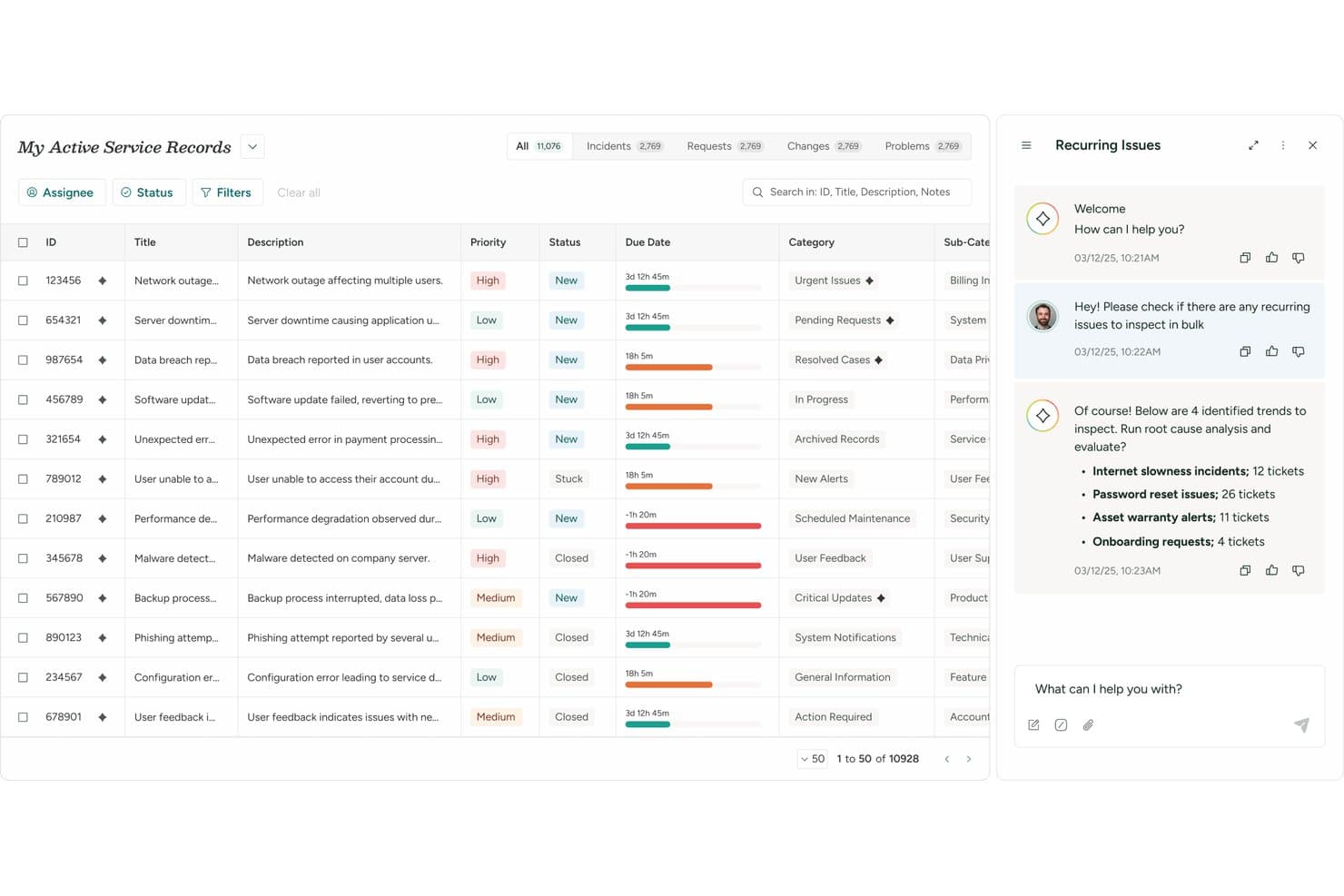
What grabs my attention most about SysAid is that it's one of the few ITSM platforms that makes AI an active participant in service delivery rather than simply a support tool. Beyond core ticket management, you get integrated asset management, license management, reporting, workflow design, and AI capabilities that are built directly into the platform rather than sold as separate add-ons. I like that it offers nearly 100 prebuilt AI agents, an AI Agent Builder, and extensive customization options that allow you to tailor workflows to your organization's processes.
SysAid generally appeals the most to enterprise IT departments looking to centralize service management and reduce ticket volumes through self-service and AI agents capable of handling routine requests autonomously.
Pros
- Agentic AI can autonomously resolve routine incidents and fulfill requests before they reach technicians.
- Highly configurable workflows adapt to your team's unique processes.
- Comprehensive ITSM and asset management in one platform.
Cons
- Better suited for larger IT teams than small businesses.
- Some interface areas are still transitioning to the modern experience.
- Broad configuration options require thoughtful setup and planning.
Is SysAid Right For Your Needs?
Who Would be a Good Fit for SysAid?
SysAid is best suited for enterprise organizations and mature IT teams that need advanced automation, built-in asset management, and highly configurable IT service management workflows. I find it particularly well-suited for organizations with complex support environments, large asset inventories, or a desire to leverage agentic AI to automate incident resolution, request fulfillment, and workflow execution at scale.
Industries such as manufacturing, government, healthcare, finance, and education can benefit from SysAid's combination of ITSM, asset management, compliance-focused capabilities, and AI-powered automation.
- Enterprise IT DepartmentsBuilt for large IT teams managing complex service operations, assets, and support workflows across departments.
- Government OrganizationsSupports structured workflows, service management, operational accountability, and consistent service delivery across agencies.
- Manufacturing CompaniesAsset visibility and automation support distributed operational environments, equipment tracking, and service efficiency.
- Education InstitutionsSelf-service and centralized support simplify campus-wide IT operations, request management, and user support.
- Healthcare ITAsset tracking and service management support regulated environments, compliance initiatives, and operational continuity.
- Organizations Focused on AI AdoptionBuilt-in AI agents can resolve incidents, fulfill requests, and automate repetitive service workflows with minimal human intervention.
Who Would be a Bad Fit for SysAid?
SysAid may not be the best fit for organizations that need a lightweight help desk or have limited IT support requirements. The platform is designed for mature IT teams that can take advantage of its automation, asset management, AI capabilities, and extensive configuration options. Therefore, smaller organizations or teams without dedicated IT resources may find the platform more powerful than their immediate needs require.
- Small IT TeamsAdvanced ITSM capabilities, automation tools, and asset management may exceed the needs of lean support teams.
- Organizations Without Dedicated IT StaffRequires ongoing administration, customization, and configuration, best suited for experienced IT professionals.
- Teams Seeking a Lightweight Help DeskThe feature-rich platform can feel excessive for organizations needing only basic ticket management functionality.
- Organizations With Fewer Than 20 IT AgentsSysAid usually services organizations with IT teams that have 20 or more agents, which is more in line with the platform's depth, breadth, and advanced capabilities.
- Rigid Out-of-the-Box Setup NeedsAdvanced configuration and customization options may require more planning than simple help desk tools, making SysAid less ideal if your organization prefers more rigid out-of-the-box setups.
- Organizations Focused Primarily on Non-IT ServicesWhile adaptable for HR, facilities, and other internal services, SysAid's deepest functionality and AI capabilities are built around IT support operations (internal or external).
La Nostra Metodologia di Recensione
Come Testiamo e Valutiamo gli Strumenti
Abbiamo trascorso anni a costruire, perfezionare e migliorare il nostro sistema di testing e valutazione del software. Il nostro schema è progettato per cogliere le sfumature della selezione software e cosa rende efficace uno strumento, focalizzandosi sugli aspetti critici del processo decisionale.
Di seguito, puoi vedere esattamente come funziona il nostro testing e punteggio su sette criteri. Ci permette di offrire una valutazione imparziale del software basata su funzionalità principali, caratteristiche distintive, facilità d’uso, onboarding, assistenza clienti, integrazioni, recensioni dei clienti e rapporto qualità-prezzo.
Funzionalità Principali (25% del punteggio finale)
Il punto di partenza della nostra valutazione è sempre la funzionalità principale dello strumento. Ha le funzioni e caratteristiche base che ci si aspetta? Alcune di queste caratteristiche sono limitate ai piani tariffari superiori? Fondamentalmente, ci aspettiamo che uno strumento regga il confronto rispetto alle capacità di base dei concorrenti.
Caratteristiche Distintive (25% del punteggio finale)
Successivamente, valutiamo le caratteristiche distintive e non comuni che vanno oltre la funzionalità base tipicamente trovata negli strumenti di questa categoria. Un punteggio alto riflette funzionalità specializzate o uniche che rendono il prodotto più veloce, efficiente o offrono ulteriore valore all’utente.
Valutiamo inoltre quanto sia semplice integrare altri strumenti tipicamente utilizzati nell’infrastruttura tecnologica per espandere la funzionalità e l’utilità del software. Gli strumenti che offrono numerose integrazioni native, connessioni di terze parti e accesso API per creare integrazioni personalizzate ottengono i punteggi migliori.
Facilità d’Uso (10% del punteggio finale)
Consideriamo quanto sia rapido e semplice svolgere i compiti definiti nella funzionalità principale utilizzando lo strumento. Il software con punteggio alto è ben progettato, intuitivo da usare, offre app mobili, fornisce modelli e rende semplici attività relativamente complesse.
Onboarding (10% del punteggio finale)
Sappiamo quanto sia importante l’adozione rapida da parte del team per una nuova piattaforma, quindi valutiamo quanto sia facile imparare e utilizzare uno strumento con formazione minima. Valutiamo quanto velocemente un membro del team possa iniziare a usare lo strumento anche senza esperienza. Soluzioni con punteggio alto indicano che sono richiesti pochi o nessun supporto.
Assistenza Clienti (10% del punteggio finale)
Esaminiamo quanto sia veloce e facile ricevere assistenza e risolvere problemi tramite telefono, live chat o knowledge base. Gli strumenti e le aziende che garantiscono supporto in tempo reale ottengono il miglior punteggio, mentre i chatbot ottengono il peggiore.
Recensioni dei Clienti (10% del punteggio finale)
Oltre ai nostri test e valutazioni, prendiamo in considerazione il net promoter score dei clienti attuali e passati. Valutiamo la probabilità che, data la scelta, selezionerebbero nuovamente lo strumento per la funzionalità principale. Un software con punteggio alto riflette un alto net promoter score da parte dei clienti attuali o passati.
Rapporto Qualità-Prezzo (10% del punteggio finale)
Infine, considerando tutti gli altri criteri, analizziamo il prezzo medio dei piani base rispetto alle funzionalità principali e consideriamo il valore degli altri criteri di valutazione. Il software che offre di più a meno otterrà un punteggio più alto.
Core Features
Incident Management
Centralizes ticket creation, assignment, and tracking for IT issues. Automated routing and escalation rules help teams resolve incidents faster.
IT Asset Management
Tracks hardware and software assets across your organization. Links assets to tickets for better context and lifecycle management.
Problem Management
Helps IT teams identify, investigate, and resolve the root causes of recurring incidents. By linking related issues and tracking known errors, it supports long-term service improvements and reduces repeat disruptions.
Workflow Designer
Lets you build custom workflows for ticket approvals, service fulfillment, and process automation. Visual drag-and-drop tools make it easier to automate IT operations without extensive development resources.
Knowledge Management
Provides a searchable portal for FAQs and solutions. Reduces repetitive tickets by empowering users with self-service resources.
Service Catalog Management
Allows users to request IT services from a structured catalog. Standardizes service delivery and improves request visibility.
Reporting & Analytics
Generates real-time dashboards and scheduled reports on ticket trends. Helps IT leaders monitor performance and identify bottlenecks.
Standout Features
SysAid Copilot and AI Agents
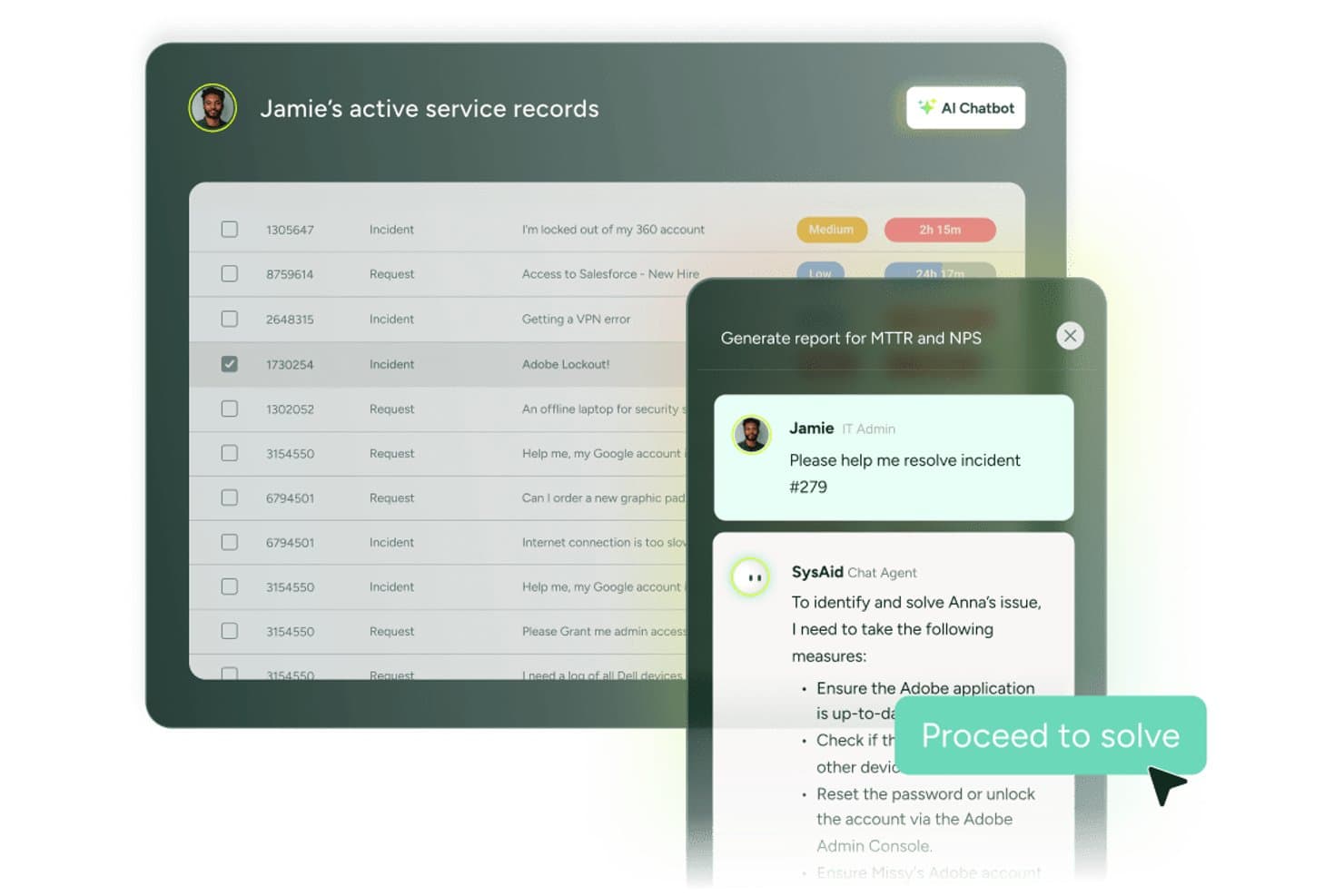
SysAid embeds AI directly into its platform through SysAid Copilot and a library of prebuilt AI agents. These tools are designed to move beyond technician assistance by autonomously resolving incidents, fulfilling requests, triggering workflows, and executing routine service management tasks. Rather than simply surfacing information, SysAid's AI agents are active participants in service delivery, operating within administrator-defined guardrails.
AI Agent Builder
SysAid's AI Agent Builder allows organizations to create and customize AI agents without extensive development resources. IT teams can tailor AI-driven workflows to organization-specific processes, automate routine service tasks, and extend automation beyond SysAid's prebuilt agent library using a no-code approach.
AI Governance and Traceability
SysAid includes governance controls designed to give organizations visibility into AI-driven actions and automated workflows. Administrators can define rules, monitor activity, and maintain traceability over actions performed by AI agents, helping support compliance, accountability, and enterprise AI adoption.
Ease of Use
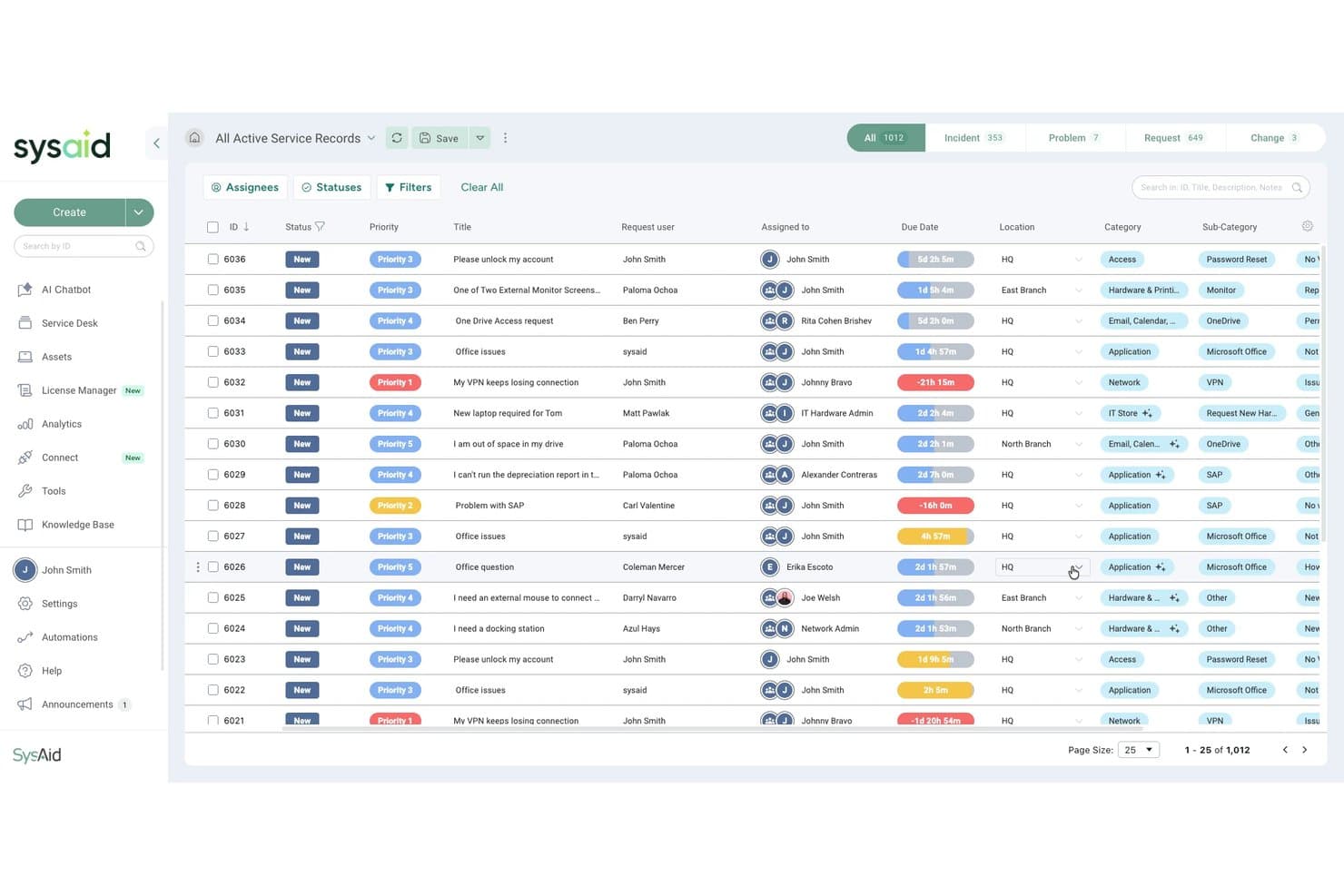
SysAid balances a broad feature set with tools designed to simplify administration, including visual workflow builders, agentic AI capabilities, and configurable automation. New users may face a learning curve, particularly when setting up workflows, service catalogs, AI agents, and other advanced ITSM processes. However, much of that complexity stems from the platform's flexibility and depth rather than poor usability.
Once configured, SysAid can streamline day-to-day IT operations through automation, asset management, self-service capabilities, and AI agents designed to resolve routine incidents, fulfill requests, and execute workflows with minimal manual intervention. Full governance is built-in, making it easy for administrators to define rules, monitor AI-driven actions, and maintain visibility into automated processes.
Onboarding
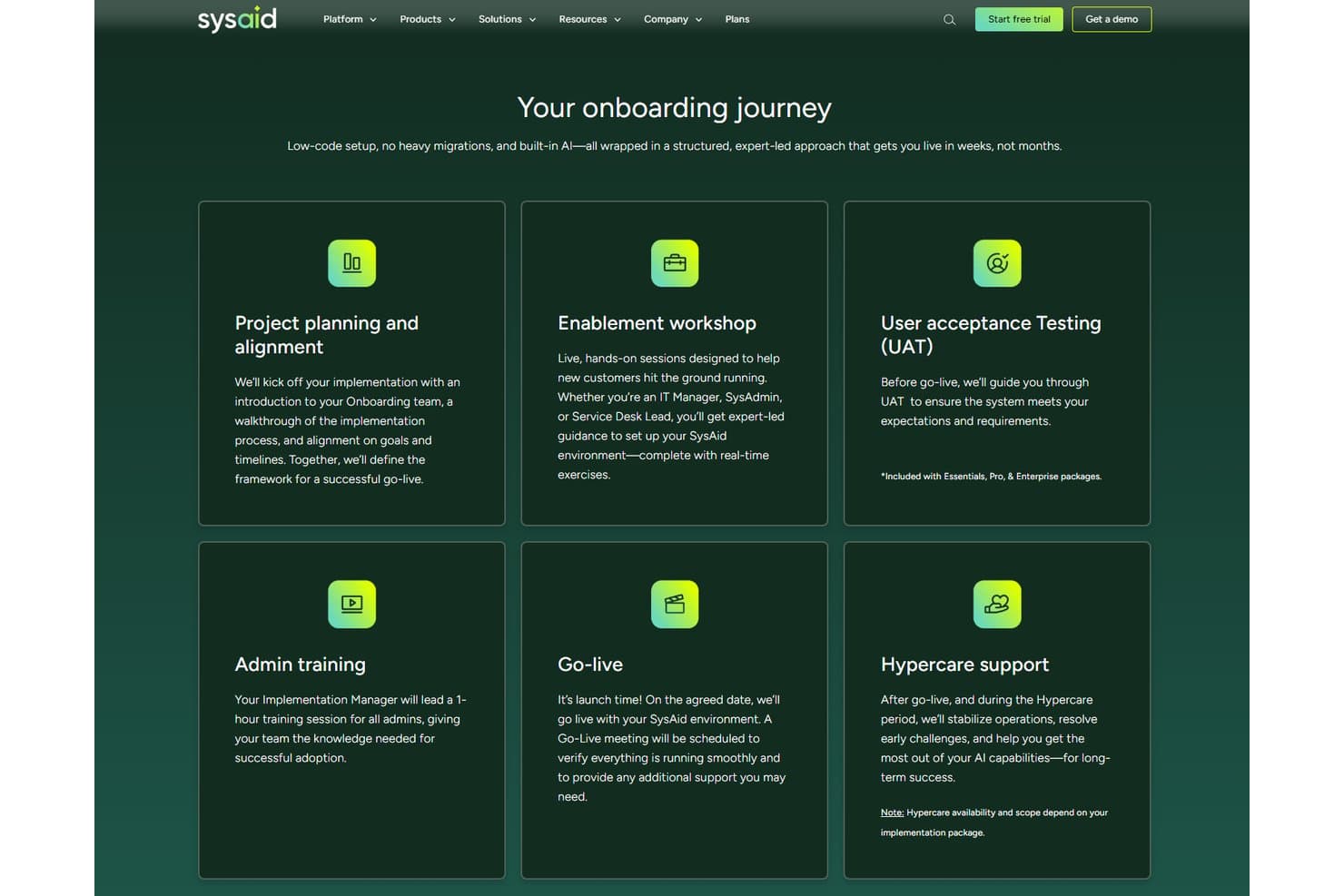
SysAid offers self-guided, guided, and dedicated onboarding options to help organizations get up and running quickly. Depending on your package, SysAid provides implementation support through expert-led workshops, admin training, user acceptance testing (UAT), dedicated project management, and post-launch hypercare services.
While organizations with complex workflows may require additional planning and customization, SysAid's structured onboarding process is designed to accelerate adoption and help teams realize value faster than many traditional ITSM platforms. AI-powered automation and natural language configuration tools can further simplify setup by allowing administrators to customize parts of the platform through conversational prompts.
Customer Support
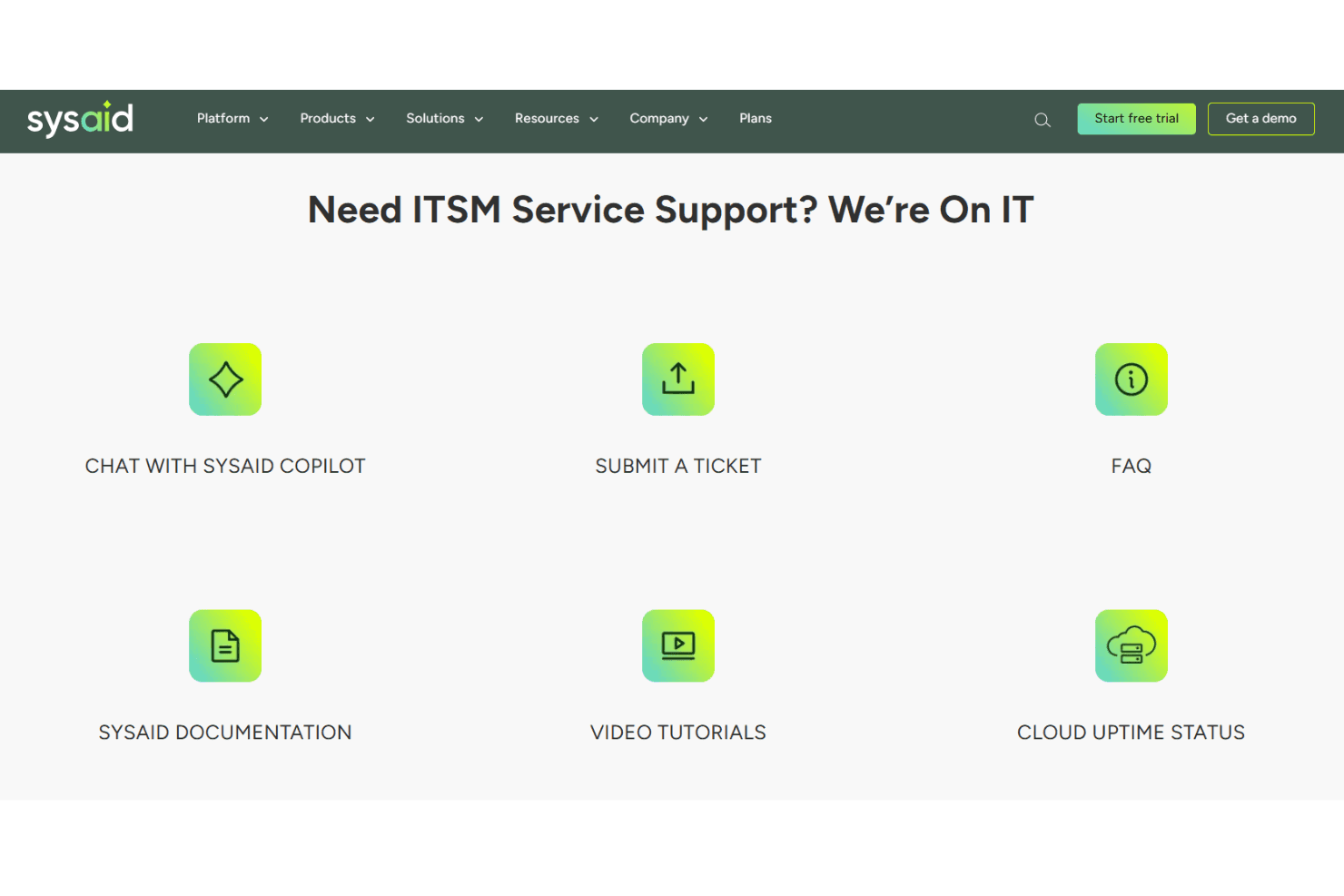
SysAid places a strong emphasis on customer support, offering assistance through multiple channels and backing customers with dedicated onboarding, implementation, and customer success teams. Support options include live chat, email, phone callbacks, WhatsApp support, and 24/7 assistance for priority-one issues. Depending on your plan and eligibility, you may also receive support from dedicated senior engineers and customer success managers.
Integrations
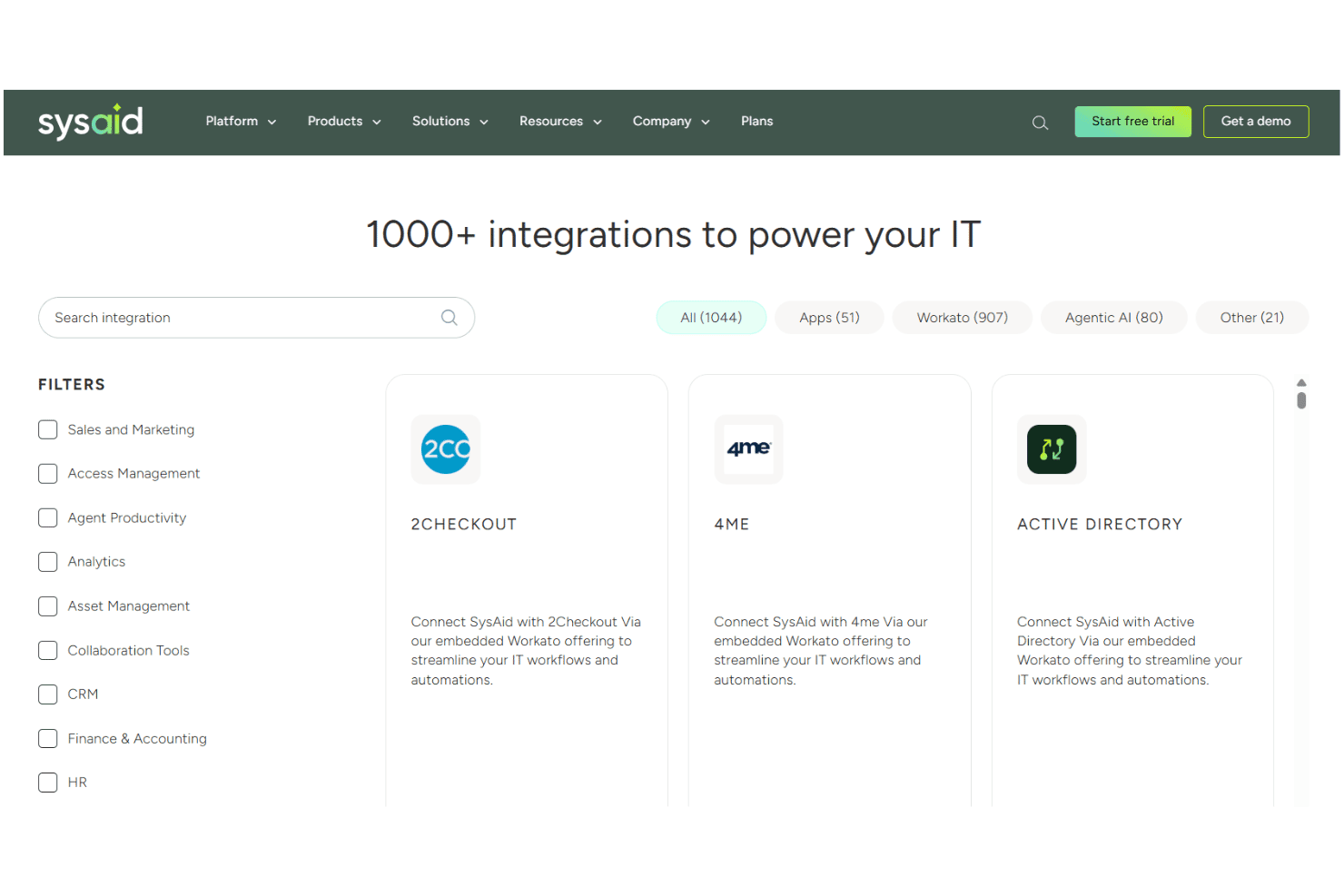
SysAid integrates with Asana, Azure DevOps, Google Workspace, Harvest, HubSpot, Salesforce, Jira, Lansweeper, Microsoft Dynamics, Okta, QuickBooks, Slack, and Trello, among others.
SysAid also offers a modern API and connects with third-party integration tools like Workato and Zapier for custom workflows.
Value for Money
From a value perspective, SysAid bundles capabilities that many competitors charge extra for, including IT asset management, workflow automation, and agentic AI features. Pricing is customized based on factors such as your chosen package, number of users, and the assets you need to manage, helping organizations avoid paying for capabilities they don't require. SysAid also offers both cloud and on-premises deployment options, giving organizations flexibility based on their security and compliance requirements.
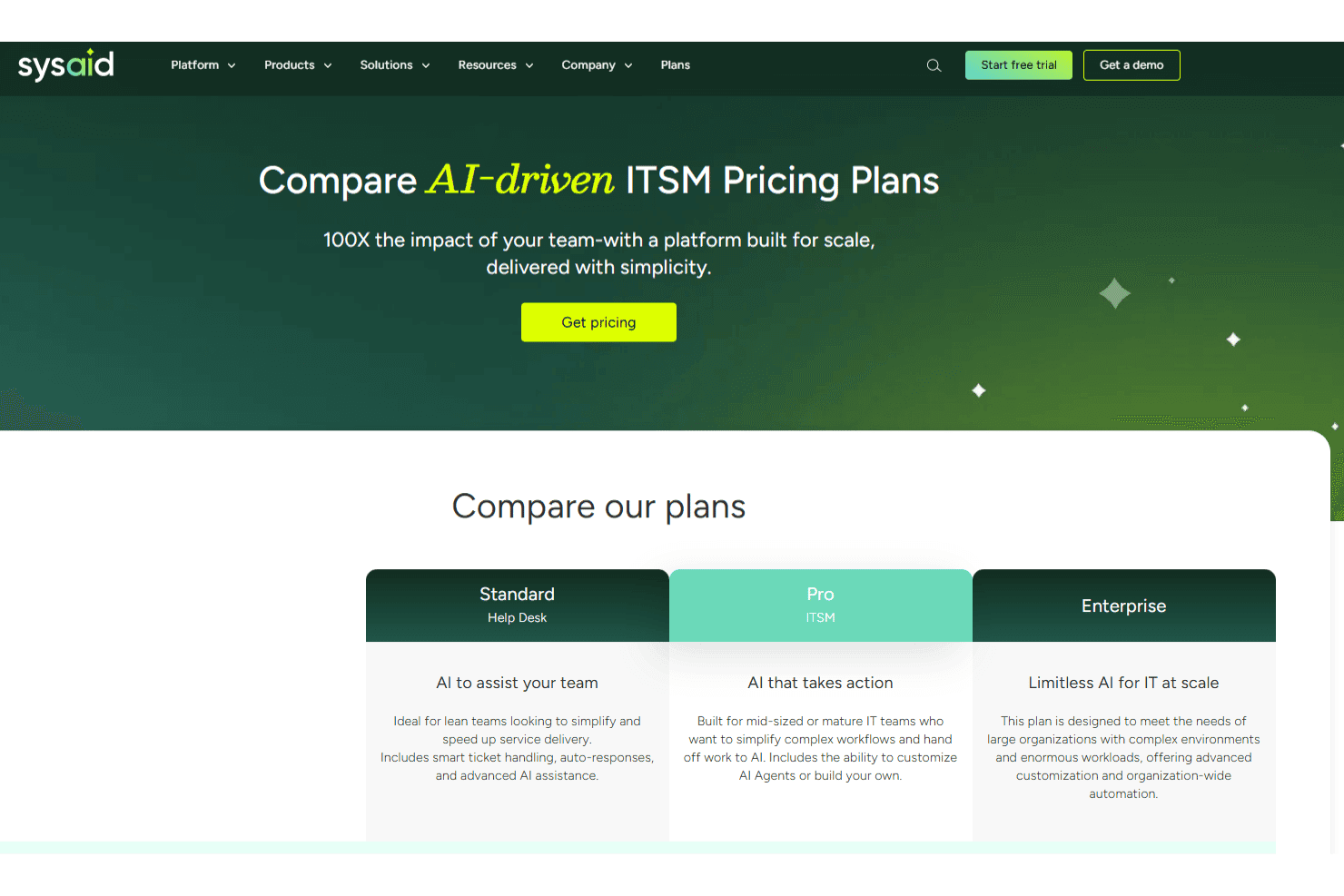
- Standard (Help Desk): Help desk-focused plan that includes incident management, asset management, self-service, automation, reporting, and AI-powered chatbot capabilities for end users and agents.
- Pro (ITSM): Full ITSM plan that adds change, problem, and request management, workflow automation, advanced reporting, compliance-focused capabilities, and enhanced support options.
- Enterprise: Advanced AI-driven ITSM plan that includes SysAid Agentic AI, nearly 100 prebuilt AI agents, AI Agent Builder, enterprise-grade support, and additional governance, traceability, and oversight capabilities designed to support enterprise AI adoption.
New Product Updates from SysAid
SysAid Adds Custom Fields for License Manager Contracts
SysAid lets system administrators create custom contract fields that appear across all contract forms in License Manager. The feature supports text, text area, number, date, and list fields for capturing additional contract information. Highlights include:
- Contract Custom Fields: Add organization-specific fields to contracts in License Manager.
- Multiple Field Types: Create Text, Text Area, Number, Date, and List fields.
- Account-Wide Availability: New fields appear on every contract form once created.
- Custom List Values: Define dropdown options for standardized contract data.
- Admin Controls: System administrators can create, rename, update, and delete contract fields.
Visit SysAid’s official site for more details.
 Opens new window
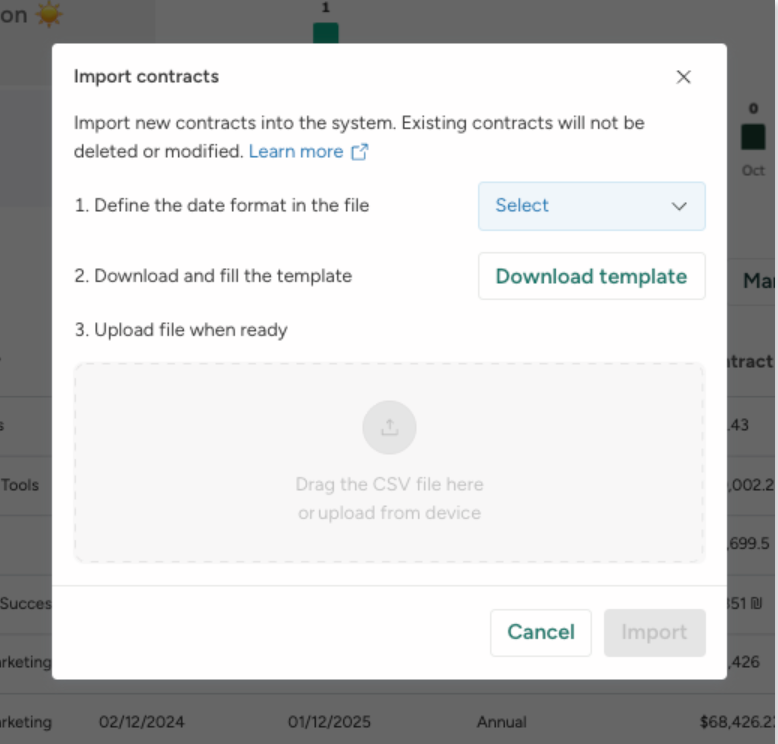
SysAid Adds Bulk Contract Import
SysAid’s License Manager Essentials now supports bulk contract creation, reducing manual entry and helping admins onboard contract data more quickly and consistently. The new CSV-based workflow adds validation to catch issues before contracts are created. Highlights include:
- Bulk CSV Contract Uploads: Admins can import multiple contracts at once using a CSV template.
- Contract Validation: Uploaded contract entries can be validated before creation to reduce setup errors.
- Faster Contract Setup: Teams can activate and manage contracts more efficiently with less manual work.
Visit SysAid's official site for more details.
 Opens new window
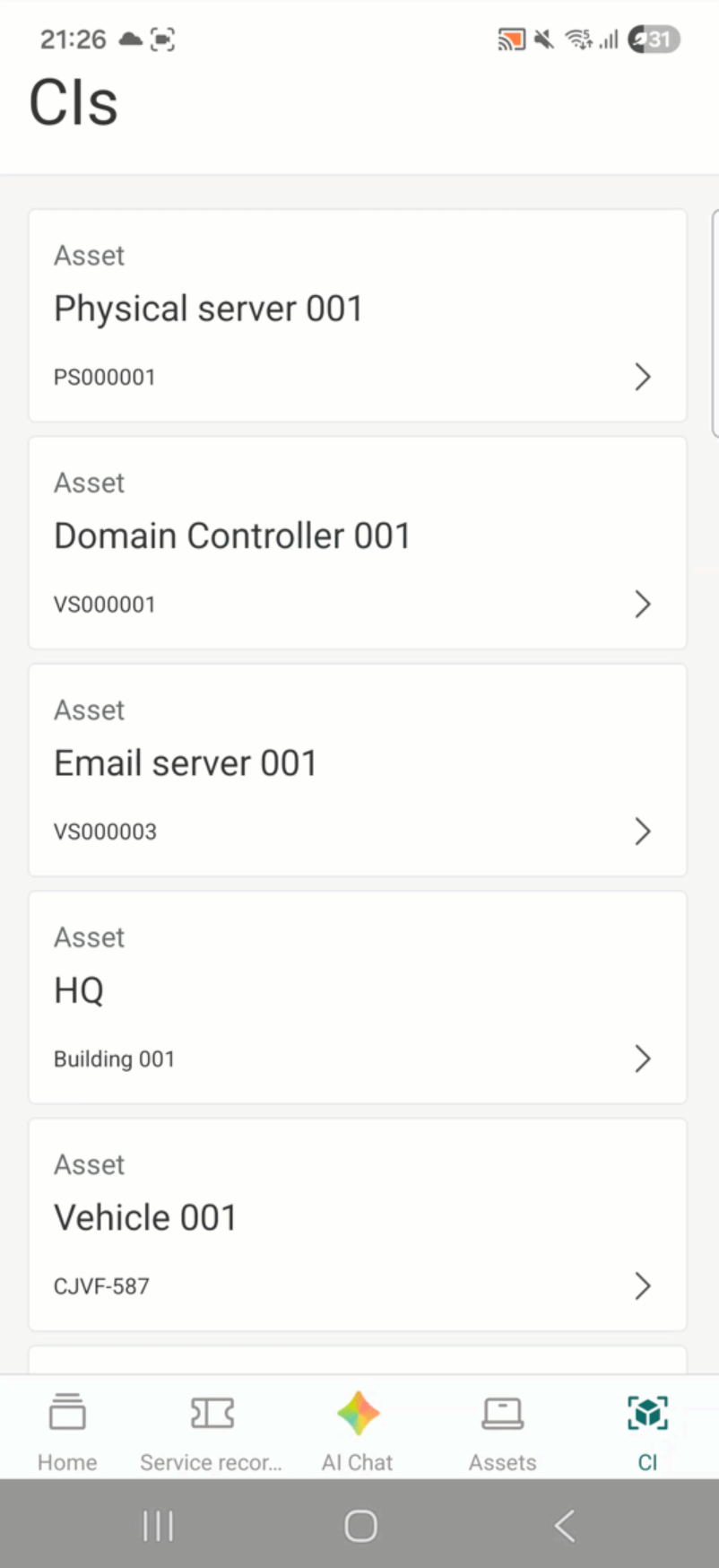
SysAid Mobile App Adds AI Agents and CI Barcode Scanning
SysAid adds AI Agents, CI barcode scanning, and expanded asset management tools to its mobile app. The updates help IT teams handle service and asset management tasks more easily from mobile devices. Highlights include:
- CI Barcode Scanning: Teams can scan configuration items individually or in bulk directly from the mobile app.
- Mobile AI Agents: Users can access the same AI Agents available on SysAid desktop within the mobile app.
- Asset and CI Management: Teams can search, filter, and edit assets and configuration items directly from mobile.
Visit SysAid’s official site for more details.
 Opens new window
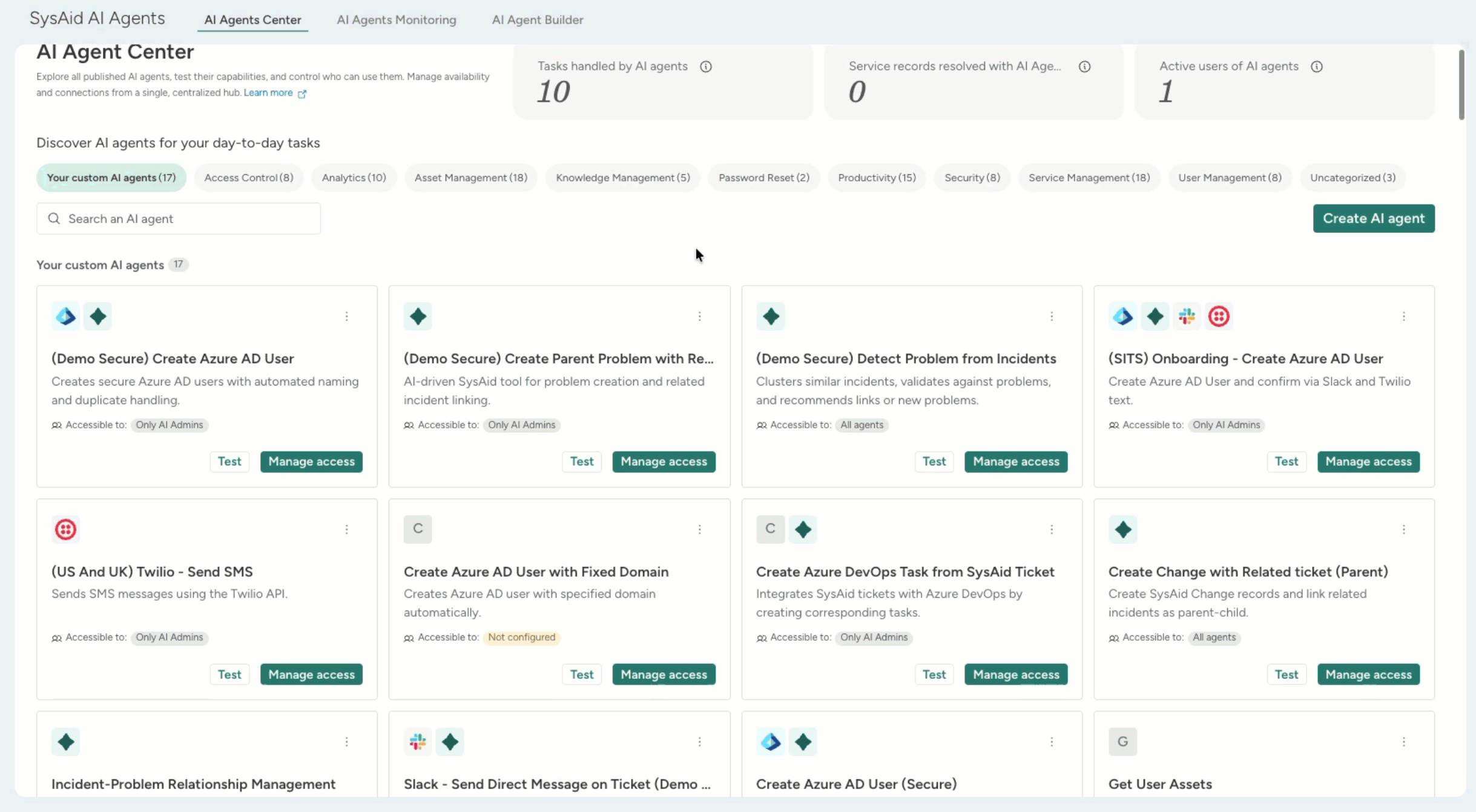
SysAid Adds AI Agent Center and License Manager Chatbot Insights
SysAid adds a centralized AI Agent Center and expands the AI Chatbot with License Manager insights and AI agents. These updates help IT teams manage AI-powered workflows and access software and contract information more efficiently. Highlights include:
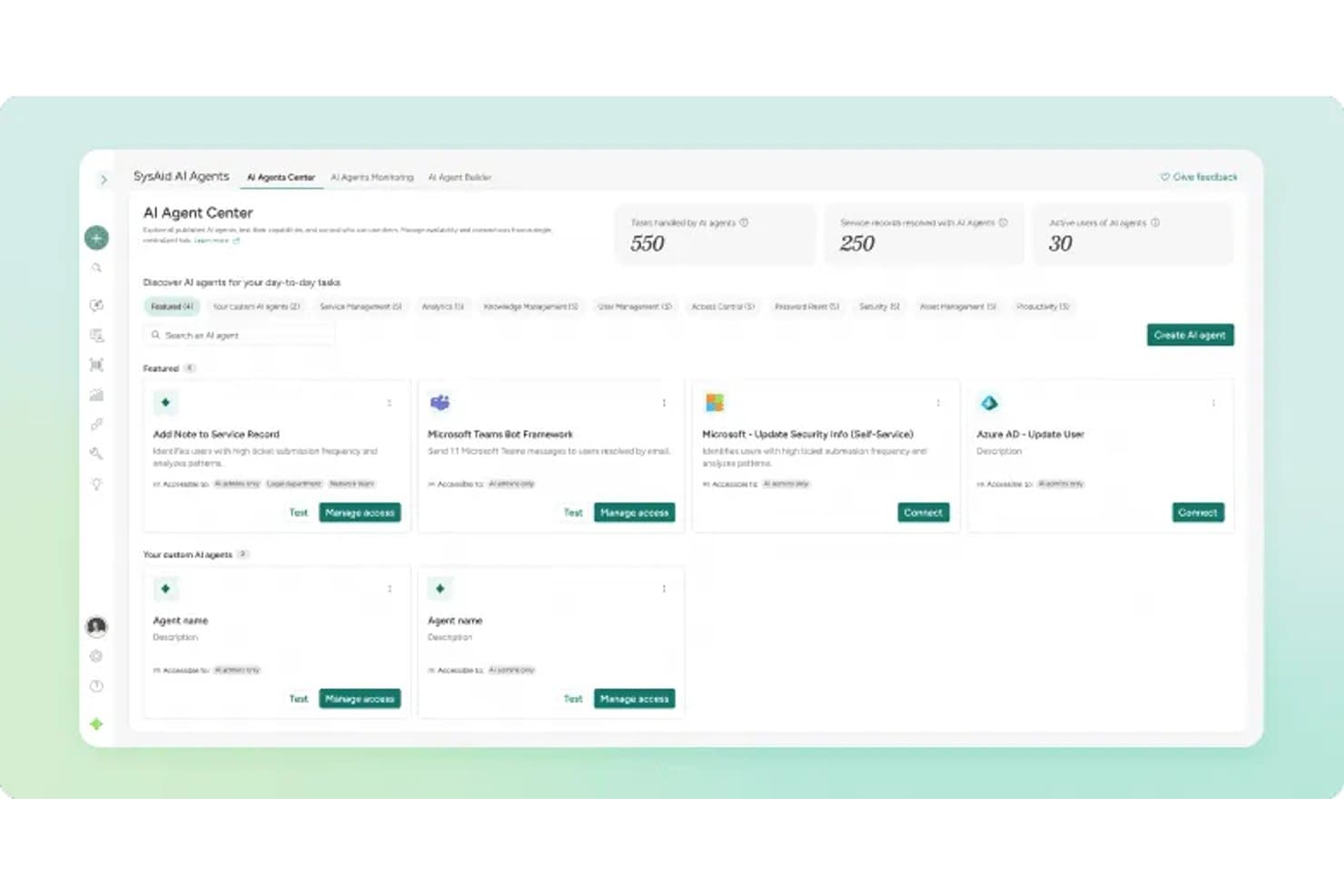
- AI Agent Center: Admins can manage, test, and monitor specialized AI agents across areas like security, asset management, and access control.
- License Manager AI Insights: The AI capabilities now extend into License Manager workflows, enabling teams to surface contract and SaaS intelligence while supporting broader automated asset and license management processes.
- Prebuilt AI Agents: Teams can use AI agents to analyze software usage, activity, and cost insights more quickly.
Visit SysAid’s official site for more details.
SysAid Specs
- 2-Factor Authentication: Yes
- Analytics: Yes
- Anti-Virus: No
- API: Yes
- Batch Permissions & Access: Yes
- Bug Tracking: No
- Call Integration: Yes
- Chat: Yes
- Contact Management: Yes
- CRM Integration: Yes
- Customer Management: Yes
- Data Export: Yes
- Data Import: Yes
- Email Integration: Yes
- Escalation Management: Yes
- External Integrations: Yes
- Incident Management: Yes
- Instant Chat Integration: No
- Knowledge Base: Yes
- Malware Protection: No
- Multi-User: Yes
- Notifications: Yes
- Organization Management: Yes
- Password & Access Management: Yes
- Project Management: Yes
- Real-time Alerts: Yes
- SAP Integration: Yes
- Self-service Portal: Yes
- Social Media Integration: No
- Support Forum: Yes
- Ticket Management: Yes
- Workflow Management: Yes
SysAid FAQs
SysAid Company Overview & History
SysAid Technologies, founded in 2002 by Israel Lifshitz, is headquartered in Tel Aviv, Israel. The company employs around 200-240 people and serves thousands of customers across six continents. SysAid is privately owned and focuses exclusively on IT service management solutions, with no major affiliated products or subsidiaries.
Notable clients include organizations in education, healthcare, manufacturing, and managed services, but specific high-profile names are not publicly listed. In 2024, SysAid reported annual revenue of approximately $20 million.
SysAid Major Milestones
- 2002: Founded by Israel Lifshitz in Tel Aviv, Israel.
- 2002: Initial release of the SysAid ITSM platform.
- 2024: Reached $20 million in annual revenue.
- 2025: Recognized in industry reports for innovation in AI-driven ITSM.
- 2026: Serves customers in over 140 countries with a workforce spanning six continents.